

Latest Headlines
- Century Seeking Attorney General Opinion To Help To Untangle ‘Copy-Paste’ Charter Mix-Up
- Santa Rosa Man Charged With DUI Manslaughter After Fatal Pickup Truck Crash
- Hurricane Center Gives Gulf Area A 20% Chance Of Development
- One Person Injured In Three Vehicle Crash On Highway 29 In Molino
- Century Council Spends Over an Hour Debating Resident Over Water Bill
- One Injured In Oak Grove Rollover Crash
- Baldwin Deputies Seek Woman Missing Since 2022 With Possible Escambia County Connection
- Tossed Stanley Cup Leads To Arrest For Cocaine Trafficking, Weapon
- Florida Prisoner, 74, Becomes The Oldest Inmate Executed In State’s Modern History
- MILO Mobile ID And Licensing Unit In Century On Thursday

Century Seeking Attorney General Opinion To Help To Untangle ‘Copy-Paste’ Charter Mix-Up
July 16, 2026
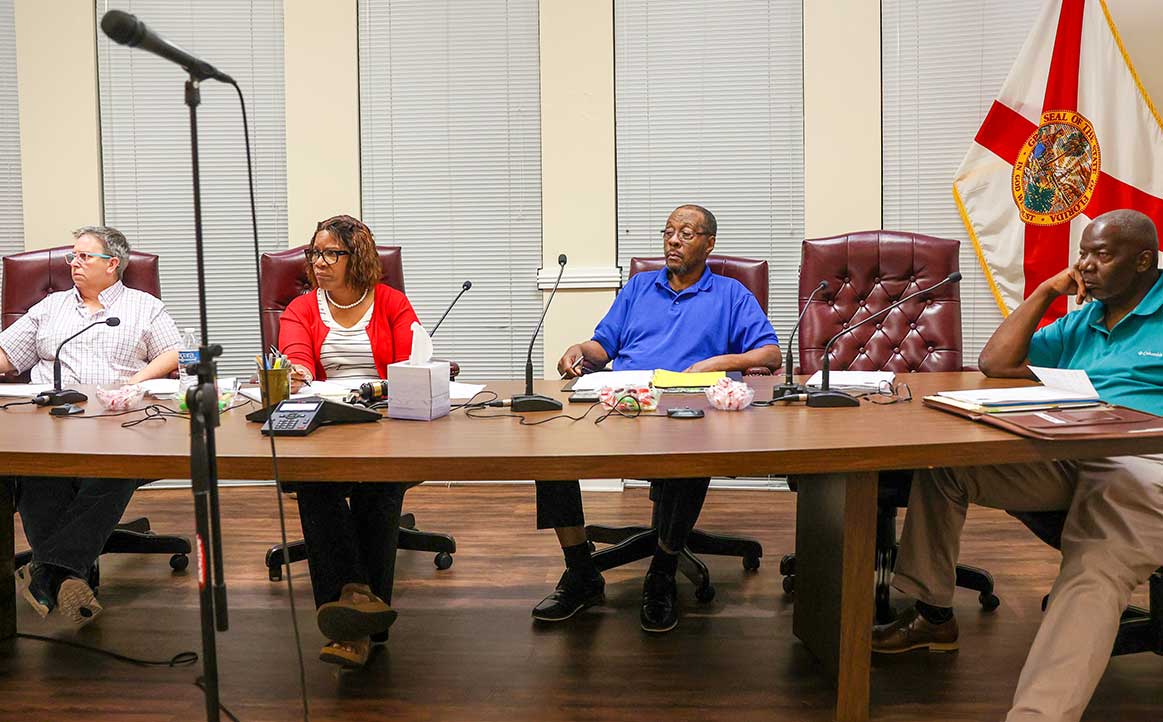
The Town of Century is reaching out to the state’s top legal officer to resolve a confusing contradiction in its town rules. This week, the Town Council authorized its attorney to request an informal legal opinion from the Florida Attorney General on how to fix an accidental drafting error in the town charter without having to run a costly public election.
Here is a breakdown of what happened, why it matters, a seemingly ignored conundrum, and how the town hopes to resolve the issue.
The Conflicting Rules: How Century Got Here
The confusion stems from a mix-up between three different eras of the town’s charter:
- The 1979 Charter: Originally, Century held its local elections in odd-numbered years, with officials serving two-year terms.
- The 2014 Amendment: To save money and boost voter turnout, the town voted in June 2014 to align its local elections with federal, state, and county elections, which take place in even-numbered years. Since then, all local elections have successfully run on this even-year schedule.
- The 2024 Amendment: In November 2024, voters approved a charter change to extend the terms of the mayor and council members to four years.
- The Oversight: When drafting the 2024 paperwork, organizers accidentally reused outdated language from the 1979 charter. Because of this “scrivener’s error,” the updated charter now says the mayor and council seats one and two must be elected in odd-numbered years — directly contradicting the 2014 rule keeping them in even-numbered years.
Why the Town is Asking the Attorney General for Help
The Town Council wants to clarify that all municipal elections will officially remain in even-numbered years. However, they need to know how they are legally allowed to correct the mistake.
- Option A (The Simple Route): Pass a local town ordinance to correct the text. Under Florida law, cities are generally allowed to change election dates and transition terms by ordinance without asking voters for permission.
- Option B (The Complex Route): Hold a public referendum. If state law requires a voter referendum to fix this specific drafting error, the town will have to put the question on a ballot.
An Additional Conundrum
There is an additional conundrum that was not addressed by the council.
The town charter states that it can only be changed by voter-approved amendments. But the 2014 amendment that created the even and odd year mistake was never presented to voters. It was only approved by the town council.
The town chartre states: “A charter amendment to be voted on by the town shall be presented for voting by ballot title. The ballot title of a measure may differ from its legal title and shall be a clear, concise statement describing the substance of the measure without argument or prejudice. Below the ballot title shall appear the following question: ‘Shall the above-described amendment be adopted?’ Immediately below such question shall appear, in the following order, the words ‘for approval’ and also the words ‘against approval’.”
What’s Next?
Town Attorney Matt Dannheisser has submitted the request to Florida Attorney General James Uthmeier for an informal opinion.
If the Attorney General agrees that a simple ordinance is enough, the Town Council can clean up the charter’s language quickly at an upcoming meeting. If the state rules that voters must weigh in, town officials will have to move quickly to get the correction on the ballot in time for the November 2026 general election.

Comments