

Latest Headlines
- Fire Marshal Now Investigating Cause Of Fire At Chili’s Restaurant On Nine Mile
- Kindness And Compassion: Byrneville Elementary, Ransom Middle Celebrate Dolly Day
- Cantonment Man Facing Trafficking, Gun Charges After Drug Raid, May Shooting; Woman Also Arrested
- Tate High School Student Abigail Lynch Named National Merit Commended Scholar
- Ransom Middle School Names Students of The Month
- Florida Education Chief to Districts: Remove Sexually Explicit Books Before Parents Complain
- Lady Royals Hold Off Hard-Fought Northview Rally in Opening Set, Roll to 3-0 Win
- Tate Volleyball Improves To 14-6 With Four-Set Win Over Fort Walton Beach
- ECFR Responds To Fire At Chili’s On Nine Mile Road
- Escambia County Man Arrested After Alabama Police Chase Ends In Florida

UWF Unearths Ancient Artifacts Ahead Of Work On Stadium Construction
April 5, 2026
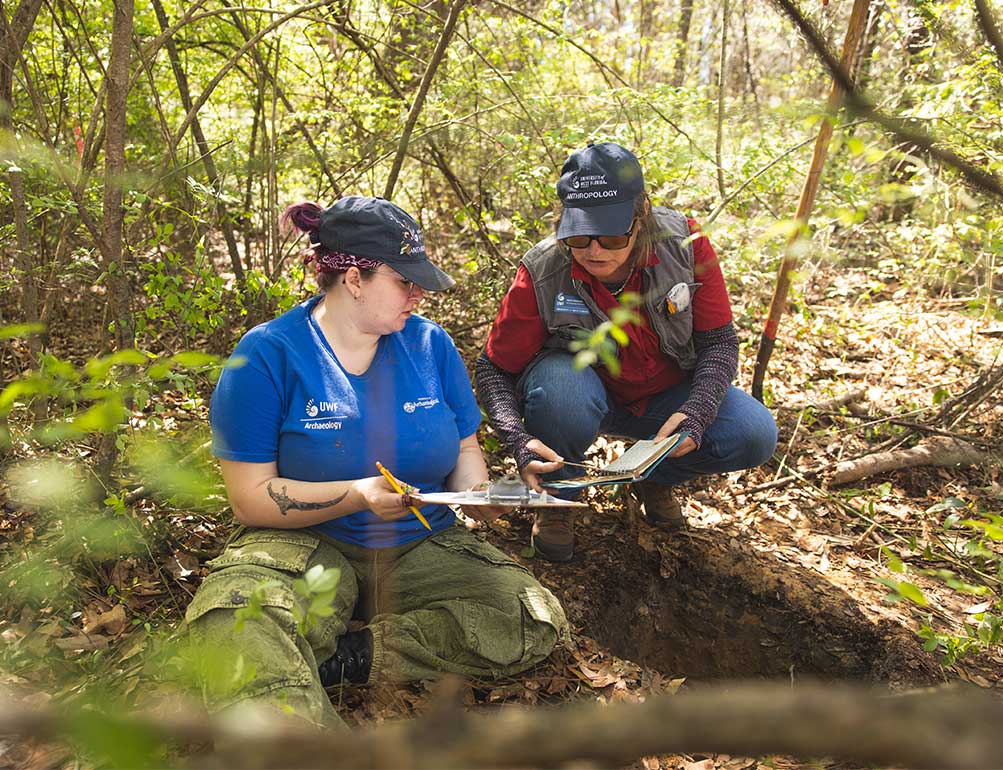
Faculty researchers and archaeology students at the University of West Florida have uncovered artifacts linked to multiple pre-Columbian Native American cultures during a recent archaeological survey on UWF’s Pensacola campus a head of new stadium construction.
The survey, conducted by the UWF Archaeology Institute, relocated a previously documented archaeological site first discovered on campus in 1989. Through systematic shovel test excavations, faculty and students also recovered ceramics associated with at least two pre-Columbian Native American cultures. The oldest artifacts appear to be linked to the Weeden Island culture of the Woodland period, likely dating between A.D. 600 and 900. Additional ceramics date to the middle-to-late Mississippian period, approximately A.D. 1250 to 1600.
“The condition of the site is significant due in part to the long history of development of our campus,” said Ramie Gougeon, director of the Archaeology Institute. “It is not common to find a site this intact. I am particularly excited to learn more about the different activities past peoples engaged in at this location.”
The survey is part of the University’s preparation for infrastructure improvements associated with the construction of the new Darrell Gooden Stadium. The work ensures compliance with state regulations governing ground-disturbing activities on state-owned land and helps protect cultural and historical resources.
Under Florida law, projects involving ground disturbance must be reviewed by the Division of Historical Resources within the Florida Department of State to determine whether archaeological or historic resources could be affected. After reviewing the stadium infrastructure plans, the division determined that an archaeological survey was required before construction could proceed.
“The survey demonstrates UWF’s commitment to responsible development and cultural resource preservation,” Gougeon said. “While our findings and follow-up work affect the timing of some activities, the investigation of this archaeological site will not negatively impact the current stadium infrastructure plans.”
In addition to supporting responsible development, the project provides valuable experiential learning opportunities for students in UWF’s anthropology and archaeology programs. Students participate directly in fieldwork by conducting shovel tests, screening soil for artifacts and documenting findings, gaining hands-on experience in the cultural resource management practices used by professional archaeologists.
“Archaeology is a hands-on profession, so any chance that we can give our students to have additional time working in the field is valuable,” Jennifer Melcher, senior faculty research associate with the UWF Archaeology Institute. “Having projects right here on campus means they can easily join us after classes and add that experience to their resumes.”
UWF archaeologists have been identifying and studying archaeological sites on campus since the late 1980s, uncovering evidence of thousands of years of human activity in the region. The current survey continues that long-standing research tradition while ensuring that cultural resources are properly documented and protected as the University grows.
Additional archaeological survey projects on campus are anticipated to continue throughout the spring.
Comments