

Latest Headlines
- Traffic Light or Restricted U-turn? Residents Voice Opinions On Highway 29, Highway 196 Intersection Safety Options
- ‘Two Major’ Natural Gas Leaks: Century To Spend Nearly $70K To Fix
- West Roberts Road Reopening Extended To Thursday; Overall Project End Pushed To Winter
- MILO, The Mobile ID And Licensing Office, Is Coming To Walnut Hill This Week
- Blue Wahoos Honor Northview Grad Brianna Smith For A Decade As ‘Twirly Girl’
- Escambia Man Sentenced For Selling Machine Gun Conversion Devices On Facebook
- Applications Open For Pine Beetle Assistance And Prevention Program
- EREC: Water Service Restored In Breastworks Road Area
- Man Airlifted Following ATV Crash On Highway 97 In Walnut Hill
- Reminder: Kids Get Free Breakfast And Lunch At 44 Escambia County Schools

Evacuated Naval Station Guantanamo Bay Personnel Head Home From NAS Pensacola
November 17, 2025
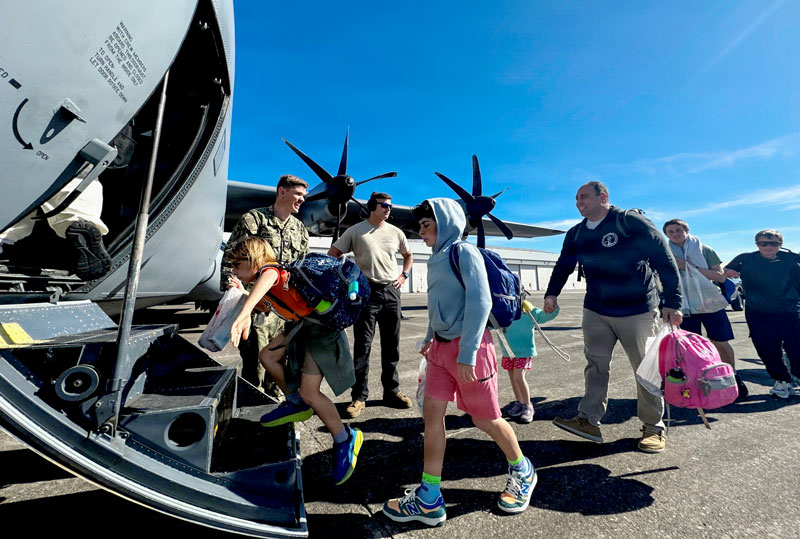
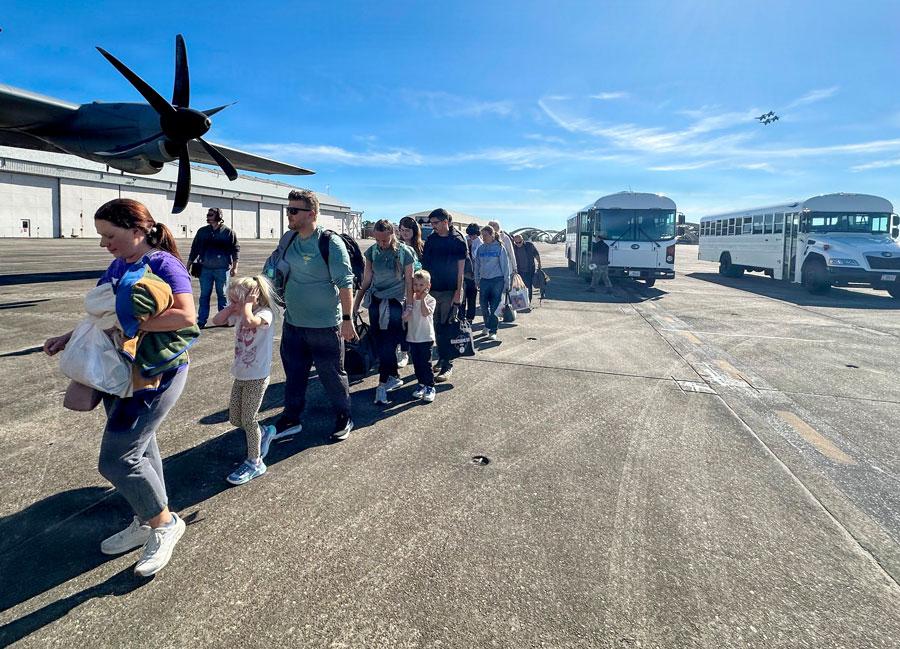
After nearly three weeks at Naval Air Station (NAS) Pensacola during late October’s Hurricane Melissa and the subsequent recovery phase of Naval Station Guantanamo Bay from the storm, non-mission essential personnel temporarily relocated to the air station are returning to Cuba.
The nearly 900 Naval Station Guantanamo Bay non-mission essential personnel temporarily relocated to NAS Pensacola have been residing in installation accommodations and – as eligible beneficiaries – have been able to use air station resources such as the Jet Port Café; Morale, Welfare and Recreation (MWR) facilities and services; and Navy Inn offerings.
“The dedicated and professional team at NAS Pensacola went above and beyond to ensure that these members of our Navy family were afforded every convenience we could provide,” said Capt. Chandra ‘Mamasan’ Newman. “The support of our air station and tenant command service members, civilian employees and other volunteers has been amazing during our increased operational tempo with our Guantanamo Bay guests, and I couldn’t be prouder of this team during what has been a challenging evolution.”
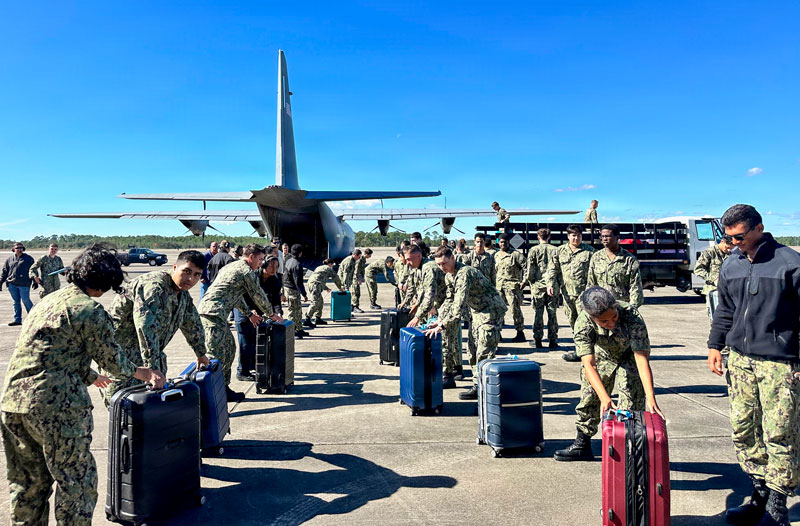 Newman said the activation of the Emergency Family Assistance Center (EFAC), a temporarily activated entity in response to an event causing relocation, was critical to the success of the nearly three-week operation. Controlled by NAS Pensacola’s Fleet and Family Support Center (FFSC), several installation departments and community mutual aid partnerships such as the Pensacola-area American Red Cross and the United Services Organization (USO) were involved in the ongoing evolution.
“Our FFSC personnel have manned the EFAC since we began this almost three weeks ago,” she said. “Their dedication, perseverance and resilience speak volumes of just how engaged and willing NAS Pensacola and our tenant commands are in ensuring we take care of our Navy family.”
Along with NAS Pensacola’s Unaccompanied Housing employees, staff from the Navy Lodge; Navy Inn; the Navy Exchange (NEX); MWR’s Child and Youth Programs; NAS Pensacola Religious Ministries and Public Works and the U.S. Army Pensacola Veterinary Readiness Activity Fort Eisenhower Pensacola Branch were integral parts of the EFAC. Additionally, organizations including the Navy and Marine Corps Relief Society (NMCRS) and USO as well as off-installation organizations such as the American Red Cross played a pivotal role in ensuring eligible beneficiaries were aware of available resources.
Newman added that the community support for Naval Station Guantanamo Bay non-mission essential personnel was overwhelming, referring to the significant donations of pet supplies, suggested outings and community engagements.
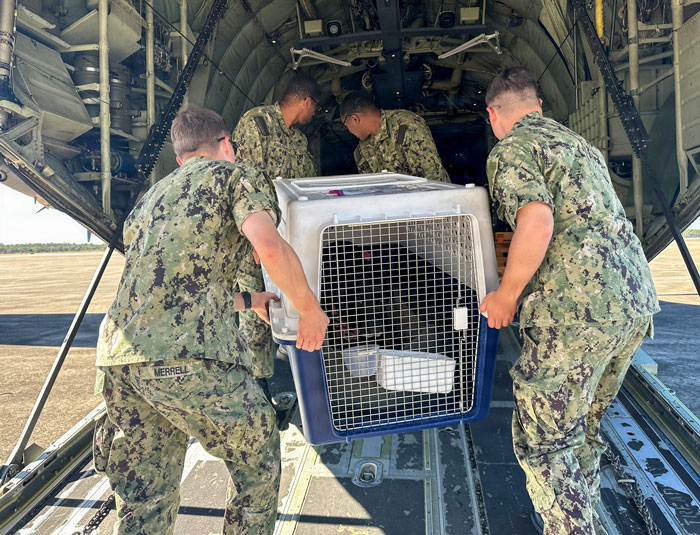 “Being part of a community which has embraced its service members and their families for nearly two centuries is awe-inspiring,” she said. “So many community organizations have reached out to provide assistance, to offer the opportunity to attend events, to just let these individuals displaced during a difficult time know that they care. The City of Pensacola and the surrounding communities are so much a part of our Navy, and we appreciate all they do.”
The non-mission essential personnel movement allowed Naval Station Guantanamo Bay to minimize operations during Hurricane Melissa and expedited recovery operations. An estimated 5,500 personnel and families live and work onboard Naval Station Guantanamo Bay.
NAS Pensacola, the only Navy installation in the Gulf with both a deep-water port and active airfield, previously received non-mission essential personnel during 2016’s Hurricane Michael, and also serves as a safe harbor for numerous U.S. Coast Guard and USNS ships during extreme weather situations.
story by Lt.j.g. Jonathan Pitts and Lt.j.g. Jonathan Merced
Photo by Bruce Cummins for NorthEscambia.com, click to enlarge.
Comments