

Wanted Molino Man Arrested On Multiple Felony Warrants
April 27, 2021

The Escambia County Sheriff’s Office has captured a Molino man wanted on multiple charges.
Hunter Grant Myrick, age 31 or Ayer Street in Molino, was captured Tuesday morning at a residence in the area of Molino Road and booked into the Escambia County Jail without bond.
Last week, NorthEscambia.com reported that the ECSO said he was wanted on two counts of failure to appear, grand theft of a vehicle, two counts of fleeing and eluding, possession of a firearm by a convicted felon, kidnapping and driving while license suspended as a habitual offender.
Myrick was wanted on multiple outstanding warrants when deputies spotted him on April 20, but he fled, according to the ECSO. During the incident, he refused to stop and let a female out of the vehicle, leading to the kidnapping charge, ECSO spokesperson Amber Southard said.
West Florida Library Board Meets In Century In Apparent Sunshine Law Violation
April 27, 2021
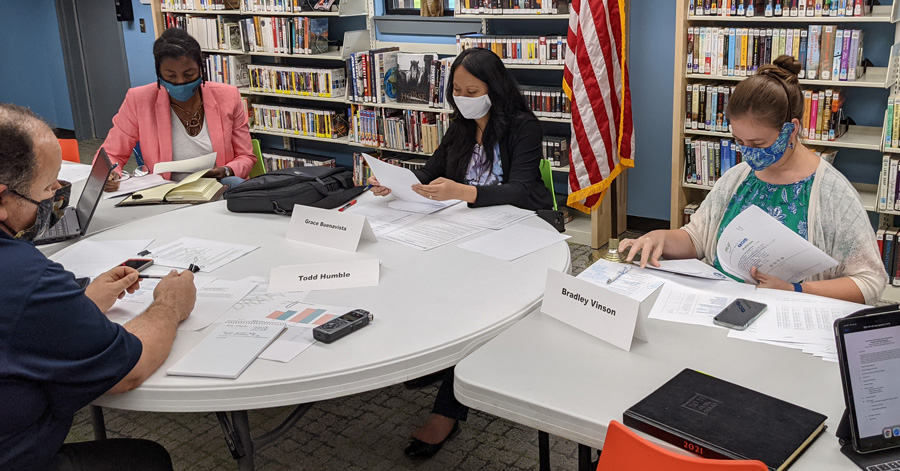
The West Florida Public Libraries (WFPL) Board of Governance held a meeting in Century Monday afternoon in apparent violation of Florida’s Sunshine Laws.
The meeting was held at the Century Branch Library beginning after 4 p.m. Two legal notices for the meeting, published by Escambia County April 17 and April 24 in the Pensacola News Journal, stated the meeting would be held at 4 p.m. on April 26 at 239 North Spring Street — the address of the Main Library downtown. The meeting was not in Escambia County’s website list of public meetings for April, and it was not posted on the West Florida Libraries website, which stated “There are no upcoming events at this time”. An Escambia County news release “BCC Weekly Meeting Schedule April 26 — April 30, 2021″ listed the meeting as being downtown.
County Attorney said Monday night that she will investigate.
Florida’s Sunshine Law requires that adequate public notice be given for public meetings, including time and the correct location.
NorthEscambia.com learned Monday afternoon that the meeting was actually underway in Century.
Shortly after our arrival at the meeting about 5:15 p.m., WFPL Director Todd Humble paused board discussion to recognize that we had arrived, and NorthEscambia.com raised concerns that the meeting was in violation of the Sunshine Law. Board member Robin Reshard told Humble that our comments could wait.
 The board continued discussion about policies and procedures for about 10 more minutes before Humble returned focus to our concerns. He said the correct information was sent to the county, and the county’s Community and Media Relations (CMR) Department had advertised the wrong location.
“We were not trying to hide anything here,” Humble said. “I know the county website thing, that’s 100% on the county because they were given the agenda stuff specifically.”
“I am going to call the person that’s over the CMR office, because this mistake is not acceptable,” he said. He then tried to place calls to someone at CMR and the county attorney’s office, but no one answered.
The board then launched discussion if the meeting would in fact violate the Sunshine Law, as Humble had advised them multiple times that it would due to the improper location in the legal advertisement. In the meantime, an unsuccessful attempt was made to find a copy the PNJ advertisement, and discussion continued among board members about rescheduling the meeting and the location of future meetings.
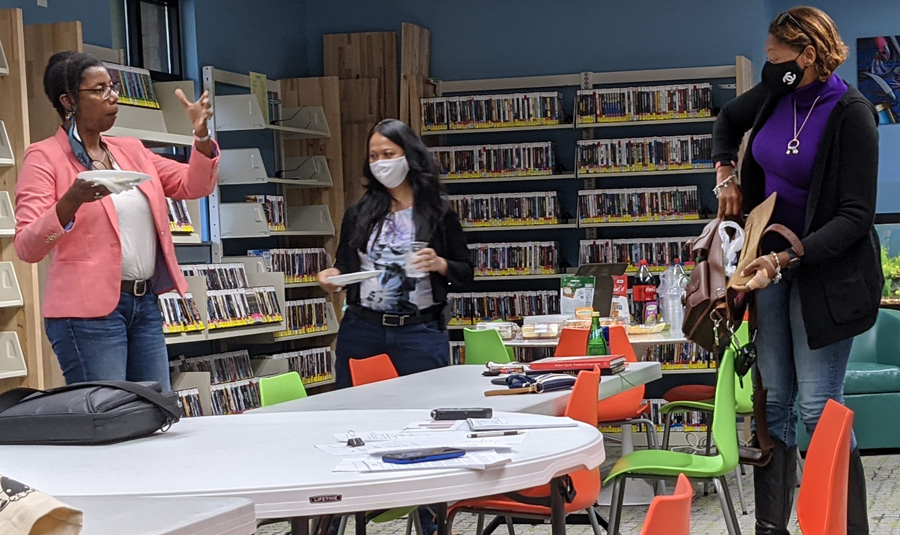 After the board adjourned about 5:45 p.m., board members remained for snacks that had been provided — doughnuts, pretzel chips, guacamole, sodas and other items. Much of the chatter was about roses and other non-library business, but at least two members had a nearly inaudible discussion concerning the board until interrupted by Humble. By about 6 p.m. board members had all cleared the library.
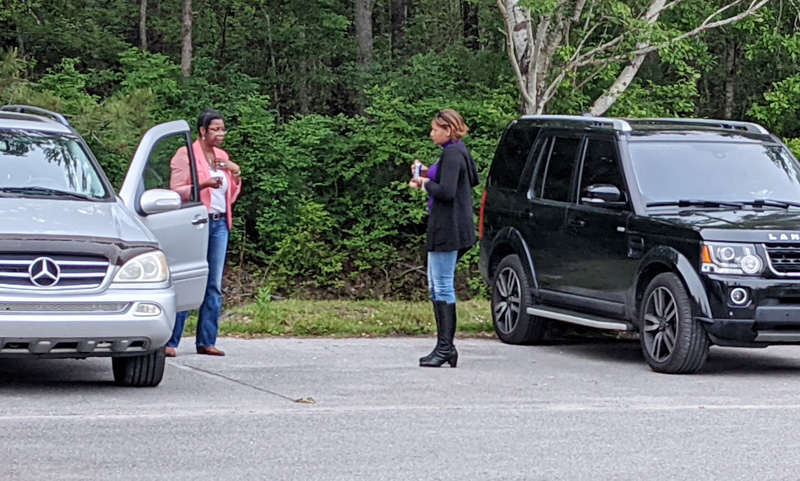
Two members — Bryant and Reshard — were seen still talking in the parking lot after 6:30.
It should be noted that the Sunshine Law does not prevent board members from speaking to each other in ordinary conversation outside a meeting.
“Members of a public board or commission are not prohibited under the Sunshine Law from meeting together socially, provided that matters which may come before the board or commission are not discussed at such gatherings,” the 2021 Florida Government in the Sunshine Manual states.
However, any discussion that might take place between board members during the refreshments, or in the parking lot, would be a violation of Florida law if it concerned library business.
“Accordingly, the law is applicable to any gathering, whether formal or casual, of two or more members of the same board or commission to discuss some matter on which foreseeable action will be taken by the public board or commission,” the Sunshine Manual states.
Other than NorthEscambia.com, no one from the public attended the library board meeting Monday in Century.
Humble said the library board’s next meeting in May would be scheduled for Century and would be properly advertised.
Editor’s note: The West Florida Library System is a function of Escambia County, as is the Century Branch Library. The Town of Century has no control of the Century Branch Library and no member on the five-member library board. Three library board members are appointed by the Escambia County Commission. One is appointed by the Pensacola City Council, and one is appointed by the mayor of Pensacola.
Pictured top: West Florida Public Libraries Director Todd Humble (far left), and Board of Governance members (L-R) Robin Reshard, Grace Buenatista, and Bradley Vinson during a meeting Monday afternoon at the Century Branch Library. Pictured inset: Humble attempts to call someone from Escambia County Community and Media Relations. Board member Dr. Laura Bryant is seen in the background. Pictured below: Reshard and Bryant remained the Century Branch Library parking lot at 6:33 p.m. NorthEscambia.com photos, click to enlarge.
Beulah Middle School Kids Have Named Their (Goat) Kids. Meet…
April 27, 2021

Those absolutely super adorable goats born a couple of weeks ago at Beulah Middle School now have names picked by the students.
Through the school-wide vote using change, $147.94 was raised for the animals and two names were chosen.
Meet Nugget, the black and white cutie pictured on the left, and Hazel pictured on the right.
(For more news about the goats, and we must warn you that it’s very sad and may not be kid friendly, scroll down below the photos.)
Photos for NorthEscambia.com, click to enlarge.

There actually three goats born two weeks ago at Beulah Middle School. Sadly, the third goat did not survive.
Cyber Tip Lead To Search Warrant, Arrest For Child Porn
April 27, 2021
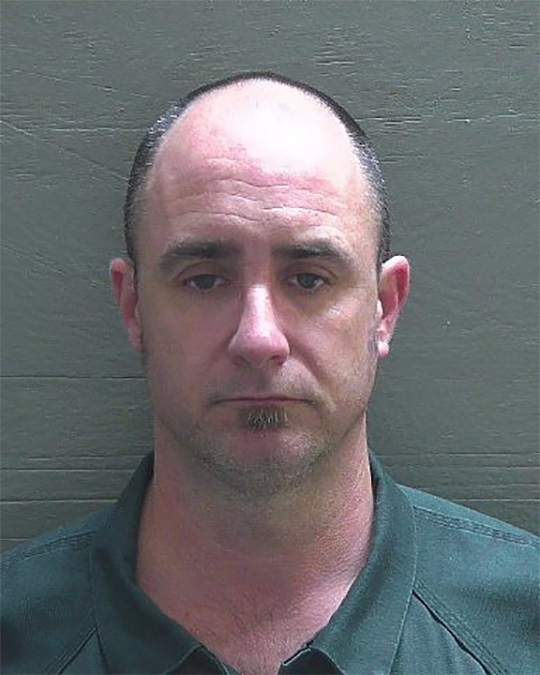
A tip line report led to the arrest of an Escambia County man on child pornography charges.
Fallon Matthew Coburger, age 46 of Ridge Road, was charged with 20 counts of possession of child sexual abuse material.
The Escambia County Sheriff’s Office launched an investigation after receiving a CyberTipline lead from the National Center for Missing and Exploited Children regarding an internet user uploading child sexual abuse material.
The Escambia County Sheriff’s Office Special Victims Unit, SWAT., Crime Scene Unit and ECSO Cadets, with assistance from the Florida Department of Law Enforcement and Homeland Security Investigations served a search warrant in the 700 block of Ridge Road, in the area of East 10 Mile Road and Chemstrand Road.
They found images depicting children as young as four-years old engaged in sexual acts, according to the ECSO. Coburger was arrested by ECSO’s lead investigator, Jeremy Horn.
Coburger remained in the Escambia County Jail with bond set at $300,000.
Two Escambia County, Alabama, Men Charged In Downtown Pensacola Shooting
April 27, 2021
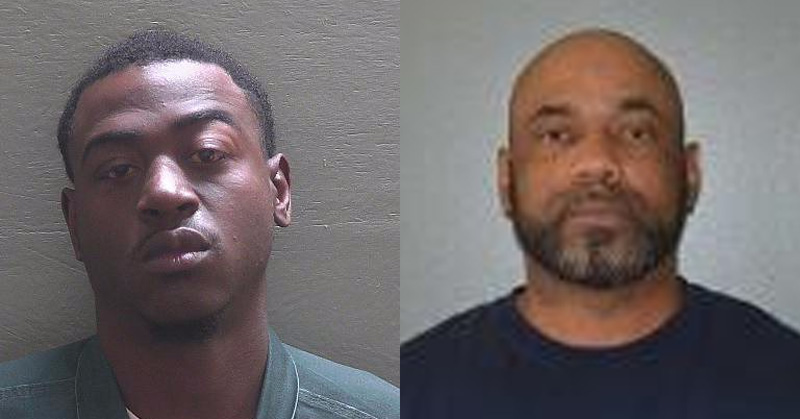
Two Escambia County, Alabama, men have been charged in connection with a shots fired incident about 2 a.m. Saturday in front of a downtown Pensacola restaurant.
Nicholas Devon Hudson, 27, of Atmore was arrested at the scene and charged with discharging a firearm in a public place, carrying a concealed weapon and resisting an officer. He was released from the Escambia County Jail on a $7,000 bond.
Robert Willis McCaskill, 51, of Brewton, fled and was arrested Monday in Escambia County, Alabama, and will be extradited to Escambia County, Florida, to face charges of aggravated assault, discharging a firearm from a vehicle, and criminal mischief.
Pensacola Police said McCaskill was inside his vehicle when he shot at Hudson as he walked in front of the Jordan Valley Restaurant. Hudson returned fire, according to PPD.
The restaurant was hit by the gunfire, damaging the front door. There were no injuries reported.
According to reports, the incident was witnessed by a
Pictured above: Suspects Nicholas Hudson (left) and Robert Willis McCaskill.
Travis Nelson Park In Bratt Remains Open As Parking Lot Is Paved
April 27, 2021

The Travis Nelson Park in Bratt remains open as work is underway to pave the parking lot.
Park visitors can park alongside Bratt Road to access the park during the construction.
Travis Nelson Park is named for fallen U.S. Marine LCpl Travis M. Nelson. The Escambia County park is at the corner of West Highway 4 and Bratt Road, just west of Northview High School
NorthEscambia.com photo, click to enlarge.
Traffic Alert: New Pedestrian Crosswalk, Signal Installed On Ninth Avenue
April 27, 2021
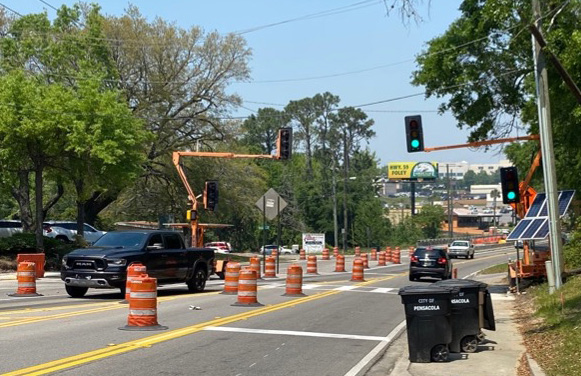
A new pedestrian crosswalk and signal has been installed on Ninth Avenue, just south of Springhill Drive. Pedestrians will be allowed to safely cross Ninth Avenue on the south side of the Carpenters Creek Bridge. Pedestrians can continue to cross Ninth Avenue on the north side of the bridge at Bayou Boulevard.
The travel lanes on Ninth Avenue over the Carpenters Creek Bridge were shifted to the eastern portion of the structure earlier this week. This traffic configuration is expected to be in place until later this year.
Ninth Avenue is the focus of a $4.3 million construction project that is replacing the existing bridge over Carpenters Creek. Construction crews will also resurface the roadway between Royce Street and Bayou Boulevard, along with a portion of Carpenters Creek Drive. The project is estimated for completion in mid-2022.
Fire Destroys Large Home On Chemstrand Road (With Gallery)
April 26, 2021

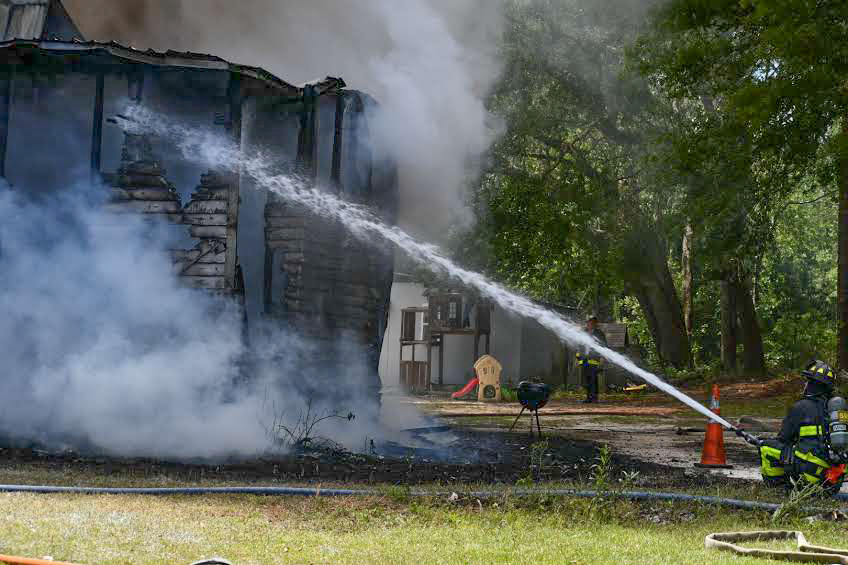
Fire destroyed a large home on Chemstrand Road midday Monday.
The fire was reported shortly before noon in the 1300 block of Chemstrand Road, near the railroad crossing.
The 2,700 square foot home was heavily involved in fire when firefighters arrived on scene. Flames were shooting high into the air on both ends of the 83-year old wood frame home.
There were no injuries reported and no immediate word on the cause of the fire.
For a photo gallery, click here.
#BREAKING – Fire destroyed a home in the 1300 block of Chemstrand Road midday Monday. There was no immediate word of any injuries. Chemstrand Road is currently closed in the 1300 block, around the area of the railroad crossing. pic.twitter.com/h0rOvdlhix
— NorthEscambia.com (@northescambia) April 26, 2021
NorthEscambia.com photos by Kristi Barbour and photos for NorthEscambia.com, click to enlarge.





Escambia County Working To Force People Out Of This Century Home
April 26, 2021
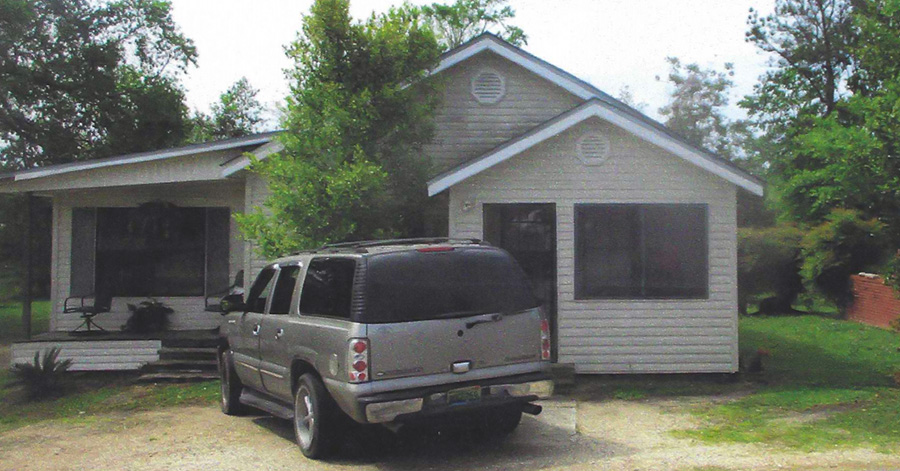
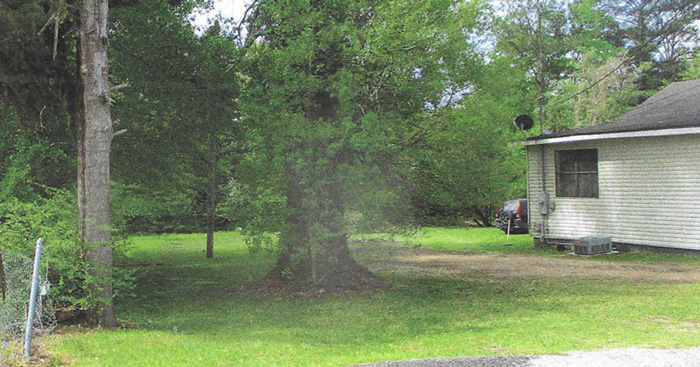
Escambia County working for force people out of a home in Century.
The property a 511 Hecker Road escheated to the county in January, becoming county property after taxes were not paid for seven years.
The total amount owed as of January was $22,516.71, according to Escambia County Tax Collector Scott Lunsford. The taxes were owed by joint property owners Shawanda Newton, Latoya Redmond, Lalita Simpson, Earwin Newton and Amber Redmond, according to the tax deed.
Lunsford said no one ever purchased a tax certificate on the property to give them claim to the property, so it escheated to Escambia County. That zeroed out the taxes due.
According to Escambia County Code Enforcement, unidentified persons have continued to live in the home even though it has been county property for nearly four months.
The Escambia County Commission has now voted to authorize the County Attorney’s Office to take necessary action for the removal of the occupants and any abandoned property or vehicles.
County Attorney Alison Rogers said the process would begin with letters and could eventually move to a court proceeding to eject (similar to evicting) the occupants. Rogers said the county is seldom required to eject people from a home.
Escambia County will likely sell the property at public action once the occupants are removed.
Spring Practice Begins Today For Florida High School Football Teams
April 26, 2021

The Northview Chiefs, Tate Aggies and other teams in Escambia and Santa Rosa counties are gearing up the 2021 football season beginning today.
Monday is the first spring practice date for high school football in Florida.
May 1 is the first day the Florida High School Athletic Association will allow contact at practice.
Last season, the Northview Chiefs lost to the Vernon Yellow Jackets in the 1A regional semifinals.
Pictured: 2020 season action with the Northview Chiefs and Tate Aggies. NorthEscambia.com photos, click to enlarge.