

Justus Shines In Wahoos 5-2 Win Against Shuckers
August 4, 2021

Connor Justus and Brian Navarreto each homered for the Wahoos as Pensacola took Tuesday’s series opener 5-2 at MGM Park.
After trailing 2-0, the Wahoos scored five unanswered, giving Kyle Nicolas (W, 1-0) his first career Double-A win.
Nicolas was excellent in his second start with the Wahoos. He allowed two runs in five innings while striking out six. Biloxi’s only offense came in the bottom of the third when Garrett Mitchell—the Brewers top prospect according to MLB Pipeline—launched a two-run homer to right to put the hosts ahead. Mitchell’s homer was one of only three hits Biloxi’s offense mustered against Nicolas.
Pensacola’s comeback effort began in the top of the fifth. After Demetrius Sims walked, Riley Mahan doubled to left center to put Pensacola on the board. The next batter, Justus, crushed a two-run homer to left field to put the Wahoos ahead 3-2. For Justus, it was his second home run of the season.
In the seventh, Justus walked to begin the inning. After a perfectly executed sac bunt from Galli Cribbs, the Wahoos picked up another run thanks to Peyton Burdick’s second double of the night. Leading 4-2, the Wahoos added one more when Brian Navarreto hit a solo homer of J.T. Hintzen to put Pensacola up 5-2.
The Wahoos bullpen, which had its struggles in the previous series against Mississippi, was magnificent against the Shuckers. Three different relievers pitched four scoreless innings while only allowing four total baserunners.
The series continues tomorrow night with RHP Max Meyer on the mound for Pensacola. He will be opposed by RHP Jesus Castillo.
Multiple Injuries In Crash Involving ECUA Truck Two Other Vehicles
August 3, 2021
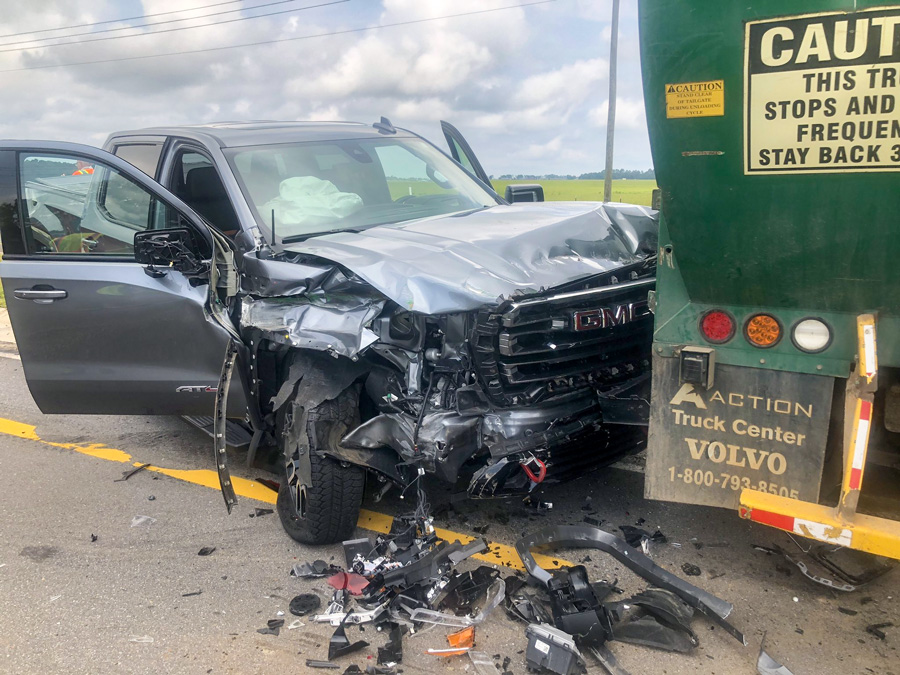
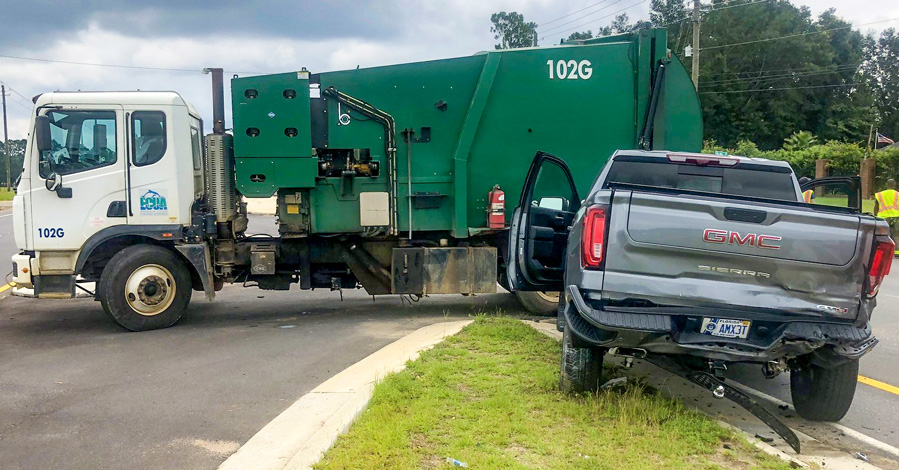
At least four people were reportedly injured in a crash involving three vehicles on Nine Mile Road Tuesday, including an Emerald Coast Utilities Authority sanitation truck.
The crash happened at Nine Mile Road and Bell Ridge Drive in Beulah about 11:30 a.m. and also involved a pickup truck and SUV.
The Florida Highway Patrol is investigating and has not released further details on how the wreck occurred.
Photos courtesy Al Showers/WEAR 3 for NorthEscambia.com, click to enlarge.

Cantonment Man Accused Of Molesting Underage Girl
August 3, 2021
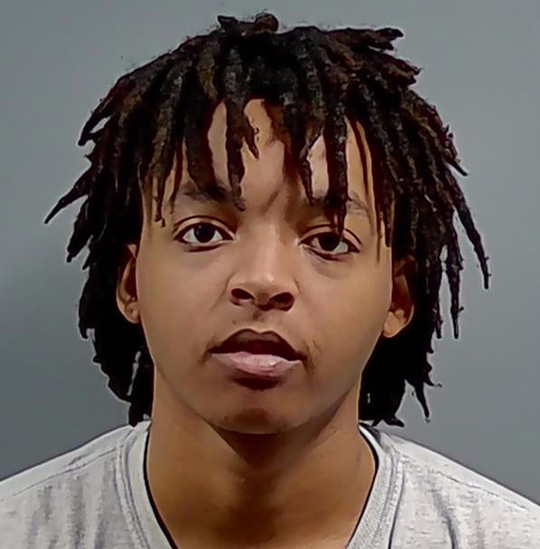
A Cantonment man is facing felony charges for the alleged sexual abuse of an underage female.
Livonn Devon McCorvey, 19, was charged with two counts of sexual battery of a person between 12-18 by a person 18 or older.
The victim recently told investigators that McCorvey had sexually abused her since she was 12-years old, between 2016 and 2021. The victim, now a legal adult, told investigators that she waited so long to disclose the abuse because she was afraid to hurt the family, according to an arrest report.
McCorvey was released from the Escambia County Jail on a $20,000 bond.
Plans Approved For New AT&T Tower In Century; Construction Expected To Take A Few Months
August 3, 2021
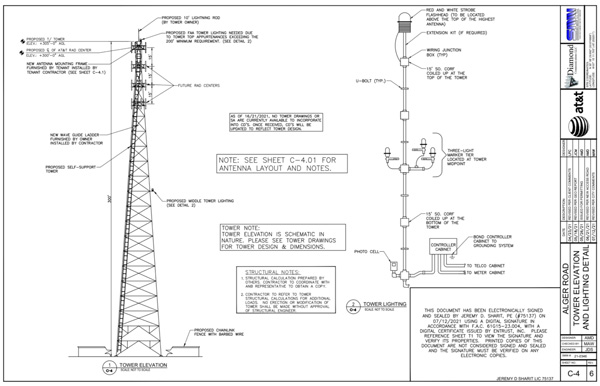
The Town of Century has now signed off on the development plans for a new 305 foot tall cell tower for AT&T.
Earlier this year, the town council approved a five-year lease with options out to 40 years with Diamond Towers for an AT&T tower on a small parcel of land in the town’s Anthony Pleasant Park off West Highway 4. It’s small area tucked away essentially at the back of the park.
Diamond Towers will lease the parcel from the town at $1,000 total for one year with an optional extension for one more year at $1,000. Once a tower is constructed, Diamond’s lease will increase to $1,500 per month for at least five years, with another $500 per month due for additional cellular providers collocated on the tower. There are annual options for slight increases.
Construction on the tower is expected to begin soon, with competition in just a few months. The tower area will be fenced to prevent access by those using the park.
Former Sheriff David Morgan Withdraws From Pensacola Mayor Race Due To ‘Family Medical Issues’
August 3, 2021
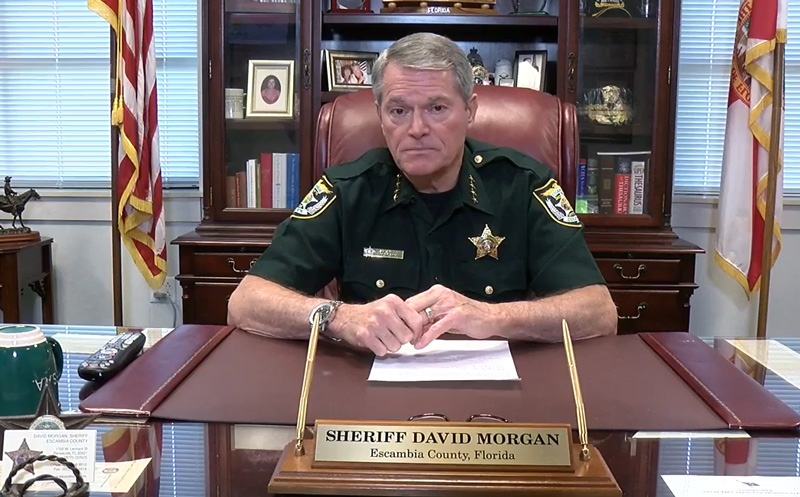
Former Escambia County Sheriff David Morgan is withdrawing from the race for Pensacola mayor in 2022 due to “family medical issues”.
After 12 years as sheriff, Morgan chose not to seek reelection. In April, he prefiled to seek the mayor’s seat now held by Grover Robinson, who will not seek reelection.
By July 31, Morgan reported that he had raised $38,895 for his mayoral campaign.
Here is the full text of an email from Morgan:
Mr. Stafford,
It is with regret that I must inform you, friends, and political supporters of my decision to withdraw from the 2022 Mayoral Race. Family medical issues, which I had prayed would resolve by years end will not.
Those with political experience know that campaigns are high energy and intensive affairs, where candidates and their families must be solely committed to the effort. It is not fair to a candidates supporters, and the process itself, to continue knowing you cannot remain fully engaged.
We of course will be refunding all campaign contributions. Any expenditures to date will be paid by me.
Susan and I thank all of you for your encouragement and support. You will all be forever in our hearts.
Sincerely,
David Morgan
Will Your Child Ride The Bus To School In Escambia County? School District Wants To Know
August 3, 2021
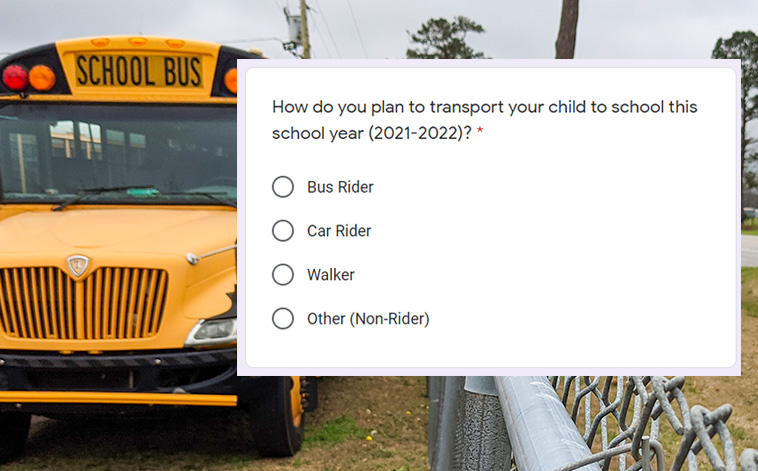
The Escambia County School District has posted a school transportation plans survey due to a bus driver shortage.
“We are asking parents to share students’ transportation plans ahead of the school year in an effort to maximize our efficiency and reduce lateness,” the survey states.
Click or tap here to take the survey.
The school district is asking parents or guardians to complete one survey for each of their children. The survey asks one simple question, along with the student’s ID number and last name.
The first day of school is Wednesday, August 11.
RELATED STORY: Here’s The List Of Adjusted Start And Dismissal Times For Escambia County Schools
NorthEscambia.com photo/graphic.
AG: Two Ensley Assisted Living Caregivers Abandoned Elderly Resident Along Road, Stole ID, Debit Card
August 3, 2021

Two Ensley assisted living facility caregivers are accused of stealing identification and a debit card from an elderly resident before abandoning them on the side of the road on a “particularly hot day” in 2019.
Following an investigation by Florida Attorney General Ashley Moody’s Medicaid Fraud Control Unit, Tavetta Lavetta Jones and Tekera Levine were arrested over the weekend on charges related to abuse and exploitation of a senior.
As employees of Whispering Pines Assisted Living Facility on Jo Jo Road in Ensley, Jones and Levine were supposed to transfer the victim to sign bond paperwork. Instead, Jones and Levine, Jones’s manager, abandoned the victim on the side of a road and took the victim’s identification card and debit card. Jones is charged with exploitation of an elderly person or disabled adult, and criminal use of personal identification information. Levine faces a charge of accessory after the fact.
“The scheme concocted and carried out by these two caregivers is horrifying—the women abused their positions to steal a patient’s ID and debit card, then abandoned the senior victim on the side of the road. Thankfully, following an investigation by my Medicaid Fraud Control Unit, these suspects have been arrested and will face serious charges for this criminal scheme,” AG Moody said.
The state investigation revealed that Jones, an employee of Whispering Pines, abandoned an elderly resident on Antioch Cemetery Road in Walton County on September 3, 2019. The elderly victim identified Jones and Levine as the facility employees who orchestrated the abandonment and identified a black Volkswagen as the vehicle Jones was driving while abandoning the victim. Jones and Levine left the victim without a phone, water, money or identification on a “particularly hot day”, according to the state.
Levine, the manager of Whispering Pines, gave varying accounts about the occurrence of the abuse and Jones’s involvement. Phone records placed both Jones and Levine in Walton County near the time law enforcement responded to a 911 call by residents on Antioch Cemetery Road. Phone records also place Jones in the vicinity of ATMs where the victim’s debit card and personal identification number were used to gain access to the victim’s bank account during August and September 2019. Video footage places a black Volkswagen or similar vehicle at the ATMs during the transactions involving the victim’s debit card and PIN.
The Escambia County Sheriff’s Office arrested Jones on one count of exploitation of an elderly person, a third-degree felony; one count of criminal use of personal identification information of a person over 60 years of age and one count of criminal use of personal identification information over $5,000, both second-degree felonies. If convicted on all counts, Jones faces a possible sentence of up to 35 years in state prison. She was released from the Escambia County Jail on a $5,000 bond.
ECSO arrested Levine on one count of accessory after the fact, a third-degree felony. If convicted, Levine faces a possible sentence of up to five years in state prison. She was also released from jail on a $5,000 bond.
The cases will be prosecuted by Assistant Attorney General Christi Hankins of MFCU through an agreement with Ginger Bowden Madden, State Attorney for the First Judicial Circuit of Florida.
ECFR: Smoke Alarms Did Not Function Properly In Gonzalez Apartment Fire
August 3, 2021
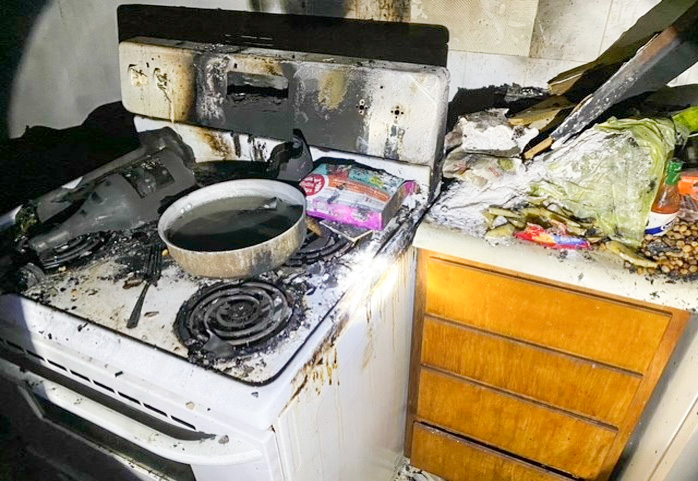
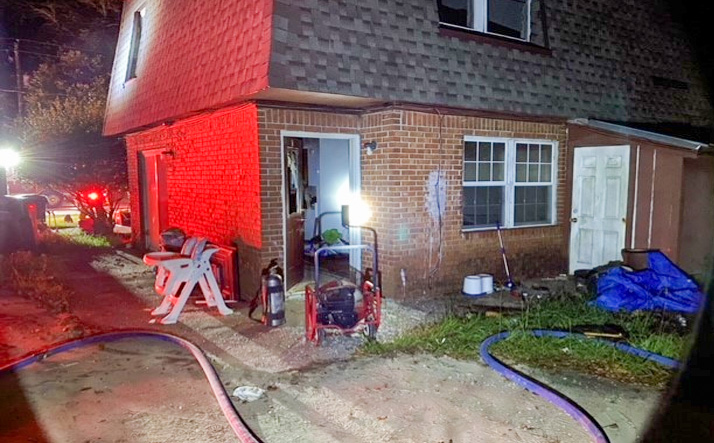
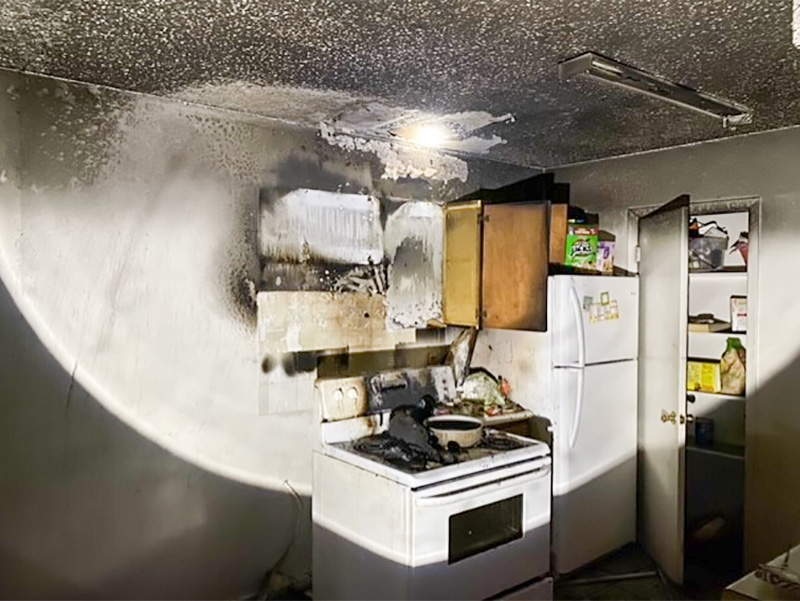
Escambia Fire Rescue said smoke alarms were present but did not function properly in an apartment fire early Saturday morning in Gonzalez.
ECFR responded to the 1100 block of Lake Drive, off Old Chemstrand Road, about 1:40 a.m. There was nothing showing upon their arrival at the triplex, but they found a working kitchen fire in the rear of the building.
Crews brought the fire under control by 1:53 a.m. The kitchen sustained moderate damage. The cause of the fire was classified as a cooking mishap.
The Cantonment, Ensley. Brent, Ferry Pass and Myrtle Grove stations of Escambia Fire Rescue responded. The American Red Cross provided temporary assistance to the displaced residents.
Photos courtesy ECFR for NorthEscambia.com, click to enlarge.
The Bill Is In The Mail? USPS Returns Mail To Sender Six Years Later
August 3, 2021
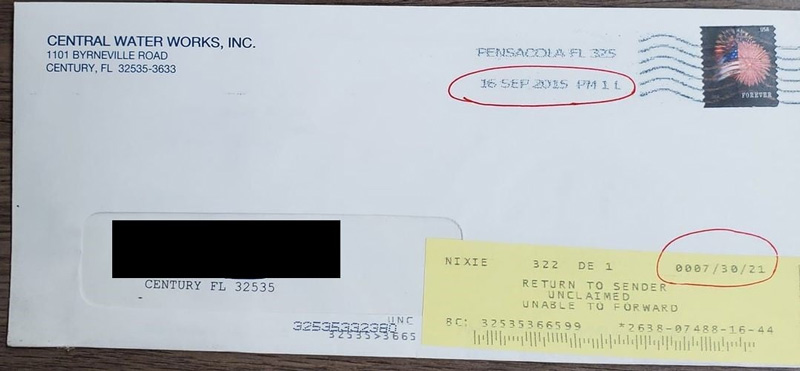
An employee at Century Water Works received a few unexpected surprises in the mail.
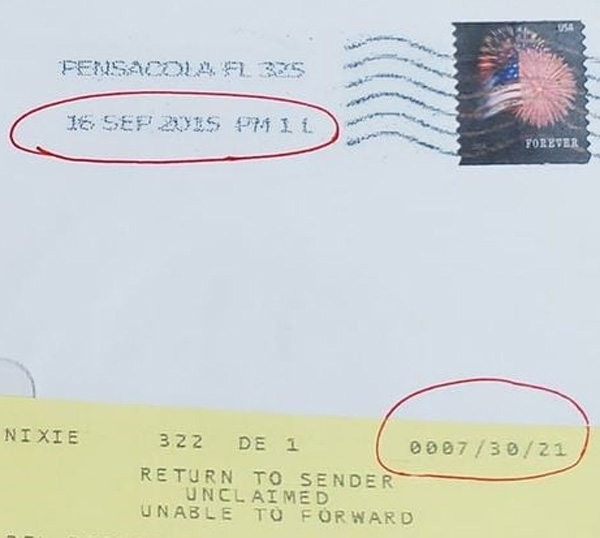
Central Water Works mailed the pictured water bill to a local address on September 16, 2015.
Monday, almost six years later, the bill arrived back at the water company on Byrneville Road with a yellow U.S. Postal Service “Return to sender” sticker dated July 31, 2021.
It was one six pieces of mail addressed by Central Water Works to the same person over a three-month period in 2015 that were all just returned by the post office.
We’ve reached out to the U. S. Postal Service (by email, not postal mail) for any possible explanation, and we’ll let you know what they say.
Photos for NorthEscambia.com, click to enlarge.
Escambia County (AL) High School Coach Dies In Mobile Wreck
August 2, 2021
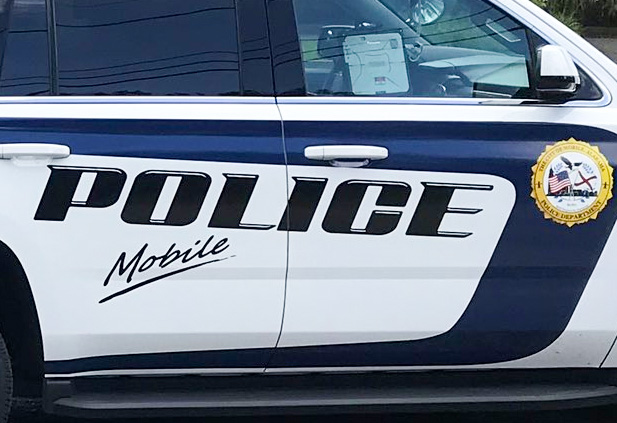
A local high school coach died in a wreck Monday in Mobile.
The Mobile Police Department said 39-year old Kasuan D. Bullard was pronounced deceased at the scene of a traffic crash Monday morning on the Cochran Causeway. Bullard was a football and basketball coach at Escambia County High School in Atmore.
Bullard was attempting to make a U-turn when his vehicle collided with a dump truck, according to Mobile Police.
The driver of truck was transported to a hospital with injuries that were not considered life threatening.