

The Third Wife: Former North Escambia Resident Arrested For Bigamy
October 6, 2014
A former North Escambia resident is accused of bigamy in South Carolina after his second wife in Alabama figured out that he had married a third time.
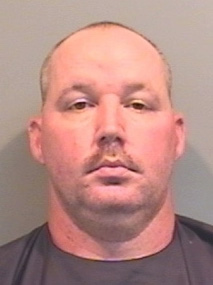 Deputies in Union County, SC, were contacted in September by a woman in East Brewton, AL, that claimed to be the wife of John Henry Shiffner, Jr.
The the woman told South Carolina deputies that she was married to Shiffner and they lived together in Escambia County AL, but that she had never divorced the 39-year old. Investigators determined that Shiffner had in fact married a woman in South Carolina while still married to his second wife in East Brewton.
Investigators found Shiffner married to his first wife in Escambia County, FL, but had divorced her. He then married his second wife in Alabama and then his third wife in South Carolina with the knowledge that he was not divorced from the second wife, according to his Union County, SC, arrest report.
Investigators said, as far they know, Shiffner has no other wives.
Global Corner: Bratt Elementary Students Take Virtual Trip To Kenya
October 6, 2014

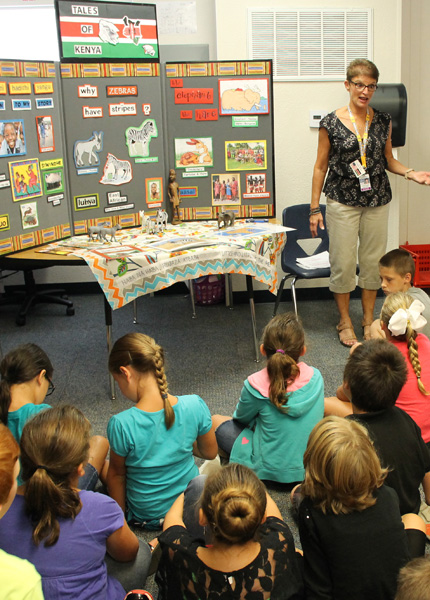 All last week, hundreds of students from Bratt Elementary School took a virtual trip to Kenya, thanks to the Global Corner Learning Center.
The students spent time learning through hands-on activities about the language, arts, culture, geography and more of a unique land half a world away. Each year, The Global Corner teachers take students from their classroom virtually to another country. Through The Global Corner, local students have “visited” Japan, Spain, Egypt, Brazil, Russian, Italy and now Kenya.
The Global Corner “Passport to Kenya” program is scheduled to be at Byrneville Elementary School next week, Molino Park Elementary in November and Jim Allen Elementary in January.
NorthEscambia.com photos, click to enlarge.

Florida Prison Boss Initiates Mental Health Reforms
October 6, 2014
Florida inmates with severe mental illnesses will have an ombudsman to represent them, and prison staff will undergo more training under the latest reforms initiated by Florida Department of Corrections Secretary Michael Crews.
 Crews announced the changes, including the creation of a “mental health ombudsman” position. The ombudsman, the first in the country according to a press release issued by Crews’s office, will serve as a liaison for about 1,000 mentally ill inmates in inpatient units and will report to the department’s director of mental health services, Dean Aufderheide, who made the recommendations.
Up to 20 percent of the 100,000 inmates in Florida prisons have diagnosed mental conditions requiring treatment, Crews said in the release.
“We are committed to ensure our actions are reflective of the department’s mission to promote public safety and the safety of our staff and our inmates by providing them appropriate security, supervision, and care,” he said.
The mental-health care reforms are among a slew of initiatives launched by Crews in the wake of reports earlier this year by The Miami Herald about inmate deaths. Darren Rainey, a mentally ill inmate at Dade Correctional Institution, died in 2012 after guards allegedly forced him to stand under scalding water for hours.
On Friday, Crews also announced that the department has expanded crisis-intervention training for correctional officers to help them better understand and cope with mentally ill inmates. More than 2,700 officers have received the training so far, according to Crews.
by The News Service of Florida
Molino Program To Share Secrets Of Escambia County Ghosts
October 6, 2014
You can learn which famous downtown Pensacola building has ghosts with English accents, whose DJ booth was once a pulpit and the locations of other ghostly apparitions in Escambia County during a special “Pensacola Ghost Stories” program Tuesday night in Molino.
Pattie Krakowski, owner of Pensacola History and Hauntings, will share the results of her own local paranormal investigations during the 6 p.m. at the Molino Branch Library.
Ernest Ward Cross Country Takes On TRM Challenge (With Gallery)
October 6, 2014

The Ernest Ward Middle School Cross County team joined about 400 other runners Saturday morning at the T.R. Miller Cross Country Challenge in Brewton.
Top finishers for Ernest Ward were:
Girls
- Payton Jackson 17:01
- Addison Albritton 17:11
- Hayley Black 18:19
- Anna Sullivan 18:32
- Lexxi Baggett 19:21
Boys
- Brandon Sheldt 14:58
- Bryce Korinchak 16:43
- Keaton Brown 19:25
- Shane Hardin 19:48
- Alexander Floyd 19:58
Photos by Charity Sheldt for NorthEscambia.com, click to enlarge.

Man Dies After Being Hit By Santa Rosa Deputy’s Vehicle In Century
October 5, 2014

[Updated 8:15 a.m.] A Century man died early Sunday morning after being struck by a deputy’s vehicle in Century.
According to the Florida Highway Patrol, Santa Rosa County Sheriff’s Deputy James L. Miller, 38, was traveling eastbound on East Highway 4 near Freedom Road in Century. He was driving a marked patrol car that was in emergency mode when the left front of his vehicle collided with an eastbound bicyclist in the center of the roadway “for unknown reasons”, according to the FHP.
The bicyclist, 26-year old Paul Martin Upton, was transported as a trauma alert by Escambia County EMS to the McDavid Station of Escambia Fire Rescue and transferred to LifeFlight. Due to the patient’s condition, he was then airlifted to Jay Hospital where he was later pronounced deceased.
Miller’s injuries were minor; he was not transported to the hospital.
Miller was responding to an emergency call in Jay at the time of the crash, troopers said. Any charges in the crash will depend on the outcome of an ongoing Florida Highway Patrol traffic homicide investigation.
No information has been released as to why the Santa Rosa County deputy was in Escambia County prior to the crash. According to Deputy Rich Aloy, spokesperson for the Santa Rosa County Sheriff’s Office, his department is unable to provide any information on the accident because the FHP is the lead investigative agency.
Any additional details will be posted as they become available.
NorthEscambia.com file photo.
Thousands Flock To Jay Peanut Festival (With Photo Gallery)
October 5, 2014

The weather was perfect Saturday as tens of thousands of people attended the first day of the Jay Peanut Festival at Brenda Gabbert’s 56-acre farm near Jay.
“I describe it to people as being like an old-fashioned county fair, without the carnival rides,” said Gabbert, who has coordinated the festival with her husband, Gene, for 25 years.
“It’s all about farming and rural life. That’s what we try to show people,” she said. “It’s good for the whole family. There is something for everybody. We really cater to the kids.”
About 70,000 people are expected to have attended the festival by the time it closed Sunday evening.
For a photo gallery, click here.
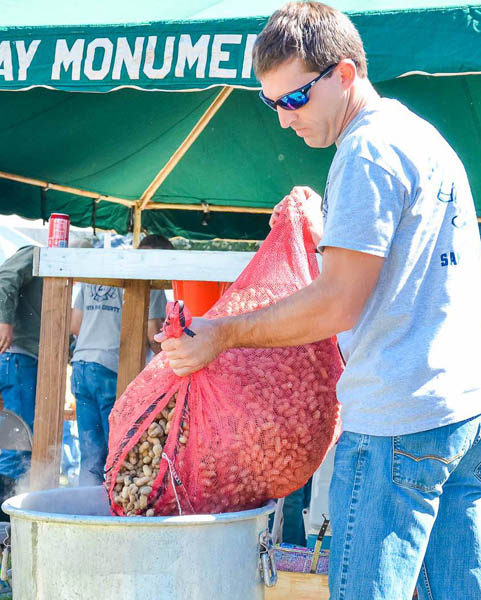 The festival site is a functioning farm, with 40 acres of peanuts – which is managed by a farmer who leases it from the Gabberts – and 16 acres that includes the couple’s home and a field of hay.
Their property also includes two museums – a farming museum and replica of a 1940s style John Deere dealership – as well as a fleet of restored classic tractors. All of that is incorporated into the festival.
“My husband has all of these tractors he’s restored himself,” Gabbert said. “We let other people bring their stuff if they want to show it.”
At the festival, the Jay Volunteer Fire Department has exclusive domain over the sale of boiled peanuts. The department uses the money raised to help supplement its modest public funding. Other vendors will offer green peanuts – the kind patrons take home to boil for themselves – roasted peanuts, fried peanuts, peanut brittle, baked goods with peanuts and many of the other forms the protein-packed snack can take.
The festival offers pony and horse rides, stage coach rides, hay rides, a rock climbing wall, a bungee jump, a mechanical bull, train rides and inflatable attractions.
Admission and parking at the festival are free, a point of pride for Gabbert. The festival is funded solely through vendor fees.
“We get letters from people who tell us this is the only thing they can afford to come to,” she said. “They have kids and they don’t have the money to go to things that have admission. They can come here and not spend a penny if they don’t want to.”
The Jay Peanut Festival dates to 1990 when the Gabberts started the event in memory of their daughter, Melissa, a 19-year-old who died earlier that year from cancer.
For a photo gallery, click here.
Pictured: Saturday at the Jay Peanut Festival. Photos by Nikki Golden Photography for NorthEscambia.com, click to enlarge.


Hospice Volunteers Needed; Free Training Available
October 5, 2014
There is a shortage of hospice volunteers in the North Escambia area. Covenant Hospice will hold a new volunteer workshop at the Century Chamber of Commerce on Saturday, October 11.
Covenant Hospital volunteers help with:
- patient and family support
- honoring veterans
- children’s programs
- faith- based initiatives
- teen volunteers
- ambassadors
- fundraising and special events
- community events
- bereavement services
- Alzheimer’s family services
- administrative projects
The training will take place from 9 a.m. until 5 p.m. Saturday at the chamber office, 7811 North Century Boulevard. RSVP to Sharon Oakes at (850) 380-0356.
Bonus Photos: Northview Homecoming Court
October 5, 2014

Kamryn Brock was name the 2014 Northview High School Homecoming Queen Friday night. Other members of her court were First Runner-up Kendall Cobb, Second Runner-up Jessica McCollough, Freshman Maid Hannah Mascaro, Junior Maid Jadlyn Agerton and Sophomore Maid Morgan Myrick.
For a bonus photo gallery with every court member, click here.
Pictured top: Senior Kamryn Brock reacts to the announcement that she has been name Homecoming Queen. Pictured below: (L-R): Freshman Maid Hannah Mascaro, Junior Maid Jadlyn Agerton, First Runner-up Kendall Cobb, 2014 Queen Kamryn Brock, 2013 Queen Anna Fischer, Second Runner-up Jessica McCollough, and Sophomore Maid Morgan Myrick. NorthEscambia.com photos, click to enlarge.

FWC Law Enforcement Report
October 5, 2014
The Florida FWC Division of Law Enforcement reported the following activity during the weekly period ending October 2.
ESCAMBIA COUNTY
While working on the Pensacola Fishing Pier, Officer Manning observed an individual catch approximately eight spotted sea trout. Officer Manning approached the individual and identified himself. After inspecting the individual’s catch, Officer Manning found that he was in possession of 12 spotted sea trout, eight of which were undersized. Officer Manning issued the individual notice to appear citations for the violations.
 The next night, Officer Manning worked the Pensacola Fishing Pier again. At one point, he was approached by an individual and asked if he wanted to purchase a red drum. Officer Manning declined the offer. The individual approached several more fishermen asking them if they wanted to buy some fish. Officer Manning eventually observed the individual sell one red drum for $20. Officer Manning approached the individual who bought the fish and identified himself. The individual confirmed that he bought the fish for $20. Officer Manning seized the fish and approached the individual who sold it. Officer Manning discovered he was in possession of two more red drum. Officer Manning issued a notice to appear citation to the individual for selling saltwater products without a license, over the bag limit of red drum, and possession of alcohol by a person under 21 years old.
Investigator Goley received information on the location of a possible stolen vessel. He responded to the address and spoke to the current owner of the vessel. With the assistance of the current owner, Investigator Goley was able to find a hidden hull identification number (HIN) behind the rub rail. After running the HIN, Investigator Goley determined that the vessel was stolen approximately ten years ago. Since that time, the vessel has been sold several times. Investigator Goley contacted the insurance company, the rightful owner, and seized the vessel.
This report represents some events the FWC handled over the past week;however, it does not include all actions taken by the Division of Law Enforcement. Information provided by FWC.