

Deadline Approaching To Enter Northview Homecoming Parade
September 30, 2015
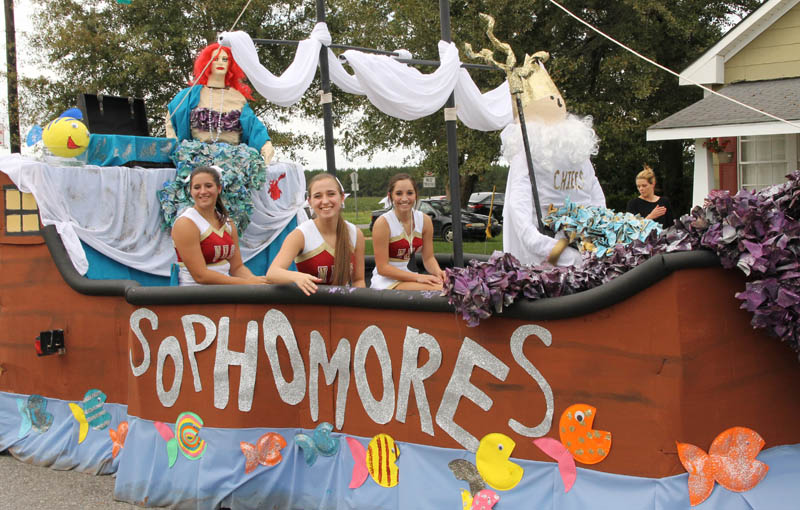
Friday is the deadline to enter the annual Northview High School Homecoming Parade. The parade has been set for Friday, October 9.
The parade will line up at noon and travel from Bratt Elementary School to Northview High. Entries are being accepted now; there is no cost to enter. For a printable entry form, click here. Entries are due by October 2.
Contact Perry Byars at (850) 327-6681 ext. 248 for more information.
The Northview Chief’s homecoming game will kickoff at 7 p.m. on October 9 against Liberty County.
Pictured: A float in the 2014 Northview High Homecoming Parade in Bratt. NorthEscambia.com file photo, click to enlarge.
One Injured In Kingsfield Wreck Near Tate High
September 29, 2015

One person was transported to an area hospital after hitting a brick fence near Tate High School Monday night.
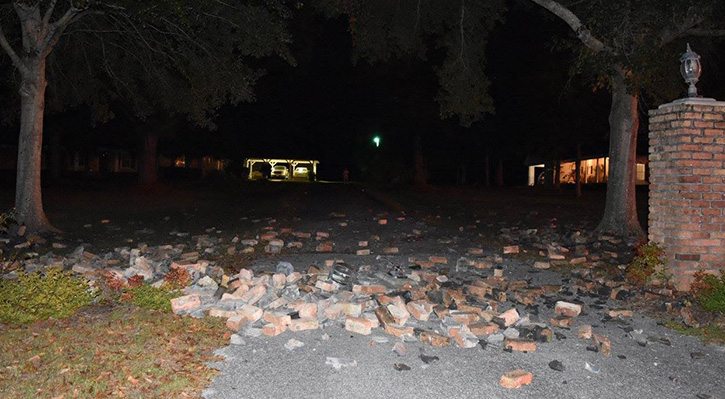
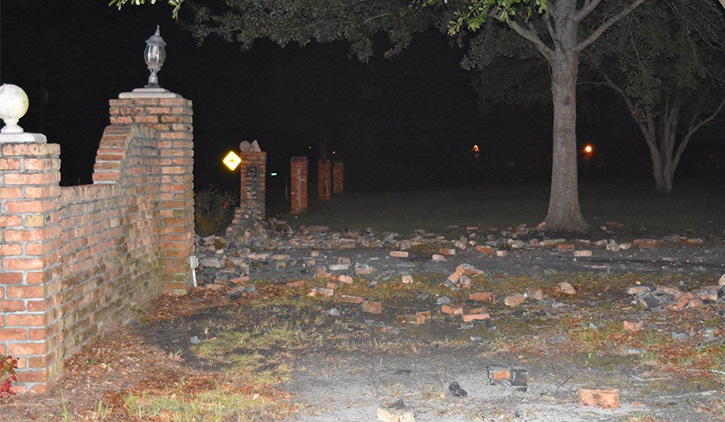
Just before 9 p.m., the drivet of a pickup left East Kingsfield Road just past the entrance to Tate High. He then reportedly drove through a fence, traveled around through a residential yard and then collided with a brick fence post that stopped his pickup truck.
The pickup driver was transported by Escambia County EMS to an area hospital for treatment of non-life threatening injuries.
The accident is under investigation by the Florida Highway Patrol.
NorthEscambia.com photos by Kristi Price, click to enlarge.

Escambia Man Arrested For Soliciting Minor
September 29, 2015
An Escambia County man has been arrested after arranging what he thought was a meeting with a teen for sex.
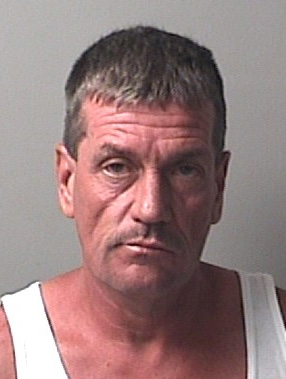 The Florida Department of Law Enforcement, along with agents from the United States Immigration and Customs Enforcement Homeland Security Investigations, and detectives from the Pensacola Police Department arrested Dennis Kevin Marks, 53, on three counts of online solicitation of a child, one count of traveling to meet a minor for sex, and one count of unlawful use of a two-way communications device.
Marks was arrested after traveling to meet an undercover FDLE special agent who he believed was a 14-year-old juvenile for sex. Marks had been communicating with the undercover agent by email and text messages since mid-August.
Marks was booked into the Escambia County Jail on $45,000 bond.
Florida Lawmakers Continue To Get Wealthier
September 29, 2015
Being in the state’s “part-time” Legislature might tax members’ time, but for most it hasn’t caused financial heartaches.
With all 160 annual financial-disclosure reports from House and Senate members now available — the reports were due July 1, the last outstanding report was posted online Friday — the average net worth of sitting senators stands at $3.8 million, while House members on average are worth $1.43 million.
 For state lawmakers who are paid roughly $30,000 a year plus expenses, the net-worth averages, according to self-reported numbers, grew by $212,650 in the Senate from 2013 to 2014 and by $56,260 in the House during the same period. The newly filed reports typically reflect the finances of lawmakers as of Dec. 31.
Over the past four years, the averages are up nearly $750,000 in the Senate and just over $366,000 in the House, which has had greater turnover.
Republicans, who comprise the majority in both chambers, are doing better financially on average than their Democratic counterparts.
Senate Republicans are worth $4.5 million on average, compared to $2.6 million for Democratic members. House Republicans average $1.7 million, while House Democrats average $837,454.
Individual net worths range in the Senate from $26.99 million for Sen. Don Gaetz, a Niceville Republican who co-founded VITAS Healthcare Corp, to $14,042 for Sen. Audrey Gibson, D-Jacksonville.
Sen. Geraldine Thompson, D-Orlando, holds the distinction of being at the median for net worth among senators at $828,099.
Sen. Wilton Simpson, R-Trilby, has reported the largest individual growth of net worth over the past four years. Simpson, whose business interests include Simpson Environmental Services, Inc., reported a net worth of $12.3 million in 2011. For 2014, Simpson reported his net worth stood at $21.2 million.
In the House, the highs and lows range from the $17.36 million reported by Miami Republican Michael Bileca to a negative $354,165 posted by Rep. Victor Torres, D-Orlando. Torres, a retired New York City Transit Police detective who was $28,017 in the red in 2013 added a $278,440 residential mortgage to his portfolio in 2014.
Bileca a co-founder of the Towncare Dental Partnership firm located throughout Central and South Florida, has also reported one of the largest hikes in net worth over the past four years among House members.
Bileca reported a net worth of $3.855 million in 2011. His current totals include $2.56 million in 2014 income from Atg Development, a Miami limited liability firm — one of the companies for which he has been listed as a registered agent.
The $480,000 net worth reported by freshman Rep. Mike Miller, R-Winter Park, represents the median of the House.
Not everyone has seen their net worths grow in recent years.
Over the past four years, five senators have reported decreases in their net worth — Republicans Tom Lee and Denise Grimsley and Democrats Gibson, Gwen Margolis and Jeremy Ring.
Ring, former executive at Yahoo worth $13.7 million, had the largest drop over the past four years, $1.3 million.
In the House, 20 members — nine Democrats and 11 Republicans — have reported losses of net worth over the past four years.
The largest drop in the House was reported by Ocala Republican Dennis Baxley, who has seen his net worth diminish nearly $2 million, to $3.58 million, over the four year period.
For a number of those who have reported drops in net worth, the primary cause involved taking out loans to buy real estate.
Northview Students Receive Ronald Reagan Student Leader Awards
September 29, 2015
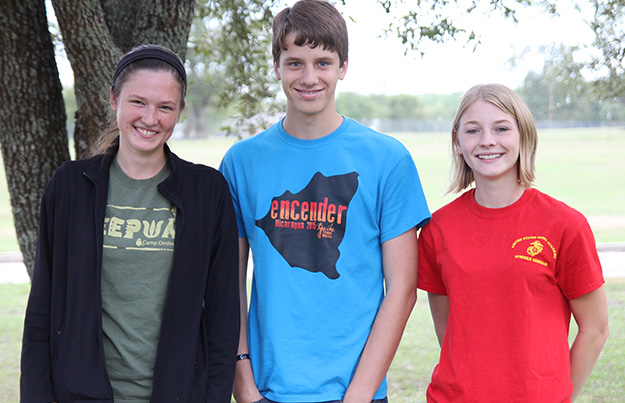
Northview students (L-R) Jessica Amerson, David Weber and Moriah McGahan have been registered as recipients for the Ronald Reagan Student Leader Award by Principal Gayle Weaver, as part of an effort to inspire the next generation of outstanding leaders. These students will share their experiences with other recipients throughout the nation in a national online database. Photo for NorthEscambia.com, click to enlarge.
Molino Park Holds 5th Grade Grandparents Breakfast
September 29, 2015
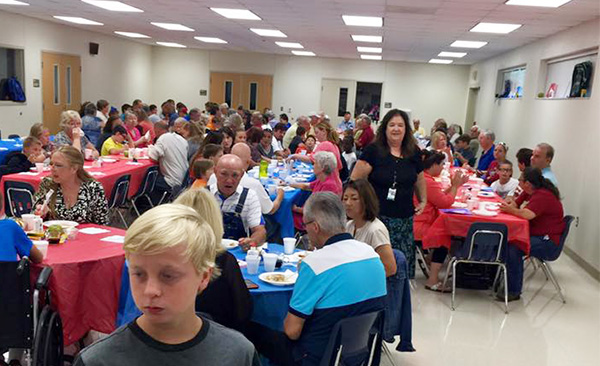
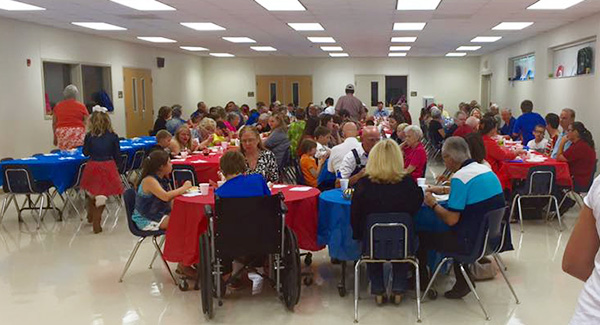
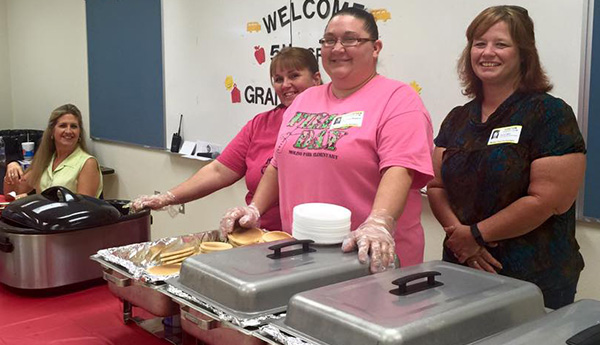
The Molino Park Elementary School PTA held their 5th Grade Grandparents Breakfast recently.
The school holds a grandparents breakfast during year for each grade level, even taking a photo of each student with the grandparent for the yearbook.
Photos by Amanda Manning for NorthEscambia.com, click to enlarge.

Northview Grad Ross Named SoCon Special Teams Player Of Week
September 29, 2015
Northview High School graduate Brian Ross of Century has been named the Southern Conference Special Teams Player of the Week for his performance in the Furman University Paladins’ 24-21 SoCon season opening victory over VMI on Saturday.
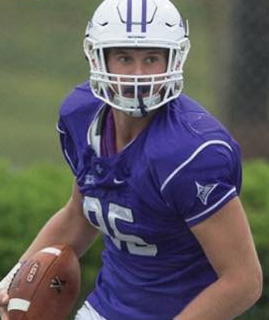 With Furman trailing 14-7 at halftime, Ross, a 6-foot-5, 235-pound junior, set the tone for the Paladins in the second half by blocking a VMI punt, which he scooped up and rambled five yards into the end zone to help Furman tie the game en route to the win.
In addition to his decisive special teams play, the defensive end registered a pair of tackles, including a sack for a six-yard loss, and forced fumble. His second tackle of the game also proved key, as the diving stop came on a fourth down play at the Furman 45 with 3:49 remaining, forcing the Keydets the turn the ball over on downs and effectively sealing the game’s outcome.
Winners of its last two games, Furman (2-2) plays host to South Carolina State this Saturday at Paladin Stadium in a 7:00 ESPN3 broadcast contest.
Ross is a 2012 graduate of Northview High School where he played defensive end and tight end. He totaled 54 tackles, 7.5 sacks, and two blocked punts as a senior in helping Northview to a 7-4 record, district, and regional championships. He was named first team all-area and all-district and second team all-state. He was also recipient of the Chiefs’ Challenger Award. Ross also played baseball for the Chiefs.
Ross is a earth and environmental science major at Furman University in Greenville, SC.
Traffic Watch: Creighton Road Bridge Work Begins Wednesday
September 29, 2015
Construction activities will begin Wednesday on a bridge repair and rehabilitation project on Creighton Road over I-110 in Pensacola. Drivers will encounter intermittent lane restrictions on I-110 at Creighton Road, however, there will be no southbound lane closures from 6:30 a.m. to 8:30 a.m. The project is anticipated to be complete within two weeks.
All activities are weather dependent and may be delayed or rescheduled in the event of inclement weather. Motorists are reminded to travel with care through the work zone and to watch for equipment and workers entering and exiting the roadways, according to the Florida Department of Transportation.
Scott Takes On ‘Price Gouging’ At Hospitals; Wants Costs Posted Online
September 29, 2015
Gov. Rick Scott on Monday said he will push a series of proposals targeting “price gouging” in the hospital industry, including a proposal that would require hospitals to post online the prices and average payments for services they provide.
The proposals, which Scott said he will ask the Legislature to approve, are the latest in a series of moves by the governor — who made millions of dollars as a hospital-company CEO — to try to revamp the industry.
 “The high cost of health care continues to hurt some of our most vulnerable families in Florida, and the best way to guard against unfairly high hospital costs being passed on to patients is to require hospitals to be fully transparent with their own costs and patient charges,” Scott said in a news release.
But Bruce Rueben, president of the Florida Hospital Association, said his group is working on proposed legislation that could help increase transparency in the health-care industry. Rueben said he was disappointed in Scott’s statements Monday and said the governor never talked with the association before releasing the proposals.
“It doesn’t help the discourse to make mean-spirited accusations that are completely unfounded,” Rueben said.
Rueben said “we all want to see” health care become less expensive and added it is understandable that people are concerned about a wide disparity of charges for services. But he took issue with Scott’s characterization of price gouging.
“The fact is, there’s a big difference between high prices and so-called price gouging,” Rueben said.
Scott in recent months has repeatedly taken aim at costs and regulations in the hospital industry. In part, he created the Commission on Healthcare and Hospital Funding, which has held hearings across the state to delve into the operations of hospitals. Scott’s news release Monday came as members of the commission met in Tampa.
The Scott administration this summer also requested information from hospitals about Medicaid managed-care contracts with health insurers and said it would audit hospitals that didn’t adequately comply with the request. In addition, Scott has raised the possibility of eliminating what is known as the “certificate of need” process for hospitals. That longstanding regulatory process requires state approval of new or expanded hospitals.
The proposals outlined Monday include requiring all hospitals to post on their websites the prices and average payments received for products and services that they offer. Also, Scott called for patients to be able to pursue complaints of hospital “price gouging” with law-enforcement and regulatory agencies. Another move would require non-profit hospitals to post on their websites Internal Revenue Service documents that include detailed financial information.
“With our proposed reforms, patients who believe their hospital bills are unconscionably high will have the ability to ask for a third-party review of their charges,” Scott said. “We must address the high costs hospitals pass on to patients if we are going to make health care more affordable and accessible in Florida.”
Out Of State Lawyer Proposal Not Likely To Fly In Florida
September 29, 2015
A proposal that would let out-of-state lawyers get licensed in Florida without taking the state’s Bar exam is likely dead, but that didn’t stop opponents from piling on during a Florida Bar meeting.
Reaction to the “admission by motion” proposal at the forum echoed the overwhelmingly negative response to the recommendation since it was first floated by the Bar’s Multi-jurisdictional Practice-State Focus Committee earlier this summer.
 Also known as “reciprocity,” the proposal has spawned fear among lawyers in small or individual practices and divided the legal community. Not a single legal association in the state has supported it.
The plan is “ill-conceived and little more than an attempt to allow large firms to flood wherever they wish with lawyers,” said Charles Morehead, a Fort Lauderdale lawyer and president-elect of the Broward County Bar Association.
Several lawyers also complained about the $96,000 the Bar paid a public relations firm this summer, accusing the Bar of spending lawyers’ dues to push an agenda many don’t agree with.
Jay Cohen, a member of the Florida Bar’s Board of Governors who also opposes admission by motion, sat alone on a dais as the Bar’s designee for the forum. More than two dozen lawyers, nearly all of them opposed, railed against the plan.
About a dozen Bar governors sat in the audience, but missing from the session was Florida Bar President Ray Abadin. Abadin has remained publicly neutral on the plan but who has been pilloried by some for even pushing forward a debate on the issue, which arose as part of the Bar’s “Vision 2016″ program launched three years ago.
“I do wish Mr. Abadin was here,” Morehead told Cohen. “I’m sorry you have to take the bullet for him.”
About 40 other states allow some sort of entrance for lawyers without taking the exam, and to Abadin, reciprocity could be a way to modernize the legal profession in an increasingly mobile age.
“It’s clearly unnerving a lot of lawyers because it is now creating a dialogue over what we do and where we fit in the social scheme. As lawyers we have had the luxury of being the only game in town for a long time,” Abadin told The News Service of Florida in an interview. “Technology and modernization of knowledge management has changed that paradigm.”
Palm Beach Gardens lawyer Lloyd Schwed launched the campaign against the proposal and sent dozens of emails to thousands of lawyers urging them to speak out against it.
“I’m not the greatest lawyer in the world, but I find it very powerful that a man who has spent 43 years practicing law here, Florida Supreme Court Justice Fred Lewis, just last week was asked about this and he said, ‘I think it’s absolutely he worst thing that could happen to the citizens of Florida,’” Schwed said.
Under the criteria suggested by the Bar committee, out-of-state lawyers who have been practicing for at least five of the past seven years before they apply would be eligible. Also, admission by motion would only be available to lawyers who are from states that allow Florida Bar members to practice without a written or oral exam.
In addition, admission by motion would only be available to lawyers who haven’t failed the Florida Bar exam within five years of applying. Applicants would have to have a law degree from law schools approved by the American Bar Association at the time they graduated.
The proposal created such an uproar that the Bar set up a special email account to take input on the issue, and Abadin last month issued a public statement trying to quell fears that the matter had already been decided.
About 500 lawyers showed up at a Hillsborough County Bar Association meeting this week to hear from Abadin on the issue.
Cohen predicted that the Board of Governors would vote next month to reject moving forward on the proposal.
“The many, many Board of Governor members that have talked with me because of my open opposition to this have confirmed that, in their own circuits, their constituents have been as vocal and have reflected as much opposition as we are hearing generally … and for that reason alone I don’t believe that I’ve heard any strong support for reciprocity,” Cohen said after the meeting.
Thomas Bopp, who represents the Hillsborough region, joined the Board of Governors in June. He said he has been inundated with emails objecting to reciprocity, and also predicted the board would reject it at a mid-October meeting.
“I have not seen any marginal support even for this motion. From what I’ve seen, the majority of my board of governors feel the same way,” Bopp said. “Whatever that member feels personally is one thing. But it’s not what I feel. If you listen to your constituents … if I’ve gotten seven or eight hundred emails, I think I’ve gotten one or two in favor.”
Charles Tiffany, a Kissimmee lawyer, made the sole pitch in favor of the plan.
Tiffany argued that making it easier for out-of-state lawyers to practice in Florida would “enlarge freedom,” but acknowledged lawyers’ concern about increasing competition.
“It’s this fear, this fear that’s just running over the profession that something is wrong,” Tiffany said. “We have to accept the fact that the law business is not as lucrative as it used to be and you’re not guaranteed a ticket to the upper-middle class when you graduate from law school.”
by Dara Kam, The News Service of Florida