
Smokey Bear, Forest Service Teach Fire Safety At Molino Library Story Time
October 12, 2017
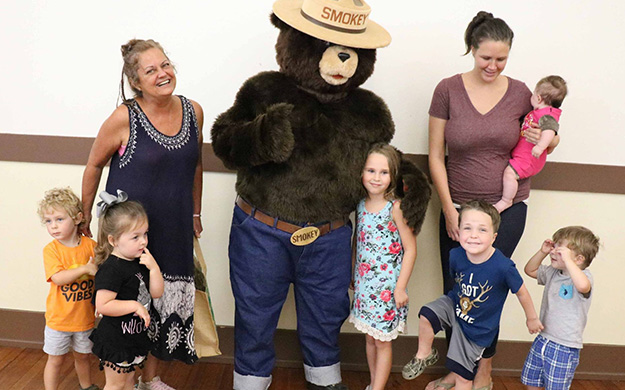
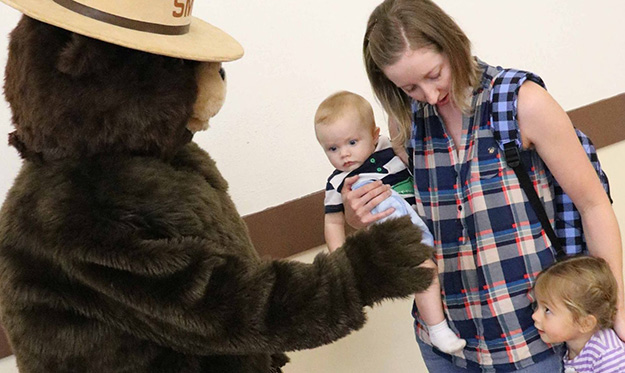
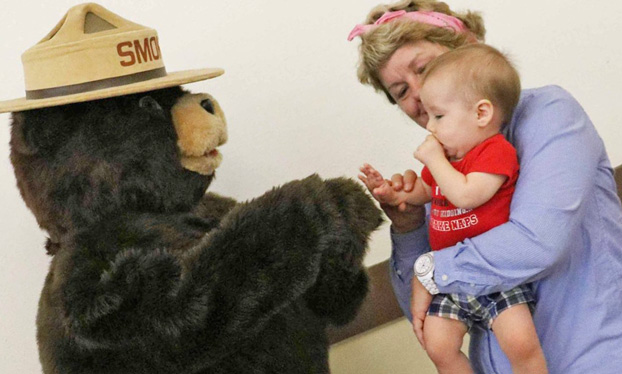
 Smokey Bear and the Florida Forest Service visited Story Time at the Molino Branch Library on Wednesday. They taught the children the importance of forest fire prevention. Preschool story time is held every Wednesday at 10:30 at the Molino Branch Library. Courtesy photos for NorthEscambia.com, click to enlarge.

Cantonment Man Sentenced For DUI In February Wreck
October 11, 2017

A Cantonment man has been sentenced on a DUI charge related to a single vehicle wreck last February.
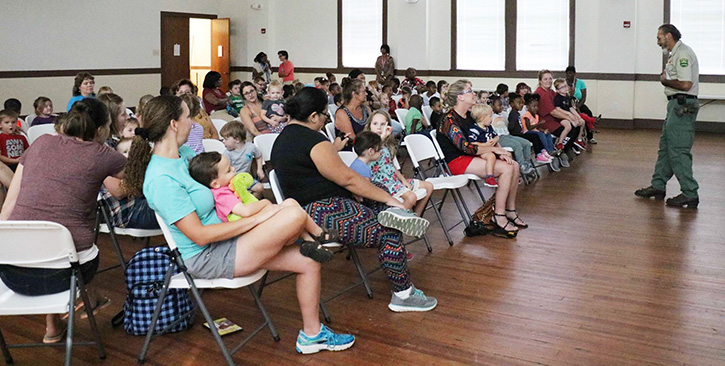
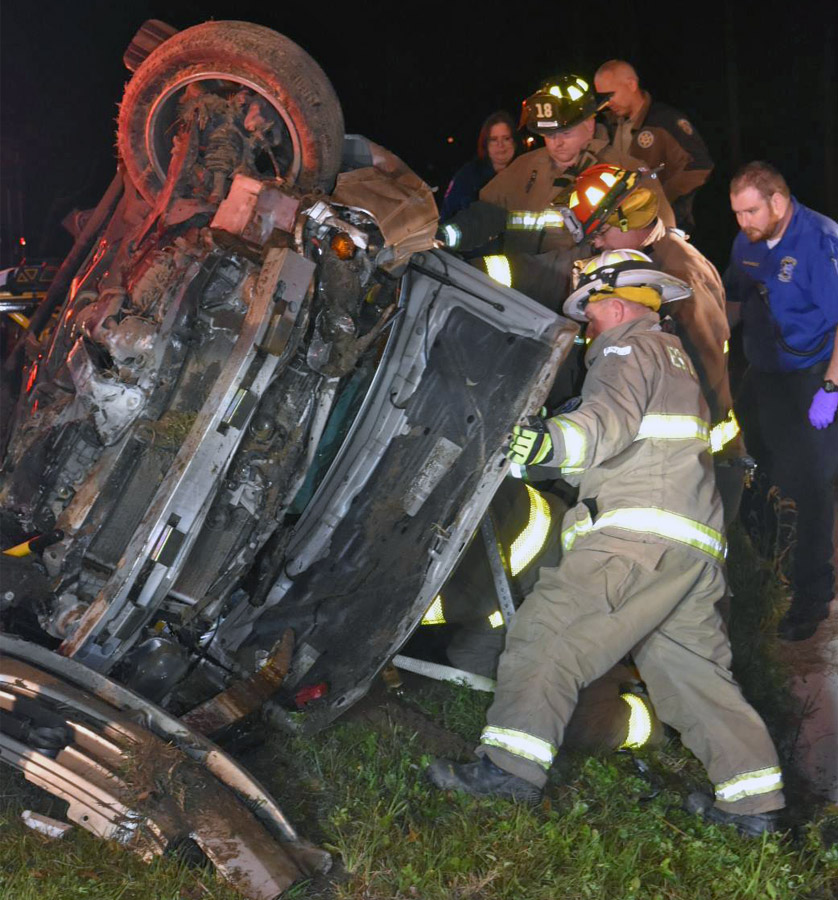
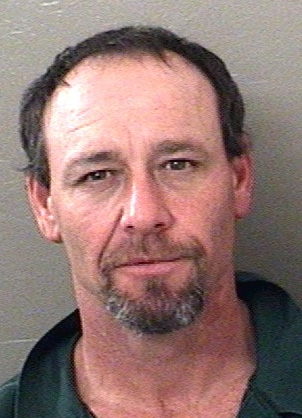 The Florida Highway Patrol said 43-year old Daniel Goodale lost control on Jacks Branch Road near Old Bridge Road, ran off the roadway and struck a culvert about 12:15 a.m on February 26. Officials said his 2003 Nissan Altima then went airborne for almost 100 feet before crashing into a ditch. Goodale was trapped in the vehicle after it came to rest on its side. It took firefighters about 30 minutes to stabilize the vehicle and free him from the wreckage.
Goodale pleaded no contest to DUI 0.15 or higher. He was sentenced to 12 months supervised probation, ordered to pay fines and court costs of $1,456 and attend DUI school. His driver’s license was also revoked for six months.
NorthEscambia.com file photos by Kristi Barbour, click to enlarge.
Escambia Woman Gets 20 Years For Kidnapping, Armed Robbery
October 11, 2017
State Attorney Bill Eddins announced that Iesha McGaster has been sentened by Circuit Judge Thomas Dannheisser to 20 years in state prison. McGaster entered a plea of no contest on May 8, 2017 to armed kidnapping with a weapon with the intent to commit a felony, carjacking with a deadly weapon, attempted robbery with a deadly weapon, and aggravated battery.
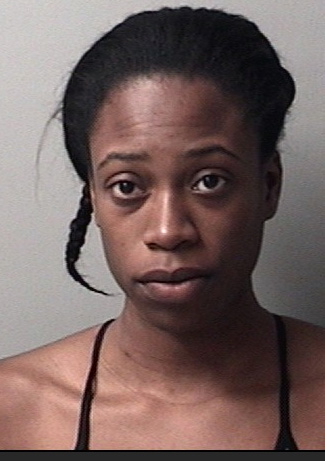 In the early morning hours of March 7, 2016, the victim went to McGaster’s residence in Foley to loan her money. When he arrived, he was attacked and yied up by co-defendant Corey Bowick, Carlton Lamar and McGaster. Ultimately, he was forced into his own vehicle and driven to Pensacola to get money from his place of employment. While traveling in Pensacola, the victim jumped out of the moving car on Pace Boulevard when he saw a law enforcement vehicle parked in Town and Country Plaza.
The defendants were arrested shortly thereafter on Fairfield Drive.
Bowick was previously sentenced to 20 years in state prison followed by 10 years state probation by Judge Dannheisser, and Carlton Lamar was previously sentenced to 15 years state prison to be followed by five years state probation.
Since there is no parole in Florida, McGaster, Bowick and Lamar will be required to serve 85 percent of their prison sentence.
Cat Country 98.7 Named CMA Station Of The Year
October 11, 2017
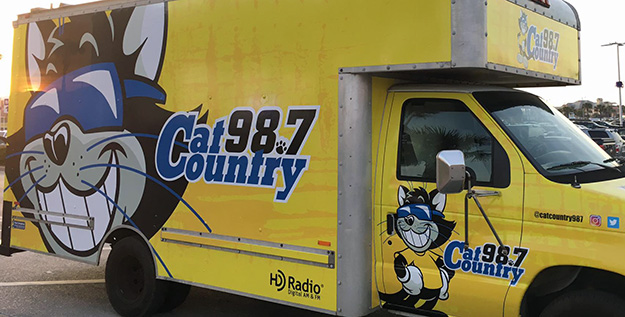
Pensacola’s locally-owned country radio station, CatCountry 98.7, has been named 2017 Radio Station of the Year by the Country Music Association (CMA).
Keith Urban called morning show hosts Brent and Candy to announce the win Tuesday. This is the first time Cat Country 98.7 has won the coveted CMA Station of the Year award.
CatCountry 98.7 personalities Brent and Candy were also nominated by the CMA for the 2017 Radio Personalities of the Year for The Cat Pak Morning Show. Brent & Candy’s CatPak Morning Show is “Live & Local” 5-10 a.m. Monday-Friday on CatCountry 98.7 and on www.CatCountry987.com.
The CMA Awards will air on WEAR ABC 3 on November at 7 p.m. Brent and Candy will be broadcasting live from Nashville in the days leading up to the awards show.
“This incredible honor and recognition from the Country Music Association is a direct reflection on our community. Every part of our submission to the CMA has something to do with you. CatCountry 98.7 is so proud to be locally owned and operated by Dave and Mary Hoxeng. It is our privilege to serve in times of need and times of joy. You are our family and to be recognized as such on a national level is a great and heartfelt honor,” Brent Lane.
ECUA: Yard Waste Collections Increase, Some Pickups Late Due To Nate
October 11, 2017
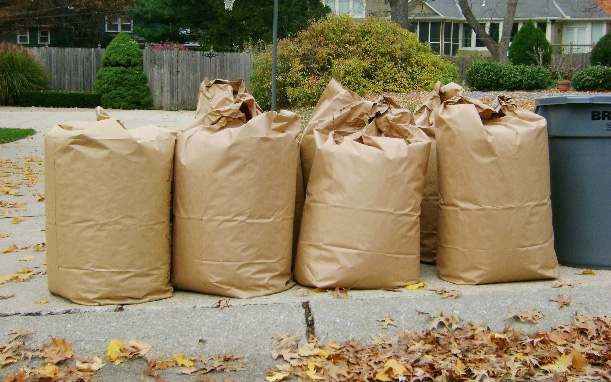
Due to increased volumes of yard debris following Hurricane Nate, ECUA yard waste collections in Escambia County may run behind normal schedules throughout this week. All routes/collections will be completed but some customers may have their yard waste collection later in the day than they normally do, or their yard waste may be collected on the following day. All collections will be completed by the end of the day on Saturday. Yard waste, as defined by the ECUA Sanitation Program, includes leaves, pine straw, grass clippings and small prunings.
To help ensure collections are completed as promptly as possible residents are asked to:
- Not use their garbage or recycling can for yard waste. Yard waste is collected separately from household garbage and recyclables so it can be composted.
- Place bagged, bundled, or canned yard waste within two feet of the curb and away from the street/road.
- Contain small yard waste, leaves, pine straw and grass clippings in standard garbage containers or bags (preferably compostable) that do not exceed 32 gallons in size or weigh more than 40 pounds when full. The ECUA will collect up to 20 yard trash bags or cans each week.
- Cut limbs should not exceed six feet in length or 40 pounds in weight, and must be bundled in two piles of no more than two 6’ W x 6’ D x 6’ H.
- Ensure that yard waste is placed by the curb for collection by 5:30 a.m. on the normal collection day.
Customers are asked to call ECUA Customer Service at 476-0480 if their yard waste has not been collected by the end of the day following their regular collection day.
Local Football Playoff Point Standings Released
October 11, 2017

The Florida High School Athletic Association has released current projected football playoff point standings for local schools.
Bottom Line for North Escambia Schools: Tate is second in District 1-Class 6A. The Northview Chiefs are currently next to last in Region 1-Class 1A (not in a playoff spot).
District 1-Class 6A
Escambia 4-2 1-0 36.67
Tate 4-1 1-0 35.20
Pine Forest 2-3 0-1 36.40
Washington 2-4 1-0 30.67
District 2-Class 6A
Navarre 5-1 1-0 36.17
Gulf Breeze 5-1 1-0 34.83
Milton 2-4 0-1 31.67
Pace 1-4 0-1 24.80
District 1- Class 5A
West Florida 5-1 1-0 42.50
Pensacola 2-4 1-0 27.00
Mosley 4-3 1-1 34.29
Arnold 3-3 1-1 29.00
Bay 1-5 0-2 27.00
Region 1-1A
Baker 6-0 39.33
Holmes County 4-2 37.00
Bozeman 3-3 34.50
Vernon 2-3 32.80
Jay 2-4 32.50
Freeport 3-4 30.43
Northview 1-6 27.71
Graceville 0-5 26.80
Beginning this season, district play has been eliminated in Classes 1A-4A, with teams making the playoffs based on a points system. Classes 5A-8A retain districts, with the district champion receiving an automatic playoff bid.
For Classes 1A-4A, no region or district play is required, with each school controlling its own schedule. Four teams from each region (16 total statewide) will make the playoffs based on the new points system.
District play for Class 5A-8A remains, with 32 teams qualifying for the playoffs in each class. District champions will receive an automatic bid to the playoff and will receive a 1-4 seed based on the new points system. Four wild cards will be taken from each region based on points following the conclusion of Week 11.
For more information on the points system, click the graphic at the bottom of the story to enlarge and click here for a informative pdf.
NorthEscambia.com file photo, click to enlarge.
Florida Lawmakers Hear Grim Picture Of Opiod Epidemic
October 11, 2017
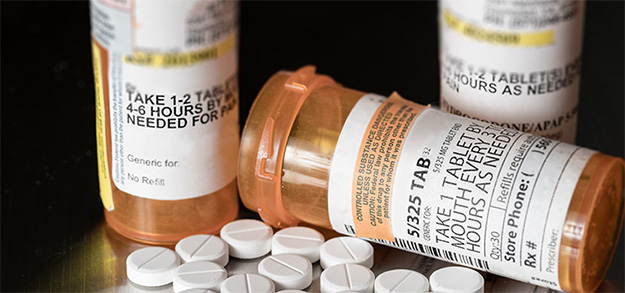
Facing what one expert called “chemical warfare,” a key Senate panel Tuesday began tackling the opioid crisis that has engulfed the nation and state, ripped families apart and created a public health crisis bound to get worse.
The Senate Health Policy Committee heard from a panel of experts — including emergency doctors, treatment providers, law enforcement officials and insurance company executives — who laid out a litany of woes detailing the severity and complexity of the opioid epidemic, which prompted Gov. Rick Scott to declare a public emergency.
Testimony from the experts made a chilling impression on the committee.
Abuse of prescription painkillers along with fake street pills and street drugs such as heroin and the synthetic opioid fentanyl — and the deaths associated with the drugs — has skyrocketed since lawmakers cracked down on “pill mills” six years ago.
There aren’t enough treatment beds. Access to medically assisted treatment — where addicts receive drugs and other services, such as cognitive behavioral therapy — is limited. A stigma associated with addiction keeps many users in the shadows. The system is disjointed, making it difficult for addicts and their families to navigate.
And nearly all the entities involved — physicians, treatment providers and sheriffs and police departments — are struggling to make do with scarce resources as the number of addicts continues to skyrocket.
“Currently, it’s much easier to get high than it is to get help in Florida,” Aaron Wohl, an emergency room physician from Lee County, said.
Scott has said he will ask lawmakers in 2018 to spend $50 million on programs such as substance-abuse treatment, counseling and recovery. He also is proposing a three-day limit on new prescriptions for opioids, though the prescriptions could be up to seven days under some conditions.
But the prescription-drug limits are mainly a “feel-good” measure that won’t address the larger problem of addiction and access to street drugs, such as heroin and fentanyl, experts agreed.
“To focus on the flow of medications and creating new persons with addiction is certainly one issue that’s important and we want to help with that, but to ignore those persons that are actually addicted currently, and the medications that they’re overdosing on, being heroin and illicitly manufactured fentanyl, then we’re missing the point,” Wohl told reporters after Tuesday’s meeting.
An interim report by the state’s medical examiners covering the first six months of 2016 showed a 13.9 percent increase in drug-related deaths, compared to the first half of the previous year.
Fentanyl was the top killer, followed by benzodiazepines, morphine and heroin, according to the report. Deaths caused by fentanyl increased by nearly 140 percent, and accidental deaths from heroin overdoses jumped by 25 percent, compared to the same six-month period in 2015.
The situation is even more dire than the report suggests, as medical examiners struggle to keep pace as demands for autopsies skyrocket because of overdoses.
“Scrap your numbers. They’re meaningless because they are so under-quoted,” said Raymond Pomm, a doctor with more than 30 years of experience in the substance-abuse field who now serves as the medical director of Gateway Community Services in Jacksonville. “I’m sorry to say whatever numbers you have, they’re far, far worse. Never have we ever seen anything like this.”
Medical examiners in the Jacksonville area have asked Pomm’s agency to provide naloxone, also known as Narcan, a prescription medication that can reverse opioid overdoses. The coroners want access to the treatment because of their exposure to fentanyl. Even miniscule amounts of the synthetic opioid, often mixed with heroin, can be deadly when inhaled or absorbed through the skin.
“It’s more than an epidemic. It’s become chemical warfare,” Pomm said. “It’s become a gnarly system that’s entwining every aspect of our society.”
Making matters worse, users can purchase fentanyl on the internet, Volusia County Sheriff Michael Chitwood told the committee.
Correcting the “legal” side of opioid abuse is only part of the problem, said Kenneth Scheppke, medical director for Palm Beach County Fire Rescue and a medical director for emergency medical services in Broward County.
“If we don’t address the treatment side, the addicts will turn to a different source. They will turn to street drugs,” he said.
While the use of naloxone is rapidly increasing, reviving patients who’ve overdosed — some of whom receive more than one dose of the drug in a single day — does nothing to cure the problem.
Palm Beach County has launched a pilot program in which emergency-room patients who’ve overdosed on opioids are connected while in the hospital with a detox program, using the drug buprenorphine, also known as Suboxone, that reduces cravings and eases withdrawal symptoms without getting patients high.
Patients in the program also receive behavioral counseling, which experts agree is a critical part of treating addiction, in combination with medications like Suboxone.
The pilot program, with 50 participants, has a 76 percent success rate, according to Scheppke.
The program is a stark contrast to the “revolving door” encountered by most users.
Patients overdose, are saved by Narcan and sent to the emergency room, where they are released to go home and relapse again.
“Nothing’s really done,” Scheppke said. “What we have basically is the patients treating themselves as best as they can.”
Monday’s testimony struck a chord with Senate Health Policy Chairwoman Dana Young, who made an impassioned pledge at the close of the 2½- hour meeting.
“You said it was easier to get high than to get treatment. That needs to stop. That needs to stop today. And it is within our power as a legislature to make that happen. While it can be exhausting and frustrating to deal with this issue, I will tell you that we are not exhausted, as a committee, as a Senate, as a legislature. We are determined to tackle this problem any way we can,” Young, R-Tampa said.
Young told reporters she was impressed by Scheppke’s pilot program and that it was “abundantly clear” that the Legislature needs to fund medically assisted treatment programs statewide.
“I have no idea how much that’s going to cost, but we need to figure it out, and we need to find the money to do it,” she said.
by Dara Kam, The News Service of Florida
Century Sends ‘Entertainment Survey’ To Utility Customers
October 11, 2017
Town of Century utility customers received an “Entertainment Survey” with their utility bills this month, with little explanation as to why.
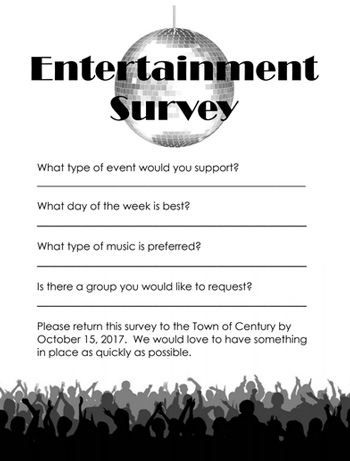 The survey asked respondents what type of event they would support, best day of the week, preferred type of music and for any requested group.
Century Mayor Henry Hawkins said he would simply “like to bring some good entertainment to town”.
“If other cities can do it, why can’t we provide something for our citizens?”, he said.
The survey is due back by October 15.
For a pdf of the survey, click here.
Changes Slated For State Worker Health Insurance
October 11, 2017
As many as 2,000 obese state employees who suffer from conditions such as diabetes or hypertension can enroll online for a program that provides coverage for treatment and management of obesity and related conditions.
The offering is one of a number of changes legislators authorized to the state group health-insurance plan during the 2017 session. Available to employees who were enrolled in Aetna, AvMed, Florida Blue or UnitedHealthcare plans in 2017, the benefit is available for 2018.
Tami Fillyaw, director of the Division of State Group Insurance in the Department of Management Services, appeared Tuesday before the House Health & Human Services Committee and the Senate Governmental Oversight and Accountability Committee to update lawmakers on steps the department has taken to retool the health-insurance program, which, as of June 30, provided benefits to more than 367,000 state employees, spouses and dependents.
Fillyaw told lawmakers that the state inked a contract last week with the independent benefits consultant Foster & Foster to meet requirements of the bill approved during the 2017 session. Among other things the consultants will analyze the state group plan, compare its benefits to that of other large employers and submit a report to the Legislature by Dec. 1.
Foster & Foster also will assist the state as it moves forward with two new health-care offerings that will be made available in the 2019 plan year: an online tool to shop and compare the quality of available in-network providers; and a service that offers employees access to comprehensive pricing for surgery and other medical procedures.
Both of those benefits also will include a “shared savings program,” where employees can receive a portion of any savings attributable to their health-care choices.
Fillyaw said employees’ shared savings will be deposited into flexible savings accounts, health savings accounts or health reimbursement accounts (which would be a new benefit offering) or could be used for out-of-pocket medical expenses.
Fillyaw said the state has met with potential vendors interested in both initiatives and issued requests for information about the potential services. She said the state will issue invitations to negotiate in January and hopes to have signed agreements with vendors by April. “Ideally,” she said, the offerings can be in place for the 2019 benefit year.
As part of an overall budget agreement that included pay raises for state employees and changes to the Florida Retirement System, the Legislature during the 2017 session agreed to pass SB 7022, which directed the Department of Management Services to begin offering state employees a variety of health plans.
Currently, employees have access to HMO coverage, PPO coverage and a high-deductible health plan.
One of the biggest changes will take place in 2020 when the Department of Management Services offers access to four different levels of insurance: platinum, gold, silver and bronze. The plans will have different actuarial values — ranging from a high of 90 percent, meaning the policy will cover 90 percent of health-care costs — to a low of 60 percent.
The higher the actuarial value of the plan, the more it will cost. If an employee chooses a health plan that costs less than what the state contributes in premium, the employee can request that the difference be directed toward other benefits or to salary.
While the legislation was not touted as a cost-saving measure, expenses in the state group health insurance are a growing concern for lawmakers. State economists say the trust fund that pays the costs of the program will have a $357.3 million deficit by June 30, 2019.
Helping drive the costs increase, Fillyaw told lawmakers Tuesday, are prescription drugs.
Fillyaw said that regardless of the plan, all employees are enrolled in the state’s self-insured prescription drug program. Pharmacy costs for state employees are projected to be $693.1 million this year, a jump of more than $81 million from the previous year’s spending.
To help curb the costs, the Department of Management Services will ask the Legislature to consider changes to the pharmacy program.
“Prescription drug spend is the most unpredictable cost driver in our program,” Fillyaw told lawmakers, adding that there are formulary-management programs in 18 state-employee health insurance programs across the country.
by Christine Sexton, The News Service of Florida
Driver Injured In Crash At Lake Stone Campground
October 10, 2017
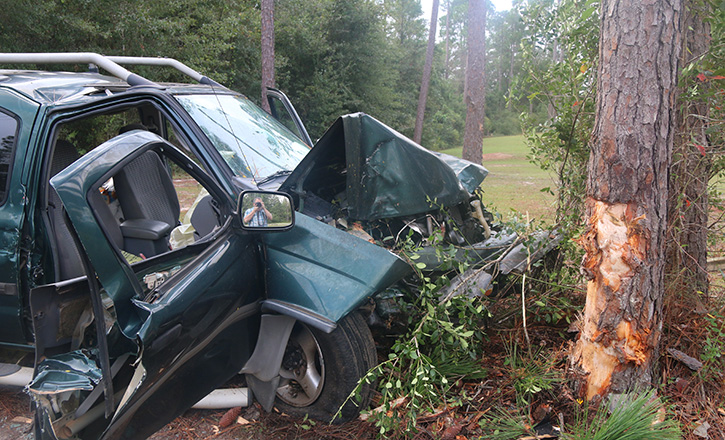
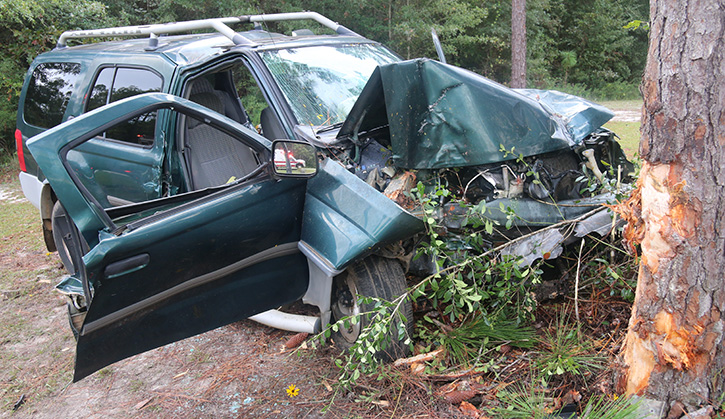
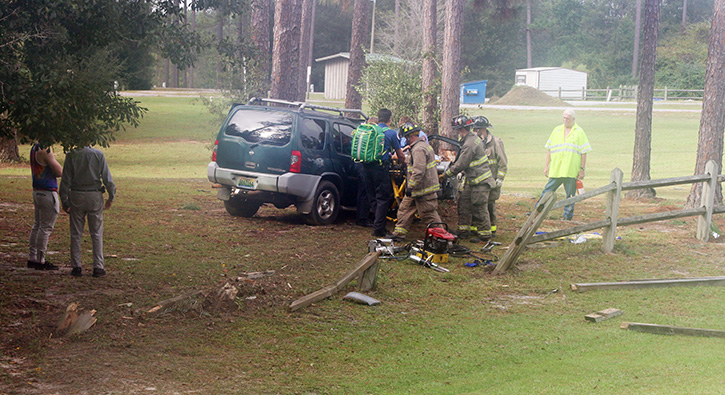
One person was injured in a single vehicle crash at Lake Stone near Century Tuesday morning.
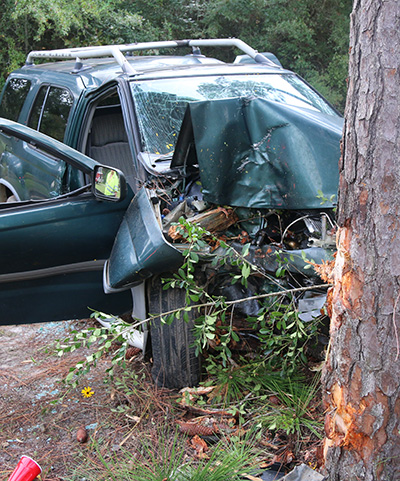 The driver of A Nissan Xterra was traveling on West Highway 4 when they ran off the roadway, ran through a wooden fence around the Lake Stone campground and struck a pine tree just inside the park.
Minor extrication was needed to free the driver from the vehicle. They were transported by Escambia County EMS to an area hospital with non -life threatening injuries.
NorthEscambia.com photos, click to enlarge.