

Crist Visits Pensacola Beach; Swimming Ban Partially Lifted
June 26, 2010

Pensacola Beach reopened for swimming Friday after a health advisory due to heavy oil concentrations was lifted for a portion of Escambia’s beaches.
Florida Gov. Charlie Crist abandoned his regular scheduled Friday to head to Pensacola to meet with with Department of Environmental Protection Secretary Mike Sole. He visited Pensacola Beach and a staging area on Bayou Chico.
Meanwhile, Florida Attorney General Bill McCollum sent a letter to Homeland Security Secretary Janet Napolitano asking for more aid in the state’s fight against the slick.
“With oil mats, sheen and tarballs now coming ashore on Florida beaches, the continued slow response and limited resources being directed to protect our coasts from the effects of the Deepwater blowout is extremely frustrating,” McCollum wrote. McCollum wants more skimmers and other equipment sent to Florida, a message conveyed earlier in the day by Crist.
Crist is scheduled to spend his Saturday in the Pensacola area, again meeting with state and local officials.
The Escambia County Health Department rescinded the health advisory for a portion of the beach. The area from Walkover 23 (just west of Portofino) on Pensacola Beach to the entrance of Fort Pickens is no longer under a health advisory. The entire Gulf Islands National Seashore from Fort Pickens to Johnson Beach is still under the advisory, according to county officials.
The Escambia County Sheriff’s Office helicopter was able to spot a two mile stretch of oil ribbons and notify skimmers. Emergency officials said that allowed skimmer vessels to be dispatched to collect the oil before it hit the coast.
Pictured above: Florida Gov. Charlie Crist made an unscheduled trip to Pensacola Beach Friday as he tried to get more machinery to help Florida clean up oil. Meeting with recovery crews, Crist made a call to the incident commander in Mobile, asking for beach skimming equipment to help state and local officials keep the beaches clean. Accompanying Crist Friday were Department of Environmental Protection Secretary Michael Sole, David Halstead, director of the Division of Emergency Management and U.S. Coast Guard Commander Joe Boudrow. Photo by Mike Peltier for NorthEscambia.com, click to enlarge.
Youth Police Academy Needs Donations
June 26, 2010
Law enforcement agencies in Escambia County (Ala.) are asking for the public’s donations to help with their 10th annual Youth Police Academy.
The Youth Police Academy is funded by donations, with many officers taking their vacation time to volunteer.
“It’s very expensive to run a week long academy and it takes everyone working together to allow these kids the opportunity to experience the things that they do,” said Samantha Bennett of the Atmore Police Department. “If we all work together and donate just one item it will make a great difference.”
The Youth Police Academy is asking for donations of:
Snacks (cheese crackers, cookies, etc.)
Sports drinks (Gatorade, vitamin water)
Plastic or paper cups
Plastic forks and spoons
Paper plates (such as Dixie for durability)
Paper bowls (for cereal)
Water
Pancake mix
Toilet tissue
Paper towels
Cereal (kids’ brands)
Breakfast items (honey buns, muffins, etc.)
Napkins
Items can be dropped off at any local police or sheriff’s office in Escambia County, Alabama. Please mention that the items are for the Youth Police Academy.
For more information, contact Bennett at the Atmore Police Department at (251) 368-9141.
Experts Offer Advice On Summer Vegetable Harvesting In North Escambia
June 26, 2010
 Early summer vegetables are nearing harvest time, but when is the perfect time to pick? Dan Gill and Allen Owing, Louisiana State AgCenter Horticulturists offer the following tips for picking the perfect time to pick your vegetables in the North Escambia area:.
Harvest sweet corn when the silks turn light brown or darker. Peel back the shuck to see how well the kernels have developed before removing the ear. The juice of the kernel should be milky when you puncture it with your thumbnail.
Cucumbers can be harvested at your desired size; however, harvesting should be done before the cucumber begins to lose its green color. When old cucumbers begin to yellow, they’ll have well-developed seeds and become bitter. If the fruit is allowed to mature and turn yellow on the plant, the plant will stop producing new fruit.
Eggplants should be harvested when they are one-third to two-thirds of their full, mature size. The skin should be glossy. If the skin is dull, this indicates over-maturity, and the fruit will be seedy and often bitter. Harvest eggplants using pruning shears because the stem is tough.
Peppers, both sweet and hot, can be harvested at any size or color. Most peppers will turn red at maturity, but some may be green, purple, yellow or orange along the way.
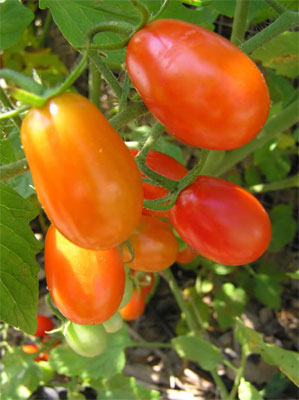 Tomatoes can be harvested any time after green fruit begin to turn pink. Best quality, however, is obtained when fruit fully ripen on the plant. If you harvest early, often to get the fruit out of harm’s way from birds and insects, you can ripen the fruit at room temperature and still expect excellent quality. Tomatoes don’t need light for ripening, so there’s no need to put them in a window.
Okra should be harvested every two to three days. Most types should be harvested when they are young, tender and less than 3 inches long. The pod snaps easily from the plant when it’s harvested at the proper stage.
Summer squash, including zucchini, should be harvested small (one-half to two-thirds the mature size) and immature while the skin is still tender. The more frequent the harvesting, the more fruit the plant will produce. Use a knife to remove the fruit and leave 1 inch of stem attached.
Harvest the pods of Southern peas – purple hull, black-eyed and others – when they’re well-filled and have changed to a light straw, silver or purple color, depending on the variety. They shell easiest at this stage.
Harvesting watermelons is a bit tricky. Look at the tendril or “pigtail” closest to the melon. When this tendril turns brown and dries out, it is a good sign that the melon is ripe. Also look at the bottom of the melon where it lays on the ground. When this area, sometimes referred to as the “color spot”, turns from white to a light yellow, there is a good chance the watermelon is ripe. The thump test is done by thumping the top of the melon. If the watermelon has a dull thud when thumped, it is very possible the melon is ripe. Unripe melons will usually have a tighter, ringing or hollow sound.
Pensacola Beach Oil Cleanup By The Numbers
June 25, 2010
Here are some numbers related to the oil and cleanup on Pensacola Beach:
- Pounds of tar balls and oil material collected on Wednesday: 44,955 (total)
- Pounds collected at West Perdido State Park: 7,500
- Pounds collected at East Pensacola Pier – 14, 070 pounds
- Pounds collected at West Pensacola Pier – 13,140 pounds
- Pounds collected at Gulf Islands National Seashore – 10,245
- Number of Health Advisory signs posted: 47
- Number of BP cleanup workers in Escambia County: 1,225
- Number of Beach Tech 2000 mechanical cleaners: 4
- Percentage chance a tropical wave in the Caribbean will develop: 40
- Number of gallons spilling per day: 2.5 million
- Total number of gallons spilled so far (estimates): 39-111 million
- Number of days: 66
- Number of BP claims paid in Florida: 18,694
- Dollars paid by BP for Florida claims: $16,880,359.96
- Average payout per claim: $902.98
- Approximate dollars BP profited in the first three months of 2010: $6 ,000,000,000.00.
New Principals Named In Atmore, Flomaton
June 25, 2010
Three new principals were hired Thursday in Escambia County (Ala.) for Flomaton Elementary, Escambia County High and the Escambia County Career Technical Center.
 Escambia County Middle School Principal Zickeyous M. Byrd (pictured) was named the new principal at Escambia County High School. Byrd will begin his new position next Thursday, July 1. He replaces Joseph Dean who quit for unannounced reasons after less than a week on job. He replaced former Principal Harvey Means after the board failed to extend Means’ contract.
Sandra Reid, who was assistant principal at W.S. Neal Elementary School in Brewton, was hired as the new principal at Flomaton Elementary School. Reid had been at W.S. Neal for the past three years. She replaces David Curran who retired as Flomaton Elementary School’s principal after 24 years.
David Lanier was named the new principal of the Escambia County Career Technical Center. He had served as an assistant principal at Escambia County High School for the past two years.
Escambia Oil Update For Friday
June 25, 2010
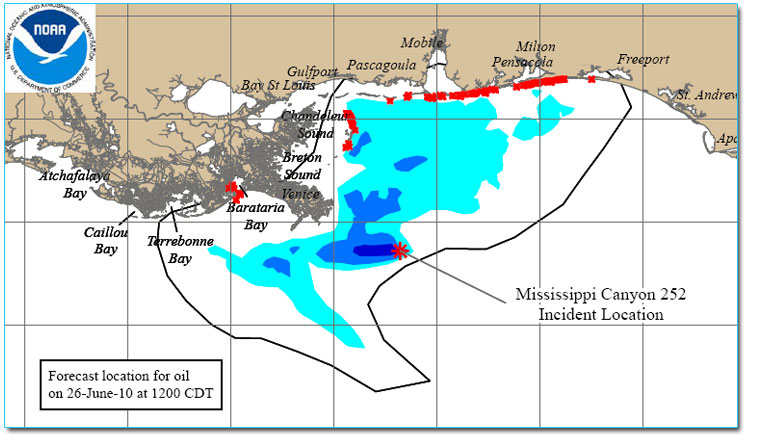
Here is the latest BP oil spill update for Friday, June 25 with information specific to Escambia County:
|
|
|
|
| BP |
|
|
|
|
| Federal |
|
|
|
| State of Florida |
|
|
|
| Escambia County |
|
|
|
|
| City of Pensacola |
|
|
|
| Volunteer Opportunities |
|
|
|
| Safety Information |
Wildlife
Boats
Personal Safety
|
|
|
| Business Information |
|
|
|
Important Phone Numbers For Citizens
|
No More Pensacola Junior College
June 25, 2010
Pensacola Junior College will be no more in less than a week; it will become Pensacola State College on July 1.
 The Southern Association of Colleges and Schools Commission on Colleges approved Pensacola Junior College to offering bachelor degree programs.
The PJC District Board of Trustees approved for the new name to be implemented July 1, 2010, once the Commission on Colleges approved PJC to offer upper level degrees.
The Florida State Board of Education approved the college to offer a Bachelor of Science in Nursing and a Bachelor of Applied Science in Administration and Supervision in May. The college plans to offer courses in these programs beginning January 2011.
PJC President Edward Meadows said this final step sets the stage for the college to better meet the workforce needs of Northwest Florida. The response from business and industry has been very positive, he said.
“We have a lot of work to do to help the public understand that these new degree programs are workforce focused,” Meadows said. “The college is one of the Top 100 community colleges in the nation in number of associate degrees awarded, and the newly named college will continue to offer associate degrees and certificate programs as it has for the past 62 years.”
Brackets Released For Northwest Escambia Softball Tournament
June 25, 2010
The Florida District 1 All Star Tournament for 11-12 year old girls will get underway Saturday at Bradberry Park in Walnut Hill with teams from Northwest Escambia, Tri-County, DeFuniak Springs and Niceville.
The tournament begins at 10 a.m. Saturday with DeFuniak Springs and Tri-County. The winner of that game will face Northwest Escambia at 7:30 Monday night.
Click here for a printable bracket, or click the image below.
Are you going to the tournament? Share your photos with our readers! Email your pictures to news@northescambia.com

Century, Jay, Atmore, Escambia Grow; Pensacola, Flomaton Lose Residents
June 25, 2010
The U.S. Census Bureau has released its latest population estimates, which show growth in communities including Century, Jay, Atmore, Escambia County (Fla.) and Santa Rosa County; and population declines in Pensacola, Flomaton, Escambia County (Ala.)
Escambia County, Florida
 Overall, Escambia County grew 3 percent, from 294,410 persons counted in the 2000 census to an estimated 2009 population of 303,343.
Pensacola saw a population decline of 2,502 people from 2000-2009. After a population of 56,255 in the 2000 census, Pensacola’s population declined 4.4 percent to 53,752.
Century, which had a population of 1,714 in 2000, experienced a 8.6 percent growth rate from 2000-2009. As of the 2009 estimate, Century had grown to 1,862 residents.
Outside of Pensacola and Century, Escambia County grew about 3 percent, from 294,410 people outside of Century and Pensacola in 2000 to 303,343 as of the 2009 estimate.
Santa Rosa County, Florida
Santa Rosa County’s population increased 28.9 percent from 117,743 in 2000 to 151,759 in 2009, according to the Census Bureau — an increase of 34,016 people. Outside of Santa Rosa County’s cities and towns, the population grew 30 percent from 104,454 in 2000 to 135,769 by the 2009 estimate.
Santa Rosa’s smallest town, Jay, had an estimated increase of 19.7 percent, from 579 residents in 2000 to 693 in 2009.
Gulf Breeze grew 16.7 percent from the 2000 census of 5,665 to 6,609 estimated in 2009. Milton had a 23.3 percent growth rate from 7,045 to 8,688 in 2009.
Escambia County, Alabama
Atmore grew 31.8 percent from 7,676 in the 2000 census to 10,119 estimated residents in 2009. However, it’s worth noting that while the 2000 census officially counted 7,676 in 2000, the Census Bureau actually estimated Atmore’s population to actually be 10,298 in 2000, which would actual population decline of 179 residents.
Flomaton’s population decreased a slight 3.1 percent from 1,588 in 2000 to an estimated 1,540 in 2009.
Brewton declined 4.8 percent from 5,498 in 2000 to 5246 in 2009. And East Brewton had a 0.8 percent decrease from 2,496 in 200 to 2,475 in 2009.
Riverview, a tiny town south of Brewton, had huge growth by percentage, increasing 56.6 percent from 99 residents in 2000 to 155 in 2009. Escambia County’s other small town, Pollard, had 120 residents in 2000 and 118 estimated in 2009.
Outside of the five cities and towns in Escambia County, Ala., there was a large population decline in the county. The 2000 census showed 20,963 non-city residents, which declined 17.9 percent to 17,781 as of the 2009 estimate. However, due to the Census Bureau’s population estimate discrepancies with Atmore’s numbers, Escambia County showed only a slight decrease in population from an estimated 18,283 in 2000 t0 17,781 in 2009.
Cost Of Some Hunting, Fishing Permits Headed Up; New Deer Permit Required
June 24, 2010
There will be an increase in the cost of some of Florida’s hunting and saltwater fishing permits, beginning July 1. If sportsmen act now, however, they can beat the price increase.
On July 1, 2010, the cost of a turkey permit will go up from $5 to $10 for Florida residents and from $100 to $125 for nonresidents. In addition, Florida waterfowl permits will increase as well, from $3 to $5.
 The cost of two saltwater fishing permits also will go up July 1. The snook permit will increase from $2 to $10, and lobster permits will increase from $2 to $5.
Until July 1, though, sportsmen can buy all of these permits at the current prices, and all permits are valid for one year after the date of purchase.
There also is a new deer permit that will be required whenever hunting deer in Florida, beginning during the upcoming 2010-2011 hunting season. The permit will cost $5 and will not be available for purchase until July 1.
Those with a Sportsman’s License, Gold Sportsman’s License, 64 or Older Sportsman’s License, Military Gold Sportsman’s License, Lifetime Hunting License or Lifetime Sportsman’s License will not need to purchase the new deer permit because it has already been included in each of these licenses, even if they were purchased before July 1.
However, the deer permit is not included with a hunting license, combination hunting/freshwater fishing license, combination hunting/freshwater/saltwater license or a five-year hunting license. Anyone hunting deer with either of these licenses must also buy the $5 deer permit to hunt deer legally.
All permits and related licenses can be purchased at county tax collectors’ offices, retail outlets that sell fishing and hunting supplies, online at www.fl.wildlifelicense.com or by calling toll-free 888-HUNT-FLORIDA (486-8356).