

Florida Weekly Government Roundup
March 27, 2011
Once again the week saved the biggest news for the end, as prosecutors unexpectedly announced Friday afternoon that they were dropping the theft charges against former House Speaker Ray Sansom and developer Jay Odom.
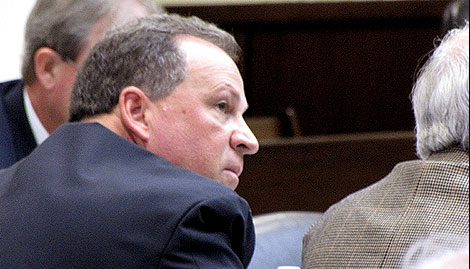 Sansom and Odom were charged in an alleged scheme to use a $6 million 2007 state budget appropriation for what is now Northwest Florida State College to build a hangar at the Destin airport for Odom, a friend of and contributor to Sansom, who at the time was the chief House architect of the budget.
Sansom and Odom’s defense had said the money was needed for a joint-use emergency operations center and classroom building and there was nothing unusual about the way the money was put into the budget.
The bombshell on Friday dropped after Circuit Judge Terry Lewis rejected a key witness. Prosecutors were hoping to put the college’s former president, Bob Richburg, on the stand. He had originally also been charged in the case, but agreed to testify against Sansom.
But to introduce testimony by Richburg, prosecutors needed to show evidence of a conspiracy, and Lewis ruled he hadn’t seen that evidence. Without Richburg’s testimony, State Attorney Willie Meggs decided he couldn’t get a conviction and dropped the charges.
PARTY LIKE IT NEVER WAS 2010
The Sansom case being back in the news wasn’t the only throwback to an earlier legislative session this week.
Legislators late this week overrode two vetoes by former Gov. Charlie Crist, continuing the Republican effort to erase his memory. One of the bills wasn’t really controversial – having passed the Legislature unanimously last year and then again in the veto override vote this week. That bill dealt with local farm regulations – even Democrats agreed widely that the bill made sense, eliminating some local ability to make rules that could make it hard for farmers to do simple things like replace a fence without a permit.
But the other measure lawmakers restored was highly controversial.
That bill creates “affiliated party committees” to allow legislative leaders to raise money independently of the political parties and parcel it out to lawmakers they need to get elected to help them in their quest to control the legislative process.
 The accounts will be controlled by both parties’ leadership. And another word for account is fund. So in the generic, we might normally call them leadership funds. But when we do, we get a gentle, annoyed reminder from Republicans that these are nothing like “leadership funds,” which were outlawed in 1989.
And in fairness, those funds were pretty opaque and may have been more accurately called backroom slush funds. The new funds are far more transparent than those were, and, backers say, more transparent than the current process even. That makes them a step forward for openness, the proponents of the new type of funds said.
Democrats argued against them, saying they were really just a return of leadership funds. But just as in 2010, Democrats are vastly outnumbered and so without Crist on their side they couldn’t stop the return of whatever these funds should be called. In fact, they not only lost Crist as an ally on this particular issue, they have lost since the last election any ability to block it by themselves because Republicans now have 81 members in the House. The number of votes needed to override a veto: 80.
So why are leadership … affiliated party committees, needed now?
Last year the normal process for doling out fundraising help in the Legislature – having the parties do it – didn’t work out too well for Republicans. The party was having a bit of a hard time raising money on account of its chairman being accused of misspending it at first, and then later of outright stealing it. The chairman, now former chairman, is facing criminal charges.
“I was frustrated by the actions of the former chairman, where we raised a lot of money and they spent it,” said Senate President Mike Haridopolos. “We want to make it where what money we raise, we show, and what money we spend, we show.”
He’s on message as far as transparency, but what he could have been saying was they want to make it so that money they raise doesn’t get siphoned off.
In fact, in the House, Rep. Paige Kreegel, R-Punta Gorda, did say so. He said the bill was needed to make sure leaders could still raise money and get favored candidates elected when “the leader of a party rips the party off and leaves the party without any money.”
ARE YOU ON DRUGS?
Gov. Rick Scott did say this week during a visit to the Agency for Health Care Administration that he thinks state workers ought to be paid fairly – though he didn’t say they deserved a raise, which they haven’t had for a while.
He told the workers that he thinks it’s fair for government to make its workers pay into their pensions because that’s the way it works in the private sector. And, in response to a question from an employee, he acknowledged it ought to go the other way too – wages should be competitive with those in the private sector, he said.
That drew applause.
But so far, there’s no proposal for a state worker pay raise, and actually, many in the state workforce feel like Scott doesn’t think much of them. His proposals to lay some of them off haven’t been particularly well received in the halls of Tallahassee’s government buildings.
So it probably wasn’t that much of a surprise when he implied this week that the problem with state workers is that they might just be drug users.
Scott made national news this week when he ordered random drug testing for all state workers who answer to the governor regardless of suspicion. He also ordered drug testing for all new state job applicants. Again, it’s the norm in the private sector workforce, Scott argued.
There would be a cost of about $25 a test, and Scott’s plan doesn’t spell out where that money would come from.
For the sake of humor, we’ll suggest that the state deduct it from workers paychecks. Some of the money in those checks – dollars that now go to the worker’s union – may soon be freed up. Besides, the union would probably just fight against these drug tests anyway.
UNION PAYCHECK DEDUCTIONS
It wasn’t a good week for unions in Tallahassee, but really when was the last time it was?
The House passed a bill that prevents unions from collecting dues from members who are government workers through automatic payroll deductions. Democrats and unions said it was an attack on the unions – payback for supporting Democrats. Republican backers of the bill say it just makes sense, that the government shouldn’t be in the business of helping unions collect their dues in the age of PayPal – especially when those dues are going in part to political activity that is aimed at attacking some of those in that government.
The bill passed along party lines, but now goes to the Senate.
BUT THINGS ARE LOOKING UP FOR WORKERS
Also this week, Florida got some rare good economic news. The state unemployment agency announced on Friday that the jobless rate dropped last month by about a half a percentage point. It’s still higher than it was a year ago and much higher than the national rate, but now at 11.5 percent, it’s at least headed in the right direction and the economy has added jobs for several months now.
MEDICAID OVERHAUL
In other news about major legislation, the House proposal to overhaul the way Medicaid works changed fairly dramatically this week when backers added to the bill limits on malpractice awards in cases brought by those on Medicaid.
The government health care program has long suffered from not having enough doctors, who complain the reimbursement rates are too low. The solution to that problem that emerged in the House this week – make it more attractive by making it less likely that a doctor will be sued for medical malpractice if he is treating Medicaid patients. Overall, the House and Senate are moving Medicaid to a privatized managed care program – an issue that will be on the House floor on Tuesday of next week.
NO MACK
Politically, the U.S. Senate race got a bit clearer as Republican U.S. Rep. Connie Mack said on Friday that he won’t pursue the seat now held by Democratic Sen. Bill Nelson. The Fort Myers Republican would have been a strong contender, but his decision leaves Senate President Mike Haridopolos as the GOP frontrunner to take on Nelson at the moment.
STORY OF THE WEEK: Charges of theft are dropped against former House Speaker Ray Sansom and developer Jay Odom as the prosecution of their alleged money-shifting scheme falls apart without a key witness.
QUOTE OF THE WEEK:
“The evidence will show you that he did what any legislator is supposed to do: Fund good, meaningful projects for his community.” Steve Dobson, lawyer for Ray Sansom, in his opening statement to jurors in Sansom’s trial this week. Jurors won’t get to decide – the state dropped the case Friday.
By David Royse
The News Service of Florida
Dombroskie Graduates From Military Basic Training
March 27, 2011
 Air Force Airman 1st Class Laura A. Dombroskie graduated from basic military training at Lackland Air Force Base, San Antonio, Texas.
The airman completed an intensive, eight-week program that included training in military discipline and studies, Air Force core values, physical fitness, and basic warfare principles and skills. Airmen who complete basic training earn four credits toward an associate in applied science degree through the Community College of the Air Force.
She is the daughter of John Dombeoskie of Milestone Blvd., Cantonment, Fla. Dombroskie is a 2007 graduate of Tate High School.
Featured Recipe: Sopapilla Cheesecake
March 27, 2011
This weekend’s featured recipe is Sopapilla Cheesecake, an impressive combo of sugary crunch topping and a smooth and creamy center. It’s a terrific recipe for anyone looking to make a splash at dinner without spending all day in the kitchen. Garnish with berries or citrus zest for a lovely presentation and a memorable end to your meal.
To print today’s recipe column, you can click the image below to load a printable pdf with a recipe card.

Four Injured In Highway 29, Highway 97 Crash
March 26, 2011
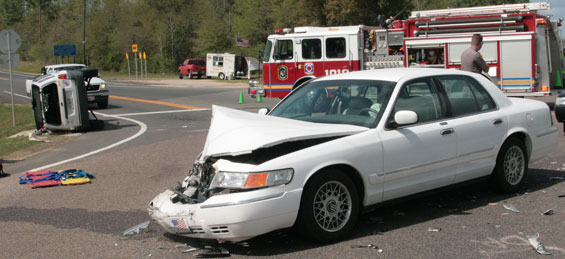
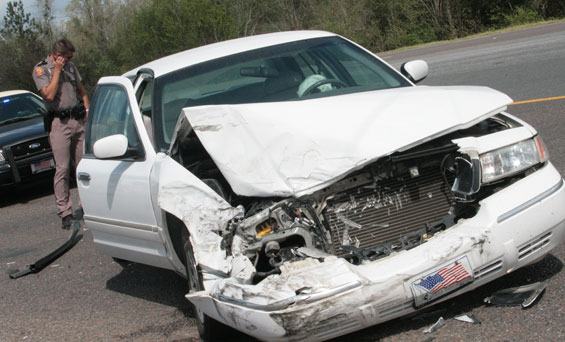
At least four people were injured in a two vehicle crash Saturday afternoon at Highway 97 and Highway 29 in Molino.
The accident involving a SUV and car just occurred just after 2 p.m. All four of the injuries were from the car. The SUV came to rest on its side.
The four were transported by ambulance to a Pensacola hospital. Further details were not immediately available. The accident is under investigation by the Florida Highway Patrol.
Escambia County EMS and the Molino Station of Escambia Fire Rescue also responded the crash.
Pictured: At least four people were injured in this crash Saturday afternoon in Molino. NorthEscambia.com photos, click to enlarge.
Escambia, Santa Rosa Unemployment Shows Decline
March 26, 2011
The latest job numbers released Friday showed 2,200 people no longer among the jobless during a one month period in Escambia and Santa Rosa counties.
Escambia County’s unemployment dropped nearly a full percentage point — from 11.8 percent in January to 10.7 percent in February. That represented 1,686 people no longer seeking employment, for a total Escambia County unemployment of 14,801 people. One year ago, unemployment in Escambia County was 11.1 percent.
 Santa Rosa County also recorded a large drop in unemployment— from 10.4 percent in January to 9.5 percent in February. Santa Rosa County gained 583 jobs during the period, with a total of 6,763 persons still unemployed. The year-ago unemployment rate in Santa Rosa County was 10.1 percent.
Florida’s unemployment rate dropped to 11.5 percent in February as the state added more than 20,000 jobs, state officials said Friday.
While the drop still leaves the jobless rate just a bit above February of 2010, when it was 11.3 percent, the drop from 11.9 percent in January was seen as good news in an economy that has been stubbornly sluggish. The number of jobs in the state was nearly 33,000 higher than a year ago, the strongest annual growth rate since 2007.
“This decrease in Florida’s unemployment rate, combined with continued job growth, is welcome news and provides additional evidence that our economy is getting back on track,” said Agency for Workforce Innovation Director Cynthia R. Lorenzo.
It’s also good political news for Gov. Rick Scott, who took office earlier this year promising to get the state back to work. Whether the drop can be credited to anything he’s done or not won’t matter eventually – Scott has set himself up to be measured as successful or not based almost entirely on whether the state creates 100,000 new jobs a year over the next several years.
“The dip in the number of Floridians who are out of work is an encouraging sign and cause for guarded optimism,” said Scott, who visited a workforce center on Friday. “However, 11.5 percent unemployment is still unacceptable because more than one million Floridians need jobs. That is why I remain focused on making Florida the best place to start or grow a business.”
Economists have said for months that they expected the state’s job market would start to recover, basically anytime, but it has been slow in coming.
“This is how we anticipated that the labor market recovery would play itself out in Florida – slow, very measured growth in the beginning of the year, then picking up speed as 2011 continues,” said Sean Snaith, the director of the Institute for Economic Competitiveness at the University of Central Florida.
Still, the state’s jobless rate, hammered by heavy reliance in Florida’s economy on housing, remains well above the national average of 8.9 percent.
But the increase in jobs available represented the fifth consecutive month with year-over-year job growth since the state started losing jobs in the summer of 2007.
The industry doing best was leisure and hospitality, which saw a nearly 3 percent annual increase in jobs. Other industries with significant gains in jobs included education and health care.
But the bane of Florida’s job market, the construction industry, remained lackluster. It was the industry that lost the most jobs over the year, seeing a 4.5 percent decline, representing just under 16,000 jobs.
State Officials Recommend No Outdoor Burning
March 26, 2011
With high fire danger and several active wildfires throughout Northwest Florida, officials with the Florida Division of Forestry are asking residents to refrain from any outdoor burning in the immediate future.
“We have several large scale fires from Bay County west through the Panhandle going on right now and we recommend that people do not burn anything outside this weekend,” said Public Information Officer Joe Zwierzchowski. “With the cold, dry winter and lack of rain in the past several weeks, there is a good chance of fires spreading and those fires will be intense.”
While this is just a recommendation and not a burn ban, officials say that until the area receives some appreciable rainfall, the fire danger risk remains higher than normal.
“The most important thing is for people to be safe and realize that we are in a very real situation,” Zwierzchowski said. “What starts as a simple, little grass fire from someone burning off some tree trimmings or palm fronds can quickly become a wildfire.”
Man Back In Court On Molino DUI Death Charges
March 26, 2011
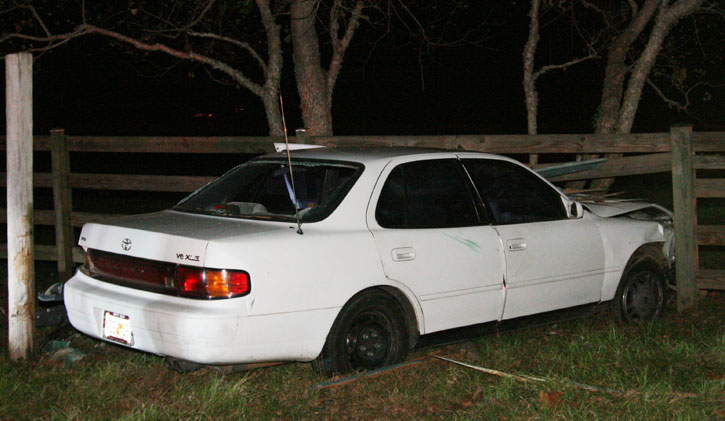
The Navarre man charged with DUI manslaughter in connection with a Molino wreck that claimed the life of a Pensacola woman was back in court this week.
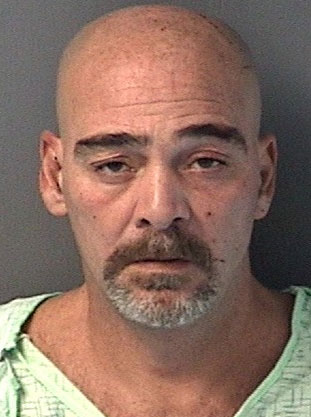 Terry E. Lee, 41, appeared before Judge Linda Nobles who set his trial for May 31.
According to the Florida Highway Patrol, Lee was traveling on Omega Drive about 6:15 p.m. November 10, 2010, when his Toyota car left the roadway, traveled through a wooden fence and across a pasture before hitting another fence and a tree. Lee’s passenger, Brandee N. Scott, 49, of Pensacola, was pronounced dead at the scene of the crash. She was reportedly impaled by a wooden board from the fence.
Lee, who was airlifted to Sacred Heart Hospital following the crash, reportedly told Florida Highway Patrol troopers that he was not involved in the crash.
Lee is facing charges of DUI manslaughter, DUI property damage, no driver’s license, driving with license suspended resulting in death, and three counts of possession of a controlled substance without a prescription. He remains in the Escambia County Jail without bond.
For more photos from the scene, click here.
Pictured above: A Pensacola woman died in this single vehicle crash last November in Molino. NorthEscambia.com file photos, click to enlarge.
Lady Chiefs Shut Out Ponce de Leon With Two Homers
March 26, 2011
 The Northview Lady Chiefs shut out Ponce de Leon on the road Friday night with two home runs.
Misty Doran pitched seven for the Chiefs, striking out 11. Shaniqua Jones was 2-3 for the Lady Chiefs with a home run, and Shawna Montgomery was 1-2 also with a homerun. Ashley Digmon went 2-3 with a triple.
The Lady Chiefs (10-7, 6-2) will be in action again next Thursday when they host West Florida.
Greg Evers Weekly Wrap-Up: Septic Tanks, Gun Open Carry, Local Commissioners
March 26, 2011
Senate Memorial 358 passed its last committee of reference and was placed on the Senate’s special order calendar to be heard next Tuesday, March 29. SM 358 reaffirms that Congress should honor the intent, language and purpose of the 10th Amendment to the United States Constitution, limiting the scope and exercise of federal power. I am sponsoring SM 358 to draw attention to the importance of our state’s sovereignty.
 The House companion bill to Senate Bill 234, relating to the open carry of firearms, has passed its last committee of reference in the House of Representatives and is now ready for the House floor. I am continuing to work hard to get the Senate bill through its committees so we can successfully pass this important Second Amendment protective legislation.
This week, I had the opportunity to meet with county commissioners from Santa Rosa, Holmes, Okaloosa, Washington and Escambia Counties. Your input is a great resource to me and I want to thank those of you who participated in County Commission Day at the Capitol. I particularly appreciate the input and hard work of Santa Rosa County Commissioners Lane Lynchard, Jim Melvin and Bob Cole who are working closely with me to find a reasonable solution for Santa Rosa County residents to some problems relating to a rogue gun range operator located in a Gulf Breeze neighborhood. Together, I think we can protect our residents’ rights to enjoy their homes in peace and privacy while at the same time protecting those same resident’s Second Amendment rights from unwarranted government intrusion.
I look forward to continuing my work with county officials and citizens as we take point to address the major issues affecting Northwest Florida as the legislative session progresses.
I am continuing to work to pass Senate Bill 168 and permanently repeal the septic tank inspection requirement that was passed as Senate Bill 550 in spite of my strong opposition during last year’s legislative session. We simply cannot let this legislative session pass us by without reaching a reasonable solution to stopping the expensive and unnecessary government intrusion caused by the mandatory septic tank inspection program from the Department of Health. Please join me in urging my Senate colleagues that this inspection program was a bad idea that needs to be corrected.
As always, please continue to send me your priorities and concerns for the legislative session. For further assistance, do not hesitate to contact me at greg@gregevers.com or call my office at (850) 689-0556 with any questions or concerns.
Thank you for your continued input and support!
Greg Evers
Behind The Pollen: Those Majestic Oaks
March 26, 2011
Trees are slowly waking up after a long winter’s nap. While some trees awaken with a beautiful floral display, others are more subtle. One such restrained tree that is just waking up is the oak.
 Oak trees produce flowers each spring, although their flowers are not the showy type. Showy flowers are showy for a reason; they need to attract insect pollinators to transfer their pollen. It’s the plants that don’t have showy flowers – cedars, oaks, pines, hickories, grass, and the notorious ragweed that make the lives of allergy sufferers miserable each year. These plants have chosen wind as their means of spreading pollen, and an effective method it is. Windblown pollen is produced in abundant quantities and can be carried for miles in the breeze.
All members of the Quercus genus are known to produce large amounts of pollen, making both deciduous and evergreen oaks highly, to extremely, allergenic. One way of knowing when the oak trees are blooming is the appearance of yellow pollen on your car, sidewalk or pool. Following the bloom, oak flowers, known as catkins, drop to the ground and accumulate along curbs.
Successful pollination results in the development of acorns. Curiously, the word for oak tree fruit is not the same word for the tree. Apples grow on apple trees, hickory nuts and pine nuts grow on hickories and pines, but acorns grow on oaks. This odd disconnection between the parent and fruit names goes back to an Old English word meaning fruit of a tree.
Oaks can be divided into two broad categories: the red (or sometimes called black) oaks and the white oaks. The main difference between the groups is the time it takes for the seed, or acorn, to mature.
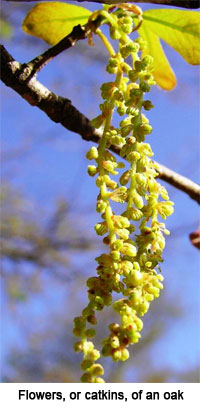 Examples of red oaks include the laurel oak, Southern red oak, turkey oak and water oaks. Their leaf lobes are usually pointed or tipped with a fine bristle. A bristle is a small spine at the tip of the leaf. Red oaks produce flowers each spring. The acorns of these trees, however, take two seasons to mature following their formation, leading to the designation as biennial oaks.
Some examples of oaks in the white group include the live oak, post oak and the swamp chestnut oak. White oaks generally have a rounded leaf tip and rounded lobes without bristles. Their acorns are sweeter than those of the bitter red oak group, making them more palatable to both humans and wildlife. After pollination the white oak acorns grow and mature in only one season. Oaks that have acorns that mature in the fall of the year they are formed are designated as annual oaks.
If we have a warm spring and a summer with enough rain we typically will have a heavy crop of acorns in autumn. That’s why a heavy crop of acorns is not an indicator of the severity of winter to come but rather a reflection of the past spring and summer.
Oaks provide valuable food for vertebrate wildlife in the form of acorns. More than 100 species of vertebrate animals are known to consume acorns in the U.S., including mammals such as white-tailed deer, gray squirrels, fox squirrels, flying squirrels, mice, voles, rabbits, raccoons, opossums, gray foxes, red foxes, and wild hogs. Birds that feed on acorns include wild turkey, bobwhite quail, wood ducks, mallards, woodpeckers, crows, and jays.
Theresa Friday is the Residential Horticulture Extension Agent for Santa Rosa County. Photo courtesy Theresa Friday.