

Weekend Gardening: Colorful Bedding Plants Can Brighten A Winter Day
November 4, 2012

Decreasing day length is a signal to start preparing for winter. Soon, deciduous shrubs will drop their leaves and the landscape will appear stark and less impressive. To keep the gloomy days of winter at bay, add cool season bedding plants to the landscape.
 Bedding plants are those that are commonly used in residential and commercial landscapes to provide color and interest. No other group of plants can so quickly and economically create a colorful landscape.
Most bedding plants are annuals. These short-lived plants grow from seed, bloom and die within one growing season. The transient nature of annuals means that at the end of their season when they are no longer attractive, annuals are removed and replaced with new plantings.
Many flowering plants prefer a very specific season; therefore, bedding plants are classified into two groups based on the temperatures they prefer. Cool season bedding plants do best in the cold to mild temperatures of October through early May and generally tolerate typical winter freezes without protection.
According to a University of Florida/IFAS publication, bedding plants that can be added to the North Florida landscape now include alyssum, baby’s breath, calendula, carnation, dianthus, dusty miller, foxglove, hollyhock, ornamental cabbage and kale, pansy, petunia, snapdragons and violas.
 Most annual bedding plants prefer to be in a sunny location. Prepare the planting beds several weeks before planting. First, remove any weeds or other unwanted plants from the bed. Next, turn the soil to a depth of about eight inches. Spread a two- to four-inch layer of compost, rotted leaves, aged manure, composted finely ground pine bark or peat moss over the bed, and then evenly sprinkle a light application of an all purpose fertilizer. Thoroughly blend the organic matter and fertilizer into the bed, rake smooth and you’re ready to plant.
Gardeners are accustomed to (and even demand) that bedding plants be in bloom when they are purchased. Some cool season bedding plants, however, will provide far superior results if they are purchased when young and before the colorful display begins.
Bedding plants are typically planted to make a dramatic statement. To accomplish that, place multiple plants of the same kind in a bed. Bedding plants generally look best and the beds will fill in better when the rows are staggered. Lay out the first row of plants spaced properly. The second row is laid behind the first row at the appropriate spacing from it, but the plants are placed between the plants of the first row so that they form triangles with those plants.
Flower beds of colorful bedding plants add a lot to the landscape but require a fair amount of maintenance to stay looking their best. Keeping beds well weeded is critical. A two-inch layer of mulch will help considerably in keeping weeds from growing, and using preemergence herbicides (weed preventers) may help in some situations. However, always plan on having to do some hand weeding.
Theresa Friday is the Residential Horticulture Extension Agent for Santa Rosa County.
Deadline for Conservation Assistance and Funding is Approaching
November 4, 2012
The USDA-Natural Resources Conservation Service (NRCS) in Florida is encouraging landowners, farmers and producers to visit their local NRCS office now to receive more information and apply for conservation technical assistance and possible cost share opportunities.
The application process for 2008 Farm Bill conservation programs is continuous, but funding selections are typically made once a year. The Florida NRCS application cutoff date for consideration for Federal Fiscal Year 2013 funds is November 16, 2012.
“Applications received after that date will be considered for future funding periods,” said State Conservationist Carlos Suarez. “We’re urging producers to contact their local service center as soon as possible to be considered for this year’s funding.”
NRCS works with landowners through conservation planning and assistance designed to benefit the soil, water, air, plants, and animals that result in productive lands and healthy ecosystems.
Cost share funding may be available to eligible applicants for the following Farm Bill programs:
The Environmental Quality Incentives Program (EQIP) is a conservation program that provides financial and technical assistance to farmers and ranchers who face threats to soil, water, air, and related natural resources on their land. Through EQIP, NRCS develops contracts with agricultural producers to voluntarily implement conservation practices. Persons engaged in livestock or agricultural production and owners of non-industrial private forestland are eligible for the program. Eligible land includes cropland, rangeland, pastureland, private non-industrial forestland, and other farm or ranch lands.
The Wildlife Habitat Incentive Program (WHIP) is a voluntary program for developing or improving high quality habitat that supports fish and wildlife populations of National, State, Tribal, and local significance. Through WHIP, the NRCS provides technical and financial assistance to eligible private and Tribal landowners for the development of upland, wetland, aquatic, and other types of wildlife habitat.
The Conservation Stewardship Program (CSP) is available on Tribal and private agricultural lands and non-industrial private forest land. CSP encourages producers to address resource concerns in a comprehensive manner by undertaking additional conservation activities; and improving, maintaining, and managing existing conservation activities.
NRCS encourages interested parties to visit with their staff as soon as possible. Applicants who apply early have more time to resolve any program or land eligibility issues, officials said.
The Escambia County Field Office is located at 151 Highway 97 in Molino (in the Escambia County Farm Bureau Building) For more information, call (850) 587-5404 ext 3, or visit www.fl.nrcs.usda.gov.
Florida Republicans Dominate Chase For Campaign Cash
November 4, 2012
In an advantage that could ripple through races statewide, the Republican Party of Florida has raised nearly $14 million since Aug. 10 — while the Florida Democratic Party has collected about $7.5 million, according to campaign-finance reports filed Friday.
The GOP, which totally controls state government, tapped major donors such as Florida Power & Light, which contributed $435,000, and Blue Cross and Blue Shield of Florida, which chipped in $425,000.
Democrats, meanwhile, received $535,000 from the Florida Education Association teachers union and $475,250 from Florida Justice PAC, a political offshoot of the Florida Justice Association trial-lawyers group.
The latest party totals, which covered the period from Aug. 10 until Thursday, widened a fund-raising gap that has been evident in campaigns across Florida. In all, the Republican Party has raised about $26 million this year, more than double the $10.8 million raised by Democrats.
That money provides a huge advantage, in part because it can be used to buy television ads and crank out mail pieces in competitive races. Also, the Republican Party has contributed tens of thousands of dollars directly to numerous legislative campaigns, including to some candidates and races that have drawn little attention or are not considered particularly competitive.
The parties, candidates and political committees faced a Friday deadline for filing campaign-finance information, giving a final glimpse of how — and where — money is flowing before Tuesday’s elections. Candidates and committees, which must disclose information more often than parties, provided reports detailing activity from October 13 to Thursday.
By Jim Saunders, The News Service of Florida
Pensacola To Canceled New York Marathon Runners: C’mon Down
November 4, 2012
After Superstorm Sandy left devastation in the northeast and canceled the New York Marathon, the Pensacola Marathon is inviting displaced runners to head to Pensacola.
“The Pensacola Marathon sends our thoughts and prayers to those affected by the storm. Pensacola and the Gulf Coast have experienced terrible, event changing storms as well, and are familiar with what the people affected are going through. We also know the importance of all the hard work and training the runners prepared for such an event,” local race officials said Saturday.
The Pensacola Marathon is opening slots in the ninth running of the Pensacola Marathon on November 11 for displaced New York Marathon runners.
The Pensacola Marathon, already at an all-time registration high, will be ordering special commemorative t-shirts for the additional runners and will be ordering additional Pensacola Marathon medals, which will be mailed to the runners upon their delivery. The registration fee will include the race, event t-shirt, medal, and post-race party, which features a taste of Pensacola with food vendors providing samples of their local specialty. Special hotel rates are still available for all runners, including staying on the white sandy beaches of Pensacola Beach.
For more information, visit www.marathonpensacola.com.
Former Trooper, Police Investigator Convicted Of Theft
November 3, 2012
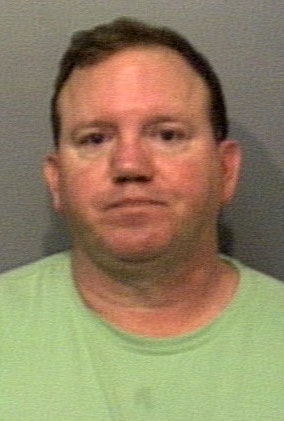 A former Alabama State Trooper and Atmore Police Department investigator from Walnut Hill has been convicted of using a state credit card to buy over $2,200 worth of gas for his personal use.
Jonathan Dees, 48, pleaded guilty in Baldwin County Circuit Court. He was sentenced to 60 months in jail, That sentence was suspended and he was ordered to serve a term of six months supervised probation, to pay court costs, and a fine of $100 to the Alabama Crime Victims Compensation Fund.
Dees provided a current address in the 7000 block of Highway 97 in Walnut Hill at the time of his arrest on February 16, 2012, according to Baldwin County Jail records.
Dees had been assigned to the Mobile office of the Department of Public Safety and was later hired as a police investigator by the City of Atmore. He resigned his position with the Atmore Police Department on the day of his arrest.
The state presented Dees’ confession; video evidence showing him purchasing the gasoline; and documentation that, on his days off, he used his trooper vehicle and bought gas for his personal use with the state credit card. Prior to pleading guilty, Dees repaid $2,204.09 for purchases between the approximate dates of July 2009 and January 2011.
“This case is a sad example of someone who has betrayed not only the trust of taxpayers and the law that he was sworn to uphold, but also his fellow law enforcement officers who have earned our trust and respect,” said Alabama Attorney General Strange. “Our message to all is that public corruption must be fought so that Alabama citizens may have confidence on those who serve the public.”
Playoff Bound: Northview Beats Baker For District Championship
November 3, 2012
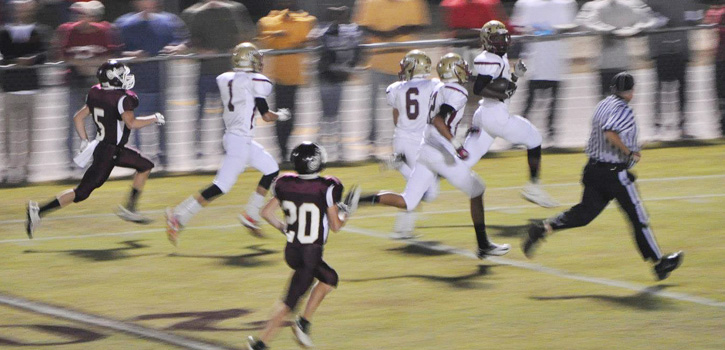
For the second year running, the Northview Chiefs are the District 1-1A champions. The Chiefs have dominated the district this year, outscoring three district opponents by a combined 144-20.
Friday night, the Chiefs chomped the Baker Gators 40-6 to seal the district title.

For a photo gallery, click here.
Northview started things off in Baker with a touchdown on the opening drive of the game — a 65-yarder from quarterback Kevin Vaughan to La’Mikal Kyles. But the flags were flying, and the touchdown was called back on a holding call.
Baker was about to have their one moment of glory, but after that there was going to be no holding back a Chiefs team that has dominated district play this year.
On a bad Northview snap, the Gators recovered in the end zone for a touchdown. A missed kick, and Baker was up 6-0. And it was downhill from there for the Gators.
Northview senior Neiko Robinson was in for a 70 yard touchdown 32 seconds later With a good kick from Vaughan, Northview took a 7-6 lead. Vaughan then connected with Robinson for another touchdown with 11:09 to go in the half.
In the second half, Kyles had touchdowns of 12 and 88 yards.
Other Northview scores included a 3-yard quarterback keeper from Kevin Vaughan with 3:13 to to in the game and a 30-yard Neino Robinson interception return with 2:08 on the clock.
With the win, the Chiefs (7-2, 3-0) will open the state playoff series at home in the regional semifinals on Friday, November 16. Next week, the Chiefs will be at home for Senior Night against West Florida High School.
For a photo gallery, click here.
Pictured: The Northview Chiefs beat Baker Friday night to for the district championship. Photos by Chris Edwards for NorthEscambia.com, click to enlarge.
Tate Beats Washington (With Football, Senior Night Photos)
November 3, 2012
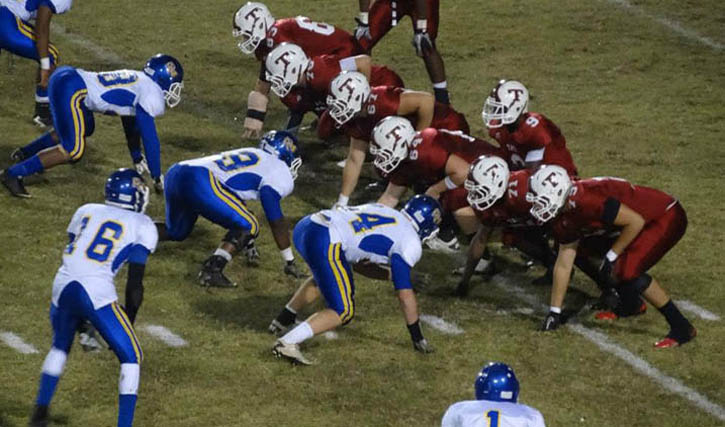
The Tate Aggies went into Friday night’s Senior Night game with one thing on their minds — that so-far elusive first win of the 2012 season. And that’s just how the Aggies ended Senior Night, 35-20 over Washington.
Washington was on the board at 3-0 first with a field goal with 5:23 to go in the first quarter. The Aggies answered at 4:34 in the first with an eight-yard run from Lorenzo Long. After a good kick from Todd Ryals, the Aggies were up 7-3.
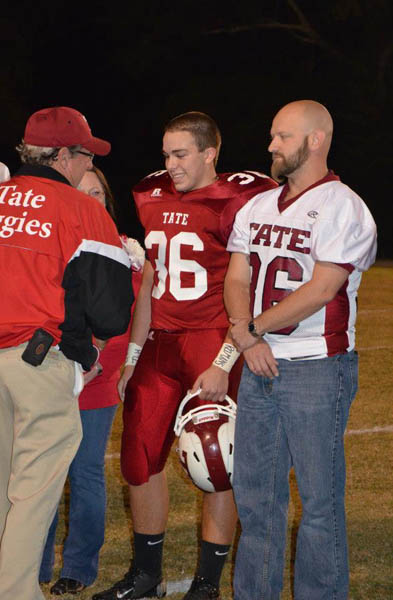 The Aggies would strike again in the first quarter, when Rashaun Johnson returned an interception 29 yards and Ryals put the pigskin through the uprights on the point after. Headed into the second, Tate was up 14-3.
In the second, Tate scored again, this time on a 25-yard pass from Devekyo Lewis to Bryan Davis, 21-3.
With 3:03 in the third, the Wildscats scored on a 26-yard pass. Tate’s Johnson returned the kickoff 88 yards for another Tate TD, and the Aggies were still on top 28-10. The Aggies, looking for that big first win of the season, scored again in the third on a 78-yard run from Long, 35-10.
Washington scored times three in the fourth quarter with a safety, a five-yard touchdown and a two-yard touchdown pass. But it wasn’t enough at Tate celebrated a 35-20 win.
With the win, the Aggies finished their 2012 season — the first under head coach Brad Naggatz — at 1-8. It was the first win for Tate since 2010 when the Aggies went 3-7.
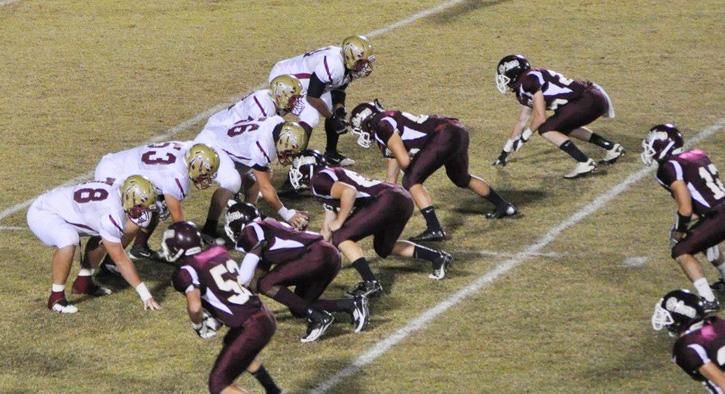
Pictured top: The Tate Aggies beat the Washington Wildcats Friday night for the Aggies first win of the season. Pictured inset. Friday night was Senior Night for the Aggies. Pictured below: The Tate varsity cheerleaders. Photos by Kristi Smith and Hope Bonucchi for NorthEscambia.com, click to enlarge.

Three Arrested On Prostitution Charges
November 3, 2012
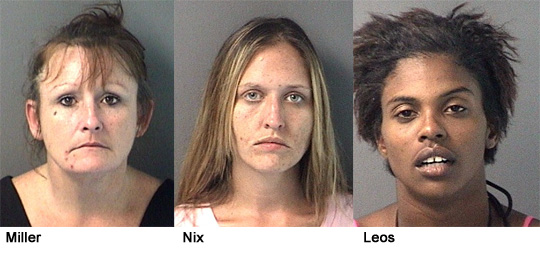
Three Escambia County women were arrested for prostitution Friday after an undercover sting by the Escambia County Sheriff’s Office.
Virginia Elaine Miller, 44, and Jamie Louise Nix, 32, were each charged with soliciting for prostitution and booked into the Escambia County Jail with bond set at $1,000. Jasmine Rae Leos, 20, was jailed for soliciting for prostitution and trespassing. Her bond was set at $2,000.
All three women approached undercover deputies on different occasions and solicited them for money in exchange for sex, the Sheriff’s Office said.
Freeport Downs Jay
November 3, 2012
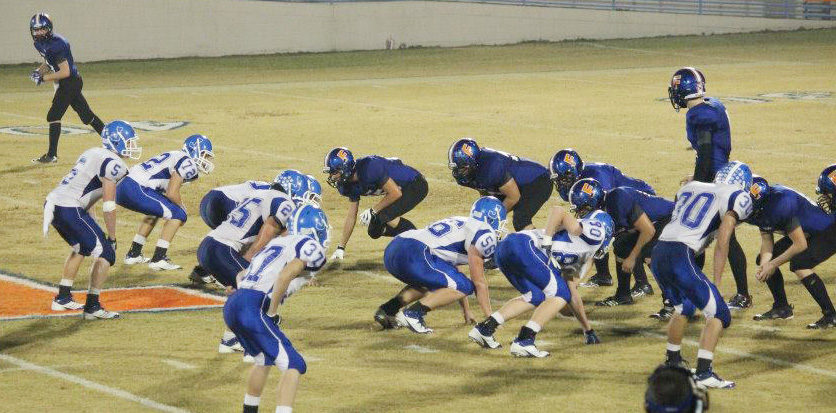
Freeport defeated the Jay Royals 46-7 Friday night in Freeport. Jay will end their season next Friday night, November 9 at home against R.F. Monroe. at 7 p.m.
Photos by Michele Gibbs for NorthEscambia.com, click to enlarge.
Escambia Man Arrested For Possessing Child Porn
November 3, 2012
An Escambia County man has been arrested on multiple felony child pornography charges after police said a month-long investigation determined he was downloading child porn off the internet.
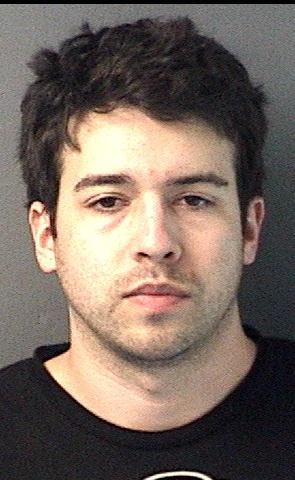 William Blake Edgar, 24, was charged with 19 counts of possession of child pornography. Additional charges are anticipated, according to Pensacola Police Department Detective Jeff Brown.
Edgar, who is unemployed, was arrested during the execution of a search warrant at his residence. The warrant was served by members of the North Florida Internet Crimes Against Children Task Force, which includes personnel from the Pensacola Police Department, Escambia County Sheriff’s Office and the Department of Homeland Security.
Brown said officers seized a computer and several other electronic devices that contained several thousand child notable photographs; additional forensic investigations will be done on the devices.
The male and female children shown in the photographs are believed to be up to 13 years old. Some of the pictures and movies showed children being sexually abused, police said.
Brown said investigators also are trying to determine if Edgar had personal contact with children.