

Store Robbery Suspect Arrested; Century Woman Charged As Accessory
January 20, 2013
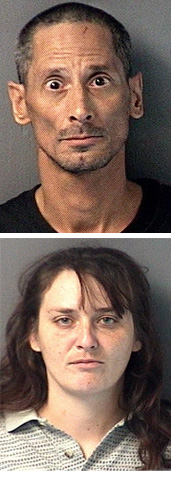 An Escambia County man was charged with a Saturday morning convenience story robbery, and a Century woman was charged with being an accessory in the crime.
Felipe Samuel Cruz, 46, was charged with the robbery of the Tom Thumb at Saufley Field Road and Blue Angel Parkway just before 8:00 Saturday. Cruz allegedly entered the store, held a knife to the clerk’s throat and demanded cash.
As deputies were arriving on scene, they spotted Cruz running and were able to catch him as he was attempting to enter a Jeep Cherokee Laredo occupied by 29-year old Candida Rose Daw of Whirlpool Road in Century and Summer Kalb.
Cruz was charged with aggravated battery and robbery with bond set at $115,000. Daw and Kalb were booked into the Escambia County Jail. Daw’s bond set at $10,000; Kalb was held without bond.
Florida Gov’t Weekly Roundup: Let The People Vote Early, In More Places
January 20, 2013
Gov. Rick Scott this week broke with many in his own party by saying some recent Republican-backed election changes should be reversed to give voters more time to cast ballots.
Following an election mired by hours-long lines in certain precincts, Scott said local election supervisors need more flexibility to expand early voting hours and venues in an effort to make every potential vote count.
 Scott’s comments came as lawmakers returned to Tallahassee and began looking at several major issues, from what went wrong on Election Day to finding ways to enhance safety for students following the fatal shooting of 20 grade-school children and six adults in a Connecticut school last month.
Meanwhile this week, a Florida Supreme Court decision upheld a Scott-backed initiative to require workers in the Florida Retirement System to pay into to their pension plans, a ruling that will affect hundreds of thousands of teachers, state and local employees.
And as President Barack Obama announced plans to push for gun control measures, Florida’s governor said he won’t push for any legislation to make it more difficult to own a gun, and the Senate president said he didn’t expect that debate to be held this year in the Legislature, but left to Washington.
SCOTT: EARLY VOTING BACK
Two years after signing an elections bill that critics said was politically inspired to reduce voting by Democrats, Gov. Rick Scott said this week the change should be reversed.
Elections supervisors should have the authority to give voters up to 14 days before Election Day, Scott said this week. The governor also said shorter ballots would help alleviate the long lines that clogged some precincts in the last general election, and that supervisors should have more flexibility in setting up early voting. All of that would, presumably, make it easier for people to vote – which was the argument the losers made when they tried to persuade Republicans not to reduce the opportunities to vote in the first place.
Scott’s announcement breaks with many in his own party who backed the voting restrictions as a way to fight fraud.
Scott also said the early voting period should once again include the Sunday before Election Day, an option used by many black churches to get out the vote and seen by most as an advantage for Democrats.
“Our ultimate goal must be to restore Floridians’ confidence in our election system,” Scott said.
FRS CHANGES OK
In a victory for Republican legislative leaders (and also for Scott), a divided Florida Supreme Court this week upheld a 2011 law that requires government workers to chip in 3 percent of their salaries to help fund their own retirement accounts.
In a 4-3 decision, the high court overturned a Leon County circuit judge who ruled the law violated the constitutional rights of government workers hired before July 1, 2011, the day the law took effect.
Legislative leaders had feared that a loss at the Supreme Court would blow a $1 billion hole in the state budget.
Backers of the contribution said the ruling allows the state to save money and offer retirement plans more similar to business in the private sector.
Critics, including a coalition of unions led by the Florida Education Association, characterized the employee contributions as a hidden tax on government employees, many of whom have not seen a raise in several years.
Had the court sided with the unions, the state would have been on the hook for about $1 billion in contributions that have already been collected.
Echoing the sentiment of other supporters, Senate Appropriations Chairman Joe Negron said government employees should help pay for their retirement packages, as private-sector workers do.
“I think that our constituents want us to live by the same rules that exist in their workplace,” said Negron, R-Stuart. “We can now move forward with crafting our budget.”
The case primarily centered on whether a 1974 retirement law created contractual rights that shielded public employees from having to contribute money into the pension system. The court said no.
“The preservation of rights statute was not intended to bind future legislatures from prospectively altering benefits for future service performed by all members of the FRS,” Justice Jorge Labara wrote for the majority.
ETHICS PROPOSALS ON FRONT BURNER:
Sen. Jack Latvala, chairman of the Senate Ethics and Elections Committee, said this week he expects an ethics bill to go to the full Senate during the first week of the 2013 legislative session in March.
The bill appears likely to deal with several issues, including bolstering penalties for officials who do not file financial-disclosure forms, reining in lawmakers’ use of political committees to pay for meals and other personal expenses, and cracking down on voting conflicts of interest. It also may seek to make it harder for former legislators to lobby after their service.
The bill may also give the Florida Commission on Ethics the power to undertake investigations after receiving referrals from the governor’s office, the Florida Department of Law Enforcement, state attorneys or federal prosecutors.
SCHOOL SAFETY
In the wake of the December school shootings in Newtown, Conn., lawmakers appear serious about school-safety changes – they’re already talking about how much it might cost. .
Florida now spends about $70 million on school security. Putting a cop in each elementary school might cost more than $100 million, school district representatives estimate.
A Senate panel this week discussed ways to standardize cost-sharing of school resource officers. In some counties, local sheriffs are paying the bulk of providing law enforcement officers in schools. In other counties they pay little or nothing.
Scott, though, says he has no plans to push lawmakers to enact any gun control legislation this session.
“Gov. Scott supports the second amendment,” a statement from his office said this week. “He will listen to ideas about improving school safety during the legislative session, but he continues to support the second amendment and is not proposing any gun law changes.”
On Friday, Senate President Don Gaetz said he didn’t think state lawmakers were likely to go there on their own, either. In an interview with the Tampa Bay Times editorial Board Gaetz said while he favors background checks on all gun purchases, he doesn’t think any changes to gun laws will come up in Tallahassee.
“Congress is going to take that up,” Gaetz, R-Niceville, said. “Let them have that debate.”
STORY OF THE WEEK: Two years after signing a new law reducing early voting, Gov. Rick Scott does an about face and calls for extending the number of days Florida voters can go to the polls early.
QUOTE OF THE WEEK: “I just don’t quite understand how someone can be a make-believe cop, pursue my son who had every right to be in that neighborhood, chase him, get in a confrontation with him, shoot and kill him and not be arrested. Something has to be done.” Sybrina Fulton in reference to the state’s stand your ground law, (and a delay before the arrest of George Zimmerman in the shooting death of her son, Trayvon Martin.) Zimmerman, a neighborhood watch volunteer has now been charged with murder, but is expected to claim self defense under Florida’s Stand Your Ground doctrine.
By The News Service of Florida
Featured Recipe: Mexican Lasagna
January 20, 2013

Today’s featured recipe for Mexican Lasagna will add new flavors to family mealtime as an old favorite gets a south of the border twist.
Mexican Lasagna
Ingredients
- 1 can (10 3/4 ounces) Campbell’s Condensed Cheddar Cheese Soup
- 1/4 cup milk
- 1 package (about 1 ounce) fajita seasoning mix
- 1 pound ground beef
- 1 can (10 3/4 ounces) Campbell’s Condensed Golden Mushroom Soup
- 1/2 cup water
- 1 tablespoon chili powder
- 1 1/2 teaspoons dried oregano leaves, crushed
- 12 corn tortillas (5-to 6- inch)
- Chopped tomatoes (optional)
- Sliced green onions (optional)
Preparation
- Stir cheese soup, milk and half the fajita seasoning in medium bowl until mixture is smooth.
- Cook beef in a 10-inch skillet over medium-high heat until well browned, stirring often to separate meat. Pour off any fat.
- Stir mushroom soup, water, chili powder, oregano and remaining fajita seasoning in skillet and heat to a boil. Reduce heat to low. Cook for 5 minutes. Remove skillet from heat.
- Place 3 tortillas in the bottom of a 2-quart shallow baking dish, overlapping slightly. Spread 1 cup beef mixture over the tortillas. Repeat layers twice. Top with remaining tortillas. Spread the cheese soup mixture over the tortillas.
- Bake at 350°F. for 30 minutes or until hot and bubbling. Let stand for 10 minutes. Sprinkle with the tomatoes and onions, if desired.
Serves
Makes 6 servings
Preparation Time:
20 minutes
Bake Time:
30 minutes
Standing Time:
10 minutes
Hundreds Fill A Bowl For Manna
January 20, 2013

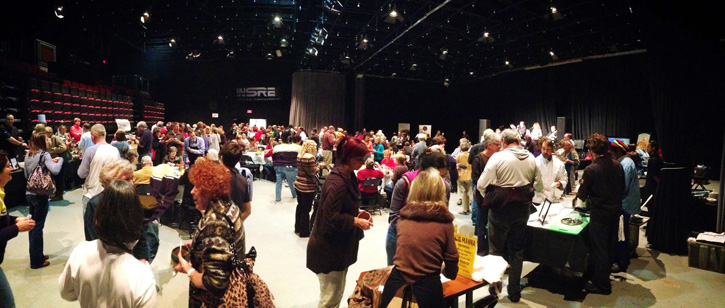
Fill a Bowl for Manna was held Saturday to benefit the local food bank that serves clients across the area.
Attendees filled their keepsake ceramic bowl with sumptuous soups from several restaurants while helping Manna Food Panties raise funds to fill the empty bowls of more than 44,000 people in Northwest Florida.
A $30 admission fee entitled guests to a keepsake ceramic bowl filled with soups by local eateries. The event was held at the Jean & Paul Amos Performance Studio of WSRE-TV.
Courtesy photos for NorthEscambia.com, click to enlarge.
Fire Heavily Damages Barrineau Park Road Home
January 19, 2013

A Friday night fire heavily damaged a home near Molino.
The occupant of the home in the 700 block of Barrineau Park Road managed to escape the fire without injuries. The fire reportedly began as a cooking fire in the home’s kitchen about 6:30 p.m.
For a photo gallery, click here.
The Molino, Cantonment, McDavid, Beulah and Ensley stations of Escambia Fire Rescue responded to the blaze.
Pictured: Fire heavily damaged this home in the 700 block of Barrineau Park Road Friday night. NorthEscambia.com photos by Kristi Smith, click to enlarge.

Little Change In Local Job Numbers; Florida’s Rate Best In Four Years
January 19, 2013
The latest job numbers released Friday showed the unemployment rate dropping in almost unchanged in the North Escambia area, while Florida’s unemployment rate dipped to the lowest rate in four years.
 Escambia County’s unemployment rate dropped from 8.2 percent in November to an even 8 percent in December. There were 227 fewer people reported unemployed during the period, for a total Escambia County unemployment of 11,030 people. One year ago, unemployment in Escambia County was 9.7 percent.
Santa Rosa County unemployment increased from 7.1 percent in November to 7.2 percent in December. Santa Rosa County had a total of 5,159 persons reported to be still unemployed. The year-ago unemployment rate in Santa Rosa County was 8.9 percent.
In Escambia County, Alabama, unemployment was down slightly from 8.2 percent in November to 8.1 percent in December. That represented 1,169 people unemployed in the county during the month. The year-ago rate was 9.1 percent.
The jobless numbers released by Florida and Alabama do not include persons that have given up on finding a job and are no longer reported as unemployed.
Florida’s unemployment rate dipped to 8 percent in December — the lowest rate in more than four years.
The drop in the unemployment rate also lowered the gap between the state’s jobless figure and the national number, which edged up to 7.8 percent in December. The difference between the state and the national unemployment number had been 0.4 percent in November.
The unemployment rate was the lowest it’s been since November 2008, state officials said.
Currently, 749,000 Floridians are unemployed, with slightly fewer than 7.4 million people holding non-agricultural employment.
Alabama’s seasonally adjusted unemployment rate, at 7.1 percent in December, was down from November’s rate of 7.5 percent and was below the year-ago rate of 8.0 percent.
Doc-in-a-Box: Pain Clinic Owner, Two Docs Sentenced For Running Pill Mill Clinics
January 19, 2013
The owner of an Escambia County pain clinic and two doctors have been sentenced for their roles in operating illegal pill mill clinics in Pensacola and New Orleans.
Dennis M. Caroni, age 38 of Los Angeles, CA, Dr. Gerard M. DiLeo, age 61 of Bradenton, FL, and Dr. Joseph G. Pastorek, II, age 62 of Slidell, LA, were sentenced Friday by Chief U.S. District Judge Casey Rodgers. Following a six week trial, all three defendants were charged and found guilty of conspiring to unlawfully distribute prescription pain killers. Caroni and DiLeo were also convicted of conspiring to unlawfully launder the proceeds of their prescription drug distribution violations.
As the owner and operator of Global pain management clinics in Pensacola and the New Orleans area between 2004 and 2008, Caroni was sentenced by Rodgers to 20 years in prison. DiLeo was sentenced to two years imprisonment plus one additional year home confinement for his role as part-owner of one of the clinics and full-time prescribing physician. The other prescribing physician charged, Pastorek, was sentenced to one year’s imprisonment plus one additional year home confinement.
This case was the result of a multi-year Organized Crime Drug Enforcement Task Force operation named “Doc-in-a-Box” and the cooperative efforts of the Drug Enforcement Administration, Internal Revenue Service—Criminal Investigation, Florida Department of Law Enforcement, Santa Rosa County Sheriff’s Office, and U.S. Attorney’s Office Northern District of Florida.
‘Massive Burglary Ring’ Suspects Busted
January 19, 2013
Police have arrested two men that allegedly burglarized at least 50 homes.
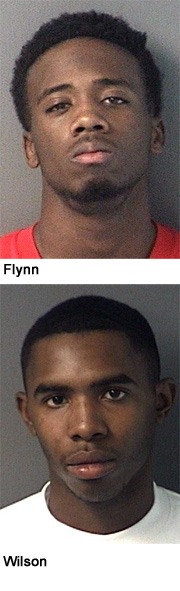 John Flynn, 19, has been charged with nine burglaries and one count of grand theft auto. Jo’Kavious Wilson, 18, has been charged with seven burglaries and one count of grand theft auto.
Eight burglary and one grand theft warrants also are active on Decker Brooks, 21, of 910 Martin Luther King Jr. Dr., Pensacola. He has not yet been taken into custody. Flynn and Brooks are brothers.
Pensacola Police Department Detective Danny Harnett said the males are suspects in excess of 50 residential burglaries that occurred since August 2012. More charges are pending on these and other suspects as the investigation continues.
Among items taken were televisions, computers, alcohol, guns, coins and a vehicle. Detectives are still trying to determine what the suspects did with the items.
Harnett said the investigation determined that Flynn was the leader of the group, who typically committed burglaries during daytime hours by ringing doorbells or knocking on doors. When no one answered, they would kick doors in for access to residences.
Byrneville Elementary Celebrates Florida Literacy Week
January 19, 2013

Students across the area have spent the past week celebrating Florida Literacy Week.
At Byrneville Elementary School, numerous guest readers stopped by during the week to read to students. Friday, NorthEscambia.com’s publisher read from “Extra Credit” by Andrew Clements to fifth grade students, and from “The Fantastic Secret of Owen Jester” by Barbara O’Connor to fourth graders. Afterwards, students had an opportunity to ask questions and learn more about NorthEscambia.com and how media organizations operate.
Pictured top: Jacke Johnston’s fifth grade class at Byrneville Elementary School. Pictured below: Stephanie Gilmore’s fourth grade class. NorthEscambia.com photos, click to enlarge.

Northview Sweeps Freeport; Robinson Scores 41; Jones Adds 39 (With Photo Galleries)
January 19, 2013


In varsity boys action, the Chiefs beat Freeport held a strong 33-12 lead at the end of two periods, before going on to win 68-23. Neino Robinson led the Chiefs with 41, while Cameron Newsome added nine.
In junior varsity boys action, Northview beat Freeport 67-22. The Chiefs held the Bulldogs to just two points in the fourth period. Nick Lambert scored 19 for the Chiefs. Tydre Bradley and Trent Howard both had 13 for Northview.
In girls action, the Northview Lady Chiefs beat the Lady Bulldogs of Freeport 59-43. Shaquanna Jones scored 39 for the Lady Chiefs, and Elayzha Bates added 8.
The Chiefs will be in action next Tuesday at home as follows:
4 p.m. — JV Lady Chiefs vs. Escambia
5 p.m. — JV boys vs. Baker
6 p.m. — Varsity Lady Chiefs vs. Escambia
7 p.m. — Varsity Boys vs. Baker
For photo galleries, click the links below: