
Top Stories Of 2012

January 1, 2013

Here are our picks for the Top 12 Stories of 2012 on NorthEscambia.com:

12. Century’s Nativity

An atheist group attacked the Town of Century’s nativity scene — which had not actually been displayed in years. The town declared the nativity scene surplus property, Baby Jesus and all, and sold it to the highest bidder. With a $5 bid from the Faith Bible Baptist Church, a spot of property from Century Marine, power from Abundant Life Assembly of God and extension wiring from the Tabernacle Baptist Church, the nativity scene found a new home just across the street from the Century Town Hall and was back on display for the Christmas season.

11. Local Elections

The election year brought new faces — Steven Barry and Lumon May — to the Escambia County Commission and the same familiar faces re-elected to the Escambia County School Board. In neighboring Alabama, Dewey Bondurant was back in as Flomaton’s Mayor, while Jim Staff was named Atmore’s mayor, ending about two decades in office for Howard Shell who did not run again.

10. Local Crime

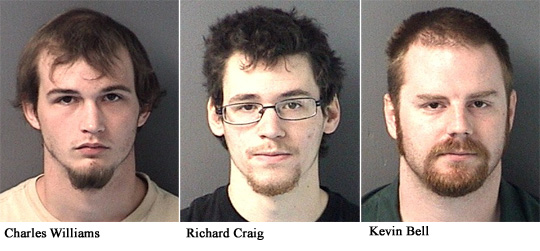
2012 was not without crime in North Escambia — including several high profile cases in the last months of the year. A Century convenience store was robbed at gunpoint, a person was stabbed at a Century bar and Century’s Pen Air Federal Credit Union was held up by a bandit claiming to have a gun. And in Davisville, the longtime owner of a lottery story was shot to death during a robbery attempt. Two were arrested, claiming they intended to rob the store of Spice.

9. Gulf Power Nuclear Plans

The future became uncertain for 2,728 acres of land near McDavid purchased by Gulf Power for a possible nuclear power plant. State regulators ruled in July that Gulf Power could not force customers to pay for the land in advance of plans for a nuclear power plant at the North Escambia site. It became  unclear whether Gulf Power will ever build a power plant — nuclear or otherwise on the site –  as the utility never took a key first step in the lengthy approval process — a step known as getting a “determination of need.” Also, officials said it would likely take at least a decade to get permits and build a nuclear plant.

8. West Nile

North Escambia residents became increasingly aware of those pesky mosquitoes during the warmer months of the year. A total of 13 people were diagnosed with West Nile Virus in Escambia County during 2012. One case was fatal.

7. New Ernest Ward Middle School

The Escambia County School Board signed off on a new state of the art, $16.5 million Ernest Ward Middle School in Walnut Hill. An architect was hired to design the school, which will be built on the school’s existing campus in Walnut Hill. Construction could begin in 2013. Students will be on site during the construction of the new school. Once the new building is complete, most of the current building will be torn down, and portables and modular buildings  currently on the campus will be removed.

6.  Not So Quiet At the Library

Things were far from quiet at Escambia County’s libraries in 2012. With budget cutbacks at Escambia County and the City of Pensacola, both of which fund the libraries, the West Florida Library system became a very public budget battleground.  Hours were slashed at branches in the county, and threats were made to close the Century Branch Library and never open a planned branch in Molino. Library supporters and Escambia County fired back at Pensacola, with the county withholding funds to make sure county branches were open increased hours. In the end, most hours were restored, and the city and county took steps to look at new library funding methods and management in 2013.

5. Highway 29 Resurfacing

A $7.7 million project to resurface about 16 miles of Highway 29 from north of Champion Drive in McDavid to the Alabama state line in Century came to a conclusion in 2012.

4. Oil In Walnut Hill

In August, a train loaded with 69,000 barrels of crude oil worth about $6.5 million rolled into a new crude oil transfer station in Walnut Hill, the largest such facility in the United States. Genesis Rail Systems, LLC  has complete phase one of the facility on 20 acres that fronts Corley Road near Arthur Brown Road. The property was chosen because it is at the intersection of an existing crude oil pipeline and the Alabama & Gulf Coast Railway. From the location, crude will flow primarily to a Shell facility near Saraland, Ala., and potentially to other refineries along the Gulf Coast. Back in June, an estimated 800 people stood in line for hours at the Walnut Hill Community Center in hopes of being hired for the oil transfer station.  About 15 were hired, with the payroll expected to increase to about 30 people. The positions pay from $16 to $20 per hour.

3. Molino Community Complex

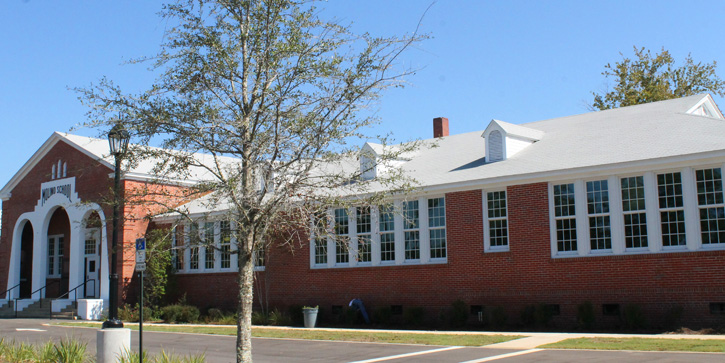
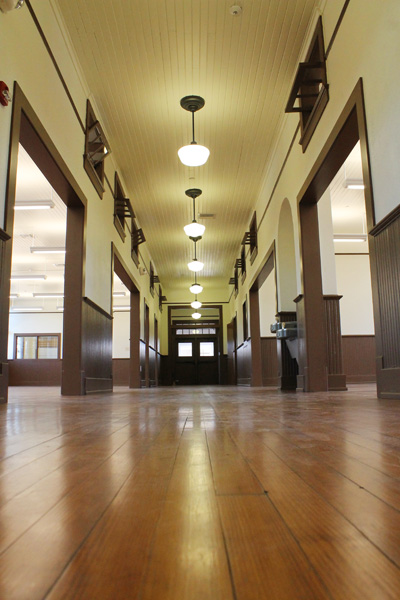
The grand opening of the new Molino Community Complex was held in October. The project included the conversion of the old Molino School in to a library, community center and museum. There was also a new 7,000 square foot facility constructed for the tax collector and property appraiser. The project was funded by local option sales tax monies.

2. Navy Federal Buys 4-H Facility

The children and teens on the 4-H County Council voted to sell their 240 acre Langley Bell 4-H Center to Navy Federal Credit Union. Navy Federal will pay $3.6 million for the property next to the credit union’s campus in Beulah, and the Escambia County Commission is constructing the new 4-H Center on Stefani Road with $1.5 million in local option sales tax funds. Navy Federal will use the property for expansions and promised new jobs.

1. All We Do Is Win, Win

The Northview Chiefs made history in Orlando’s Citrus Bowl, winning the first state football championship in the history of the school. It was the first state championship for an Escambia County school since 2009, and the first state championship of the new Class 1A Rural division.  Chiefs fan supported their team in huge fashion, with about 1,500 make the 500 mile road trip to Orlando to cheer on their team.

Hungry At Mercy Of Washington For Farm Bill Action

January 1, 2013

Florida’s anti-hunger advocates are watching Congress warily, fearing lawmakers will cut the Supplemental Nutrition Assistance Program, or SNAP, formerly known as food stamps, by billions of dollars as they wrangle with the fiscal cliff.

The cuts are contained in a federal farm bill that has been held hostage to sparring over automatic spending cuts and tax increases set for Jan. 1.

The farm bill must be reauthorized every five years; it expired at the end of September. But since the price of milk could more than double without congressional action, lawmakers are working on a deal to extend. That would hold SNAP harmless but not for long.

So far House Speaker John Boehner, R-Ohio, has rejected a one-year extension, offering 30 days instead. It’s unlikely that any deal will remove the possibility of SNAP cuts in the near future.

Advocates say Florida cannot bear another blow to its food support network. In June, nearly 3.5 million Floridians were getting SNAP benefits. From June 2011 to June 2012, Florida saw the nation’s second-highest increase in SNAP use – a rise of 9.7 percent.

“If SNAP benefits get cut, it scares me to death,” said the Rev. Pam Cahoon, executive director of CROS (Christians Reaching Out to Society) Ministries, a coalition of about 100 religious groups that runs food pantries and other programs to feed the hungry in Palm Beach County.

Last summer both chambers agreed to SNAP cuts, but they’re far apart on numbers. The full Senate passed a bill with $4.5 billion worth of cuts over ten years. The House Agriculture Committee okayed $16 billion in cuts for the same period; that measure hasn’t reached the House floor. The Congressional Budget Office estimates that nearly two million Americans would lose food assistance under the House version.

“Cuts in the food stamp program will have a terrible impact everywhere, but a particularly detrimental impact in Florida,” said Jim Weill, president of the Food Resource and Action Center in Washington, D.C.

The center is lobbying against any cuts. Weill cited polling by Gallup showing Florida with five urban areas in the nation’s top 25 in need for food help last year – Orlando-Kissimmee, Lakeland-Winter Haven, Jacksonville, Miami-Fort Lauderdale-Pompano Beach and Tampa-St. Petersburg-Clearwater.

Fully 19.2 percent of adults and 28.4 percent of children are “food-insecure” in Florida, compared to the national averages of 16.1 percent for adults and 21.6 percent for children, said Richard English, executive director of Tallahassee’s Second Harvest of the Big Bend. That means at some point within a given month, their families might not be able to afford a meal.

Perry Borman, executive director of the Palm Beach County Food Bank and former Children and Families administrator for Palm Beach and Broward counties from 2008 to 2012, said the region saw a 300 percent increase in the number of residents needing food stamps.

“In a county that people probably think is full of wealth and extremely wealthy people, over 57 percent of all of our children in the Palm Beach County school system are on free and reduced lunch,” Borman said.

Congress, however, is facing immense pressure to cut spending, and the rise in SNAP costs during the recession is a sore point for many lawmakers. High jobless rates and expanded eligibility under President Barack Obama’s 2009 stimulus bill pushed the cost of SNAP to $76 billion a year in 2011, double what it was in 2008. The percentage of SNAP benefits going to households with gross incomes over 130 percent of the poverty line also doubled in that time, according to data released by the U.S. Department of Agriculture last month.

House Agriculture Committee leaders say they’re trying to preserve the program’s core mission – feeding the hungry – while preventing waste and worse.

Florida Congressman Tom Rooney, chairman of the House Agriculture Subcommittee on Livestock, Dairy and Poultry, supports the House bill. Rooney spokesman Michael Mahaffey has said the bill ensures that SNAP benefits “are there for those who need them. It closes loopholes…The House bill also achieves significant savings by cracking down on waste, fraud, and abuse.”

Anti-poverty activists say that approach ignores the economic benefits of SNAP.

“When you’re dealing with folks who don’t have savings, and they’re living from month to month, these federal resources go right back into the community,” said Debra Susie, executive director of the anti-poverty group Florida Impact. “And the U.S.D.A. research shows that every five dollars of SNAP benefits generates nearly twice that in local economic activity as a result.”

Besides, say local food bank administrators, it’s rare for people to ask for food who don’t need it.

“It comes down to them getting very, very desperate,” said Paul Clements of Tallahassee’s Second Harvest of the Big Bend. “We’ve seen a lot of prior donors who are now standing in our food pantry lines.” He also said donations are down this year.

“We had a couple of people come into the pantry and then turn around and walk out and come back the next day,” said Cahoon. “They were just so chagrined that they were having to be at a food pantry that they couldn’t even do it the first time they came.”

The main reasons for the greater SNAP participation, Cahoon said, are job loss, housing problems and the higher cost of fuel, “which made everything go up in price, from a loaf of bread to a gallon of milk.” She said people with jobs come to the food pantries because gas and groceries are so high, they can’t afford both.

Among the SNAP provisions marked for elimination: federal bonuses for food stamp payment accuracy. That has particular resonance for Florida, which went from one of the nation’s most error-prone states to one of the best performers. Former Florida Department of Children and Families Secretary Bob Butterworth, who oversaw DCF from early 2007 to mid-2008, plowed the bonus money back into the agency’s ACCESS program, which handles food assistance, just in time for the recession.

“Because of redesigning our ACCESS system over the years to provide online access, more than 95 percent of our applications are completed online,” said DCF spokeswoman Erin Gillespie. “We have (so far) been able to keep up with the ever-increasing demands…For food stamps, we process cases on average in 15 days and the federal standard is 30 days.”

Florida has never been faced with a farm bill’s expiration, said Gillespie; they’ve always been passed or extended.

“There are many current proposals regarding the federal farm bill, so we cannot speculate as to how changes would affect Floridians until something passes,” she said.

Advocates say the high rates of hungry children are especially troublesome, given what that augers for DCF going forward.

“In the state of Florida, we look at the third graders and how they’re doing with reading,” said Cahoon. “If they’re behind in reading, that’s how many beds we plan for our prison system in the future. If kids aren’t eating, then they can’t learn in school…and they’re going to end up in our prison system.”

By Margie Menzel, The News Service of Florida

2012 In Photos: August

January 1, 2013

All this week, we are looking back at the photos that were in the news in 2012. Today, we are featuring photos from August.

Workers watch as the first $6.5 million train load of crude oil arrives at a new transfer station in Walnut Hill in August.

Hurricane Isaac left a calling card on Pensacola Beach.

Northview took on Catholic in high school volleyball.

Authorities removed a suspected meth lab from a mobile home in Escambia County, Ala.

Gov. Rick Scott paid a visit to Escambia County to promote Labor Day activities post-Hurricane Isaac.

A Robertsdale man allegedly opened fire in the parking lot of the Grocery Advantage in Cantonment, causing minor injuries to one person in the domestic violence incident.

Hurricane Isaac pounded Pensacola Beach with high surf.

August meant back to school for students across the area, including Aubree Jordan on her first day of kindergarten at Molino Park Elementary School.

The intersection of Highway 97 and Highway 29 continued to prove problematic for drivers.

Atmore elected Jim Staff (left) as mayor, ended more than two decades in office for Howard Shell (right).

LifeFlight lifts off following a motorcycle crash on Highway 97 in Walnut Hill.

Eli Miller of Walnut Hill shows his support for Escambia County Commission District 5 candidate Steven Barry at the Walnut Hill precinct during the August primary.

Atmore held a “Market in the Park” event downtown.

An overturned log truck snarled traffic for hours on Highway 29 in Cantonment.

A new Family Dollar store opened in Century.

Mission Molino — a joint group of students from Highland Baptist Church in Molino and Friendship Baptist Church of Cleburne, TX — teamed up to clean up and make an impact across Escambia County.

One person was injured and three horses were killed in this accident on West Highway 4 in Davisville.

The Molino 16U Lady Astros took second in the Southern Nationals.

Thousands turned out to Chick-fil-A  restaurants in August, an effort organized by Mike Huckabee to support the Christian owned business.

Texting and driving became illegal in Alabama on August 1.

Make A Resolution To Be More Wildlife Friendly

January 1, 2013

theresafriday.jpgThe tradition of the New Year’s Resolutions dates back to 153 B.C. Janus, a mythical king of early Rome was said to have two faces which allowed him to look back on past events and forward to the future.

The beginning of a new year is a great time to reflect on the issues of the past and resolve to do better in the upcoming year.  The 2010 Gulf oil spill had a devastating impact on local wildlife. Florida is a state renowned for its diverse and unique ecosystems. But rapid development and environmental disasters, particularly in coastal areas, is continuing to destroy wildlife habitat. Resolve to be more wildlife-friendly in 2012 by following these easy tips from the Florida Yards and Neighborhoods Program.

Provide food

Select plants with seeds, fruit, foliage, or flowers that butterflies, birds, and other wildlife like to eat. Berries, fleshy fruits, nuts, and acorns are all treats for many animals.

Supply water

Any water you provide will attract wildlife. You could have running water in the form of a natural feature, such as a pond, creek, or other body of fresh water, but a fountain or birdbath will also beckon wildlife.  Empty and clean your birdbath every few days. Do not clean it with soap or bleach—just physically scrub all surfaces with a brush or scouring-type sponge. Change the water regularly to prevent mosquito breeding and bacterial contamination.

Leave snags

Leave snags, which are the trunks of dead trees, in place if they do not create a hazard. Many birds use snags for perching, nesting, and feeding. Snags are often removed from yards or land mistakenly thought of as no longer having value. Nothing could be farther from the truth. A tree’s full life cycle at this point, is far from over.

Manage pets

If you permit pets to harass or kill wildlife, you will only hinder any efforts you make toward attracting wildlife. This is especially true for cats allowed outdoors.

Reduce insecticide use

Each time you apply an insecticide to your landscape, you reduce insect populations, which form an important food source for birds. Some chemicals can also poison birds and other animals that feed on affected insects.

Reduce the amount of mowed lawn area

Unmowed areas can contain more plant species than mowed areas, providing more potential food sources and habitat for wildlife. Reduce the mowed area around your house, especially in low-traffic areas, such as corners of the yard.

Increase vertical layering

Plant a variety of plants in different sizes and heights to provide more cover and feeding opportunities for diverse species of wildlife.

By following the simple tips in this chapter, your Florida-Friendly lawn and garden can become a sanctuary for wildlife, as well as part of a migratory passage between one wild space and another. Animals need to move from place to place, just like people. They have trouble traveling in heavily urban and suburban landscapes, but you can help them by joining your Florida-Friendly yard with others in the neighborhood to create a “natural corridor”—a safe, traversable route between woodlands, wetlands, or other wild areas.

For more specific information, visit the University of Florida/IFAS website at http://edis.ifas.ufl.edu/topic_landscaping_for_wildlife or call your local Extension Office.

Theresa Friday is the Residential Horticulture Extension Agent for Santa Rosa County.

Manhunt In Cantonment

December 31, 2012

A manhunt for a wanted suspect took place today in Cantonment.

The manhunt reportedly began after the Escambia County Sheriff’s Office attempted to serve an arrest warrant on Booth Avenue and the suspect fled. Deputies established a perimeter around Booth Avenue, including Pace Parkway and Morris Avenue, and called in a K-9 to assist in the search.

There’s no word from the Escambia County Sheriff’s Office if the suspect was taken into custody.

Pictured: Deputies search for a wanted suspect Monday morning in Cantonment. Reader submitted photo by Paula Butler for NorthEscambia.com, click to enlarge.


Locals Performing During Capital One Bowl Halftime

December 31, 2012

A group of local majorettes will be performing during the halftime of Tuesday’s Capital One Bowl in Orlando.

Katilyn Abbott, a majorette at Northview High School, attended a summer camp at the University of South Alabama where she won first place in “Outstanding Majorette Solo”,  “Grand Champion Majorette”, and the “All-Star Performer Award”. With the All-Star Performer award, she received personal invitations to the Capital One Bowl in Orlando and the Cotton Bowl in Dallas.

She picked the Capital One Bowl where she will be joined on the field at halftime by four other members of the local Twirl Time Group –  Dana Hursh, Maggie Thomas, Julie Hester and Valen Shelly.  The group traveled to Orlando last week along with former Twirl Time student Mallorie Beachy and Twirl Time instructor Angie Shelly.

The Capital One Bowl between the Georgia Bulldogs and the Nebraska Cornhuskers will air locally at noon Tuesday on WEAR 3 from the Florida Citrus Bowl in Orlando.

Pictured top: Previous Twirl Time student Mallorie Beachy, FSU majorette Maggie Thomas, home school student Dana Hursh, Northview majorette Kaitlyn Abbott, Northview majorette Julie Hester, Huxford Elementary student Valen Shelly and Twirl Time instructor Angie Shelly. Pictured: The group at Disney’s Magic Kingdom. Photos for NorthEscambia.com, click to enlarge.

Perdido Landfill Holding Recycling Workshops

December 31, 2012

Escambia County Solid Waste Management will host two recycling workshops this week to give children a learning experience in recycling.

Offered on Wednesday, January 2 and Thursday, January 3, from 9 a.m. until 3 p.m, the workshops are held at the Perdido Landfill, 13009 Beulah Road, Cantonment. The cost of the workshops is a donation of one pair of new or gently used shoes to be given to Soles4Soles.

Activities at the workshops include tours of the landfill and recycling center, arts and crafts with recycled materials and games that focus on recycling and reuse. Participants should wear clothes that are appropriate for outside play and bring a lunch, snack and drinks. Please try to pack a zero waste lunch, which means reusable containers.

The event is sponsored by the Department of Solid Waste Management. For more information or to pre-register, call (850) 937-2160.

Troopers Out In Force For New Year’s Holiday

December 31, 2012

Law enforcement officers will be out in force as 2012 comes to a close, cracking down on drunk and impaired driving.

“December is National Drunk and Drugged Driving Prevention Month, and I encourage Floridians to act responsibly this holiday season,” said Florida Attorney General Pam Bondi. “Those who drive under the influence endanger everyone on the road and will go to jail.”

The National Highway Traffic Safety Administration finds fatalities in crashes that involve one or more impaired drivers appear to increase significantly during the Christmas and New Year’s Day holiday period and for thousands of families across Florida, the holiday season brings a somber reminder of the loved ones they lost to an impaired driver.

“We want everyone to enjoy the holidays, but also we want driving on our roadways to be safe,” said Col. David Brierton, FHP director. “The Patrol will be out in full force to help save lives, and we are not going to tolerate impaired driving. So remember: Drive Sober or Get Pulled Over.”

Florida Government: 2012 In Review

December 31, 2012

In an election year and a redistricting year, you might have expected this. The biggest stories of 2012 ended up being an election and redistricting.

A third ongoing story also pervaded the year’s news: The economy continued its long, slow rise from the ashes of the recession, and by year’s end the rebound – while facing the possible stomach-punch of a fiscal cliff setback – appeared to be solid. Unemployment is down dramatically from a year ago; home sales are back, as are home prices; and consumer confidence is up for most of us.

FAIR DISTRICTS?

For political junkies, the election competed with the precursor to the election, the once-a-decade redrawing of political lines, for the biggest news of the year. In retrospect, the remapping of political boundaries had a stunning effect that likely few truly expected: It seems to have re-jiggered the boundaries in a way that allowed the minority party, Democrats, to gain some ground, to make the election a little bit fairer.

That was the goal of a couple of constitutional amendments that were in effect for the first time this year. Voters in 2010 approved the amendments, called “fair districts” for short, which essentially required legislators to remap the state’s politics in a way that sought to avoid protecting incumbents or political parties.

Impossible, most of us said. And a true measure of whether it worked may also be impossible.

But one thing was clear – a number of Republican legislative incumbents in the House were drawn into the same districts as fellow GOP members, and some were drawn into districts that nearly assured they’d lose. Gone from the Legislature after Election Day, arguably as a result of redistricting, were big-name Republican lawmakers Scott Plakon and Chris Dorworth, who had been in line to become speaker in 2014. A number of other Republican lawmakers also lost, with Democrats gaining seats in the Legislature for the first time in years.

The same was true in Congress, where national tea party superstar Allen West lost to neophyte Democrat Patrick Murphy, despite being one of the biggest fundraisers in the country. Credit in part the new district West had to run in. Another tea party favorite, U.S. Rep. Sandy Adams, was also victimized by the establishment Republicans drawing the lines – they put her in the same district as long-time incumbent Republican Rep. John Mica, who won.

In a stunner, Republican Cliff Stearns, who was elected to Congress in 1988 the same day the first George Bush was elected president, was ousted, in part, because he had to run in a revamped district. Stearns lost in the GOP primary to Ted Yoho despite a fundraising advantage of 16-1. Yoho went on to win the seat in November.

Democrats didn’t hail the redistricting plans when passed – in fact they went to court over how the Republican majority drew the maps. Democratic Party Chairman Rod Smith said the GOP had failed to implement the will of the people. While the state Supreme Court forced lawmakers to redo the Senate maps, the House plan as drawn by lawmakers was approved, and the congressional map withstood a court challenge.

But in the end, Democrats appeared to benefit more from the new districts than the Republicans.

In the November election, Democrats picked up two seats in the Senate, though Republicans still have a 26-14 advantage. Democrats picked up five House seats, narrowing the GOP margin in that chamber to 76-44. They also gained seats in Congress.

Republican legislative leaders at first fought and tried to nullify the Fair Districts amendments. And it is hard to assess the degree to which the amendments ultimately worked.

A key difficulty is that the amendments are predicated on intent. Lawmakers can’t draw districts that favor incumbents – but if an incumbent wins, who is to say whether it was because of the way the district was drawn or not? Whether they tried to draw districts to help themselves or not is in the eye of the beholder (a judge, or Supreme Court justice, in this case).

Despite their initial anger at the amendments and attempt to invalidate them, Rep. Will Weatherford and Sen. Don Gaetz, who were generally in charge of redistricting efforts, eventually said they would try to follow them. Whether the redistricting process is fairer may ultimately take several years to determine. If legislative representation comes to more closely resemble other measures of political preference, such as party registration and how people vote in statewide and national elections, then perhaps at the end of a decade or so, the determination can be definitively made.

ELECTION DAY – ER, DAYS

Whether owing largely to redistricting or not, the Democratic success in November was the main political story this year for most casual observers.

And Democratic President Barack Obama’s winning of the state’s electoral votes was the apex of that year-long story, and a big surprise to a number of people on both sides of the political spectrum who thought the race might be closer.

Democrats replicated their strong registration push and get-out-the-vote effort from 2008, doing something that conventional wisdom said would be unlikely with the economy having been in the tank the last few years.

The state’s senior U.S. senator, Bill Nelson, also benefited from the Democratic effort, easily defeating Republican Connie Mack.

But Obama’s Florida win this time wasn’t needed – it turned out he won plenty of electoral votes across the country, and Florida’s mattered only in the margin of victory.

With that lack of drama, the story of a Democratic presidential candidate winning for a second election in a row in swing state Florida was overshadowed by the fact that it took us a few days to know exactly what happened.

FLORIDUH

Yet again, Florida voters seemed to have trouble voting, and officials seemed to have a problem counting votes.

As was the case in 2000, when Florida burst onto the late-night election joke scene in a big way, it was really only a few counties where there were problems. Most Floridians either voted early with no problems, or showed up on Election Day and cast a ballot in a generally unremarkable way.

But for some voters, and it was a large number because the trouble was most pronounced in heavily populated counties, particularly Miami-Dade, the election wasn’t so easy.

Voters reported waiting, in some cases, seven hours – nearly a full work day – to cast a ballot. Lines were unbelievably long on Election Day, even though voters had been able to vote early on eight days leading up to the election.

ELECTION CORRECTION

Afterward, there were calls for investigations of what went wrong, and a few are ongoing. Gov. Rick Scott determined that three questions need to be looked at closely: whether local elections supervisors need more flexibility in setting up polling sites; whether the ballot was too long and difficult for people to read; and whether the state messed up when Republican lawmakers passed – and he signed – a bill that reduced early voting from 14 days in 2010 to eight this year.

That last one was an extraordinary admission: Rarely in recent memory has a leading member of the majority party suggested that a high profile reform measure – especially one that was so heavily criticized by the other party – might have been a mistake.

But that’s exactly what Scott said.

For two years, Republicans in Florida have said that the 2011 changes to the election laws were needed to help prevent fraud, wouldn’t keep legal voters from voting and were benign in every way. Democrats warned the whole time that the changes would make it harder for legally registered voters to cast ballots.

Scott may have sold his GOP colleagues, who have so adamantly suggested the changes were needed, down the political river. Scott didn’t make any commitments but said that the number of early voting days is certainly something worth re-examining.

“People are frustrated in our state,” Scott said. “We’ve got to restore confidence in our elections.”

GRACIAS, LATINOS

If there was a voter of the year it was the newly registered Hispanic. Latino voters not only registered heavily as independents – making them up for grabs – but they registered in huge numbers. And then they voted in huge numbers, largely for Democrats.

Democrats worked hard for that Latino vote, aiming much of their ground game at Hispanic communities. Republicans have generally acknowledged they didn’t, and that was a big part of the difference in November.

ECONOMY, BACK AGAIN

In the latest numbers this year, Florida’s jobless rate stood at 8.1 percent. While not great when compared to the go-go days of the late-90s or mid-2000s, it looks pretty good when considering that it was over 10 percent just a year ago.

The unemployment rate is now at its lowest point in Florida since 2008, good news for Scott who has staked his whole governorship on getting the state back to work. So far, whether he can really claim the credit or not, he’s looking good. The jobless rate has dropped and jobs are being created.

Unfortunately for Scott a lot of people say the state’s economy is coming back just as the nation’s is – a recent poll showed many Florida residents don’t credit Scott with the turnaround.

Consumer confidence was up near the end of the year, though after the election about half the people – presumably those who wanted Mitt Romney to be president – got a little less optimistic about the future. But people’s perceptions about their own personal financial status are much higher than a year ago.

Home prices have also risen, as sales have picked up. Real estate fueled earlier Florida booms, and economists say now that a housing recovery is within sight, the state is just about back on its feet.

There was one major caveat as the year came to a close: the fiscal cliff talks in Washington. If a deal isn’t reached, the economy could go back into a stall.

CHARLIE CRIST, BACK AGAIN

When was the last time that the year’s most fascinating politician was someone who is not in office or technically running for office — and lost his last election after having to leave his party because he would have likely been defeated in a primary?

If 2011 was the year of Marco Rubio in Florida, Charlie Crist was undoubtedly the most intriguing political figure of the year. Even those who hate Crist – and that’s much of the Republican political establishment – have to admit his reincarnation as a Democrat, his re-emergence as a magnet for media attention, and his continuing popularity among the general non-political crowd has been astonishing.

Crist made a number of interesting moves, from changing his registration to Democrat to endorsing Obama for re-election. He also managed to get himself inserted into the lineup of speakers at the Democratic National Convention in Charlotte, N.C., even though he hadn’t yet become a Democrat.

Just as when he was a Republican governor of the state from 2007 to 2011, Crist generally was able to read where the political winds were blowing – getting out ahead of a Democratic wave year in a way that would benefit him.

In December, we learned that Crist’s re-emergence appears to be for real. A Quinnipiac University poll found that Crist had a 47 percent favorable rating – higher than Gov. Scott, who remains mired in the mid-30s in approval. And more than half of voters at the end of the year told pollsters they didn’t think Scott should get a second term, which must have been interesting to Crist and anyone else contemplating a run against the governor.

“Obviously, the governor has almost two years to go until the election and anything is possible, but he faces a herculean task in changing public opinion to his favor,” Quinnipiac pollster Peter Brown, said after the survey’s mid-December release.

OTHER BIG STORIES

As the year began it wasn’t clear whether the federal health care overhaul would be in place come the end of the year. But it is because of two things: first, Florida and other states lost a U.S. Supreme Court challenge to the law and second, the president won re-election, defeating Romney who had promised a repeal.

For what amounts to an arcane overhaul of insurance law, the Affordable Care Act has grabbed the attention of the American people like few other new laws in history.

To their credit, Floridians also widely debated another controversial law this year, with discussions in town halls, on radio talk shows, on Facebook and in letters to the editors about the 2005 “stand your ground” self-defense law.

The reason for the examination was tragic, however. The shooting early in the year of an unarmed African-American teenager, Trayvon Martin, by a neighborhood watch volunteer under disputed circumstances, not only exposed the continuing racial divisions embedded in criminal justice in the state, but also raised questions about when and where Florida residents are allowed to shoot each other.

A year-long examination of the stand-your-ground law by a special panel appointed by Scott ended with a draft report that suggested few major changes. But by the end of the year the talk of gun culture had shifted dramatically after the December school shooting in Connecticut that killed 20 children and six teachers and staff.

FIRST OPENLY GAY LAWMAKERS

The year may be remembered by advocates for gay and lesbian people as the year in which Florida voters, for the first time, sent openly gay legislators to represent them in Tallahassee. It wasn’t just one: Florida voters elected Rep. David Richardson, D-Miami Beach, and Rep. Joe Saunders, D-Orlando.

Both ran largely on other issues but said they’d be proud to help advance issues important to gay Floridians, too.

“If people want to ask me about being gay, I’ll talk about that,” Richardson told the News Service. “If you want to talk to me about the budget, I’ll talk about that.”

PASSINGS OF NOTE: Among those who left us in 2012:

-Sam Gibbons, a legend of Florida politics who served three decades in Congress and was chairman of Ways and Means, died at 92 in October. The Tampa Bay area Democrat never lost an election and was considered the “father of the University of South Florida.”

-Doyle Conner, who was the state’s agriculture commissioner for 30 years, from 1961 to 1991, died in December at age 83, Conner became speaker of the Florida House at age 28 and remains the youngest person to hold that post in the state’s history.

-Bill McBride, who ran for governor in 2002, losing to Republican Jeb Bush after defeating Janet Reno in the Democratic primary, died at 67 in December. McBride was married to Alex Sink, who lost the governor’s race in 2010.

-Phil Lewis, who was Senate president from 1978 to 1980 and served in the Senate for a decade, before becoming a member of the Board of Regents, died Sept. 4. He was 82.

-Ken Sorensen, who served in the House from 1998 to 2006 and then worked in the House for Speaker Marco Rubio, died in July at age 77.

-Former House Republican Leader Jim Tillman, who represented Sarasota County from 1967-1974, died in July. He later worked as a lobbyist.

By The News Service of Florida

2012 In Photos: June, July

December 31, 2012

All this week, we are looking back at the photos that were in the news in 2012. Today, we are featuring photos from June and July.

Tropical Storm Debby brought heavy surf to Pensacola Beach.

The Northview High School Food for America program was named the best in the Florida during the 84th Florida FFA State Convention in Orlando.

A Walnut Hill man escaped serious injury when a car reportedly fell on his neck.

Portions of Escambia County experienced extreme flooding in June.

June flooding in Pensacola.

Hundreds of people turned out in Walnut Hill in June to apply for one of just 20 jobs available with the opening of a new crude oil transfer station.

Graduations were held for area schools, including Tate High School.

The Northview High School Class of 2012 graduated at the school.

A July fire caused minor damage at a Century apartment complex.

Numerous churches held Vacation Bible Schools, including Highland Baptist Church in Molino.

Wounded Marine Lance Cpl. Joseph Daniel Palmer was welcomed home in July.

The new Escambia County Tax Collector and Property Appraiser offices opened in Molino.

Farmer’s markets, including the Market at St Monica’s in Cantonment, offered the best of summer’s bounty.

Northwest Escambia brought home the state title Sunday from the 16A State Babe Ruth Softball Tournament in Brewton — the first ever softball state championship for NWE.

Fire set by an arsonist damaged Escambia High School.

Relatives comfort each other following the death of an 11-year old in an Atmore house fire.

Flomaton and Century celebrated the Fourth of July with fireworks at Showalter Park.

« Previous PageNext Page »