
Helpful Hints To Prevent Frozen Pipes
November 27, 2013
Now is the time to prepare you your pipes for freezing cold weather.
The following recommendations, from ECUA, are a few simple measures residents can take to ready their home’s plumbing for this winter’s freezing temperatures.
External, exposed pipes are naturally the most vulnerable to freezing. Homeowners may:
Insulate Pipes or Faucets in Unheated Areas: Pipes located in unheated areas of your house, such as a garage or crawl space under the house or in the attic, are subject to freezing. If you have time to do this before freezing temperatures arrive, wrap these pipes with insulation materials made especially for this purpose. These materials can be found in most hardware stores or home improvement centers.
Disconnect And Drain Outdoor Hoses: Detach all hoses from faucets and allow them to drain. This will prevent the water in the hose or pipe from freezing and bursting the faucet or pipe to which it is connected.
Run a Trickle of Water: When forecasts call for sustained and / or severe freezing temperatures, run thin trickles of water from the faucet furthest from the water line coming to your house. Usually this is in a room at the back of the house or outside, in the yard. Allowing the water to circulate through your home’s plumbing helps to keep it from freezing. Some consider this a waste of water, but the cost of the water used is extremely slight compared to that of repairing broken pipes and the resulting water damage.
Remember the Backflow Preventer: Residents and business owners who have backflow preventers on their properties for water lines, fire lines, irrigation systems, and swimming pools need to protect their backflow preventers from freeze as well. Extended freezes can burst the body of the backflow assembly, rendering it useless. Wrap these pipes with insulation materials, made especially for this purpose. These materials can be found in most hardware stores or home improvement centers. If the device and the water lines are not in use at this time (i.e., irrigation system or swimming pool lines), shut off the water supply line and drain the backflow device.
From The Farm To The City: A Thanksgiving Bounty For The Needy
November 27, 2013
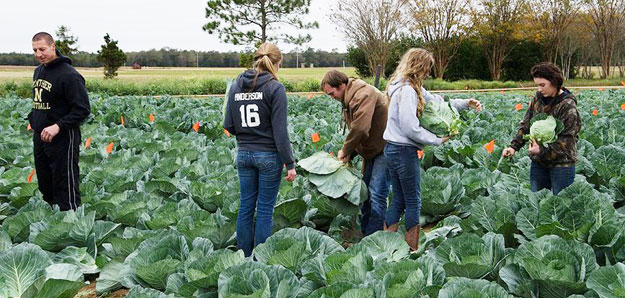
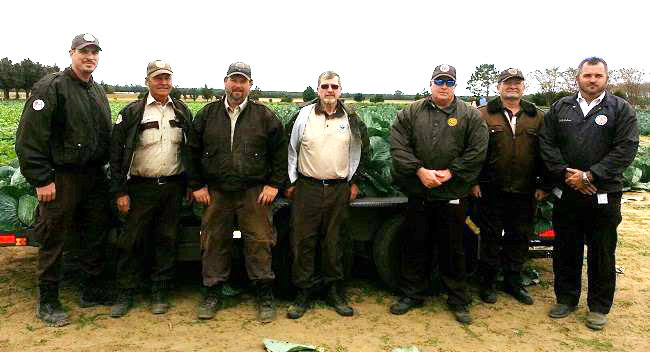
Students from several northern Santa Rosa County schools put in a hard day’s work to help make sure hundreds of families have a good Thanksgiving dinner.
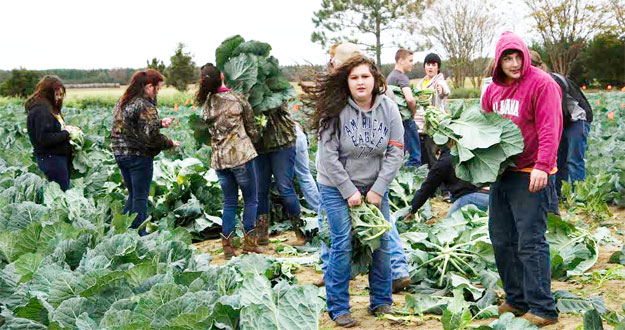
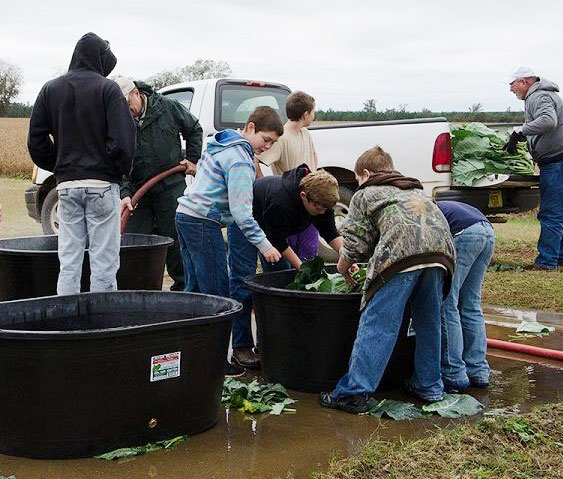 Students from Jay, Central and Milton high schools harvested hundreds of pounds of collards and cabbage from fields at the West Florida Research and Education Center near Jay. And middle schoolers from King Middle School in Milton washed the crops and bagged sweet potatoes. Staff from the Century Correctional Institution also took part in the harvest.
The fresh bounty was paired with turkeys and all the fixings donated by sponsors and distributed to about 400 families in need that had pre-qualified for the program.
“”We get to go out and meet with the families and see and talk with them a lot of families aren’t what you think. They aren’t in despair. These are hard working families that just need help,” said Robin Vickers of the UF West Florida Research and Education Center.
Hunting And Fishing Licenses Now Available At Century Courthouse
November 27, 2013
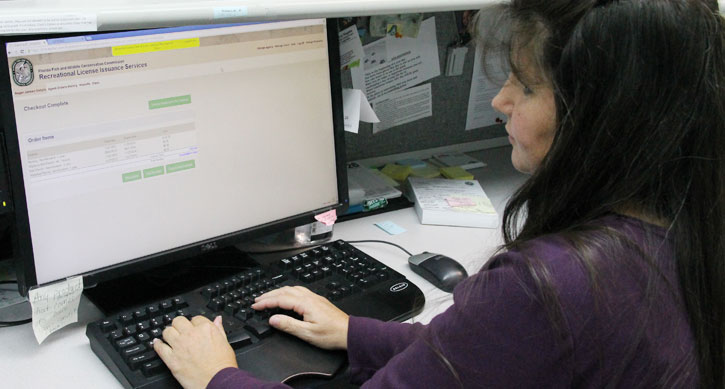
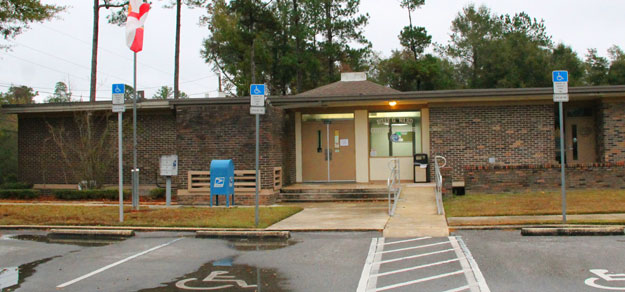
Hunting and fishing licenses are now available at the Billy G. Ward Courthouse in Century.
Citizens are now able to obtain Florida hunting and fishing licenses at the office of Clerk of Circuit Court & Comptroller Pam Childers in the courthouse at 7500 North Century Boulevard.
The office is open Monday through Friday, 8:00 a.m. – 5:00 p.m. and closed each day from noon – 1:00 p.m. for lunch.
The office is open today, but will be closed Thursday and Friday for the Thanksgiving holidays. Regular business hours will resume on Monday, December 2. For more information, contact the Escambia County Clerk of the Court office during the business hours listed above at (850) 256-6161.
Pictured top: Clerk of the Court employee Cindy Courtney works Tuesday afternoon to issue a Florida hunting license in Century. Pictured below: The Billy G. Ward Courthouse in Century. NorthEscambia.com photos, click to enlarge.
Turkey Time: Extension Service Offers Thawing Tips
November 27, 2013
 It’s Thanksgiving, time for family and friends to gather and give thanks. And time for cooks to ponder the correct way to prepare their turkey.
Today, we are taking a look how to make sure your turkey is properly thawed with tips from Dorthy Lee, Family and Consumer Sciences Agent for the Escambia County Extension Office.
Following four simple food-handling practices—clean, separate, cook, chill—will ensure a delicious and safe meal.
Frozen turkeys should be thawed—at a safe temperature— prior to cooking. There are three safe ways to thaw a turkey — in the refrigerator at 40°F or less; in cold water; and in the microwave.
Frozen Turkeys
Allow 1 pound of turkey per person.
Keep frozen until you’re ready to thaw it.
Turkeys kept frozen in the freezer should be cooked within one year for best quality.
Thawing Your Turkey
In the Refrigerator (40°F or below)
Keep the turkey in its original wrapper. Place it on a tray or in a pan to catch any juices that may leak. A thawed turkey can remain in the refrigerator for 1 to 2 days. If necessary, a turkey that has been properly thawed in the refrigerator may be refrozen. When thawing in the refrigerator, allow 24 hours thawing time for every 5 pounds of turkey.
4 to 12 pounds = 1 to 3 days
12 to 16 pounds = 3 to 4 days
16 to 20 pounds = 4 to 5 days
20 to 24 pounds = 5 to 6 days
In Cold Water
When thawing in cold water, allow 30 minutes per pound and change the water every 30 minutes until the turkey is thawed. Wrap your turkey securely, making sure the water is not able to leak through the wrapping. Submerge your wrapped turkey in cold tap water. Change the water every 30 minutes. Cook the turkey immediately after it is thawed. Do not refreeze. Allow approximately 30 minutes per pound.
4 to 12 pounds = 2 to 6 hours
12 to 16 pounds = 6 to 8 hours
16 to 20 pounds = 8 to 10 hours
20 to 24 pounds = 10 to 12 hours
In the Microwave
When thawing in the microwave, follow the manufacturer’s instructions, and plan to cook the turkey immediately after thawing because some areas of the turkey may become warm and begin to cook during microwave thawing.
For more information, call the Escambia County Extension office, (850) 475-5230.
Featured Recipe: Sweet Potato Marshmallow Swirl Cheesecake
November 27, 2013
As Thanksgiving approaches, we are featuring recipes on NorthEscambia.com this week. Today’s featured recipe, from columnist Janet Tharpe is a Sweet Potato Marshmallow Swirl Cheesecake.

Deputies: Drugs Found At Double Homicide Scene
November 27, 2013
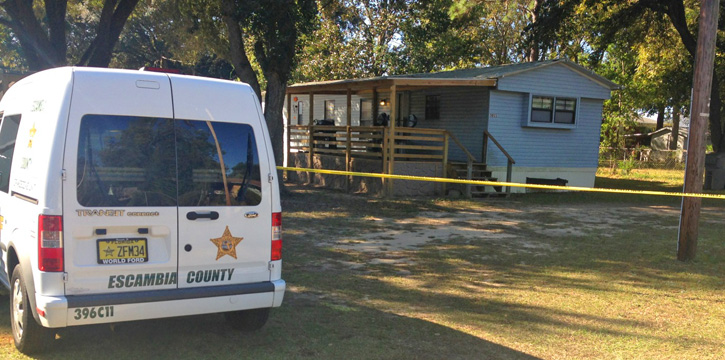
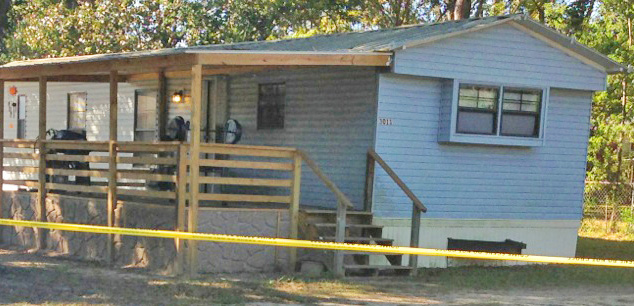
The Escambia County Sheriff’s office has released new details in the November 10 double homicide of two men found dead at a home on Boulder Avenue.
According to investigators, 36-year old John Edward Gibbons and 34-year old Christopher Lee Fehl were found deceased of apparent gunshot wounds. Deputies said narcotics were also found at the scene.
The investigation is continuing, and anyone with any information is asked to call Crime Stoppers at (850) 433-STOP or the Escambia County Sheriff’s Office at (850) 436-9620.
Pictured: The scene of an apparent double murder November 10 in Bellview. Photos by Christina Leavenworth, WEAR 3 for NorthEscambia.com, click to enlarge.
Two Injured In Two Afternoon Accidents
November 26, 2013
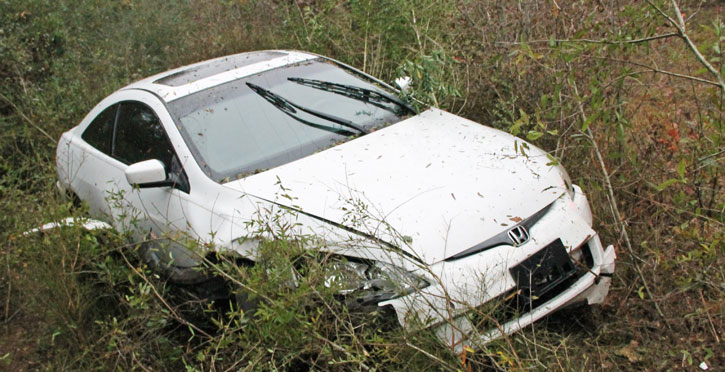
Two people were injured in two separate traffic crashes Tuesday afternoon near Bratt and Byrneville.
The first accident was reported just after noon on West Highway 4 near Byrneville Road. A driver lost control and ran off the roadway with the vehicle overturning in to a ditch. One person was transported with non-life threatening injuries by Escambia County EMS to Jay Hospital.
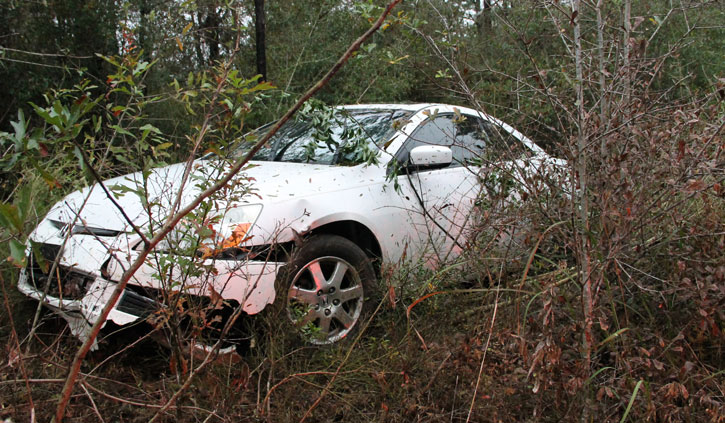
The second accident occurred about 3:50 p.m. on North Pine Barren Road just north of Hanks Road in Bratt. The 19-year old female driver a northbound car lost control, ran off the roadway and struck a utility pole and some small brush. She was transported by Escambia County EMS to an area hospital with injuries that were not considered severe.
Both accidents are under investigation by the Florida Highway Patrol.
Pictured: One person was injured in this crash on North Pine Barren Road Tuesday afternoon. NorthEscambia.com photos, click to enlarge..
Man Shot By Mother Of His Child Sentenced For Battery
November 26, 2013
A Cantonment man shot last June by the mother of his child has been convicted of battery.
 Casey Lee Leopard was found guilty by Judge Michael Allen and sentenced to 12 months community control followed by 24 months probation.
The female victim told deputies that Leopard, the father of her child, came to her residence on Benjulyn Road holding their 2-year old child. She said he forced his way inside when she opened the door. He searched for and found the woman’s phone in an attempt to determine where she had been the previous night, according to an arrest report.
The woman retrieved a firearm, located ammunition for it and attempted to leave the residence. Leopard then allegedly thew her to the floor and choked her. She escaped his hold and loaded the gun. As Leopard approached her again in her hallway, she shot him in the knee, the report states, because he was coming toward her and she feared being attacked again.
Leopard fled the residence and was later located at Victory Assembly of God Church on Highway 29, the report states, and was transported to Sacred Heart Hospital for his injuries.
Woman Charged With Bomb Threats Against Gulf Power
November 26, 2013
A Santa Rosa County woman was arrested Monday on federal charges for allegedly making bomb threats against Gulf Power.
 Eboni Parker, age 33, of Milton, was charged with two counts of maliciously conveying false information of a bomb threat, according to United States Attorney Pamela C. Marsh, Northern District of Florida.
A two-count federal indictment alleges that on January 30 and February 20, Parker used a cell phone to make the false bomb threats to the Milton office of Gulf Power.
Parker was in federal court Monday for her initial appearance and arraignment before U.S. Magistrate Judge Elizabeth Timothy at the U.S. District Court in Pensacola. Parker pleaded not guilty to the charges and her trial is scheduled for January 6, 2014, before Senior United States District Judge Lacey Collier.
Parker is facing a maximum sentence of ten years and a $250,000 fine on each count.
Citrus Canker Discovered In Santa Rosa County
November 26, 2013
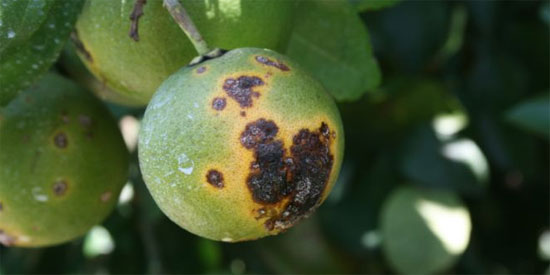
Citrus canker is a serious disease of citrus trees that was recently confirmed for the first time in Santa Rosa County.
Citrus canker has been a major pest of citrus in south and central Florida. It is economically damaging to the commercial industry and is also problematic to homeowners because it causes premature fruit drop, discolored fruit, and eventually causes the tree to become unproductive.
Canker, caused by the bacterial pathogen Xanthomonas citri subsp. citri, was first introduced in 1912 into Florida and was declared eradicated in 1933.
The disease was found again in the Tampa area on citrus in 1986. It was declared eradicated in 1994, but once again was found in 1995 in Miami.
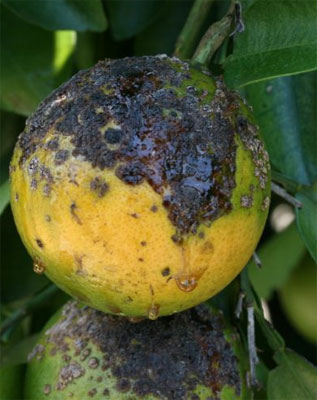 This time, the disease was not successfully eradicated in part because hurricanes made the disease too widespread to control.
Despite its prevalence in south and central Florida, this disease has not been known in the Panhandle. The University of Florida and the Florida Department of of Agriculture and Consumer Services’ Division of Plant Industry will be assessing the extent of the disease in Santa Rosa County in the coming months.
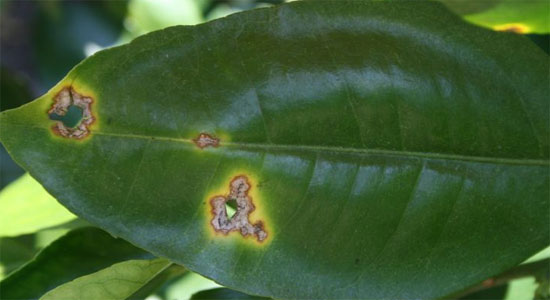
One of the best indicators of canker is presence of lesions, diseased spots, on the upper and lower surfaces of the leaves. The lesions will be raised and have a rough surface and will be surrounded by yellow halos. Similar lesions may be present on the fruit and stems as well.
The disease is highly contagious to citrus only and spreads rapidly through wind, rain and via people on their hands, clothes, and tools.
Do not transport any plant material that shows symptoms of canker. Decontamination practices should be used when going from one citrus tree to the next. Hand washing with soap and water for 20 seconds or more to eliminate bacterium on the skin should be practiced as well as using alcohol-based hand sanitizers. Pruning tools or other tools that come into contact with citrus should be disinfected by a fresh solution of 1 ounce of household bleach to 1 gallon of water. An old or dirty bleach solution is not able to disinfect because the chemical is no longer active.
Grapefruit, Navel orange, early orange varieties, lemon and lime are most susceptible citrus to canker infection. Hamlins and tangelos are less susceptible. Valencia, some hybrids and Satsuma and other tangerines are the most resistant to the disease. However, all citrus is vulnerable to some extent.
In order reduce the likelihood of citrus canker choose the most resistant varieties of citrus, practice proper sanitation procedures, and purchase only certified citrus from registered nurseries within the state of Florida. It is unlawful to purchase citrus trees from another state and bring them into Florida unless the proper permitting is in place.
If you suspect that your citrus trees may have citrus canker please contact the Division of Plant Industry’s Helpline Center at 1-888-397-1517 before taking any action to reduce accidental spread of this disease.
Courtesy photos for NorthEscambia.com, click to enlarge.