

Molino Library Reads Across America With Dr. Seuss
March 6, 2014


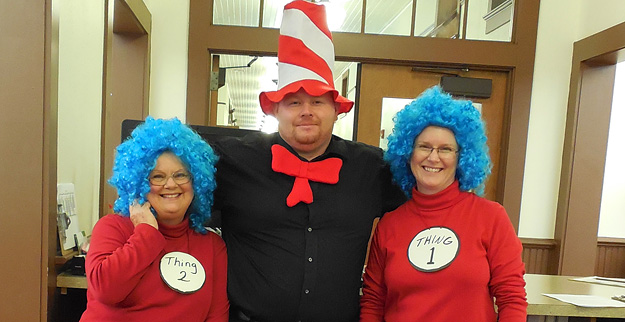
The Molino Branch Library recently celebrated Dr. Seuss and Read Across America with stories, characters, popcorn a lots of reading fun. Several participants also took the “Reader’s Oath”, promising to read each day and each night (because it’s the key to “growing up right”). Submitted photos for NorthEscambia.com, click to enlarge.
Lawmakers Hope To Save Money With State IT Agency
March 6, 2014
The creation of an information technology department for state government might or might not save Florida money.
Lawmakers believe it will. And they say such an agency will make the state’s records more secure.
But the problem is they don’t have firm numbers about how much computer and software services currently cost the state.
A staff analysis of a proposed bill (SB 928) to create the Agency for State Technology only lists a fiscal impact of the $5 million needed for the first year of operation.
The Senate version of the proposed agency would include 25 full time employees.
The current cost for such services, which are contracted and spread among various state agencies, was called a “gray area” by senators as the General Government Appropriations Subcommittee gave unanimous support Wednesday for the consolidation effort.
Sen. Jeremy Ring, a Margate Democrat who is backing the Senate measure, said he and other lawmakers have been trying for years to determine the exact amount the state spends on technology services.
“We truly don’t know the answer to that question,” Ring said. “What we unfortunately do know is that there is no consolidation. If you can be a sales person for IBM and sell the same product 19 different times, instead of trying to sell it once, ultimately we’re not getting the scale, and as you get greater scale you get greater discounts and greater purchasing power.”
Equally important, Ring, a former Yahoo.com executive, said that without a chief technology officer and others whose jobs would be to oversee the state’s technology services, the state now has little security from unwanted outsiders.
“Who knows what hackers are doing today to all our information,” Ring said. “We’re the only state in the nation without a chief information officer, which means we’re a $75 billion business without a chief information officer. … That doesn’t exist in any business I assure you.”
The Senate supported the creation of such an agency last year. The House appears to be more receptive to the proposal this year, with its own measure (HB 7073) moving out of the Appropriations Committee.
The issue of a centralized IT agency has grown during the past four months with the troubled rollout of the $63 million Department of Economic Opportunity’s unemployment compensation website. Concern about that department’s system has put focus on even larger programs that are on the horizon, including the Department of Financial Services’ Florida Accounting Information Resource (FLAIR) system, now in development, that could top $100 million.
The new IT agency would be housed within the Department of Management Services under the direction of the governor’s office. The agency wouldn’t oversee Cabinet agencies, but would perform oversight of IT projects and contracts worth $25 million or more within those agencies, under the Senate plan.
The oversight rules and the eventual size of the agency would have to be worked out with the House if both measures reach that point this session.
by Jim Turner, The News Service of Florida
Marine Corp’s Biggest Helicopters On Area Training Mission
March 6, 2014

The Marines are flying their largest helicopter on training missions out of NAS Pensacola.
The Marine Heavy Helicopter Training Squadron (HMHT) 302, from New River, NC, will be operating at NAS Pensacola through March 15. Flying the CH-53, the largest helicopter in the Marine Corps inventory, the squadron will be training pilots and aircrew with operations centered around NAS Pensacola, Navy Outlying Field (OLF) Choctaw and other outlying fields in the area.
Training missions for HMHT 302, while at NAS Pensacola, will include night operations until midnight on several days. Residents near the air station can expect increased noise levels as the aircraft takeoff and land at the base.
Pictured top: A CH-53 being prepared for flight aboard NAS Pensacola. Courtesy photo for NorthEscambia.com, click to enlarge.
Man Charged In November Escambia County Double Homicide
March 5, 2014
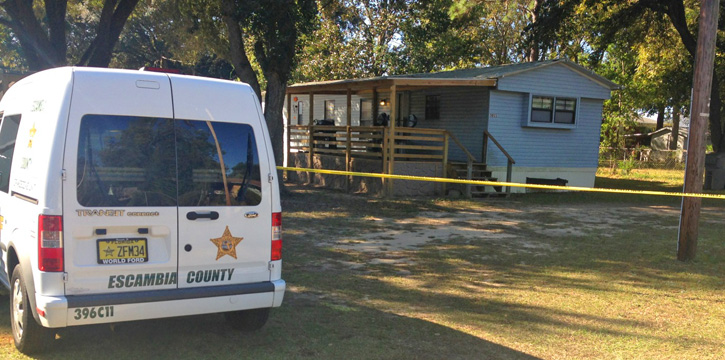
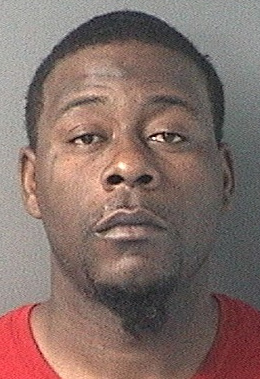 An Escambia County man was arrested this morning and charged with a two counts of premeditated homicide and two counts of armed robbery in connection with the deaths of two men last November.
Henry Daymon Payton, 36, was taken into custody without incident at this home and is being held in the Escambia County Jail without bond.
The victims, 36-yearold John Edward Gibbons and 34-year old Christopher Lee Fehl, were found deceased of apparent gunshot wounds at their residence on Boulder Avenue.
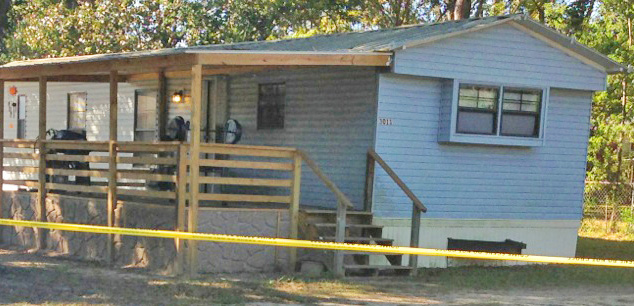
Pictured: The scene of a double murder last November in Bellview. File photos by Christina Leavenworth, WEAR 3 for NorthEscambia.com, click to enlarge.
Good Morning Governor Scott! We Are Part Of Florida Too
March 5, 2014
Good morning Governor Rick Scott! We appreciate you taking the time to stop by and read NorthEscambia.com.
We just wanted you to know the we’re part of Florida too. During your State of the State address Tuesday, you mentioned, “The stories of opportunity in Florida stretch from east to west – from Key West to Panama City.”
A quick check of our trusty map confirms that there are plenty of places and plenty of opportunities west of Panama City. Places like Escambia and Santa Rosa counties and Pensacola.
 But while we have your attention, we want to talk to you about the opportunities that exist in our area of North Escambia. Little places you’ve probably never heard of or have forgotten like Walnut Hill, Bratt, Enon, McDavid, Bogia and Century.
To the best of our knowledge, you have never set foot into those places during your term as governor. During your campaign, you sat down on the campaign bus with our publisher following a campaign appearance in Molino (that’s in North Escambia).
And you were proud to announce, a week after we broke the story on NorthEscambia.com, that the West Fraser sawmill in McDavid (that’s in North Escambia, too) was reopening with dozens and dozens of jobs. It was great news, but you announced it in Pensacola (that’s west of Panama City, but not in North Escambia).
This little message was not meant to be overtly political as we head into an election season. We just saw a great chance to bring the communities of North Escambia to your attention.
During your term as governor scores of jobs were created in Walnut Hill as Genesis Energy opened one of the largest crude oil rail transfer stations in the nation. Hundreds of people stood in line for hours for the chance to apply for the jobs. They were looking for opportunity.
 A few miles away, still in Walnut Hill, our state road was repaved during your administration, and we even have a flashing caution light now. At the same intersection, half cent sales tax money is replacing our middle school, part of which was built in the 1940’s, with a modern $20 million school that will provide great opportunity for our youth.
Back in Enon, one of the most rural places in the state, a brand new $1.5 million bridge funded by your administration just opened this week.
Over in Bratt, Northview High School, the smallest regular high school in the county, continues to hold its own despite all of the state testing requirements, and the Chiefs continue to shine in academics and extra-curricular activities. From the FFA that was named one of the best in the nation, to a state championship football team, to those lowest quartile students working to make learning gains on state testing, Northview is something to be proud about. You recently sent them a few handwritten notes congratulating them on learning gains.
And, by the way, if you were to consider a visit to Northview one day, stop by the Travis Nelson Memorial Park just down the road. There you can salute the flag and pause for a moment of prayer at the memorial to one of our local sons that joined the military looking for opportunity, but so willingly gave his life for our freedoms and opportunities.
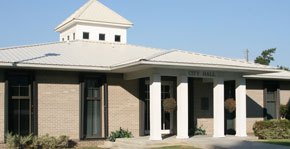 Then there’s Century. It’s Florida’s northernmost city…so “the stories of opportunity in Florida stretch from east to west – from the beaches of Key West to Century in the far northwest”. Your speechwriters are welcome to file that line away and use it.
There’s a lot to be proud about in Century, but it’s no secret the population is declining and poverty is increasing. Century is like the Little Engine That Could, but just can’t get over the hurdles. There’s a business incubator and empty industrial sites just waiting for jobs. There’s a Brownsfield designation. There are people in poverty looking for the opportunity to work. It’s time for you, Gov. Scott, to get to work and find a way to help bring opportunity to Century.
You, Governor Scott, have the opportunity to reach out and learn what’s working today in North Escambia, so Florida can really be a story of opportunity from Key West to Century.
Senates Passes Four Bills Making State Inhospitable To Sexually Violent Predators
March 5, 2014
With the mother of a murdered child looking on, the Florida Senate on Tuesday unanimously passed four bills intended to make the state as inhospitable as possible to sexually violent predators.
 Diena Thompson, whose 7-year-old daughter Somer disappeared in Clay County in 2009 while walking home from school, watched in tears from the gallery. After an extensive search, the child’s body was found in a South Georgia landfill, and last year a 26-year man was sentenced to life in prison for her death.
“This is for Somer,” said Sen. Rob Bradley, a Fleming Island Republican and the sponsor of one of the bills. He noted that he was wearing a purple tie because that had been Somer’s favorite color.
The legislative package has been at the top of Senate President Don Gaetz’s agenda since August, when the South Florida Sun Sentinel reported that 594 sexual offenders had gone free since 1999 — only to commit 463 child molestations, 121 rapes and 14 murders.
“We will protect our children and we will scorch the earth against sexually violent predators,” Gaetz, R-Niceville, said in an address Tuesday opening the annual legislative session. “We cannot waste one more day. We cannot lose one more child.”
The Senate approved the following measures:
— SB 522 by Sen. Denise Grimsley, R-Sebring, would require sheriffs to refer for civil-commitment proceedings inmates who are serving sentences in county detention facilities if the inmates are registered sex offenders or sexual predators and have previously committed sexually violent offenses.
— SB 524 by Eleanor Sobel, D-Hollywood, would require a person to be subject to civil confinement as a sexually violent predator after a finding by two or more members of a multidisciplinary team.
— SB 526 by Bradley would increase the length of sentences for certain adult-on-minor sexual offenses and prohibit incentive gain-time for certain sexual offenses.
— SB 528 by Sen. Greg Evers, R-Baker, would require registered offenders to report vehicle information, Internet identifiers, palm prints, passports, professional licenses, immigration status, volunteer work at higher education institutions and other information.
Sobel cited the case of Cherish Perrywinkle, an 8-year-old Jacksonville girl who was kidnapped, raped and murdered last year. A registered sex offender, Donald Smith, will be tried in May for those crimes. Smith, 57, had made repeated failed attempts to kidnap young girls — even posing as a Department of Children and Families worker at one point, authorities say. Under the Senate proposals, he would not have been released before the Perrywinkle abduction given his previous crimes.
After the Senate adjourned, reporters asked Diena Thompson if the bills could have changed what happened to her daughter.
“I don’t know that the law would have changed it for Somer,” she said. “But what I do know is that it would change it for Cherish and many other children to come, so that’s really all that matters.”
The House versions of the Senate bills have passed two committees, and House Speaker Will Weatherford, R-Wesley Chapel, said they’ll be ready within two weeks.
by Margie Menzel, The News Service of Florida
Higher Speed Limit Bill Makes First Pass In Florida House
March 5, 2014
A bill that could result in speed limits reaching 75 mph on some Florida roads was steered around opposition from the auto-club AAA on Tuesday as the measure made its first House appearance.
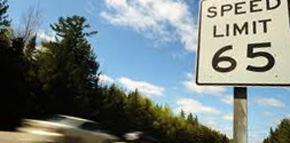 The House Transportation & Highway Safety Subcommittee voted 13-1 to support the measure (HB 761), which would direct the state Department of Transportation to determine the safe minimum and maximum speed limits on all divided highways that have least four lanes.
Senate Transportation Chairman Jeff Brandes, R-St. Petersburg, who along with Sen. Jeff Clemens, D-Lake Worth, is sponsoring the Senate companion (SB 392), told the panel that the bill doesn’t raise the posted limits but gives engineers from the state agency more leeway in setting speeds.
“In certain areas of the state it will better reflect how drivers are actually using the roads, and therefore make it safer because you won’t have the variability between minimum speeds and maximum speeds,” Brandes said.
However, Lee Moffitt lobbying on behalf of AAA Auto Club South, said the proposal will result in more accidents if Florida joins Maine to become the only state east of the Mississippi River with speed limits higher than 70 mph.
“We urge you to consider the safety of Florida’s citizens and the millions of tourists that plow in to our state every year,” Moffitt said.
Moffitt pointed to a National Highway Traffic Safety Administration study that found nearly a third of all motor vehicle fatalities in 2012 were speed-related, and states with higher speed limits exceeded the national average.
“With our current speed limits, Florida’s roadways are safer than those states that have increased their speed limits,” Moffitt said. “You know congestion is a huge problem on Florida’s highways and many drivers in this congestion are driving too closely. … If you drive faster it increases the time you need to stop and makes the conditions for an accident even greater.”
Rep. Irv Slosberg, a Boca Raton Democrat who cast the lone vote against the bill, said with the limit posted at 75 mph, motorists will push speeds to 80 mph and higher.
“Is this bill going to make our roads safer? I don’t think so,” Slosberg said.
But Rep. Keith Perry, R-Gainesville, said vehicles are designed safer now than when the speed limit was increased to 70 mph.
“I’m trusting DOT would be an entity we can all hopefully have faith in to objectively make a good decision,” Perry said.
Florida’s highways have had a 70 mph maximum since 1996, the last time the speed limit was reviewed
The House bill has only one more scheduled stop — the Economic Affairs Committee — before reaching the House floor.
The Senate version, which has already been approved by Brandes’ committee, is scheduled to appear Wednesday at the Senate Community Affairs Committee.
by Jim Turner, The News Service of Florida
Scott In State Of State Address: Let’s Keep Working
March 5, 2014
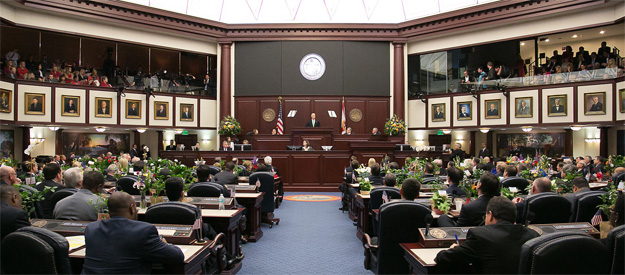
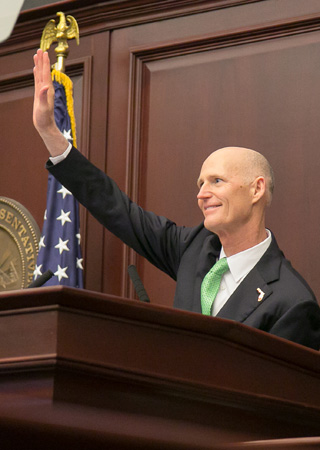
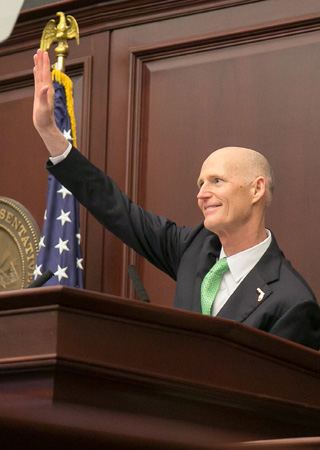
With a difficult battle for re-election looming, Gov. Rick Scott on Tuesday used the final State of the State address of his first term to frame the campaign and the role of his personal biography in it.
The half-hour speech, delivered before a joint meeting of the Legislature, plowed little to no new ground on the policies the governor will tout during the 60-day session that opened Tuesday. But Scott used the speech to connect his family’s financial troubles when he was young to his quest to bring more jobs to the state, and to introduce what seems to be his theme for the fall: “Let’s Keep Working.”
Scott also used the occasion to flay the administration of former Gov. Charlie Crist, a Republican predecessor now running for governor as a Democrat.
“Four years ago, people were down on Florida: high unemployment, shrinking home values,” Scott said. “Florida was in retreat. … But now, we are on the rise. Jobs are coming back, career opportunities are growing, home values are improving, and there is simply no reason that Florida cannot be the number one state in the country to find a good job, raise a family and achieve the American dream.”
The speech comes as Scott continues to trail Crist in the polls and has slimmed his legislative agenda to focus on one politically popular major issue: $500 million in tax and fee cuts.
Scott also spent much of his time Tuesday highlighting the stories of Floridians who had found work in the last few years, as well as recognizing Florida State head football coach Jimbo Fisher for the Seminoles’ national championship.
Democrats saw politics at play in the governor’s remarks, saying the speech was more focused on the campaign than the issues lawmakers will confront in the legislative session.
 “Floridians heard clearly that Rick Scott only cares about his own re-election,” Florida Democratic Party Chairwoman Allison Tant said in response to the address. “This speech wasn’t about the state of Florida. It was about the state of Rick Scott’s campaign, and he is desperate.”
Republicans pushed back against that idea.
“I thought it was a speech that reflected on the last three years and where we had come, and I think it reflects where we need to go in the state of Florida,” said Sen. John Thrasher, the St. Augustine Republican who doubles as Scott’s campaign chairman. “To me, I don’t think it was a campaign speech as much as I thought it was a roadmap to what we need to do to continue to be successful in our state.”
But while he pointed out that Crist was never mentioned by name in the speech, Thrasher slammed the former governor nonetheless.
“Charlie Crist left this state in a disastrous situation,” Thrasher said. “He did. He was more interested in promoting his own personal interest in running for vice president and then running for United States Senate than he was trying to help fix the problems of the state of Florida.”
Crist, who himself faced allegations that he sometimes used the State of the State to boost his campaign, slammed Scott’s speech and the governor’s polices over the last three years.
“With the blessing of the people, next year I will deliver a State of the State that puts people first,” he said.
Scott’s speech followed remarks by House Speaker Will Weatherford, R-Wesley Chapel, and Senate President Don Gaetz, R-Niceville, who highlighted their priorities for the session. The two leaders have unveiled a joint House-Senate “Work Plan” meant to guide the chambers through the next two months.
“My friends, we’re on the shot clock,” Gaetz said.
Gaetz then spent about 20 minutes highlighting work-plan items like toughening laws dealing with sexual predators, approving a proposal aimed at helping soldiers and veterans, expanding school vouchers, requiring elected officials to live in their districts and overhauling the pension system for public employees.
The erudite Gaetz wrapped up by quoting Theodore Roosevelt.
“Some say that the second year of a presiding officer’s term is not supposed to be ambitious,” Gaetz said. “I commend to you instead the advice of Theodore Roosevelt who said that each of us is given his ‘crowded hour’ to do great things even when risking failure, but to never be ‘with those poor spirits who live in the gray twilight of fear and indecision that knows neither victory nor defeat.’ Starting now we have 60 days. Sixty days. Let’s fill them with crowded hours.”
Gaetz’s speech was at times overshadowed by the chants of members of the Dream Defenders gathered in the fourth floor outside the chamber doors. The organization held a sit-in outside Scott’s office for a month this summer to call for changes to Florida’s self-defense laws and school discipline policies.
For his part, Weatherford presented the work plan as an anti-poverty initiative. Democrats nationwide have signaled that they are prepared to try to use the issue of income inequality to bludgeon Republicans in the fall, but Weatherford said small-government policies will help lower-income Floridians.
“I believe that strong families, a quality education and a good paying job are the only ways to disrupt poverty in this state and this country — particularly when they’re generational,” he said.
The speaker also reiterated his call to provide in-state tuition at state colleges and universities for students who are living in Florida illegally after being brought to the state by their parents.
“We invest tens of thousands of dollars to educate them through the 12th grade,” he said. “And then we shut the door on their future. And we no longer treat them as if they’re Floridians. It makes no sense fiscally, it makes no sense economically, and it makes no sense morally — because we should never punish a child for the mistake of their parents.”
But that proposal is not included in the work plan and could run into trouble in the Senate.
by Brandon Larrabee, The News Service of Florida
Pictured: Gov. Rick Scott delivers his State of the State address Tuesday. Courtesy photos for NorthEscambia.com, click to enlarge.
Phone Service Restored In Byrneville After 4 Day Outage
March 5, 2014
A four-day outage for some Byrneville residents and businesses has been resolved. An unknown number of AT&T land line customers in Byrneville lost phone service last Thursday.
“ Due to a water-damaged cable, some AT&T customers in Byrneville may have experienced issues with their wireline services. Technicians worked around the clock to repair the damage and service is currently running normally. We apologize for this inconvenience,” Rosie Montalvo, a spokesperson for AT&T said Tuesday.
Those without phone service including Byrneville Elementary School and Central Water Works.
Darlene Dickey Of Molino Pre-files For County Court Judge
March 5, 2014
Darlene Dickey of Molino pre-filed Tuesday for County Court Judge, Group 5 in the 2014 Election.
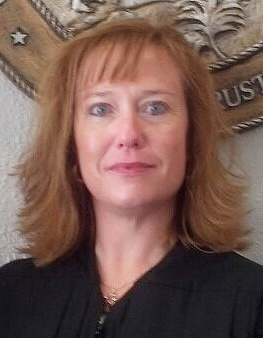 Dickey, 43, was appointed an Escambia County judge by Gov. Rick Scott in April 2012 to fill the vacancy created by the appointment of Judge John F. Simon to the First Judicial Circuit. She had served as the general counsel for the Escambia County Sheriff’s Office since 2006. Previously, she practiced with Bozeman, Jenkins and Matthews P.A. from 2003 to 2005 after three years as an assistant state attorney with the First Judicial Circuit.
After completing a bachelor’s degree, she served five years as a law enforcement officer, first with the University of West Florida Police Department, and later as a field training officer with the Escambia County Sheriff’s Office. Dickey received a bachelor’s degree from the University of West Florida and a law degree from Florida State University.