

Dogs Still In The Running In Gambling Bill
April 9, 2014
With “Johnny Depp,” “Twiggy” and “Whisper” by her side, the Senate’s first lady, Vicky Gaetz, could not hold back the tears when asked why she was participating in a press conference about the perils of greyhound racing.
“I’m so passionate about it that I can hardly speak about it,” Gaetz, the wife of Senate President Don Gaetz, said Tuesday. “It’s just an issue I’m very passionate about, anything involving animals or children who are neglected or abused.”
Rep. Matt Gaetz, the president’s son, knelt beside his mother, who is in a wheelchair, and planted a kiss on her cheek.
“It’s OK, mother,” the normally brash Gaetz, R-Fort Walton Beach, said.
During the press conference, Matt Gaetz said he learned from his mother that “you can tell a lot about any person by how they’ll treat an innocent and defenseless animal.”
Matt Gaetz joined Sen. Maria Sachs in what has become for Sachs a perennial fight to eliminate greyhound racing.
“This is an activity that very few people watch, even fewer people bet on and it’s an activity that erodes our collective humanity. I look forward to Sen. Sachs passing her very good amendment today that will end the government mandate to engage in a barbaric activity,” he said.
But despite pressure from the Senate’s “first family,” the Senate Gaming Committee stopped short Tuesday of trying to do away with greyhound racing and instead approved a measure that would force tracks to report injuries and deaths to the state.
The Gaetz clan — Vicky, Matt and the Senate president — were all on hand at the meeting where, after some heated sidebar huddles between GOP lawmakers, Sachs backed down from her attempt to allow dog tracks to stop racing greyhounds.
But Sachs said she isn’t backing down from her push to “decouple” greyhound racing from other types of gambling. The movement is supported by animal rights groups including Grey2K, which, like Sachs and Matt Gaetz, contend that greyhound racing is a thing of the past, costs the state money and has led to cruel treatment of the racing dogs by some operators who only use the dogs as a means to operate more lucrative poker rooms. The pari-mutuel permits allow the race track operators to operate card rooms and, in Miami-Dade and Broward counties, slot machines.
Instead of doing away with dog racing, the committee signed off on a proposal (SB 742) by Sen. Eleanor Sobel, D-Hollywood, that would require tracks to report injuries and deaths of greyhounds, something only two states — Alabama and Florida — do not currently mandate. According to one report, 74 greyhounds died in a six-month period in 2013 — an average of three dogs per day.
Jack Cory, a lobbyist who represents the Florida Greyhound Association, told reporters that most dogs die because of injuries on poorly maintained track surfaces, electrocution from the “bunny” that runs around the track or a lack of breakaway fences.
Cory, whose group represents greyhound breeders, owners and kennel operators, said racing should continue to be required for other gambling operations, like cardrooms, because that is what voters authorized.
“You said you were going to be a live pari-mutuel. Either be a live pari-mutuel or turn your license in,” Cory said.
At least three members of the panel — Sens. Tom Lee, Jack Latvala and Gwen Margolis — objected to a series of amendments proposed by Sachs that would have gone far beyond allowing the state’s 16 greyhound tracks to decide whether they wanted to race dogs or not.
One of the proposals would have essentially allowed each of the tracks — including holders of permits that are currently dormant or in use at other tracks — to move elsewhere in their counties and set up poker rooms and offer simulcast wagering.
Sachs’ amendments prompted confusion and intense questioning by Margolis and Latvala.
“We have demonstrated that’s an expansion of gambling …under the guise of decoupling, there’s an expansion in there,” Latvala, R-Clearwater said.
Margolis objected that the complicated amendment, filed on Friday, lacked a staff analysis or any information about how much it would cost the state.
“The whole thing is a big mish-mash of stuff and I don’t know what the fiscal impact is,” Margolis, D-Miami, said.
Staff later said that state analysts estimated that Sachs’s “decoupling” amendment would cost the state about $300,000 in the first year but would eventually end up making money.
But Sachs said that a study by Spectrum Group, for which the Legislature paid $400,000, found that the state is underwriting greyhound racing, which it termed a “loss leader.”
Meanwhile, the Senate president huddled in what appeared to be a heated debate with a half-dozen senators, including Latvala and ardent gambling opponent Andy Gardiner, R-Orlando.
Lee said animal-rights supporters in the audience are “volunteering to be used” by track owners.
“These folks don’t care about your animals. They care about their profits,” Lee, R-Brandon, said. “As this thing goes forward, the question for this committee is if we believe so much in the humane treatment of animals, why don’t we just recognize that this industry is dead. Its day has come and gone. It’s time to revoke the permits for the dog licenses that exist in this state and reissue permits on a competitive bid basis for some new form of gaming that doesn’t involve the inhumane treatment of animals.”
Shortly after Gaetz left the room, Sachs withdrew her amendments. The panel approved the measure by a 13-1 vote, with Lee casting the sole negative vote.
“Dog racing is losing money. The animals are not treated well. Until we fix that, we’re not going to have humane treatment of our animals,” Sachs, D-Delray Beach, said after the meeting.
But Sachs said she hasn’t given up on ending greyhound racing.
“I withdrew the amendments because it needed more work. … I think we’re going to see my amendments again. I think they are going to be in a way that will make sure that there’s not an expansion of gambling,” she said.
by Dara Kim, The News Service of Florida
Two Arrested For Burglary After Kicking In Door At Century Home
April 8, 2014
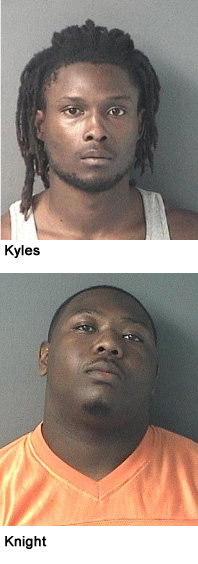 Two people were arrested shortly after kicking a door at a Century home Monday afternoon.
At about 2:30 p.m., the Escambia County Sheriff’s Office responded to a burglary in progress in the 7000 block of Hadley Lane. According to the victim, two black males kicked in a back door and then fled through the woods when they were startled by a resident inside.
After getting a description of the two suspects, deputies spotted on suspect and then quickly found another behind a residence on Pond Street. Both were positively identified by the victim.
Lamikal Devonte Kyles, 20, and Devante Aaron Knight, 22, were both charged with attempted burglary and criminal mischief. Bond was set at $6,000 each.
Poarch Creeks Next Casino Could Be In Rural North Escambia
April 8, 2014
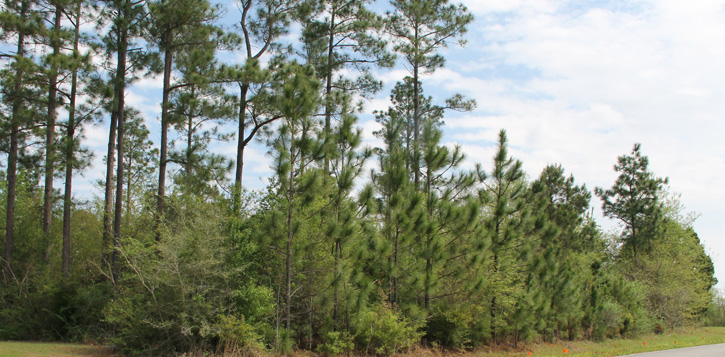
The Poarch Band of Creek Indians’ next gaming facility could be in rural North Escambia. The tribe has asked Gov. Rick Scott for a Tribal-State gaming compact that would allow the tribe to operate casino-like gambling in Escambia County — specifically on a small parcel of land in Nokomis, FL.
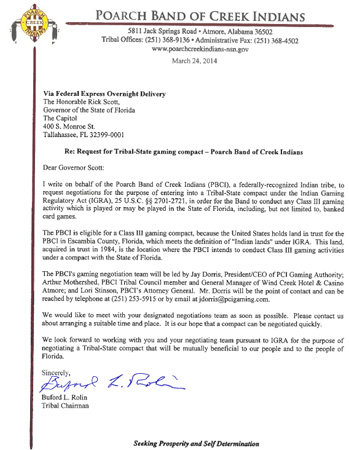
 Such an agreement would allow the tribe “to conduct any Class III gaming activity which is played or may be played in the State of Florida, including, but not limited to, banked card games,” Tribal Chairman Buford Rolin wrote in a letter to Scott. Class III gaming in Florida includes table games and slot machines.
Scott’s office received Rolin’s request “and a meeting will be scheduled,” spokesman John Tupps said in an e-mail.
In his letter, Rolin said the United States holds land in trust for the Poarch Creek Indians in Escambia County, which meets the definition of “Indian lands”. “This land, acquired in trust in 1984, is the location where the PCBI intends to conduct Class III gaming activities under a compact with the State of Florida,” he wrote.
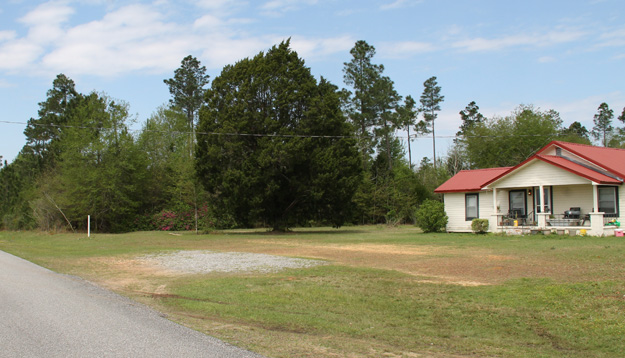
The one-acre parcel is located on Nokomis Road, just west of Tullis Road, about about five miles west of Highway 97. The lot is currently wooded, with houses on each side.
Jay Dorris, CEO of the Poarch Creek Gaming Authority, told NorthEscambia.com that the tribe intends to place a Class III gaming facility — with table games — on the Nokomis property once an agreement with Scott is reached.
“It would be very complimentary to our facility in Atmore,” he said. At the Wind Creek Casino in Atmore, the tribe is only able to offer electronic bingo gaming.
Once the Nokomis site is established, Dorris said there would be a “number of possibilities” for the tribe to potentially expand Class III gaming in Florida. In Florida, the Poarch Creeks already operate Creek Entertainment Gretna near Tallahassee and the Pensacola Greyhound Park and Poker Room.
 There is no timetable for the Nokomis facility, but Dorris said work could begin at the site “very soon” after any agreement with the state is reached. And the tribe hopes that will be in the near future.
“We would like to meet with your designated negotiations team as a soon as possible….It is our hope that a compact be negotiated quickly,” Rolin’s letter to the governor states.
To read the letter to Scott, click here.
Pictured top: The one-acre parcel for which the Poarch Band of Creek Indians wishes to negotiate a gaming compact for with Gov. Rick Scott. Pictured inset: The small parcel is between two homes. NorthEscambia.com photos, click to enlarge.
Legislative Halfway Point: Where Do The Issues Stand?
April 8, 2014
Florida lawmakers have crossed the mid-point in their 60-day march to craft new laws, amend existing ones and agree on a roughly $75 billion budget for the next fiscal year.
And they’ve done so mostly without controversy.
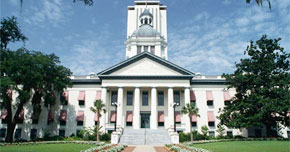 A day at the Capitol was blown out to honor the Florida State University football team for winning the national championship, and another day was seemingly devoted to lawmakers taking “selfies” with retired British soccer star David Beckham, who wants to build a soccer stadium in Miami.
With the two chambers working in tandem on most issues, Gov. Rick Scott was able to sign a series of bills into law this week. They included a bill, dubbed the “Florida GI Bill,” aimed at making the state more military friendly; a package of bills aimed at keeping sexually violent predators locked up; and a bill that will roll back motor-vehicle registration fees.
Meanwhile, the vast majority of the 1,826 bills, resolutions and memorials filed by members and committees as of Friday morning had already died with barely a murmur.
Here’s a look at where a dozen major issues stand as lawmakers head toward the homestretch of the 2014 session::
BUDGET
The House on Thursday approved a $75.3 billion spending plan for the budget year that begins July 1. The Senate countered a few hours later by approving a $74.9 billion proposal. Both exceed the $74.2 billion budget proposed by Scott. Leaders in both chambers said they should be able reach agreements on allocations — overall spending caps for broad areas of the budget — in the coming days and start scheduling meetings to hammer out the final budget. Both chambers are touting increases in spending on education and programs such as the Agency for Persons with Disabilities. Also, both chambers have built in election-year tax and fee cuts.
CHILD WELFARE
In response to media reports about a series of child deaths last year, lawmakers have crafted a sprawling proposal that attempts to address a number of areas in the child-welfare system, from upgrading the education of child protective investigators to keeping siblings together when possible to expanding the transparency of state and privatized agencies. The House and Senate bills aren’t far apart, but senators are still working on several provisions. The heart of the matter is funding, though, and the final numbers are still in flux. Scott called for nearly $40 million to hire 400 new child protective investigators. But privatized community-based care agencies say they’ll need an additional $25.4 million to hire case managers and provide services to meet the needs generated by more investigators.
DREAMERS’ TUITION
The Republican-dominated Legislature has handed Scott what some see as a dilemma and others see as an election-year gift — a measure that would allow illegal immigrants to pay cheaper, in-state tuition rates at state colleges and universities if they meet certain requirements. The House has already approved the proposal, a top priority of Speaker Will Weatherford, R-Wesley Chapel. The bill also includes a sweetener for Scott: a reduction of the “tuition differential” that allows universities to hike tuition by up to 15 percent annually without legislative approval. The Senate version of the bill has started moving through committees. Scott wants to eliminate the tuition differential, but he has remained mum about granting in-state tuition to undocumented students. Many view the proposal dealing with young, undocumented “Dreamers,” named after the congressional “Dream Act,” as a way for Scott to extend an olive branch to Hispanic voters. But Scott also faces a backlash from some conservative voters, who supported him in 2010 when he backed an Arizona-style immigration law.
GAMBLING
After months of discussion, lawmakers won’t move forward with an expansion of gambling, such as proposals to allow resort casinos in South Florida. That will remain the case until Scott completes negotiations with the Seminole Tribe of Florida about a portion of a 20-year gambling deal that will expire in mid-2015. Scott has given no indication how far the talks have progressed.
GUNS
The power of the National Rifle Association has once again been on display inside the Florida Capitol. Both chambers have passed what is known as the “warning shot” bill, which would allow people to show guns and fire warning shots if they feel threatened. The measure is ready to go to Scott. The House, meanwhile, has passed the so-called “Pop-Tart bill,” which would prevent children from being disciplined for simulating guns while playing or wearing clothes that depict firearms. The Senate version is scheduled to go to its final committee Tuesday. Among other measures, the Senate overwhelmingly approved a bill that seeks to prevent insurers from discriminating against customers because of gun ownership. Also, the House is ready to take up a bill that would allow people without concealed weapons licenses to pocket their guns during emergencies. And a proposal that would allow district school superintendents and school principals to designate one or more individuals to carry a concealed weapon or firearm on school property is one stop away from reaching the House floor.
HEALTH
Many of the major-health care issues pit different parts of the industry against each other. For example, hospitals are in a lobbying fight about bills dealing with the approval of new trauma centers. Lawmakers have waded into the issue after nearly three years of litigation that focuses on trauma centers the Department of Health approved at Blake Medical Center in Manatee County, Regional Medical Center Bayonet Point in Pasco County and Ocala Regional Medical Center in Marion County. Also unresolved are closely watched issues about granting more powers to advanced registered nurse practitioners and expanding the use of telemedicine in Florida. Supporters say those proposals could help expand access to care, but physician groups oppose more authority for nurse practitioners and also are worried about out-of-state doctors using telemedicine to provide treatment to Floridians.
MARIJUANA
GOP leaders in both chambers are backing proposals that would make available a strain of cannabis that is low in tetrahydrocannabinol, the psychoactive component in marijuana, but high in the derivative cannabidiol, or CBD. The effort is being pushed by parents of children who suffer from a rare form of epilepsy who say the substance dramatically reduces life-threatening seizures. It also comes as a proposed constitutional amendment will go before voters in the fall that would legalize medical marijuana in the state. Details of the House and Senate bills differ about how to address the low-THC, high-CBD strain of marijuana. House sponsor Matt Gaetz, R-Fort Walton Beach, is trying to work a deal out with the Senate, while House Judiciary Chairman Dennis Baxley, R-Ocala, said he will hear the bill but has not determined when.
PUBLIC SCHOOLS
The House has spent much of the first half of the session pushing for more school choice, from a sweeping expansion of a voucher program to a measure meant to help charter schools get started and expand. But the Senate so far has proved to be an obstacle. The upper chamber pulled its version of the voucher expansion less than a month into the session. The House responded by tacking the language onto a bill that would help parents pay for the services of children with disabilities, but the Senate seems to be resisting that. And the charter school bill was essentially gutted by a Senate committee at its most recent stop. Lawmakers are expected to approve a bill streamlining the state’s school-grading system and suspending penalties for bad grades for a year. While some education groups have pushed for a longer transition period after a new test is introduced in the 2014-15 school year, Republican members in particular haven’t shown any willingness to extend it.
SEXUAL PREDATORS
Legislative leaders made clear before the session that one of their top priorities was to toughen laws dealing with sexually violent predators. They moved quickly to approve a package of bills, which Scott signed into law this week. The emphasis on the issue came after an investigation by the South Florida Sun Sentinel found that hundreds of sexual predators had been released only to be convicted of new sex offenses. Lawmakers also pointed to specific incidents such as the kidnapping, rape and murder last year of an 8-year-old Jacksonville girl. The bills make numerous changes to the state’s criminal and civil-commitment laws, such as requiring mandatory minimum sentences of 50 years in prison for what are known as dangerous sexual felony offenders.
TAX CUTS
Lawmakers and Scott have already signed off on a bill repealing a 2009 increase in vehicle-registration fees. That move, which eventually will save motorists about $400 million a year, will be campaign fodder this year for Scott. At least another $100 million in savings for consumers and businesses are on the way, including a number of sales tax-free shopping periods. It remains to be seen how the House and Senate will work out the final details. Chances are good there will be sales-tax holidays for back-to-school shopping in August and for buying hurricane preparedness gear in June. There may even be one in September for energy-efficient appliances. The House has approved a package that also includes issues such as an increase in the corporate income-tax exemption from $50,000 to $75,000.
TRANSPORTATION
Senate Transportation Chairman Jeff Brandes, R-St. Petersburg, and Rep. Frank Artiles, R-Miami, drew widespread attention when they called for repealing the state’s red-light camera law. But that idea appears dead, though lawmakers could put some more restrictions on local governments that use the cameras. Meanwhile, a measure that could raise speed limits by 5 mph on Florida roads has raced to the Senate floor, but the House companion has been idling for a month, waiting to get agenda time in its final committee.
WATER
The big money so far is headed to South Florida, where Senate Appropriations Chairman Joe Negron, R-Stuart, has advanced nearly $160 million in projects intended to reduce polluted runoff from Lake Okeechobee and to clean the Florida Everglades. The House is offering less than $130 million, but Negron said he will fight to secure the higher amount to improve the health of the Indian River Lagoon. And while a group of senators continues to pursue new policies and a massive boost in funding for the state’s natural springs, the aspirations may have to wait for another year or two, when Sen. Andy Gardiner, R-Orlando, and Rep. Steve Crisafulli, R-Merritt Island, become the leaders of their respective chambers. Both have declared water policy issues as a priority for the 2015 and 2016 sessions.
Man Flees Into Woods With Child, Leads Deputies On Manhunt
April 8, 2014
An Escambia County man remains in the Escambia County Jail today after taking his two-year old and leading deputies on a manhunt for several hours Sunday afternoon.
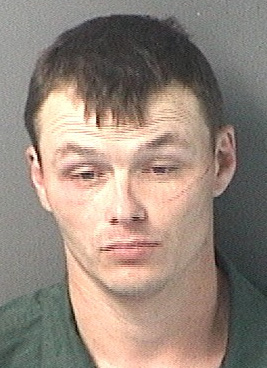 Darin Anthony Mathis, 28, is charged with child neglect – domestic violence for carrying the two-year through thick woods for 3-5 miles, and resisting arrest without violence. His bond was set at $11,000.
As a deputy was responding to a reported disturbance, he was flagged down by a witness who said Mathis had fled in his pickup truck with his two-year old child, threatening violence and threatening to kill the child.
The Sheriff’s Office received a call that Mathis had driven into the woods off Hillock Road, near the western end of Neal Road. An individual on Hillock Road told deputies that she had received a call from Mathis, who stated that he was in trouble, he thought he would be arrested for kidnapping, and that he had fled into the woods on Hillcock Road.
Deputies established a perimeter as two K-9 officers tracked Mathis unsuccessfully for about an hour and a half. At that point, a resident on Cedar Tree Lane reported to deputies that Mathis had dropped the two-year old off at their residence and kept running north.
Mathis was later apprehended off Power Road and booked into the Escambia County Jail. His bond was set at $11,000. The two-year old suffered some minor scratches on his arms and was evaluated on the scene by Escambia County EMS.
Molino Family Searching For Stolen Bears
April 8, 2014
A Molino family is asking for the public’s help after their bears were stolen from their yard in the 3500 block of Highway 97 in Molino sometime Sunday night or early Monday morning.
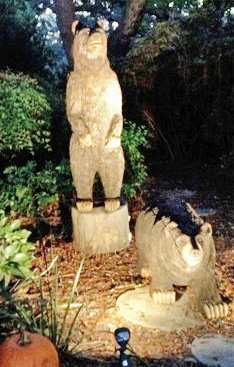 The bears were one-of-a-kind chainsaw carvings made of juniper wood, worth about $1,300. One stands upright about five-feet tall; the second is on all fours and is about two-feet tall and four-feet long.
The homeowner said a white male in a teal pickup truck pulled into the family’s yard and tried to pick up one of the bears a few weeks ago.
“By the time I got downstairs he was gone. They are very heavy and would have taken at least two people pick them up,” she said. She did snap a picture of the truck.
Anyone with information on the missing bears is asked to call Crimestoppers at (850) 433-STOP or the Escambia County Sheriff’s Office at (850) 436-9620.
Submitted photos for NorthEscambia.com, click to enlarge.

Century Council Denies 3 Of 4 Barnyard Animal Variance Applications
April 8, 2014
The Century Town Council voted Monday night to deny three of four applications for variances under the town’s new animal control ordinance that prohibits non-conforming barnyard animals
The council first denied a variance requested for one horse for Ronald Bass at 6850 Jefferson Avenue. According to Mayor Freddie McCall, bass will move the horse to another location outside the town.
A variance for Willie Owens at 460 Barnwell was denied for two horses because he does not actually own the property, according to county records.
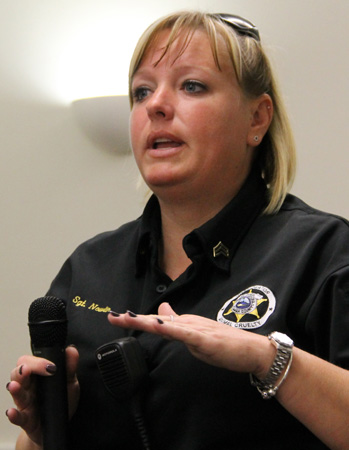 The council also shot down a variance request by Roy and Rosie Hale at 541 East Pond Street for two horses. Town consultant Debbie Nickles said the lot is only one-fourth of an acre, when two acres are required per horse under the ordinance, and she said the property is in a flood plain. Horses on the property only have the “mud and muck and feces and urine they are walking in,” testified Escambia County Animal Control Officer Sgt. Stephanie Nowlin. The Hale’s son, Ramone Hale, told the council that there had been horses kept on the property for years with no problems.
Monday night, the council did vote to approve a variance for Ernest and Jean Gandy at 9340 Old Flomaton Road, subject to a pen being moved to the rear of the two-acre property.
In mid-March, the council approved the first variance under the ordinance for Tom and Darla Warta to keep two horses and one steer on their 2.5 acre low density residential parcel at 7911 Jefferson Avenue.
As of December 23, it became illegal to keep a horse, mule, donkey, goat, sheep, or cow within the town limits except in areas that are zoned agricultural or rural residential. Hogs were already prohibited in all areas of the town.
One horse or cow is now allowed for every two acres, one donkey or mule per acre and one goat or sheep per one-half acre. The animals and their pens must be 200 feet or greater from a dwelling or property line.
Anyone with the regulated animals in an area not zoned agricultural or rural residential within the town limits, was required to register their animals at the Century Town Hall within 60 days from the passage of the ordinance. Anyone with nonconforming animals must apply for and be granted a variance from the town council within six months or get rid of their animals.
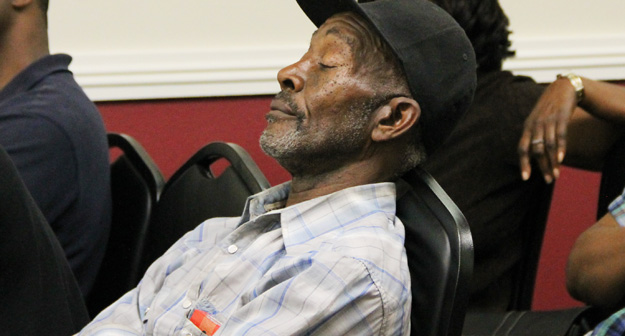
Pictured top: Century Resident Roy Hale sits back with his eyes closed Monday as the Century Town Council discusses an animal control ordinance variance for his property at 541 East Pond Street. Pictured inset: Escambia County Animal Control Officer Sgt. Stephanie Nowlin discusses the poor living conditions of horses on Hale’s small lot. NorthEscambia.com photos, click to enlarge.
FWC: Look Out For Gopher Tortoises
April 8, 2014
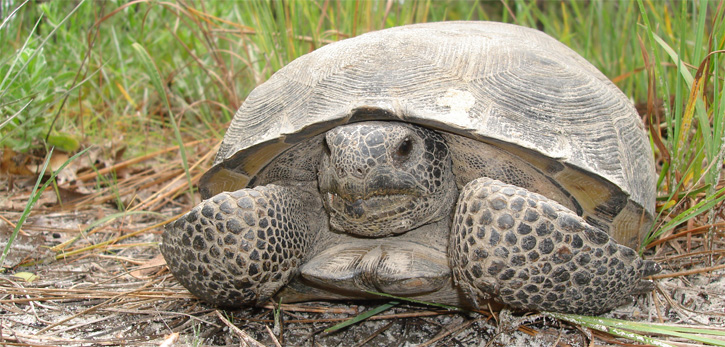
A gopher tortoise strolling across a road or through a backyard or field is a common sight during spring in the North Escambia area. Yet as tortoises become increasingly active this time of year, they are vulnerable to being struck by vehicles and injured or killed.
The Florida Fish and Wildlife Conservation Commission is urging residents to look out for these slow-moving reptiles with their bony-plated shells and elephantine legs. They leave their burrows in search of green plants to eat and a tortoise to become their mate. From now through May, females will be laying eggs the size of ping-pong balls in the sandy apron outside their burrows.
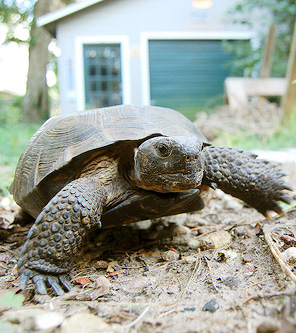 FWC is also encouraging drivers to slow down on highways to help protect the state’s gopher tortoises. If a gopher tortoise is crossing the road, it is OK to pick it up and move it to safety – but keep it pointed in the direction it was heading and do not put this terrestrial animal into the water.
People also can help by downloading and using a new smartphone app to report to the FWC when and where they spot gopher tortoises. The free “Florida gopher tortoise” app recently became available on iPhone and Android. When users of the app take a photograph of a tortoise or its burrow, the photo and its GPS coordinates will be sent automatically to the FWC.
App-generated data collected by citizen scientists will help guide conservation of this threatened species. Biological information and a quiz testing the user’s knowledge of the only tortoise east of the Mississippi River also are included in the app.
Harming a gopher tortoise, its burrows or eggs is against the law.
Health Groups Seek To Snuff Out E-Cigarette Bill
April 8, 2014
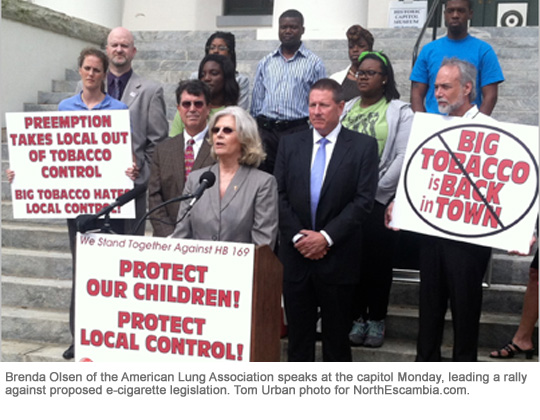
Health groups and local governments say decades of work to keep tobacco products out of the hands of kids could be overturned through a House measure billed as prohibiting the sale of trendy electronic cigarettes to minors.
The American Lung Association of Florida, the Florida Chapter of the American Academy of Pediatrics, local officials and Students Working Against Tobacco have found themselves fighting the measure (HB 169) that would prevent youths under 18 from buying electronic cigarettes. That is because the proposal also would ban local efforts to restrict the sales of cigarettes and other tobacco-related products.
“The bill is another attempt by big tobacco to weaken protections that we all seek to keep electronic devices out of the hands of our children,” Brenda Olsen, chief operating officer of the American Lung Association in Florida, said during a news conference Monday on the steps of the Old Capitol.
However, one of the bill’s sponsors said the opposition is “unwarranted,” as language is planned to clarify that the legislation would only preclude local governments from making new rules about the sale of tobacco products.
The bill has completed the committee process. While it could be taken up by the House later this week, the measure has yet to be scheduled for a floor appearance.
The state currently doesn’t have rules on electronic cigarettes, the nicotine-delivery tubes that heat an often-flavored nicotine solution into a water vapor, which users draw in before exhaling as if smoking a cigarette. The use is called vaping.
The ire of the health groups is an amendment that Rep. Frank Artiles, R-Miami, added to the bill during its final committee stop on March 27, preempting municipal and county ordinances on the sale of tobacco products and electronic cigarettes.
Many of those local laws require tobacco products to be placed behind the counter, forcing customers to ask for specific items before making purchases.
Rep. Ronald “Doc” Renuart, a Ponte Vedra Beach Republican who co-sponsored the bill, said Monday the amendment was intended to only ban new local rules on the sales of tobacco and electronic cigarettes, and that Artiles is working on another amendment to “clarify” that the changes don’t impact existing local regulations.
“It is my understanding that any rules that are in place are going to stay in place,” Renuart said. “It will be just on making new restrictions; like if a municipality were to say they’re not going to allow any tobacco to be mixed with flavors. It becomes real confusing for retailers.”
Artiles, who was not immediately available for comment Monday, said during the March 27 committee meeting that the bill seeks uniformity in the regulation of sales. Among the backers of the bill is the Florida Retail Federation.
“We can’t have 415 cities and 67 counties doing different ordinances,” Artiles said.
Local governments don’t want any state rules that keep them from enacting local restrictions.
Florida Association of Counties President Bryan Desloge, a Leon County commissioner, said during the news conference that the state government is overstepping “home rule” on the sale of tobacco and electronic cigarette products.
“There is a role for the Legislature, but in this case we feel pretty strongly that we’re the people that are at the soccer games, we’re the people at the Publix, we’re the people at the churches and synagogues, and we’re the people that are most responsive to the needs of the community,” Desloge said.
Olsen said the tobacco industry is using the Legislature to subvert local rules as it “has its strength here at the state house. It doesn’t have its strength at the local communities.”
Olsen said the groups are more supportive of a measure (SB 224) by Sen. Lizbeth Benacquisto, R-Fort Myers, that received unanimous support March 18 from the Senate.
Benacquisto’s measure includes electronic cigarettes with the prohibition on sales of cigarette and tobacco sales to minors. It doesn’t include the language to preempt local tobacco laws.
Renuart said no discussions have occurred on which version would move forward to restrict the sale and possession of electronic cigarettes to minors.
by Jim Turner, The News Service of Florida
Wahoos Take 4 Of 5 Over The Smokies
April 8, 2014

The Pensacola Blue Wahoos defeated the Tennessee Smokies 3-2 Monday at Pensacola Bayfront Stadium. The Wahoos (4-1) won their third game in a row behind a spectacular performance from starting pitcher Michael Lorenzen. The Smokies (1-4) had just four hits against Lorenzen and six total hits in their final game in Pensacola.
 The right-hander Lorenzen started for the first time since Rookie ball and went 7.0 innings strong while striking out six Smokies. Lorenzen no-hit the Smokies until first baseman Dustin Geiger led off the 5th inning with a single. Lorenzen’s defense helped him by turning two double plays in the 5th and 6th innings.
Drew Hayes notched his Southern League leading third save of the season despite yielding a ninth inning solo home run to Geiger for the second night in a row.
Left fielder Donald Lutz led the Wahoos’ offensive attack with a solo home run; Lutz went 1-for-4 in the game. First baseman Travis Mattair made a spectacular diving play in the field in the eighth inning to go along with a 2-for-3 night with two singles and an RBI.
Smokies’ RHP Matt Loosen went 5.0 innings in his first start of the year giving up 3 R/ER on six hits while striking out two. RHP Ryan Searle and LHP Hunter Cervenka provided a combined 2.0 innings and three strikeouts in relief for the Smokies.
The Smokies scored their first run thanks to an RBI double from shortstop Jeudy Valdez who scored John Andreoli all the way from first. Valdez went 2-for-3 on the night while Geiger went 2-for-4 with a home run.
The Wahoos have an off day Tuesday before they head to Huntsville for a five game series beginning Wednesday. The Stars lead the Southern League North Division with a 4-1 record. RHP Carlos Contreras is scheduled to start the opener of the series on Wednesday. Huntsville’s starting pitcher is still to be determined. The Wahoos will return home Monday, April 4 against the Montgomery Biscuits.
by Tommy Thrall
Photos by Michael Spooneybarger/Pensacola Blue Wahoos for NorthEscambia.com, click to enlarge.