

Byrneville Elementary School Presents Year End Awards
June 5, 2014
Byrneville Elementary School recently presented the following year-end awards:
Dawson’s 1st grade:
Most Improved Reader: Logan Bevins
Highest Averages:
Math- Addisen Miller & Madeleine Atallah
Reading- Madeleine Atallah
Language Arts- Addisen Miller
Science- Addisen Miller
Social Studies- Madeleine Atallah
Physical Education:
Luke Diamond
Zidon Smith
Layla Brown
Danny Ray Wilson
Music:
Daisy Johnson
Layla Brown
Mrs. Thornton’s 1st grade:
A Honor Roll all year:
Madison Levins
Evin Matlock
Jayden White
Brian Yoder
A/B Honor Roll all Year:
Ayden Atallah
Gavin Beasley
Maddie Mae Driskell
Tyler Gilmore
Jikeem Hall
Jaci Jackson
Kelan Jury
Mia Kornegay
Riley Long
Allie Odom
Mia Turner-White
Most Improved: Olivia Griffis
Citizenship:
Maddie Mae Driskell
Tyler Gilmore
Kelan Jury
MAdison Levins
Riley Long
Evin Matlock
Brian Yoder
Highest Averages:
Reading: Brian Yoder
Language: Madison Levins
Math: TylerGilmore
Science: Kelan Jury
Social Studies: Riley Long
Physical Education:
Evin Matlock
Madison Levins
Brain Yoder
Music:
Evin Matlock
Madison Levins
Kelan Jury
Maddie Mae Driskell
Destiny Burt
Mrs. R. Gilmore 2nd grade:
A Honor Roll all Year:
Riley Dawson
Kaylee Hamilton
Tyson McBride
Tyler Riggs
Ayden Smith
Highest Reading:
Tyler Riggs
Most Improved:
Reygan Steadham
Adrianna Atallah
Highest Math:
Kaylee Hamilton
Tyson Mcbride
Most Improved:
Caitlyn Dortch
Highest Science:
Kaylee Hamilton
Most Improved:
Troy Parr
Highest Social Studies:
Tyson McBride
Kaylee Hamilton
Riley Dawson
Physical Education:
Dalton Wolfe
Music:
Riley Dawson
Kaylee Hamilton
Tyler Riggs
Mrs. Marshman 2nd grade:
A Honor Roll all Year:
Meredith Johnston
A/B Honor Roll all Year:
Nolin Godwin
Leif Waters
Madalyn Grimes
Alexa Castro
Takayla Lewis
Highest Averages:
Reading-
Nolin Godwin
Madalyn Grimes
Meredith Johnston
Most Improved- Camron Howell
Math-
Leif Waters
Meredith Johnston
Most Improved- Alexa Castro
Language Arts-
Nolin Godwin
Madalyn Grimes
Takayla Lewis
Meredith Johnston
Most Improved- Jakelle Mixon
Science-
Nolin Godwin
Alexa Castro
Madalyn Grimes
Most Improved- Jakelle Mixon
Social Studies-
Nolin Godwin
Alexa Castro
Madalyn Grimes
Most Improved- Alexa Castro
Physical Education:
Nolin Godwin
Camron Howell
Music:
Alexa Castro
Nolin Godwin
Madalyn Grimes
Camron Howell
Meredith Johnston
Mrs. Dunsford’s 3rd grade:
Good Citizens Awards:
Leah Anderson
Josh Diamond
Drake Allen Driskell
Emily Levins
Grace Long
Kaden Odom
Aleigh Thornton
Math Achievement:
Drake Allen Driskell
Emily Levins
Reading Achievements:
Emily Levins
Blake Yoder
Language Achievement:
Emily Levins
Science Achievement:
Emily Levins
Social Studies Achievement:
Kaden Odom
Blake Yoder
Accelerated Reader Awards:
Blake Yoder- 472 points
Emily Levins- 204 points
A Honor Roll all Year:
Emilyy Levins
Blake Yoder
A/B Honor Roll all Year:
Leah Anderson
Drake Allen Driskell
Kaden Odom
Music Awards:
Emily Levins
Drake Allen Driskell
Physical Education Award:
Blake Yodar
Mrs Weaver’s 3rd grade:
Outstanding Citizenship:
Aloysia Dortch
Briana Dunsford
Bradley Hamilton
Chase Hampton
Kerry Hicks
Johnnie Howell
Emily Lambeth
Nicholas MArtin
Jasmin Robinson
Jolee Sloan
A Honor Roll all Year:
Aloysia Dortch
Bradley Hamilton
Kayla Johnson
Jolee Sloan
A/B Honor Roll all Year:
Briana Dunsford
Chase Hampton
Emily Lambeth
Nicholas Martin
Tiana White
Reading:
Highest Average: Bradley Hamilton
Most Improved: Conner Sheffield & Patrick Rolin
Math:
Highest Average: Jolee Sloan
Language Arts:
Highest Average: Jolee Sloan & Bradley Hamilton
Science:
Highest Average:
Aloysia Dortch
Bradley Hamilton
Jolee Sloan
Tiana White
Social Studies:
Highest Average:
Aloysia Dotch
Bradley Hamilton
Kayla Johnson
Nicholas MArtin
Joless Sloan
Physical Education:
Jolee Sloan
Johnnie Howell
Music:
Johnnie Howell
Kerry Hicks
Chace Hampton
Bradley Hamilton
Briana Dunsford
Aloysia Dortch
Mrs. S Gilmore 4th grade:
Highest Averages:
Reading:
Hunter Borelli
Torka Mills
Math:
Hunter Borelli
Harley Walker
Science:
Hunter Borelli
Torka Mills
Social Studies:
Hunter Borelli
Jace Gifford
Torka Mills
Language Arts:
Hunter Borelli
Jace Gifford
Physical Education:
Cody Adams
Music:
Cody Adams
Hunter Borelli
Nevaeh Brown
Bama Coburn
Kayla Dixon
Kaitlynn Gafford
Jace Gifford
Taylor Levins
Torka Mills
Julianna Money
Mrs. Johnston’s 5th grade:
Reading:
Highest Average- Maille Kilcrease
Second Highest- Dustin Martin & Abigail Levins
Math:
Highest Average- Maille Kilcrease
Second Highest- Heather Knowles
Science:
Highest Average- Maille Kilcrease
Second Highest- Jalexis Robinson
Language Arts:
Highest Average- Maille Kilcrease
Second Highest- Ty Rolin
Social Studies:
Highest Average- Maille Kilcrease
Second Highest- Abigail Levins & Jalexis Robinson
Physical Education:
Joseph Franklin
Maille Kilcrease
Music:
Desirae Bell
Briannaq Colter
Maille Kilcrase
Heather Knowles
Justin Lambeth
Abigail Levins
Tyler Merchant
Jalexis Robinson
Shot Burglar That Fled The State After Conviction Now Back In Escambia Jail
June 5, 2014

A burglar shot last summer by a Walnut Hill homeowner is back in the Escambia County Jail after skipping out on a sentencing hearing last February.
On January 21, 34-year old Ricky DeWayne Taylor of Century pleaded no contest to the charges against him, including burglary and grand theft. Judge Michael Allen allowed Taylor to stay free on bond until his February 20 sentencing hearing. Taylor fled the state and was arrested in late March by the Lafayette (LA) Parish Sheriff’s Office in on a misdemeanor charge of possession of stolen things.
He was extradited this week back to Escambia County where he’s facing sentencing on the original charges plus new felony failure to appear charges. He’s being held this time without bond.
 On May 17, 2013, Taylor broke into the victim’s home on Rockaway Creek Road and began removing items. The victim unexpectedly returned and caught Taylor and co-defendant Teresa Sunday in the act. Sunday, who was acquainted with the victim, had called him earlier that day to lure him away from the home to meet her at a local pool hall.
The victim held them at gunpoint with a .38 caliber revolver and contacted the Escambia County Sheriff’s Office. As the victim was speaking with dispatchers, Taylor lunged toward him. The homeowner fired a .38 caliber revolver, striking Taylor in the leg and grazing Sunday on the left cheek. Taylor was alert and conscious when he was transferred to LifeFlight to be airlifted to Baptist Hospital in Pensacola. He was charged with burglary, larceny, criminal mischief property damage and battery.
Sunday, age 35 of Century, pleaded guilty to charges of burglary of an unoccupied dwelling and grand theft of a dwelling. In January, she was sentenced by Judge Michael Allen to five years in state prison.
Taylor was also charged with burglary and grand theft on Klondike Road on May 10, 2013. Deputies say he parked his Lincoln Town Car with Alabama plates near a home in the 8000 block of Klondike. He then allegedly took a duffel bag, five extension cords and a five gallon gas can from a barn and placed them outside, according to an arrest report.
The resident walked outside and confronted Taylor near the duffle bag outside of his barn. Taylor ran and the victim gave chase but was unable to keep up. The victim noticed the out of place Lincoln Town Car in the neighborhood and photographed the tag. After the victim returned home, he drove around in an attempt to located the suspect and passed the Lincoln, being driven by the man he chased from his yard.
Deputies were able to trace the Lincoln to Taylor from the tag photo, and the victim positively identified Taylor from a photo lineup.
Pictured: The scene on May1 7, 2013, on Rockaway Creek Road in Walnut Hill after burglary suspect Ricky Taylor was shot. NorthEscambia.com file photos, click to enlarge.

Deputies Remind Drivers To Be Careful At Railroad Crossings
June 5, 2014

Escambia County Sheriff’s deputies were out at railroad crossings in the county Wednesday, handing out literature and keychains and reminding drivers to be safe around tracks and trains.
The Escambia County Sheriff’s Office and Operation Lifesaver offer the following safety tips:
- Look both ways.
- Don’t get stuck on the track: make sure there is room before you cross.
- If you see a train coming, wait. Don’t try to beat a train.
- Watch for vehicles that must stop at railroad crossings (like buses and trucks).
For more information, visit Operation Lifesaver at oli.org.
Pictured: An Escambia County Sheriff’s deputy handing out safe literature Wednesday morning on East Kingsfield Road near Highway 95A in Gonzalez. Courtesy photo for NorthEscambia.com, click to enlarge.
Escambia School District Opens Clothes Closet
June 5, 2014
The Escambia County School District held a grand opening Wednesday for a new clothes closet.
The new established clothes closet will assist families with providing essential items to students enrolled in the Escambia County School District. The clothes closet will include new and gently-used clothing, shoes, belts, backpacks, underwear, socks, and t-shirts – all in various sizes. Clothing will only be available through a referral process. Contact a needy child’s principal for complete details.
“By simply meeting a basic need, you give students the opportunity to experience regular classroom attendance, develop positive self-esteem and achieve academic success,” said Escambia County School Superintendent Malcolm Thomas.
The clothes closet, open to children from across the school district, is located at Lincoln Park Elementary School.
For the past couple of weeks, Escambia County School District employees have been donating new and gently-used items for the project. Now, clothing and monetary donations are being accepted from the public.
To make a clothing donation, contact Cassandra Smith, principal of Lincoln Park Primary at (850) 494-5620, or Celestine Lewis, director of the Jacqueline Harris Preparatory Academy at (850) 432-2273.
To make a monetary donation, contact the Escambia County Public Schools Foundation Office at (850) 469-5354.
Kent Wins Solon Gandy Memorial Scholarship
June 5, 2014

Hannah Kent was recently presented with the Solon Lee Gandy Memorial Scholarship.
Kent graduated with a 3.68 grade point average and has played varsity softball, volleyball and basketball since middle school. She has been a member of the Future Business Leaders of America, Beta Club, Student Council Association, the National Society of High School Scholars, honor roll and a 4-year academic all- star. She is a member of the Alco Baptist Church youth group.
The Solon Lee Gandy Memorial Scholarship was established in 2008 in memory of Solon Gandy, a 1990 Flomaton High School graduate. Solon was a member of the 1988 Flomaton High School state baseball championship team and was a four-year member of the Flomaton Hurricane football team.
Upon graduation, Solon attended Pensacola State College where he earned an associates degree in forestry, giving him the background needed to begin his own company, Big Ridge Forestry. His love of nature started early in life with his avid passion for hunting. The scholarship was established to help foster his love of nature and sports in a deserving Flomaton or Jay High senior.
Pictured: Brenda Godwin, mother of Solon Gandy and retired English teacher from Flomaton High, presents Hannah Kent with this year’s scholarship. Courtesy photo for NorthEscambia.com, click to enlarge.
Study: Florida Leads Nation In Inmates Who ‘Max Out’ Sentences
June 5, 2014
A new study by the Pew Charitable Trusts finds Florida leading the nation in inmates who “max out” their sentences — serving 100 percent of their time and being released with no supervision beyond the prison gates.
The study found that 64.3 percent of Florida inmates, or 21,426 offenders, were released in 2012 without conditions, monitoring or support.
The states with the next-highest rates were Maine with 63.4 percent, or 703 unsupervised releases, and North Carolina with 59.9 percent, or 7,388. The state with the lowest max-out rate was Oregon with 0.4 percent, or 22 unsupervised releases. The average of all states was 21.5 percent.
 In Florida, the study’s results drew varying reactions from policymakers and people knowledgeable about the criminal-justice system.
“You can go in Florida from solitary confinement to the street, and that’s probably not a good thing,” said Allison DeFoor, chairman of the Project on Accountable Justice at Florida State University and a former Monroe County sheriff and judge.
He agreed with the Pew study’s recommendation that states require a period of post-prison supervision for all offenders to reduce recidivism and costs.
“I’ve had plenty of clients, when I was a criminal defense attorney, say, ‘I’ll take more time and no paper, thank you very much,’ ” DeFoor said. “And they were the seasoned ones, the ones who really knew the system.”
But Polk County Sheriff Grady Judd, president of the Florida Sheriffs Association, pointed to the same data and said, “We should celebrate that we don’t have parole and crime is at a 43-year low. When we had a parole system in Florida where we watched out for people upon their release from prison, they didn’t stay in prison as long, and our crime rate was through the roof.”
Florida abolished parole in 1983 and adopted a system of sentences that are definite and not subject to review by a parole board. Florida was also one of the first states to adopt a truth-in-sentencing law, requiring all offenders who committed crimes on or after Oct. 1, 1995, to serve at least 85 percent of their sentences.
“Since then, the number of inmates maxing out in Florida has risen steadily,” noted the Pew study. In 1990, Florida released approximately 12,000 inmates, or 32 percent of offenders, without supervision. By 2012, the max-out rate had doubled.
Like Judd, House Criminal Justice Chairman Matt Gaetz, R-Fort Walton Beach, said the study findings were good news.
“I’m proud that Florida keeps bad guys and gals behind bars longer than most,” he said.
But Gaetz also said he believes in supervision after release, noting that his committee drafted legislation during the 2014 session cracking down on sexually violent predators, including a split sentence extending supervision “so that in the event that any sexually violent predators were released into the wild, we would be monitoring them extremely closely.”
Senate Criminal and Civil Justice Appropriations Chairman Rob Bradley, R-Fleming Island, also pointed to the low crime rate as a sign the state was on the right track.
“I think it’s a good thing when you have certainty in sentencing,” he said.
Bradley said Florida’s recidivism rate is dropping, from just under 33 percent to less than 30 percent. He also pointed to the opening of re-entry centers, such as one that opened last year in Gadsden County. The centers take prisoners from other institutions within three years of their release dates, providing substance-abuse treatment, vocational training and job-readiness instruction.
“But however we do it, the ultimate goal is to make sure that the individuals have tools to succeed in life after they leave from behind the razor wire,” Bradley said. “And we’re doing that.”
The Pew study maintains that supervised release can cut recidivism and costs, pointing to a study it conducted in New Jersey that found “parolees are less likely be rearrested, reconvicted and re-incarcerated for new crimes than inmates who max out their full prison sentences and are released without supervision. Even when controlling for key risk factors such as age, time served, current offense and criminal history, parolees were 36 percent less likely to return to prison for new crimes within three years of release.”
But Judd said he disagrees with Pew’s recommendation that the state carve out a community-supervision period from inmate prison terms.
“I don’t think we need to spend the extra money,” he said. “I think the 85 percent is benevolent, because they should serve 100 percent. I do believe in re-entry, but those training programs and the re-entry programs must occur while they’re in prison.”
Gaetz agreed, saying the state is providing re-entry preparation on its own terms.
“In Florida, we believe that those re-entry services ought to be offered inside the walls of the state prison, not in some halfway house or provisional release program, to the same frequency that other states use those tools,” he said.
But DeFoor of the Project on Accountable Justice called the Pew study “the opening salvo of the world changing for criminal justice,” predicting that the system would become increasingly data-driven.
“They’re not used to people coming in and saying, ‘This is how you’re performing,’ ” DeFoor said. “But it got too big to be allowed not to be measured.”
by Margie Menzel, The News Service of Florida
Wahoos Takes Series Against Jacksonville Suns With 7-3 Win
June 5, 2014

Michael Lorenzen, Rey Navarro and Steve Selsky turned in All-Star performances for the Pensacola Blue Wahoos Wednesday. Lorenzen shut out the Jacksonville Suns for five innings. Navarro doubled and tripled and scored two runs. And Selsky came through with a pinch-hit single that drove in a run.
Their play and other contributions led Pensacola to a, 7-3, victory over Jacksonville and helped them capture the five-game homestand, 3-2.
 “I definitely feel blessed and praise God for it,” said Lorenzen, who about this time last year was drafted by the parent club Cincinnati Reds in the first round. “I feel I’ve gotten this far by a lot of humility and listening.”
He also added it’s no surprise to him that the Wahoos put three of their five starters on the All-Star team.
“Deep down inside we are all very competitive and it makes us better,” Lorenzen said. “We’re always helping each other.”
It’s Navarro’s fourth selection as a league’s All-Star. Last night, the shortstop’s two hits extended his hitting streak to six games and his on-base streak to 13 games. He leads the team with 29 RBI and has launched seven homers.
“I’m excited,” Navarro said about playing in the All-Star game Tuesday, June 17 in Chattanooga, Tenn. “I knew I was having a good year but I didn’t expect it.”
Meanwhile, Selsky extended his hitting streak to eight games and is now 9-for-20 or .450 in that span. He’s hitting .306 this season.
Stephenson, the No. 1 pick in 2011 and Cincinnati’s top prospect, was an All-Star selection for the second year in a row. He is allowing opposing batters to hit just .206 off him, fifth in the Southern League.
“It’s pretty cool,” Stephenson said. “You never know what to expect but we knew our rotation was pretty impressive at the beginning of the year.”
by Tommy Thrall
The Pensacola Blue Wahoos beat the Suns 7-3 at Pensacola Bayfront Stadium Wednesday. Photos by Michael Spooneybarger/ Pensacola Blue Wahoos for NorthEscambia.com, click to enlarge.

Summer Dance Workshop Next Week In Byrneville
June 4, 2014

A Summer Dance Workshop will be offered at the Byrneville Community Center next week, June 9-13.
Classes will be offered as follows:
- 8:30 – 9 am — Pre-ballet (ages 3-4)
- 9:15 – 10:15 am — Ballet I (ages 5-7)
- 10:30 – noon — Ballet II and Jazz (ages 8-10)
- 12:30 – 2 p.m. — Ballet III and Jazz (ages 9-teen)
Proper dancewear and dance shoes are required. The registration deadline is this Friday, June 6. Contact Heather Leonard’s Danceworks by email at hldanceworks@gmail.com or on Facebook.
Pictured: Last month’s Heather Leonard’s Danceworks recital at Northview High School. NorthEscambia.com file photos, click to enlarge.

4-H Property Purchase Complete, Open House Planned; Groudbreaking Set For New 4-H Building
June 4, 2014

The purchase of two parcels of property in Molino for Escambia County 4-H has been completed, and a new Escambia County 4-H Center on Stefani Road has reached the groundbreaking stage.
In 2012, the children and teens on the 4-H County Council voted to sell their 240 acre Langley Bell 4-H Center to Navy Federal Credit Union. Navy Federal paid $3.6 million for the property next to the credit union’s campus in Beulah, and the Escambia County Commission agreed to construct a new 4-H Center on Stefani Road.
Escambia County has now closed on the purchase of two parcels totaling about 108 acres on or near Chalker Road. The county made the land purchases to house the 4-H’s animal science and outdoor education programs with reimbursement to come from the Escambia County 4-H Foundation.
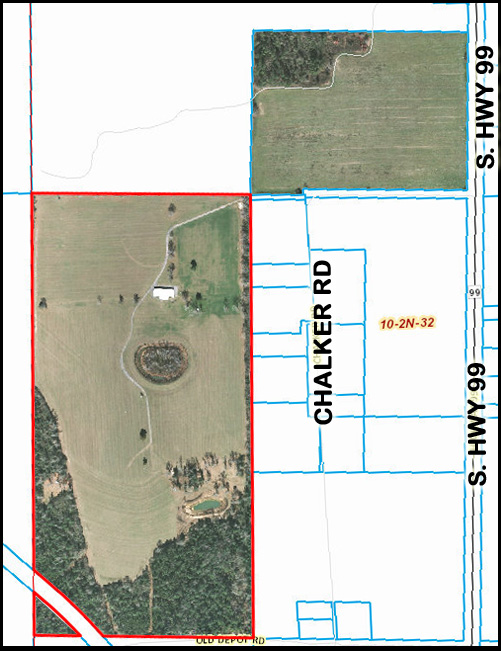 One parcel is 79.5 acres in the 5600 block of Chalker Road and includes about 20 wooded acres, a pond and a 5722 square foot barn. The second property, located at South Highway 99 and Chalker Road, is about 28.7 acres and allows the main property to have road frontage on South Highway 99.
A few residential lots border the east side of the proposed 4-H site along Chalker Road, while the north side is bordered by a 50 acre improved agricultural lot. The southern and western sides of the site are surrounded by hundreds of acres of timber belonging to La Floresta Perdida, Inc.
An open house will be held at the new 4-H property on Saturday, June 14 from 10 a.m. until 1 p.m. with free hotdogs and hamburgers while they last and property tours.
“We are also asking our youth to help us prioritize educational projects they would like to see on the property,” Escambia County Extension Director Pam Allen said in an email “For those that attend the Open House on June 14th, there will be tours and a survey to complete. We will also ask others who cannot attend to give input at a later time as we plan out the structures over the next 1 to 3 years.”
“A critical component of using the property is to have restroom facilities constructed as soon as possible. Restroom construction, along with the livestock facilities, will remain a top priority as we move along in the process,” Allen continued.
On Friday, June 13, at 3 p.m., a groundbreaking ceremony will be held for a new Langley Bell 4-H Center building at 3740 Stefani Road in Cantonment, the current location of Escambia County Extension.
The new 4-H Center will be a single story building just under 10,000 square feet that will include a multi-purpose room/auditorium with stage, kitchen, offices, reception area, life skills room, science room with wet lab, volunteer room with technology lab, county council,club meeting room and storage.
Pictured top and bottom: An existing 5,722 square foot barn on one of two parcels that may soon be home to Escambia County 4-H. Photos for NorthEscambia.com, click to enlarge. Pictured inset: Two parcels will provide 4-H about 108 acres near Barrineau Park. NorthEscambia.com graphic, click to enlarge.

Bratt Davisville Water System Transfer Approved; Second In County With Possible Franchise Fee
June 4, 2014

The Escambia County Commission Tuesday night gave approval to the transfer of a franchise agreement from the Bratt-Davisville Water System to Escambia River Electric Cooperative.
About a year ago, the membership of the Bratt-Davisville Water System voted to be acquired and operated by EREC.
The franchise agreement between EREC and Escambia County is the second in the county among 17 such agreements that includes a provision that would allow Escambia County to charge a franchise fee to Bratt-Davisville’s customers.
Escambia County won’t charge the fee for now, and has no immediate plans to do so, but wanted to reserve that right. Commissioner Gene Valentino said he would like to one day see the ability to charge franchise fees added to all water system franchises in the county.
EREC, the electric provider in the Bratt and Walnut Hill areas, currently operates the Walnut Hill Water Works, which serves about 700 customers in the Walnut Hill area. When EREC purchased the Walnut Hill water system in 2001, that franchise agreement became the first to include a possible county franchise free. To date, the county has not charged any water customers the fee.
Editor’s note: This story was updated 6/4/14 at 2 p.m. after it was discovered that the Bratt-Davisville water franchise agreement with Escambia County was actually the second such agreement to include a possible franchise fee. An Escambia County department head provided incorrect information to commissioners during their meeting on Tuesday.
Pictured: The Bratt-Davisville Water System office on Highway 97 in Davisville, just south of the Alabama state line. NorthEscambia.com photo, click to enlarge.