
National Weather Service Skywarn Spotter Training Offered In Molino

May 19, 2014

A National Weather Service Skywarn spotter training class will be held at the Molino Branch Library on Tuesday.

Presented by John Werner, meteorologist/Hydrology Program leader NOAA, this is the introductory course that describes the basic forms of severe weather, what NWS SkyWarn spotters do, basic spotting techniques and how to make reports to the NWS and basic storm safety.  The class is approximately 90 minutes and there are no formal prerequisites for the Basic SkyWarn class; however it is recommended attendees take online training beforehand.

The class will be held from 6:00 – 7:30 p.m. on Tuesday, May 20 at the Molino Branch Library. For more information, call (850) 435-1760.

Young Adults Learn To Surf Florida’s Changing Political Times

May 19, 2014

Getting bills passed is an art and a science, the reason people pay lobbyists millions of dollars. But for some young Floridians, the 2014 session was a breakthrough in succeeding in the legislative arena.

After more than a decade of trying, students watched as lawmakers passed a bill (HB 851) granting in-state tuition to undocumented immigrants who have attended Florida secondary schools for at least three years. Gov. Rick Scott has promised to sign the measure.

“It took a lot of courage to do what they did,” said House Speaker Will Weatherford, a Wesley Chapel Republican whose support powered the bill to passage. “They’re the face of what we were trying to articulate.”

Wearing orange mortarboards and brandishing their high-school diplomas, the students repeated their stories of hard work and good grades, their dreams of higher education colliding with the cost of out-of-state tuition. When HB 851 stalled in the Senate, they held a sit-in outside Senate President Don Gaetz’s office, calling on him to allow a floor vote. He did.

Lawmakers also passed a bill (HB 755) allowing Jose Godinez-Samperio, an undocumented immigrant with a law degree, to be admitted to The Florida Bar. Scott signed the measure on Monday.

But Godinez-Samperio, who got his start in legislative advocacy working on the first in-state tuition bill in 2003, has no illusions about the reason for its hard-won success.

“The 2012 election, really, is when our message started getting heard,” he said.

Godinez-Samperio is an example of a so-called “Dreamer,” an undocumented immigrant brought to the United States as a child. He was 9 when his parents brought the family from Mexico and remained after their visas expired, which meant they were here illegally. Godinez-Samperio became an Eagle Scout, was valedictorian of his high school class, graduated from New College and attended law school at Florida State University before passing the Bar exam. But he was blocked from admission to The Bar because he was not a U.S. citizen.

As a high school student, Godinez-Samperio worked on the first version of the in-state tuition bill with former Rep. Juan Zapata, a Miami-Dade County Republican who was the sponsor. He has stayed with the measure ever since and recalls 2010 as a considerably more difficult political climate than 2014.

“The (changing) political tides were the result of how the Dreamers presented themselves,” he said. “I don’t think it would have happened if we hadn’t done all that work for the past 10 years.”

The session also held disappointments for young activists. Members of the Dream Defenders, known for their 31-day sit-in outside Scott’s office last summer, saw little progress on their key issues of repealing Florida’s “stand your ground” self-defense law and ending zero-tolerance policies in public schools, both of which, they say, target minority students.

“We were constantly having to fight not only to be seen but to be heard,” acknowledged Ciara Taylor, political director of the Dream Defenders.

Members of the Dream Defenders have a more adversarial relationship with state leaders than some other youth groups. They marched to the Capitol after George Zimmerman was acquitted in the 2012 shooting death of Trayvon Martin, an unarmed teen.

Meanwhile, Florida Youth Shine, an advocacy group for young people who have been in foster care, convinced lawmakers to help teens in foster care learn to drive. It was just a year after the Legislature passed two groundbreaking foster-care bills, the so-called “normalcy bill” giving foster families more of a right to make decisions for their foster children, and a measure giving kids in care the option of staying until age 21.

“They can get in places I can’t,” said Christina Spudeas, executive director of Florida’s Children First and adviser to Youth Shine. “It really helps the legislators to see from the child’s perspective how it affects them.”

But like the Dreamers, the members of Florida Youth Shine haven’t always been as welcome at the Capitol. Spudeas said they learned not to focus on their hard-luck pasts.

“That message wasn’t as well received as, ‘We want to succeed and we want to give back,’ ” Spudeas said. “And they got it.”

Since the group started coming to Tallahassee in 2007, Spudeas said, it has grown from about 30 members to 250 statewide.

This year, 43 members spent Children’s Week at the Capitol lobbying more than 60 legislators. They backed a provision in the child welfare bill (SB 1666) that would keep siblings together in foster care whenever possible. Lawmakers heard from kids who hadn’t seen their brothers and sisters in years.

Sen. Denise Grimsley, a Sebring Republican and a longtime ally of Youth Shine, said the legislative process is more accessible now, not just for young people but for everyone, because technology and transparency have improved in the last 30 or 40 years.

“Technology has given younger people the ability to access, digest and react to policymaking quickly and inexpensively,” Grimsley said. “Youth Shine is …a perfect example of mobilization. Youth Shine is their attempt to put a face on their situations, and they have found great success in a relatively brief period of time.”

by Margie Menzel, The News Service of Florida

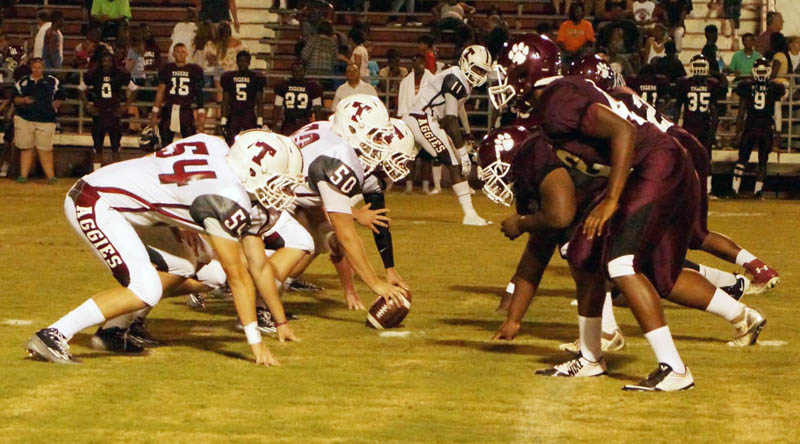
Are You Ready For Some HS Football? Spring Games This Week

May 19, 2014

Are you ready for some high school football? Spring jamborees for most area teams are this week.

Spring drills are underway on the practice fields, with teams limited a total of 20 practice sessions for spring. Those spring drill culminate in the spring jamborees.

Here’s the local schedule:

Thursday, May 22

  • Milton at Pensacola
  • Tate Aggie Crimson/Gray game

Friday, May 23

  • Northview at Jay
  • West Florida at Washington
  • Pine Forest at Pace
  • Lincoln at Escambia

Friday, May 30

  • Niceville at Tate

Pictured: The defending state champion Northview Chiefs shut out the Jay Royals 26-0 during the 2013 regular season.  The Royals will host the Chiefs during a spring game Friday night. NorthEscambia.com file photo, click to enlarge.

Wahoos Fall To Suns

May 19, 2014

The Pensacola Blue Wahoos (18-26) lost their fourth straight, 3-0, at the hands of the Jacksonville Suns (21-22). Both teams pitched well in another low-scoring contest. The Wahoos took a no-hitter into the sixth inning, but the Suns bullpen threw eight scoreless innings on the way to the win.

RHP Michael Lorenzen didn’t allow a hit through 5.0 innings pitched. The right-hander was pulled in favor of a pinch hitter, but Steve Selsky struck out looking with Devin Lohman standing on second. Lorenzen struck out six and walked a season-high four batters. Elvin Ramirez threw two scoreless innings behind Lorenzen and allowed just two hits. Shane Dyer took the loss for the Wahoos, he gave up three runs over 2.0 innings pitched.

The Wahoos couldn’t get much going with the bat and managed five hits. Lohman continued to his hot streak with a double; he went 1-for-3.

Suns starter Angel Sanchez left the game in the second inning after being struck by a hard liner by Travis Mattair. Sanchez pitched just 1.0 inning and allowed one hit. RHP Tyler Higgins did a fantastic job in relief. Higgins gave up three hits over 5.0 innings out of the bullpen, his longest appearance of the season. The right-hander struck out a season-high four batters. LHP Greg Nappo pitched two scoreless innings for the Suns and earned the win. Nick Wittgren earned his sixth save of the season.

Austin Nola and Wilfredo Gimenez put together a couple of singles in the sixth, but Ramirez coaxed a fly ball from Ryan Fisher to get out of the inning. Nola finished the day 2-for-4 with a double and a run scored. Brady Shoemaker broke the scoreless tie with a base hit in the eighth inning. Gimenez provided an insurance run with a double, scoring Shoemaker from first. The Suns tacked on one more in the eighth thanks to a solo home run from right fielder Alex Burg. Nick Wittgren earned his sixth save of the season for the Suns.

RHP Mikey O’Brien (2-2, 3.33) will receive the start for the Wahoos in the series finale. O’Brien has a 1.80 ERA as a starter this season and the Wahoos are 3-0 during his starts this season. LHP Justin Nicolino (2-2, 3.32) will make the start for the Suns.

by Tommy Thrall

Lawyers For The Poor Seek Hike In Bar Dues

May 19, 2014

Joined by a former state Supreme Court justice, attorneys for the poor are trying to raise annual Florida Bar dues by up to $100 to address what they call a fiscal crisis.

The attempt to hike the annual dues, which have not increased since 2001, from the current $265 has sparked an outcry in the legal community and created a rift over how much of the onus lawyers should bear to fund legal-services groups throughout the state.

Former Justice Raoul Cantero, Florida Legal Services Executive Director Kent Spuhler and Florida Justice Institute Executive Director Randall Berg are leading the crusade to increase the fees before the bulk of the current funding for legal aid dries up.

In accordance with Bar rules, Cantero formally notified The Bar that his group intended to file a petition with the Supreme Court proposing a change to the current rule that caps lawyers’ annual dues at $265. The proposal would allow the Bar to lift the maximum dues by up to $100 and would require that the additional funds be steered to the “Legal Aid for the Poor Program” administered by The Florida Bar Foundation.

The Bar’s Board of Governors unanimously voted in March to oppose the petition, which Cantero said he plans to file with the court on June 16. The foundation voted to remain neutral on the issue. As of last week, more than 375 lawyers had signed onto the “Access to Justice” petition, according to the Florida Legal Services website.

Those on both sides agree that funding for legal-services groups — which receive money from the Florida Bar Foundation, counties and the federal government — is in dire straits. The chief source of the foundation’s funding is interest from lawyers’ trust accounts. Because of historically low interest rates, that money has dropped 88 percent in recent years — from $44 million in 2007 to $5.5 million in 2012. The foundation has supplemented funding for legal services with money from reserves, which it projects will run out by 2017. The foundation has earmarked about $15 million for legal services this year.

Money from the counties has also shriveled because of a plunge in property tax collections caused by the bursting of the state’s real-estate bubble.

And, since taking office in 2011, Gov. Rick Scott has exacerbated legal services’ fiscal woes by slashing money the Legislature placed in the state budget for “civil legal assistance.” Scott vetoed $1 million in 2011 and $2 million in each of the following two years.

The proposal pushed by Cantero and the legal-aid lawyers would raise approximately $10 million from the nearly 100,000 lawyers in Florida.

“Allowing a $100 increase in The Florida Bar’s membership fees offers immense benefit to the public with minimal inconvenience to Florida’s lawyers. Lawyers have a professional obligation to assist in improving the administration of justice, and to provide legal services to those unable to pay for such services,” the petition reads.

According to the petition, more than a quarter of the 410 full-time legal aid lawyer positions in Florida are in jeopardy because of the funding shortfall. In 2012, legal-aid lawyers handled 89,720 cases. More than half of the cases dealt with family issues, such as divorce or child custody, and housing cases, like foreclosure.

But Florida Bar President Eugene Pettis and other opponents of a hike in bar dues say that lawyers, who already contribute nearly 2 million hours of pro bono services each year, shouldn’t take on more of the burden of a societal problem.

“I think it’s just shortsighted,” Pettis said of the petition during a recent telephone interview. “This is a community crisis. I think it’s time we leaders bring the community together to address it.”

The Bar is considering lending the foundation $6 million over the next two or three years and will vote on that proposal at its next meeting May 23, Pettis said.

But, he said, money alone won’t fix what he called an outdated system of delivering legal services to the needy. Instead, Pettis is calling for a statewide summit where “stakeholders”— including Supreme Court justices, Attorney General Pam Bondi and others — can develop a long-term plan to ensure that all Floridians have access to the legal representation they need.

“These are all efforts to strengthen the foundation, not to get into some little fight with the petitioners,” Pettis said.

But Cantero said poor Floridians can’t afford to wait for a study.

“These are people that need Medicaid benefits now, that need medical attention now that they cannot afford, that are getting thrown out of their homes now, that are not getting veterans’ benefits now,” Cantero said. “It’s hard for (those in the middle-class) to really understand people that are at this level of poverty where every penny matters and just getting $100 to pay for a prescription medication can make a difference in their lives. It’s hard for us to understand that, and it’s easy for us to say let’s wait until next year when we get the appropriation or wait until we can get the Legislature to do it. These people cannot wait. They cannot afford to wait.”

But Pettis said that Cantero’s route could take just as long or longer.

“They don’t know when their process is going to take effect. There is no way in the world that is a quick track,” Pettis said.

In addition to the dues dispute, the handling of the petition itself appears to have caused hard feelings. Cantero, Berg and Spuhler had planned to attend the Bar’s Board of Governors meeting in March where the petition had been put on the agenda.

But Cantero said the trio changed their minds after Pettis discouraged him from attending.

“He said, well you’re always welcome to come if you want to come. But he led me to believe that we hadn’t been invited, that we were kind of crashing the party,” Cantero said.

Pettis said he never told Cantero not to attend the meeting but advised him that he would have “a few minutes to speak” and that Cantero joked that, as an appellate lawyer, he was comfortable with the short time frame.

“Why they elected not to show up, I don’t know. But it was not due to me disinviting him or discouraging him or telling him not to come,” Pettis said.

Pettis said he had hoped Cantero and his allies would drop the effort.

“I don’t know the reasons why he brought forth the petition. But if it was to bring this to the front of everybody’s agenda, he succeeded. If it was to get action now on trying to resolve the problem, he’s succeeded. If you wanted to get the foundation and the Bar to work together toward some solutions, you all have succeeded. I don’t know what more, and this was my conversation with him, I don’t know what more you can hope for on this issue,” Pettis said.

Cantero accused Bar leaders of being “intimidated by the petition because they feel like they’re going to lose control of the process of setting fees.”

But Pettis said that $10 million won’t resolve problems delivering services not just to the poor but also to low-income Floridians who do not qualify for legal aid.

“There is no silver bullet out there,” he said. “So that’s why I don’t understand why we’re not spending our energies in corporate relationships, bringing each other together to address a long-term solution to the problem. Get off of this up to $100 a member. If everybody put money in the kitty, $10 million would be not a solution.”

Pettis said Cantero proposed having the Bar agree to the petition and then discuss alternatives later.

“I said no. We’re not going to sit here quietly and allow you to do this without us letting the court know what our feelings are on this process,” Pettis said.

Berg helped draft the 1987 petition, backed by the foundation but opposed by the Bar, that resulted in the current funding system that requires lawyers to contribute the interest from their trust accounts.

He said the Bar needed to “show some leadership” on the issue.

“This could be a major wonderful thing that the legal profession does for the people of Florida,” Berg said. “We give lip services to legal services for the poor but when we’re asked to step forward and help in any meaningful way we oppose it. It could be a public relations disaster for the Bar in my opinion. This is a wonderful opportunity for lawyers to show the good that they do, by putting their money their mouth is.”

by Dara Kim, The News Service of Florida

Driver Cited After Wreck With Four Injuries In Century

May 18, 2014

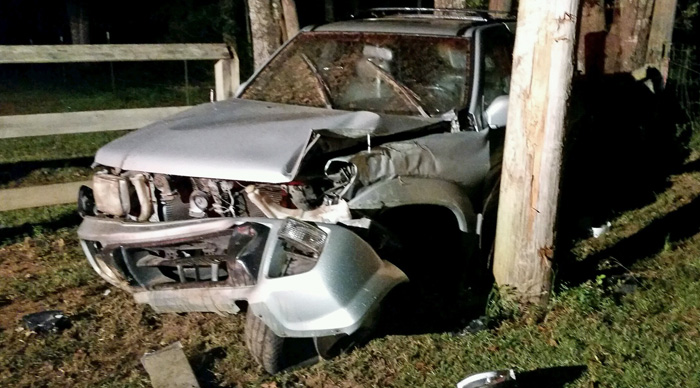
Four people were taken to area hospitals after a  two-vehicle crash Saturday afternoon in Century.

The accident happened about 1:30 p.m. on North Century Boulevard at Pond Street. According to the Florida Highway Patrol, 61-year old Linda Rodriguez of Century was eastbound on Pond Street when she pulled into the path of a 2011 Nissan Murano that was northbound on North Century Boulevard. The impact caused the Murano to spin around, strike a curve and overturn. The Murano came to rest upside down in the inside and center lanes of North Century Boulevard.

The driver of the Murano, 34-year old Alvin A. Cleveland, Jr. and his passengers, 33-year old Nia Cleveland and 4-month old Ava Cleveland, were all transported to Sacred Heart Hospital by ambulance.

Rodriquez was transported to Jay Hospital with minor injuries. According to the FHP, Rodriquez was cited with violation of right of way.

The Escambia County Sheriff’s Office and the Century Station of Escambia Fire Rescue also responded to the crash.

NorthEscambia.com photos, click to enlarge.
Manna Food Pantries Back Home After Flood, Accepting Donations

May 18, 2014

After losing all its food to recent flooding, Manna Food Pantries’ main facility is once again receiving and stocking food.

Since Monday, staff and volunteers have been sorting 73,845 pounds of food collected during the Stamp Out Hunger Letter Carrier Food Drive. While that’s only enough food to serve the hungry in the area for one month, Executive Director DeDe Flounlacker says it’s a start.

“We’re overwhelmed by the generosity of this community,” said Flounlacker. “We’re starting from scratch, but we hope to be able to resume partial service in 8 to 10 weeks. We ask that the community continue to give — there is still a great need.”

The receiving warehouse is the only occupied building at the facility, and the staff has been temporarily working out of a trailer. Jay Bradshaw, president of the Manna board of directors, says the board is actively looking for a new permanent home away from the flood-prone area.

“Right now, the priority for Manna is to resume service to the hungry as soon as possible,” said Bradshaw. “For the long-term, the board is committed to finding a more suitable location to serve the community.

Last year, Manna Food Pantries distributed nearly 900,000 pounds of food to the hungry and helped 42,116 people. The non-profit has been serving the community since 1983.

Got to mannafoodpantries.org to find out how you can make a donation or volunteer to help. Donations can also be made by U.S. Mail to Manna, PO Box 2582, Pensacola, FL 32513.

County Waives Noise Ordinance For Molino Bar Fund Raiser

May 18, 2014

The Escambia County Commission has voted  to approve a limited waiver of the county’s noise ordinances for a June Special Olympics Fund Raiser at  a Molino bar.

The outdoor  “S.O.B. A-Thon” event (with the initials representing “Special Olympic Biker”)  is planned for 8 a.m. until midnight on Saturday, June 7. at Louie’s Tavern in the 200 block of Molino Road.  The all-day event will include  live music in the evening.

The Escambia County Sheriff’s Office will be notified that the waiver was issued.

Tate Grad Jackson Completes Basic Military Training

May 18, 2014

Air Force Airman Justin J. Jackson recently graduated from basic military training at Joint Base San Antonio-Lackland, San Antonio, Texas.

The airman completed an intensive, eight-week program that included training in military discipline and studies, Air Force core values, physical fitness, and basic warfare principles and skills.

Airmen who complete basic training earn four credits toward an associate in applied science degree through the Community College of the Air Force.

Jackson is the grandson of Joyce Jackson and nephew of Kristi Toohey, both of Pensacola.

He is a 2012 graduate of J.M. Tate High School.

Florida Gov’t Weekly Roundup: The Two Sides Of The Governor’s Office

May 18, 2014

he dual roles of the governor’s office during an election year were on full display this week.

On the one hand, Gov. Rick Scott was signing and at least preparing to veto some of the bills approved in this spring’s legislative session — including accidentally “signing” one bill before it had been sent to him.

http://www.northescambia.com/wp-content/uploads/2011/01/floridaweeklly.jpgNew restrictions on education standards, the last half of a sizable tax cut and a bill paving the way for undocumented immigrants to practice law in Florida all met with Scott’s approval. Whatever Scott’s motive for signing them, several of the bills served political ends. At the same time, the governor said a bill that would increase how fast motorists could drive on state highways wasn’t his speed.

Meanwhile, blind trusts like the one Scott has used to handle his assets during his time in office came under fire from advocacy groups who object that, while the mechanism might shield knowledge about investments from elected officials, it also keeps their financial interests secret from the public.

And the fundraising machine continued to churn for Scott, his rivals and dozens of other candidates and causes across the board, as the November elections loomed.

SIGNING BILLS — WHEREVER THEY ARE

The closest intersection between the governor’s campaign and his official duties was the signing Monday of the final portion of his $500 million reduction in taxes and fees, something already transitioning from the cornerstone of Scott’s legislative agenda to the centerpiece of his campaign for re-election.

“The bill we signed today is $121 million right back into Florida citizens’ hands,” Scott said during a Monday news conference.

Scott last month had already signed a larger part of the tax and fee cuts, rolling back vehicle registration fees, that was expected to save motorists on average savings of $20 to $25 per vehicle.

Lawmakers approved the most recent tax-cut package (HB 5601) — called “the patchwork of awesomeness” by House Finance & Tax Chairman Ritch Workman, R-Melbourne — on the final day of the legislative session, saying it would save Floridians about $105 million. But Scott put the number Monday at $121 million, and his office also repeated that figure in a news release.

The savings include sales-tax holidays on hurricane gear, school supplies and energy-efficient appliances. It reduces or gets rid of taxes on college meal plans, therapeutic pet food, car seats and bicycle helmets for kids.

Scott also autographed a set of bills aimed at calming down activists worried about the state’s version of the Common Core education standards. The governor was so eager to get the proposals into law, his office announced that he had authorized a bill that he was technically unable to sign.

The brief mix-up began when the governor’s office announced that Scott had signed bills meant to “push back on federal intrusion.” The bills included measures that would give parents more opportunities to challenge their school boards’ choice of textbooks; remove the words “Common Core” from state law while leaving unchanged the state’s modified version of the benchmarks; and ban the collection of students’ biometric and other personal information by school districts.

There was just one hitch — the Legislature had not yet sent Scott the education privacy bill, meaning that he could not sign it. After the announcement, Scott’s office asked the Legislature to send the bill to him. Lawmakers complied, and Scott inked it along with another measure giving school districts one year to transition to a new state test.

Scott approved several other proposals this week, including a bill that would allow admission to The Florida Bar for a Mexican-born law school graduate who was brought to the country at age 9 by his parents and became an undocumented immigrant.

But the governor announced he would slam the brakes on an effort to increase speeds on state highways by vetoing a bill that would have allowed the Florida Department of Transportation to consider hiking maximum speed limits by 5 mph.

“I’m going to stand with law enforcement and I want everybody to stay safe,” Scott said less than a week after a Florida Highway Patrol trooper made an impassioned plea for him to veto the bill at a fellow trooper’s funeral.

DO TRUSTS BLIND THE PUBLIC?

Open-government advocates didn’t attack any of the bills that Scott signed into law this week, but they did take aim at a 2013 law that allows elected officials to put financial assets in blind trusts that do not offer detailed public disclosure of the holdings.

Jim Apthorp, former chief of staff to the late Gov. Reubin Askew, filed a lawsuit Wednesday challenging the law.

The suit has the backing of the First Amendment Foundation, the League of Women Voters and half a dozen media organizations that will file friend-of-the-court briefs, including the Associated Press, The Miami Herald and The Florida Times-Union.

Apthorp and the attorney in the case, Talbot “Sandy” D’Alemberte, said the use of blind trusts circumvents the full disclosure of public officials’ holdings required by the Sunshine Amendment, which Askew spearheaded and Florida voters overwhelmingly passed in 1976.

Apthorp’s petition asks the high court to prohibit Secretary of State Ken Detzner from accepting the qualifying papers of any candidate who has placed finances in a blind trust.

Senate President Don Gaetz and House Speaker Will Weatherford released a joint statement Wednesday defending the law, which was known as Senate Bill 2 and followed a 2010 grand jury recommendation about the use of blind trusts and a 2012 recommendation from the Commission on Ethics and suggested that the lawsuit was politically motivated.

“For the plaintiff to suddenly come forward with his objections four years after the grand jury report, two years after the ethics commission’s recommendations and one year after Senate Bill 2 was enacted raises the suspicion that this is not a serious or sincere constitutional challenge but a cynically timed political ploy designed and timed to affect the outcome of this year’s elections,” the statement said.

Although Apthorp and D’Alemberte are Democrats, as was Askew, they said the lawsuit doesn’t target Scott, a Republican.

“Gov. Scott did everything that the ethics commission and the Legislature asked him to do,” Apthorp said. “So I don’t think he’s done anything wrong here. The problem is that the statute under which he received advice is not constitutional.”

Scott’s campaign manager Melissa Sellers on Thursday sent a letter to Florida Secretary of State Ken Detzner, making clear the governor would comply with disclosing his individual investments if blind trusts are barred.

“If the courts believe the trust should be dissolved, all assets will be disclosed in accordance with the law for qualifying,” Sellers wrote.

MONEY WARS

In a development that no one could dispute has everything to do with the 2014 elections — and where blind trusts are unquestionably forbidden — campaign-finance reports started rolling in for candidates across the state,

Former Gov. Charlie Crist, a onetime Republican now running against Scott as a Democrat, and a closely aligned political committee raised about $2.2 million in cash in April and neared a total of $10 million to fuel this year’s campaign.

Crist’s haul for the month topped the combined $1.3 million in cash raised in April by Scott and a Scott-aligned political committee known as “Let’s Get to Work.” The Scott re-election effort still has a major financial edge over Crist, primarily because Let’s Get to Work had raised an overall total of $28 million through April 30, and Scott has already put some of that money to use.

The reports showed Let’s Get to Work spent $5.1 million on advertising in April. It still had roughly $18.4 million available to spend, while the candidate’s campaign account had about $3.1 million as of April 30.

At the same time, the contributions to Scott and Crist only provide a partial picture of how the campaign’s finances are taking shape. The Republican Party of Florida, for example, sent out a news release Monday indicating it had raised $1.72 million in April and that at least part of that money would go toward helping Scott.

Running far behind both men was former Senate Minority Leader Nan Rich, Crist’s primary foe, who raised $20,748 in cash for her campaign account in April, while also receiving $34,583 in in-kind contributions, newly filed reports show.

Rich had raised an overall total of $348,804 in cash through April 30, while spending $244,554, the reports show. She also had received a total of $216,883 in in-kind contributions.

Rich also heads a political committee called Citizens for a Progressive Florida. It had raised an overall total of $92,815 but did not report receiving any contributions in April.

Overall, the reports filed Tuesday showed a continuation of huge fund-raising leads for GOP Cabinet incumbents Attorney General Pam Bondi, Agriculture Commissioner Adam Putnam and state Chief Financial Officer Jeff Atwater. Bondi had raised a total of nearly $1.16 million for her campaign account through April, while Putnam and Atwater had each topped $1.7 million.

Former Department of Children and Families Secretary George Sheldon, a Democrat running for attorney general, had raised a total of $212,386 through April. But none of the other Democratic candidates for the three Cabinet seats had collected more than $102,392, the total raised by attorney general candidate Perry Thurston.

STORY OF THE WEEK: Open-government advocates filed suit against a law allowing elected officials to put their assets in blind trusts, saying the mechanisms kept the public from knowing about the officials’ financial holdings.

QUOTE OF THE WEEK: “There won’t be fields of marijuana growing in Florida. It will be grown under roof, in controlled environments, inside, for obvious security reasons.”–Agriculture Commissioner Adam Putnam, speaking about the potential impact of the impending legalization of low-THC marijuana, in a videotaped interview with the South Florida Sun Sentinel editorial board.

by Brandon Larrabee, The News Service of Florida

« Previous PageNext Page »