

House Backs Evers Plan To Unbuckle Rural Letter Carriers
April 27, 2015
Despite safety concerns raised by some lawmakers, the House have given final approval to a bill by Sen. Greg. Evers that would exempt rural letter carriers from the state’s mandatory seat-belt law. House members voted 88-28 to approve the bill, which earlier passed the Senate and is ready to go to Gov. Rick Scott.
The bill would apply to rural letter carriers who often need to stretch across their front seats to reach for mailboxes.
But Rep. Irv Slosberg, a Boca Raton Democrat who was an outspoken opponent of the bill, argued that it could lead to requests from other groups, such as package-delivery services, for exemptions to seat-belt requirements.
Florida allows police to stop motorists for not wearing seat belts, a concept known as primary enforcement. “Primary enforcement is the law of the land, and I don’t think we should tinker with it,” Slosberg said.
by The News Service of Florida
Prayer And WD-40: 106-Year Old Hattie Schneider Passes Away
April 27, 2015
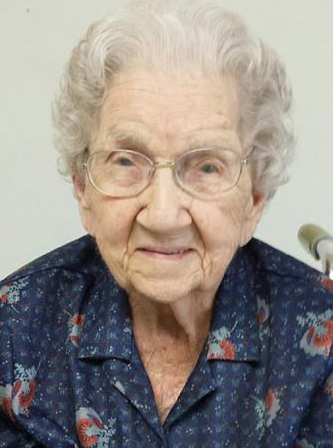 One of the North Escambia area’s oldest residents has passed way. Hattie Schneider of Molino turn 106 last March, giving credit for her long life to “prayer and WD-40″, and her trust in the Lord.
She is survived by several grandchildren, great-grandchildren and great-great grandchildren. Her husband passed away in 1989.
Her family and friends said they thank God everyday for blessing them with her, and she was a true inspiration to everyone.
Visitation for Hattie Gay Schneider will be this Wednesday, April 29, from 10-11 a.m. at Highland Baptist Church in Molino, with funeral services set for 11 a.m.
Blue Wahoos Split Doubleheader With Biloxi
April 27, 2015

A few days ago, reliever Layne Somsen learned he would get the start for the Pensacola Blue Wahoos against the Southern League South-leading Biloxi Shuckers.
His feeling? Relaxed.
Somsen threw five scoreless innings in the second game of Sunday’s doubleheader that Pensacola won, 2-1. Biloxi won the first game, 2-1, to split the day at Pensacola Bayfront Stadium.
Somsen pitched in front of a sellout crowd—the Blue Wahoos 109th in 210 home appearances and fifth sellout in its first six home appearances this season against the Shuckers.
Somsen laughed when asked if he has been miscast as a reliever during his professional career. He was a starter at South Dakota State when the Wahoos parent club Cincinnati Reds drafted him in 2013.
“You know, (starting) is a different mindset,” Somsen said. “You throw as many strikes as possible and go as far as possible. It’s a more relaxed feeling when you’re starting. In the bullpen, you try to go out there and blow guys away.”
Somsen started the game having pitched eight innings in three relief appearances, allowing one run and striking out 11 hitters. In Sunday’s start, he gave up two hits, a walk and struck out three in five innings.
Blue Wahoos Manager Pat Kelly laughed when asked if Somsen should be groomed as a starter, instead of a reliever. He likes Somsen’s curveball and cut fastballs.
“I think he’s a great swing man,” Kelly said. “He fits that role really good. He can do a lot of things with a baseball.”
The difference in the second game was a big two-out double down into the left field corner that came from pinch hitter Sean Buckley in the fifth inning that scored third baseman Ray Chang from second and put Pensacola ahead, 1-0. Ryan Wright, who went 3-7 Sunday, singled to right field to score Juan Silva for a 2-0 lead. Buckley was thrown out at the plate to end the inning.
In the first game, Buckley had the chance to tie or win the game with a two-out hit in the seventh inning but grounded out to short to end the first game of the doubleheader. In the second game with two outs, he smashed Shuckers’ Jacob Barnes curveball to left.
“You want to be aggressive and get a good pitch,” Buckley said. “Hopefully, I made up for” grounding out in the first game.
The Blue Wahoos had the tying and winning runs on third and second with two out against the Shuckers in the seventh and final inning of Sunday’s first game. But Buckley grounded out. He had tied the game, 1-1, when his single scored Ryan Wright from second base.
That was the first run in eight innings that the Blue Wahoos managed off of Biloxi righty Brooks Hall (3-0) this season. Hall came into the game holding right-handed batters to a .069 batting average but Pensacola hitters managed to go 4-16 or .250 against him. Hall gave up all seven hits in his six innings of work Sunday.
The fourth game of the six-game series with the Milwaukee Brewers Double-A affiliate Biloxi Shuckers is scheduled at 6:35 p.m. RHP Daniel Wright (0-2, 5.68) takes the mound for the Wahoos and is scheduled to be opposed by the Shuckers RHP Tyler Wagner (3-0, 1.59).
One Injured In Highway 97 Rollover Accident
April 26, 2015

One person was injured in a single vehicle rollover crash on Highway 97 Sunday afternoon.
 The driver of a Chevrolet Avalanche was northbound on Highway 97 when he apparently ran off the shoulder of the road, over-corrected, crossed back over the highway and then flipped the vehicle numerous times into a muddy field.
The driver was transported by Atmore Ambulance to an area hospital injuries that were not considered life threatening.
The accident is under investigation by the Florida Highway Patrol; further details have not yet been released. The Walnut Hill Station of Escambia Fire Rescue also responded to the crash.
NorthEscambia.com photos, click to enlarge.


Reimagine Century To Return Next Month
April 26, 2015

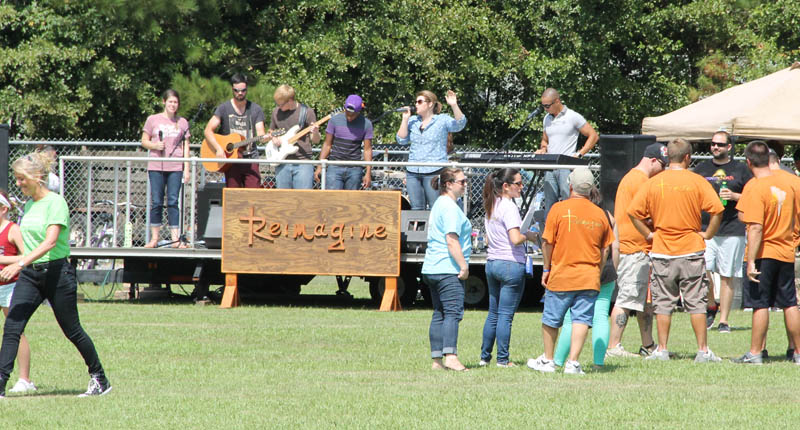
In just a few short weeks, the faithful will reach out during Reimagine Century to touch the hearts and lives of area residents in need.
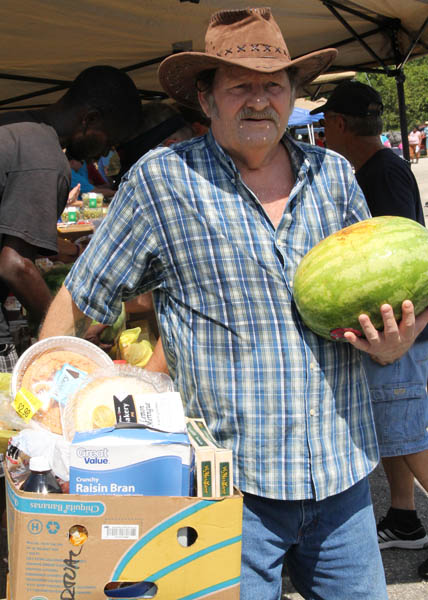 “Reimagine Century is going to be better than last year. It’s going to be an event where businesses, the community, agencies, industries and churches come together to not only bless the impoverished, but to unite and serve each other,” said organizer Linda English.
She said the volunteers are on a mission to serve those less fortunate — both their physical and spiritual needs.
“We do this first and foremost to emphasize that we are one body of Christ. We have lots of denominations, we have racial division, so for one day come together and all that racial division falls down, all that denomination differences fall down, and we just serve Jesus, the one thing we have in common,” she said. “As we do that, we get the benefit of doing what the Bible says, which is to love on each other and love on the poor.”
“It’s honor to serve those individuals that are in need,” English said.
The event will include a wide variety of activities, including a 15,000 pound food giveaway, health screenings, AIDS testing, diabetes information, live music, fishing lessons from Mission Fishin’, free manicures, information from community agencies, a clothing giveaway, free lunch, free haircuts, youth and teen activities and sports, a diaper giveaway and more.
Reimagine Century 2015 will be held Saturday, May 16 from 10 a.m. until 2 p.m. at the old Century High School at 440 Hecker Road.
For more information or to become a part of Reimagine Century, call Linda English at (850) 454-5280 or Greg English (850) 712-8397.
Reimagine Century is sponsored in part by numerous organizations, including NorthEscambia.com.
Pictured: The first Reimagine Century event last September. NorthEscambia.com photos, click to enlarge.
‘
Nighttime Lane Restrictions Planned for Nine Mile Road
April 26, 2015
Eastbound traffic on Nine Mile Road will be restricted west of I-10, near Heritage Oaks Drive, in Escambia County, from 8 p.m. to 6 a.m. beginning Monday, April 27, through Saturday, May 2, as crews perform construction activities.
All activities are weather dependent and may be delayed or re-scheduled in the event of inclement weather. Motorists are reminded to travel with care through the work zone, especially at night, and to watch for construction equipment and traffic flaggers entering and exiting the roadway.
House, Senate Sill At Odds Over Budget Negotiations
April 26, 2015
House and Senate leaders continued to swap offers on the broad outlines of a budget Friday, but remained far apart on more than just the numbers, with divisions remaining on the conditions for negotiations and the mechanics of how to bridge the differences.
By the end of Friday, the House had made a significant concession to the Senate on hospital funding — but said it would only follow through if the upper chamber dropped insistence on using Medicaid expansion dollars to help lower-income Floridians purchase private insurance. The Senate essentially said the House offer was still inadequate, in part because two components of the health-care puzzle facing the Legislature are tied together.
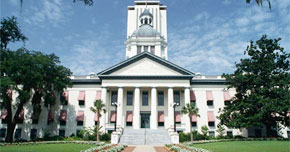 With a week left in the legislative session, it is inevitable that lawmakers will have to return to the Capitol for either an extension of the current session or a special session in a few weeks. And despite the continuing offers, Senate leaders clearly did not expect in-depth negotiations to begin soon over the nuts and bolts of the budget plan.
“There’s no need for you to stay in town,” Senate Appropriations Chairman Tom Lee, R-Brandon, told colleagues eager to head home for the weekend.
At the heart of the disagreement lies what to do about the coverage expansion and the Low Income Pool, or LIP, program that is largely used to cover the expenses of uninsured, low-income Floridians who show up at hospitals needing treatment. The $2.2 billion LIP program is set to expire June 30 unless the state can reach a new agreement with the federal Centers for Medicare & Medicaid Services.
Federal officials and the Senate would like to see the House and Gov. Rick Scott consider the Medicaid expansion alternative in conjunction with LIP. But Scott and House leaders are fiercely opposed to tapping the expansion funds, which come from the federal Affordable Care Act, commonly known as Obamacare.
The House is now proposing to use up to $600 million in state funds to draw down additional federal money to shore up hospitals in case the federal government rejects a new version of LIP or comes back with a significantly smaller figure. That is the amount the Senate has called for if the state has to replace LIP.
But House Speaker Steve Crisafulli, R-Merritt Island, said the Senate has to abandon its expansion plan first.
“We stand ready, willing, and able to partner with the Florida Senate on joint priorities,” the House said in an unsigned, written offer to the Senate. “There is no need to use Medicaid expansion as a condition for finishing our constitutional duty to pass a balanced budget.”
The Senate response, which came after a “deadline” requested by the House: No dice. The upper chamber has said that LIP or a state replacement and the $2.8 billion expansion program are both needed to give long-term stability to hospitals and other medical providers and to prevent damage to the state’s economy.
“Equipped with this knowledge, we are not willing to rush to a resolution that could damage our economy — particularly when there is a clear alternative available to maximize federal taxpayer dollars returning to Florida while staying true to the Medicaid reform principles we all support,” Gardiner wrote in a response.
Senate leaders also want to wait to hear back from federal officials on the state’s LIP proposal before finalizing any budget. Most provocatively, the upper chamber wants to communicate directly with the Centers for Medicare & Medicaid Services.
When two senators traveled to Washington late last month to get a direct update, the trip angered the Scott administration, which has been handling formal negotiations with the federal government.
“We’re indicating to the House and to the governor that the Senate would like to take a much more active role in asking questions of CMS, because we need to know,” Gardiner said.
The House points out that a response from the federal agency could take until early July — after the beginning of the state’s budget year. But Gardiner says it’s almost impossible to move forward on a reliable budget without at least an understanding of how much money the state can expect once the federal government makes its decision.
“Out of respect for everybody … let’s make sure that we give CMS every opportunity to give us a number that puts us in a position where we can make a decision and we’re not back here later making cuts because something bad happened,” he said.
The two chambers also disagree on how to handle the negotiations if little progress has been made by next Friday, the scheduled end of the regular legislative session. The Senate would like to extend the session until June 30, the day before the state’s budget year begins, if necessary. According to senators, that would make the process for passing a budget easier.
Under the Senate plan, lawmakers would likely still return home and return to seal any budget deal. But remaining in session would prevent lawmakers from campaign fundraising in the interim. Doing so would also make it more difficult for Scott to call a special session, something that would give him much more control over the agenda — though lawmakers could achieve that goal by simply calling a special session on their own.
The House, for its part, says there’s no need to keep the session going unless the talks are moving ahead.
“I think you would extend the session if next week we’re talking about budget negotiations. It would be foolish for us to leave otherwise,” Crisafulli said. “But if we’re not getting into a point of where we’re working through a reasonable approach to solve the budget impasse, then we would leave and reset and take a clear mind and come back.”
Despite their differences, lawmakers seemed buoyed by the fact that something like a negotiation was finally underway after weeks of gridlock.
“While that conversation is a little narrow for our taste right now, at least we’re talking,” Lee said.
by Brandon Larrabee, The News Service of Florida
Barrineau Park Community Teams Up To Clean Up
April 26, 2015
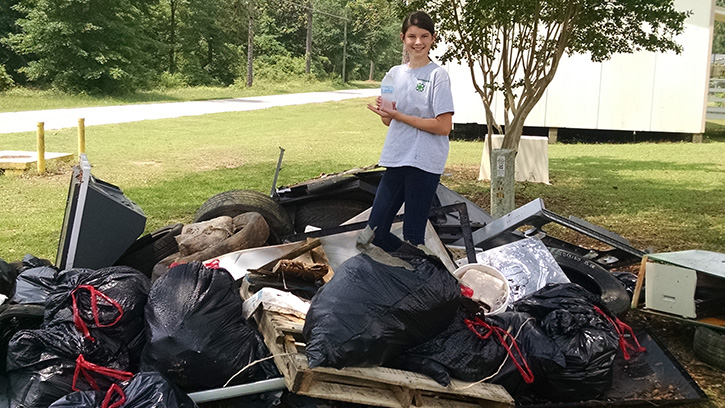
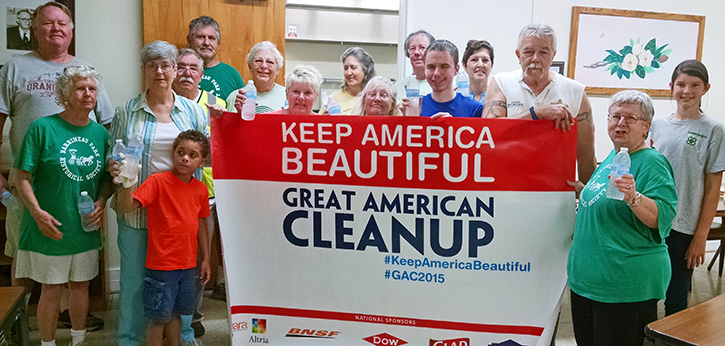
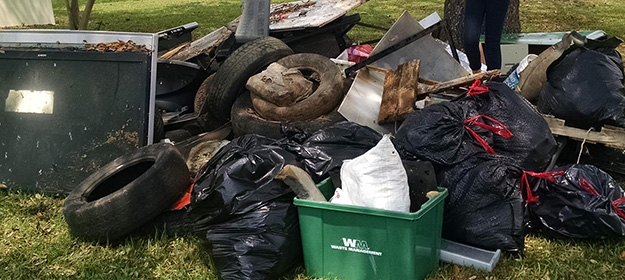
The Barrineau Park community is just a little bit nicer , thanks a volunteer cleanup effort Saturday for Earth Day involving the Honeysuckle Garden Club, Barrineau Park Historical Society, Barrineau Park 4-H, and Clean and Green of Escambia County.
Volunteers fanned out across the community, working through the morning collecting trash from the roadsides before enjoying a lunch provided by the Barrineau Park Historical Society.
Photos by Sarah-Jane Conti for NorthEscambia.com, click to enlarge.
Prison Overhaul Headed Back To Senate
April 26, 2015
 After months of reports about inmate abuse and alleged cover-ups in the state prison system, the House on Friday unanimously approved a plan to fix problems in the Florida Department of Corrections. The House vote will send the bill back to the Senate, which approved the measure April 1. The House made changes to the bill, making it necessary for the Senate to take up the issue again.
The bill deals with numerous subjects, ranging from creating a new regional administrative structure for the department to requiring that inspectors receive specialized training if they conduct sexual-abuse investigations.
by The News Service of Florida
Biloxi Beats The Wahoos
April 26, 2015
Pensacola Blue Wahoos outfielder Jesse Winker hit a deep fly ball to the 400-foot sign in centerfield with his final swing of the game and a runner on second base.
He thought it was a goner. So did manager Pat Kelly and the Blue Wahoos fans.
However, Biloxi Shuckers centerfielder Kyle Wren chased Winker’s shot down to preserve a 4-3 victory over Pensacola. The Wahoos recorded its 108th sellout in its fourth season at Pensacola Bayfront Stadium.
“I definitely thought it was gone for sure,” said Winker, the Cincinnati Reds No. 3 prospect who has hit two dingers in his past four-game hitting streak. “I thought I got it. PK (Pat Kelly) wants to win and so do we.”
Kelly, who coached Winker last year in Bakersfield, also thought Winker had a walk-off two-run home run.
“I thought he got it, seeing him hit the past couple years,” Kelly said of Winker. “He came pretty close. He just couldn’t get it over Wren’s head.”
The Blue Wahoos dropped to 4-10 on the season and 1-4 against Biloxi. They are 5.5 games back of the 10-5 and first-place Shuckers.
Pensacola fans came to life in the bottom of the second inning when, not only did the Blue Angels Fat Albert make an unscheduled fly over, the Blue Wahoos loaded the bases with no outs. Stephenson hit a deep fly ball to right field to score Kyle Waldrop to tie the game at 2. Shuckers lefty Brent Suter then walked Wahoos Ryan Wright to put Pensacola ahead, 3-2. Suter struggled in the inning walking four batters, hitting another and allowing a Waldrop single.
However, Shuckers shortstop Orlando Arcia, the Brewers’ No. 2 prospect according to Baseball America, smashed a solo home run over the left field wall in the fifth inning for the game-winning run, 4-3. He leads the Southern League in hitting at .458 (22-48) and has reached base in all 15 Shuckers’ games this season.
Wahoos right fielder Winker prevented Biloxi from adding another run in that inning by gunning down Taylor Green at second base, when he tried to stretch his single to a double.
“I had a bad rap about my defense when I was drafted,” said the 21-year-old Winker, who was the 49th pick overall in the 2012 draft. “But I’ve worked a lot and felt I’ve always been a good defender. I take a lot of pride in my defense.”
The Reds No. 1 prospect, Stephenson, threw 5.2 innings, allowing six hits four runs, two of which were earned, three walks and striking out five. In three starts and 16.2 innings, he has 21 strike outs.
The doubleheader Sunday with the Milwaukee Brewers Double-A affiliate Biloxi Shuckers is scheduled at 2:05 p.m. Both games will be seven innings. RHP Tim Adleman (0-2, 2.70) takes the mound for the Wahoos in the first game and is scheduled to be opposed by the Shuckers RHP Brooks Hall (2-0, 1.13). In the second game, RHP Layne Somsen (0-0, 1.13) takes the mound for the Wahoos and is scheduled to be opposed by the Shuckers RHP Jacob Barnes (0-2, 3.72).