
Woman Caught Stealing Christmas Decorations Will Spend This Christmas In Jail
October 1, 2014
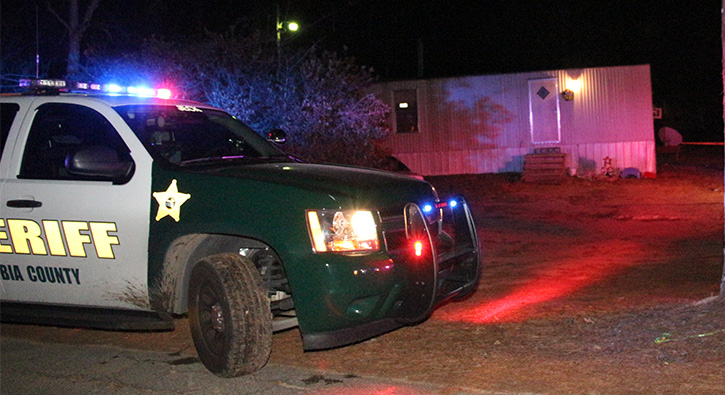
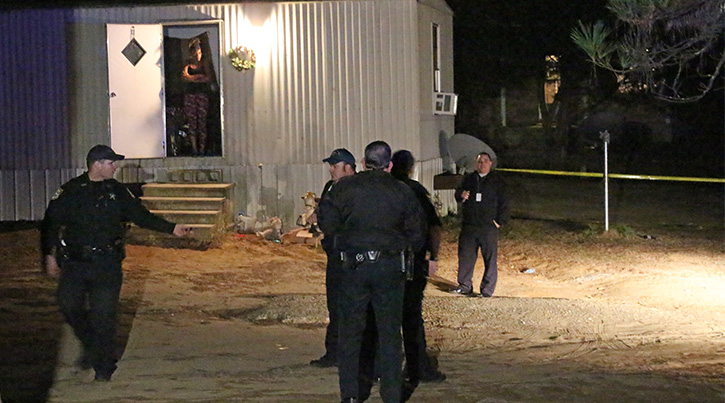
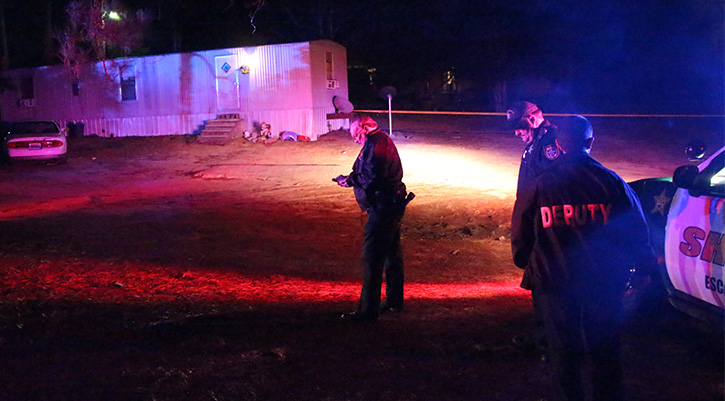
A Cantonment woman was busted red handed taking Christmas decorations out of front yards just before Christmas 2013 will be spending this Christmas in jail.
Daphne Ann Whited, age 45 of Cantonment, drove around a Bellview neighborhood, taking decorations from yards and placing them inside her vehicle. She was convicted on several misdemeanor counts of petit larceny and sentenced t0 60 days in jail and ordered to pay restitution.
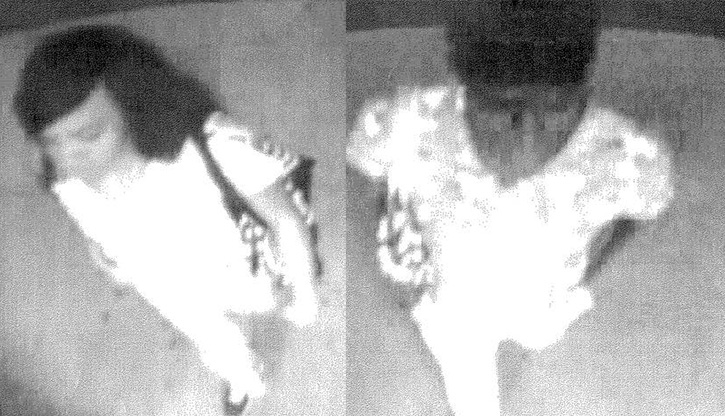
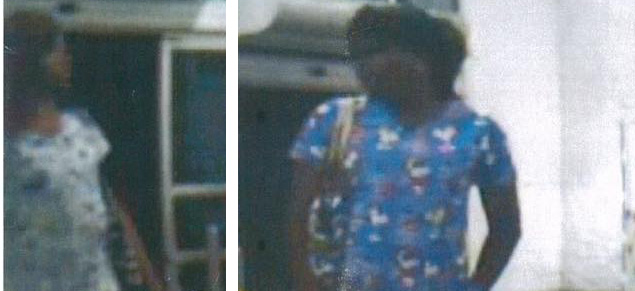
One resident, Sean Young, caught Whited on camera and posted the photos to his Facebook page.
“I asked her if she needed help putting my stuff in her car,” Young wrote on Facebook. “Then I took her picture.”
Whited told Escambia County Sheriff’s deputies that an ad on Craiglist said the decorations were on a lawn free for the taking on Tributary Street.
Once Whited finishes her time in the Escambia County Jail, she’ll be headed to state prison just in time for Christmas, according to court records. She was sentenced to just under two years in state prison on an unrelated 2014 burglary case in Santa Rosa County.
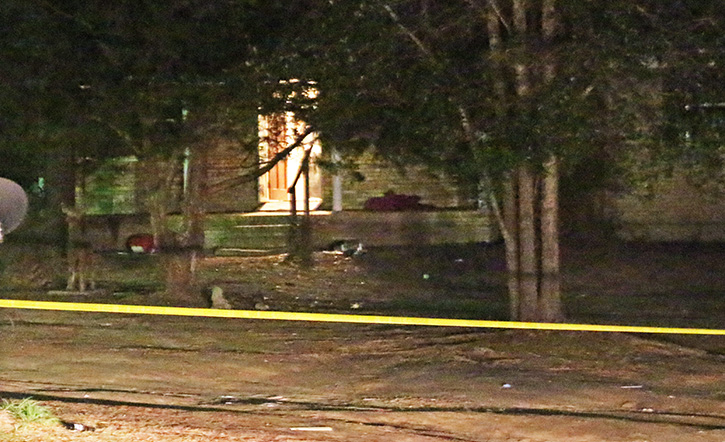
Courtesy photos for NorthEscambia.com, click to enlarge.
32 New Laws Take Effect In Florida
October 1, 2014
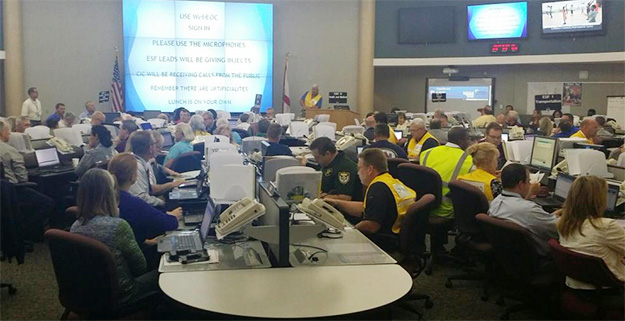
Long-sought regulations on Florida’s commercial parasailing industry, along with a measure about crimes against unborn children, are among 32 laws that went into effect Wednesday.
A number of the new laws, signed by Gov. Rick Scott after the 2014 legislative session, involve public-records exemptions, including one to allow some university boards to meet in private to discuss donors and research funding.
But one of the highest-profile new laws (SB 320) was years in the making. Known as the “White-Miskell Act,” it requires commercial parasailing operators to log weather conditions before embarking, forbids operations during severe weather conditions, requires operators to be licensed by the U.S. Coast Guard and limits operations near airports.
The law is named after Kathleen Miskell, a 28-year-old Connecticut woman who died in August 2012 after she fell from a harness while parasailing over the ocean off Pompano Beach, and Amber May White, a 15-year-old Belleview girl who died in 2007 after a line snapped on a parasail, resulting in her hitting the roof of a hotel.
The industry came on board with the regulations at the urging of Senate President Don Gaetz, R-Niceville, after two Indiana teens were videotaped last summer as they were seriously injured parasailing in Panama City Beach.
Another high-profile measure (HB 59) calls for people who attack pregnant women to be charged with crimes against unborn children, regardless of the term of pregnancy.
In April, Sen. Eleanor Sobel, D-Hollywood, was among Democrats arguing the bill is vague and that a person could be charged if involved in a traffic crash in which a woman loses a pregnancy.
However, Sen. Rob Bradley, R-Fleming Island, responded at the time that the proposal establishes a law similar to when a person commits DUI manslaughter.
The bill was spurred by a Tampa woman who was tricked by an ex-boyfriend into taking a pill that caused her to have a miscarriage.
For the year, lawmakers sent 255 bills to Scott, with just one getting vetoed: SB 392, which would have allowed the Florida Department of Transportation to raise speed limits on some highways by 5 mph.
The majority of the laws, 158, including the budget, went into place July 1.
Here are highlights of some of the other laws taking effect Wednesday:
Sex offenses and human trafficking:
— SB 526 and 528 include wide-ranging changes aimed at cracking down on sex offenders, including toughening sentences and strengthening registration and reporting requirements for offenders. The laws are part of a package of new laws targeting sexual predators and offenders, with two other laws, SB 522 and SB 524, going into effect July 1.
— HB 989 increases felony penalties for people who live off the proceeds of others through prostitution or when crimes involve the trafficking of children. The measure also removes a statute of limitations for human trafficking violations, prohibits minors from working in adult theaters and requires adult theaters to verify the ages of all employees. The law also creates a new third-degree felony for those who permanently brand trafficking victims.
Law enforcement:
— HB 41 creates the Florida Law Enforcement Officers’ Hall of Fame. The law, requires space to be set aside in the first floor plaza of the Capitol for the hall, joining wall space used for the Florida Women’s Hall of Fame, Fallen Firefighters Wall of Honor, Florida Veterans’ Hall of Fame, Florida Civil Rights Hall of Fame, Florida’s Medal of Honor recipients, and the Florida Artists Hall of Fame.
— HB 427 increases the penalty for burglars who cross county lines to commit break-ins. The law was crafted in response to the so-called “pillowcase burglars” in Martin County, where Sheriff William Snyder, a former state representative, noted an increase in people traveling Interstate 95 to break into homes and quickly flee to other counties.
Education:
— HB 485 increases penalties for teachers and other school authority figures who take advantage of students sexually.
Public records:
— HB 115 allows university direct-support organization boards to meet in private when they discuss donors or potential donors, proposals for research funding or plans for initiating or supporting research.
Pharmacies:
— HB 7077 sets registration requirements and standards for what are known as “compounding pharmacies” that are located in other states but sell medications in Florida. Those pharmacies, in general, create medications that are supposed to be tailored to the needs of individual patients. The law is aimed at preventing a repeat of a 2012 outbreak of fungal meningitis because of problems at a Massachusetts pharmacy.
by Jim Turner, The News Service of Florida
UF Report: Consumer Confidence Hits Post-Recession High
October 1, 2014
The state’s consumer confidence has reached a post-recession high, according to a University of Florida report released Tuesday
On a scale from two to 150, confidence among Floridians sits at 83, a point higher than in August, and the highest mark since April 2007, according to a release from UF’s Survey Research Center in the Bureau of Economic and Business Research.
The small monthly rise was seen across all ages and income levels, in part because gas prices have fallen and because of growth in the perception that now is a good time to buy big-ticket items such as cars and appliances.
“While we are still about 10 points behind where we would like to be at this point in a recovery, confidence among Floridians is heading in the right direction,” Chris McCarty, director of the research center, said in a prepared statement.
Similar to how the state’s unemployment rate has held relatively steady for most of the year, the consumer confidence mark has wavered most of the year in the high 70s and low 80s.
Whistleblowers Risk Retaliation As Part Of Prison ‘Culture’
October 1, 2014
Whistleblowers at a North Florida prison were punished by their bosses after exposing abuse of inmates, including an instance where one guard sprayed noxious chemicals into a prisoner’s mouth, according to an investigation by the state’s Commission on Human Relations.
The Wakulla Correctional Institution case reveals a pattern that has re-emerged in recent months, as the embattled Florida Department of Corrections faces allegations that it has repeatedly ignored inmate abuse — and punished workers for revealing the truth.
The 2011 Commission on Human Relations complaints — along with records of an investigation into corruption and fraud at Wakulla Correctional Institution — describe in detail the risks facing workers who try to shine light on wrongdoing within the beleaguered corrections agency and then nearly always become the subject of scrutiny themselves.
Margaret Summers, a former worker at Wakulla Correctional Institution, and her assistant Anita Nichols were retaliated against for alleging that Megan Dillard, a former captain at the prison, ordered inmates to be attacked and falsified records to justify the use of force, the commission decided.
The Department of Corrections settled the case in 2012, paying $25,000 each — a total of $100,000 — to Summers, Nichols and two former guards, Stephen Glover and Irenie Zurita, who were witnesses in their cases.
“Punishment for disclosing wrongdoing is part of the culture within (the Department of Corrections). Any disclosures that go against respondent and staff are likely to be met with hostility and retaliation,” Commission on Human Relations senior attorney David Organes wrote in a fact-finding report in Nichols’ case on Dec. 20, 2011. “Disclosures of wrongdoing that eventually lead to internal investigations and criminal prosecution of high ranking staff can make retaliation even more likely to occur, and can involve retribution from higher ranking staff. Within (the department), whether a disclosure is considered protected or unprotected, retaliation is almost always certain.”
Summers, now an investigator at the agency’s inspector general office, said attitudes toward whistleblowers haven’t changed in the three years since she was targeted by her superiors at the Wakulla institution after questioning an incident involving Dillard, at least four other guards and 10 inmates in 2011.
“The average Joe, they can’t come forward. They can’t. Not only will they lose their living, they’ll be set up. They’ll be framed. They’ll be in danger. They could have an inmate go after that officer, and then when it goes out on the radio to respond, nobody comes,” Summers told The News Service of Florida. “For them, the decision to do the right thing is not as simple as right and wrong. It is, am I going to go home at the end of the day? Am I going to have a job to feed my family?”
Department of Corrections Secretary Mike Crews, at the end of a summer-long crusade to clean up his embattled agency in the wake of reports of inmate abuse and corruption, admitted that Summers was treated unfairly.
But he strongly objected to Organes’ characterization of a retaliatory ethos within the department.
“I think that’s totally unfair to categorize every institution and our culture based on what you see in one, two or three cases,” Crews told The News Service of Florida on Tuesday. “It’s not unlike what we’ve seen happen in the last two-and-a-half months where you have people who want to categorize everybody who works in this department for the actions of a few people.”
Crews took over as assistant secretary shortly before Summers and her cohorts settled with the department. Crews said he personally apologized to Summers, who worked as a disciplinary-report coordinator at the North Florida institution when she said she discovered that Dillard and a group of guards lied about the gassing of inmate Joshua Pullum and abuse of other prisoners.
Dillard allegedly ordered a group of guards to randomly select about a dozen inmates — whom she later accused of trying to rape her — and retaliate against them after an unknown prisoner insulted her in March 2011, according to a Department of Corrections investigation. Former guard Andrew Gazapian allegedly emptied a can of chemicals in Pullum’s mouth, claiming that the spray was justified because the prisoner bit him. A medical examination later revealed that Gazapian bit himself. Dillard, Gazapian and two other guards were arrested for their roles in Pullum’s abuse, and Dillard was also charged with official misconduct for falsifying use of force reports. Dillard and Gazapian are awaiting trial.
After she questioned Dillard’s account of what happened, Summers said her superiors at the prison tried to have her transferred out of the institution. She said those efforts were thwarted because Summers gave her findings to the inspector general’s office, which opened an investigation.
Summers said she was instead transferred from her job reviewing records and ordered to supervise inmates, a potentially dangerous task because she lacked the cooperation of many of her co-workers. She said she was warned “not to irritate her superiors,” that incident reports she submitted were never filed, and that she was repeatedly written up for disciplinary infractions that never occurred. Summers said she eventually took a six-month leave of absence after senior staff at the prison and at the department pressured her to drop the investigation.
In her complaint, Nichols said she was continuously harassed by her co-workers and superiors at the facility about 20 miles from Tallahassee and that “there was hardly a day where she was not targeted for some minor infraction and written up.” Nichols said she was the last to receive her equipment when arriving to work. She said she was not allowed to go to the bathroom without an escort. She lost her computer privileges, her requests to review video footage were denied and she was singled out for having “multi-colored” hair although other workers were not, according to the complaint.
The retaliation did not stop after hours.
The home and car of Glover and Zurita, who lived together, were vandalized. Their dogs were kidnapped and returned a week later — injured, according to Summers.
Harming or killing pets, leaving dead animals in mail boxes, and breaking into homes and vehicles are common examples of retribution against prison workers who tell on their colleagues, according to Summers and other DOC investigators.
During recent visits to each of the state’s prisons, the secretary encouraged staff to come forward and report wrongdoing.
“I told them that, if you’re doing the right thing, there’s only one person in this agency that can fire you and that’s me. And I give you my word that, if you’re doing the right thing, you don’t have to worry about your job,” he said.
But a lawyer representing four whistleblowers now under investigation by the agency disagreed.
“It hasn’t changed at all. In fact, it’s getting worse. It’s clearly a pattern of practice. You can cut the head of the snake off but it doesn’t do anything. They can change secretaries of the department, but they’ll never change the culture,” said Steve Andrews, a lawyer representing four Department of Corrections investigators who filed a lawsuit this summer against Crews, Gov. Rick Scott’s Chief Inspector General Melinda Miguel and others.
The suit alleges that the four investigators bringing the claim — Aubrey Land, David Clark, Doug Glisson and John Ulm — have faced retaliation for raising questions about the investigation into the death of inmate Randall Jordan-Aparo, who died two years ago after being gassed by guards. Miguel refused to grant the investigators whistleblower protections after they exposed an alleged cover-up involving Jordan-Aparo’s death at Franklin Correctional Institution. The four whistleblowers, who work for the Department of Corrections inspector general, are currently under investigation.
Crews said the whistleblowers came under scrutiny based on complaints from outside the agency. The investigations were launched after a guard linked with covering up Jordan-Aparo’s death threatened to sue the department.
“At the end of the day, they’ve taken action that they feel is in their best interest and appropriate. I respect that. There’s a process to go through to resolve that,” he said.”If we get to a point where there’s credible evidence and information that shows that they were in fact retaliated against or were treated disparagingly because of what they were doing in their minds, which was the right thing, then we’ll deal with those issues when we reach that point.”
Crews has made cleaning up the agency a top priority in the wake of reports by The Miami Herald this spring about the death of Darren Rainey, a mentally ill inmate at Dade Correctional Institution who died after guards allegedly forced him to shower in scalding hot water as punishment two years ago. State and federal officials are investigating inmate deaths and corruption at numerous prisons.
Crews has fired dozens of prison workers, established a “zero tolerance” policy for abuse and launched a website with limited information about the inmates who have died while incarcerated since 2000.
But convincing guards in the close-knit prison community that it is safe to snitch on their peers will take time, Crews acknowledged.
“I think the way that we finally start to get over this a little bit is that when people are willing to stand up and do the right thing is to make sure those people understand that they’re not going to be retaliated against. … Those are the kind of people, honestly, we need to be publicly recognizing for doing the right things,” he said. “What I can’t promise them is that if they’re willing to do that is that that’s going to make people like them or there’s not going to be instances where people are going to be ostracized. But I will promise them … that they don’t ever have to fear about retaliation or loss of their jobs or those types of things from this administration if they’re trying to do the right thing. And if we find out that we’ve got people out there intentionally doing those things and retaliating against them, then there will be consequences for those people, too, if we can prove that that happened.”
by Dara Kim, The News Service of Florida
Middle School Football: Ernest Ward Beats Jay (With Photo Gallery)
October 1, 2014
The Ernest Ward Eagles defeated the Jay Royals in middle school football Tuesday evening in Walnut Hill, 24-12.
The EWMS Eagles will travel to Graceville Saturday night at 6 p.m. before hosting Excel on Thursday, October 9.
For a photo gallery, click here.
NorthEscambia.com photos, click to enlarge.
30,000 Escambia County Absentee Ballots Are Mailed
October 1, 2014
Voters could receive their ballot as early as Wednesday. Ballots must be received in the Supervisor of Elections Office by 7 p.m. on Election Day, November 4. Ballots require a first-class postage stamp ($.49 postage) if returned by mail.
The deadline to request an absentee ballot for the General Election is 5:00 p.m. on Wednesday, October 29. To request or track your absentee ballot for the General Election, visit EscambiaVotes.com and click “Vote by Mail”, or contact the Supervisor of Elections Office at (850) 595-3900.
Courtesy photo for NorthEscambia.com, click to enlarge.
Volleyball: Baker Sweeps Northview (With Photo Gallery)
October 1, 2014
In varsity action Tuesday evening, Baker defeated Northview in three straight, 25-7, 25-20, 25-13.
The Northview JV will host the Northview JV Tournament on Saturday, October 4. Both the varsity and junior varsity Lady Chiefs will be in action on Thursday, October 9 as they host Jay for Senior Night.
Pictured: Northview at Baker. Photos by Kayleen Amerson for NorthEscambia.com, click to enlarge.
Cantonment Man Gets Prison Time For Crashing Stolen Motorcycle Into Deputy’s Cruiser
September 30, 2014
A Cantonment man is headed to prison for stealing a motorcycle and crashing into an Escambia County deputy’s cruiser.
Charles Black, age 24 of McKenzie Road, was convicted of fleeing/eluding law enforcement, grand theft of a motor vehicle and criminal mischief. He was sentenced by Judge Michael Jones to 30 months in state prison.
Back on December 2, 2013, a deputy parked at Blue Angel Parkway and Mobile Highway observed Black driving a motorcycle erratically with no lights. The deputy followed, attempting a traffic stop at about Mobile Highway and Massachusetts Avenue. After the motorcycle stopped, the deputy reported Black appeared to be reaching for something. Then the motorcycle accelerated and ran into the deputy’s patrol vehicle.
A short time later, Black lost control while turning onto Fairfield Drive and crashed into a utility pole. According to the Escambia County Sheriff’s Office, the 2008 Kawaski motorcycle had been reported stolen on November 30, 2013. The motorcycle was extensively damaged in the crash.
Black was also convicted of the November 10, 2013, theft of a Ford Ranger and sentenced to 30 months in state prison to be served concurrently.
Envision Escambia: Drainage Survey Results
September 30, 2014
A new Escambia County survey reveals what county residents thing about drainage in the county. The survey was the third in an “Envision Escambia 2028″ series.
Two additional surveys — one regarding traffic calming and pedestrian safety and a second regarding residents’ satisfaction with public safety services – are now being conducted. Future surveys will ask questions about parks and recreation, libraries and natural resources.
Envision Escambia 2028: Storm Water Drainage
Question #1: First, tell us little about yourself. Where do you live?
Twenty-eight percent of respondents to our third survey live north of Nine Mile Road, with almost 22 percent living between Cantonment and the Alabama state line. Over 17 percent of those who answered the survey lived south of SR 98 and west of Navy Boulevard to Innerarity. Nearly 11 percent lived in the area bounded by Palafox on the east, New Warrington Road on the west, Fairfield Drive on the north and Pensacola Bay on the south. Residents from Perdido Key and those living south of I-10, north of Brent Lane/Bayou Boulevard and between US 29 and Escambia Bay each represented almost nine percent of respondents. Residents in the following areas each represented just over 6.5 percent of those who took the survey: east of Pine Forest/south of I-10/west of Pensacola Boulevard/north of Michigan Avenue, south of Michigan Avenue/north of Cervantes/between Palafox and US 90, and east of Palafox/south of Bayou Boulevard/between Escambia Bay on the east and Pensacola Bay on the south. Residents of Downtown Pensacola comprised 4.35 percent of respondents. Residents living south of I-10, west of Pine Forest and north of Saufley Field Road were approximately two percent of those who answered the survey. Pensacola Beach was unrepresented.
Question #2: How often do you experience standing water or ponding in your neighborhood?
Every time it rains. = 22.22 percent
Sometimes, if it has been raining frequently = 15.56 percent
Rarely, only if it’s a major storm event = 35.56 percent
Never, I do not experience standing water or ponding in my neighborhood = 20 percent
Question #3: Have you ever experienced flooding in your home as a result of a weather event?
Yes = 28.89 percent
No = 71.11 percent
Question #4: Please share with us the location of flooding and the severity of the flood damage as a result of a weather event. If you have never experienced flooding in or around your property, please select N/A.
Flooding in the driveway or lawn/yard.
- No Damage = 0 percent
- Minor Clean Up = 63.64 percent
- Severe Damage = 27.27 percent
- Total Loss = 9.09 percent
- N/A = 0 percent
Flooding inside the garage.
- No Damage = 9.09 percent
- Minor Clean Up = 54.55 percent
- Severe Damage = 36.36 percent
- Total Loss = 0 percent
- N/A = 0 percent
Flooding that reached inside the house or residence.
- No Damage = 8.33 percent
- Minor Clean Up = 25 percent
- Severe Damage = 58.33 percent
- Total Loss = 8.33 percent
- N/A = 0 percent
Question #5: Storm water management refers to engaging in practices to divert and/or store rainfall to protect property during periods of inclement weather. Between 2006 and 2014, Escambia County has used $45 million of Local Option Sales Tax funds to enhance and improve storm water systems throughout the County. Between now and 2017, an additional $17 million of Local Option Sales Tax will be spent on storm water drainage. Please select which most accurately expresses your opinions regarding these statements.
In the event of a 25-year flood, Escambia County drainage systems are designed to keep water in pipes, ponds and outfalls. An example of this type of an event was given as several days with heavy, periodic rain.
In the event of a 100-year flood, Escambia County drainage systems are designed to divert water away from homes and force it to flow down the streets to bodies of water. Examples of recent 100-year flood events were given as April 2009 and June 2012.
Given these examples, almost 42 percent of survey respondents said they felt that Escambia County drainage systems perform as designed in the event of a 25-year flood, while 58 percent said they felt it performed under design expectations. When asked about the County’s storm water drainage system performance in a 100-year flood, 21 percent of respondents said they thought it performed to design expectations and 78.5 percent said they performed under expectations.
Question #5: Escambia County cannot responsibly finance a storm water drainage system that would not see breaches in the event of a 500-year flood like the April 29-30 event.
I agree. There is a reduced cost to benefit ratio, and that it is not financially possible to guard against all disasters = 38.10 percent
I disagree. It is important to protect as many people as possible from all possible outcomes = 38.10 percent
Additional feedback included:
- “Doesn’t matter how much money you spend if drainage lacks common sense.”
- “It is completely possible to significantly reduce property damage through responsible and appropriate stormwater management.”
- “You can not always predict and be prepared for all natural disasters such as the April 29-30 flooding that occurred in Pensacola. Creeks & drainage ponds overflowing was unexpected to say the least.”
- “I agree that the April 29-30 event was unprecedented; however, continuous repetitive loss structures should be examined and expanding mitigation beyond the immediate area should be examined.”
Question #6: When it rains, water must go somewhere. Traditional storm water management design has been focused on collecting storm water in piped networks and transporting it off site as quickly as possible, either directly to a stream or river, or to a large storm water management facility or basin. Water can also be diverted into a retention pond. Which of these methods, if any, do you feel is most effective?
Sixty-four percent of survey respondents felt that piped storm water drainage systems were either very effective or effective and almost 24 percent said piped systems were somewhat effective. Almost 48 percent thought that construction of curbs and gutters was most effective, with an additional 40 percent saying they felt curbs and gutters were at least somewhat effective. Use of drainage ditches was thought to be somewhat effective to very effective by 76 percent of those who responded to the survey, while 80 percent felt retention ponds to be somewhat effective or higher.
Question #8: On July 14, David Wagonner – an architect who helped develop the Greater New Orleans Urban Water Plan – spoke to residents at a joint City/County meeting on storm water drainage issues. His vision on storm water management focuses on approaches that rely less on pumping systems and more on integrating water into the infrastructure. With that in mind, what do you think are some of the best ways to improve our storm water systems? You may select more than one answer.
59.52 percent chose “Integrate water features into parks that will also serve as retention ponds.”
59.52 percent chose “Require more pervious areas in new residential and commercial developments.”
57.14 percent chose “Encourage construction of green features in neighborhoods.”
52.38 percent chose “Replace underground pipes to increase the amount of water these systems are able to carry.
26.19 percent chose “Build more retention ponds, but fence them in to protect children and others from drowning and other hazards.”
Nearly 43 percent offered other suggestions. Among them:
- “Install drainage inforstructure (sic) before installing paved roads.”
- “Maintaining our current drainage infrastructure so that it does not become clogged or blocked with sediment or yard waste.”
- “We do not need any more retention ponds. The ones currently in place are effective, except in cases of exception such as the unusual flood in April 2014 or a hurricane, and retention ponds increase mosquitoes.”
- “I think it would benefit us to hold on to our water and let it clean naturally before it flows into a large body of water.”
- “Establish a plan to gradually shift from pipes and ponds towards a more natural stormwater plan that reduces unnecessary impervious area and keeps water closer to the location it originates.”
- “I believe in a more nature centered approach to drainage. Less piping and more natural features such as the rain gardens idea.”
Question #9: If you selected any of the answers in the previous question, would you still support those efforts if doing so would come at an increased cost to residents and businesses either in terms of higher taxes or other public projects (such as roads, parks or public safety) not being completed?
Yes, I would support efforts to enhance integrated water infrastructure no matter what the cost = 14.29 percent
No, I would not support anything that raises my taxes or causes loss of service in other areas = 19.05 percent
The best approach would be a combination of the two = 40.48 percent
- “Drainage should be top priority due to the increased frequency of flood events over the past few years.”
- “Stop allowing sub divisions to be build in low lying areas (swamp lands).”
- “I would rather see LOST money used for stormwater projects versus additional parks, libraries, or new fire stations.”
- “A compromise would be the best approach but special projects may require temporary funding measures which I may support.”
Florida Board Of Ed Approves Record Per Student Funding
September 30, 2014
Backing a pledge made by Gov. Rick Scott, the Florida Board of Education on Monday approved a proposed 2015-16 budget that includes record per-student funding for public schools.
The proposal is an initial step in a months-long process that will end with lawmakers passing a state budget next spring. As he seeks re-election, Scott has called for the public-school funding formula to include $7,176 per student next year, the same number included in the Board of Education proposal Monday. The proposal would be a $232 per-student increase over the current year.
Board of Education Chairman Gary Chartrand said the proposal includes “historic” levels of funding.
“I think we all know this is an investment in our future,” Chartrand said. “It will pay dividends for Florida.”
If approved by the Legislature, the $7,176 per-student total would top a previous high of $7,126 reached when former Republican Gov. Charlie Crist was in office. With Crist running as a Democrat this year to try to unseat Scott, education funding has become a heavily debated issue during the campaign.
by The News Service of Florida