

Court Tries To Decide Exactly What Is A Kosher Prison Diet
July 20, 2015
After ordering the Florida Department of Corrections to provide kosher meals to inmates, a federal judge is expected to hear arguments about what exactly that means.
 U.S. District Judge Patricia Seitz ruled April 30 in a long-running dispute between the state and the U.S. Department of Justice about providing kosher meals to inmates whose religions have dietary restrictions. Seitz required attorneys for the state and the Justice Department to file proposed language for a final judgment and permanent injunction.
But Seitz issued another order last month setting a July 15 hearing because the two sides could not reach agreement on details, including the state objecting to use of the term “certified kosher diet” in any permanent injunction.
She wrote that she will hold the hearing, in part, to determine the “meaning of the terms ‘kosher diet’ and ‘certified kosher diet,’ ” though she said that portion of the hearing could be canceled if agreement is reached.
Seitz wrote that “there is nothing in the record regarding what plaintiff (the Department of Justice) meant when it sought to have defendants (the state) provide ‘kosher meals’ to prisoners, and there is nothing in the record as to how either side believes defendants can demonstrate compliance with the court’s order to provide kosher meals.”
Pictured: The cafeteria inside the Century Correctional Institution. NorthEscambia.com file photo, click to enlarge.
Reward Offered: Flomaton Police Seek Playground Vandals
July 20, 2015
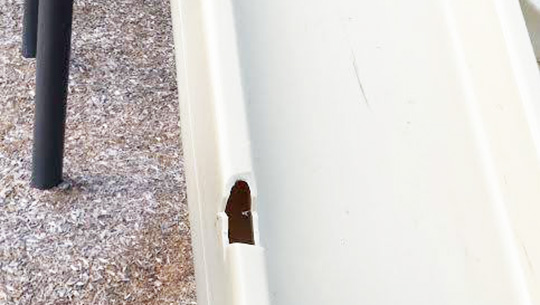
The Flomaton Police Department is seeking information on the person or persons who damaged playground equipment at the town’s Hurricane Park.
The playground was damaged with some type of an edged object, causing large holes in two of the slides. A rock climbing wall and other slides were damaged.
The playground, which is designed for children ages 2-12, will be closed until repairs are made. Two individuals are offering a total reward of $1,000 for information that leads to the arrest and conviction of the responsible person or persons.
Anyone with information on the playground damage is asked to contact the Flomaton Police Department at (251) 296-5811.
Photos courtesy Flomaton Police Department for NorthEscambia.com, click to enlarge.

Skipworth Homers, Wahoos Lose To Birmingham
July 20, 2015
Pensacola Blue Wahoos catcher Kyle Skipworth set another franchise record Sunday with his seventh home run blast in a month and now has nine homers on the season.
On Thursday against the Birmingham Barons, Skipworth had set the team record with five homers in five straight games. He now has six homers in the past seven games and seven homers in the past 10 games.
Despite Skipworth lifting a fly ball over the center field wall for a solo home run in the seventh inning, Birmingham won, 11-3, Sunday at Regions Field and captured the five-game series, 3-2.
The Barons broke the game open with seven runs in the bottom of the sixth inning to go up, 9-0. Birmingham shortstop Tim Anderson had a two-run single and DH Courtney Hawkins hit a two-run home run.
Mostly the Barons relied on the arm of the Chicago White Sox No. 2 prospect Frankie Montas, who was called up for one day July 17 to the Major Leagues, where he served as the 26th man for a doubleheader.
Montas, whose fastball has been clocked as high as 102 mph this season, blanked Pensacola over five innings, allowing just two hits—a double by third baseman Seth Mejias-Brean in the fourth inning and a single by shortstop Zach Vincej in the fifth.
He also walked one and struck out eight in Sunday’s game. Montas improved to 3-1 in 16 starts in Double-A and lowered his ERA to 2.31. He has given up just three earned runs in his last 18 innings for a 1.50 ERA since June 28.
Mejias-Brean, who was 2-4, has gotten a hit in 13 of his last 16 games, including five multi-hit games. He is now batting .259 on the year.
Vincej went 1-3 and walked and has a hit in 11 of his last 12 games, after going 0-4 Saturday to end his 10-game hitting streak.
Pensacola is now 13-10 in the second half of the Southern League season (25-43 first half) and fell into second place in the South Division.
Meanwhile, the Barons improved to 17-5 in the second half (33-36 first half) and remains in first place in the North Division.
The Blue Wahoos return home to play the Jacksonville Suns July 20-21 and the Biloxi Shuckers July 22-26.
FWC Law Enforcement Report
July 19, 2015
The Florida FWC Division of Law Enforcement reported the following activity during the weekly period ending July 16 in Escambia and Santa Rosa counties.
ESCAMBIA COUNTY
 The Annual Blue Angels Air Show on Pensacola Beach took place this week. The event was a success and the weather cooperated. FWC officers performed vessel inspections on over 250 vessels and spoke to more than 600 people. Sixteen citations were issued for boating safety infractions, three notice to appear citations were issued for underage drinking, and three subjects were arrested for BUI. Additionally, 38 warnings were issued and officers responded to two medical emergencies.
SANTA ROSA COUNTY
Lieutenant Suggs, Investigator Armstrong, and Officers Maltais and Molnar responded to a search and rescue in Destin. It was reported that two swimmers were in distress. The operator of a pontoon boat came to the aid of one of the distressed swimmers by pulling him onto the pontoon boat. Witnesses reported that the second swimmer went down and did not surface. Two FWC boats equipped with side scan sonar arrived on scene and a search recovery pattern was coordinated with the United States Coast Guard and Okaloosa County Sheriff’s marine vessel units. Within a few hours, the deceased swimmer was located using side scan sonar.
FWC officers responded to assist the Santa Rosa County Sheriff’s Office in locating two young women who were missing from the Blackwater State Park. The officers located the two women just south of the park boundary. The women were tubing and passed the bridge and swimming areas. When they realized that they could go no further, they spent the night on a sandbar and attempted to walk back towards the park the next morning. The women were shaken up from their ordeal, but were unharmed. Many residents and tourists aren’t aware that the Blackwater River is impassable just south of the Blackwater River State Park and just north of the intersection with Coldwater Creek.
This report represents some events the FWC handled over the past week; however, it does not include all actions taken by the Division of Law Enforcement. Information provided by FWC.
Florida Quietly Ends Appeal In Same-Sex Marriage Case
July 19, 2015
Three weeks after the U.S. Supreme Court ruled that same-sex couples have a fundamental right to marry, Florida quietly gave notice Friday that it was dismissing an appeal in a legal battle about the constitutionality of the state’s voter-approved ban on gay marriage.
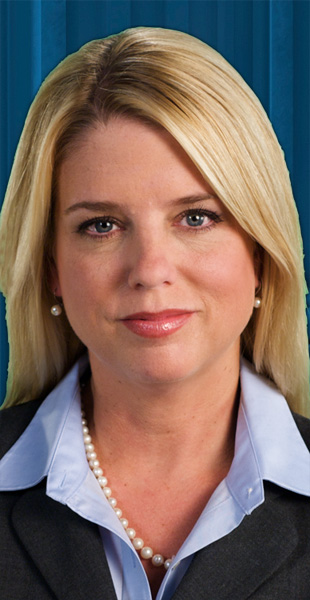 Attorney General Pam Bondi’s office filed a two-paragraph motion for dismissal in the 11th U.S. Circuit Court of Appeals, according to an online docket.
The state in November filed the appeal in two consolidated cases, after U.S. District Judge Robert Hinkle issued a preliminary injunction against Florida’s ban on same-sex marriage. Hinkle ruled that the ban, which voters approved in 2008, was unconstitutional. Hinkle’s decision ultimately allowed same-sex couples to start getting married in Florida in January.
The appeals court in February put the Florida appeal on hold because of the then-pending U.S. Supreme Court case that involved gay-marriage bans in Kentucky, Michigan, Ohio and Tennessee. The February order also directed the parties in the Florida case to notify the court 21 days after a Supreme Court ruling about any remaining issues. The state complied with that directive by filing the motion Friday.
“Appellants (state officials and the Washington County clerk of court) respectfully state in response to the court’s inquiry that no issues remain pending in these appeals,” the document said. Bondi made clear after the U.S. Supreme Court ruling that Florida would comply. “We have always sought finality on this important constitutional issue, and today the United States Supreme Court provided the clarity our state and country was seeking,” she said at the time. “Legal efforts were not about personal beliefs or opinions, but rather, the rule of law. The United States Supreme Court has the final word on interpreting the Constitution, and the court has spoken.”
by The News Service of Florida
Hardy Graduates From Basic Military Training
July 19, 2015
Air Force Airman Tyra N. Hardy graduated from basic military training at Joint Base San Antonio-Lackland, San Antonio, Texas.
The airman completed an intensive, eight-week program that included training in military discipline and studies, Air Force core values, physical fitness, and basic warfare principles and skills.
Airmen who complete basic training earn four credits toward an associate in applied science degree through the Community College of the Air Force.
Hardy is the daughter of Craig F. and Tera M. Hardy of Cantonment and granddaughter of Teresa Williams and Charles F. Hardy, both of Pensacola.
She is a 2014 graduate of West Florida High School of Advanced Technology, Pensacola, Fla.
That’s Cool: Molino’s Only Igloo Ready For A Week Of VBS
July 19, 2015

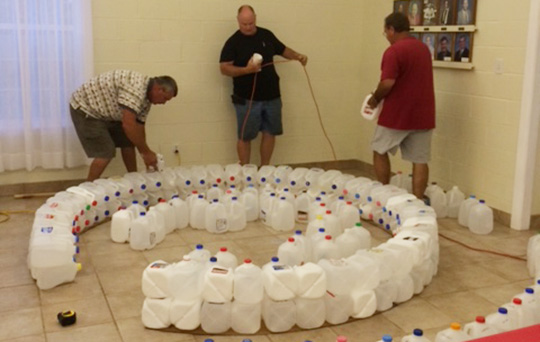
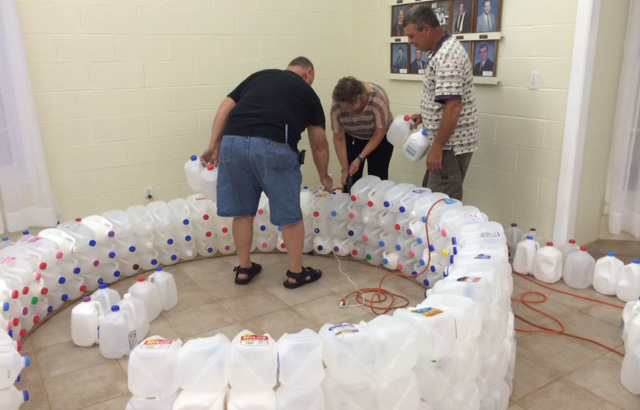
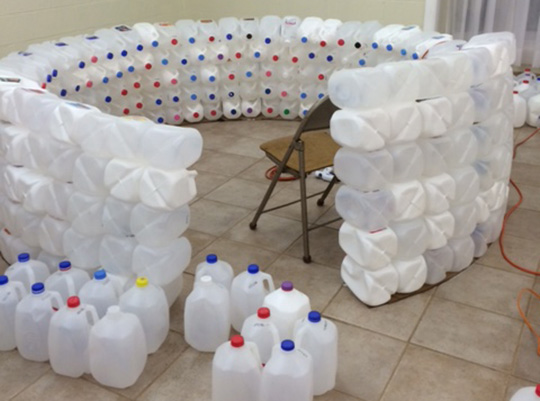
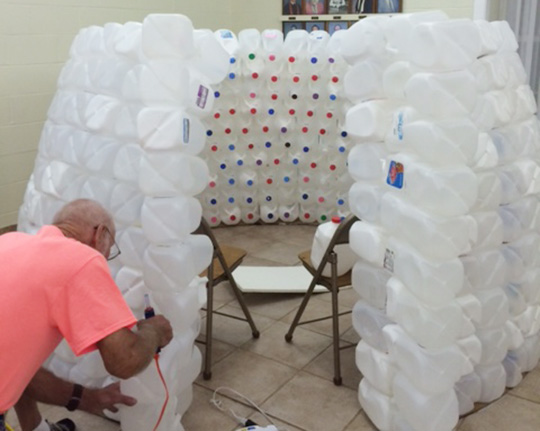
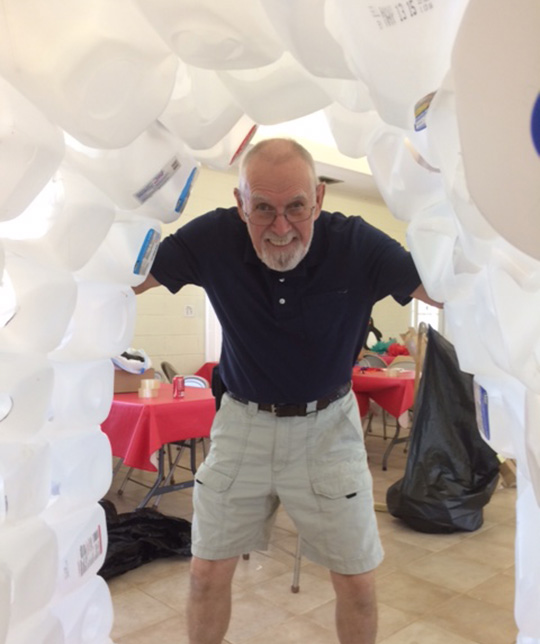
For a really cool Vacation Bible School during this hot summer, Aldersgate United Methodist Church members constructed an igloo. They collected over 1,000 gallon jugs for the project and spend days gluing together the self-supporting structure. With a forecast of a little fake snow by the end of Sunday, the igloo will be ready to Aldersgate’s Vacation Bible School this week.
“Camp Edge” VBS will be held each night, Monday – Friday, this week at Aldersgate United Methodist Church on Highway 29 just south of Highway 97 in Molino from 5:30 until 8:30 p.m. The VBS is for children age 3 to rising 5th graders. For more information, contact Sandra at (850) 587-2489.
Scroll through the photos below to watch the construction of Molino’s only igloo progress.
Submitted photos for NorthEscambia.com, click to enlarge.




Scott Ups Protection For National Guard Members
July 19, 2015
Alarmed by a shooting rampage in Tennessee that killed four Marines and a sailor, Gov. Rick Scott on Saturday issued an executive order designed to increase protections for members of the Florida National Guard.
 Scott directed Adjutant Gen. Michael Calhoun to temporarily move National Guard members from six “storefront” recruitment centers to armories. Also, he ordered Calhoun to work with local law-enforcement agencies to arrange regular security checks of armories and said the state will expedite processing of new concealed-weapons licenses for members of the National Guard.
“We’re going to do everything we can to make sure that all of our National Guard members are safe,” Scott, who was scheduled to hold a late-afternoon news conference in West Palm Beach, said during a CNN interview.
The executive order said Guard members will be moved from the recruitment centers to armories until Calhoun “can fully evaluate and make recommendations for improving the security” of the centers. It said possible improvements could include installing bulletproof glass and enhancing video-surveillance equipment.
The move to expedite new concealed-weapons licenses would apply to Guard members who do not have such permits. Scott said during the CNN interview that the move is designed for “personal protection when they are not on duty.”
Scott issued the executive order two days after 24-year-old Mohammad Youssef Abdulazeez opened fire at a military-recruiting center and a Navy Reserve facility in Chattanooga, Tenn. Abdulazeez, whose name has been spelled in different ways by news organizations, killed four Marines, and a Navy petty officer died early Saturday of wounds, according to the Washington Post.
The shooting spree has spurred investigations into whether Abdulazeez, who also died, had links to terrorist organizations. In a Twitter post Saturday, Florida House Speaker Steve Crisafulli, R-Merritt Island, said he supported Scott’s executive order to “help protect our military from acts of terror.”
Agriculture Commissioner Adam Putnam, whose agency administers concealed-weapons licenses, issued a statement that said he is “fully committed to supporting our military members, and we look forward to expediting their concealed-weapon license applications.”
by Jim Saunders, The News Service of Florida
Florida Gov’t Weekly Roundup: Redistricting, Elections Heat Up
July 19, 2015
The mid-summer classic in baseball usually means Florida gets to settle into a sweltering, snowbird-free serenity, with eyes throughout the peninsula shifting to the tropics for hurricanes and the near horizon for the latest brush fire.
In Tallahassee, summer also means a slowdown in the pace of life, including a respite from lawmakers, fewer cars on the road, open barstools and even more talk than usual about Florida State University football.
 But this summer, it’s hard to escape the politics filling the capital air.
Courts have moved lawmakers toward holding the second special legislative session of the year, this time to redraw congressional district lines.
Also, the 2016 presidential contest, with Floridian Marco Rubio hoping to capture the White House, has created a spillover effect of an open U.S. Senate seat. That drew in Florida’s lieutenant governor this week and has also started a chain reaction in at least three congressional districts involving ambitious state and local politicians.
Accompanying the maneuvering by politicians, Floridians also found out this week that rival groups will pitch alternative constitutional amendments in 2016 on solar energy.
RAINING SOLAR AMENDMENTS
Floridians got a preview of just how messy the battle over expanding solar energy might get during the next year.
Conflicting constitutional amendments about the future of solar energy in Florida are now being proposed by competing groups.
The state Supreme Court is already reviewing the language in a constitutional amendment proposed by Floridians for Solar Choice. That proposal would allow businesses and homeowners to generate and sell relatively small amounts of solar energy.
Attorney General Pam Bondi, Florida Power & Light, Duke Energy, Tampa Electric Co., Gulf Power, the Florida League of Cities and a number of influential business groups in recent weeks expressed their opposition to that proposal.
On Wednesday, a new group emerged proclaiming it too wants to place before voters an amendment.
Former state Rep. Jim Kallinger, a co-chairman of Consumers for Smart Solar, said during a brief news conference in Orlando that his group is making the counter proposal because the amendment now before the state’s top court “will result in subsidies, higher taxes or user fees, and an unfair balance for consumers, meaning that some will pay more than their fair share to maintain the cost of the grid while others get a free ride.”
Kallinger’s group also released a video that contends the coalition behind Floridians for Solar Choice is a front for what is actually a “shady” power grab by out-of-state solar companies.
Floridians for Solar Choice — which counts among its members the Southern Alliance for Clean Energy, the Florida Retail Federation and the Sierra Club Florida — responded that the newest opposition “is a slickly developed campaign to potentially confuse voters” and said it believes the effort is supported by energy companies.
“We’re the grassroots, we’re the people begging and asking for choice,” Tory Perfetti, chairman of Floridians for Solar Choice, told reporters during a conference call Wednesday. “What this is, is an attempt by us to open up and give citizens further control of their own bills and have the ability to lower them. And anyone who is standing against this is representing the actual elite class which controls how much people pay in this state.”
Floridians can expect to find both groups outside libraries and other public venues for the rest of this year trying to collect signatures of registered voters.
CLOCK TICKING ON REDISTRICTING
The Florida Supreme Court made clear last week lawmakers would have to move quickly to redraw congressional districts that the court found unconstitutional. Then, a circuit judge turned up the pressure even more.
On Wednesday Leon County Circuit Judge George S. Reynolds III told lawmakers that a special legislative session to redraw the districts and a subsequent trial must be finished by Sept. 25.
Oh, but first Reynolds — who one could kindly guess is an extreme optimist — said he wants attorneys for lawmakers and voting-rights groups challenging the congressional lines to try reach an agreement on the time needed for the latest changes.
“The court will do its best to accommodate everyone’s schedule, but clearly there is not much time to do all that is required and the court reserves the right to enter a scheduling order that it believes is necessary to provide for a fair and expeditious resolution of this matter,” Reynolds wrote.
The Supreme Court last week tossed out eight congressional districts because it found that lawmakers violated a 2010 constitutional amendment aimed at preventing gerrymandering. Redrawing the eight districts, however, also will affect other districts.
SENATE PRIMARY LINES
Lt. Gov. Carlos Lopez-Cantera, who on Wednesday jumped into the U.S. Senate race, may not have gotten any rousing endorsement from the man who he accompanied in the 2014 gubernatorial election.
In fact, Gov. Rick Scott was in Jacksonville for a ceremonial bill signing as his number two was in South Florida kicking off the senatorial campaign.
But others have quickly taken sides in the Republican primary for Rubio’s seat.
Chief among those stepping up to support Lopez-Cantera was Bondi, who some earlier this year speculated would also run for the Senate in 2016.
However, Lopez-Cantera will have to overcome criticism from the far-right that he may not be conservative enough.
Ken Cuccinelli II, president of the Senate Conservatives Fund, which is backing Northeast Florida Congressman Ron DeSantis, has wasted little time labeling Lopez-Cantera, a former state House majority leader, as a “RINO,” the infamous “Republican in name only” moniker.
“Lopez-Cantera’s record includes supporting wasteful spending at the state level, in-state tuition for illegal immigrants, and former governor Charlie Crist’s budget that raised taxes by $2.2 billion,” Cuccinelli wrote to members in a “RINO alert” memo.
Meanwhile, a few more big name Republicans may also come off the bench to run, with decisions expected from Tampa Bay-area Congressman David Jolly and Northwest Florida Congressman Jeff Miller.
And the GOP fight shouldn’t overshadow what is expected to be an equally contentious scrap on the Democratic side of the ledger as Congressmen Alan Grayson of Orlando and Patrick Murphy of Jupiter seek Rubio’s seat.
The move by congressmen to run for higher office is already rippling through the state and county levels. State Sen. Darren Soto, D-Orlando, announced Thursday he is running in Grayson’s district, joining at least three other Democrats. Also, the candidacies of Murphy and DeSantis have touched off races in their congressional districts.
STORY OF THE WEEK: The 1st District Court of Appeal in Tallahassee heard arguments Tuesday from Florida Carry Inc., which contends students and other people residing in on-campus housing at the University of Florida should be allowed to have firearms.
QUOTE OF THE WEEK:”Are you going to ask the congressmen who are running for this office the same question?” — Lt. Gov. Carlos Lopez-Cantera when asked if his campaign for U.S. Senate would interfere with his duties as lieutenant governor.
by Jim Turner, The News Service of Florida
Smith, Winker Smash Homers In Wahoos 3-1 Win Over B’ham
July 19, 2015

Pensacola Blue Wahoos Marquez Smith and Jesse Winker both hit solo home runs against the Birmingham Barons Saturday at Regions Field to win its second game in a row.
Smith crushed a fly ball deep to left field for his fifth homer of the season in the fourth inning and Winker lined a drive to right center field for his sixth homer in the eighth inning.
The five-game series between Pensacola and Birmingham is tied at two games apiece after the Blue Wahoos, 3-1, victory. Pensacola, which has won eight of its last 10 games, plays the final game of the series with the Barons at 3 p.m. Sunday.
Smith, who was the DH, currently has five homers and 29 RBIs, while Winker, who was playing left field, now has six homers and 31 RBIs.
Pensacola went ahead, 2-1, when it scored its other run in the seventh inning after shortstop Juan Perez doubled in third baseman Seth Mejias-Brean, who doubled to lead off the inning.
Birmingham had tied the game, 1-1 in the bottom of the fourth inning when first baseman Danny Hayes singled on a line drive to right field to score third baseman Nick Delmonico.
Pensacola starter Daniel Wright improved to 6-7 with a 4.57 ERA, after scattering nine hits and striking out four in eight innings of work. It was Wright’s third win in four games and his longest start of the year for the Blue Wahoos.
In his past two games, both wins, Wright has allowed one earned run in 15 innings for a 1.20 ERA that dropped his ERA below 5.0 runs per game for the first time this season.
Zack Weiss earned his team-leading 10th save, allowing one hit, one walk and striking out one.
Pensacola catcher Kyle Skipworth’s franchise record five home runs in five games was broken and Zach Vincej’s hitting streak ended at 10 games.
Mejias-Brean, who doubled Saturday in four at bats, has gotten a hit in 12 of his last 15 games, including four multi-hit games. He is now batting .255 on the year.
Pensacola is now 13-9 in the second half of the Southern League season and is tied for first place in the South Division. The last time the Blue Wahoos were in first place this late in the season was July 22, 2012.
The Barons dropped to 16-5 in the second half and lead the North Division by five games over the Montgomery Biscuits.
The Blue Wahoos return home to play the Jacksonville Suns July 20-21 and the Biloxi Shuckers July 22-26.