

Pensacola Tops Chattanooga
August 19, 2015
Pensacola right fielder Juan Duran knocked in three of the club’s six runs in the first two innings as the Blue Wahoos pulled out a series opening victory over the Chattanooga Lookouts.
Duran tripled in two runs and hit a sacrifice fly to knock in another run as Pensacola cruised to an 8-4 win in front of 3,909 Tuesday night at Pensacola Bayfront Stadium.
Since finishing rehab in Arizona, Duran has played 42 games and has four home runs, 34 RBIs and is hitting .270 for the Blue Wahoos in July and August. He went 1-4 and scored a run against Chattanooga. His 22 extra base hits are second in the Southern League in the second half of this season.
Pensacola improved to 29-22 in the South Division in the second half of the Southern League season and catapulted into a first place tie with the Mobile BayBears, who lost to the Jacksonville Suns. The latest the Blue Wahoos had been in first place before now was July 22, 2012 — the team’s inaugural season.
Pensacola manager Pat Kelly said he looks forward to Duran coming to the plate.
“Juan has been terrific,” he said. “He’s really good with runners in scoring position, especially with two outs. Having his presence in the lineup really helps.”
Chattanooga was playing in front of its parent club Minnesota Twins general manager Terry Ryan on Thursday. Ryan coincidentally is from the same hometown as Blue Wahoos owner Quint Studer in Janesville, Wisc.
Ryan watched as Pensacola wasted no time chasing Chattanooga starter Greg Peavy in the second inning, after going up, 6-0. Duran drove in three of those runs on a line drive triple that rolled to the wall in the right-center gap, scoring center fielder Bryson Smith and shortstop Alex Blandino in the first inning. His deep sacrifice fly to center field scored left fielder Beau Amaral in the second inning.
Amaral added two more runs when he blasted a home run, his fourth of the year, to left field in the sixth inning that also brought in second baseman Zach Vincej to put the Blue Wahoos up, 8-3.
Pensacola has had a home run outburst in the second half. It has gone from last place in home runs in the Southern League with 25 in the first half to fourth place with 44 home runs in the second half for 69 on the season.
Amaral’s sister, Jessica, who played softball at UCLA, was in Pensacola for the first time and got to watch her big brother hit his fourth home run of the season.
“I need her to come to more games,” Amaral said jokingly. “It was cool for her to come out here.”
Starting right-hander Daniel Wright checked Chattanooga the first two innings, retiring the side both times and striking out four. He retired the side five of the seven innings he worked. In all, he lasted 6.1 innings before walking two in the seventh.
Wright had one bad inning when the Lookouts added three in the third inning on a solo home run by shortstop Niko Goodrum and then center fielder Shannon Wilkerson and third baseman Steve Wickens both scored when Duran fumbled a bloop single by right fielder Max Kepler, earning an error on the play. The Lookouts pulled within, 6-3.
Blue Wahoos closer Zack Weiss entered the game in the eighth inning and earned his Southern League-leading 21st save on the season. Weiss is one save from the Pensacola franchise record of 22 saves set by Shane Dyer last season.
Mosquito Borne Illness Alert: Second West Nile Case Confirmed In Escambia County
August 18, 2015
The Florida Department of Health in Escambia County (FDOH-Escambia) has issued a mosquito-borne illness alert for Escambia County.
 The alert comes after a second case of West Nile virus (WNV) in Escambia County was confirmed in an adult male. This makes the sixth human case in Florida in 2015.
“Residents and visitors should take precautions to avoid being bitten by mosquitoes and to limit exposure to mosquito-borne illnesses,” says FDOH-Escambia Director, Dr. John J. Lanza. The Escambia County Mosquito Control Division and FDOH-Escambia continue surveillance and prevention efforts. There is heightened concern that other Escambia County residents and visitors may become ill from being bitten by an infected mosquito.
To protect yourself from mosquitoes, the health department recommends that practice of “Drain and Cover”:
Drain standing water.
- Drain water from garbage cans, house gutters, buckets, pool covers, coolers, toys, flower pots or any other containers where sprinkler or rain water has collected.
- Discard old tires, bottles, pots, broken appliances and other items not being used.
- Empty and clean birdbaths and pets’ water bowls at least twice a week.
- Protect boats and vehicles from rain with tarps that do not accumulate water.
- Maintain swimming pools in good condition and chlorinated. Empty plastic swimming pools when not in use.
Cover skin with clothing or repellent and cover doors and windows.
- Wear shoes, socks, long pants and long sleeves when mosquitoes are most prevalent.
- Apply mosquito repellent to bare skin and clothing.
- Always use repellents according to the label. Repellents with DEET, picaridin, oil of lemon eucalyptus, and IR3535 are effective.
- Re-apply mosquito repellent as often as needed to prevent mosquito landings and bites.
- Use mosquito netting to protect children younger than 2 months old.
- When using repellent on children, apply to your hands first and then rub on their arms and legs.
- Place screens on windows, doors, porches, and patios. Always repair broken screens.
One Arrested, One Wanted For August 11 Homicide
August 18, 2015
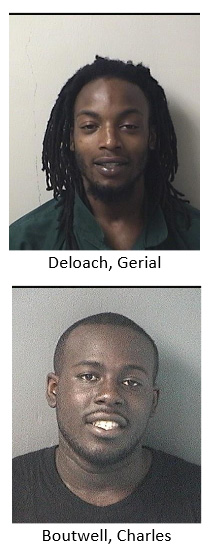 Gerial Martell Deloach, 22, has been arrested and charged with homicide in the death of Dewayne Nason Silason August 11. Also wanted is Charles Demetries Boutwell, 23, who has an active warrant for homicide in the case.
At approximately 9 a.m. on August 11th, the Escambia County Sheriff’s Office received a call in reference to a shots fired disturbance at Hansel Street and Hollywood Avenue. Silas was discovered with multiple gunshot wounds.
Anyone having information concerning the whereabouts of Charles Demetries Boutwell is asked to contact Crime Stoppers at (850) 433-STOP.
Century Moves Foward With New Splash Pad For Showalter Park
August 18, 2015

After concerns that operational costs could be too high, the Town of Century is moving forward with a new splash pad at Showalter Park.
Century was recently awarded a $50,000 grant from the Florida Recreation Development Assistance Program to install a splash pad at Showalter Park. That amount will fund the installation of the watery playland, but not associated costs such was water and sewer. At a July council meeting, Mayor Freddie McCall expressed concerns that the splash pad might cost the town too much to operate.
The splash pad that Century can afford won’t recycle water — that feature would cost the town another $50,000 plus, McCall said. The splash pad that Century can purchase with grant money will use hundreds of gallons of water in just minutes. At a Monday night council meeting, McCall said the cost to operate the splash pad could reach an affordable average of $184 per week — calculating water and sewer expenses at the town’s cost since they operate their own water and sewer system. The splash pad will not be operational during the colder months of the year.
The council voted to move forward, accepting the splash pad grand and agreeing to pay the water and sewer costs.
McCall said the town will also install a restroom near the splash pad at Showalter Park, next to new playground equipment recently installed with a previous state grant.
Pictured: The Town of Century has been awarded a state grant to purchase this model splash pad. Courtesy images for NorthEscambia.com, click to enlarge.

Nine Mile Road Construction Delays At Navy Federal
August 18, 2015
 Westbound traffic on Nine Mile Road will encounter lane closures west of Interstate 10, near Heritage Oaks Drive and Navy Federal, from 8 p.m. to 6 a.m. Tuesday, August 18, through Friday, August 21, as crews perform construction activities. Drivers are reminded to use caution, especially at night, when traveling through a work zone, by the Florida Department of Transportation.
Construction activities are weather dependent and may be re-scheduled in the event of inclement weather.
Murder Suspect Behind Bars After More Than A Week On The Run
August 18, 2015
A murder suspect that had been on the run for over a week and was once believed to be in the North Escambia area is now behind bars.
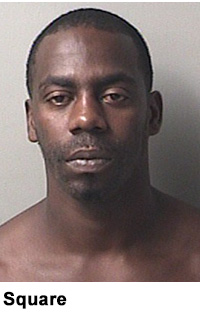 Jesse Dontase Square, 28, was booked into the Escambia County Jail just before 11:00 Monday night on charges of homicide and robbery.
About 5:45 a.m. Saturday, August 8 deputies found Eugenio Acosta Lopez inside a home in the 220 block of Lakeview Avenue suffering from multiple gunshot wounds. He was transported to a local hospital where he was pronounced deceased.
Jeremiah Farrish, 24, and Santorialashay Robinson, 23, were previously arrested for the murder.
Farrish and Square were both the subjects of multi-agency police search at an apartment complex on Patterson Street in Atmore on August 11. That search turned up empty.
Escambia Man Gets 40 Years For Shooting
August 18, 2015
State Attorney Bill Eddins announced Monday that Ahmad Sheaffers was sentenced on August 14 by Circuit Judge Edward P. Nickinson, III to 46 years in state prison with 40 years being served day for day under Florida’s 10-20-Life Statute.
Sheaffers was convicted on June 25, 2015 by an Escambia County jury of two counts of aggravated assault with a firearm, shooting from a vehicle, and shooting at a dwelling.
The charges stem from a drive by shooting that occurred June 21, 2014, in the area of Fisher Street and Gonzalez Court. The defendant, known as “Spook”, was identified by witnesses at the scene as being one of possibly two shooters in the backseat of a vehicle. A home was struck multiple times by gunfire, but no one was injured in the shooting.
Judge Orders Federal Oversight Of Kosher Meals In Florida Prisons
August 18, 2015
Over the objections of Florida corrections officials, a federal judge has given the U.S. Department of Justice the authority to oversee the state’s kosher-meal program for prisoners.
U.S. District Judge Patricia Seitz last week issued a final order and permanent injunction in the drawn-out case, granting federal officials’ request to monitor the kosher meals, called the “Religious Dietary Program,” through visits to prisons.
 Seitz’s final order also requires the Florida Department of Corrections to file monthly reports about the use of the program with both the court and the Justice Department, and to file quarterly reports regarding prisoners who were suspended or removed from it.
On Monday, it remained unclear whether the state — which has spent at least $400,000 in legal costs and fees in lawsuits over kosher meals — would appeal the order.
“The department is thoroughly evaluating the ruling in order to determine the appropriate next steps,” corrections spokesman McKinley Lewis said in an email.
Throughout the current lawsuit and a predecessor, the state has maintained that it is not obligated to offer the meals although the religious diet is a requirement of the federal “Religious Land Use and Institutionalized Persons Act” law of 2000.
Corrections officials were willing to provide records of the program but objected to onsite monitoring. But in the order Wednesday, Seitz found that external oversight of the state’s Religious Dietary Program, or RDP, is necessary.
“Quite simply, given defendants’ refusal to recognize their legal obligation to provide kosher meals, to rely only on defendants’ self monitoring as the sole form of on-site monitoring of the RDP would be unreasonable,” she wrote.
Seitz banned the department from using a “zero-tolerance” policy that removed inmates from the kosher-meal plan if they were caught eating regular meals or purchasing non-kosher food from the canteen, something corrections officials have already abandoned. And her order also bars prison officials from kicking inmates off the kosher plan if the prisoners miss 10 percent or more of their meals in a month, another policy the department says it has discontinued.
Seitz sided with the department regarding a “sincerity” test used to ferret out prisoners who lack a genuine reason to get the kosher meals, saying the screening does not violate federal law as long as it is not the only factor used to determine if inmates are eligible for the program.
If it stands, Seitz’s oversight order will be the first time Florida’s prison system has been subjected to open-ended, onsite monitoring by the court and the Justice Department in decades.
“It is a big deal,” said Luke Goodrich, deputy general counsel for the Becket Fund for Religious Liberty, which sued the state on behalf of Bruce Rich, an Orthodox Jew who was denied a kosher diet. Rich dropped his case in December after Seitz gave the agency until July 1 to offer kosher meals to “all prisoners with a sincere religious basis for keeping kosher.”
Seitz’s order “takes Florida to task for how stubborn it has been throughout all this litigation,” similar to “a school principal talking to a stubborn and deceptive schoolchild,” Goodrich said.
“It’s really unfortunate that it came to this for the state of Florida. It didn’t have to be like this at all. Thirty-five other states have put in place a kosher diet without having to lose in court and be put under monitoring by the federal government,” he said.
The fight over kosher meals in Florida prisons has dragged on for more than a decade.
The department started offering the kosher meals in 2004 to Jewish prisoners at 13 facilities and transferred inmates who were eligible for the meals to those institutions. The agency expanded the program to inmates of all faiths in 2006 but halted it the following year before reinstating it as a pilot project at a single prison in 2010, serving fewer than 20 prisoners.
A year after the Department of Justice filed the lawsuit in 2012, the department again began serving kosher meals and promised to have the meals available to all inmates by last July.
Last summer, the department switched to all-cold meals, consisting largely of peanut butter and sardines, served twice a day, prompting some inmates to complain that the unappetizing diet was aimed at discouraging prisoners from signing up for the plan.
Corrections officials had argued that the cost of the kosher meals, an option not only for Jewish prisoners but for Muslim and Seventh-Day Adventists whose religions also proscribe dietary restrictions, could cost the state up to $12 million a year because the food cost nearly twice as much as the $1.89 a day spent on regular grub. About 11,000 of the state’s 100,000 prisoners are now receiving the kosher meals, according to Lewis.
The battle over the kosher meals is a relatively minor issue for a department that has been under intensive scrutiny for more than a year over inmate deaths, allegations of abuse and accusations of cover-ups.
Florida Justice Institute Executive Director Randall Berg, who represents inmates, said he hopes Seitz’s order is a first step toward broader oversight, especially from Justice Department officials. Berg and the American Civil Liberties Union of Florida have asked the agency’s Civil Rights Division to investigate unsolved deaths and allegations of widespread brutality in Florida prisons.
“There are serious problems in Florida’s prison system, of which newspapers across the state have been writing now for years. Hopefully, the Civil Rights Division will be taking a serious look at many of the other issues in addition to this one,” Berg said.
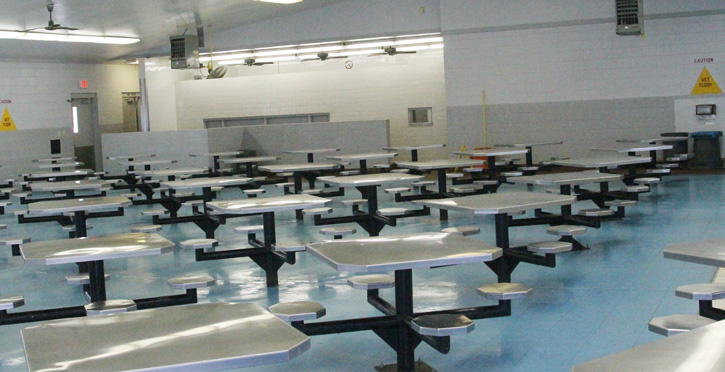
Pictured: The cafeteria inside the Century Correctional Institution. NorthEscambia.com file photo, click to enlarge.
Students Head Back To Class (With Photo Gallery)
August 18, 2015

 Monday was the first day of school across the area, with tens of thousands of students heading back to class.
We asked NorthEscambia.com readers to submit their back to school photos.
For a photo gallery, click here.
We apologize, but due to a tremendous response, we were unable to publish all photos, and we are unable to add additional photos to the gallery.

Need A Passport? Passport Fair To Be Held Next Week In Century
August 18, 2015
The U.S. Postal Service is hosting a special Passport Fair at Century Post Office next week to accept passport applications and provide passport information.
 The event will take place at the Century Post Office are from 9 a.m. until 12:30 p.m. and 2 p.m. until 3:30 p.m. on Monday, August 24. Appointments are not required on this day, so customers are encouraged to show up early, as applicants will be served on a first-come, first-served basis.
“We will continue to leverage the convenience of the Postal Service to help our customers apply for passports. Having this service available where an appointment is not necessary is a plus for our customers”, said Pamela Tramonte, Century Postmaster.
On August 24th, customers can visit Century Post Office to apply for a passport without first having to make an appointment. To help the passport application process go smoothly and efficiently, the Postal Service recommends the following:
• Bring in proper proof of American citizenship. This must be either: a certified birth certificate issued by the city, county or state; a previous U.S. passport; a certificate of citizenship; or a naturalization certificate. (Please note: a hospital-issued birth certificate alone is not acceptable.)
• Bring in proof of identity. This must be either: a previous U.S. passport; a naturalization certificate; a certificate of citizenship; or a current valid driver’s license, government ID or military photo ID. Also bring a photo copy of the driver’s license front and back.
• Passport photograph services will be provided on site for a $15.00 fee.
• To save time, customers can download a passport application at www.usps.com/passport to complete their application beforehand.
• All applicants must appear in person (including minors). Applicants under age 16 must appear with both parents. If one parent is not available, a notarized authorization from the absent parent is required along with a copy of their driver’s license front and back.
Each passport for an adult must be accompanied by a check or money order for $110 made payable to the U.S. State Department and a $25 execution fee made payable to Postmaster. Fees for children under 16 are $80 and $25.
The cost to expedite processing at the Department of State is $60 paid per application in addition to required fees.
The cost to expedite delivery service to the passport processing lockbox is $19.99 per family for Priority Mail Express paid to the United States Postal Service.
The cost to expedite delivery service is $14.85 paid per application directly to the Department of State for the delivery of an issued passport book from the Department of State to the customer. This service is only available to mailing addresses within the United States. Not valid for passport cards.
Passport customers may also check the U.S. State Department’s web site at www.travel.state.gov to obtain additional information. U.S. citizens also may obtain passport information by phone, in English or Spanish, by calling the National Passport Information Center toll free at 1-877-487-2778.