

Florida Gov’t Weekly Roundup: Temps Rising As Budget Unveiled
March 22, 2015
Things are getting warmer in Tallahassee — and while the mercury is rising sharply, the hottest thing in town could soon be the battle over the shape and size of the budget for the coming year.
On Friday, the House and Senate unveiled spending plans for the year beginning July 1 that were similar in some respects and vastly different in others. The most striking area of conflict was the bottom line. An austere House budget would spend $76.2 billion — less even than the almost $77 billion plan that Gov. Rick Scott proposed.
 The Senate, on the other hand, made it rain, unveiling an $80.4 billion budget that would be the largest in state history and would include funding for a quasi-Medicaid expansion and a reconfigured Low Income Pool program. Those responsible for the upper chamber’s proposal played down the significance of its size.
“Absent an additional $5 billion in local and federal funding, our proposed budget is approximately the same as the initial budget the Senate passed last year,” Senate Appropriations Chairman Tom Lee, R-Brandon, said in a statement accompanying the budget. “This conservative approach preserves the resources necessary to address a crisis in Florida’s hospital network.”
There are other differences in the plans — the Senate’s focus on health care comes even as it provides fewer dollars than Scott or the House in per-student funding for public schools. Neither the House nor the Senate would reach Scott’s recommendation for school spending under the main formula used to bankroll elementary and secondary education.
Those disputes could lead to a climate change in what has so far been a mundane legislative session — a change that would make it almost as heated inside the Capitol as April in Tallahassee promises to be outdoors.
SCOTT GETTING SCHOOLED ON ED FUNDING?
As part of Scott’s attempted makeover the past few years from rock-ribbed budget cutting conservative to a more moderate figure, the governor has touted his efforts to pump more and more money into education. A key part of his 2014 re-election platform was to propose a new high-water mark for per-student funding for public schools, which he made good on by requesting $7,176 a pupil in the coming budget year.
He won’t get that much. House and Senate lawmakers have both issued plans that fall short of Scott’s proposal, which would surpass the old record set in the 2007-2008 school year. But the House put forward a version that, at $7,129 a head, at least surpassed the old mark by $3.
“It wasn’t a slight to the governor,” said Rep. Erik Fresen, the Miami Republican who chairs the House’s education budget subcommittee. “We wanted to make sure we hit his historic number.”
The Senate didn’t go that far, proposing a plan that would bump education spending up to $7,123, short of the old mark.
It wasn’t that much of a surprise. Sen. Don Gaetz, Fresen’s counterpart in the Senate, said lawmakers were trying to patch a potential drop in health-care funding from the federal government.
“I think it’s less likely that the Senate or the House can get to the governor’s number, because the governor’s budget relied upon revenues that no longer exist,” said Gaetz, R-Niceville. “That’s not the governor’s fault. He operated under the information that he had then.”
Also worth noting: The Senate’s proposal would still boost per-student funding for public schools by 3 percent. But failing to get the symbolic victory of even a couple of dollars over the old record likely wouldn’t help Scott shake the perception that he’s losing clout at the Capitol.
MEDICATION FOR YOUR LIP
The flip side of the House’s more generous treatment of education is its less generous treatment of the health-care budget. The Senate released a budget proposal Thursday that banks on expanding health-care coverage for low-income Floridians and extending a critical funding program for hospitals.
That creates a hefty $5 billion conflict with the House, a difference that could be one of the biggest flashpoints once the two chambers start negotiating the budget.
Senators included $2.8 billion in the budget proposal to pay for an expansion of health-care coverage that is an outgrowth of the federal Affordable Care Act, better known as Obamacare. House Republican leaders have rejected such proposals during the past two years — and have shown no willingness to go along with a revised Senate expansion plan this year.
If the expansion ultimately is approved, the federal government would cover the $2.8 billion first-year costs of the plan, which the Senate has dubbed the Florida Health Insurance Affordability Exchange Program, or FHIX.
The Senate budget proposal also includes nearly $2.2 billion for the continuation of the Low Income Pool program, which in recent years has funneled additional money to hospitals and other health providers that serve large numbers of poor and uninsured patients. The program, known as LIP, is scheduled to expire June 30 unless the state can reach agreement with the federal government on an extension. Amid such uncertainty, a House budget proposal did not include the money.
Sounding a bit like the H&R Block commercials, Lee essentially said Friday that the state should get its billions back.
“Each year, Floridians across our state send a significant amount of their hard-earned money to Washington,” he said. “Our goal in this budget was to return more of those federal tax dollars to serve the people of Florida.”
The House, which doesn’t include the LIP money, isn’t so sure.
House Health Care Appropriations Chairman Matt Hudson, R-Naples, said it would be premature to include the LIP money in initial budget plans, given that state and federal officials haven’t agreed that there will be a LIP program after June 30.
Hudson and House Speaker Steve Crisafulli, R-Merritt Island, said lawmakers are in a similar position as last year, when the program also was slated to expire. The House and Senate did not include LIP money in their initial budget proposals last year but added the money after an agreement was reached for a one-year extension of the program.
“We’re in the same scenario this year,” Hudson said.
The House also continues to rule out any sort of Medicaid expansion, regardless of the way the Senate presents it.
WATER UNDER THE BRIDGE? NOT YET
And while the House and Senate were presenting their different plans on high-profile issues like education and health care, lawmakers also spent part of the week dealing with how they would divvy up the funding stream for water and land conservation set aside under a voter-approved constitutional amendment.
Under the House plan, Florida’s natural springs would get $50 million, the Kissimmee River is in line for $30 million, and a wastewater plan for the Florida Keys is up for $25 million.
But there are few other clearly outlined projects in a $772.1 million proposal for next fiscal year released Tuesday by the House Agriculture & Natural Resources Appropriations Subcommittee. The proposal is focused more on land management and water projects than on new land acquisitions.
The plan quickly drew mixed reviews from conservationists, whose reactions included that it was a “a good starting point” for negotiations and that lawmakers disregarded the intent of voters who supported a constitutional amendment, known as Amendment 1, in November.
“The recommendation ignores what the voters thought that they were voting for, which was to put money into land acquisition for parks and wildlife habitat and trails,” said Audubon Florida Executive Director Eric Draper, a lobbyist on environmental issues.
Senators were busy defusing a potential showdown with affordable-housing advocates, changing course Wednesday and saying housing programs won’t take a hit as part of the Senate’s approach to meeting the demands of the constitutional amendment.
The Senate Appropriations Committee unanimously removed a controversial reduction in money for housing programs that had been included in a series of bills (SB 576, SB 578, SB 580, SB 582, SB 584, and SB 586) revamping trust funds to handle the conservation amendment.
“It was a just a choice we made to move on that issue,” Sen. Charlie Dean, an Inverness Republican who is the author of the Senate trust-fund measures, said after the committee meeting.
The change restores the current percentage of money that goes into a trust fund for affordable housing from real-estate taxes known as documentary-stamp taxes.
STORY OF THE WEEK: House and Senate committees revealed their budgets over the course of the week, setting up the annual clash over state spending priorities.
QUOTE OF THE WEEK: “I don’t think that we can ever be confident that we found all of them. I think it’s the tip of the iceberg. We can only investigate those cases which are brought to our attention since there is no real meaningful oversight by the department to police itself.”—Florida Justice Institute Executive Director Randall Berg, talking about the prison death or Rommell Johnson. After being contacted by The News Service of Florida and told about Johnson’s death, Department of Corrections Secretary Julie Jones said she intends to have Johnson’s case reviewed by the Florida Department of Law Enforcement, now probing about 100 unresolved prison deaths.
by Brandon Larrabee, The News Service of Florida
Molino Park Celebrates The Arts (With Photo Gallery)
March 21, 2015
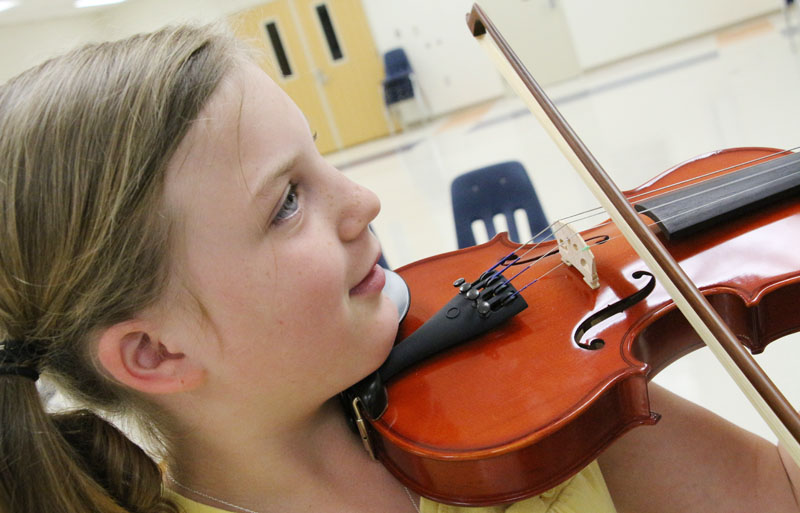
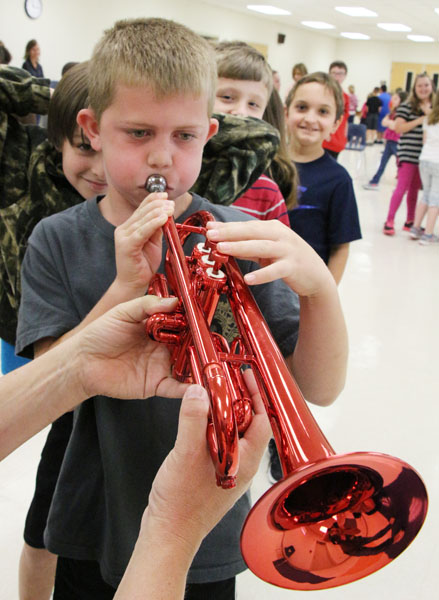 Molino Park Elementary School held its annual Arts Day on Friday, with the students spending the day immersed in a variety of arts.
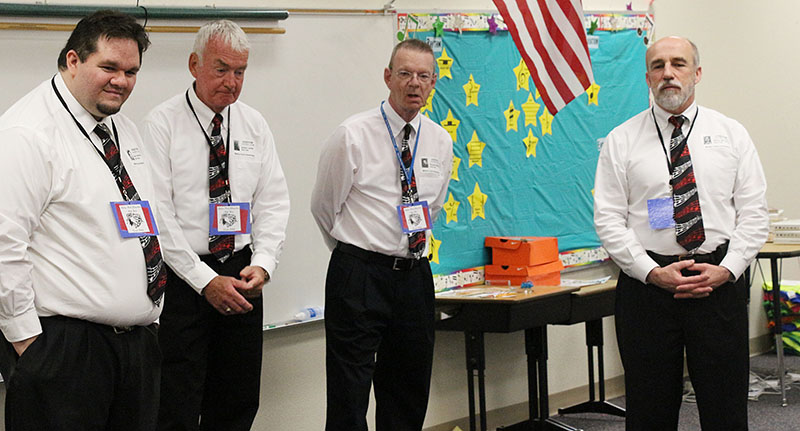
The students enjoyed a wide variety of artistic experiences including pottery, theater from the Pensacola Little Theatre, quilting, painting, woodworking, handbells, a barbershop quartet performance and more. And, courtesy of Pensacola Symphony volunteers, they were able to play a variety of instruments.
Pictured top and inset:During Arts Day at Molino Park Elementary, students had the opportunity to try playing instruments with members of the Pensacola Symphony Orchestra. Pictured belows: A barbershop quartet performed. Pictured bottom: Leaning about pottery. NorthEscambia.com photos, click to enlarge.

ECUA Warns Of Scam
March 21, 2015
The ECUA is warning customers about a potential fraudster.

ECUA officials said they learned late Friday that a person claiming to be an employee of the utility has been contacting ECUA commercial water customers, specifically hotels, seeking immediate payment on alleged overdue accounts using an online money transfter.
ECUA is advising all customers, commercial or residential, that their customer service representatives never seek to collect payments on accounts by telephone or call to verify a customer’s banking information. ECUA is urging customers to never divulge personal information over the telephone or by email. Instead, get the caller’s name and contact information if possible, and call ECUA customer service at (850) 476-0480 to report of verify the caller’s claims.
Friday’s incidents have been reported to the Escambia County Sheriff’s Office.
Trio Wins Ernest Ward Talent Show
March 21, 2015
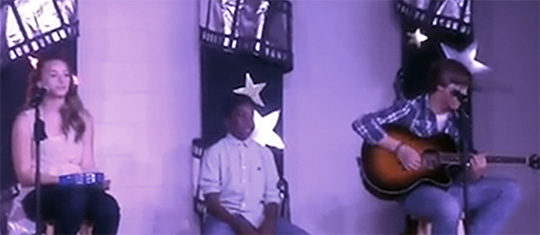
The trio of (pictured L-R) Madison Sherouse, Jaylon North and Seth Killiam one first place in the annual Ernest Ward Middle School Talent Show Friday night. Submitted photo for NorthEscambia.com, click to enlarge.
Judge Sets Hearing In Medical Marijuana Debate
March 21, 2015
Administrative Law Judge Elizabeth McArthur has scheduled an April 14 hearing in a legal challenge to a proposed regulatory framework for the state’s new medical-marijuana industry, according to a document posted on the state Division of Administrative Hearings website.
The case challenges a proposed Department of Health rule for carrying out a 2014 law that would make available a limited type of medical marijuana. A Jacksonville attorney filed the challenge on behalf of 4-year-old Dahlia Barnhart, who has an inoperable brain tumor.
The challenge alleges that the department did not follow the law in drawing up the rule, in part taking issue with the way the department proposes selecting five “dispensing organizations,” which would grow, process and dispense the cannabis.
In November, another administrative law judge rejected the department’s first attempt at a rule to carry out the law, which allows a type of marijuana that is low in euphoria-inducing tetrahydrocannabinol, or THC, and high in cannabadiol, or CBD.
Longtime Century Employee Eddie Hammond Retires
March 21, 2015
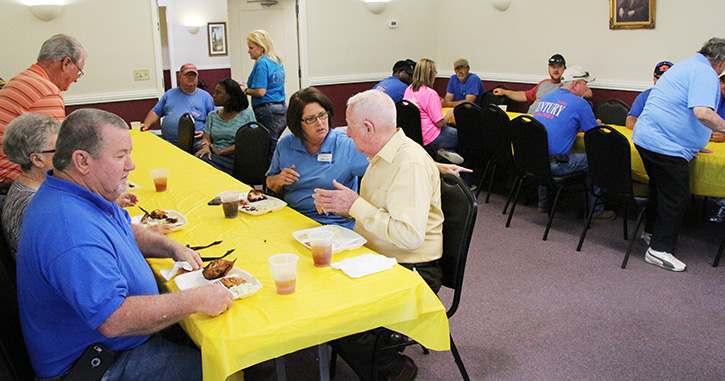
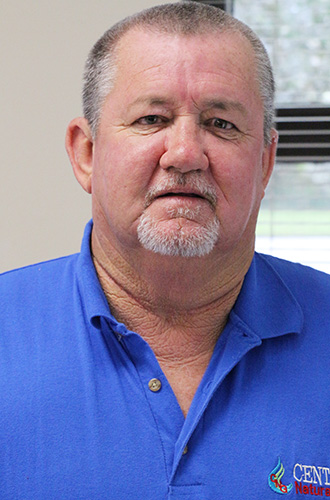 A longtime Town of Century employee has retired. Most recently gas department supervisor, Eddie Hammond had 33 years of service. Hammond says he plans to “fish a little” now that he has retired. Town of Century employees held a luncheon in Hammond’s honor Friday to say goodbye. NorthEscambia.com photos, click to enlarge.
Two Busted For Meth, Over $10K In Meth, Firearms, Cash Seized
March 21, 2015
A confidential tip led Pensacola Police to the arrests of two people and the seizure of more than $10,000 worth of methamphetamine plus firearms and cash.
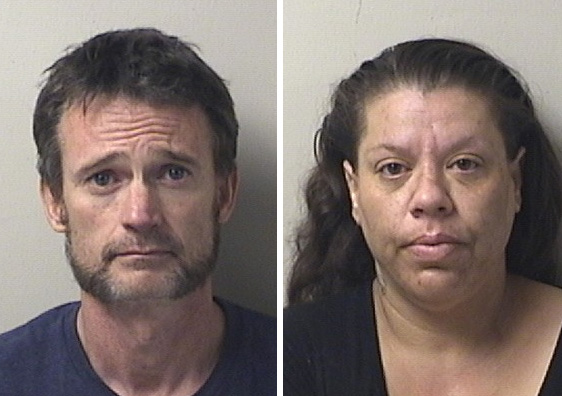 William Richard Lucas, 46, was charged trafficking in methamphetamine, possession of drug equipment, possession of a chemical used in manufacturing methamphetamine, and driving with a suspended/revoked license. April Sherri Vasquez, 35, was also charged with trafficking in methamphetamine, possession of drug equipment, possession of a chemical used in manufacturing methamphetamine, and not having a vehicle registration.
The suspects were arrested after Vice and Narcotics officers served a search warrant at their residence. As officers were conducting surveillance on the residence prior to the arrests, they saw Vasquez carry a bin outside and place it in a pickup truck. Inside the container, officers found three plastic bags of crystal methamphetamine with a total weight of approximately 80.5 grams; an unopened box of Sudafed, which is a listed chemical in production of meth; multiple pipes used for smoking meth; syringes; and a plastic bottle containing one ounce of a liquid that contained meth.
Pensacola Police Sgt. Marvin Miller said a five-year-old child was in the truck when Vasquez tried to leave the scene with the bin that contained drugs and drug paraphernalia. Among items found inside the residence were cash in a safe, a digital scale, additional pipes used to smoke meth, small empty plastic bags associated with the sale of meth, six firearms, and ammunition.
Lucas was released from the Escambia County Jail on a $60,750 bond, while remained jailed with bond set at $79,000.
The suspects had been under surveillance for approximately a month, Miller said.
EA’s Brooks Signs With Huntingdon College
March 21, 2015

Escambia Academy senior running back Gordon Brooks, Jr. signed Friday morning with Huntingdon College in Montgomery. Brooks was a member of the 2014 Escambia Academy AISA state champion team, the first in the school’s history. Photos by Ditto Gorme for NorthEscambia.com, click to enlarge.

Extension Service Hosts Food Plot Meeting
March 21, 2015
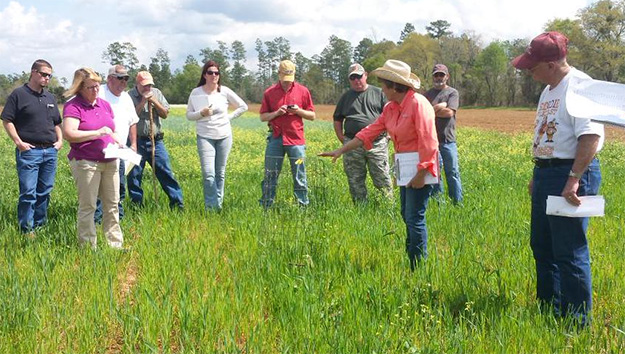
The Escambia County Extension Service held a wildlife food plot meeting Friday afternoon at the West Florida Research and Education Center in Jay. The free event showcased 18 different test plots that ranged in material from clover to wheat. Dr. Ann Blount, UF/IFAS Forage breeder, shared her experiences with various forages and the keys to getting the maximum production out of a plot.
Pictured: Dr. Ann Blount suggests using excluder cages when planting wildlife food plots to determine use of forage. Courtesy photo for NorthEscambia.com, click to enlarge.
Impact 100 Sets Membership Record, To Give Record Grants
March 20, 2015
IMPACT 100 Pensacola Bay Area announced Thursday that their membership drive has concluded with a record 1,060 members. That will allow the local women’s philanthropy group to award 10 grants of $106,000 each to nonprofits agencies in Escambia and Santa Rosa counties this October.
 This will be the 12th year that IMPACT 100 will award grants to local nonprofit agencies. Since the inception of IMPACT 100 Pensacola Bay Area in 2004, the organization has awarded 57 grants to 48 different nonprofit agencies for a totaling over $6.175 million.
“We are thrilled to have such a tremendous response from our community and we can’t wait to see what innovative projects the nonprofit agencies submit this year,”said Cyndi Warren, president of IMPACT 100. “Thanks to every one of our members, the Pensacola Bay Area shines once again as the largest Impact 100 organization in the world.”
Two grants will be awarded in each of the following five focus areas: Arts & Culture; Education; Environment, Recreation & Preservation; Family; and Health & Wellness.
Non-profit organizations interested in applying for a grant are invited to attend this year’s Nonprofit Education Workshop with guest speaker Keisha A. Rivers Shorty of The KARS Group/The KARS Institute. She will present “Crafting Proposals That Work: “Building Relationships Through The Art of The Ask” at First Baptist Church, 500 N. Palafox St. on Thursday, April 16 from 8:30 a.m. until 12:30 p.m. All non-profit organizations in Escambia and Santa Rosa Counties are invited to learn about the grant process, get tips to writing a more successful grant, be inspired to dream big and create a winning project. Letters of Intent to Apply for a grant are due April 30. Grant Applications must be submitted by June 26.