
Northview High Warns Parents Of Water Issue, Potential Health Concerns
September 16, 2015
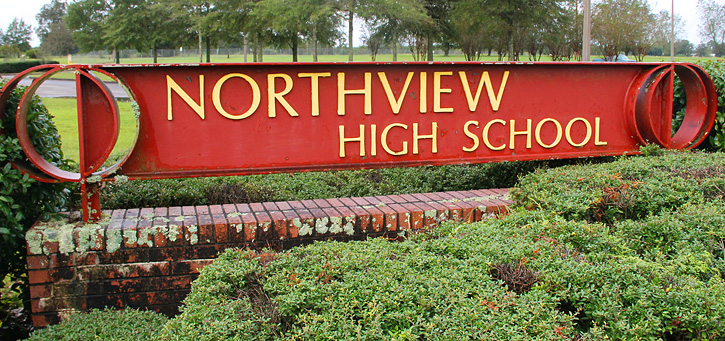
Northview High School and the Escambia County School District are warning parents about a potential health problem resulting from a water supply issue Wednesday.
According to Principal Gayle Weaver, a contractor had injected chemicals into the water supply for testing purposes. An item known as a “backflow preventer” is supposed to prevent the chemicals from releasing into the main water supply.
”This system failed,” Weaver said. “The indication of the release was a very slight pink discoloration of the water.”
The chemical in the main supply was in a very diluted state, but as a precaution students were prevented from having skin contact with water. They were allowed to use the restroom, but were required to use hand sanitizer instead of water to wash their hands.
Northview was in constant contact with the offices of the superintendent and other officials in order to obtain the necessary manpower and resources to quickly address the situation. The school also compiled a list of students that may have consumed water from water fountains prior to the discover of the situation.
“No students visited the clinic or sought assistance for any symptoms associated with the chemical,” the principal said.
Weaver said any student that has symptoms such as rash or irritation of the skin should seek medical attention. The student’s physician can call (850) 327-4894 or (334) 248-1275 for an emailed copy of the MSDS sheets on the chemical.
“(Thursday) and Friday mornings, the health department will do tests on the water to determine water safety. We will know Monday morning, if all is clear, for there must be two consecutive negative test results for clearance,” she said. “In the meantime, we will have district-furnished hand sanitizer and bottled water for all needs. In addition the lunchroom will not be using the school water for food preparation.”
School will not be canceled and will be in session as usual.
Escambia Students To Take 60 Fewer Tests This Year
September 16, 2015
Escambia County students will face over 60 fewer tests and assessments this school years under an assessment calendar approved by the Escambia County School Board.
“Tests cannot go away completely. They serve an important purpose by allowing teachers to track and understand what students have learned and what they still need to learn”, said Superintendent Malcolm Thomas. All of the tests administered last year were reviewed and categorized as “Required” or “Optional,” and then examined to determine which could be eliminated.
 The calendar presented to the school board includes a range of dates for schools to administer over 30 exams that are required by the state. These tests and exams include the Florida Standards Assessments (FSAs) for reading, math and writing in various grades and the FCAT exam for science for fifth and eighth grade students. It also includes the seventh grade civics exam required by the state for all seventh graders in Florida. The district also chose to continue some English/language arts and Math Discovery Education assessments for students in kindergarten through third grade.
We are also keeping some quarterly exams but they have been designated as “Optional.” Those exams cover quarterly assessments for fifth grade science and seventh grade civics, as well as two Discovery Education exams for third grade Math, added Thomas.
Students will have other tests, as they have always had, but they will be selected or created by their teachers.
“Mini-assessments that can be given at the end of a lesson or a chapter allow teachers to find out which facts, operations, or concepts need to be retaught and to know that information quickly, which allows them to use the results for lesson planning,” Thomas said. “The difference is those exams can be scheduled by the teacher and given in class. Schools do not have to completely reorganize their schedule for a quiz or a chapter test.”
The testing calendar has windows with ranges of dates assigned, which does not mean the test will be given every day in that window. Generally the test will be given in the first couple of days in the window with other days scheduled for make-up exams. Having windows of time allows for flexibility in scheduling, especially when the tests are computer based or if the weather causes a disruption in the school schedule.
The calendar also includes the registration deadlines and test dates for the ACT and SAT exams.
“All high school students are encouraged to take the ACT or SAT early so there will be time to take them again should the student wish to try to increase their score,” Thomas encouraged. “If students or their parents have any questions about these exams and their importance, they should schedule an appointment with their guidance counselors.”
The calendar can be downloaded from http://ese.escambia.k12.fl.us/eval/WebDocs/Testing_Calendar_(General).pdf.
FDOT State Line Landscaping Project Begins On Highway 97
September 16, 2015
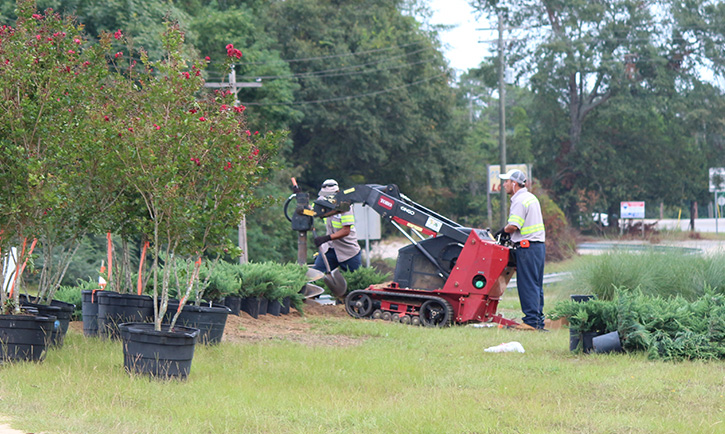
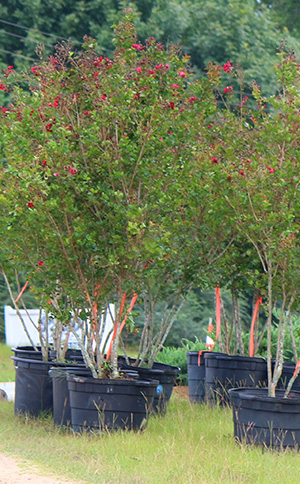 Work is underway on a gateway landscaping project on Highway 97 at the Alabama/Florida state line. The $163,900 project includes state line landscaping on both Highway 97 and on Highway 90 by contractor Pine Grove Nursery and Landscaping. The landscaping is funded by the Florida Department of Transportation.
Pictured: A landscaping project got underway Tuesday morning at the Alabama/Florida state line on Highway 97. NorthEscambia.com photos, click to enlarge.
Escambia Sex Offender Gets 20 Years For Child Porn
September 16, 2015
A registered sex offender from Escambia County has been sentenced to federal prison.
Shawn P. Caldwell, 36, was sentenced to 240 months in prison for receipt of child pornography.

During an undercover operation, law enforcement officers discovered Caldwell was in possession of 76 child pornography files at his Pensacola residence. At his plea hearing on June 24, 2015, Caldwell admitted that, between April 2011 and April 2015, he received child pornography images and videos from the internet, which he downloaded from several peer-to-peer programs. A forensic review of Caldwell’s electronic devices revealed approximately 263 videos and more than 1,000 images of child pornography, including images of children under the age of 12.
The charges were the result of an investigation by the Federal Bureau of Investigation, the Florida Department of Law Enforcement, and the Pensacola Police Department.
Ernest Ward Names Students Of The Month
September 16, 2015

Ernest Ward Middle School has named students of the month for August. They are (L-R) Anna Adams, sixth grade; David Lamb, seventh grade; and Keaton Solmonson. Submitted photos for NorthEscambia.com, click to enlarge.
Barry Holds Walnut Hill Town Hall Meeting
September 16, 2015
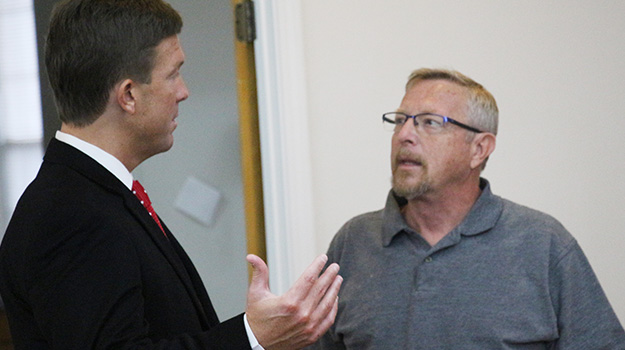
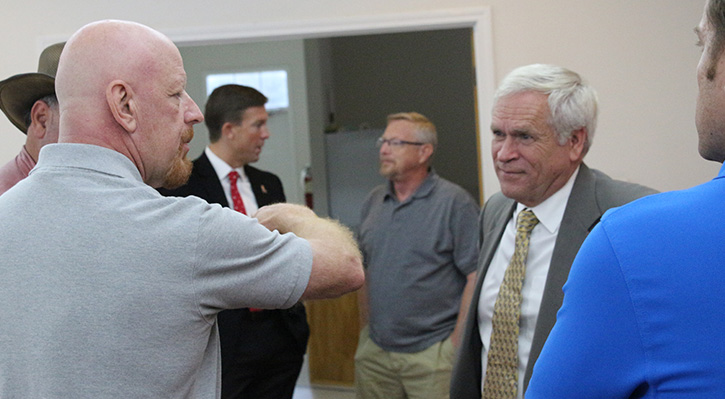
Escambia County Commissioner Steven Barry held what was to be an open forum town hall meeting Tuesday evening in Walnut Hill.
But due to an error by the county, the public was not notified about the town hall until just a few hours before it started, As a result, attendance was limited to just a handful of people.
Those attendees were able to have face-to-face time with Barry, County Administrator Jack Brown and other top county staffers.
NorthEscambia.com photos, click to enlarge.
Flomaton Goes Gold For Childhood Cancer Awareness
September 16, 2015
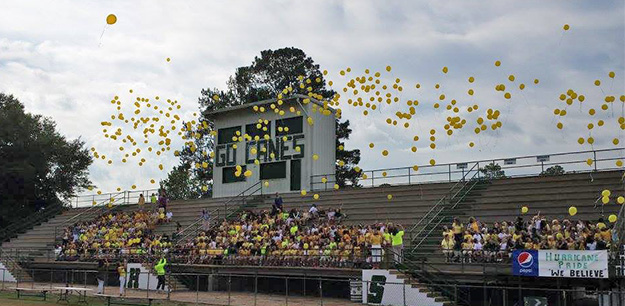
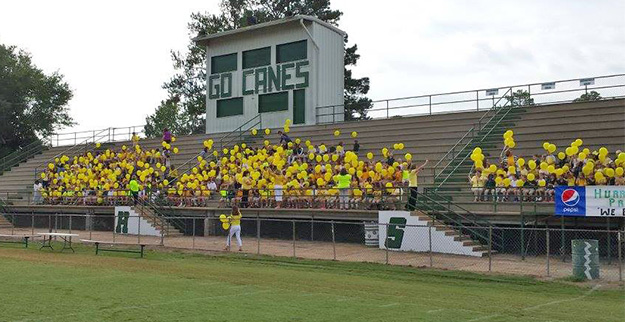
 Flomaton Elementary School went gold Tuesday for childhood cancer awareness. The students released 400 yellow balloons from the high school’s football stadium.
The faculty, staff and school administration, along with the Flomaton fire and police departments, have also gone gold for Bryant Cooper and all of the many other children and adolescents that are fighting cancer.
For an earlier NorthEscambia.com story and more information about Bryant Cooper and childhood cancer awareness, click here.
Submitted photos for NorthEscambia.com, click to enlarge.
Bill Would Shift Burden Of Proof In ‘Stand Your Ground’ Cases
September 16, 2015
A key supporter of Florida’s controversial “stand your ground” law filed a bill Tuesday that would shift a burden of proof to the state in cases in which people argue they used force in self-defense.
The bill (HB 169), filed by Rep. Dennis Baxley, R-Ocala, came about two months after the Florida Supreme Court ruled that people who use “stand your ground” defenses have the burden of showing they should be shielded from prosecution. In such cases, pre-trial evidentiary hearings are held to determine whether defendants are immune from prosecution under the law.
But Baxley’s bill, which will be considered during the 2016 legislative session, would place the burden of proof on prosecutors in the evidentiary hearings.
The bill said it is “intended to correct misinterpretations of legislative intent made by the courts” and would apply retroactively to pending cases. “The Legislature finds that imposing the burden of proof on a person who uses or threatens to use defensive force as permitted by general law at a pretrial evidentiary hearing substantially curtails the benefit of the immunity from trial provided by this section (of law),” the bill says. “The Legislature intends to make it explicit that the state shall bear the burden of proof in establishing beyond a reasonable doubt whether a defendant is entitled to immunity at a pretrial evidentiary hearing in order to disprove a prima facie claim of self-defense immunity. The Legislature has never intended that a person who acts in defense of self, others, or property be denied immunity and subjected to trial when that person would be entitled to acquittal at trial.”
by The News Service of Florida
Central Tops Northview; Washington Over Tate
September 16, 2015

 Central defeated Northview 3-0 in varsity action Tuesday at Central, 25-8, 25-22, 25-19. Junior varsity results were not available. Northview will host Laurel Hill High School on Thursday. For more photos, click here.
Washington High School defeated Tate 3,0 Tuesday at Tate, 25-23, 25-23, 25-17. Tate will travel to West Florida School on Wednesday.
Pictured: Northview at Central. NorthEscambia.com photos by Gary Amerson, click to enlarge.
Missing Children’s Day: Search Continues In North Escambia Case
September 15, 2015
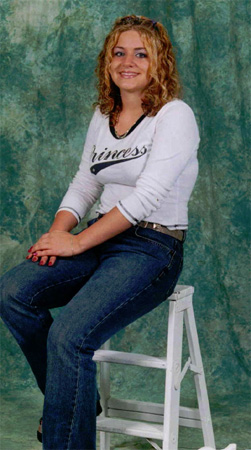
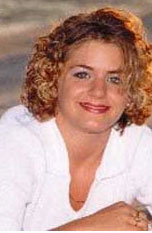 A Tate High School student last seen 14 years ago in North Escambia was among those remembered Monday on the 2015 Florida Missing Children’s Day in Tallahassee.
““Our prayers are with each of the parents and loved ones of missing children for the heartache that they have experienced. Florida remains a national leader in combating these terrible crimes, and we will continue to work together to shine a light on any crime that places the life of a child at risk,” Florida Gov. Rick Scott said Monday.
In 2014, more than 35,000 incidents of missing children were reported to Florida law enforcement agencies and six AMBER Alerts were issued statewide. Since its inception, 192 AMBER Alerts have been issued, including two so far this year. AMBER Alerts have directly aided in the rescue of 62 children.
“We will never forget about these children and their families. We will continue to search and investigate, regardless of how long it’s been, to bring missing children home and provide answers for their families,” Florida Department of Law Enforcement Commissioner Gerald Bailey added.
Danielle Arion Bell was last seen at age 14 at a party in September 2001 in the 500 block of Cedar Tree Lane, between Highway 29 and Highway 95A in Cantonment.
Witnesses told authorities that Bell left a party with a man that was in his mid-twenties at the time. Escambia County deputies later questioned that man and searched his home, but he was never charged in connection with the case.
During the summer of 2007, Alfredo Gomez Sanchez, Jr. was charged with providing law enforcement with false information about his whereabouts at the time Bell disappeared. He was not implicated in her disappearance.
In October 2010, the Escambia County Sheriff’s Office Cold Case Unit served a search warrant at the home.
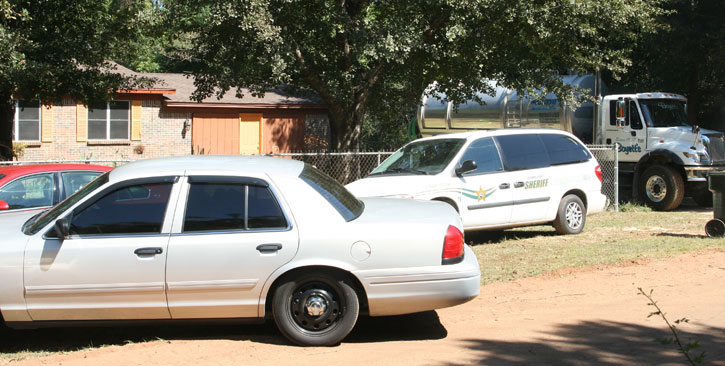
 As part of that search warrant, a septic tank behind the residence was pumped out, and dogs from Escambia County Search and Rescue were also used to search the area. Investigators said nothing was found, and they would not say what new information might have led to the search.
According to the Florida Department of Law Enforcement, Danielle has a scar on her right forearm and blue eyes. She had brown hair at the time of her disappearance. Danielle, whose nickname was “Dani”, was a member of the Tate Aggies cheerleading squad. The popular teen enjoyed dancing and drawing.
Anyone with information about Bell is asked to call the Escambia County Sheriff’s Office Major Crimes Unit at (850) 436-9580 or Crime Stoppers at (850) 433-STOP.
FDLE invites the public to sign up to receive Missing Child Alerts and AMBER Alerts via email or text message by visiting www.missingchildrenalert.com. To view photos of missing children, visit www.fdle.state.fl.us.
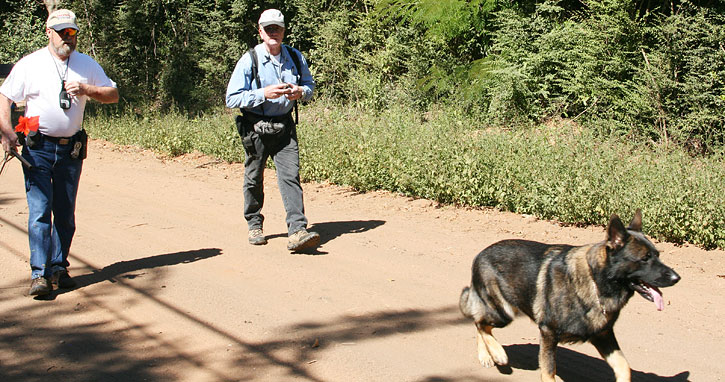
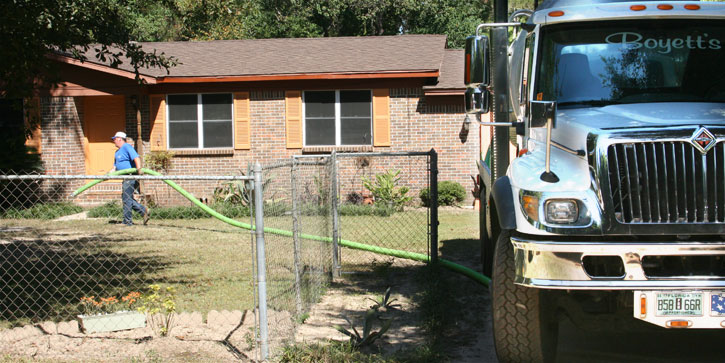
Pictured top: Investigators pumped and searched a septic tank at this home on Cedar Tree Lane in Cantonment in October 2010 in the case of missing teen Danielle Arion Bell. Pictured below: A search and rescue K-9 team was also on site. Pictured bottom: A septic tank company employee prepares to pump a septic tank at the home. NorthEscambia.com file photos, click to enlarge.