
PCA Tops Northview (With Photo Gallery)
September 25, 2015

Pensacola Christian Academy defeated the Northview Chiefs in high school volleyball Thursday evening.
In varsity action, PCA defeated Northview in four sets, 26-24, 25-16, 25-15, 25-17. In JV play, PCA defeated Northview 25-21, 25-20.
The varsity Chiefs will take part in the Tate Varsity tournament on Saturday.
NorthEscambia.com photos by Gary Amerson, click to enlarge.

Escambia Neighborhood Cleanups Remove Over 125 Tons Of Debris
September 25, 2015
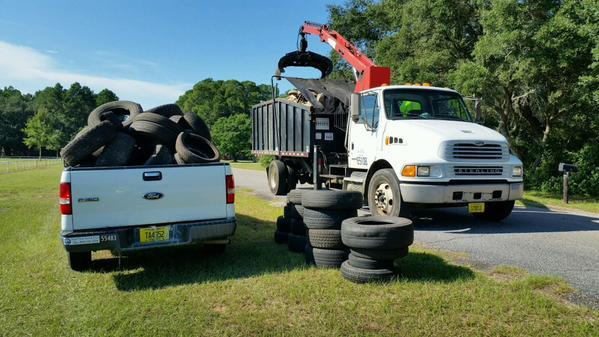
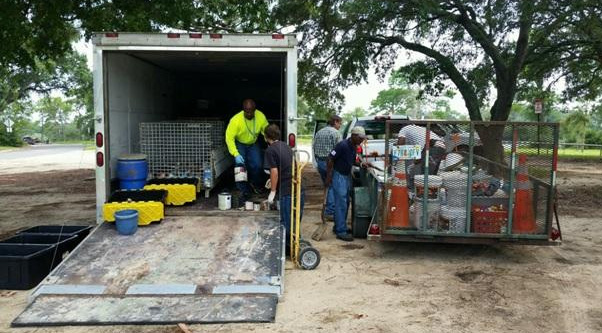
Escambia County collected and disposed of over 125 tons of debris during this year’s neighborhood cleanup program.
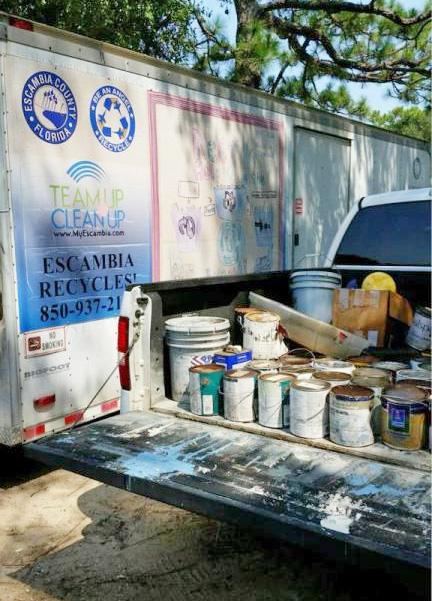 The initiative involved an aggressive clean-up effort, targeting different neighborhoods throughout the county, with crew members and volunteers working hard to pick up a variety of debris and waste, including electronics, furniture, paint, old batteries and tires.
The county’s neighborhood cleanup program was hosted by the Community Redevelopment Agency, Escambia County Safe Neighborhoods Program and Escambia County Waste Services. Local partners for this year’s efforts included tge City of Pensacola Sanitation Services, Escambia County Environmental Code Enforcement and Keep Pensacola Beautiful.
Submitted photos for NorthEscambia.com, click to enlarge.
State Fire Marshal Investigating Early Morning Vehicle Fire Near Bratt
September 24, 2015
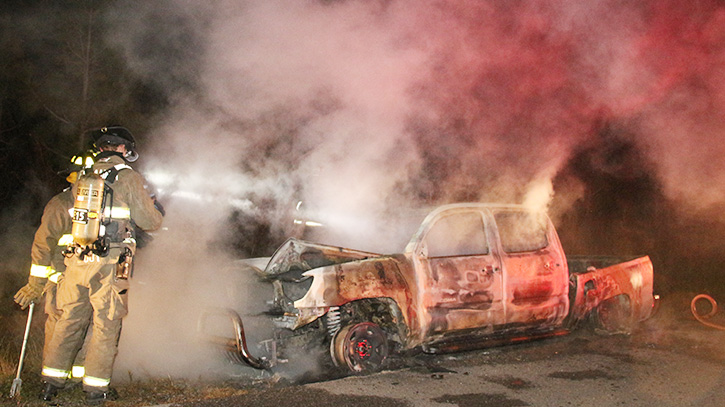
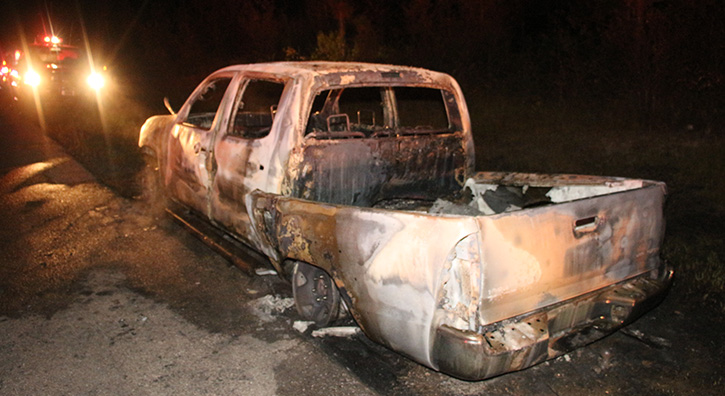
An early Thursday morning vehicle fire near Bratt is under investigation.
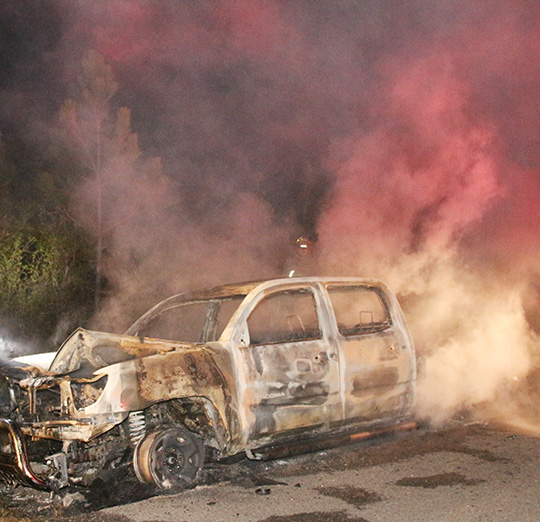 A passerby reported a pickup truck on fire alongside Pine Barren Road just south of Highway 168 about 12:40 a.m. When the Walnut Hill Station of Escambia Fire Rescue arrived, they found the Toyota Tacoma pickup destroyed and that the fire had mostly burned itself out.
The owner of the pickup arrived on the scene and told firefighters that he had run out of gas about an hour before the fire was reported. He said he had called his wife and driven to Flomaton to purchase gas, only to return and find the truck burned out.
The fire is under investigation by the Escambia County Sheriff’s Office and the Florida State Fire Marshal’s Office.
There were no injuries reported.
Pictured: The remains of a Toyota Tacoma pickup smolder alongside Pine Barren Road in Bratt just before 1 a.m. Thursday. NorthEscambia.com photos, click to enlarge.
Walnut Hill Home And Barn Burglarized; Stolen Truck Recovered
September 24, 2015
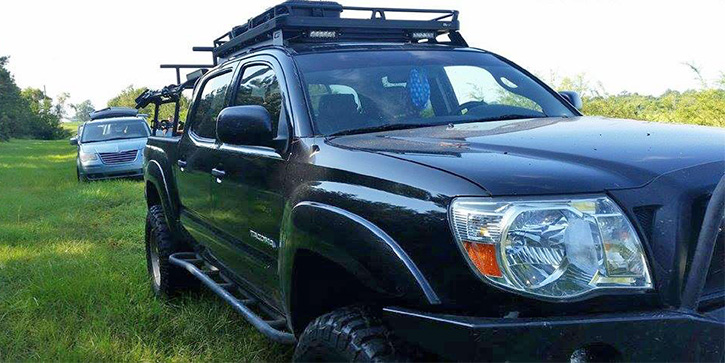
Authorities are searching for clues in two burglaries at a Walnut Hill home in which tens of thousands of dollars of items were taken.
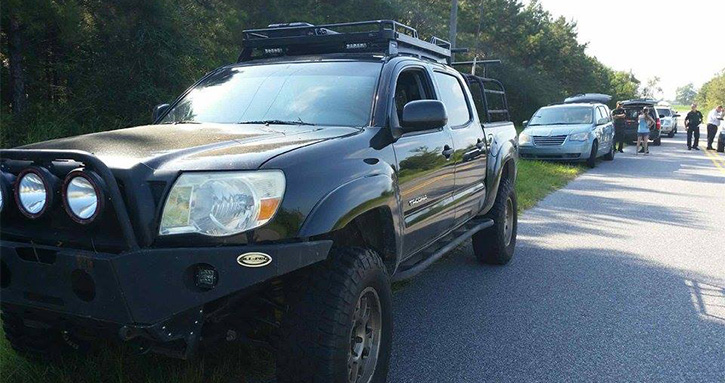
 Within the past two weeks, someone broke into a metal barn at a home on Kansas Road and stole a Kubota ZTR mower, all of the resident’s tools and fishing gear. The home was burglarized Tuesday, with several guns, ammo, a 24-inch TV and a banjo stolen, according to the resident. His 2007 Toyota Tacoma was also stolen.
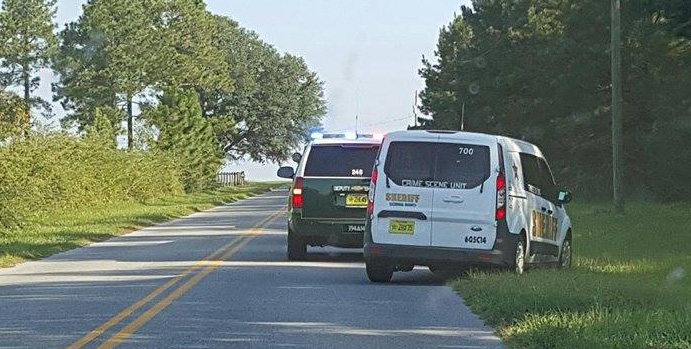
The Escambia County Sheriff’s Office recovered the Tacoma Wednesday morning, abandoned in a remote area off Kansas Road, not far from where it was stolen.
Anyone with information on the burglaries is asked to call Crime Stoppers at (850) 433-STOP or the Escambia County Sheriff’s Office at (850) 436-9620.
Pictured top: This stolen Toyota Tacoma was recovered in a remote area off Kansas Road in Walnut Hill Wednesday morning. Pictured; A Kubota ZTR mower that was stolen from Kansas Road. Pictured below: Escambia County Sheriff’s Office deputies and a crime scene unit process the truck after it was pulled back to Kansas Road. Photos for NorthEscambia.com, click to enlarge.
Escambia Jail Inmate Dies
September 24, 2015
A 29-year-old male died from an apparent suicide at the Escambia County Main Jail on Wednesday, according to Escambia County officials.
 Jail personnel found the inmate unresponsive in his cell and immediately began emergency medical procedures. The inmate was being held after being charged with two counts of sexual battery on a victim under the age of 12, one count of aggravated assault with a deadly weapon without the intent to kill, battery and withholding support/non support of children or spouse.
The case is currently under investigation by the Escambia County Sheriff’s Office. Escambia County Corrections personnel are conducting a review of the incident.
According to jail records, the inmate was homeless prior to his arrest on August 7.
Escambia District Seeks Input On Upcoming School Calendars
September 24, 2015
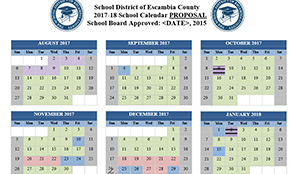 The Escambia County School District has developed proposed school calendars for the next two school years, and they are asking for public approval before they are approved.
Both calendars begin school on August 10, and both include a full week out of school at Thanksgiving (a combination fall break and Thanksgiving holiday).
To view both calendars and take the survey, click here. The calendar links and the survey are the bottom of the linked page. The survey closes on September 29.
Final recommendations for the 2016-17 and 2017-18 school calendars will be on the Escambia County School Board agenda on November 17.
Teens Put Down The Smokes, Pick Up E-Cigarettes
September 24, 2015
Florida high-school students have largely kicked the cigarette habit. But many have found another way to get nicotine fixes.
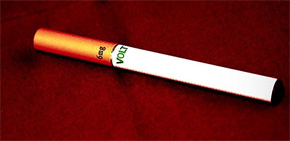 A state report released Wednesday shows that 6.9 percent of high-school students smoke cigarettes, part of a steady decline during the past two decades. But while students have stopped lighting up old-school tobacco, health officials are alarmed at a sharp increase in teens using electronic cigarettes.
The report, released by the Department of Health, found that 15.8 percent of high-school students use electronic cigarettes, which allow people to inhale vaporized nicotine in different flavors. That was up from 10.8 percent in 2014 and 5.4 percent in 2013.
“The use of e-cigarettes, and this dramatic increase that we’re seeing among youth, threatens to normalize smoking again,” said Shannon Hughes, director of the department’s Community Health Promotion Division. “We have worked for decades to de-normalize smoking.”
The report details results of the annual Florida Youth Tobacco Survey. The 2015 survey was conducted in the spring and included 5,877 middle-school students and 6,443 high-school students in 174 public schools throughout the state, according to data released Wednesday.
Overall, the report reflects teens’ continued move away from cigarettes. For example, while 6.9 percent of high-school students said they “currently” smoke cigarettes, that figure is down from 10.1 percent in 2012, 13.1 percent in 2010, 15.7 percent in 2005 and 22.6 percent in 2000. Current tobacco use is defined as having smoked at least once in the past 30 days.
High-school students who said they smoke “frequently” — defined as using tobacco in at least 20 of the past 30 days — also declined. That total was 2.5 percent in 2015, down from 3.9 percent in 2012, 5.1 percent in 2010, 6.5 percent in 2005 and 10.5 percent in 2000, according to the data.
But while smoking tobacco has dropped, the use of relatively new electronic cigarettes has grown quickly. Along with 15.8 percent of high-school students who said they currently use electronic cigarettes, 6.4 percent of middle-school students said they use the devices.
Florida lawmakers in 2014 approved a ban on sales of electronic cigarettes to minors, similar to bans on the sales of regular cigarettes and other tobacco products. Electronic cigarettes do not carry all the health risks of smoking tobacco, but critics contend that the devices can hook teens on nicotine, ultimately leading to the use of tobacco products.
Hughes and the state’s Tobacco Free Florida program want the federal government to come up with national standards to regulate e-cigarettes. While Florida passed the 2014 law, the availability of electronic cigarettes online has made enforcement difficult.
by Jim Saunders and Tom Urban, The News Service of Florida
School District Purchases Nearly 200 Chromebooks For Ransom Middle
September 24, 2015
The Escambia County School Board has approved the purchase of nearly 200 new tablets for Ransom Middle School.
The district signed off on the purchase of 195 Chromebook 11 tablets with three year accidental damage insurance and a three year mail-in warranty.
The total cost of the purchase of $60,841.95, or just over $300 per device.
2-1-1 Northwest Florida Awarded For Quality Assurance
September 24, 2015

United Way’s local five-person 2-1-1 Northwest Florida team was honored with highest quality assurance over 20 other 2-1-1s from across the nation. The Quality Assurance program uses a paid third party to conduct secret calls each month and scores them using 42 distinct items. In competition with call centers containing staffs of over 180, 2-1-1 Northwest Florida scored highest among those who participated.
As a free, confidential informational and referral service, 2-1-1 Northwest Florida ensures that our community’s callers receive superior service from its specialists.
To be connected with community resources and information 24/7, dial 2-1-1 or visit 211nwfl.org.
“I am extremely proud of our team at 2-1-1. They work hard to connect our callers with the community resources that may meet the caller’s need and to provide a top quality service,” said Amanda Crabtree, director of 2-1-1 Northwest Florida.
Pictured: 2-1-1 Call Center Supervisor Mike Martin. Submitted photo for NorthEscambia.com, click to enlarge.
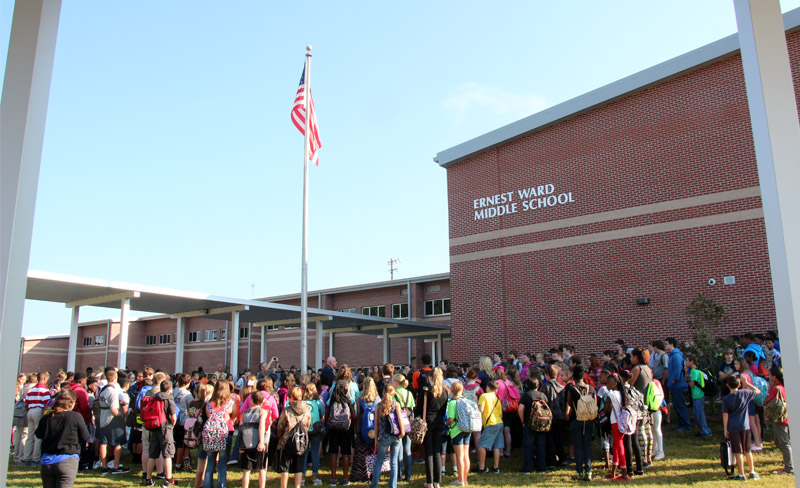
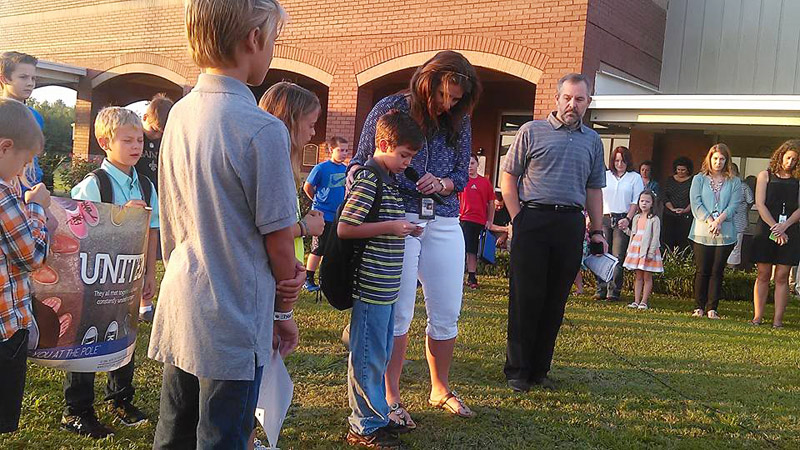
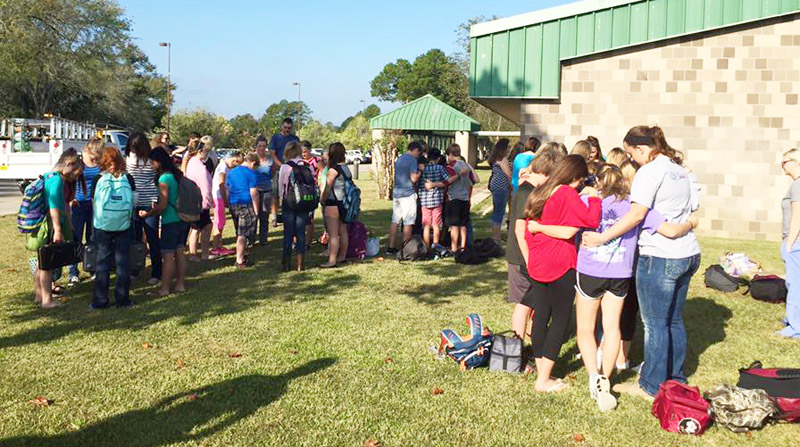
Hundreds Of Students Gather To Pray At The Pole (With Photo Gallery)
September 24, 2015
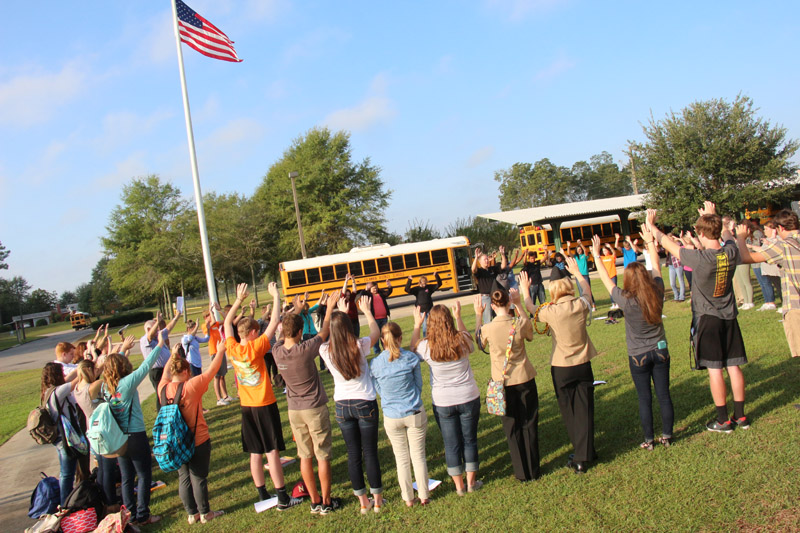
Hundreds of students gathered to pray at their schools in across the area Wednesday morning during the annual See You at the Pole event.
Students gathered as school began to pray in the non-denominational event. See You at the Pole is a student-initiated, student organized, and student-led event. Students prayed for their school, friends, teachers, government and the nation.
Pictured top See You at the Pole Wednesday morning at Nothview High School. Pictured below: Two photos from Ernest Ward Middle, followed by photos from Molino Park Elementary, West Florida High and Ransom Middle schools. NorthEscambia.com and reader submitted photos, click to enlarge.