

Cantonment Man Gets Life For Sexual Assault, Carjacking
September 2, 2015
A Cantonment carjacking and sexual assault suspect was sentenced Tuesday to life in prison as a prison releasee reoffender. Under the sentence handed down by Circuit Judge Jennie Kensey, Atkins is not eligible for parole and will service the rest of his life in prison.
 Eddie Lee Atkins, age 27 of 622 Muscogee Road, was convicted bny Escambia County Jury of sexual battery with force likely to cause serious bodily injury, attempted sexual battery with force likely to cause serious bodily injury, burglary of a conveyance with assault and battery and carjacking without a weapon for two separate attacks on September 18, 2014. The Escambia County Sheriff’s Office said DNS evidence linked Atkins to both crimes.
At approximately 8:15 a.m., a carjacking was reported at the Raceway gas station at Highway 29 and Muscogee Road. The 55-year old victim went inside the store to make a purchase and pay for gasoline. After she pumped her gas, she found that Atkins had allegedly entered her unlocked vehicle and concealed himself in the backseat. The victim did not see Atkins and drove away from the store with him in the vehicle.
Atkins ordered the victim to drive to a particular location and when she disobeyed his orders, he jumped in the front seat and began beating her multiple times in the face. Finally, the victim was able to stop the car, at which time Atkins pushed her out and stole the car.
Within 20 minutes, the stolen vehicle was located at the intersection of Pine Street and Booth Avenue. The second female victim was jogging past the area when Atkins attacked her and dragged her into the woods where he sexually battered and beat her.
A little more than 15 minutes later, the attempted sexual battery of a female jogger was reported on Rocky Avenue. The victim reported that as she was jogging when an unknown black male suspect grabbed her from behind and dragged her into awooded area. Once there he struck her in the face and attempted to remove her clothing but the victim fought back and was able to escape.
DNA evidence found inside the vehicle linked Eddie Lee Atkins to the crime. He was subsequently identified by the second victim in a photographic lineup.
Circuit Judge Jennie Kinsey scheduled Eddie Lee Atkins to be sentenced on September 1 at 1:30 p.m. at which time he is facing up to life in prison.
Atkins was released from prison in August 2013 and has a prior criminal history that includes robbery, two aggravated assaults, and possession of a firearm by a convicted felon.
Prison’s Cabinetry Program Provides Desks For Elementary School
September 2, 2015
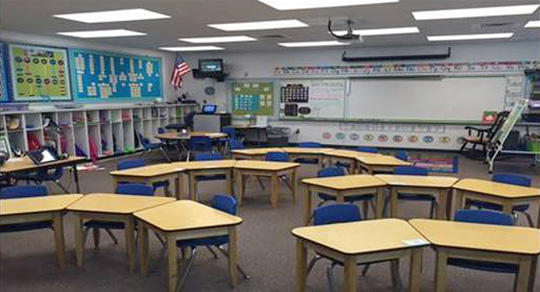
Santa Rosa Correctional Institution’s cabinetry program provided 36 desks to Jay Elementary School to use in a first and fifth grade classroom for the school’s Science Technology Art Engineering Mathematics program. SRCI Warden James Coker, along with SRCI staff, delivered the desks late last week.
“The Florida Department of Corrections is proud to play an active role in the communities surrounding our institutions. Through re-entry initiatives such as the cabinetry program, Florida’s inmates have an opportunity to gain the skills and resources necessary for successful re-integration into our communities,” Florida Department of Corrections Secretary Julie Jones said.
Pictured: Desks constructed by inmates in the cabinetry program at Santa Rosa Correctional Institution in place at Jay Elementary School. Photo for NorthEscambia.com, click to enlarge.
Gulf Power Customers To See Rate Decrease Next Year
September 2, 2015
Beginning in January, Gulf Power customers will see a 2.7 percent decrease in their electricity bills if approved by the Florida Public Service Commission.
 The residential bill for 1,000-kilowatt hours of electricity will drop $3.71 to $135.58. This decrease is due mostly to continued lower prices in natural gas and coal used to generate electricity.
“We’ve worked very hard to manage our fuel mix to provide affordable, reliable electric service for our customers,” said Jeff Rogers, Gulf Power manager of external communication. “In the end it means lower electricity bills and that’s great news for Gulf Power customers.”
Each January the Florida Public Service Commission adjusts Gulf Power’s prices to reflect cost changes in fuel, environmental compliance and energy conservation programs.
Volleyball: Neal Tops NHS, Jay Over Central
September 2, 2015
 W.S. Neal defeated Northview, and Jay defeated Central in high school volleyball action Tuesday.
At Northview
W.S. Neal JV def. Northview 2-1
17-25, 25-23, 5-15
W.S. Neal Varsity def. Northview 3-2
25-21, 24-26, 18-25, 25-23, 11-15
Northview will host Baker on Thursday.
At Jay
Jay def. Central 3-1
25-16, 18-25, 25-22, 25-23
Jay will ravel to Laurel Hill on Thursday.
File photo.
Fishing Rodeo To Benefit Backpack Project
September 2, 2015
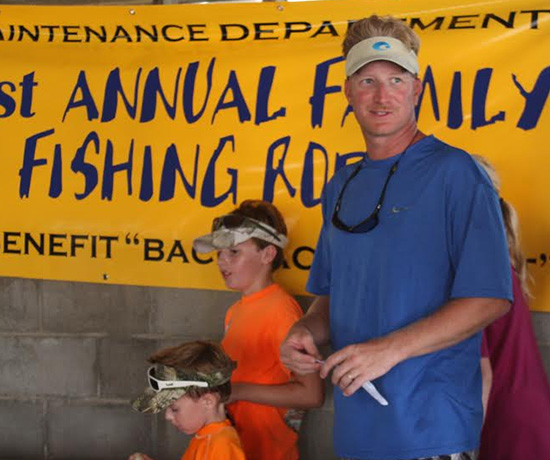
The Escambia County School District’s 2015 Family Fishing Rodeo will be held at the Grand Lagoon Golf Club September 4-6.. This is the ECSD’s Maintenance Department’s third annual rodeo held to help raise funds so they can help local children with a Friday afternoon backpack project.
Maintenance epartment organizers are excited to be able to help local children again this year with the support of their sponsors and the many people they hope will come out to fish and compete in the rodeo.
“Three years ago we started this event to do everything we could to help Escambia County children who need a little help to make sure they have something to eat over the weekends, “ Scott Stillman, one of the event organizers explained. “Last year we were able to send home healthy, easy to prepare snacks with 155 kids at 4 schools. Our goal this year is to serve more children and to work closely with the schools to ensure we are helping the children who need this service the most.”
Interested fishermen of all ages are encouraged to sign up to compete for prizes while helping kids. The Open Division fishermen will compete for first, second and third place in 15 salt water categories and 3 fresh water categories. Prizes are $50.00 for third place, $100.00 for second place, and $150.00 for first.
Winners in the junior division categories will win trophies for first, second and third place AND all first place winners will have a chance to win a bike! Their age group will also compete in15 salt water categories and 3 fresh water categories.
Participation starts with a Captain’s Meeting and light dinner on Friday, September 4 at 6:30 p.m.. Fishing begins at midnight and continues through Saturday and Sunday. On Sunday, during weigh-ins, there will be a fish fry, a silent auction and a drawing off opportunity.
“For $2.25 we can send a child home with snack foods to help them get through the weekend,” Stillman explained. “We look for food items that are healthy, balanced and most importantly, easy for a child to open or prepare without needing to turn on a stove or use any kitchen implements they might not be old enough to use yet.”
Tickets for adults planning to fish are $15 for the Open Division and only $1.00 for the Junior division (ages under ten). Ticket price includes a hot dog dinner sponsored by Sonny’s at the Captain’s meeting and a meal at the fish fry on Sunday.
Those wishing to join in for the Sunday fish fry may do so for $5.00 for adults and $1.00 for kids under 10. There will also be a Silent Auction for items like a vacation, a Yeti cooler, original artwork and more.
Fishermen — Tickets are available at :
Dizzy Lizzy’s Bait and Tackle, 2801 Cervantes Ave.
Outcast Bait and Tackle, 3520 Barrancas Ave.
Gulf Breeze Bait and Tackle, 825 Gulf Breeze Pkwy.
Tight Lines Bait and Tackle, 711 N. Pace Blvd.
Goin’ Fishin’. 10870 Lillian Hwy.
Gray’sTackle and Guide Services, 13019 Sorrento Rd.
For more information, contact the ECSD Maintenance department at (850) 469-5585.
Wahaoos Start Final Series Atop Division
September 2, 2015
The Pensacola Blue Wahoos lost the rubber match Tuesday to the Jackson Generals but it didn’t matter because the Mississippi Braves did the same against the Biloxi Shuckers.
That means that with its final home stand starting Monday against its rival Mobile BayBears, Pensacola remains a half game ahead of Mississippi and controls its own destiny – the chance to become the first Cincinnati Reds Double-A team to make the playoffs since Chattanooga in 2006.
 Despite scoring five runs in the second inning, including a two-run homer by Blue Wahoos shortstop Alex Blandino, Pensacola lost the five-game series to Jackson, 3-2, with an 8-7 loss at The Ballpark in Jackson.
Pensacola finished 7-8 overall against Jackson this season, despite the Generals owning last place in the Southern League North Division in both halves with a 50-82 overall record.
Pensacola and Mississippi are battling for the South Division postseason spot. The Blue Wahoos are 36-29 in the second half of the Southern League season. However, it remains a half game ahead of Mississippi, which lost to Biloxi, 5-4, Tuesday to fall to 35-29.
Jackson scored two runs in the first when first baseman Jody Lara doubled to drive in a run and catcher Tyler Marlette singled to score another run.
However, that’s when Pensacola had a five-run inning in the second to go ahead, 5-2. Designated hitter Juan Duran started the inning with a leadoff single, followed by a single by first baseman Seth Mejias-Brean and then catcher Kyle Skipworth doubled them both in on a double to left field that knotted the score, 2-2. Blue Wahoos second baseman Ray Chang then doubled to score Skipworth for a 3-2 lead. That’s when Blandino crushed a one-out, two-run homer to centerfield and Pensacola went ahead, 5-2.
Jackson, trailing, 5-3, came back with its own five-run inning in the fourth inning to go ahead, 8-5. The big hit in the inning for the Braves was Jabari Henry’s triple that drove in two runs.
Pensacola scored a run in the fifth when Mejias-Brean singled in Phillip Ervin and another in the seventh when the Blue Wahoos loaded the bases and right fielder Jesse Winker scored from third on a walk to Chang. However, 8-7 was the closest the Blue Wahoos could get against Jackson.
One Critically Injured In Crash Near State Line
September 2, 2015
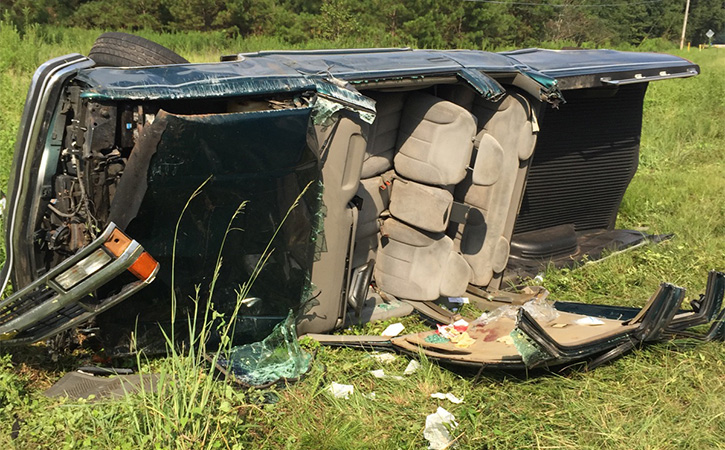
One person was critically in a crash outside Flomaton near the Alabama/Florida state line Tuesday afternoon.
 First responders used the Jaws of Life to extricate the driver from the single vehicle crash on Old Atmore Road, about a mile west of Gandy Lane. The driver was transported by ambulance to the McDavid Station of Escambia Fire Rescue and airlifted to Sacred Heart Hospital.
The crash remains under investigation by Alabama State Troopers; further details have not been released.
The Flomaton Fire Department, Century Station of Escambia Fire Rescue, Atmore Ambulance and the Escambia County (AL) Sheriff’s Office also responded to the crash.
Submitted photos by Jay Jackson for NorthEscambia.com, click to enlarge.

Highway 29 Armed Robbery Suspect Found Passed Out In Lawn Chair
September 1, 2015
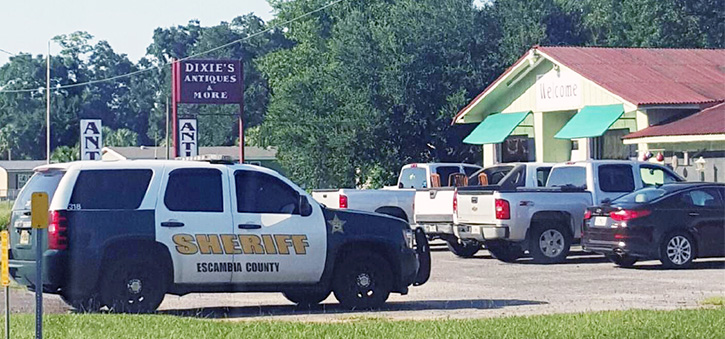
An Escambia County man was arrested Monday for the armed robbery of a Highway 29 antiques store after deputies found him passed out in a lawn chair with the loot.
 William George Kunkel, 60, was charged Monday with aggravated assault, display of weapon during the commission of a felony, petit theft and robbery for the incident last Friday afternoon.
The Escambia County Sheriff’s Office said a white male, later identified as Kunkel, entered Dixie’s Antiques and Collectibles armed with a handgun. After robbing the store of money and silver coins, Kunkel allegedly took an employee’s car keys with the intention of stealing her car.
The victim convinced him to allow her to give him a ride instead, and she drove Kunkel to the Circle K at Highway 29 and Kingsfield Road, according to investigators. Deputies were unable to locate him Friday afternoon.
Monday, deputies responded to Pauline Street in Cantonment where they found Kunkel unconscious in a lawn chair. They reported finding methamphetamine and drug paraphernalia in his possession along with the silver coins taken during the antique store robbery. For Monday’s incident, Kunkel was charged with possession of methamphetamine and possession of drug paraphernalia.
At the time of his arrest, Kunkel had an outstanding warrant for violation of probation in a 1984 robbery case. He remains in the Escambia County Jail without bond.
Editor’s note: This story was updated at 1:30 p.m., Sept. 1 after the ECSO confirmed that Mr. Kunkel was located on Pauline Street in Cantonment, not Paulding Avenue.
Escambia Teen Claims $3 Million Lottery Prize
September 1, 2015
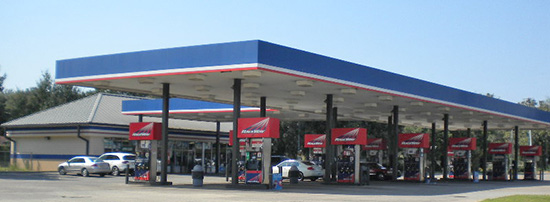
The Florida Lottery announced Monday that Tyler Stone, 19, of Pensacola, claimed a $3 million top prize in the $600 million GOLD RUSH Scratch-Off game at Florida Lottery headquarters in Tallahassee. He chose to receive his winnings as a one-time, lump-sum payment of $2,228,340. Stone purchased his winning ticket from Raceway, located at 7271 Pensacola Boulevard, just south of I-10.
The $20 Scratch-Off game, $600,000,000 GOLD RUSH launched in September 2014. The overall odds of winning are 1 in 2.95.
Northview To Host Mini-Majorette Clinic
September 1, 2015

The Northview High School Majorettes will host a Mini-Majorette Clinic on September 8, 9 and 10 from 4-5 p.m. each day.
The clinic will teach students baton tricks, skills and a baton routine they will perform during a pregame show on September 11. The clinic is open to any student between age five and eighth grade. Students should bring their own baton, or one will be provided.
The cost is $25 per child. This includes the clinic, a t-shirt, admission to the September 11 Northview Chiefs home game and a performance before kickoff.
To reserve a spot in the click, parents should call (850) 623-4399 with the twirler’s name a t-shirt size by Friday, September 4 (please leave a message if no answer). All money is due by the first practice on September 8.