

Pawnbroker Arrested For Dealing In Stolen Property
August 11, 2015
A Niceville pawnbroker was arrested in Escambia County following an investigation by multiple law enforcement agencies.
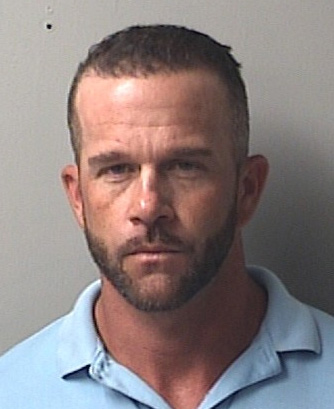 Florida Commissioner of Agriculture Adam H. Putnam announced Monday that pawnbroker Bryan Kirk, 36, was arrested for dealing in stolen gold and jewelry, a second degree felony. The department’s Office of Agricultural Law Enforcement, the Florida Department of Law Enforcement, the Escambia County Sheriff’s Office, and the State Bureau of Investigation in Alabama conducted a month-long investigation into allegations that Kirk knowingly purchased and sold stolen gold and jewelry through a gold refinery. Approximately $10,000 worth of gold was seized at the time of Kirk’s arrest.
“I thank all of our partnering law enforcement agencies for their collaboration on this investigation involving stolen gold and jewelry,” stated Commissioner of Agriculture Adam H. Putnam.
“I am proud of this cooperative, multi-agency effort and the actions on the part of Escambia County Sheriff’s Property Crimes investigators which led to this arrest,” stated Escambia County Sheriff David Morgan.
The Office of Agricultural Law Enforcement, an office within the Florida Department of Agriculture and Consumer Services, protects Florida’s agriculture and consumers through professional law enforcement in support of all the regulatory aspects of the department
Wahoos Drop To B’ham
August 11, 2015
One of the areas that Pensacola Blue Wahoos manager Pat Kelly wanted to see improve in the second half was the team’s bullpen.
The Blue Wahoos used three relievers Monday, who allowed one run on seven hits and one walk over 6.1 innings and struck out four.
Despite the solid performances by Jacob Johnson, Joel Bender and Kyle McMyne in relief of starter Cody Reed, Pensacola dropped its second straight game to Southern League North Division leaders the Birmingham Barons, 7-2, in front of 4,136 at Pensacola Bayfront Stadium.
 However, the Blue Wahoos remained tied for second place with the Mississippi Braves in the second half in the Southern League South Division at 25-19 (50-62).
The bullpen got its opportunity to show its stuff when Pensacola left-hander Cody Reed was chased after 2.2 innings. Reed came over in the Johnny Cueto trade July 26 with the Kansas City Royals and was making a much-anticipated Double-A start at home.
Kelly said the relievers kept Pensacola in the game. The Barons had the bases loaded in the second and seventh innings and runners at first and third in the third inning but couldn’t get a run across the plate.
“They did a great job,” Kelly said. “We had a couple of opportunities and they kept us in the game.”
Reed entered the game 2-0 in two starts on the road with a 0.60 ERA, giving up one run in 15 innings. The Southern League pitcher of the week, though, promptly faced nine batters and gave up five runs in the first inning to Birmingham. However, in the second inning he struck out the top of the Barons’ order.
But when the struggling Reed walked in a run in the third inning, he was pulled. His line was: 2.2 innings, six earned runs, three hits, five walks and three strikeouts.
Kelly said he liked that Reed kept his composure despite being in trouble most of his start.
“His command was a little off,” Kelly said. “He really competes. He came out in the second inning and struck out the side. I liked what I saw. He didn’t give in.”
Meanwhile, Birmingham starter Frankie Montas shut down the Blue Wahoos lineup over the first five innings. He allowed four hits one run and zero earned runs walked two and struck out five. Rated the No. 89 prospect in Major League Baseball, Montas improved to 4-3 and lowered his ERA to 2.59.
The Pensacola Blue Wahoos play the final game of a five-game series at 6:35 p.m. Tuesday against the Chicago White Sox Double-A affiliate the Birmingham Barons.
No Serious Injuries In Cottage Hill Crash
August 10, 2015
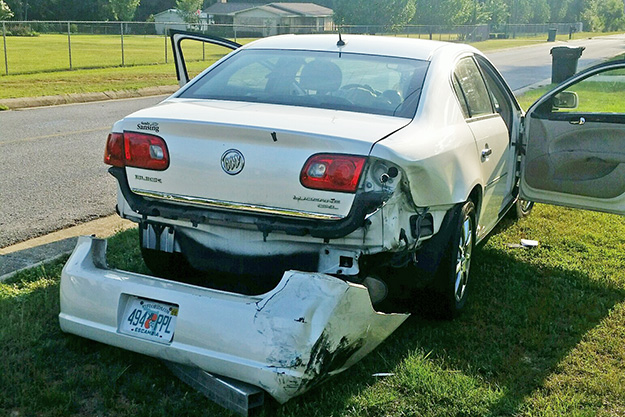
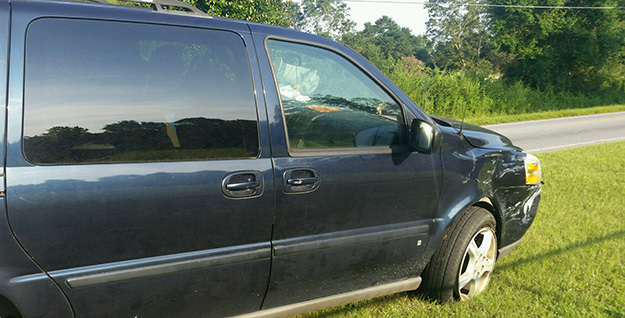
There were no serious injuries in a two vehicle crash Monday afternoon near Cottage Hill. The accident was reported about 5:40 p.m. on Highway 95A near Stacey Road. The accident is under investigation by the Florida Highway Patrol. NorthEscambia.com photos by Kristi Price, click to enlarge.
Police: Man Found Dead At Confederate Monument Was Murdered
August 10, 2015
A man found dead on a park bench in Pensacola was murdered, according to the Pensacola Police Department.
 The body of 50-year old Larson Ogwin Brake, Jr. was found by a passerby about 9:30 Sunday morning at the foot of the Confederate monument in Lee Square, in the 600 block of North Palafox Street near the First Baptist Church of Pensacola.
PPD Detectives have determined that the homeless man’s death was not racially motivated, according to Capt. Paul Kelly.
Kelly said said detectives are pursuing leads in the case. An autopsy will be done to determine cause of death.
Anyone having information on the incident is asked to contact the Pensacola Police Department at (850) 435-1900 or Crime Stoppers at (850) 433-STOP.
Walnut Hill Man Charged With Underwear Theft
August 10, 2015
A Walnut Hill man with a history of shoplifting arrests is facing a felony charge for allegedly stealing a 32-gallon tote full of underwear.
 Michael Alan Flowers, 52, was charged with petit theft from a merchant third or subsequent offense.
He allegedly filled a 32-gallon plastic tote with 11 packs of socks, four packs of underwear and six packs of undershirts at Walmart on Creighton Road. Loss prevention employees watched he Flowers pushed a shopping cart with the tote out of the store, according to a Pensacola Police Department arrest report.
According to the report, Flowers has at least eight previous shoplifting convictions on his record. Flowers remained in the Escambia County Jail Monday with bond set at $1,000.
Get Your Child Vaccinated: Same Day Appointments In Ensley, Molino
August 10, 2015
The Florida Department of Health in Escambia County is making it a bit easier for parents to get their children vaccinated for school with same-day appointments available each day this week in Molino and Ensley. Children entering Escambia County schools next month must be up-to-date on their vaccinations, including a tetanus, diphtheria, and pertussis (Tdap) vaccine for all students entering the seventh grade.
 Children may be vaccinated at their physician’s office or at FDOH-Escambia’s Immunizations Clinic. Parents of children needing school-required vaccinations are being urged not to wait in order to ensure that their child may be vaccinated prior to the start of school.
FDOH-Escambia’s Immunizations Clinic is open Monday through Friday at 1295 Fairfield Drive in Pensacola. Parents wishing to have their child vaccinated at FDOH-Escambia’s Immunizations Clinic need to make an appointment. Appointments fill quickly and are same-day only.
Special clinics are also being held in additional locations, as follows:
Northside (Ensley) 8390 North Palafox
- same-day appointments, Monday through Friday from August 10 through August 21, 2015.
Molino 3470 Highway 29 North
- same-day appointments, Monday through Friday from August 10 through August 21, 2015.
To schedule an appointment, call (850) 595-6554.
Construction Delays: Nine Mile Road; I-10 At Scenic Highway
August 10, 2015

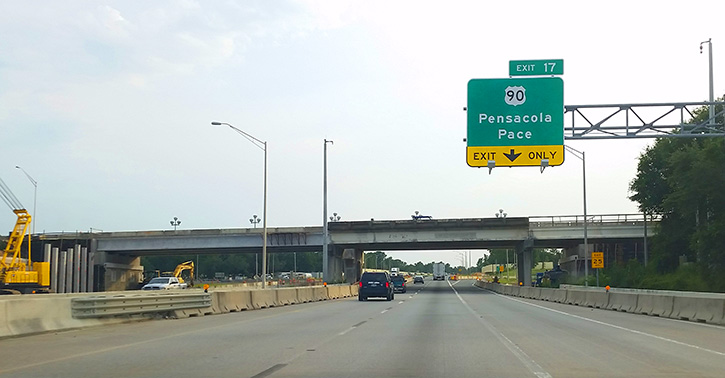
Drivers can expect delays this week on Nine Mile Road at Heritage Oaks Drive and on I-10 at the Scenic Highway overpass.
Nine Mile Road westbound traffic west of I-10, near Heritage Oaks Drive (at Navy Federal), will encounter lane closures from 8 p.m. to 6 a.m. Monday, Aug. 10 through Friday, Aug. 14 as crews perform construction activities.
Demolition and reconstruction of the existing Scenic Highway overpass on I-10 continues. The work will require the following traffic impacts beginning Monday, Aug. 10:
- I-10 eastbound traffic near U.S. 90 (Scenic Highway) will be shifted to the south near the overpass until the end of 2015. The speed limit will be reduced to 60 mph.
- I-10 westbound near the Scenic Highway overpass and the Scenic Highway on-ramp to I-10 will be intermittently closed from 8 p.m. to 6:30 a.m. each night for approximately three weeks.
Drivers are reminded by the Florida Department of Transportation to use caution, especially at night, when traveling through a work zone. All planned construction activities are weather dependent and may be re-scheduled in the event of inclement weather.
Pictured I-10 at Scenic Highway eastbound (top) and westbound (below). NorthEscambia.com photos, click to enlarge.
Learn More About Master Gardeners During Open House
August 10, 2015
Escambia County Extension Service will host a special Volunteer Open House on Wednesday, August 19 for those interested in learning about the University of Florida’s Master Gardener Volunteer Program. The open house will be held at the Escambia County Extension Service offices at 3740 Stefani Road in Cantonment.
Attendees will learn about training sessions, volunteer activities and the role of master gardeners in our community. Applications will also be available for the 2015-16 fall/winter master gardener training program. During the open house, a program overview and tour of the projects at the Extension Service office will be given by the agent and master gardeners at 9 a.m. and lasting approximately 30 minutes.
For information, contact Beth Bolles with Escambia County Extension at (850) 475-5230 or at bbolles@ufl.edu.
Barons Beat The Wahoos
August 10, 2015
Pensacola Blue Wahoos pitcher Tim Adleman showed no signs of the right elbow injury that placed him on the disabled list July 30 and caused him to miss one start.
The lanky right-hander struck out a season-high eight Birmingham Barons batters over six innings of work on national television. He now has 95 strikeouts in 119.2 innings of work for the Blue Wahoos.
However, the Barons scored the winning run in the eighth to pull out a 3-2 victory in front of 5,038 fans, which was the 21st sellout this season at Pensacola Bayfront Stadium.
The Wahoos Life was televised across the nation by the American Sports Network. Sunday’s game was one of 15 Minor League Baseball games that will air live this year and was the only Southern League game selected. Fans and staff pinked out the stadium with thousands wearing pink Blue Wahoos t-shirts provided by Visit Florida.
Pensacola fell to 25-18 (50-61) in the second half of the South Division in the Southern League. Birmingham remains on top of the North at 27-15 (60-51).
The Barons went ahead, 3-2, in the eighth inning when third baseman Nicky Delmonico doubled and scored on first baseman Danny Hayes’ smash to Blue Wahoos second baseman Alex Blandino, who was playing in on the grass. Blandino’s throw to home was wide left.
Pensacola manager Pat Kelly said the Blue Wahoos were hurt when Birmingham snuffed out the club’s bases-loaded, no-out rally in the fifth inning. Birmingham reliever Tim Crabbe, who improved to 2-1, struck out Pensacola right fielder Juan Duran and then got third baseman Seth Mejias-Brean to ground out into a double play to end the scoring threat.
“We had a good opportunity with the bases loaded and nobody out,” Kelly said. “That was very huge.”
Pensacola had tied the game, 2-2, in the fourth inning when DH Sean Buckley lined a single to center to score Mejias-Brean, who led off the inning with a double past the third baseman. Buckley then scored on a chopper by shortstop Zach Vincej down the third base line.
Meanwhile, Adleman had a strong start and could have gotten out of the two-run first inning but Blandino missed the tag on Birmingham speedster Tim Anderson in a run down. Anderson then ended up scoring on Hayes’ ground ball single to right field. Second baseman Joey DeMichele lined a single to left that scored center fielder Jacob May and Birmingham led, 2-0.
Birmingham is now 46-5 when they score first.
In his six innings, Adleman allowed six hits and a walk and lowered his ERA to 2.41.
“I thought Timmy pitched great,” Kelly said. “If we don’t screw up that run down in the first inning, they don’t score off him. They have a tough lineup.”
But Birmingham’s Anderson, the Chicago White Sox top prospect, went 3-4 with a double and stole his Southern League-leading 45th base in the seventh inning.
The Pensacola Blue Wahoos play the fourth game of a five-game series at 6:35 p.m. Monday against the Chicago White Sox Double-A affiliate the Birmingham Barons.
ECSO Questions Two About Lakeview Murder
August 10, 2015

UPDATE: The Escambia County Sheriff’s Office said both individuals have been located and talked to investigators.
The Escambia County Sheriff’s Office is looking for two people in connection with a Saturday murder.
About 5:45 a.m., deputies found Eugenio Acosta Lopez found inside a home in the 220 block of Lakeview Avenue suffering from multiple gunshot wounds. He was transported to a local hospital where he was pronounced deceased.
Investigators said that they would like to speak with 18-year old D’Erica Keondrasha Goldsmith and 28-year old Aaron Simmons for questioning only. Anyone with information about their whereabouts or the death is asked to call the Escambia County Sheriff’s Office at (850) 436-9620 or Crime Stoppers at (850) 433-STOP.