

Century Decides To Accept Bids For Website, Marketing Services
October 22, 2015
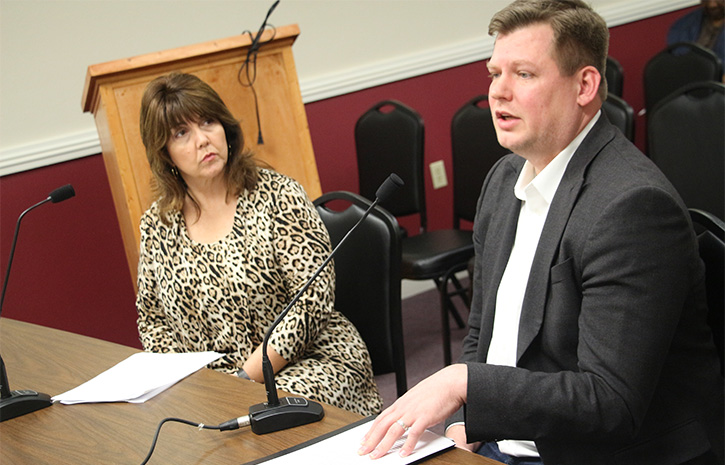
The Town of Century has decided that a maintenance contract for a new website and implementation of other marking plan proposals will be put out for bid after clarifying that the town will be responsible for footing the bill.
Century’s current website was developed by an area marketing firm in 2012 for $5,950, part of a $11,450 package that also included a five year comprehensive marketing strategy.
In 2013, the town was awarded a technical assistance grant from the Florida Department of Economic Opportunity to develop an economic development strategic plan. After hearing proposals from four contenders, the town contracted with the Haas Center (the research and consulting arm of the University of West Florida) to develop the plan at no cost to the town.
The Haas Center’s detailed plan and recommendations included a new website for the town, with suggestions from the Haas Center in late 2014 that the website be created by a volunteer or perhaps UWF marketing interns.
On October 5, Dr. Felicia Morgan from the UWF Marketing Department and Johnathan “Jet” Tisdale of the Pace company White Paper Marketing presented a marketing plan with a one year contract at $1,650 per month cost for website maintenance, an email subscription drive, website and a database management and other marketing resources. Any additional costs, such as advertising purchases, would add to the bottom line.
After questions arose about whether the cost would be the sole responsibility of the town, or if any grants or other funding sources existed, the council tabled any action on accepting the proposal. A question was also raised if the the town should accept bids on the marketing plan.
This week, town officials reported that the UWF Marketing Department had already contracted directly with White Paper Marketing for $8,000 for website and logo design and those items had been accomplished.
Now the town will pay their consultant, Debbie Nickles, to create a request for proposals in order to receive bids to implement the marketing plan, including website maintenance, newsletter production, a recreational guide and formation of a young professional’s group. The town will pay for the services using economic development funds.
A timetable to accept bids has not yet been set.
Pictured top: Dr. Felicia Morgan from the UWF Marketing Department and Johnathan “Jet” Tisdale of the Pace company White Paper Marketing address the Century Town Council on October 5. NorthEscambia.com photo, click to enlarge.
Escambia RESTORE Projects Scored
October 22, 2015
Proposed RESTORE Act projects in Escambia County have been scored and ranked by a consulting firm.
The 124 projects were scored and an estimated costs assigned. The top 10 scoring projects (listed with numerical score and cost) were:
- Restore the City Creek 78.0 $5,760,000
- Eleven Mile Creek Stream Restoration 77.0 $12,929,908
- Navy Blvd Beautification and Navy Point Restoration 76.0 $17,020,000
- Forest Creek Apartment Complex Acquisition/Demolition & Jones Creek Floodplain Restoration Project 74.0 $2,029,200
- Lake Charlene/BridleTrail 73.0 $501,923
- Beach Haven S & NE 72.0 $18,000,000
- Perdido Key Gulf of Mexico Public Access 71.0 $1,648,000
- Perdido Bay Bronson Field Living Shoreline Project 66.0 $840,000
- Jackson’s Lakes Diversion & Wakeboard Park 66.0 $930,000
- Jones Swamp Wetland Preserve Management & Ecosystem Restoration 65.0 $940,000
Five projects specifically benefiting some portion of the North Escambia area (north of Muscogee Road) were submitted. Those projects (listed with rank, numerical score and cost) were:
43. Town of Century Water Quality Improvements 50.0 $486,000
73. Cantonment Community Center 36.0 $2,000,000
89. Lambert Bridge Rd 30.0 $500,000
101. Cottage Hill Water Works Infrastructure Update and System Improvements 27.0 $3,700,000
119. Cantonment Sportsplex 9.0 $50,000
The RESTORE Advisory Committee will next review the projects and Dewberry rankings. The 11-memember committee will submit recommendations to the Escambia County Commission following three November public hearings.
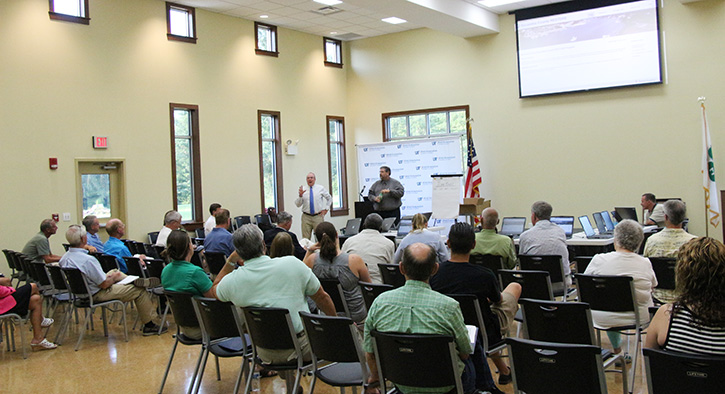
Pictured top: A RESTORE project information meeting held recently in Cantonment. NorthEscambia.com file photo, click to enlarge
Senate President Looks To Target Fantasy Sports Teams
October 22, 2015
Florida Senate President Andy Gardiner is exploring what the state can do to shut down daily fantasy sports, even as federal prosecutors are probing the online industry that has taken the nation by storm and drawn accusations of illegal gambling.
Gardiner has asked his lawyers to look into fantasy sports, in which players pay entry fees to draft “teams” that compete against each other for cash prizes based on the actual performance of players.
The fast-growing daily fantasy sports industry is the focus of probes by prosecutors in New York and Tampa, where the U.S. Attorney’s Office recently subpoenaed the Florida-based Fantasy Sports Trade Association.
People in the industry contend that fantasy sports is not gambling because it involves games of skill, not chance, which are outlawed under most state gambling laws.
But gambling regulators in Nevada last week ordered companies like FanDuel and DraftKings to stop operating in the state after determining that online players’ activity “involves wagering on the collective performance of individuals participating in sporting events.” The decision prompted several online fantasy sports businesses to shut down operations in the state.
“I have asked staff to kind of start the process of researching as much as we possibly can,” Gardiner, R-Orlando, told The News Service of Florida on Wednesday. “I would remind you we ran the Internet cafes out of the state of Florida because they were outlawed and they were bad. You have the Nevada Gaming Commission saying that FanDuel and DraftKings are gaming and gambling. So we have an obligation, if we’re going to be consistent, that we need to look at them, and, if it is gaming, then we need to react to it.”
Two years ago, lawmakers hurriedly passed a law shutting down Internet cafes in response to an investigation into Allied Veterans of the World, a bogus charity accused of running an illegal gambling ring throughout the state.
House Speaker Steve Crisafulli also has directed legal aides to explore the fantasy sports issue.
“It is early in this conversation and there is a lot to learn about the status of this industry under Florida law. We intend to understand that more before any decisions will be made moving forward,” Crisafulli, R-Merritt Island, said in an interview Wednesday.
Brian Ballard, a lobbyist who represents the Fantasy Sports Trade Association, accused Nevada gambling regulators of “a hugely protectionist move” in shutting down the online games and said “it doesn’t make sense” to do the same in Florida.
“You can see pretty clearly they’re trying to protect the casinos and other interests they have,” Ballard said Wednesday. “I don’t think it’s relevant to what goes on in Florida.”
Ballard said that industry operators are amenable to regulations that would protect players, such preventing employees of daily fantasy sports operations like FanDuel from participating.
“I think you’ll see legislation soon that talks about regulation and talks about consumer protections and really enhances the rights of players but also protects them from any problems that would treat them unfairly,” he said. “I’m hopeful that we’ll see a mix of keeping what’s legal, legal, while protecting players’ consumers’ rights first and foremost.”
Amid the growing debate over whether the daily fantasy sports sites are legal or not, the association contributed $70,000 last month to political committees led by Florida lawmakers, according to a state Division of Elections database.
And the association and FanDuel have retained some of the Capitol’s most influential lobbyists, including Ballard, J.M. “Mac” Stipanovich and Marc Reichelderfer.
Congress exempted fantasy sports from a 2006 federal law that banned online gambling, but questions remain about whether the virtual competition violates a nearly century-old Florida statute. Five states — Iowa, Louisiana, Montana, Arizona and Washington — have banned fantasy sports.
Marc Dunbar, a Tallahassee lawyer who specializes in gambling and who teaches the subject at Florida State University’s law school, said the activity is outlawed in Florida.
“The state statute is very clear. It says that you and I cannot wager against each other on a game of skill. Chess, checkers, cards, fantasy sports, horse racing — doesn’t matter. We can’t wager on a contest of skill. Most states don’t have a statute like that,” Dunbar said.
The Florida probe could link a violation of the state law with the federal Illegal Gambling Business Act, which Dunbar said could be a “death sentence” for the industry in the state. Under the federal law, any violation of a state gambling law could open up businesses to fines, forfeiture, or even prison, Dunbar said.
“The statute hits everybody. It hits investors. It hits everybody who aids and abets. It’s a very, very, broad, intentionally broad, and aggressive statute. It was passed … as part of the Kennedy-era, anti-mob laws to deal with organized crime,” Dunbar said.
Dunbar said he recently handled a case in the federal Middle District of Florida, where the fantasy sports investigation is centered, involving an online lottery.
“They don’t play around. You’re talking about forfeiture of everything related to the enterprise,” he said.
by Dara Kam, The News Service of Florida
Poarch Creek Operated Slot Machine Case Heads To State Supreme Court
October 22, 2015
A closely watched case about whether a North Florida racetrack operated by the Poarch Creek Indians of Atmore can offer slot machines could be decided by the Florida Supreme Court, after a filing this week.
 A three-judge panel of the 1st District Court of Appeal ruled Oct. 2 that Gretna Racing in Gadsden County cannot have slot machines without legislative approval, a legal victory for Attorney General Pam Bondi and Gov. Rick Scott’s administration.
The case has implications for several counties — Gadsden, Brevard, Lee, Hamilton, Palm Beach, and Washington — where voters have approved referendums authorizing slots at local pari-mutuels.
In the Oct. 2 ruling, the appeals court asked the Florida Supreme Court to weigh in on the issue of whether pari-mutuels can have slot machines if local voters approve, or if the games require the express say-so of the Legislature.
The case was sent to the Supreme Court on Tuesday, according to online dockets.
by The News Service of Florida
A Month Of Temporary Lane Closures Begin Today On Highway 168
October 22, 2015

There will be temporary lane closures beginning today and continuing for about a month on Highway 168 near Bratt. The temporary single lane closures will take place on the Hobbs Branch Bridge on Highway 168 between Pine Barren Road and Wiggins Road from today through Wednesday, November 25. The lane closures will be between the hours of 8 a.m. and 4 p.m. Pictured: The Hobbs Branch Bridge on Highway 168 Wednesday afternoon. NorthEscambia.com photo, click to enlarge.
Florida Lawmakers Look To Help Firefighters With Cancer
October 22, 2015
House and Senate members Wednesday detailed legislation aimed at creating a presumption that firefighters diagnosed with cancer got the disease while in the line of duty.
 The bills filed by Sen. Jack Latvala, R-Clearwater, Rep. Heather Fitzenhagen, R-Fort Myers, and Rep. Frank Artiles, R-Miami, would change a burden of proof about what caused the cancer. The burden would go from the employee to the employer.
Fitzenhagen said science has proven firefighters are at a much greater risk for cancer than the general population, given their hazardous work environment.
“In the gear that firefighters wear, there are a lot of places where carcinogens can get in touch with the skin, even though they are wearing protective gear,” she said. “Typically, those places are around the neck.”
Supporters say the legislation is necessary because employees are now being let go after using up sick leave and short-term disability. The bills will be considered during the 2016 legislative session, which starts in January.
NorthEscambia.com photo.
Molino Firefighters Battle Debris Pile Fire
October 22, 2015

The Molino Station of Escambia Fire Rescue responded to a reported brush fire Wednesday night on Highway 95 in Molino. Firefighters arrived to find a debris pile burning behind the old Lee Boats building just south of Highland Baptist Church. Reader submitted photos for NorthEscambia.com, click to enlarge.

House Fire Claims Life Of Escambia County Woman
October 21, 2015
An Escambia County woman was killed in a house fire this morning.
 The fire in the 5800 block of Bilek Drive, off West Michagan Avenue claimed the life of 66-year old Barbara A. Smith.
The fire was reported shortly before 8 a.m. by a neighbor who reported seeing smoke coming from the residence. Escambia County Fire Rescue was able to quickly extinguish the fire, which was confined primarily to one bedroom in the house. The State Fire Marshal has been called in to investigate.
Wanted Century Man Arrested For Attempted Murder For Bar Shooting
October 21, 2015
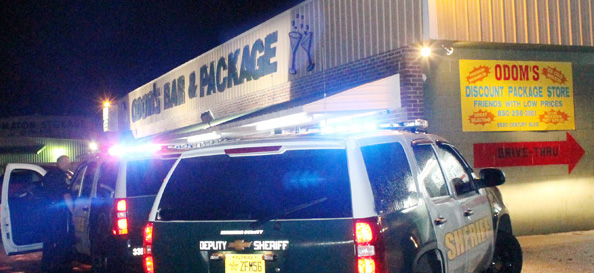
A Century man is now behind bars for an October 11 shooting at a Century bar.
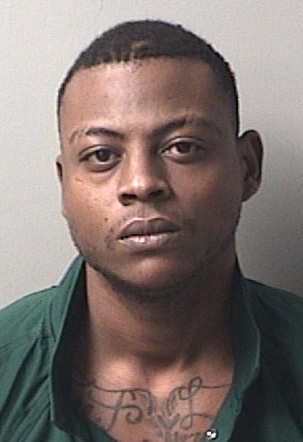 Kendrick Jamar Washington, 27, is being held in the Escambia County Jail on charges of attempted murder and possession of a weapon by a convicted felon. His bond was set at $750,000.
The Escambia County Sheriff’s Office and Escambia County EMS were called to Odom’s Bar on North Century Boulevard at the Alabama state line about 11:50 p.m. on October 11.
According to witnesses, Washington shot David Darnell McCall following an argument over Washington’s girlfriend. McCall was transported first by private vehicle to D.W. McMillan Hospital in Brewton and later to Baptist Hospital in Pensacola where he was treated for a gunshot wound to his head.
Investigators quickly developed Washington as a suspect and a search had been underway for him.
NorthEscambia.com file photo, click to enlarge.
Man Charged With Assault Outside Nightclub
October 21, 2015
A Walnut Hill man is facing multiple felony charges after an alleged assaulting two people — including a security guard — with a Crown Royal bottle outside a Pensacola nightclub.
 Thomas Zachariah Mason, 26, was charged with two counts of aggravated battery using a deadly weapon, disorderly intoxication and possession of cocaine. He was released from the Escambia County Jail on a $36,000 bond.
The altercation occurred in a Seville Quarter parking lot, with a Seville Quarter security guard and another individual telling Pensacola Police that Mason struck them in the head with a liquor bottle.
When police officers searched Mason, they reported finding two small plastics bag containing a white powdery substance that tested positive for cocaine.