
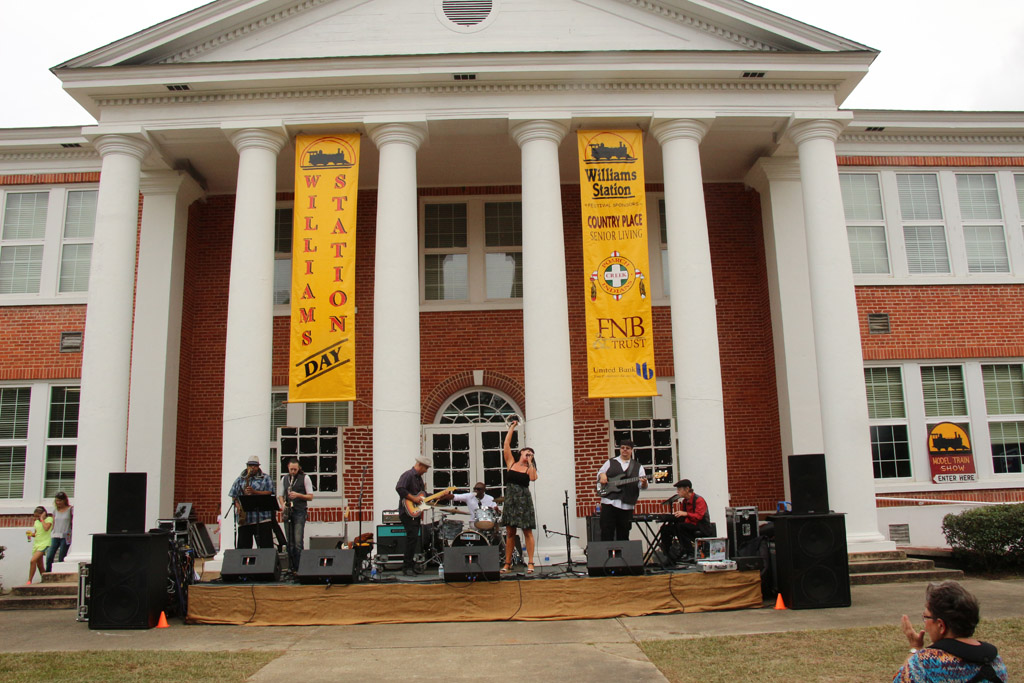
Photo Gallery: Hundreds Attend Williams Station Day
October 25, 2015

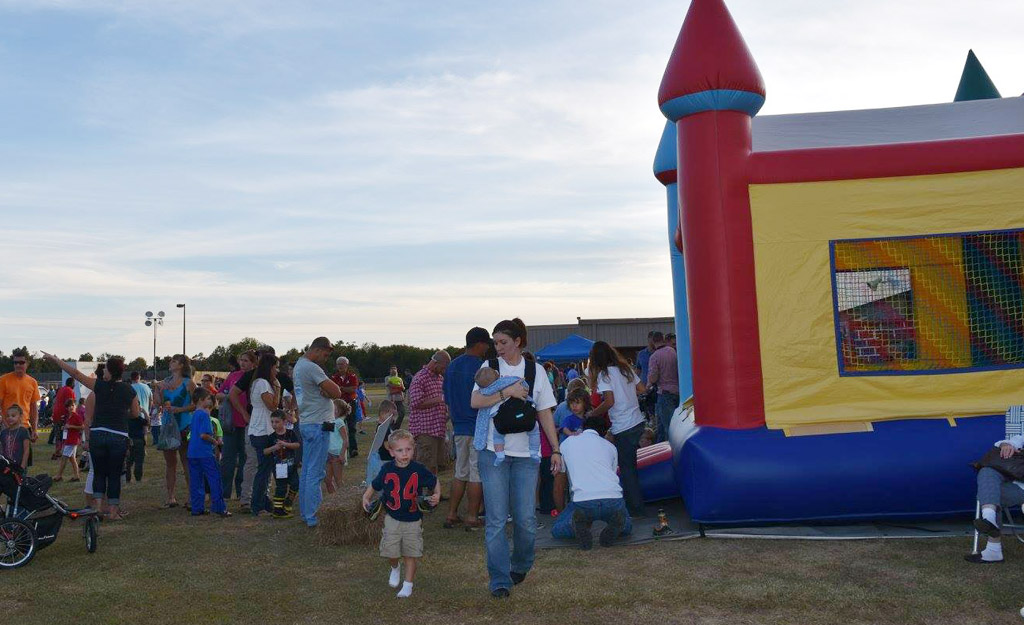
Hundreds attended the annual Williams Station Day in Atmore Saturday.
 Williams Station Day takes its name from Atmore’s early history when in 1866 the community was a supply stop along the Mobile and Great Northern railroad. Festival-goers were entertained by a wide variety of musical acts, and a wide variety of arts and crafts were also available. An opening ceremony that featured a pink balloon release to recognize Breast Cancer Awareness month in October.
For a photo gallery, click here.
NorthEscambia.com photos, click to enlarge.

Florida Gov’t Weekly Roundup: Ink And Mumbo Jumbo
October 25, 2015
Nobody thought the Legislature’s latest attempt at crafting new Senate districts was going to be easy.
But this week’s intraparty Republican fighting at the opening of a special session — in a year that sadly might best be characterized as the “Session That Never Ended” — foreshadowed what could be another grim two weeks of drawing maps, chased by an equally foreboding regular session in a few months.
 The contentiousness wasn’t restricted to the Legislature’s domain, however, even if another painful controversy did wind up inside the Capitol.
Florida A&M University President Elmira Mangum narrowly survived an attempted ouster that sharply divided alumni and students and wound up with the exit instead of the chairman of the college’s board of trustees.
Meanwhile, Capitol denizens might want to think again if they are considering a pool on the outcome of what could turn into another doomed redistricting attempt.
Senate President Andy Gardiner put the daily fantasy sports industry on notice this week that he’s definitely not “all in” on the online activity that’s swept the nation.
YEP. REDISTRICTING
The Senate Reapportionment Committee on Friday voted along party lines to approve a Senate map proposed by Chairman Bill Galvano, R-Bradenton. But there was grumbling from even some Republicans that the map might be flawed, most notably from Senate budget chief Tom Lee, a former Senate president. Before voting for the proposal, Lee called his chamber’s six proposals “defiant” and accused GOP leaders of being “unnecessarily dug in” on plans that would ultimately fail to garner support from the Florida Supreme Court.
Friday’s vote capped off a week of acrimony over the Senate plans.
Plunging into the debate Monday, the heretofore sharply divided House and Senate quickly hit on an area of disagreement about whether all 40 Senate seats will be up for re-election next year.
The split on the opening day of the session was an ominous sign about the three-week gathering aimed at producing a map that follows the voter-approved “Fair Districts” redistricting standards.
The new districts are needed after lawmakers signed a consent agreement with voting-rights organizations that conceded the current Senate map, drawn in 2012, would likely be found unconstitutional under the anti-gerrymandering amendments.
The concession followed court challenges to legislative and congressional maps that showed Republican political consultants used straw men to funnel maps into the redistricting process following the once-a-decade U.S. Census.
Late Wednesday, Galvano released his proposed draft of the map, as Republican discontent with a plan for whether and when members would have to run for re-election continued to brew.
The complicated dance during a special redistricting session highlighted the delicacy of the issue among lawmakers most affected by the process. It also underscored fissures within the GOP majority over a lingering battle for the Senate presidency following the 2016 elections, which continued to play out before the reapportionment committee gave approval to the plan Friday.
Meanwhile, senators clashed over efforts to come up with a random way of numbering districts without intending to favor incumbents. Because odd-numbered districts vote in presidential years, where larger turnout favors Democrats, and even-numbered districts vote in midterms with smaller and more conservative electorates, the number of a district can affect how safe a seat is for a particular party.
The Senate used a process Thursday overseen by the state auditor general to randomly select which seats would receive even numbers and which ones would get odd numbers. But Democrats complained during the unusual gathering — which was not formally a committee meeting — that it was too early to number the districts because it could provide lawmakers with an idea of when they would have to run.
The numbers would also decide which senators would be able to hold office for four years and who would have to run again in two years if every member of the chamber has to run for re-election in 2016 — though that hasn’t been decided.
Members of the GOP caucus, stung by repeated legal losses in redistricting cases over more than three years, said Wednesday that the Senate should consider asking the Florida Supreme Court or the Leon County judge currently overseeing the settlement what to do about the numbers.
“I just don’t find any consistency in this,” Lee said. “I think I’ve lost confidence.”
FAMU RATTLED
In a dramatic three-hour meeting Thursday, members of Florida A&M’s Board of Trustees made failed attempts to fire President Elmira Mangum and sparked students to march to Gov. Rick Scott’s office in support of the embattled president.
Mangum narrowly survived two votes that could have led to her ouster, the latest episode in a series of public conflicts between the president and several trustees.
Discussion during the meeting centered on payments for renovations to the president’s residence and four employee bonuses, which trustees Chairman Rufus Montgomery described as “irregularities and improprieties” that had not been approved by the board.
“It’s a violation of state law,” said Montgomery, who wound up resigning Friday.
Within hours of Thursday’s votes, FAMU students marched to the Capitol, demanding justice for Mangum. About 150 congregated outside the governor’s office, where their representatives met with members of Scott’s staff.
“It was an act of malfeasance on the part of the FAMU Board of Trustees,” said student body Vice President Justin Bruno, a junior from Orlando. “There needs to be some grounds for their insinuations. …They need to have grounds. They need to have evidence.”
SENATE PRESIDENT NO FAN OF FANTASY SPORTS
Gardiner, R-Orlando, said Wednesday he is exploring what the state can do to shut down daily fantasy sports, even as federal prosecutors are probing the online industry that has drawn accusations of illegal gambling.
Gardiner has asked his lawyers to look into the games, in which players pay entry fees to draft “teams” that compete against each other for cash prizes based on the actual performance of players.
The fast-growing daily fantasy sports industry is the focus of probes by prosecutors in New York and Tampa, where the U.S. Attorney’s Office recently subpoenaed the Florida-based Fantasy Sports Trade Association.
People in the industry contend that fantasy sports is not gambling because it involves games of skill, not chance, which are outlawed under most state gambling laws.
But gambling regulators in Nevada last week ordered companies like FanDuel and DraftKings to stop operating in the state after determining that online players’ activity “involves wagering on the collective performance of individuals participating in sporting events.” The decision prompted several online fantasy sports businesses to shut down operations in the state.
“I have asked staff to kind of start the process of researching as much as we possibly can,” Gardiner, R-Orlando, told The News Service of Florida on Wednesday. “I would remind you we ran the Internet cafes out of the state of Florida because they were outlawed and they were bad. You have the Nevada Gaming Commission saying that FanDuel and DraftKings are gaming and gambling. So we have an obligation, if we’re going to be consistent, that we need to look at them, and, if it is gaming, then we need to react to it.”
STORY OF THE WEEK: A Senate committee advanced a map of the chamber’s districts, but not without plenty of bipartisan angst.
QUOTE OF THE WEEK: “But all I get is squid ink when I talk to these people — a bunch of mumbo jumbo that, ‘well, this is my theory.’ Well, show me in some court precedent. Show me in some legal proceeding. Stop telling me what you want the answer to be and tell me what you think it is based upon the law. And I get nothing.” — Sen. Tom Lee, R-Brandon, expressing frustration as lawmakers tried to redraw Senate districts.
by Dara Kam, The News Service of Florida
Panel Calls For More Online Access To Justice System
October 25, 2015
Trying to make legal services more accessible in Florida, recommendations released recently call for a “robust” website outlining local, state and national legal resources that low- and moderate-income residents could access at home or on an increased number of public computers.
The Florida Commission on Access to Civil Justice, created by Supreme Court Chief Justice Jorge Labarga, also called in an interim report for additional people providing pro bono services and to draw leftover money from class-action lawsuits to help fund legal-aid efforts.
Labarga, in a letter to the other justices that was included with the report, called the recommendations a “solid foundation” to expand access to civil justice.
“I am confident the commission is on the right path to create meaningful access to civil justice for all Floridians,” Labarga wrote.
The report notes there is “anecdotal evidence” that a growing number of Floridians are heading to court without legal representation, mostly involving family-court cases.
“The commission was also informed that mortgage foreclosure cases and landlord-tenant cases more frequently involve self-represented litigants,” the report said. “In addition, it is reported that the courts are seeing more cases in which at the beginning of the case one or both parties are represented, but that one or both of the parties do not retain their legal representation through final disposition of the case.”
The committee, created in November 2014 to make civil-justice services more accessible to needy Floridians, will meet again Feb. 12 in Tallahassee.
Craig Waters, a spokesman for the Supreme Court, said no action is expected to be taken on the recommendations until the committee’s final report is submitted. The final report is due June 30.
The interim report notes that local legal-aid agencies, long a safety net for many low-income residents, serve about 20 percent of the needs of indigent civil litigants.
“This does not even take into account the many working-class Floridians who earn too much to qualify for legal aid, but not enough to afford to hire an attorney,” the report said. “This is the Florida civil justice gap.”
Among the recommendations is the creation of an “easy-to-use” Florida Civil Legal Resources Access Website, integrating existing systems from the courts, pro bono community and legal services programs.
To make the site more accessible, the committee recommended the continued development of the Statewide Gateway Portal, which would make more public computers available at libraries, shopping malls or courthouses as a type of legal “triage” for those needing help with divorces, foreclosures or child support.
The committee also recommended that a rule be revised so that more individuals, such as judges who have retired to Florida, could provide pro bono services.
To help fund legal aid, the commission proposed using residual money that remains after class-action lawsuits.
“Eighteen states have court rules or statutes providing for legal aid organizations to receive class action residuals,” the report said.
by Jim Turner, The News Service of Florida
FDOT State Line Landscaping Project Complete On Highway 97
October 24, 2015
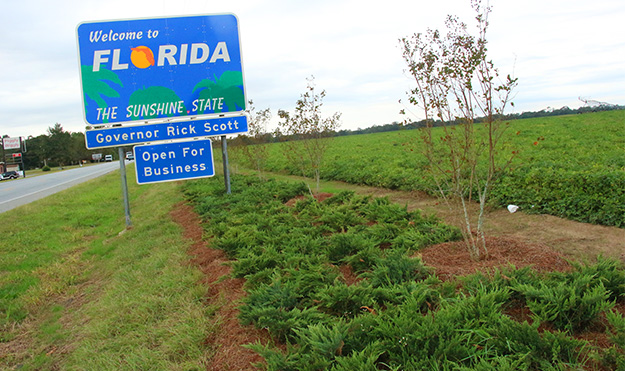
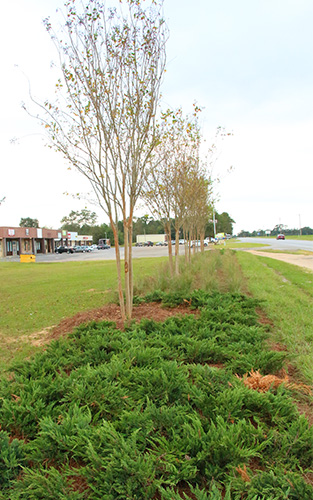
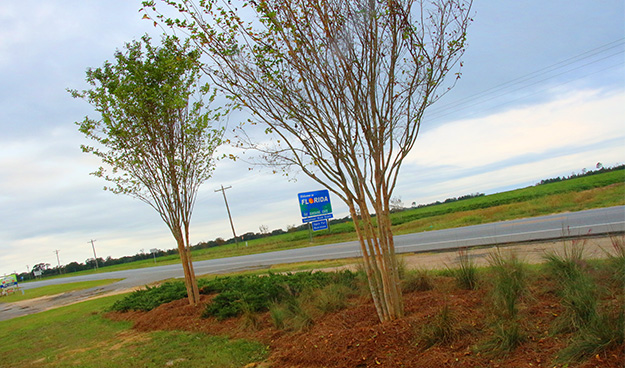
Drivers entering Florida on Highway 97 in Davisville now have a little bit better view.
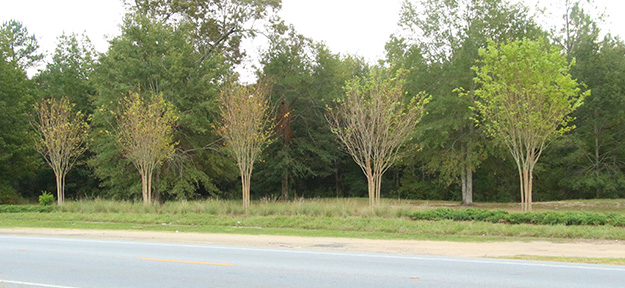
Work was recently completed on a a gateway landscaping project on Highway 97 at the Alabama/Florida state line. The $163,900 project includes state line landscaping on both Highway 97 and on Highway 90 by contractor Pine Grove Nursery and Landscaping. The landscaping is funded by the Florida Department of Transportation.
Pictured: New landscaping in place along Highway 97 at the state line in Davisville. NorthEscambia.com photos, click to enlarge.
Escambia Official Named New City Administrator
October 24, 2015
An Escambia County official has been named the assistant city administrator for the City of Pensacola.

Mayor Ashton Hayward announced that Keith Wilkins had accepted his employment offer.
Wilkins is currently the Escambia County Director of Natural Resources Management and most recently was the Director of the Community and Environment Department where he worked to revitalize six Community Redevelopment Districts and the Enterprise Zone in Escambia County. He also directed environmental recovery from the BP Oil Spill securing over $40M in economic and environmental restoration funds for Escambia County, the City of Pensacola and the greater Pensacola/Perdido Bay area.
Wilkins is expected to start his new job at the end of November.
Friday Night Finals
October 24, 2015

Here are final scores from games across the North Escambia area Friday night.
For live scoring from select games beginning at 7 p.m., click here to like our Facebook page, or click here to follow @northescambia on Twitter.
- Walton 49, Northview 7
- Tate 35, Choctaw 28
- Jay 45, Rocky Bayou Christian 27
- West Florida 21, Arnold 18
- PHS 20, Mosley 7
- Washington 35, Catholic 7
- Niceville 42, Pine Forest 14
- OPEN: Escambia, Gulf Breeze, Milton, Navarre, Pace
- Flomaton 13, Sweet Water 7
- Escambia Academy 41, t Glenwood (Phenix City) 0
- T.R. Miller 42, Excel 6
- W.S. Neal 56, Southside 42
- Monroe County 14, Escambia County 6
NorthEscambia.com photo.
Hundreds Enjoy Annual Molino Park Elementary Fall Carnival (With Gallery)
October 24, 2015
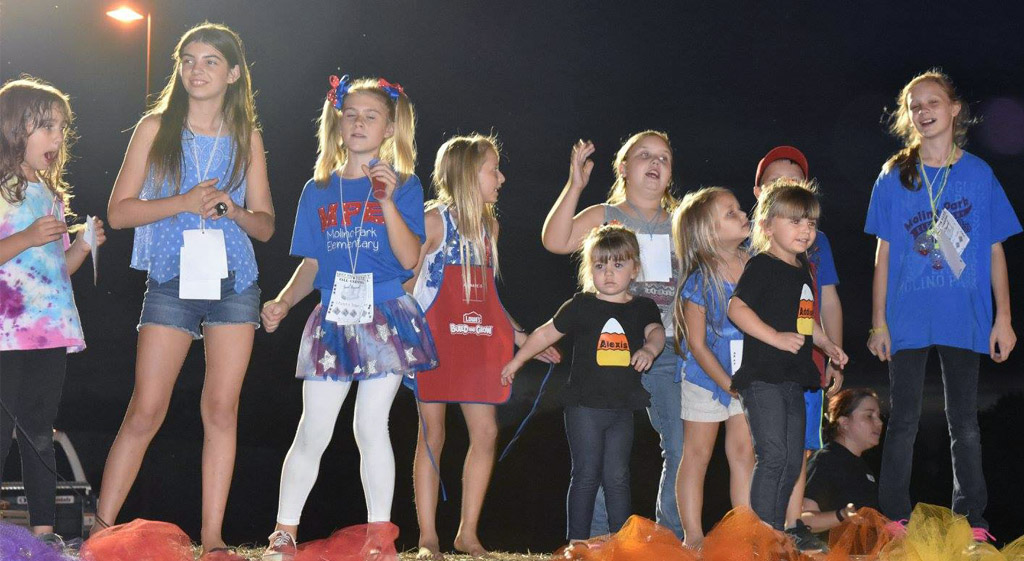
Hundreds attended the annual Molino Park Elementary School Fall Carnival Friday evening at the school. The event featured games, food, entertainment and lots of great family fun.
For a photo gallery, click here.
NorthEscambia.com photos by Kristi Price, click to enlarge.

Walton Tops Northview
October 24, 2015

The 1A Northview Chiefs lost a road game Friday night to the unbeaten 4A Walton Braves.
The Braves jumped out to an early 7-0 lead over the Chiefs in the first quarter and rolled on to a 43-0 lead by the half. Walton added another touchdown in the third to make it 49-0.
Northview’s Luke Ward scored on an 18-yard touchdown run with six second on the clock to prevent a shutout. With a good Seth Killam kick, Northview went down 49-7.
The Chiefs will be back home next Friday night in Tommy Weaver Memorial Stadium in Bratt as they host the Baker Gators for the District 1-1A title.
Pictured top: Walton scores against the Chiefs. Pictured below: Hunter Edwards (#4) intercepts a pass. Images courtesy WEAR 3 for NorthEscambia.com, click to enlarge.

Fall Gardening: Time To Tackle The Chaos And Prepare For Winter
October 24, 2015
by Santa Rosa Extension
Towards the end of the growing season, many landscapes are overgrown and untidy. Allowing plants to tower over others can mean the demise of the smaller plant. It’s time to tackle the chaos and prepare for winter.
First and foremost, take a good look at your landscape. If a plant has outgrown its allotted space, perhaps it was the wrong plant in the wrong place. Avoid these types of problems by becoming familiar with a plant before you plant it. While you can try to control the size of the plant to fit its space, it will never be a happy, stress-free plant.
Information on the mature size of a plant and their site requirements can be found in several Extension publications. The Florida-Friendly Landscaping™ (FFL) “Guide to Plant Selection and Landscape Design” is intended for homeowners who want to take the next step and design their own Florida-Friendly landscapes. Included in this book is information on landscape design strategies, a landscape planning worksheet, and the FFL plant list containing many of the UF/IFAS recommended Florida-Friendly plants for each region of the state. It’s available online by clicking here.
Even in a well-planned landscape, though, the gardener’s controlling influence is important. The most useful methods for dealing with especially enthusiastic plants are removing, pruning, supporting or creating barriers to prevent unwanted spreading.
Removing and replacing
Autumn is an excellent time to establish shrubs and trees. Consider removing oversized plants and replacing them with carefully chosen ones that will happily fit within your defined boundaries. Plants that are installed late in the year will develop strong roots systems before hot weather arrives next spring.
Pruning
 When it comes to pruning, it’s good to remember that it’s better to prune lightly occasionally as needed, than to allow a plant to get way overgrown and then cut it back severely. A few prudent snips here and there will help keep more vigorous plants from overwhelming their less vigorous neighbors.
Emphasis must be placed on the word “light.” It’s important to remember that late summer pruning may stimulate an additional flush of shoot growth on species which flush several times each year. These shoots could be damaged by an early frost.
Supporting
Another technique to improve the look of an overgrown landscape is staking. Staking or otherwise supporting plants keeps them from leaning or falling over onto others. It helps the tall plant look better, and obviously benefits the plants that would otherwise be covered. The stake should be tall enough to do the job but not be too obvious.
Stakes may simply be placed in such a way that the plant is supported by leaning up against it. On the other hand, it may be necessary to tie the plant to the stake. Typically, twine or plastic ties are used for this purpose. Make sure you tie the lower and upper parts of the plant to the stake to provide proper support.
Other techniques for support include tying twine in a loop all the way around a plant, using a wire cage – this is best done early in the growing season to allow the plant to grow into it – tying a plant to a sturdier, nearby plant or using one of the commercially available support systems.
Barriers
Many perennials and tropical plants spread by underground structures called rhizomes. If growth shows up outside the area you’ve allotted for that plant, promptly dig out the unwanted growth and replant it somewhere else.
Barriers extending at least one foot down into the ground around aggressive spreaders can sometimes help keep them under control. Digging, dividing and replanting clumps of aggressive spreaders annually is another good way to make sure they stay put.
Overgrown shrubs can cause a house to lose its curb appeal. Proper, regular control measures should be employed to keep a landscape looking its best.
Tate Tops Choctaw
October 24, 2015
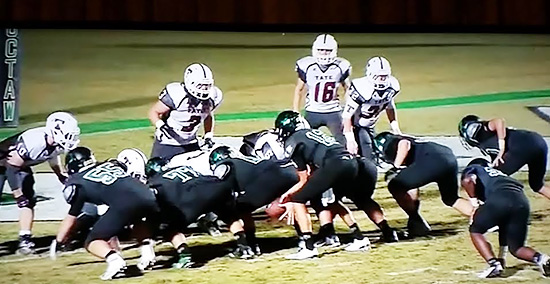
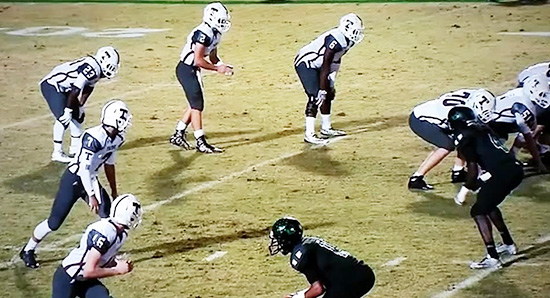
The Tate Aggies earned another win on the road Friday night as they beat the Indians of Choctaw 35-28.
Tate was first on the scoreboard with a 27-yard pass from Sawyer Smith to Cole Crews, and Choctaw answered with a 3-yard run to tie it up 7-7.
Smith scored again with a 5-yard run for a 13-7 Tate advantage. Alondo Thompkins expanded Tate’s lead to 19-7 with a 76-yard touchdown run. With another touchdown, the Aggies were up 26-7 at the half.
In the second half Choctaw scored on a 1-yard run, followed by a 33-yard Tate field goal from Evan Legassey, and another 1-yard run from the Indians to put the scoreboard at 29-21.
Thompkins added a 18-yard touchdown run and Choctaw scored once more for the 35-28 final.
Next Friday night, the Tate Aggies will host the Pine Forest Eagle for the District 1-6A championship. Both teams are 2-0 in the district.
Pictured: Tate at Choctaw. Images courtesy WEAR 3 for NorthEscambia.com, click to enlarge.