

Escambia County Set To Pick New Jail Location Thursday
November 10, 2015
The Escambia County Commission will hold a special meeting at 5 p.m. Thursday to approve one of three proposed sites for the construction of a new Escambia County Jail.
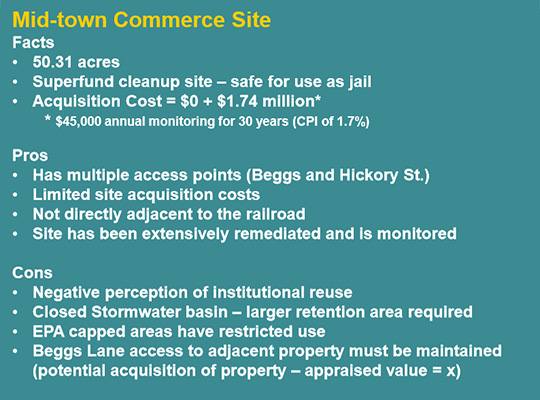
One year ago, the county was looking at 1o possible sites for the new jail, including locations in Molino and Cantonment. Now, the three sites under consideration are the Palafox and Airport Boulevard site, the Brent Lane site, and the Mid-town Commerce site. Facts, along with pros and cons, for each site, are as follows, according to a county consultant:


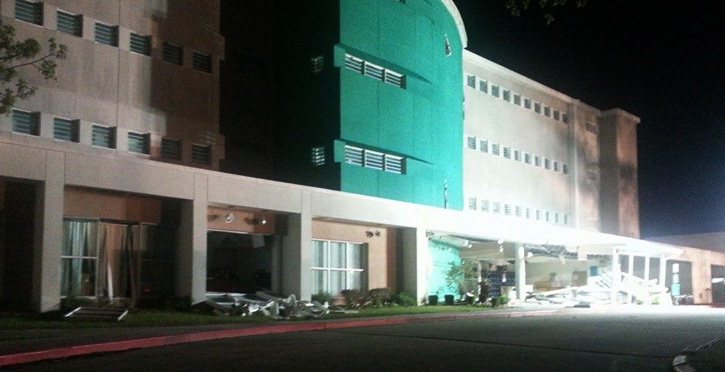
Pictured: The Central Booking and Detention Center was damaged beyond repair during a natural gas explosion following flooding on April 30. 2014. NorthEscambia.com file photo, click to enlarge.
Safety, Pedestrian Improvements Begin Along 15-Miles Of Highway 29
November 9, 2015
Construction activities on a multiple safety improvements will begin this week on a 15-mile stretch of Highway 29 in North Escambia.
The $893,000 project consists of guardrail upgrades, sidewalk replacement, pedestrian railing, ditch pavement, and signalized pedestrian crossings at various locations from north of Champion Drive to the Alabama state line in Century.
Most of the pedestrian improvements will be in the town limits of Century.
“Pedestrian feature improvements from the Alabama/Florida state line through Century would include new sidewalk construction in areas where there is currently no sidewalk, removal and replacement of damaged sidewalk, installation of handrails, curb ramps for ADA, detectable warning ramps and replacement of pedestrian signal crossings,” said Tanya Branton of the Florida Department of Transportation.
Work is expected to be completed within 100 working days. All planned construction activities are weather dependent and may be re-scheduled in the event of inclement weather.
Low bidder on the project was Gulf Beach Construction Company at $893,144.74. Other bidders were Hale Contracting, Inc. at $991,819.86 and Bun Construction Company at $1,054,456.36.
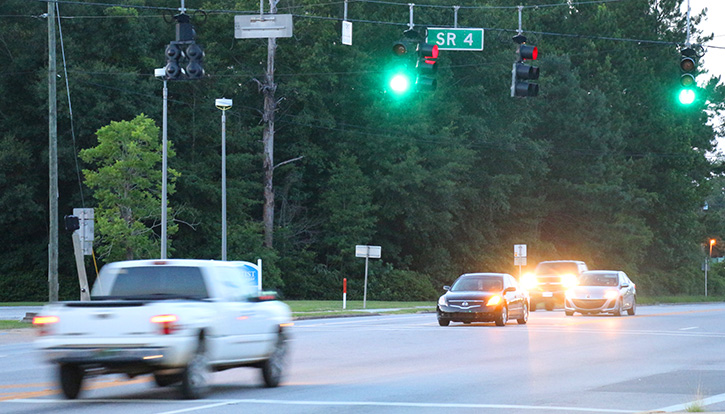
Pictured: The intersection of Highway 29 and Highway 4 in Century. NorthEscambia.com photo, click to enlarge.
FWC Law Enforcement Report
November 9, 2015
The Florida FWC Division of Law Enforcement reported the following activity during the weekly period ending November 5 in Escambia and Santa Rosa counties.
SANTA ROSA COUNTY
 K-9 Officer Pineda and Officer Clark were patrolling the Yellow River WMA looking for hunters hunting over illegally baited areas. They came to an area where a vehicle had been parked recently and deployed K-9 Kane to ascertain where the occupants of the vehicle may have gone. K-9 Kane tracked from where the vehicle was parked to two freshly baited areas. One of the spots had a ground blind and the other had a climbing tree stand on it. The officers checked the area several times and two days later observed a vehicle parked in the area. They split up and located two subjects, as well as, a third baited site. The subjects stated that they distributed the bait (corn) out onto the WMA a few days before. They also stated that they had been knowingly hunting over bait at these three spots several times since the opening of archery. Both subjects were charged with hunting/ distributing bait on a WMA.
While on patrol, Officer Miller heard the Florida Highway Patrol was in pursuit of a truck pulling a stolen trailer nearby. Officer Miller noticed on CAD that the suspect vehicle was headed towards the Yellow River WMA and went to assist in the event the suspects fled into the woods. The suspect driver wrecked and then stole a truck and traveled southbound on Highway 87 hitting patrol vehicles on the way. The Santa Rosa Sheriff’s Office pursued the suspect south into Navarre and Officer Miller followed behind in case the suspect went into Eglin Air Force Base. Shortly after the Sheriff’s Office ended the pursuit, the suspect rolled the stolen truck and Officer Miller then responded to assist with securing the suspect until he could be removed from the truck. Once the suspect was secured, Officer Miller met Officer Barnard to assist Santa Rosa Crime Unit with locating weapons that were thrown from the suspect vehicle during pursuit. Officers recovered three handguns and a magazine to a fourth weapon. The following morning, Officer Miller and K-9 Officer Pineda returned to the scene to assist again in the search for the fourth weapon. The officers and K-9 located another handgun magazine and other items dropped by the fleeing suspect.
ESCAMBIA COUNTY
No information submitted this week for Escambia County.
This report represents some events the FWC handled over the past week; however, it does not include all actions taken by the Division of Law Enforcement. Information provided by FWC.
New Tate High Winter Guard Named
November 9, 2015
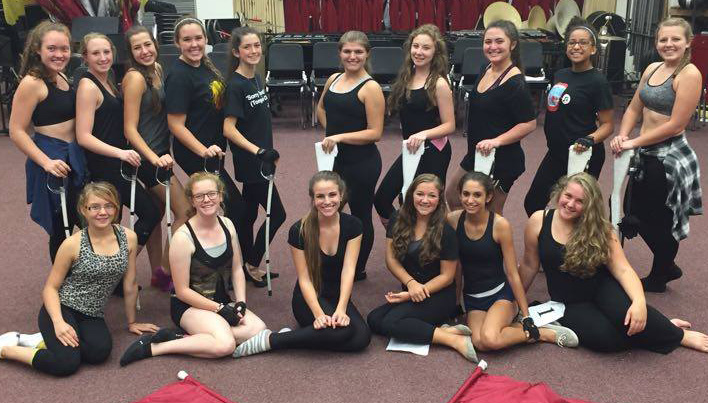
New members of the Tate High School Winter Guard have been named.
They are:
Chaparrals
Rifles: Caroline Bruns, Michaela Overby, Brenn Repine, Celina Dyess, Savannah Vonstein
Sabres: Megan Leonard, Katy Luebke, Kelsey Strength, Breanna Langley, Madison Philley
Flag line: Carly Lawrence, Jojo Osteen, Katy Dupre, Kendall Lombardo, Elizabeth Durazo, Makayla Tainter
Cadets
Weapons: Kenzi Ricardy, Virginia Vaughan, Raegan Tainter, Cordia Shaw, Olivia Starnes
Flag line: Jazmyn Quarls Julia Jimenez Sarah Stephens Julie Stanton Kirsten Carter
The Chaparrals are the oldest competitive scholastic winter guard in the nation and former world champions. They begin competing in late January.
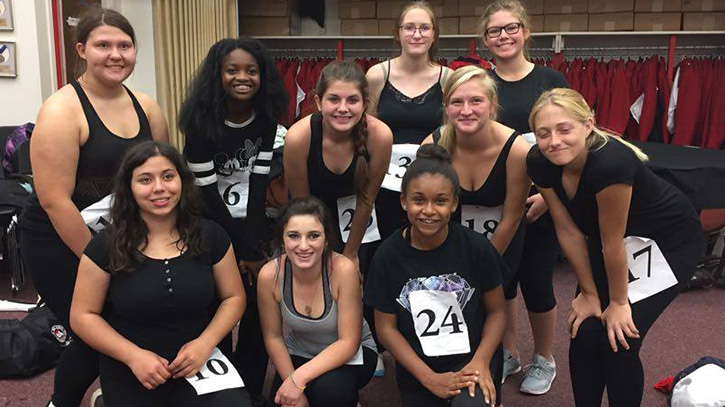
Pictured top: The Tate High School Chaparrals. Pictured below: Cadets. Submitted photos for NorthEscambia.com, click to enlarge.
Driver Slides Into Muscogee Road Ditch
November 9, 2015
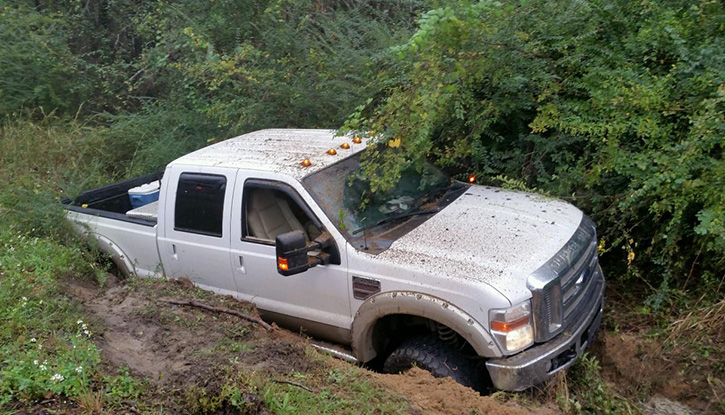
There were no serious injuries when the driver of a Ford pickup lost control, ran off the roadway and crashed into a ditch on Muscogee Road in Cantonment Sunday afternoon. NorthEscambia.com photo by Kristi Price, click to enlarge.
House Members Back Policies For Using Body Cameras
November 9, 2015
Amid a national focus on shootings by police officers, a House panel recently unanimously approved a bill that could lead to law-enforcement agencies setting policies for the use of body cameras.
The House Criminal Justice Subcommittee approved the measure (HB 93), filed by Rep. Shevrin Jones, D-West Park, and Rep. Alan Williams, D-Tallahassee. A Senate version (SB 418) is sponsored by Sen. Chris Smith, D-Ft. Lauderdale.
The proposal would only apply to police agencies that decide to use body cameras. Under it, those agencies would be required to establish policies and procedures addressing the proper use, maintenance and storage of body cameras and recorded data. State law currently doesn’t require such policies.
“There is a lot of pointing fingers that is taking place, whether it’s from the citizen’s standpoint or from the police aspect,” Jones said. “What this (bill) does is bring it into perspective, knowing who is to blame, who do we hold accountable?”
Much of the finger-pointing extends back to August 2014, when Michael Brown was fatally shot by Ferguson, Mo., police Officer Darren Wilson, touching off riots. That has been followed by a series of other highly publicized deaths nationwide involving black men in police custody.
In Florida, a controversy erupted last month about the death of Corey Jones, a Boynton Beach man who was fatally shot by a Palm Beach Gardens police officer. Jones was a musician whose car broke down on his way home from a gig late at night. The plainclothes officer who approached him wasn’t wearing a body camera.
The death prompted members of Florida’s legislative black caucus to call for an independent review, along with legislation that would include body cameras for law-enforcement officers, dashboard cameras for police vehicles and automatic reviews of all police-related shootings.
The measure that passed will be considered during the 2016 legislative session, which starts in January. A version of the bill was unanimously approved by the House during the 2015 session, but it died without Senate passage at the abrupt end of the session.
HB 93 is supported by the Florida Sheriffs Association, the Florida Police Chiefs Association and the Florida Police Benevolent Association, along with a number of individual agencies.
“When this bill was first introduced, many people were against it, the law enforcement association and many other entities,” Rep. Clovis Watson, D-Alachua, said. “And they worked together.”
One major issue with the use of body cameras has been privacy. For instance, police recordings often occur in private homes or mental-health facilities. Concerns about that issue were eased during the 2015 session with the passage of a bill that makes certain recordings by police body cameras confidential.
“Our Constitution provides us that right to personal privacy,” Rep. Gayle Harrell, R-Stuart, said. “This (HB 93) is a very good bill that allows for that, but also for the appropriate use of body cams, which I think are a good law enforcement tool.”
About one-third of law enforcement agencies currently use body cameras, both nationally and statewide.
“Body cameras are not just for the citizens, but also for the police,” Jones said. “If you look at a lot of the sheriffs, they are in favor of it because it’ll help them come down with citizen complaints, and it’ll help the citizens hold everyone accountable.”
A University of South Florida study released last month found that fewer violent incidents and fewer complaints occur when police wear the cameras. According to the study, roughly one in four officers said wearing a camera affected his or her behavior in the field. More than one-third said wearing cameras had deescalated confrontations with citizens.
“Two out of every three officers who wore a BWC (body-worn camera) reported that they would want to continue wearing one upon study completion,” the study noted.
by Margie Menzel, The News Service of Florida
4-H Teen Leadership Club Begins This Week
November 9, 2015
Escambia County 4-H will hold a teen leadership event beginning Tuesday night.
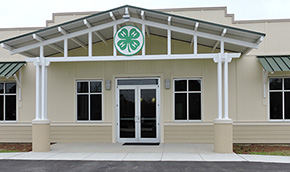 Teens interested in learning more about leadership, or parents that wish to learn more, are invited to the Teen Leadership Club November 10 at 6 p.m. at the Langley Bell 4-H Center.
This is a 4-H special interest club that focuses on developing leadership skills and provides a venue to develop skills using the learn by doing 4-H approach. There will be a field trip, community service project and learn from guest speakers what it means to be a leader. Participants will also practice public speaking and provide information about 4-H Leadership activities throughout the year.
To find out more, please attend the first meeting at the Langley Bell 4-H Center or contact Pam Allen at pha@ufl.edu or 850-475-5230. Parents are welcome to attend with their teen. This club is for current and new 4-Hers.
Fire Destroys Pine Forest Estates Home (With Photo Gallery)
November 8, 2015
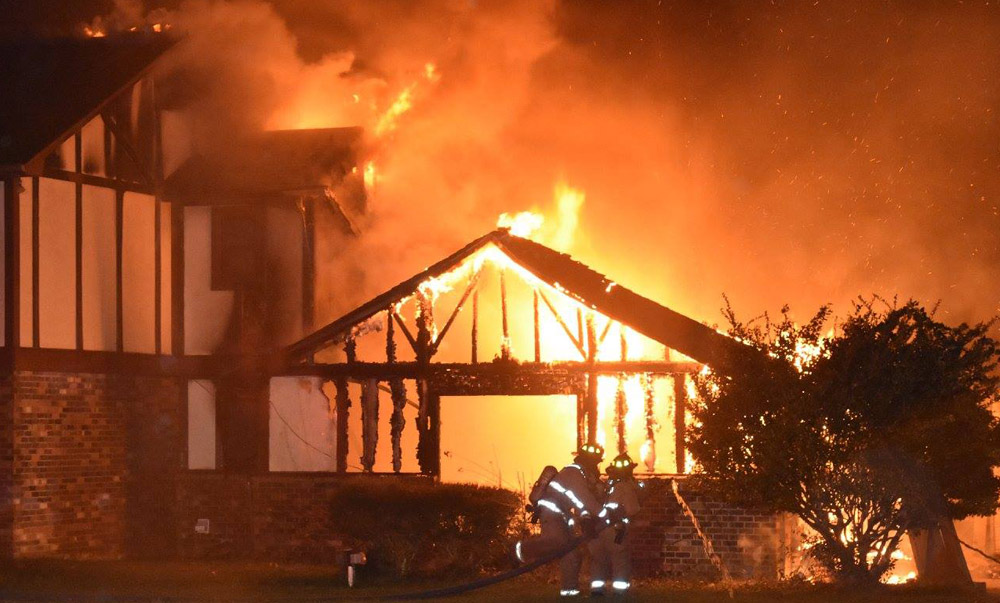
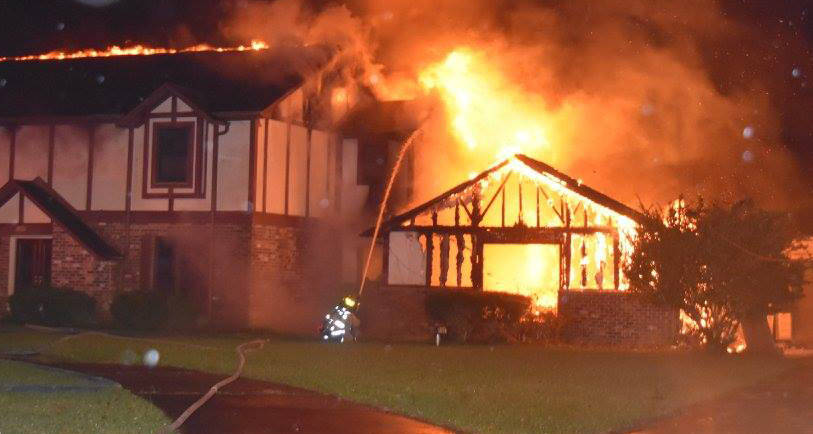
Fire heavily damaged a home in the Pine Forest Estates subdivision off Pine Forest Road in Cantonment Saturday night.
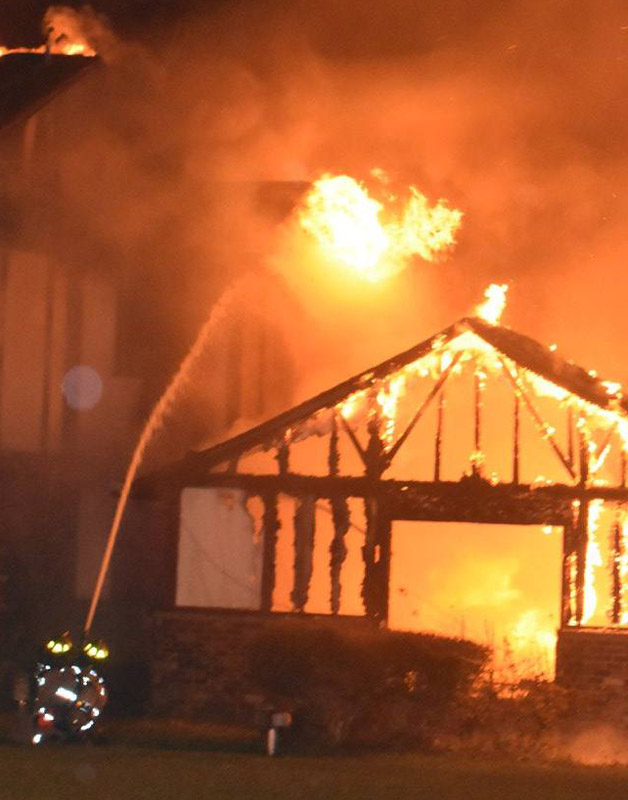 Neighbors called 911 to report that they heard an explosion and then saw flames inside the two-story home on Man-O-War Circle. When firefighters arrived, they found the attached garage involved in flames. The garage was a total loss, but firefighters were able to save the main structure of the house.
There were no injuries reported.
The cause of the fire is under investigation by the Florida State Fire Marshal’s Office.
For a photo gallery, click here.
NorthEscambia.com photos by Kristi Price, click to enlarge.
One Injured When Vehicle Struck By Train In Atmore
November 8, 2015
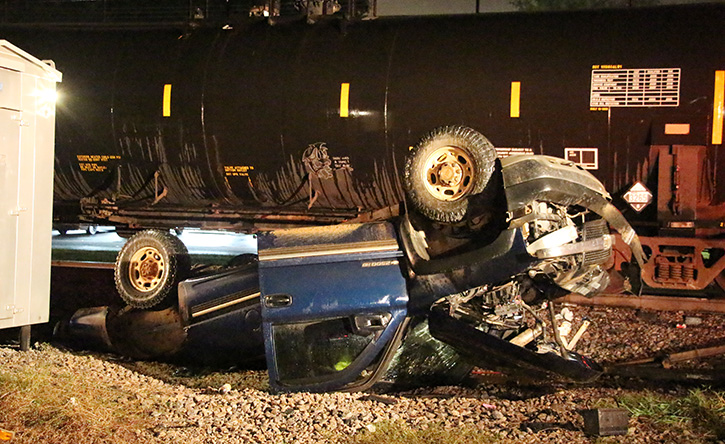
One person was injured when a train slammed into their vehicle early Saturday evening in Atmore.
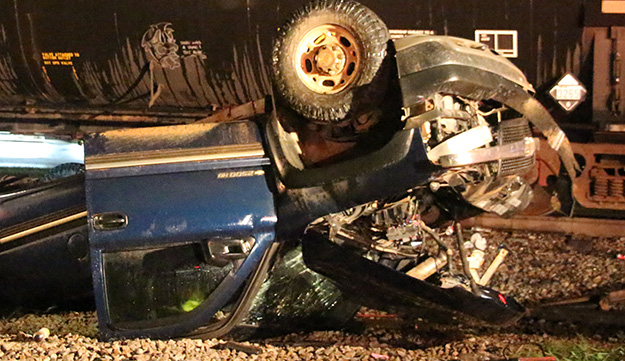
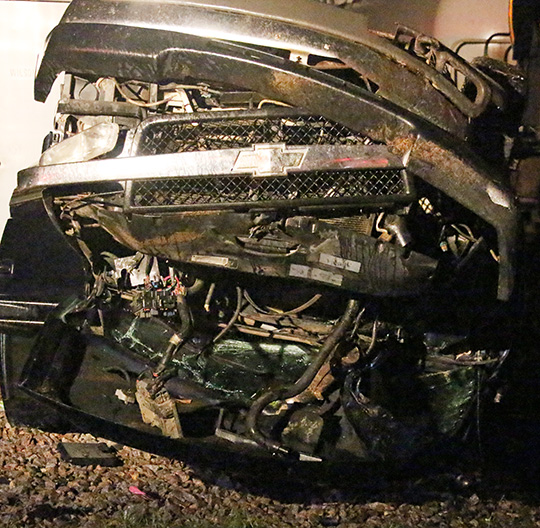 A Chevrolet Silverado pickup truck pulling a small trailer was struck by the eastbound CSX freight train about 5:30 Saturday night at Atmore’s Wilson Avenue crossing. The pickup truck came to rest upside down a short distance from the crossing.
The driver of the truck was transported by ambulance to Atmore Community Hospital with injuries that were not believed to be life threatening. His name has not been released. No one on the train was injured.
The relatively short CSX train with two locomotives came to a stop about a half mile away from the collision. The train blocked the Wilson Avenue, Trammell Street and Main Street crossings as the accident was investigated the train inspected.
Further details have not been released by Atmore Police or CSX.
NorthEscambia.com photos, click to enlarge.

Local Gospel Artist Releases CD, Music Video; Plans Concerts
November 8, 2015
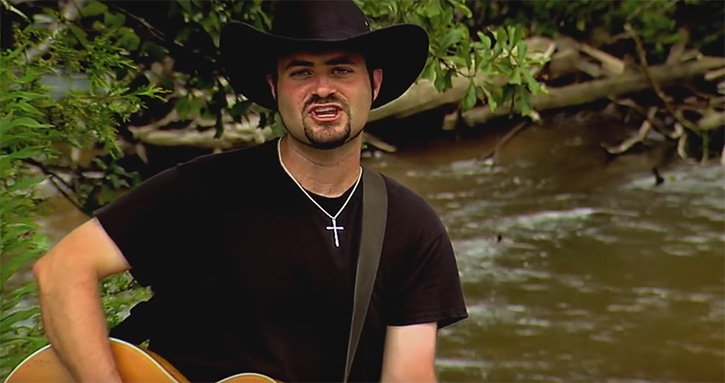
Country gospel artist Caleb Dennis of Davisville has new single, new album and a new music video that was filmed in North Escambia.
His single “Jesus is Always on Time” will be released to radio this month.
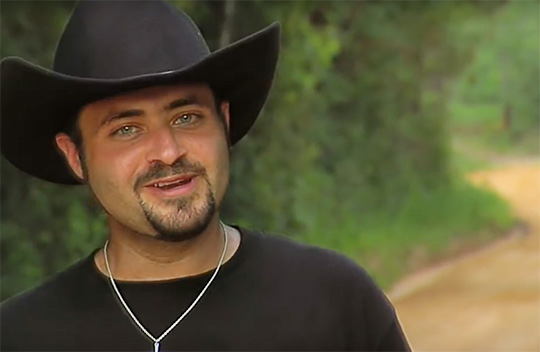 “After 15 years of working as a side musician, the release of this debut album ‘The Gravel Road’ is a fresh new start for me in the gospel music field,” Dennis said. “God has poured out so many blessings lately it’s overwhelming, and the band and I are looking forward to what 2016 holds.”
The first video from “The Gravel Road”, entitled “The Old Grist Mill” (see below) was filmed in North Escambia. It was shot along Pineville Road at Brushy Creek in Enon and includes some of Dennis’ family and friends.
“I so enjoyed filming the first video from the album. I loved that it was filmed here in my hometown. (That) makes it even more personal for me,” the Walnut Hill native said.
Dennis will be concert on Saturday, November 14 at 6:30 p.m. at the Molino First Assembly of God and Sunday, November 29 at 5 p.m. at the Walnut Hill Baptist Church. Admission is free for both events.
“The Gravel Road” is available on iTunes or Amazon.
Pictured top: Caleb Dennis in his new music video filmed along Brushy Creek and Pineville Road in North Escambia. Below: The new video “The Old Grist Mill” from Caleb Dennis. Photos for NorthEscambia.com, click to enlarge.
If you do not see the video above, it is because your work, school or home firewall is blocking YouTube videos.