

Storm 12U Team Wins Global World Series
July 24, 2015

The Pensacola Storm 12-year old Majors team recently won the Global World Series in Orange Beach, competing against 35 other 12U teams from across the county. They went 8-0 in tournament play, scoring a total of 56 runs while allowing just 16 runs. The Storm finished their season at 48-11, ranked 42nd in the nation out of 4,687 teams in 12U.
Pictured are Pensacola Storm 12U Majors team members (front, L-R) Damarius McGhee, Josh Turner, Aaron Noack, Tanner Rouchon, Ian Ladieu, (back) Jordan Jarman, Jordan McCants, Tyler Michanowicz, Hunter Pierson and Brady Garcia.
Blue Wahoos Win 11th Straight Home Game
July 24, 2015
In his last three starts — all wins — Pensacola Blue Wahoos right-hander Daniel Wright has used his mix of four pitches to keep the opposing batters off balance.
Wright won his third straight start over the Biloxi Shuckers, 2-1, Thursday in front of 4,533 at Pensacola Bayfront Stadium.
Pensacola narrowly escaped when second baseman Juan Perez ended the game on a perfect one-hop relay throw from shallow center field to catcher Kyle Skipworth to nail Biloxi pinch runner Brent Suter, who stumbled rounding third base.
The Pensacola dugout went from “a low to high moment really quick,” said Wright, who improved to 7-7 with a 4.32 ERA.
The Blue Wahoos won its fourth straight game and 11th straight home game. Pensacola improved to 17-10 (42-53) and sole possession of first place in the Southern League South Division. For the first time in franchise history since 2012, Pensacola improved to seven games above .500.
Mobile BayBears defeated the Mississippi Braves Thursday to propel the Blue Wahoos into first.
With his dad, Paul, and Little League manager Steve Knott traveling from Memphis to look on, Wright threw eight innings, allowing just one run on four hits with a walk and struck out five. After allowing Biloxi’s only run in the sixth when center fielder Michael Reed doubled in third baseman Nate Orf to cut Pensacola’s lead, 2-1, Wright retired the next seven hitters.
Wright has a 1.17 ERA, allowing one run in each of his last three starts covering 23 innings. In five of his last six starts, Wright has allowed one run or less. His second half ERA is 1.74, giving up eight earned runs in 41.3 innings.
He said having his dad and coach look on was no distraction.
“I waved to them before the game but once the game starts, you’re just thinking about the next pitch,” Wright said. “As the game went on, I got a little bit sharper.”
Pensacola manager Pat Kelly said he was worried Wright would run out of gas after scoring from first base in the fifth inning on Bryson Smith’s triple over the center fielder’s head. His score put Pensacola up, 2-1.
The Blue Wahoos went up, 1-0, in the fourth inning when right fielder Juan Duran singled in center fielder Bryson Smith.
“Daniel (Wright) was outstanding again,” Kelly said. “That’s the way he threw for me in Bakersfield.”
Last year, Wright led the Cincinnati Reds’ minor league pitchers with 14 wins (first) and 141 strikeouts (second) pitching for Low-A Dayton Dragons and High-A Bakersfield Blaze.
Bryson Smith went 2-3 with a triple, scored a run and drove in another. Smith is now hitting .381 (8-21) with one homer and three RBIs in six games with Pensacola.
Pensacola shortstop Zach Vincej also went 2-3 and has hits in 14 of his last 15 games. He’s batting 22-53 or .415 during that span. He’s hitting .362 in the second half and has raised his season average to .267.
The third game of the five-game series is scheduled at 6:35 p.m. Friday with the Milwaukee Brewers Double-A affiliate Biloxi Shuckers. RHP Tim Adleman (6-7, 2.36) takes the mound for the Wahoos and is scheduled to be opposed by Shuckers RHP Tyler Wagner (6-5, 2.53).
Five Century Families Receiving New Homes Thanks To Grant
July 23, 2015
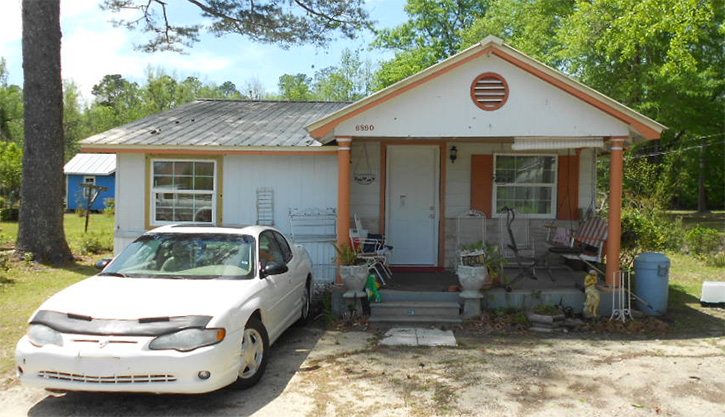
Five Century families are receiving brand new home homes thanks to a Community Development Block Grant received by the town.
Three mobile homes, one added-on trailer and one traditional built home will be demolished and replaced with new homes. Each of the homes being replaced are substandard — some so bad with mold and missing floors that residents have already been moved out, according to Robin Phillips, the town consultant that is administering the program.
Each of the new homes will be fully funded by the grant with residents required to pay nothing.
The homes being replaced are (with address, owner name, bid winner and construction amount):
- 6890 Jefferson Avenue, Mary Ann Bradley, Bill Walther Construction $81,900
- 6800 Gilford Avenue, Annie Mims, Parker Construction, $85,725
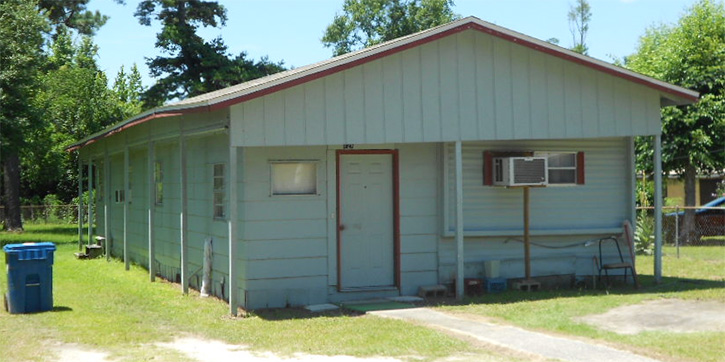
- 121 Mincy Court, Ethel Brown, Walther Construction $86,000
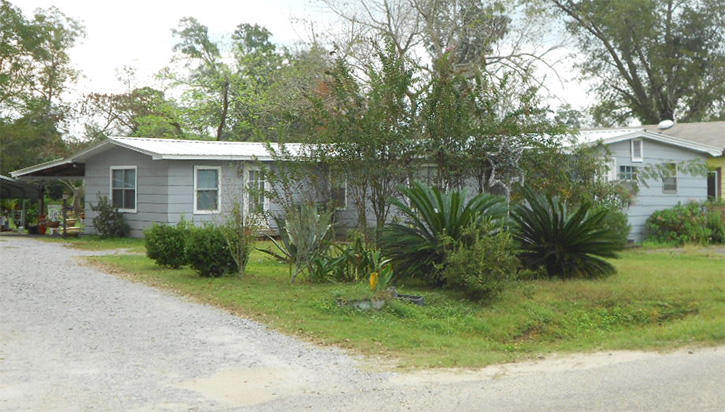
- 6845 Jefferson, David and Betty Washington, Motes Construction, $84,800
- 7024 Hartley Lane, Ruby and Olivia Fleeton, Motes Construction, $85,600
Construction work will begin as soon as contract documents are executed and approved.
Pictured: Three of the five homes being replaced with new grant-funded homes in Century. The home at top is at 6890 Jefferson Avenue, below is 121 Mincy Court and at bottom is 6845 Jefferson Avenue. Photos courtesy Escambia County Tax Collector for NorthEscambia.com, click to enlarge.
National Animal Cruelty Class Learns From Panhandle Equine Rescue
July 23, 2015

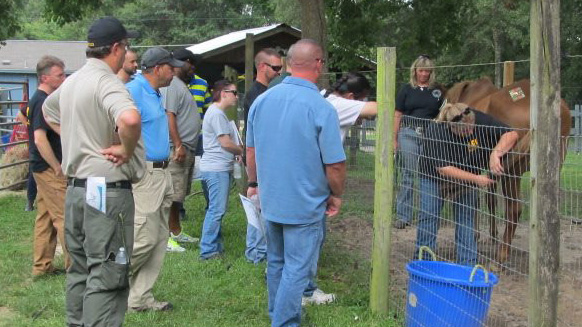
Animal cruelty investigators from across the U.S. and Dominican Republic attended an Advanced Investigators Class this week at Panhandle Equine Rescue in Cantonment.
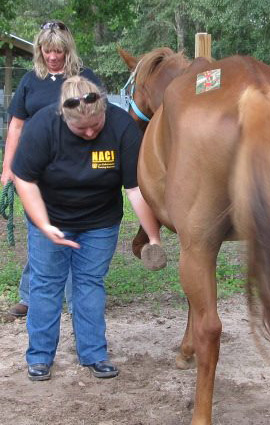 PER hosted the National Animal Cruelty Investigations School from the University of Missouri as they conducted classes for animal control, law enforcement and other agencies. The students were able to get hands-on experience with PER’s horses, learning how to catch, halter, body score and other techniques. The class was led by Christy Fischer of the Sedgwick County (KS) Sheriffs Department.
The only horse rescue in Escambia County, Panhandle Equine Rescue was founded by a small group of concerned citizens with a mission to rescue, rehabilitate and provide adoption services for abused, neglected and abandoned equines. PER is authorized by the court system to investigate equine cruelty in Escambia County.
Pictured: A group of animal cruelty investigators from across the country visited Panhandle Equine Rescue in Cantonment. Photos for NorthEscambia.com, click to enlarge.
Escambia Man Indicted For Manslaughter Of Football Standout
July 23, 2015
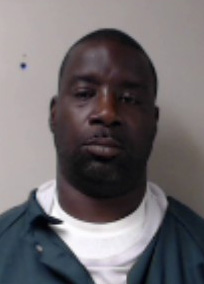
State Attorney Bill Eddins announced Wednesday that Xavier Tyrone Moore was convicted by an Escambia County Jury of third degree murder, manslaughter with a weapon, and possession of a firearm by a convicted felon. Immediately following the verdict, Moore was remanded into custody with no bond.
The charges stemmed from the June 13, 2014, shooting death of Shaquille Purifoy.
While Moore was sitting on the trunk of a car off of Country Walk Drive, he had a loaded .38 caliber Derringer pistol in his lap. When he got up from the trunk of the car, the pistol fell on the ground and discharged one time. The one shot struck Purifoy in the head resulting in a fatal wound.
Circuit Judge Linda Nobles ordered a presentence investigation due by September 2. Moore’s prior record includes robbery, possession of a firearm by convicted felon, felony battery and multiple drug offenses. Based on the charges and his prior record, Moore could face sentencing under Florida’s 10-20-Life statute as well as a habitual felony offender. Moore is facing up to 60 years in state prison.
Purifoy was on the basketball and football teams at Pine Forest High School and went on to play football for Grambling State University.
$15 Minimum Wage In Florida?
July 23, 2015
Bills started getting filed for the 2016 legislative session Wednesday, with Sen. Dwight Bullard, D-Miami, proposing a measure (SB 6) that would raise Florida’s minimum wage to $15 an hour.
Bullard filed a somewhat-similar proposal during the 2015 session to raise the minimum wage to $10.10 an hour, but the bill was never taken up in committees. The state’s minimum wage, which gradually increases each year, hit $8.05 in January.
by The News Service of Florida
Heroin Supplier Charged With First Degree Murder After Overdose Death
July 23, 2015
An Escambia County Grand Jury has indicted James Jonathan Mitchell for first degree murder in the death of Donald Davis.
 On January 30, 2014, Escambia County Sheriff’s Office found Donald Davis at his residence unconscious. He was later pronounced deceased at the scene. An autopsy determined that the cause of death was a result of acute heroin intoxication. Evidence of needle puncture marks were also found on Davis’ body. An ongoing narcotics investigation by the Escambia County Sheriff’s Office revealed evidence that James Mitchell provided the heroin to Davis that resulted in his death.
Under Florida law, a person who distributes a controlled substance to a person which results in their death has committed first degree murder, according to the State Attorney’s Office.
Florida Pot Petition Heads To Elections Supervisors
July 23, 2015
Supporters of a proposed constitutional amendment that would legalize medical marijuana this week sent 100,000 petitions to county elections supervisors, one of the first steps in getting the proposal before voters next year.
It’s the second shot for United for Care, the committee behind the petition drive, to get the proposal on the ballot. A similar plan received 58 percent of the vote in November, just shy of the 60 percent required for passage.
 Local supervisors of elections have 30 days to validate at least 68,317 petitions to trigger scrutiny by the Florida Supreme Court, which signed off on the previous version of the proposal last year on a 4-3 vote. Like all other petition initiatives, United for Care needs 683,149 validated, signed petitions to get “Use of Marijuana for Debilitating Medical Conditions” on the November 2016 ballot.
United for Care Campaign Manager Ben Pollara said Wednesday that his organization is months ahead of schedule compared to the previous attempt to get the language on the ballot. Pollara said he expects the Supreme Court to receive the validated petitions by August.
“We’re way ahead of the eight-ball this time. Last time, I was totally stressed and our staff was working 18-hour days all through the holidays and this time I believe we will have effectively put this thing to bed well before Christmas,” he said.
Orlando trial lawyer John Morgan, who bankrolled last year’s effort — spending nearly $4 million of his own money and that of his law firm — has again pledged to open his wallet to get the proposed amendment added to the constitution. In June, Morgan dumped about $233,000 into the political committee supporting the proposal.
Backers changed the name of the proposal as well as some of its language to address concerns expressed by the Supreme Court justices and used by opponents of the measure, including the Florida Sheriffs Association, to dissuade voters from approving it last fall.
“What this will do is to clarify things that will make it really impossible to misinterpret,” Jon Mills, a constitutional law professor and former House Speaker who drafted the amendment and the revision, told The News Service of Florida in January.
The revamped measure clarifies that doctors cannot order medical marijuana for children without their parents’ approval, Mills said. Mills and other supporters of the ballot initiative have insisted all along that, as with all other medical conditions, minors could not get the medical pot without their parents’ or guardians’ permission. But the sheriffs railed about the issue last year, raising the specter of “a joint in every backpack” in discussions about the proposal.
The new language also clears up ambiguity about what diseases would make patients eligible for medical marijuana treatment, another major point of contention for the law enforcement opponents of last year’s measure.
The Florida Sheriffs Association is reviewing the revised plan and does not yet have a position on it, association spokeswoman Nanette Schimpf told The News Service of Florida on Wednesday.
But St. Petersburg-based Drug Free American Foundation Executive Director Calvina Fay said Wednesday that the new proposal isn’t any better than the last.
“There are still very significant, fatal flaws in it,” she said. “They didn’t change the fact that they’re creating a big marijuana industry.”
Anxious about the proposal’s possible impact on drawing out young, Democratic-leaning voters last year, lawmakers passed a law authorizing a type of medical marijuana that purportedly does not get users high and is believed to dramatically reduce seizures in children with rare types of epilepsy. State health officials were supposed to begin selecting licensing nurseries to act as “dispensing organizations” to grow, process and distribute the pot — low in euphoria-inducing tetrahydrocannabinol, or THC, and high in cannabadiol, or CBD — on Jan. 1. But the law has been mired in legal challenges and health officials have yet to grant the first license for the new industry.
Backers of the medical marijuana initiative were hopeful that lawmakers would address the issue by expanding on the current law during the legislative session that ended in May. But that didn’t happen, and Morgan and his cohorts have since given up on getting the Legislature’s approval for the “traditional” medical marijuana legalization.
“My impression from our experience with the Legislature in this last session is this is not a body that has a particular want to engage a whole lot on this particular issue,” Pollara said.
by Dara Kam, The News Service of Florida
Blue Wahoos Win Tenth Straight Home Game
July 23, 2015

When Bryson Smith comes to the plate, opposing pitchers don’t exactly quake in their shoes that the center fielder will take them deep.
After all Smith’s career high is six in a season in 2012 when he split the season between Double-A Pensacola and High-A Bakersfield.
But Smith turned on a first pitch and took Biloxi pitcher Johnny Hellweg over the left field wall in the first inning and Pensacola went on to win its third straight game, 6-4, in front of 4,506 Wednesday at Pensacola Bayfront Stadium.
Pensacola has won 8 of its last 11 games and 10 straight games at home since losing its home opener in the second half on July 1 to Jacksonville, 6-2.
Smith is now hitting .333 (6-18) with one homer and two RBIs in five games with Pensacola. His homer gave Pensacola 16 dingers in the past 12 games. Pensacola is in eighth place in the Southern League in home runs with 46 total.
Pensacola manager Pat Kelly said having the 26-year-old Bryson on the team, who played for the Blue Wahoos every season since 2012, has been calming to the club house.
“Boy, it’s nice to have him,” Kelly said. “The way he runs the bases. Just the way he plays the game. I really like what I see.”
Pensacola hitting coach Alex Pelaez said none of the Pensacola batters are trying to hit the ball out of the ball park.
“They’re not trying to,” Pelaez said. “They’re just putting good swings on it and it’s jumping out.”
The Blue Wahoos are tied for first place with the Mississippi Braves in the second half at 16-10 (41-53) in the Southern League South Division. It’s the first time since July 22, 2012, that Pensacola has been six games over .500. The Blue Wahoos have never been seven games over .500 in a season since its inaugural year in 2012.
Meanwhile, Biloxi, the first half winner in the South, fell to 11-14 (54-39).
Kelly said the team is taking winning in stride.
“I thought we’ve had great chemistry even from day one,” Kelly said. “To me, they’re the same. They’re not too up and the not to down even when we’re winning games. We were undermanned in the first half. Now we feel like we can compete.”
Relievers Jimmy Moran and Kyle McMyne, who earned his seventh save, blanked Biloxi over the last four innings, giving up two hits striking out two and benefitting from two double plays.
With relievers Patrick Schuster, Zack Weiss and Miguel Celestino not available, Kelly said their relief work was critical.
The second game of the five-game series is scheduled at 6:35 p.m. Thursday with the Milwaukee Brewers Double-A affiliate Biloxi Shuckers. RHP Daniel Wright (6-7, 4.57) takes the mound for the Wahoos and is scheduled to be opposed by Shuckers RHP Brooks Hall (7-5, 4.72).
Get Your Child Vaccinated: Special Clinics Planned For Ensley, Molino
July 23, 2015
Children entering Escambia County schools next month must be up-to-date on their vaccinations, including a tetanus, diphtheria, and pertussis (Tdap) vaccine for all students entering the seventh grade.
 Children may be vaccinated at their physician’s office or at FDOH-Escambia’s Immunizations Clinic. Parents of children needing school-required vaccinations are being urged not to wait in order to ensure that their child may be vaccinated prior to the start of school.
FDOH-Escambia’s Immunizations Clinic is open Monday through Friday at 1295 Fairfield Drive in Pensacola. Parents wishing to have their child vaccinated at FDOH-Escambia’s Immunizations Clinic need to make an appointment. Appointments fill quickly and are same-day only.
Special clinics are also being held in additional locations, as follows:
Northside (Ensley) 8390 North Palafox
- walk-in clinic on Thursdays from 8:00a.m. until 3:30p.m. (now through August 3, 2015).
- same-day appointments, Monday through Friday from August 10 through August 21, 2015.
Molino 3470 Highway 29 North
- same-day appointments, Monday through Friday from August 10 through August 21, 2015.
To schedule an appointment, call (850) 595-6554.