

Pensacola Opera’s ‘Jack And The Beanstalk’ Free In Century, Molino
February 8, 2016
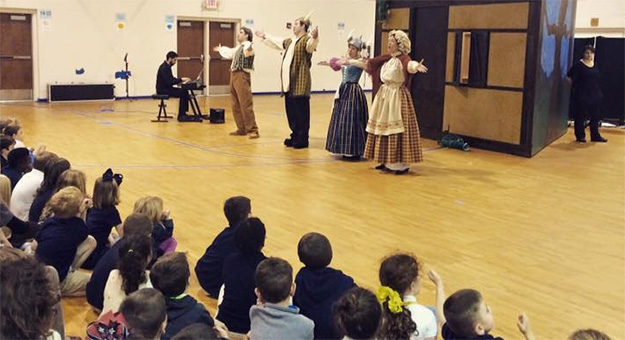
The Pensacola Opera will present free performances of the endearing tale “Jack and the Beanstalk” at two local library branches this week.
The first performance will be at 6 p.m. Tuesday at the Century Branch Library. The second performance will be at 10:30 Wednesday morning at the Molino Branch Library.
Courtesy photo for NorthEscambia.com, click to enlarge.
Blue Angels Soar Over Super Bowl
February 8, 2016

The Blue Angels helped kick off the 2016 Super Bowl when they performed a flyover at Levi’s Stadium in Santa Clara, CA, on Sunday.
The Blue Angels’ signature six-jet Delta Formation soared over more than 70,000 spectators at the stadium, following the national anthem.
“It doesn’t get more exciting than representing the Navy and Marine Corps while flying over the world’s premier sporting event,” said Blue Angels Slot Pilot Lt. Ryan Chamberlain. “Navy and marines serving all around the world should be proud of their efforts which make opportunities like this possible.”
Flight Leader and Commanding Officer Cmdr. Ryan Bernacchi, a native of Los Altos, CA, was proud to fly over his hometown.
“Being able to come back to the area you grew up in and being able to represent the Navy is always special, but being a part of this great American tradition makes this privilege that much more incredible,” said Bernacchi.
The Blue Angels, while based in Pensacola, are currently training in California for the 2016 air show season and are scheduled to fly 65 demonstrations at 33 locations throughout North America in 2016, which is the Blue Angels’ 70th anniversary year. The mission of the Blue Angels is to showcase the pride and professionalism of the United States Navy and Marine Corps by inspiring a culture of excellence and service to country through flight demonstrations and community outreach.
Photo courtesy U.S. Navy Blue Angels for NorthEscambia.com, click to enlarge.
County Monitoring Rolling Hills Landfill After Fire
February 8, 2016

County officials are monitoring the Rolling Hills Landfiill after a fire broke out Sunday morning.
Escambia County Waste Services, Environmental Code Enforcement, Public Safety and the Florida Department of Environmental Protection responded to a fire at the Rolling Hills Landfill located at 6990 Rolling Hills Road. County code enforcement and public safety staff noticed heavy smoke coming from the landfill area early Sunday morning. After investigating, the source of the fire was identified as a large mound of land clearing debris located in the southeast area of the property designated for land clearing debris disposal.
The property owner mobilized manpower and equipment and was able to cover the fire while county crews remained on standby. Escambia County Environmental Code Enforcement has posted a staff member to monitor the fire for24 hours while a plan for any further needed fire suppression is made with the guidance of FDEP. Escambia County continues to work with the landfill owners and FDEP to implement a closure plan for the construction and demolition disposal portion of the site.
The fire should not impact the levels of hydrogen sulfide gas, or H2S, in the Wedgewood Community. Escambia County’s Natural Resources Management Department has been working directly with local residents, and all data collected by the monitoring stations provides state and local officials with the tools necessary to evaluate the potential risk to public health and issue advisories as necessary.
Tate Wrestling Wins Third Tournament
February 8, 2016

The Tate High School wrestling team won the recent Tate Invitational tournament. Gulf Breeze placed second, and Niceville High came in third. For the Aggies, this was their third tournament win in the past month.
During the Tate Invitational, nine Aggie wrestlers won medals:
106: Jacob Cochran and Matthew Blalock
120: Scott Houston
126: Tanner Wood
138: Daniel Pigg
152: Logan Womack
170: Heath Herndon
195: Jacob Neales
220: Gaven McAnally
Submitted photos for NorthEscambia.com, click to enlarge.

Backyard Gun Range Bill Headed To Scott
February 8, 2016
The Florida House unanimously approved a bill aimed at curbing recreational shooting in residential areas. The bill (SB 130), which also unanimously passed the Senate last week, is ready to go to Gov. Rick Scott. The measure, in part, seeks to prevent backyard gun ranges in neighborhoods. Rep. Julio Gonzalez, R-Venice, said Wednesday that such backyard ranges are a problem in his Southwest Florida district and that police have been in a “quandary” about how to handle them. Rep. Darryl Rouson, a St. Petersburg Democrat who helped sponsor the bill in the House, said the measure is important for safety in urban areas and other densely populated residential areas. The bill creates a first-degree misdemeanor for people who recreationally fire weapons in areas with densities of one home per acre or greater. The bill includes exemptions for such things as firing weapons to defend life or property and for accidental discharges.
by The News Service of Florida
Molino Road To Be Closed For Bridge Replacement
February 7, 2016
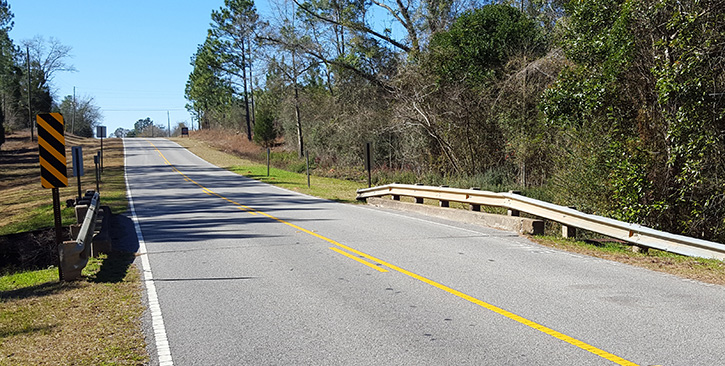
The temporary closure of Molino Road for the replacement of a 58-year old bridge has been approved.
The Florida Department of Transportation and Escambia County have signed off on the project to replace the bridge over Penasula Creek, west of Highway 29 between 4 Star Farm Road and Sunshine Hill Road.
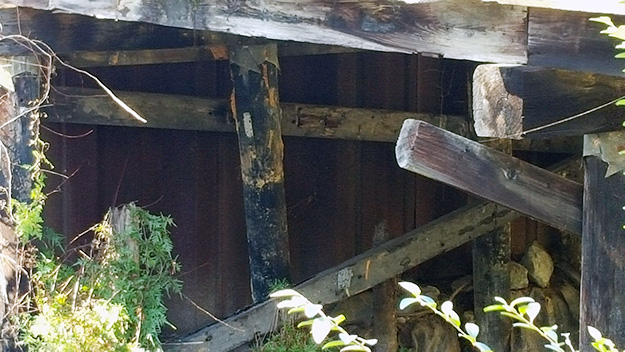
The bridge has reached a level of deterioration to warrant replacement and is next on the list of the FDOT’s Five-Year Work Plan. During construction, Molino Road will be closed for about six months to minimize costs and construction time. The project will be funded and the construction work will be performed under contract for the Florida Department of Transportation. After completion of the structure, Escambia County will be responsible for the maintenance of the bridge..
The wood piling supported Molino Road Bridge over Penasula Creek was constructed in 1958. A start date for the road closure and bridge replacement project has not yet been announced.
Pictured top: The Molino Road bridge over Penasula Creek. Pictured: The deteriorating wood pilings that support the bridge. NorthEscambia.com photos, click to enlarge.
FDOT: Weekly Traffic Alerts
February 7, 2016
Drivers will encounter traffic disruptions on the following state roads in Escambia and Santa Rosa counties this week as crews perform construction and maintenance activities.
I-10 Widening, Escambia County – Alternating east and westbound lane closures near U.S. 90 (Scenic Highway/Exit 17) from 7 p.m. to 5:30 a.m. the week of Feb. 8 as crews perform bridge deck work for the new Scenic Highway overpass. Drivers are reminded that the speed limit on I-10, between Davis Highway and Scenic Highway, is reduced to 60 mph.
 State Road (S.R.) 4, Escambia County – Temporary road closure just east of the intersection of S.R. 95 (U.S. 29) in Century from 8 a.m. to 8 p.m. Tuesday, Feb. 9 and Wednesday, Feb. 10 as CSX repairs and replaces railroad ties. Eastbound traffic will utilize East Hecker Road, Jefferson Avenue. Westbound traffic will detour on Jefferson Avenue, East Hecker Road.
S.R. 289 (9th Avenue), Escambia County – Crews continue paving operations between the intersection of Bayou Boulevard and Creighton Road. Lane closures will be in effect from 9 p.m. to 6 a.m. Motorists will also encounter intermittent and alternating daytime lane closures between Fairfield Drive and Cervantes Street as crews adjust manholes and valves.
U.S. 29, Escambia County – Intermittent and alternating lane closures within the town of Century and from Champion Drive north continue.
U.S. 90 (Scenic Highway) at the intersection of Scenic Highway Circle, Escambia County – Emergency repair work continues. New stormwater pipe will be installed beneath Scenic Highway. Traffic flaggers will be on site to assist with traffic control as construction vehicles enter and exit the work area. The repair work will take about two months to complete.
U.S. 90 Marquis Bayou Bridge Project, Santa Rosa County – Intermittent lane closures on U.S. 90, near the west end of the Marquis Bayou Bridge in Milton, from 8 a.m. to 5 p.m. Friday, Feb. 5 as crews work on the shoulder of the roadway. In addition, drivers will encounter alternating lane closures on U.S. 90, near the east end of the Marquis Bayou Bridge, from 8 a.m. to 5 p.m. Saturday, Feb. 6 and Sunday, Feb.7 as crews perform widening and paving work.
U.S. 98, Santa Rosa County- Alternating lane closures between Central Parkway and the Gulf Breeze Zoo from 7 p.m. to 7 a.m. Sunday through Thursday beginning Sunday, Jan. 31. Crews will mill and pave crossovers and side streets through the end of February.
S.R. 281 (Avalon Boulevard), Santa Rosa County – Interment lane closures from north of I-10 to south of the Moors Oak subdivision from 8 a.m. to 5 p.m. through Thursday, Feb. 11 as crews complete construction activities.
I-10 Widening, Santa Rosa County – Alternating lane closures on I-10 between the Escambia Bay Bridge and S.R. 281 (Avalon Boulevard/Exit 22) from 8 p.m. to 6 a.m. Sunday, Feb. 7 through Thursday, Feb. 11 as crews perform construction activities. The Florida Department of Transportation reminds drivers that the speed limit on I-10, between the Escambia Bay Bridge and Avalon Boulevard, is reduced to 60 mph.
All activities are weather dependent and may be delayed or re-scheduled in the event of inclement weather. Motorists are reminded to use caution, especially at night, when traveling in a work zone and to watch for construction workers and equipment entering and exiting the roadway.
Kids Learn To Make Valentine’s Lollipops At The Library
February 7, 2016

 Children had the opportunity to make their own Valentine’s lollipops Saturday afternoon at the Molino Brnach Library. Two miniature candy canes, melted white chocolate, sugar sprinkles and a lollipop stick– the recipe for easy kid’s activity. NorthEscambia.com photos, click to enlarge.


4-H Kids Learn To Shop For Healthy Foods With Small Budget
February 7, 2016

Members of the Barrineau Park 4-H Club recently learned how to shop for healthy foods on a limited budget.
 After the educational tour through the Grocery Advantage in Cantonment with UF/IFAS Extension leaders, Barrineau Park 4-H Club members and parents put their knowledge of reading food labels, picking whole grains, comparing prices, and much more into action.
Each participant successfully completed the $10 Challenge. With the $10 they were given from a UF/IFAS/Share Our Strength grant, they bought a fruit, a vegetable, a whole grain, a lean protein, and a low- or no-fat dairy product all for $10 or less.
Pictured: Members of the Barrineau Park 4-H Club learn how to shop for healthy foods on a limited budget. Submitted photos for NorthEscambia.com, click to enlarge.


Tate High’s Hoskins Named ROTC Cadet Of The Year
February 7, 2016
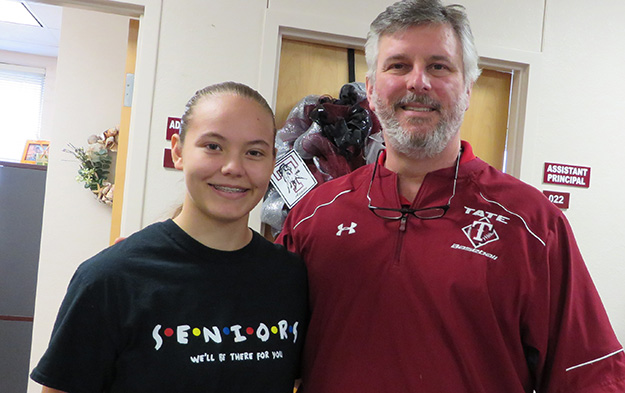
Tate High School’s Alexis Hoskins had been named Northwest Florida’s Cadet of the Year and has received a full ROTC scholarship to the University of West Florida. Hoskins is pictured with Tate High Principal Rick Shackle. Submitted photos for NorthEscambia.com, click to enlarge.