

Florida Lawmakers Float Boating Enforcement Changes
February 15, 2016
Law enforcement officers would need “reasonable suspicion” to stop and inspect boats sporting state safety stickers, under a measure that sailed through its final House committee.
The Economic Affairs Committee voted 12-3 to approve the proposal (HB 703), which would revise a state law about reckless and careless operations of vessels.
A key feature of the proposal would lessen the ability of Florida Fish and Wildlife Conservation Commission law-enforcement officers, county deputies and municipal police officers to use the pretext of conducting safety inspections to stop and search boats if the vessels display commission safety-inspection decals.
“I just want to give safe boaters the opportunity to be pulled over less,” bill sponsor Ritch Workman, R-Melbourne, said. “Not that they can’t be pulled over at all.”
The proposal wouldn’t prohibit officers from stopping boats when there is reasonable suspicion or probable cause that violations have occurred, such as over-harvesting lobster or fishing out of season.
Workman said he advanced the proposal because boaters from his community complain about being pulled over “almost every time they go out” by officers who say they are conducting safety inspections or say they have seen people not properly in the craft.
The commission’s Division of Law Enforcement-approved decal, available after a boat has undergone a safety inspection, would have to be posted within six inches of the vessel registration decal, according to the proposal.
On non-motorized boats, which are not required to be registered, the decal would have to be located just above the waterline on the forward half of the port side.
The commission already provides the decals, which don’t have an expiration date.
Workman said he doesn’t intend to impose new restrictions on the safety decals, such as requiring the color to be changed annually.
“My fear is that if I mandate a different something every year I have inadvertently created an annual inspection process, which I don’t want to do,” Workman said.
Workman’s proposal also would redefine a law about the noncriminal violation of careless operation of a vessel.
“It will no longer be, if this bill becomes law, ticketable to give a ticket to a boater that you think their kids may be sitting unsafely on the boat, otherwise bow-riding, or if your wife is sunbathing on the front of a boat,” Workman said. “You can still be pulled over for it and lectured, but not ticketed.”
The commission issued 7,770 citations for a variety of violations in 2014, including 3,146 involving safety equipment and regulations, and 802 for the negligent operation of vessels, according to agency records. A year earlier, 6,909 citations were issued by the state agency, with 3,157 involving safety equipment and regulations and 2,227 for negligent operations.
The Senate version of the proposal (SB 1454) has received unanimous support from the Environmental Preservation and Conservation Committee and must still get through Criminal and Civil Justice Appropriations Subcommittee and the Fiscal Policy Committee.
by Jim Turner, The News Service of Florida
Senate Seeks School Funding Change As Budgets Pass
February 15, 2016
The Senate unveiled a proposal that would require the state to pick up at least half of any increase in education funding — a move aimed at lowering property taxes — as the chamber’s lead budget-writer blasted proposals to slash taxes by $1 billion.
Meanwhile, the House and Senate gave final approval to spending plans for the year beginning July 1, setting up negotiations about the budget and tax cuts that will shape the last month of the annual legislative session.
Lawmakers have expressed confidence that this year’s spending talks will go more smoothly than last year’s discussions, which deadlocked over health-care spending and led to the collapse of the legislative session. A special session was called in June to resolve the clash.
But the Senate’s new proposal on education spending showed that even some of the more basic aspects of the budget remained fluid as the session entered its second half. The legislation, approved by the Senate Education Appropriations Subcommittee, is meant to counter criticism that about 80 percent of the proposed increases in public school spending for the 2016-2017 year would come from a property tax known as the required local effort.
“This is not just a tax cut,” said Sen. Don Gaetz, the chairman of the subcommittee and one of the leaders of the push on local taxes. “This is making sure that the state, through its other revenue sources, picks up our fair share of our partnership with local school boards and local property taxpayers.”
Under the bill, at least half of the boost in education funding would have to come from state funds, not the required local effort. But Senate leaders seem to be treating the bill like a statement of their intent rather than formal legislation; it has no House counterpart and has started moving relatively late in the budget process.
Using the Senate’s budget proposal — the most generous one on education funding — the state would need to kick in another $183.2 million to increase school spending by the same amount and get to an even split. An equivalent rollback in property taxes would be about $12.40 on $100,000 of taxable value.
Democrats also backed the principle.
“To me, a deal is a deal, and a 50-50 split, just to the man on the street, sounds like a reasonable thing to do,” said Sen. Bill Montford, a Tallahassee Democrat who doubles as CEO of the Florida Association of District School Superintendents.
There were still unknowns about how exactly the proposal would work. House Speaker Steve Crisafulli, R-Merritt Island, repeated that he would be interested in the proposal as long as lawmakers ensured the money made it back to taxpayers.
“Because if we’re just pushing money back to locals and not cutting the millage, then that’s not ideal, unless we’re writing checks back to the individuals that pay property taxes,” he said.
Senate Appropriations Chairman Tom Lee, R-Brandon, said the proposal would likely work by lowering the millage and not by sending rebates directly to taxpayers, which he said would incur large postage bills.
The proposal lands in the middle of a budget process that is entering a critical phase. With the House and Senate voting to approve their versions of the spending plan, Crisafulli and Senate President Andy Gardiner, R-Orlando, will now begin hammering out how much money is spent in each section of the budget.
After that, joint House-Senate conference committees will work out compromises on how to divvy up the funding in each area.
The House passed its budget on a nearly party-line vote, 85-29, after sharp debate. Five Democrats voted with Republicans to approve the measure, while Rep. John Tobia, R-Melbourne Beach, voted against the budget.
Democrats continued to pound away at a prohibition in the House budget on funding for Planned Parenthood, which offers abortion among its health-care services for women. There is already a federal law preventing the federal money that flows through the state budget from being used to pay for abortions.
“The funding that they get from this state is for the things that women need,” said Rep. Kevin Rader, D-Delray Beach.
The Senate, meanwhile, unanimously approved its version of the budget, which does not specifically ban funding for Planned Parenthood. Though they voted for the spending proposal, some Democrats complained about the lack of funding for some areas of the budget as lawmakers ready a sizable tax-cut package.
“For me, personally, even though I’m going to support this budget, I just want to let you know: I think it’s more important for us to spend that money on our students than it is to spend it on a tax cut,” said Sen. Jeff Clemens, D-Lake Worth. “I think it’s more important to spend this money on health care for children or on mental health services than it is for a tax cut.”
At the same time, Lee seemed to all but rule out tax packages of around $1 billion floated by Gov. Rick Scott and the House.
“I can tell you that, in my view, if we even begin to entertain tax cuts remotely in the area of that billion-dollar number, it would be fiscally irresponsible of us,” Lee said.
by Brandon Larrabee, The News Service of Florida
Teens: Enjoy Free Pizza And Books At The Molino Library
February 15, 2016
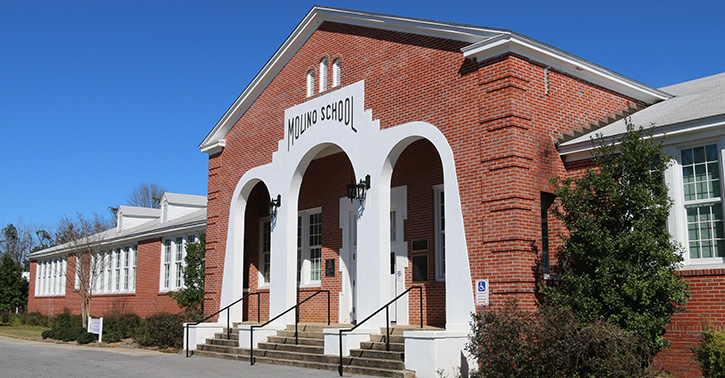
A “Pizza and Books” program will be held Tuesday at 6 p.m. at the Molino Branch Library.
Teens 13-17 are invited to “geek-out” on both at this book club designed to focus on their favorite reads. The library will provide the free pizza, and the teens will pick the books.
The Molino Branch Library is located at 6450-A Highway 95A in the Molino Community Complex.
NorthEscambia.com photo, click to enlarge.
FDOT: Weekly Traffic Alerts
February 15, 2016
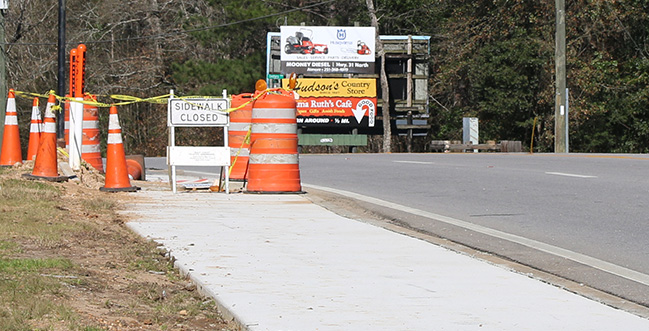
Drivers will encounter traffic disruptions on the following state roads in Escambia and Santa Rosa counties this week as crews perform construction and maintenance activities.
ESCAMBIA COUNTY
- U.S. 29, Escambia County – Intermittent and alternating lane closures within the town of Century and from Champion Drive north continue, including sidewalk work in Century (pictured top).
- Interstate 10 (I-10) over Eleven Mile Creek Bridge- East and westbound traffic will be shifted to the inside lanes at the first of next week as crew begin construction on the outside lanes. Message boards are on site to alert drivers of upcoming change in traffic pattern.
- I-10 Widening, Escambia County – Drivers will experience the following impacts on I-10 east and westbound, near Exit 17 (Scenic Highway) in Escambia County, from 7 p.m. to 6:30 a.m. Wednesday, Feb. 17 through Friday, Feb. 19:
- The right lane of I-10 will be closed.
- Traffic in the left lane will be slowed by Florida Highway Patrol.
- Traffic on the Scenic Highway on-ramp to I-10 eastbound will experience intermittent delays.
- The closures and pacing operations will allow crews to place the concrete deck for the new Scenic Highway overpass.
- S.R. 289 (9th Avenue), Escambia County – Crews continue paving operations between the intersection of Bayou Boulevard and Creighton Road. Lane closures will be in effect from 9 p.m. to 6 a.m. Motorists will also encounter intermittent and alternating daytime lane closures between Fairfield Drive and Cervantes Street as crews adjust manholes and valves.
- U.S. 90 (Scenic Highway) at the intersection of Scenic Highway Circle, Escambia County – Emergency repair work continues. New stormwater pipe will be installed beneath Scenic Highway. Traffic flaggers will be on site to assist with traffic control as construction vehicles enter and exit the work area. The repair work will take about two months to complete.
SANTA ROSA COUNTY
- US 98, Santa Rosa County- Alternating lane closures from the Gulf Breeze Zoo to the Okaloosa County line 8 p.m. to 6 a.m. Monday, Feb. 15 through Friday, Feb. 19 as crews perform striping operations.
- U.S. 98, Santa Rosa County- Alternating lane closures between Central Parkway and the Gulf Breeze Zoo from 7 p.m. to 7 a.m. Sunday through Thursday through the end of February. Crews will also mill and pave crossovers and side streets through the end of February.
- I-10 Widening, Santa Rosa County – Alternating lane closures between the Escambia Bay Bridge and S.R. 281 (Avalon Boulevard/Exit 22) from 8 p.m. to 6 a.m. Sunday, Feb. 14 through Thursday, Feb. 18 as crews perform construction activities.
All activities are weather dependent and may be delayed or re-scheduled in the event of inclement weather. Motorists are reminded to use caution, especially at night, when traveling in a work zone and to watch for construction workers and equipment entering and exiting the roadway.
Pictured top: Sidewalk work, including some lane closures, are continuing in Century. NorthEscambia.com photo, click to enlarge.
Improvements Continue At Showalter Park In Century
February 14, 2016
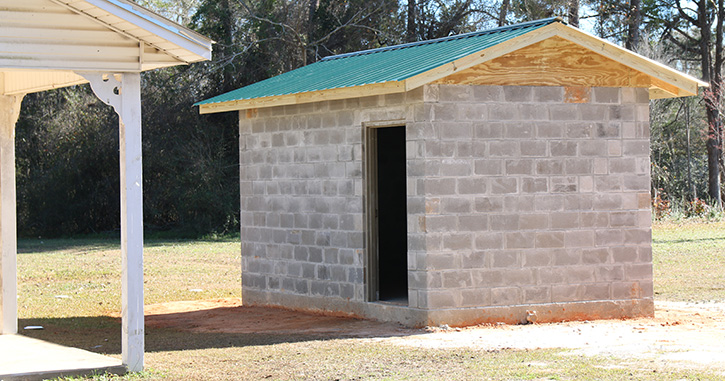
The Town of Century is continuing to make improvement at Showalter Park.
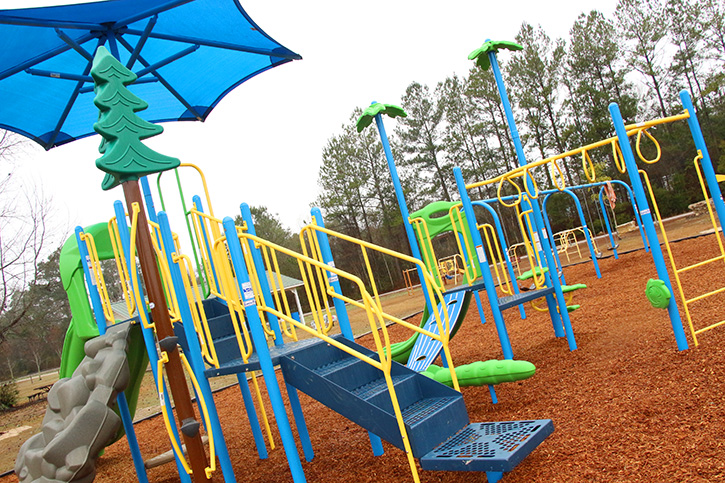
Last year, the town opened a new playground funded with a $50,000 grant from the Florida Recreation Development Assistance Program. The labor to demolish the previous playground and install the new equipment was provided by the town and state inmate labor, saving grant dollars and allowing for the purchase of more equipment.
Century received a $50,000 grant, also from the Florida Recreation Development Assistance Program, to install a splash pad at Showalter Park. It is expected that the new splash pad will be open by this summer
Now, during this winter season, the town is using inmate labor to construct a restroom facility at the park.
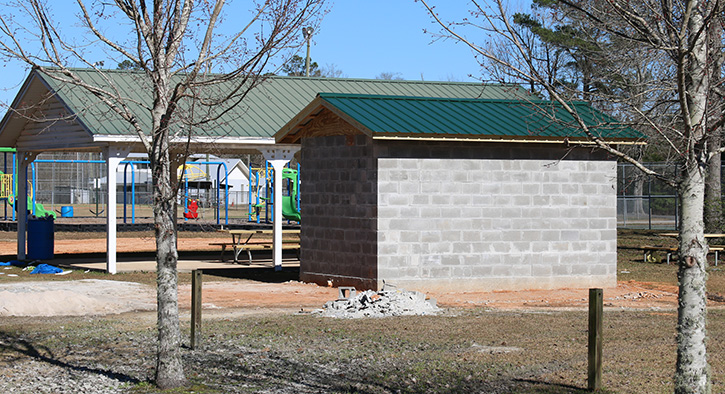
Pictured above and below: Restroom facilities under construction at Showalter Park in Century. Pictured below: The new playground equipment at the park. Picture bottom: An artist rendering of the new splash pad planned for the park. NorthEscambia.com photos, click to enlarge.

One Week: Search Continues For Missing Teen
February 14, 2016
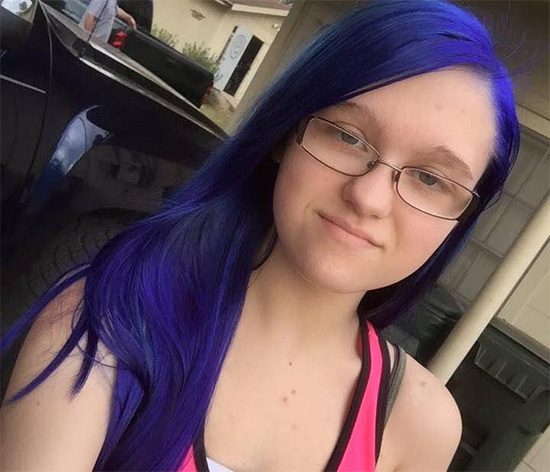
Authorities are continuing their search for a missing teen from Brewton, now about a week since she was last seen.
Brooke Lee Bridges is a 16-year old white female with blue hair that was last seen at her family home in Brewton about 11 p.m. on Sunday, February 7.
The FBI Child Abduction Rapid Deployment team from Quantico, Virginia, has become involved in the search, canvassing the neighborhood and follow up on leads as they come in. Agencies from across the area have been involved in the search, including Escambia Search and Rescue.
Authorities have also searched a lake for any possible clues.
The search has reached to the air. Escambia County Sheriff Grover Smith was uninjured Friday when the department’s small plane crashed during an aerial search Friday afternoon.
Bridges was last seen wearing a t-shirt and black sweatpants at her family home in Brewton around 11 p.m. on Sunday. She has brown eyes, is 5′3″ and weighs 100 pounds.
Anyone with information on her whereabouts is asked to call the Brewton Police Department at (251) 867-3212 or 911.
FWC Law Enforcement Report
February 14, 2016
The Florida FWC Division of Law Enforcement reported the following activity during the weekly period ending February 11 in Escambia and Santa Rosa counties.
ESCAMBIA COUNTY
No report submitted.
SANTA ROSA COUNTY
 While Officers Miller and Land were patrolling Eglin WMA, they located multiple tree stands placed in close proximity to several illegal food plots. The following morning, the officers returned to the area and located two hunters exiting the woods. One of the hunters claimed to be stalk hunting even though he was wearing a harness used for hunting from a tree stand. The second hunter stated that he had been hunting from a nearby ladder stand. The hunters took the officers back to the area where they had been hunting; the same area that had the illegal food plots. After questioning, the two hunters admitted to placing bait within the management area and planting the food plots. Both hunters were issued a notice to appear for placing/hunting over bait on a management area and their Eglin Permits were seized by Range Patrol.
Officers teamed up with other FWC staff to work the Blackwater Hutton Unit Mobility Impaired Hunts over the last two weekends. As they have for the last several years, the officers helped to provide the hunters and guests with a full meal each day, assistance with cleaning their game, and assistance tracking and recovering game. Several members and groups within the community stepped up to donate money, food, and time to help make this a successful hunt. Several hunters bagged deer and all of the hunters enjoyed their hunt. Many thanks to all of the staff that volunteered their time and efforts towards making this hunt one of the best in the state!
This report represents some events the FWC handled over the past week; however, it does not include all actions taken by the Division of Law Enforcement. Information provided by FWC.
Atmore Man Arrested With $1K In Counterfeit Cash
February 14, 2016
An Atmore man was arrested this weekend with about $1,000 in fake cash.
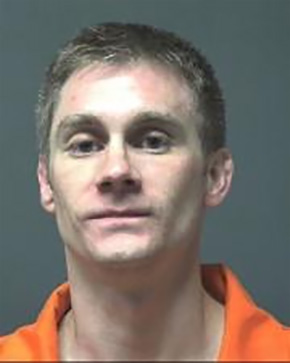 Robert Edward Lowery, 34, was arrested by Atmore Police and charged with possession of a forged instrument. He was booked into the Escambia County Detention Center in Brewton.
Lowery was discovered with about $1,000 in fake $20 bills at a Kangaroo convenience store on Highway 31 in Atmore after police were tipped off by a store clerk. Police said the $20 bills all had the same serial number and were not cut to a uniform size.
Anyone that believes they may have received any of the counterfeit cash or that may information on the case is asked to call the Atmore Police Department at (251) 368-9141 or their local law enforcement agency.
High School All-Star Soccer Team Rosters Announced
February 14, 2016
The Pensacola Sports Association has announced the tentative rosters for the 9th Annual Subway High School All-Star Soccer game to be held Thursday, February 18 at Ashton Brosnaham Park beginning at 5:00 p.m.
The roster for the West Girls Team:
Catholic
Gabrielle Dosev – Keeper
Cassidy Wood – Back
Audrey Presnell – Midfield
Chapman Maraman – Forward
Escambia
Jada Johnson – Midfield
Lea Richards – Midfield
Ally Richards – Midfield
Mia Simmons–Moering – Midfield
Pensacola
Michaela Chelico – Keeper
Kaitlyn Ham – Back
Jacquelline Sagubal – Midfield
Abby Scott – Forward
Pine Forest
Courtney Brown – Back
Noelle Paulsen – Back
Addison Deal – Midfield
Tate
Kaley Boringer – Keeper
Sabrina Franklin – Back
Washington
Haley Roberts – Back
Bailey DePriest – Midfield
West Florida
Victoria Santos – Back
Samantha Karp – Midfield
Monica Duckworth – Forward
The roster for the East Girls Team:
Choctaw
Carly Dick – Back
Crestview
Allison Ammons – Midfield
Fort Walton Beach
Brianna Wallace – Back
Gulf Breeze
Megan Hawkins – Back
Kiersten Edlund – Midfield
Sam Holloway – Midfield
Destini Ferraro – Forward
Amber Hamilton – Forward
Milton
Sabrina Bonilla – Midfield
Navarre
Julianna DeSalle – Keeper
Kaylynn Ennis – Back
Kelsey Haden – Midfield
Maraiah McKinney – Midfield
Kayla Folse – Forward
Niceville
Julie Duchock – Back
Izabella Coulter – Back
Brooke Gaskell – Back
Kelsie Walker – Midfield
Kyree Taylor – Forward
Pace
Alexis Lawson – Forward
Rocky Bayou
Samantha Anderson – Back
Abigail Alldredge – Back
The Roster for the West Boys Team
Catholic
Eric Materson – Back
Eric Buer – Midfield
Andrew Keegan – Midfield
Billy Harris – Forward
Seth Straw – Forward
Escambia
Jalen Johnson – Keeper
Carvin Wayne – Back
Charles Richardson – Midfield
Ian Hendrick – Midfield
Chris Gibson – Midfield
Emilio Maldonado – Forward
Pensacola
David Heym – Back
Andy Chiang – Back
Alex Debari – Midfield
Michael Heym – Midfield
Pine Forest
Teabryan Davis – Back
Tate
Justin Shelton – Back
Jared Stacey – Midfield
Washington
Noal Ricketson – Keeper
Jake Goodspeed – Back
Evan Wimberly – Back
West Florida Tech
Tyler Sellitto – Forward
The Roster for the East Boys Team
Choctaw
Liam Power – Back
Tyler Smith – Midfield
Austin Custelin – Forward
Andy Wentz – Forward
Crestview
Kyle Jagielski – Keeper
Danny Born – Forward
Fort Walton Beach
MJ Goodman – Back
Bobby Howell – Back
DJ Mailman – Midfield
Luis Oseguera – Midfield
Gulf Breeze
TJ Brubaker – Keeper
Milton
James Carlson – Midfield
Navarre
Logan Townsand – Back
Bailey Bridges – Midfield
Nate Shroeder – Midfield
Jonah Cruz – Forward
Niceville
Stephen Herrera – Back
Austin Thompson – Midfield
Pace
Christian Johannemann – Back
Michael Batterton – Midfield
Rocky Bayou
Donovan McArthur – Back
Chris Lawson – Back
The coaching staff for the West Girls Team:
-Head Coach, Peter Stephens of West Florida Tech High School
-Assistant Coach, Ellie Henriquez of Escambia High School
The coaching staff for the East Girls Team:
-Head Coach, Ryan Davenport of Gulf Breeze High School
The coaching staff for the West Boys Team:
-Head Coach, Greg Garrett of Pensacola High School
-Assistant Coach, Del Greatwood of Catholic High School
The coaching staff for the East Boys Team:
-Head Coach, Chris McDaniel of Choctaw High School
-Assistant Coach, Jamie Cortes of Fort Walton Beach High School
Church To Host ‘True Beauty’ Young Women’s Conference
February 14, 2016
Ray’s Chapel Baptist Church will host “True Beauty”, a young women’s retreat, this Friday night.
 The keynote speaker will be Beth Harris, and small group leaders that will lead participants in a study based upon the “True Beauty” by Carolyn Mahaney and Nicole Whitacre. Young women high school through college/career are welcome to attend.
Tickets are $20 with a t-shirt, or $10 without a t-shirt. The event will be held 5-10 p.m. at Ray’s Chapel Baptist Church at 170 West Bogia Road in McDavid. Dinner is included.
For more information, call (850) 375-4652 or visit Facebook.com/TrueBeautyYoungWomensRetreat/