

Visiting Kentucky Team Downs Northview
April 7, 2016
Visiting Corbin, KY, defeated the Northview Chiefs Wednesday night 12-2.
After a one-run first inning, Corbin powered ahead 6-0 with a five run second inning. The Chiefs two runs came in the fourth inning, which ended with Northview at a 9-2 disadvantage.
The Chiefs will be home Friday night as they host Chipley at 5:00.
Adult Male Critically Injured In ATV Accident In Bratt
April 6, 2016
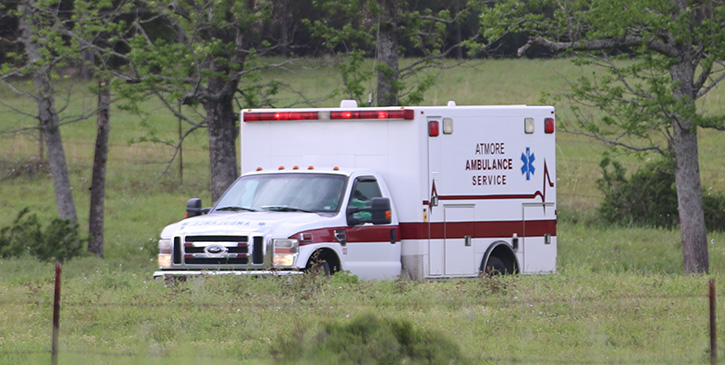
A Bratt man remained in critical condition Thursday afternoon after an all-terrain vehicle accident Wednesday in Bratt.
Boyd Sigafoose, 77, was injured in the ATV accident in pasture on Oakshade Road, a short distance behind Northview High School. He was airlifted to Sacred Heart Hospital in Pensacola as a “trauma alert”.
Atmore Ambulance and the Walnut Hill Station of Escambia Fire Rescue responded to the accident.
Further details have not been released.
Pictured top: A 77-year old male was injured in the ATV accident in pasture on Oakshade Road. Pictured below: The victim was airlifted to Sacred Heart Hospital in Pensacola as a trauma alert. NorthEscambia.com photos, click to enlarge.




School Officials: No Credibility To Threat Against Tate High School
April 6, 2016
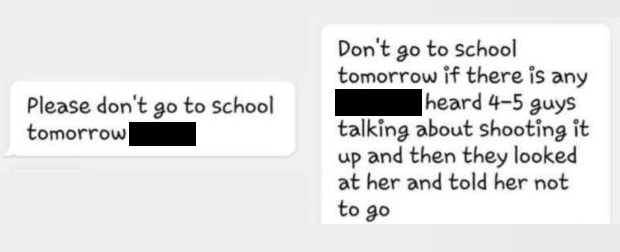
Officials say there was no credibility to a rumored threat against Tate High School today.
The rumor began making the rounds a little before 10 p.m. Tuesday as text messages were spread between students. Rumors of those text message threatening a violent act were then posted and spread on social media, often by parents concerned about their children.
But Superintendent Malcolm Thomas said there was no evidence that the threat was credible. He said school district officials and the Escambia County Sheriff’s Office worked through the night to track down the source of the alleged threat.
“There was just no credibility to this thing. We would have tracked it down; if it had been credible and the Sheriff’s Office would have been knocking on a door during the middle of the night,” Thomas said, adding that his own granddaughter is in attendance at Tate High today. “It is just too easy to spread false information on social media.”
He encouraged parents to send their children to school and added that there would be an extra law enforcement presence at the campus today out of an abundance of caution.
“It is just going to be a normal day here at Tate High School,” Thomas said from the campus Wednesday morning.
Pictured above: Excerpts from one of the text messages being spread among Tate High School students Tuesday night that was forwarded to NorthEscambia.com. The name of a student mentioned has been redacted. NorthEscambia.com image, click to enlarge.
Another Pharmacy Break-in Linked To Pharmacy Burglary Spree
April 6, 2016
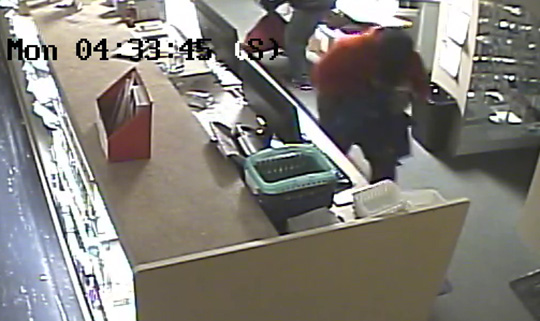
Authorities in Atmore are linking another pharmacy burglary to a string of break-ins at smaller independent pharmacies in Escambia County, FL, and in two other Alabama cities.
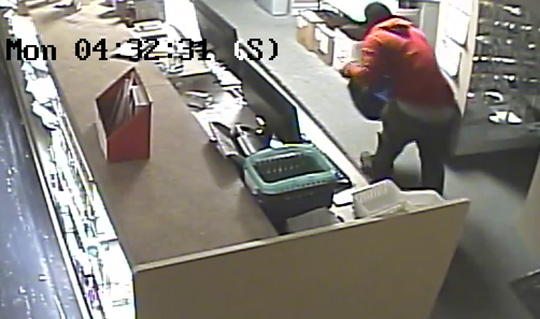
According to information released Tuesday by the Atmore Police Department, their agency received a an alarm at the Buy-Rite Pharmacy on Medical Park Drive at 4:28 a.m. Monday. Patrol officers arrived four minutes later to find that the front door and security bars had been pried open.
Police said the surveillance video showed what appeared to be two males in hooded jackets, masks and gloves entered the pharmacy, placed several placed several controlled substance items in a trash bag and exited the store in less than a minute.
Atmore Police said the burglars’ description and method of operation closely matches that of other recent burglaries in Robertsdale, AL, Wetumpka, AL, and Escambia County, FL, as well as a burglary at same Atmore pharmacy in November 2014.
As we previously reported, three other pharmacies were burglarized early Monday morning just hours apart, and the crimes appear to be related.
Kim’s Family Pharmacy in the 700 block of South Highway 29 in Cantonment was the first to be hit about 1:25 a.m., according to owner Kim Cadenhead. The thieves got in through the bottom of the front door and stole narcotics.
Burglars forced their way into the Jackson Pace Pharmacy on Nine Mile Road about 2:30 a.m., according to owner Steve Jackson, clearing shelves and dumping the drugs into trashcans for their getaway.
Then the Lee Drug Drug in Robertsdale, AL, was hit at 3:30 a.m. when two people wearing gloves, masks and long sleeves forced their way in, taking a large amount of pills and narcotics in trash cans. The Robertsdale Police Department confirmed that photos from the Escambia County burglaries showed the same suspects as those in Robertsdale.
The burglaries came about three weeks after similar burglaries in Ensley and Jay, and few months after a similar pharmacy burglary in Molino.
Anyone with information on any of the burglaries is asked to call their local law enforcement agency.
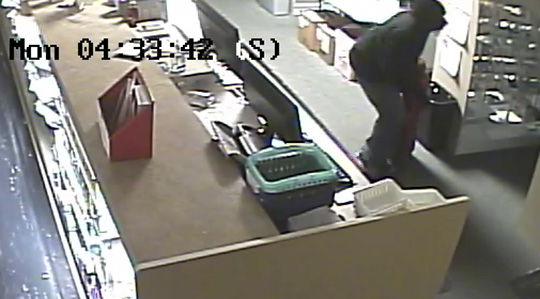
Pictured: A Monday morning burglary at the Buy-Rite Pharmacy in Atmore. Images for NorthEscambia.com, click to enlarge.
Flomaton Mourns Loss Of High School Student In Wreck
April 6, 2016

The Flomaton community is in mourning today following the loss of a local high school student.
Flomaton High School junior Courtney Pridgen passed away Tuesday evening as the result of a traffic crash Tuesday afternoon in Brewton.
Pridgen, 17, was airlifted to the USA Medical Center in Mobile following the 1:30 p.m. crash on Highway 31 near the Southern Pine Electric Cooperative in Brewton. One other person was injured and transported to a Brewton Hospital.
The accident remains under investigation by the Brewton Police Department. They have not yet released any details on the circumstances surrounding the crash.
Flomaton High School was expected to make grief counseling available to students on Wednesday.
Courtesy photo for NorthEscambia.com, click to enlarge.
Power Substation Fire Damage Was Extensive; Repairs To Take Weeks
April 6, 2016

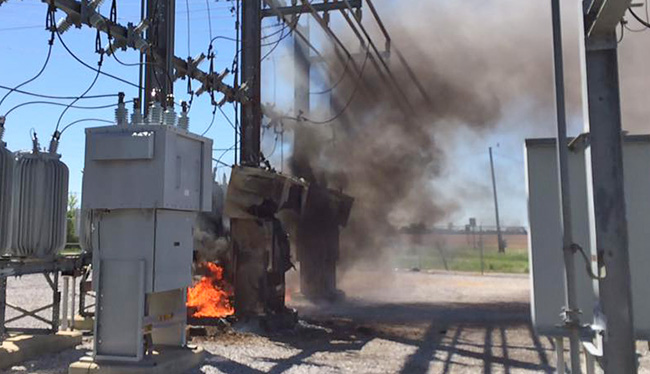
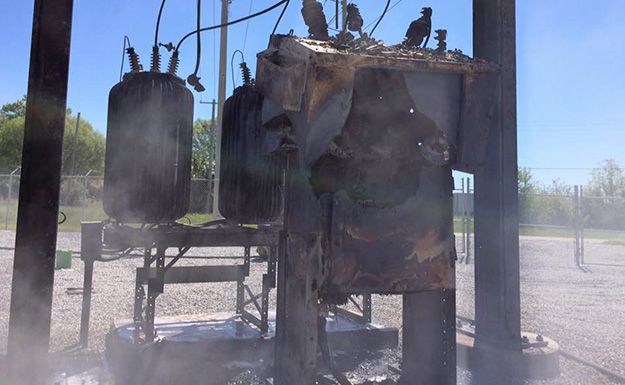
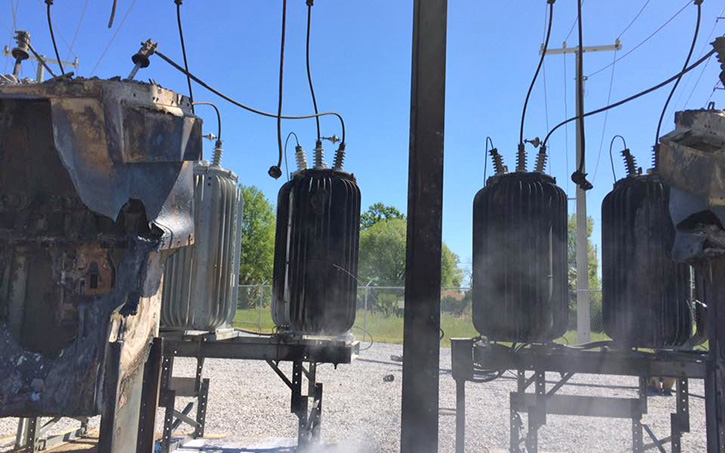
Fire damage to a power substation that serves the Jay area was extensive, Escambia River Electric Cooperative said Tuesday.
A regulator and circuit breakers failed Sunday morning, creating an arc which spread to other equipment causing the fire and power outage for about 2,500 customers. So far, technicians have not been able to determine which piece of equipment failed first and caused the chain reaction.
“The equipment was damaged to the point that it may be impossible to tell which piece of equipment failed first,” Sabrina Owens, marketing manager for EREC said Tuesday.
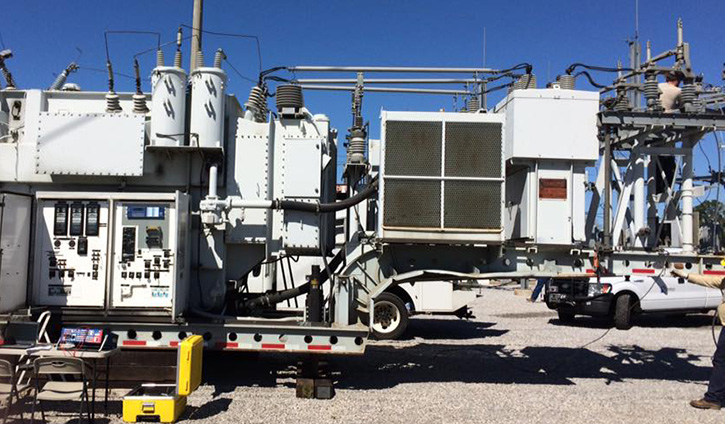
So far, there is no dollar figure estimate on the amount of damage to the substation owned by PowerSouth Energy Cooperative, which is EREC’s generation and transmission facility. PowerSouth brought in a mobile substation which they installed Sunday along with EREC line crews, restoring power by 5:45 p.m. Sunday. the mobile unit will remain in place until the permanent substation has been repaired, which may take up to six weeks because of the extensive damage.
“Our members will incur no extra cost because of this event. Response to events such as this is part of the business of power delivery to our system,” Owens said. “The mobile substation is fully capable of providing the same reliable electric service to our members as the permanent Jay substation.”
Pictured top: This mobile substation is now providing power to about 2,500 EREC customers in the Jay area following a Sunday morning substation fire, pictured below. Photos for NorthEscambia.com, click to enlarge.
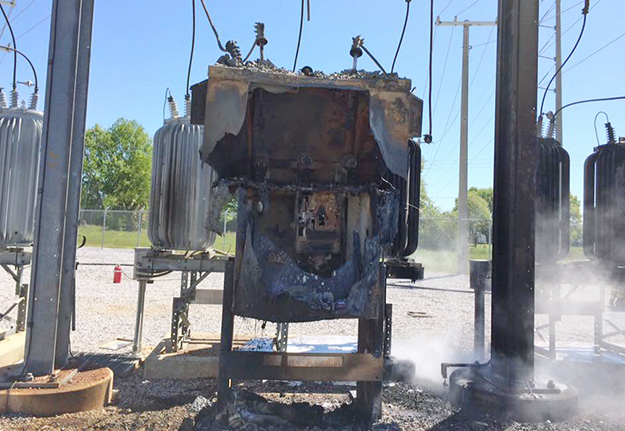
Below: Another photo of the mobile substation:
Molino Program To Discuss Historic Uses For Farm Feed Sacks
April 6, 2016
The West Florida Public Libraries and the Molino Mid-County Historical Society will present a program on the farm feed sack and its many diverse uses Thursday at 6 p.m. at the Molino Community Complex.
 Coletta Stejskal Bailey, textile coordinator at the Baldwin County Heritage Museum, will discuss the cotton bag’s origin from the late 1840’s to its impact during the Depression and World War II.
This event is being held in conjunction with “The Way We Worked,” a Smithsonian Traveling Exhibition on display until April 30 at the Lillian F. King Museum, located in the Molino Community Complex. Viewing hours are 10 a.m. to 4 p.m. weekly, closed Sundays, and open during the feed sack presentation from 6 to 7:30 p.m.
“The Way We Worked” has been made possible in Molino by the Florida Humanities Council. “The Way We Worked”, an exhibition created by the National Archives, is part of Museum on Main Street, a collaboration between the Smithsonian Institution and State Humanities Councils nationwide. Support for Museum on Main Street has been provided by the United States Congress.
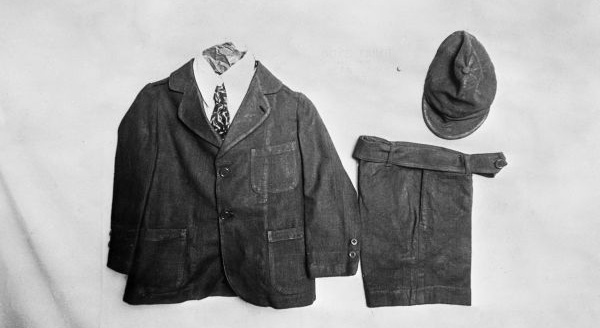
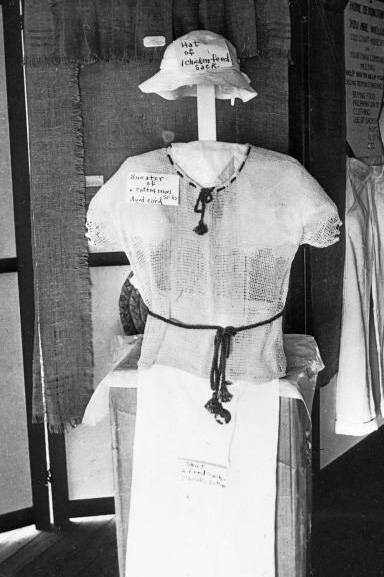
Pictured: Feed sack clothing in the 1930’s in Florida. Courtesy State Archives of Florida.
Northview Beats Jay; Tate Tops West Florida; NHS Softball Rounds Out Season
April 6, 2016

Northview 8, Jay 4
The Northview Chiefs defeated the Jay Royals Tuesday night by a score of 8-4.
 The Royals struck first with two runs in the second inning. Northview battled back with a run in the fourth inning and a run in the fifth inning to tie the game at 2-2. The Chiefs exploded for five runs in the sixth inning to take a 7-2 lead, but Jay tacked on two in the bottom half of the sixth for a 7-4 game heading into the final inning, where Northview added one more insurance run for the 8-4 victory.
Leading hitters for the Chiefs were Thomas Moore (3-3, RBI); Jared Aliff (2-4, 2B, RBI); Seth Killam (2-3, 2 runs); Quentin Sampson (1-4, 2 RBI, SB, run); Roman Manning (1-4, 2 RBI); Josh Neese (1-2); Zach Payne (1-4, 2B, RBI); Jacob Dunsford (1-3, run). Luke Ward scored two runs for the Chiefs, while Devin Stabler and M.J. Jones each added one run.
Josh Neese earned the win in relief for Northview, throwing 5 1/3 innings, giving up two unearned runs on only one hit with two strikeouts. Daniel Mascaro pitched 1 2/3 innings, giving up two runs on one hit and three strikeouts. The duo combined to only allow two hits all night.
Logan Dobson was the losing pitcher for Jay, throwing six innings, giving up seven runs on 11 hits while striking out two batters. Brandon Covan (1-3, run) and Connor Moye (1-4) recorded the only hits for the Royals.
With the win, Northview improves to 6-8 overall and 3-6 in district, while Jay falls to 5-11 and 3-6 in district. Northview plays Wednesday night at home aganst Corbin (KY) High School.
Tate 3, West Florida
The Tate Aggies beat the West Florida Jaguars Tuesday 3-1 .
Hunter Nesmith was 2-3 with a double in the second inning and a single in the fourth as Tate earned the win at home.
Madison Lockman earned the win in relief for the Aggies with two innings on the mound with no runs and striking out two. Trace Penton pitched two for the Aggies, allowing one run and walking one. Jake Davis also pitched two for Tate, striking out three with no hits, no runs and no errors. Logan McGuffey pitched one inning for Tate, striking out three with no hits, no runs and no errors.
The Tate Aggies scored one in the second inning, matching West Florida’s lone score. Josh Kea hit a sacrifice fly for the score. In the fourth inning, Tate scored a couple on a two-run single from Mason Land.
SOFTBALL
Gulf Breeze 10, Northview:
The Northview Lady Chiefs lost their final game of the Regular season at the Gulf Breeze Dolphins 10-4.
Tori Herrington took the loss in 6 innings while striking out 4, walking 2, allowing 8 hits, 10 runs and 7 earned runs.
Batting for the Lady Chiefs were Hannah Ging: 1-2 with a walk and 2 runs. Tori Herrington: 1-2 with 2 walks and 2 runs. Aubree Love: 1-4 with 3 RBI’s, Jamia Newton: 1-4. Kendall Enfinger 1-4.
The Chiefs will begin the district tournament Monday at Northview. Opponent and time TBD.

Prosecutor: ‘We Need To Talk About Demand’ To Curb Human Trafficking
April 6, 2016
A Washington state prosecutor told a Florida panel charged with fighting human trafficking that it must crack down on men who seek to buy sex from prostitutes.
Val Richey, a senior prosecutor in King County, Wash., told the legislative committee of the Florida Statewide Council on Human Trafficking that his jurisdiction — which includes Seattle — vigorously prosecutes buyers and pimps.
“How do you expect to uproot a tree when all you’re doing is ripping at the leaves?” Richey, appearing by video, asked the panel. “If we really want to end commercial exploitation, then we need to talk about demand.”
The prosecutor said his office had changed its approach to sex trafficking after studying the characteristics of pimps, buyers and victims in King County, which has a population of about 2 million.
The buyers were overwhelmingly white — 79 percent — and upper class, Richey said. The victims were overwhelmingly poor and members of a minority, and many lived on the street. Many had been sexually abused before they were trafficked. Many had mental illnesses.
“This crime just disproportionately hammers these vulnerable communities,” Richey said.
But prosecutors also found that prostitutes were being arrested at 25 or 50 times the rate of buyers. That raised ethical and moral questions, Richey said — and it also didn’t work.
“I don’t know anybody, anywhere in the country, who feels that they have a grip on the problem of trafficking,” he said. “We’re all doing our best, we’re all coming up with innovative responses — but nobody’s got it under control.”
Richey said the demand is vast, with tens of thousands of men buying sex and 100 websites selling it in his jurisdiction alone. Prosecutors quickly found that taking pimps off the streets didn’t affect demand.
“Traffickers, like drug dealers, are not deterred by other traffickers getting prosecuted,” Richey said. “They’re enabled. And that really taught us something about what our focus needed to be. And that, namely, was the buyer.”
In 2015, no King County juveniles were arrested for prostitution, down from 50 in 2009. But during that time, 140 men who bought sex from minors were prosecuted.
Buyers who are sentenced in King County must participate in a 10-week program called “Stopping Sexual Exploitation.” They have to pay for it, Richey said, and the money goes straight to victim services.
Additionally, men in the program learn about the high rate of violence against prostitutes by buyers, not just pimps and traffickers. Richey said 73 percent of prostitutes in his jurisdiction had been physically assaulted, 64 percent to 83 percent had been threatened with weapons, and 53 percent to 62 percent had been raped. Nearly 80 percent want out of the life.
Richey also noted that the peak time for buyers to solicit sex is 2 p.m. — usually from work, setting up dates for after work. Some even have sex on the grounds of their workplace. That’s why 18 King County businesses with 125,000 employees are collaborating with prosecutors in cracking down on buyers of sex.
“They do not want the liability,” Richey said. “They do not want the loss of productivity.”
After Richey’s presentation, Florida Department of Children and Families Secretary Mike Carroll said it was the most comprehensive he’d ever seen on the subject.
“We’ve got to get upstream on the demand for this,” he said.
by Margie Menzel, The News Service of Florida
Cantonment Man Arrested On Federal Meth And Weapons Charges
April 5, 2016
A Cantonment man wanted by federal authorities on drug and weapons charges is behind bars.
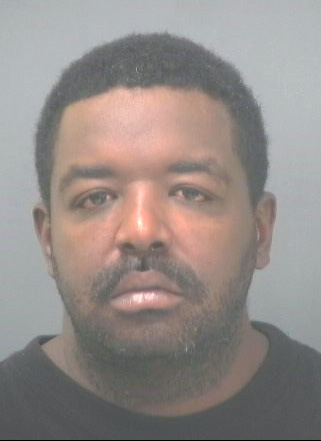 Keith Terrill Prim, age 30 of Stacey Road, was taken into custody Monday at an apartment complex off University Parkway. He is facing charges of distribution of over 50 grams of methamphetamine, five counts of distribution of methamphetamine over five grams, and possession of a firearm by a convicted felon.
Prim made his first appearance in federal court in Pensacola Monday before U.S. Magistrate Judge Charles J. Kahn, Jr.
He is due back before a federal judge on Thursday. In the meantime, he is being held in the Santa Rosa County Jail without bond.
Local authorities, the Gun Crimes Response Team and the Bureau of Alcohol, Tobacco, Firearms and Explosives had been searching for Prim for a couple of weeks. His arrest came after an anonymous tip to his whereabouts was received.