
Commission Gives Go Ahead To Fire Tax Increase To Staff South-End Stations
June 17, 2016
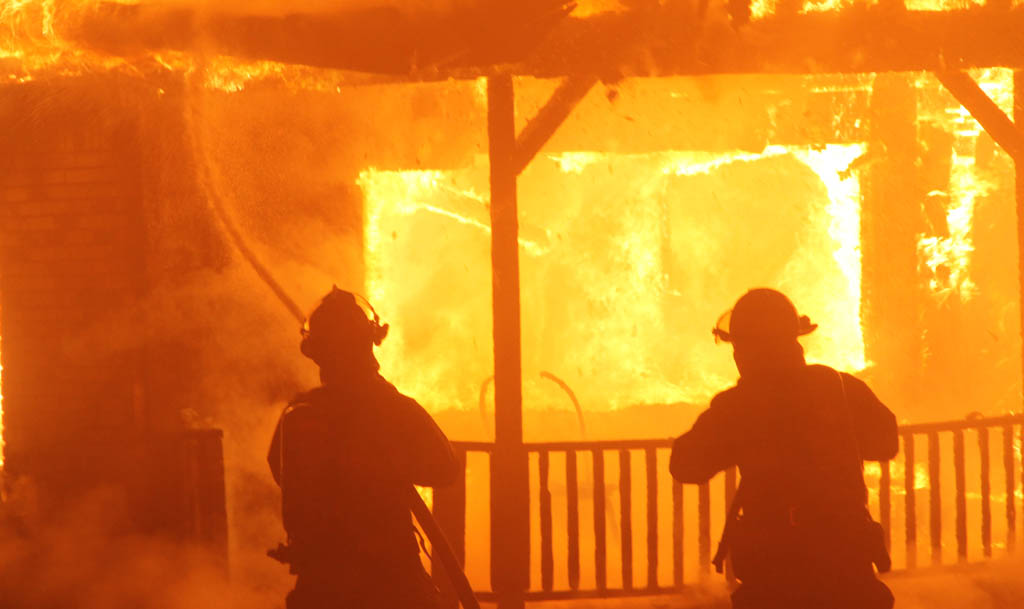
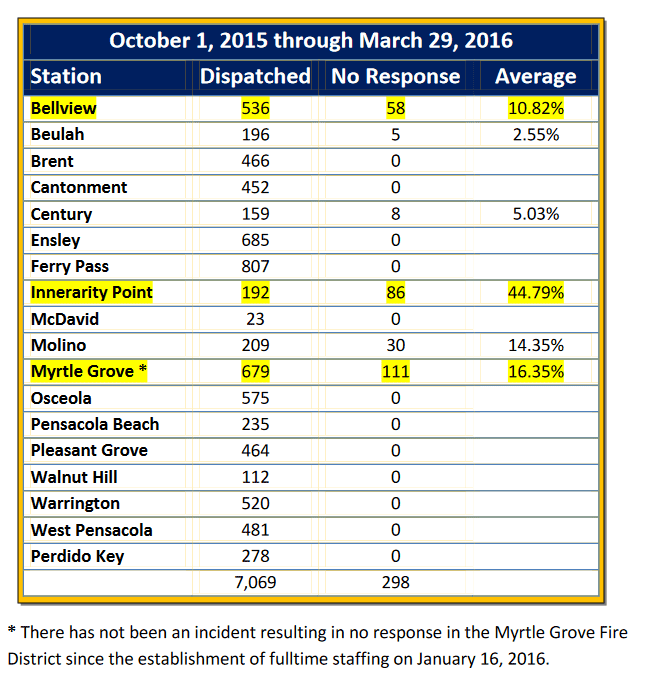
The Escambia County Commission has given official approval to a $25 fire tax increase to finishing staffing south end fire stations with paid firefighters .
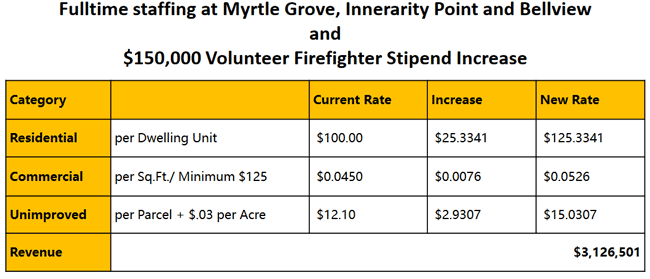
The commission voted 4-1 Thursday night, with Steven Barry against, to add the $25, increasing the fire tax for the average homeowner from $100 to $125 beginning with the next fiscal year.
The proceeds from the extra $25 per year municipal services benefit unit assessment (MSBU) will fund 24/7 paid firefighters at the Myrtle Grove, Innerarity Point and Bellview stations, plus fund $150,000 in volunteer firefighter stipend increases.
The tax is not be final until the county’s budget process for the next fiscal year is complete.
Commissioner Steven Barry voted against supporting the $25 MSBU increase because no District 5 station will receive additional benefits.
Last year, Escambia County increase the fire MSBU by $15 to fund full-time staff at Ferry Pass and West Pensacola.
NorthEscambia.com file photo.
Escambia Man Gets Life For 2014 Murder
June 17, 2016
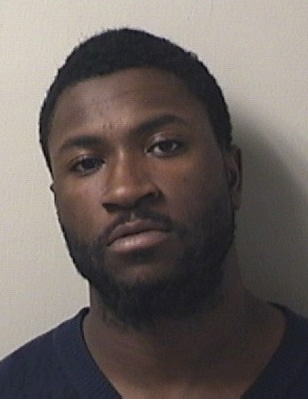 Tony Stroud, Jr., was convicted by an Escambia County jury of first degree premeditated murder for the death of Tyler Evans. Following the verdict, Circuit Judge Frank Bell sentenced Stroud to life in state prison without the possibility of parole.
On August 20, 2014, Evans’ body was found to be dumped at the rear of an undeveloped neighborhood off of Gulf Beach Highway. The cause of death was determined to be a single gunshot wound to the head. The investigation revealed that
the crime occurred on August 19, 2014, at an apartment on Stonebrook Drive, as confirmed by DNS evidence.
ECUA Helps Prepare 4-H Students For Mock Legislative Session
June 17, 2016
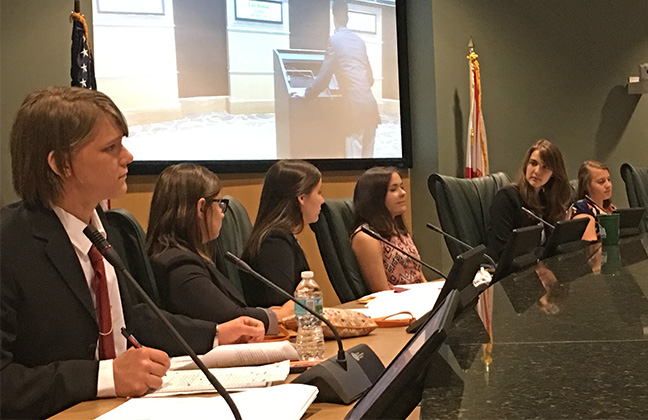
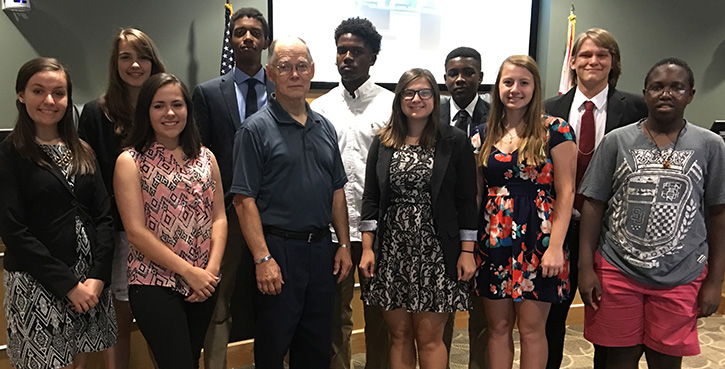
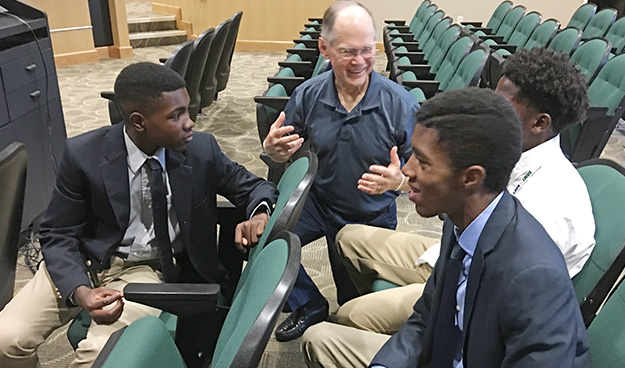
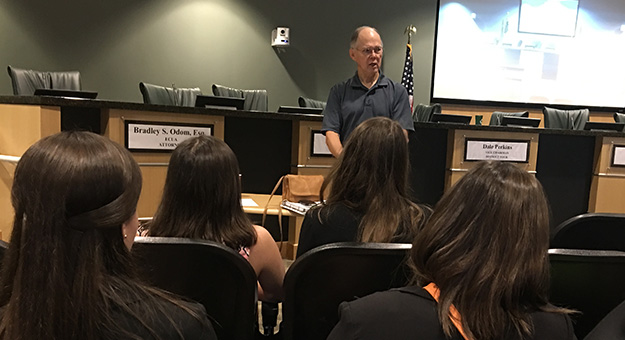
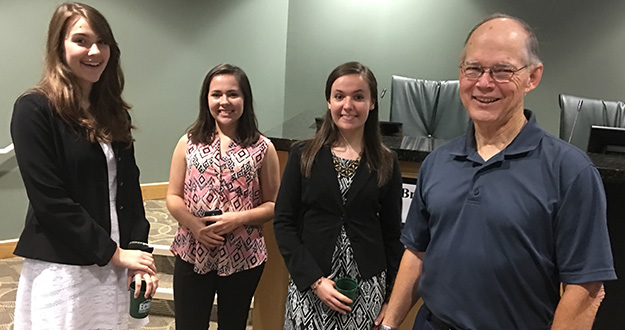
Escambia County 4-H students are scheduled to take part in a mock legislative program at the state capitol late this month. In preparation for that week, Larry Walker, ECUA District 5 board member, hosted the students Thursday in the ECUA board room to allow the students to practice their legislative skills in a governmental chamber environment.
The training prepared the students for the upcoming 4-H Legislature and gain an understanding of board proceedings similar to legislative committees that happen in organizations in all forms of government and private corporate enterprise.
The local students have participated in an intensive five-part training program, which was directed by 4-H agents and adult volunteers, who contributed their knowledge of parliamentary procedure, research, debating, the art of persuasion, and formal presentation in committee and chamber sessions.
This year’s 4-H Legislature is set for Monday, June 27 through Friday, July 1.
The civic education event allows students to write bills, act as lobbyists, pass the bills through various committees and debate the potential laws on the Capitol House and/or Senate Floor as acting representatives and senators. This exercise provides the 4-H’ers an opportunity to debate issues and experience the legislative process first-hand. This year, 14 students will represent the Escambia County 4-H Program.
Pictured: Escambia County 4-H mock legislative students practice their skills in the ECUA board room Thursday. Photos for NorthEscambia.com, click to enlarge.
 .
.
One Trapped In UWF Campus Crash
June 17, 2016

One person was critically injured in a single vehicle wreck Thursday afternoon on the University of West Florida campus.
The driver of a Chevrolet pickup truck lost control and wrapped the vehicle around a tree. Reports from the scene indicated that the driver was trapped between the frame of the truck and the tree, requiring extensive extrication efforts that lasted over one hour.
Further details regarding the accident on Campus Drive near the UWF ballfields have not been released.
The Ensley, Brent, Ferry Pass and Cantonment Stations of Escambia Fire Rescue, the Pace Fire Department, Escambia County EMS and UWF Police responded to the crash.
NorthEscambia.com photos by Kristi Barbour, click to enlarge.

Northview FFA ‘Fresh From Florida’ Program Named Second Best In State
June 17, 2016
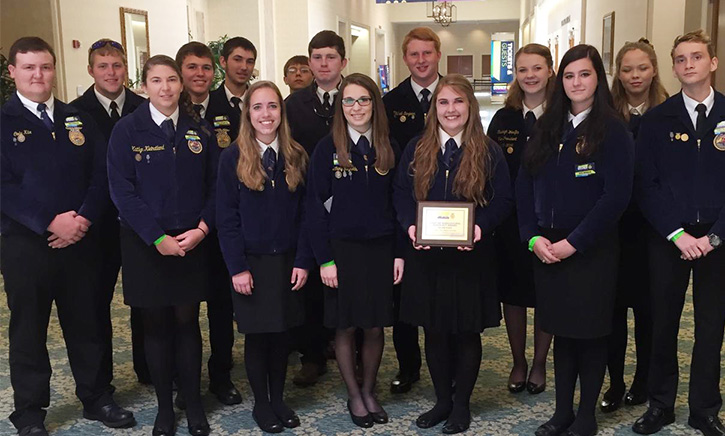
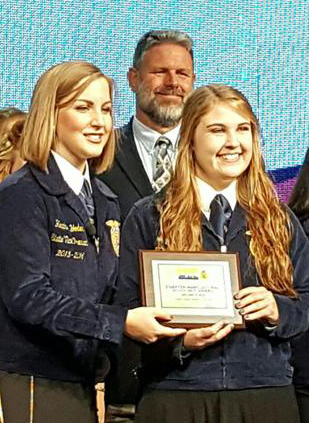
The Northview High School FFA’s “Fresh From Florida Advocacy Program” was named the second best program in the state during the FFA state convention Thursday in Orlando.
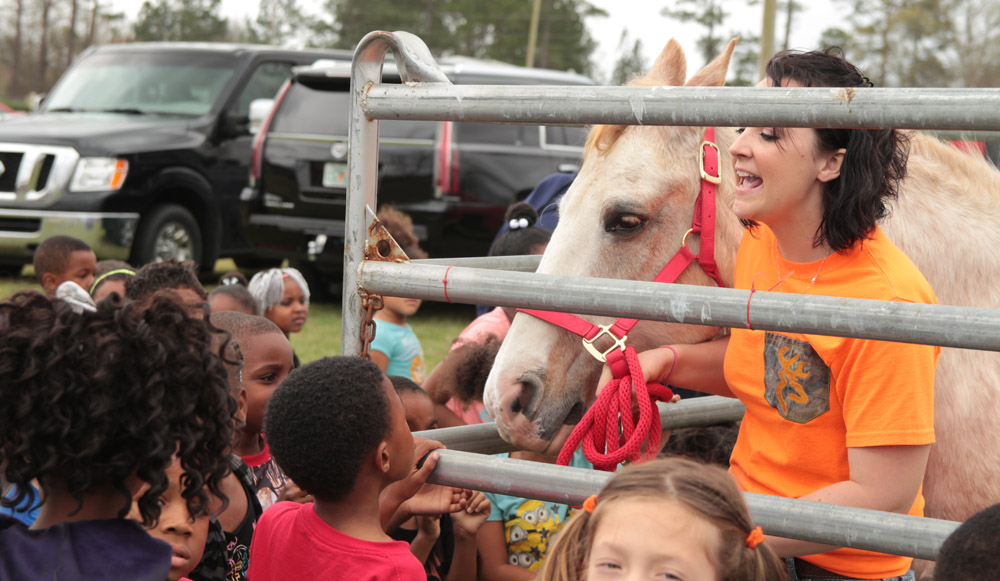
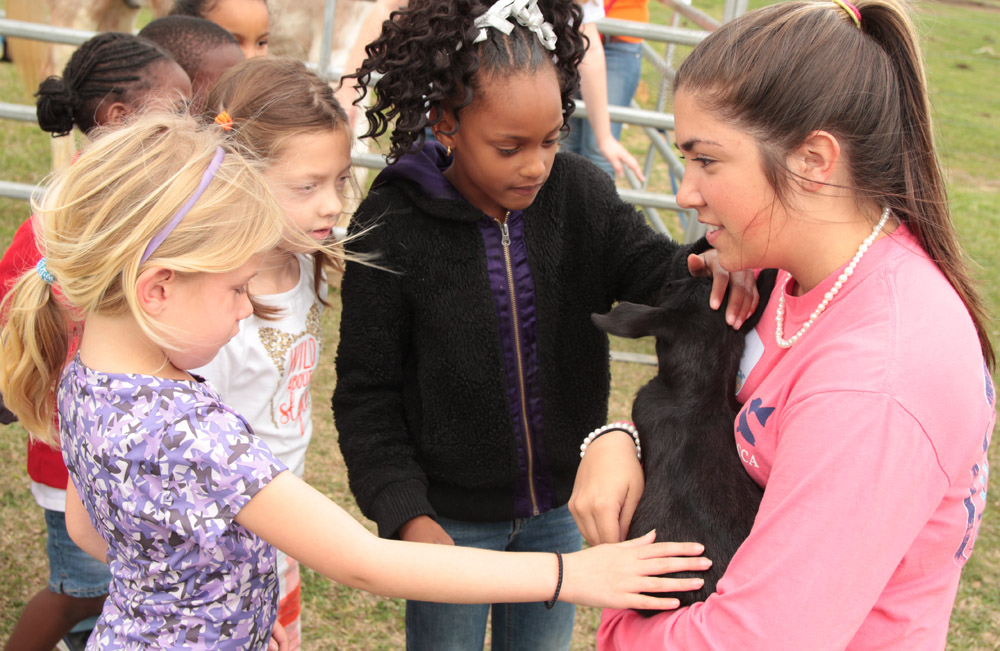
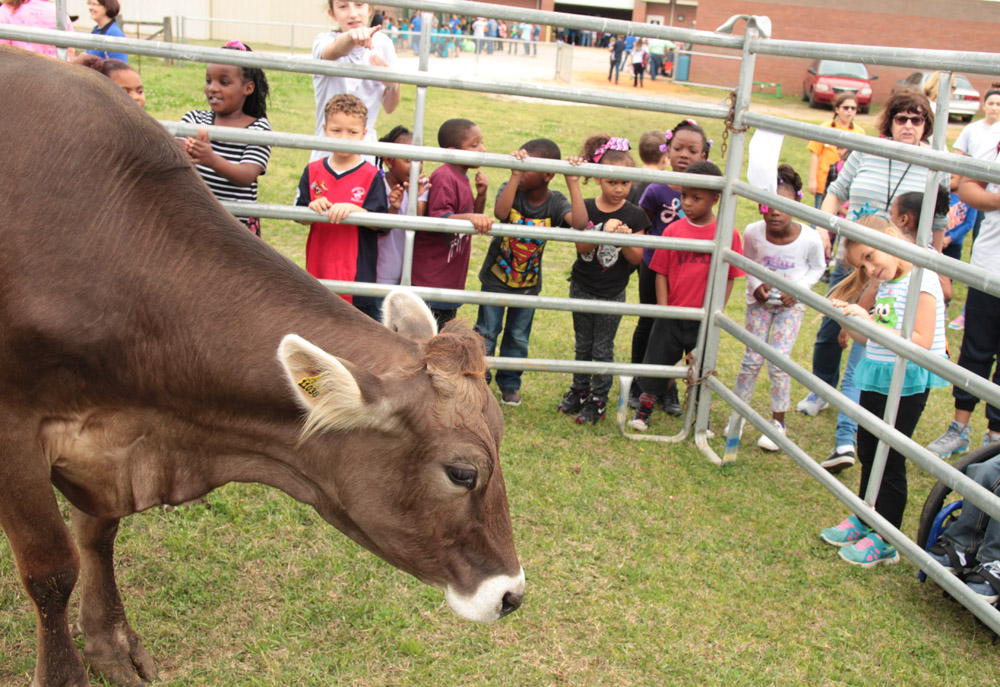
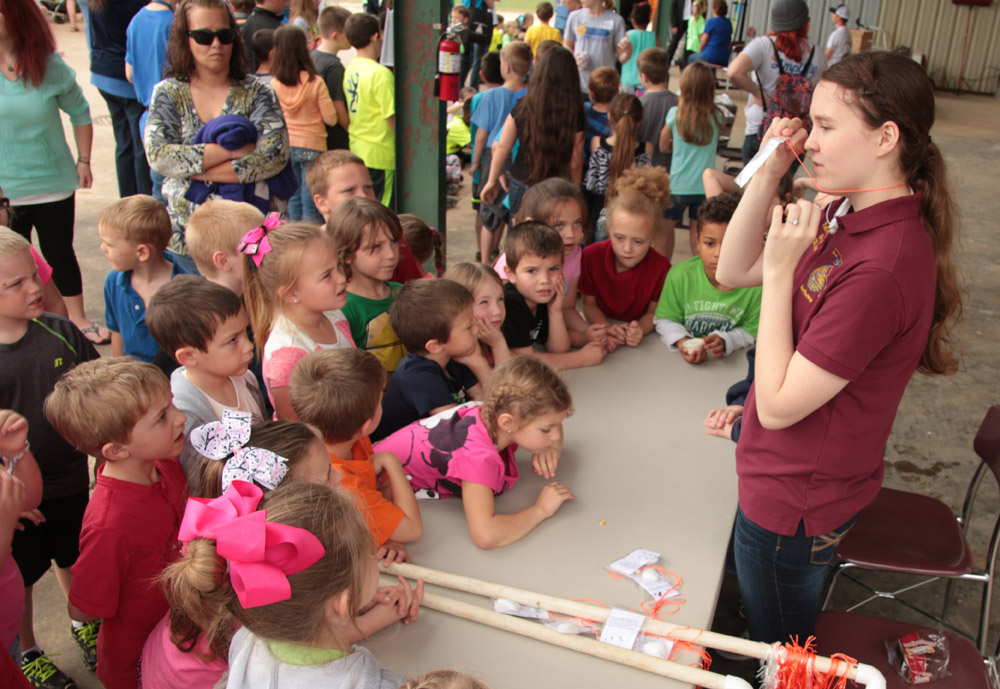
 Formerly known the Food for America program, the Fresh from Florida Advocacy Program is designed to encourage FFA members to participate in agricultural literacy and awareness projects on the local level. The annual program, conducted by the Northview FFA in March, gave hundreds of students a chance to learn about agriculture firsthand as they got up close and personal with farm animals, farm equipment and more. The students even had the opportunity to make their own butter and enjoy it on crackers.
In addition to their second place state awards in 2015 and 2016, the Northview High School FFA “Fresh From Florida” program was previously honored as the best in Florida for three consecutive years.
Pictured top: Members of the Northview High School FFA with the second place award in the Fresh from Florida Advocacy Program. Pictured inset: Northview’s Halee Weaver accepts the award on stage during the annual FFA State Convention in Orlando Thursday. Pictured below: File photos from March 2016 event at Northview High School. NorthEscambia photos, click to enlarge.
Obama Comforts Survivors Of Orlando Massacre
June 17, 2016
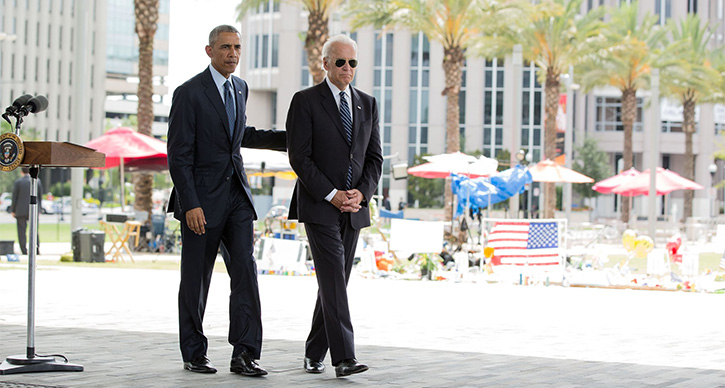
President Barack Obama spent Thursday afternoon in Orlando, comforting the family members of victims and survivors of the Pulse nightclub massacre.
“Their grief is beyond description,” Obama said after he and Vice President Joe Biden spent two hours at the Amway Center, meeting privately with people who lost loved ones in Sunday’s attack. “These families could be our families. In fact, they are our family. … And today the vice president and I told them, on behalf of the American people, that our hearts are broken, too.”
Obama arrived in Orlando at 12:45 pm, accompanied on Air Force One by U.S. Sen. Marco Rubio, R-Fla., and U.S. Rep. Corrine Brown, D-Fla. Biden had arrived shortly before on Air Force Two with U.S. Sen. Bill Nelson, D-Fla. They were greeted on the tarmac by Gov. Rick Scott, Orlando Mayor Buddy Dyer and Orange County Mayor Teresa Jacobs before traveling in a motorcade to the Amway Center.
After meeting with the families, Obama and Biden went to the Dr. Phillips Center for the Performing Arts, where they placed bouquets of 49 white roses — one for each of the people who died in the attack — at a makeshift memorial there.
After several moments of silence, Obama moved to a podium and spoke to reporters, praising the first responders and medical personnel who responded to the attack. The shooter, St. Lucie County resident Omar Mateen, was killed by police.
Obama quoted one of the doctors as saying, “After the worst of humanity reared its evil head, the best of humanity came roaring back.”
The president called for unity across party lines “to stop killers who want to terrorize us.” He vowed to be “relentless” against terrorist groups like ISIL and al-Qaida.
“We are going to destroy them,” he said. “We are going to disrupt their networks and their financing and the flow of fighters in and out of war theaters. We’re going to disrupt their propaganda that poisons so many minds around the world.”
However, he noted, the last two terrorist attacks in the United States, in Orlando and San Bernardino, were “homegrown.”
“It’s going to take more than just our military, more than just our intelligence teams,” he said. “If you have lone wolf attacks like this, hatched in the minds of disturbed persons, we’re going to have to take different kinds of steps to prevent these kinds of things from happening.”
He noted that the Pulse attack was done by “a single killer with a powerful assault rifle,” saying that while the motives may have been different than in other mass shootings in Newtown, Conn., or Aurora, Colo., “the instruments of death are similar.”
The president said he was pleased that the U.S. Senate had agreed to consider gun control measures. .
“Today, once again, as has been true too many times before, I held and hugged grieving family members and parents, and they asked, ‘Why does this keep happening?’ ” he said. “And they pleaded that we do more to stop the carnage. They don’t care about the politics — and neither do I.”
Those who defend easy access to assault weapons, he said, “should meet these families and explain why that makes sense.”
Jay-Fidelis All-Stars Win 8U District Tournament
June 17, 2016
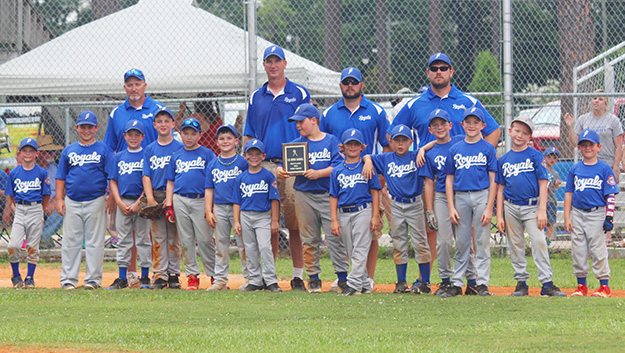
The Jay-Fidelis Rookie League All-Star Team recently won the AL District 7 Cal Ripken 8U District Tournament at Tom Byrne Park in Atmore. The team will represent the district at the 2016 Alabama 8U Cal Ripken State Tournament in Athens, AL, from June 24-28.
The team is accepting donations to offset travel and tournament expenses. Click here to donate.
Pictured: (front, L-R) Carson Baxley, Nicholas Baxley, Nathan Strickling, Brady Godwin, Rowdy Fretwell, Judson Marcantel, Cooper Willis, Mason Mathis, Mason Jordan, Ethan Pipkin, Jacob Knowles, Clay Norris, Ryan Wells, and Reece Partrick, (back) Stewart Baxley, Assistant Coach; Brandon Godwin, Head Coach; Brent Jordan, Assistant Coach; Brandon Pipkin, Assistant Coach. Submitted photo for NorthEscambia.com, click to enlarge.
Wahoos Split Doubleheader With Mobile
June 17, 2016
In an all-important doubleheader against the Mobile BayBears, the Pensacola Blue Wahoos split the games to take a half game lead in the Southern League South Division over the Biloxi Shuckers.
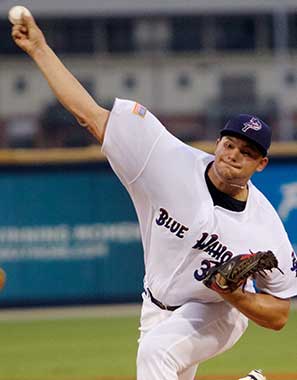 In a must-win game, Pensacola pinch hitter Jeff Gelalich hit a soft line drive to the opposite field in left to give the Blue Wahoos a walk-off win, 3-2, with two outs in the seventh inning.
It was Pensacola’s fourth walk-off hit in its last seven games.
Then in the second game, Mobile returned the favor when Mobile right fielder Gabriel Guerrero led off with a single to center and then first baseman Kevin Cron singled to right field, allowing Guerrero to reach third base. Mobile third baseman Cody Regis delivered a deep sacrifice fly ball to right center to score Guerrero for a 3-2 lead.
The split puts Pensacola at 38-29 a half game up on the Biloxi Shuckers, who dropped to 37-29 with a 3-1, loss to the last place Jacksonville Suns.
In the first game, Pensacola catcher Kyle Skipworth launched an opposite field homer to left field, his third in 35 at bats this season, to start the sixth inning and tie the game, 2-2, in the sixth inning.
Pensacola starting pitcher Amir Garrett reached 5.2 innings before being yanked after throwing 98 pitches. The southpaw reached his pitch limit after throwing 10 pitches to third baseman Travis Denker before walking him.
Garrett allowed three hits and three walks and gave up two earned runs to Mobile, while striking out eight.
Pensacola manager Pat Kelly said the victory was critical.
“To be up a half game in the win column in this division is huge,” Kelly said. “It is very important.”
Pensacola left fielder Tony Renda said he’s confident in his Blue Wahoos teammates to win the first half and make the playoffs for the second time in the team’s five-year history.
“In my eyes we are clearly the best,” said Renda, who was 3-7 with a run scored and his 24th double of the year. “I have all the faith in the world that we will finish strong.”
In the second game, Pensacola shortstop Calten Daal smashed a standup triple to the right center gap that drove in Renda, who hit a hard liner to left field, and pulled the Blue Wahoos within, 2-1. Elizalde then lifted a deep fly ball to left field to score Daal and tie the game, 2-2. Mobile then pulled out the victory in the eighth.
Mobile scored first when left fielder Steward Ijames hit a solo blast into the Hill-Kelly Dodge hill in right field.
Mobile went ahead, 2-0, in the top of the fourth inning when Pensacola starting pitcher Barrett Astin intentionally walked BayBears shortstop Ildemaro Vargas to pitch to right-hander Billy Buckner, who was hitless this year. But Astin walked him on five pitches to score Mobile’s Cron.
Mobile’s Buckner retired the last 12 batters in a row before coming out at the end of the fourth inning for reliever Luis Ramirez, who retired two more, before hitting Pensacola third baseman Eric Jagielo.
The Blue Angels Are Back
June 16, 2016
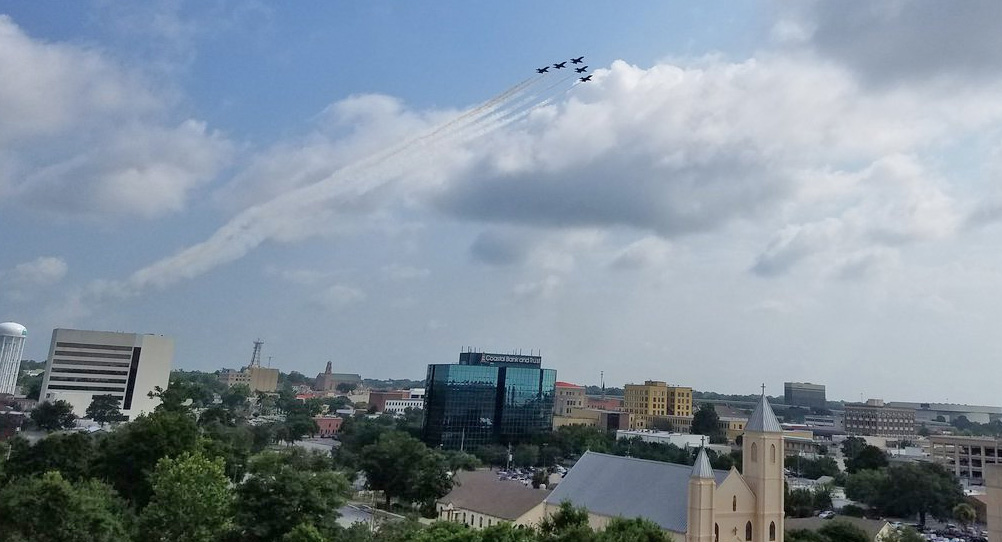
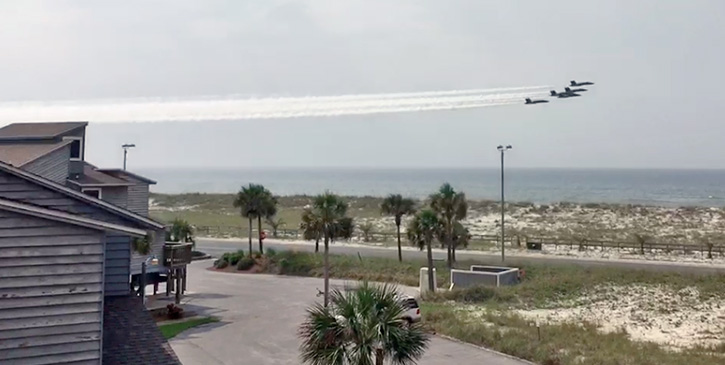
The Blue Angels announced Thursday morning that they have started training flights in preparation to resume the team’s Pensacola practice and air show season schedules.
The team flew its first training flight about 9:30 this morning in a “Big V” formation, with five aircraft, over downtown Pensacola and Pensacola Beach this morning.
The formation few over Perdido Key towards Pensacola Beach, then over Palafox St. in downtown Pensacola before returning to Forrest Sherman Field on Naval Air Station Pensacola.
Pictured: The Blue Angels back in the skies Thursday morning. Bottom photo reader submitted by Douglas Berry for NorthEscambia.com, click to enlarge.
Cantonment Hit And Run Driver Identified, Facing Arrest
June 16, 2016
Thanks to public tips, the Florida Highway Patrol has identified the driver of a Dodge Ram involved in a May 31 hit and run crash in Cantonment.
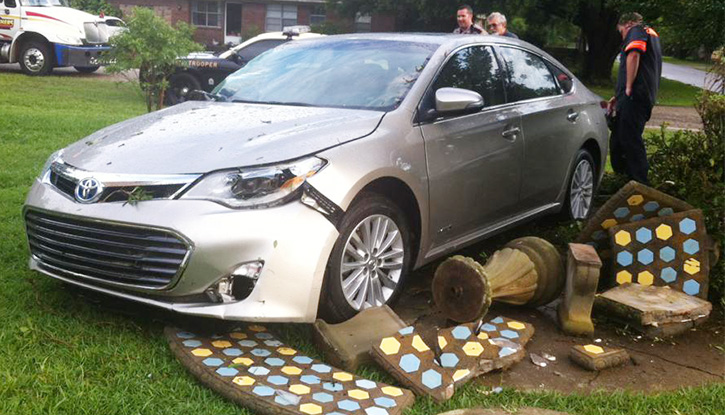
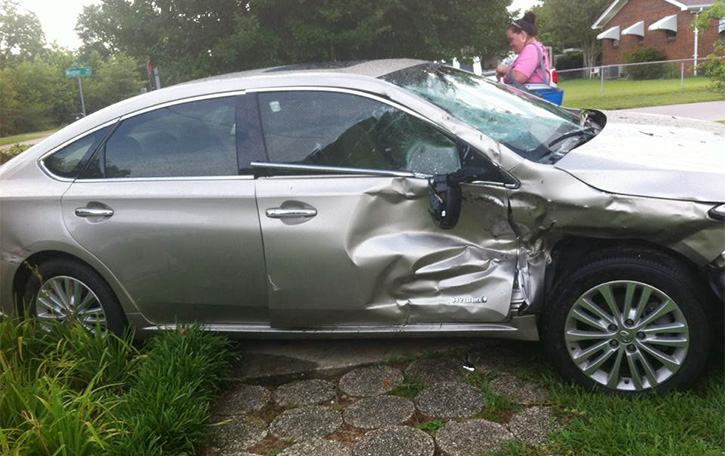
According to the FHP, the Dodge Ram was traveling northbound on Wegner Avenue approaching Mintz Lane when the driver failed to stop at a yield sign and struck a Toyota Avalon driven by 71-year old Elizabeth Harris of Cantonment.
 The Toyota left the roadway and struck a concrete table and landscaping at 302 Wegner Avenue, while the driver of the Dodge Ram fled the scene northbound on Wegner Avenue. Harris and her six-year old passenger suffered minor injuries.
Wednesday night, the FHP said the Dodge Ram was located on Well Line Road and identified as the the vehicle involved in the crash. The driver of the Dodge was identified as 25-year old Colby Chase Myrick of Cantonment. The FHP said Myrick has an arrest warrant pending judicial review for leaving the scene of a crash with injuries, leaving the scene of a crash with property damage, driving while license revoked habitual, reckless driving with injuries, driving while license expired more than six months and tampering with evidence.
Myrick was also cited for failure to report a crash and failure to provide insurance in a crash.
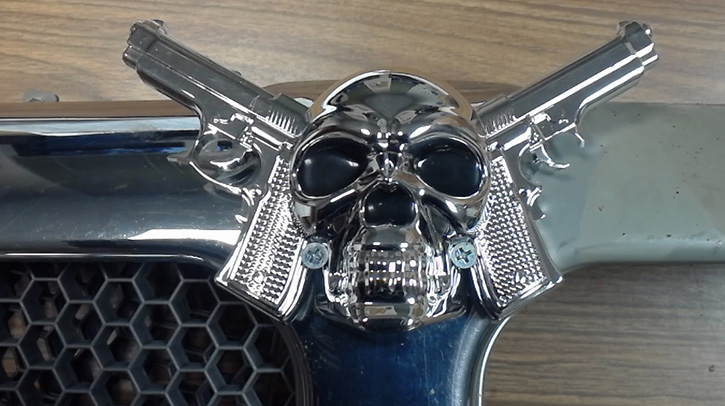
Myrick’s 1996 Dodge ram was identified by a piece of the front grill left behind at the crash scene with a chrome skull with two guns mounted to the front.
Vehicle photo by Penny DeVries for NorthEscambia.com, click to enlarge.