

The Way We Worked: Molino To Host Smithsonian Exhibition
March 9, 2016
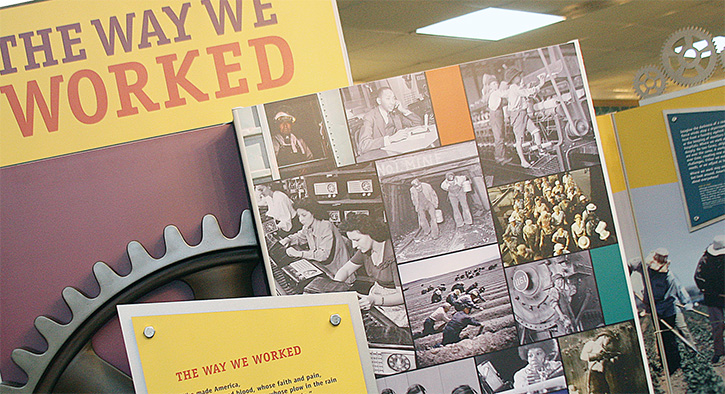
West Florida Public Libraries and the Molino Mid-County Historical Society will host “The Way We Worked,” a Smithsonian Traveling Exhibition from Saturday, March 19 to Saturday, April 30. This exhibition, which celebrates the history of American workers, will be on display at the Lillian F. King Museum located in the Molino Community Complex, 6450 Highway 95A North in Molino. Hours of operation are Monday through Saturday from 10 a.m. to 4 p.m.
In addition to the traveling exhibition, the Library and the Molino Mid-County, Alger-Sullivan, and Barrineau Park historical societies, have partnered to create six weeks of interesting related events showcasing the unique work history of North Escambia. Join us for a look back in time to the way we worked in North Escambia.
“The Way We Worked” has been made possible in Molino by the Florida Humanities Council. “The Way We Worked”, an exhibition created by the National Archives, is part of Museum on Main Street, a collaboration between the Smithsonian Institution and State Humanities Councils nationwide. Support for Museum on Main Street has been provided by the United States Congress.
Schedule of Events
Discover The Way We Worked in North Escambia: A Smithsonian Institution Traveling Exhibit
“The Way We Worked” in North Escambia, the Exhibit
- March 19 – April 30, Monday through Saturday, 10 a.m. to 4 p.m. – Molino Community Complex
The Smithsonian Institution is here. Come see this interactive exhibit designed to engage all ages which spotlights the role of work in our communities. Visit the exhibit and join us for six weeks of events and activities which celebrate the way we worked in North Escambia.
“The Way We Worked” traces America’s rich work history. With their hands and minds hard at work and sweats on their brows, American workers perform a diverse array of jobs to power our society. Whether we work for our own professional satisfaction & personal growth or to ensure the well-being of ourselves and our families, work is a part of nearly every American’s life.”
“The Way We Worked”: Kick-Off Event
- Saturday, March 19, 10 a.m. to 3 p. m. – Molino Community Complex, Molino Branch Library
Join us for a look back in time to the way we worked in North Escambia. Explore the Smithsonian exhibit, enjoy live entertainment, watch a potter, a flintknapper and more. Take a look at the line-up below.
- 10 a.m. – Opening Ceremony
Ribbon cutting performed by Commissioner Barry
- 10:15 a.m. – Smithsonian Exhibit Opens
Take a stroll through the museum to learn how work impacts our lives and communities.
- 10:30 a.m. – Southern Revival Band
Hear the “Molino Florida Song” performed by local musicians, Caleb Dennis and the Southern Revival Band.
- 11:30 a.m – Mission San Joseph de Escambe
Dr. John E. Worth, U.W.F. Anthropology professor, will speak about his archaeological work at this 250-year-old site on private land in Molino.
- 12:45 p.m. – Dogwood Dulcimers
Enjoy the down-home sounds of this stringed folk band.
- 1:45 p.m. – Panhandle Cloggers
Tap your toes along with the Panhandle Cloggers’ percussive folk dances.
- 2:30 p.m – The Change Gang .
Listen to traditional work songs performed by teens from the Pensacola Branch NAACP Youth Council and Allen Chapel AME Church Young People’s Department.
“The Way We Worked”: Molino History
- Thursday, March 31, 6 p.m. – Molino Branch Library, Auditorium
Enjoy video-graphic stories of long-time residents who recount memories of growing up in rural Escambia. Several of the interviewees will be present for a question and answer session.
“The Way We Worked”: Agriculture in North Escambia
- Saturday, April 2, 10 a.m. to 2 p.m., Barrineau Park Community Center
Join Barrineau Park Historical Society for a day of farming fun featuring a presentation from Extension Services at 1 p.m. Come learn how farming fed us all.
“The Way We Worked”: Farm Fabric – Feed Sacks
- Thursday, April 7, 6 p.m. – Molino Branch Library, Auditorium
Coletta Stejskal Bailey, Textile Coordinator at the Baldwin County Heritage Museum, will discuss the cotton bag’s origin from the late 1840s to its impact during the Depression and World War II.
“The Way We Worked”: A New Beginning for Old Industry: History and Archaeology of Molino Mills
- Thursday, April 14, 6 p.m. – Molino Branch Library, Auditorium
Join UWF graduate student, Melissa Maynard for insights into Molino Mills, a lumber mill which operated from 1865-1884 that helped develop a community and an industry.
“The Way We Worked”: From Can’t See to Can’t See
- Saturday, April 16, 1 p.m. – Pensacola Library, Meeting Room A
- Thursday, April 28, 6 p.m. – Molino Branch Library, Auditorium
Up before dawn and home after dark describes Teniadé Broughton’s talk on African American work experiences in rural Escambia County. The event also features the “Change Gang” performing historical work songs.
“The Way We Worked”: Escambia County Railroads, 1830s – 1950s
- Saturday, April 23, 1 p.m. – Alger-Sullivan Historical Society, Century
All aboard, at the Alger-Sullivan Historical Society Museum with Jerry Fischer and Russell Brown. Come learn about the county’s early railroads. Climb aboard Old 100, a sawmill transport steam engine, and tour the museum.
“The Way We Worked”: Colonial Work Story Times
- Saturday, April 9, 1 p.m. – Molino Branch Library, Auditorium
- Thursday, April 14, 6 p.m. – Pensacola Library
- Saturday, April 16, 1 p.m. – Tryon Branch Library
- Thursday, April 21, 6 p.m. – Century Branch Library
Join Sandra Pettis, retired Ferry Pass Elementary Librarian and a costumed member of the UWF Historic Trust for a story, demonstrations and hands-on activities about the way we worked in Colonial times.
“The Way We Worked”: Displays in Escambia County
- March and April – Tryon Branch Library
View a fascinating collection of antiques from the area belonging to Mr. Charlie Booher of Pensacola.
- March and April – Southwest Branch Library
This library features a collection of work-related items from the Alger-Sullivan Historical Society located in Century.
- March and April – Molino Branch Library
In addition to housing the Smithsonian Institution Traveling Exhibition, The Way We Worked, this facility also spotlights artifacts belonging to UWF Collections from Mission Escambe and the Molino Mills archaeological dig sites in Molino.
- March and April – Century Branch Library
This display houses a small collection of memorabilia from the Alger-Sullivan Lumber Company once located in Century.
New Highway 97 Bridge Opens In Walnut Hill
March 9, 2016
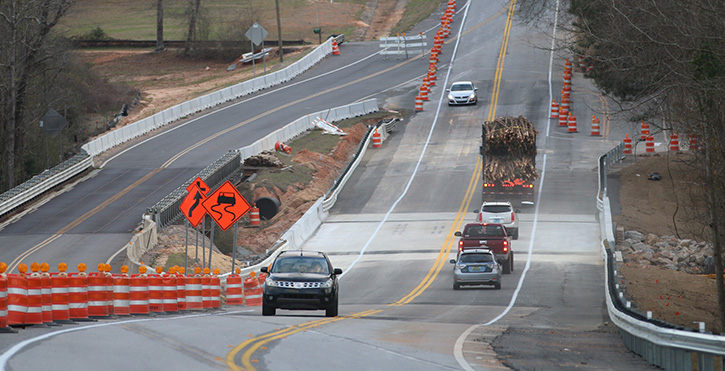
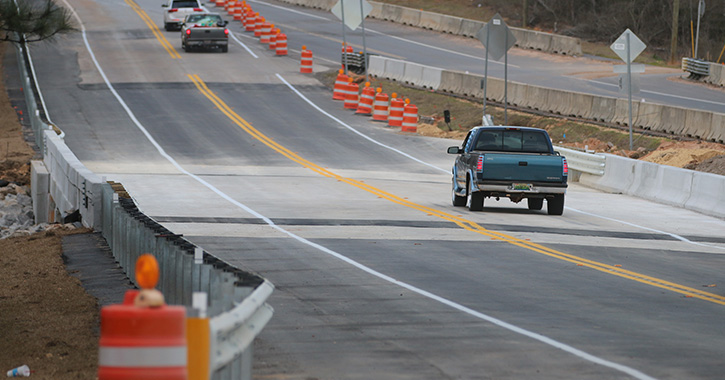
Traffic was shifted Tuesday to a new Highway 97 bridge over Little Pine Barren Creek in Walnut Hill. The $2.5 million project is, however, only partially done as crews will work to remove a temporary bridge and add a final layer of asphalt to the bridge approach. The original bridge that was replaced was 75 years old. NorthEscambia.com photos, click to enlarge.
 9
9
Running A Stop Sign Ends With Drug Charges For Escambia Man
March 9, 2016
Running a stop sign led to the arrest of an Escambia County man on multiple drug charges.
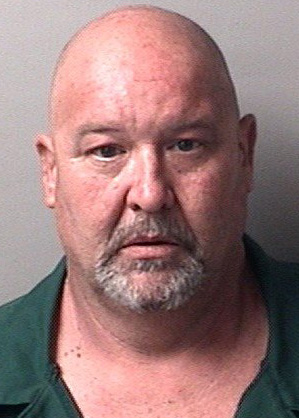 Dillon McDouglas Barr Jr., 49, was stopped by Escambia County Sheriff’s Office deputies after running a stop sign at Bobe Street and Hollywood Avenue.
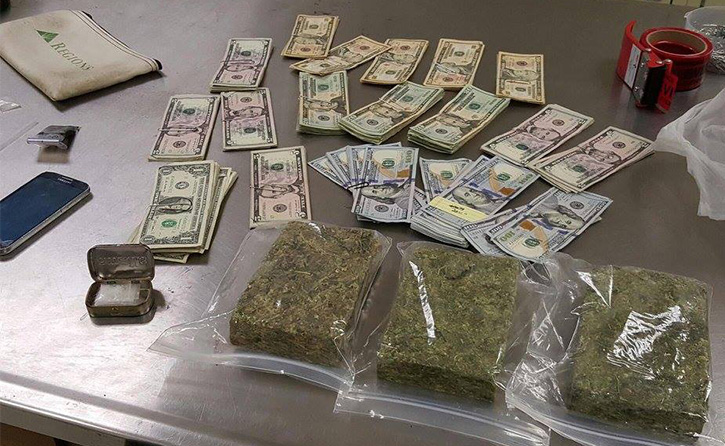
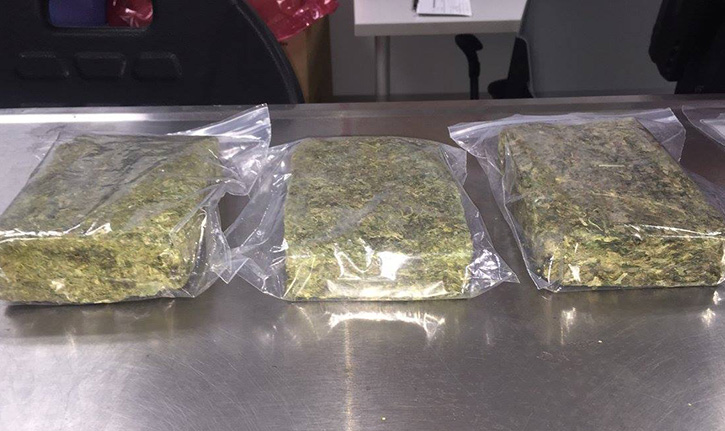
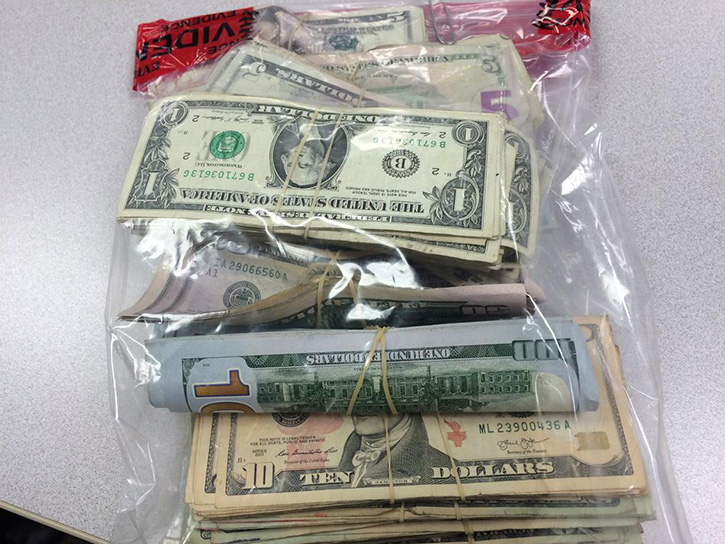
A check of Barr’s driver’s licenses revealed he had an active warrant in Escambia County, and he was placed under arrest. The deputy searched Barr and reported finding drug paraphernalia and methamphetamine inside his pockets. DA K-9 united searched Barr’s truck and found three large bricks of marijuana weighing 1,395 grams and more than $6,800 in cash, according to the Escambia County Sheriff’s Office.
Barr was charged with possession of marijuana over 20 grams, possession of marijuana with intent to distribute, possession of drug paraphernalia, and possession of methamphetamine with intent to distribute.
Fire Damages Cottage Hill Home
March 9, 2016
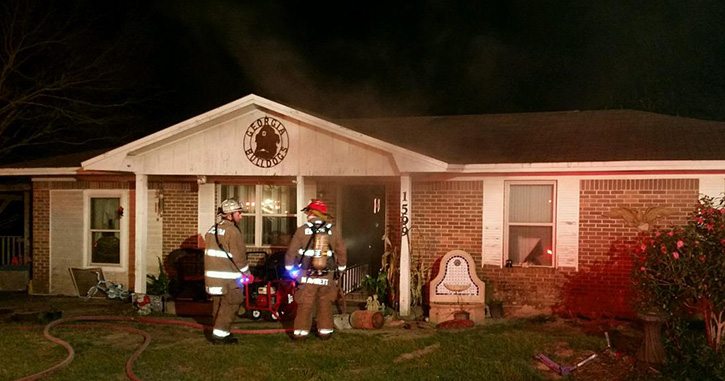
A Tuesday night kitchen fire and small attic fire damaged a Cottage Hill home. The 7:15 p.m. fire on Cottage Park Drive was quickly extinguished by Escambia Fire Rescue. There were no injuries reported. NorthEscambia.com photo by Kristi Price, click to enlarge.
NHS Defeats Tate 7-6
March 9, 2016
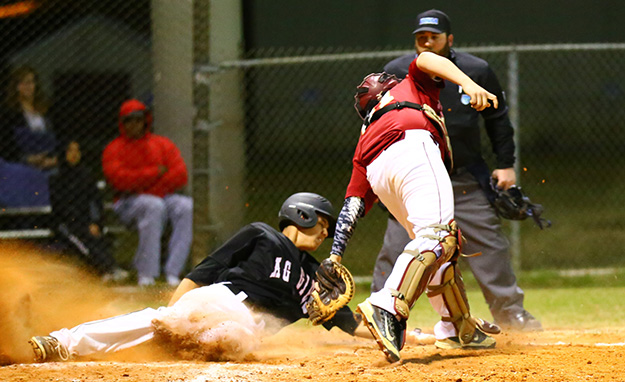

The Northview JV baseball team rallied from a 4-0 deficit to defeat the Tate Aggies freshmen by a score of 7-6.
The Aggies scored 2 runs in the 1st and 2 runs in the 3rd to go ahead 4-0. The Chiefs cut the score to 4-3 heading into the 7th inning. Tate scored two runs in the top of the 7th to go ahead 6-3, but the Chiefs answered with 4 runs in the bottom of the 7th to secure the victory.
Leading the Chiefs at the plate were Sam Stott (3-4, 2 RBI, 1 SB, 1 run), Jackson Moore (2-3, 1 RBI, game-winning run), MJ Jones (2-4, 1 run), John Chivington (1-3, 2B, 1 RBI, 1 run), Wesley Hardin (1-1, 1 RBI), Cade Allen (1-4, 1 run), Andrew Sharpless (1-3, 1 RBI) and Heath Sheldt (1-3, 1 run). Trevor Singleton drew the game winning walk in the bottom of the 7th inning with the bases loaded. Alex McMinn also scored a run for the Chiefs.
MJ Jones was the winning pitcher, throwing 2 innings, giving up 4 hits and striking out 4. Jason Fischer threw 5 innings, giving up 8 hits while striking out 3 batters.
The JV Chiefs improved to 7-1 on the season and host West Florida on Thursday at 5:00 at Northview.
NorthEscambia.com photos by Ramona Preston, click to enlarge.

Wildfire Burns 1.5 Acres In Walnut Hill
March 8, 2016
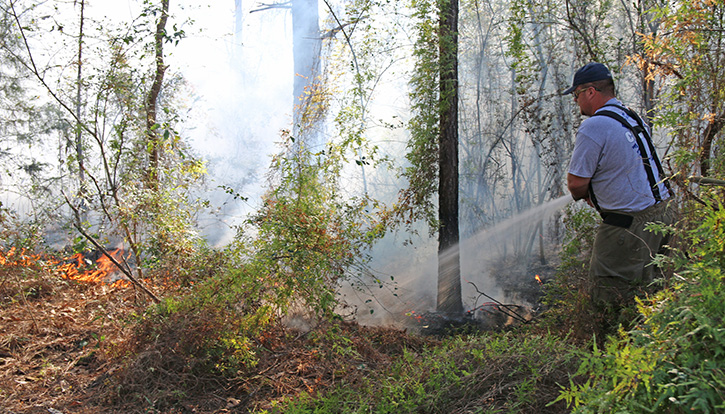
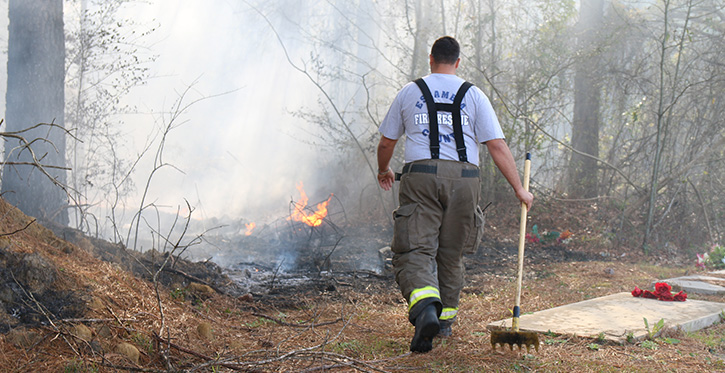
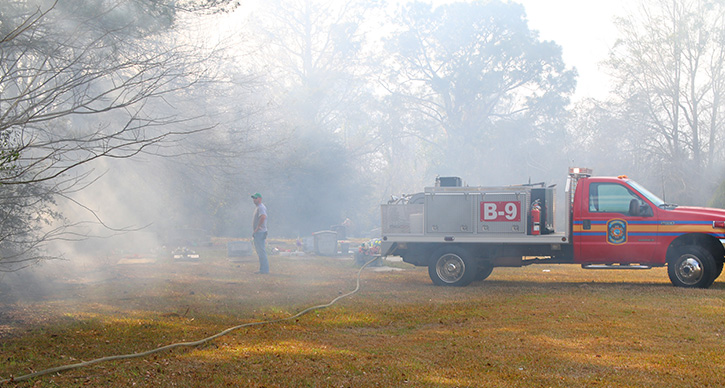
Firefighters battled a wildland fire in Walnut Hill Tuesday afternoon. The fire burned over about an acre and a half near the dead end of Juniper Street. It burned near several homes, a church and cemetery, but no structures were threatened by the blaze.
The cause of the fire was not immediately known. There were no injuries reported.
The Walnut Hill, McDavid and Molino stations of Escambia Fire Rescue and the Florida Division of Forestry responded to the fire. Forestry used a bulldozer to create a line around the fire.
NorthEscambia.com photos, click to enlarge.
Broken Down Train Blocks Crossings In Cantonment, Cottage Hill – Again
March 8, 2016
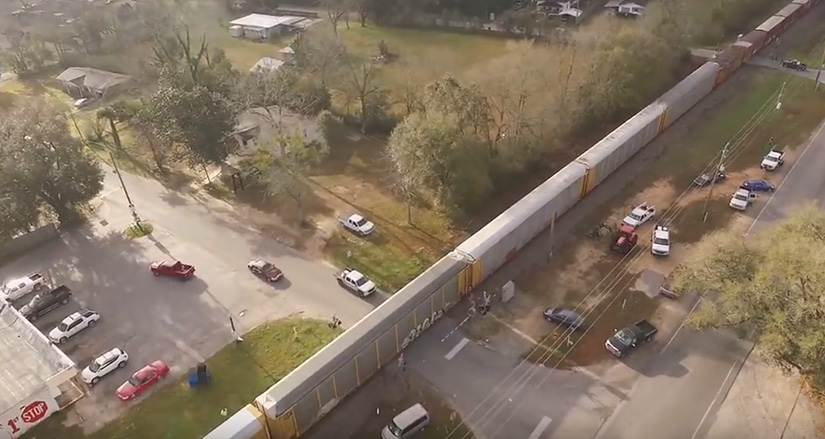
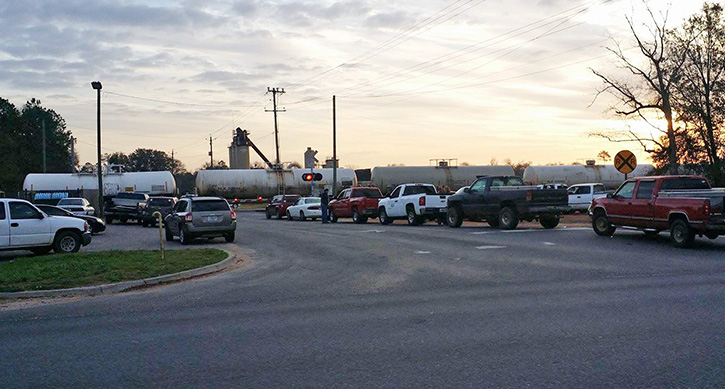
A CSX train blocked crossings from Becks Lake Road in Cantonment north to McKenzie Road in Cottage Hill Tuesday morning, leaving numerous residents unable to enter or exit their neighborhoods for hours.
According to CSX officials, the train was stopped due to a warning light. The train was on the move a little after 9 a.m.
“First responders have access to the impacted neighborhoods through a private road should the need arise,” Escambia County spokesperson Joy Tusbooka said while the train was stopped.
An similar incident occurred on January 28, blocking many of the same crossing for an entire morning.
Pictured top: An aerial view of the train blocking crossings in Cantonment. Image courtesy Eric McCowan for NorthEscambia.com, click to enlarge. Pictured below: The train blocks Becks Lake Road in Cantonment. NorthEscambia.com photo, click to enlarge.
Traffic To Switch Today To New Highway 97 Bridge In Walnut Hill
March 8, 2016
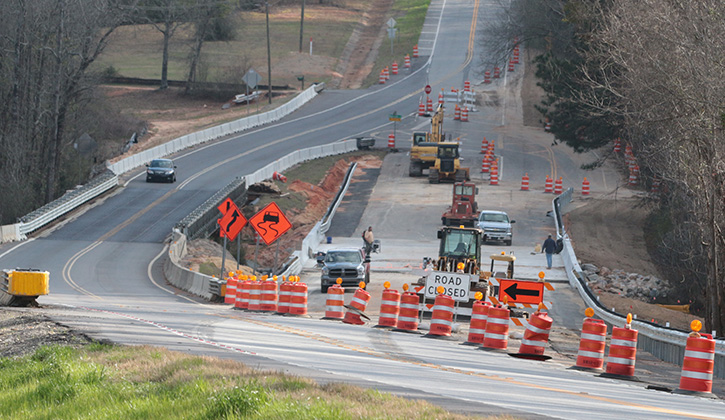
Traffic on Highway 97 over Little Pine Barren Creek in Walnut Hill will encounter intermittent lane restrictions today as crews make preparations and transition traffic back onto the new bridge and begin demolition of the temporary detour structure.
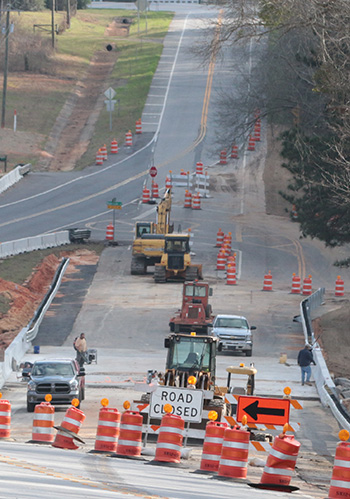 The work is part of a $2.5 million contract to replace the existing 75-year old Highway 97 bridge over Little Pine Barren Creek, milling and resurfacing, guardrail, drainage, new signs and pavement markings.
All activities are weather dependent and may be delayed or re-scheduled in the event of inclement weather. Motorists are reminded to use caution, especially at night, when traveling in a work zone and to watch for construction workers and equipment entering and exiting the roadway.
Pictured: Final work late Monday afternoon on a new Highway 97 bridge over Little Pine Barren Creek in Walnut Hill. NorthEscambia.com photos, click to enlarge.
Budget Deal Reached, Session To End On Time
March 8, 2016
House and Senate leaders announced a deal on the state budget during a late-night meeting Monday, pumping more than $120 million in last-minute projects into the spending plan and setting the Legislature on course to end its annual session Friday, as scheduled.
The final negotiating session between the budget chiefs for the two chambers — House Appropriations Chairman Richard Corcoran, R-Land O’ Lakes, and Senate Appropriations Chairman Tom Lee, R-Brandon — included agreements on tens of millions of dollars in education spending along with the additional projects.
The full House and Senate are expected to vote on the proposal Friday, after a required 72-hour review period.
Simply reaching a deal on the roughly $80 billion spending plan for the year beginning July 1 was a victory. Last year, a conflict over hospital funding led to the contentious implosion of the regular session and prompted a rare June meeting where lawmakers finally hammered out their differences.
But despite criticism last year of last-minute additions to the budget, Lee and Corcoran once again agreed to three lists of projects that spread another $123.1 million throughout the spending plan, with money going to everything from a construction project at a state university to an infusion of cash for the Agency for Persons with Disabilities.
Items on the so-called “sprinkle lists” are often projects that appeared in earlier versions of one of the chamber’s budget plans, but dropped out during negotiations. The lists themselves, however, are not publicly vetted until one of the last meetings of the House-Senate conference committee that reconciles the competing proposals.
The Senate spent almost $71.8 million on its list, formally referred to as “supplemental funding initiatives.” The House offered $30.3 million on its version, along with nearly $21 million more in a list of additional water projects.
For example, the Senate poured another $24.8 million into the Agency for Persons with Disabilities. Senate President Andy Gardiner, R-Orlando, has focused on people with disabilities as one of his priorities this legislative session. The chamber also used $11 million to fund a building at the University of North Florida, the only one of the 12 state universities that didn’t receive construction money in a previous list of education facilities.
The House, meanwhile, used $7 million to replace radio equipment for state law enforcement agencies, something the Senate had strenuously opposed and that had been dropped from spending plans during a public meeting on Sunday.
“Our only concern was that it not go into a spreadsheet that included any indication that the Senate bought into that notion at the subcommittee level,” Lee said, referring to negotiations that took place before he and Corcoran began discussions. ” … It needed to come late if it was going to happen.”
At the same time, he left little doubt that the Senate was still skeptical about the need for the equipment from a third-party vendor.
“There was no request from the agencies for these radios,” he said. “They don’t want them, but they’re going to get them anyway. We’ll see if they take them.”
Asked why the radios were important enough to the House to push them back into the plan at the last minute, Corcoran essentially said the House did so because it was the chamber’s prerogative.
“We have the power of the purse,” he said. “We’re going to make the decisions and the executive branch has the power of vetoes.”
The two men defended the budget process in general and the sprinkle lists specifically. Corcoran pointed to the decision to put money back into the budget for the project at the University of North Florida, which has been approved by the Florida Board of Governors.
“That’s why we have a supplemental list, so that we can make sure that we can correct those mistakes, and we did,” he said.
Lee also suggested that the spending plan could have been even worse.
“The things you see in this budget don’t tell the whole story,” he said. “There are a good number of things you don’t see in this budget that, but for Chairman Corcoran and myself, would be in here, and they wouldn’t be good government.”
As for the education budget, Corcoran and Lee agreed to spend more than $40 million on the “Best and Brightest” bonus program, which awards up to $10,000 in extra money to teachers who scored in the top fifth of all students on their college-admissions tests and are rated highly effective. The House then folded another $4 million into the program through its sprinkle list.
The two sides also agreed to $36.9 million in funding for high-performing universities, and increased the amount of existing money that universities would kick into a performance funding formula to $275 million, the share favored by the House.
by Brandon Larrabee, The News Service of Florida
Scott Signs Death Penalty Fix Into Law
March 8, 2016
Gov. Rick Scott on Monday signed into law a measure designed to fix the state’s death-penalty sentencing process after it was found unconstitutional by the U.S. Supreme Court, but the new law will almost certainly be challenged.
The Jan. 12 Supreme Court ruling — handed down on the opening day of the legislative session — found that Florida’s system of giving judges, and not juries, the power to impose death sentences was an unconstitutional violation of defendants’ Sixth Amendment right to trial by jury.
“It is my solemn duty to uphold the laws of Florida and my foremost concern is always for the victims and their loved ones. I hope this legislation will allow families of these horrific crimes to get the closure they deserve,” Scott said in a statement.
With the death penalty effectively on hold in Florida, lawmakers hurried to come up with a solution before the legislative session ends Friday. Scott signed the bill (HB 7101) into law just days after the Senate approved it.
While the new law establishes a revamped system for defendants charged with capital crimes who have not yet been sentenced, it is unlikely to have any impact on the cases of Florida’s 390 Death Row inmates. The Florida Supreme Court is sorting through some of the cases now, after lawyers for the inmates filed a flurry of appeals in the wake of the ruling.
 The 8-1 U.S. Supreme Court decision, in an Escambia County case known as Hurst v. Florida, dealt with the sentencing phase of death-penalty cases after defendants are found guilty, and it focused on what are known as aggravating circumstances that must be determined before defendants can be sentenced to death. A 2002 U.S. Supreme Court ruling, in a case known as Ring v. Arizona, requires that determinations of such aggravating circumstances must be made by juries, not judges.
While the Supreme Court ruling focused on aggravating circumstances, nearly all of the legislative debate centered on whether Florida should require unanimous jury recommendations about whether defendants should be put to death.
The new law, which went into effect immediately, would require at least 10 jurors to recommend death for the penalty to be imposed — a compromise between the House and the Senate, which had originally favored unanimous jury recommendations. Prosecutors, including Attorney General Pam Bondi, pushed for the 10-2 recommendation, arguing that unanimity would allow a single juror to hijack the process.
Of the 31 states with the death penalty, Florida is one of only three that do not require unanimous jury recommendations for death to be imposed. The others — Alabama and Delaware — require at least 10 jurors to recommend death. Until Monday, Florida law had allowed majorities of juries to recommend death.
The Hurst ruling did not specifically address unanimous jury recommendations to judges, a process that happens after jurors determine whether sufficient aggravating factors exist. Death penalty experts advised lawmakers that failing to require unanimous jury recommendations could make the state’s death penalty law vulnerable to future court decisions.
Although both chambers overwhelmingly approved the measure, a key component is expected to prompt a legal challenge.
The new law would require juries to unanimously determine “the existence of at least one aggravating factor” before defendants could be eligible for death sentences. Florida law lists 16 aggravating circumstances — such as whether a crime was committed for pecuniary gain or if a victim was under 12 years of age — that juries could consider.
Defense lawyers argue that the list is so broad that virtually any murder could be considered a capital crime.
Allowing a single aggravating circumstance — even with a unanimous jury finding, as the proposed law would require — to determine whether a defendant is death-penalty eligible could run afoul of the Supreme Court’s consistent view that capital punishment should be reserved for a narrow class of offenders who commit the worst crimes, the lawyers contend.
Because of that, the proposed law could violate Eighth Amendment protections against cruel or unusual punishment, Rex Dimmig, public defender in the 10th Judicial Circuit, told The News Service of Florida last week.
But lawmakers remained confident that the law would pass muster.
“I would have felt more comfortable if it (jury recommendations) had been unanimous, but the way it is right now, I feel like we’ve got a good death penalty bill. I feel like it will hold up in court,” Senate Criminal Justice chairman Greg Evers, R-Baker, said.
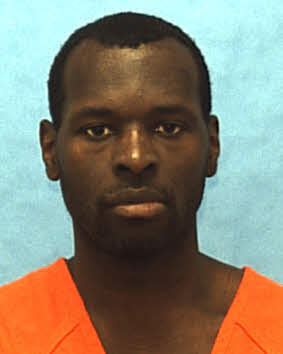
Timothy Lee Hurst, now 36, was convicted in the 1998 murder of Cynthia Lee Harrison, who was an assistant manager at a Popeye’s Fried Chicken restaurant on Nine Mile Road where Hurst worked. Harrison’s body was discovered bound in a freezer, and money was missing from a safe, according to a brief in the case.
by Dara Kam, The News Service of Florida