

One Airlifted After Wreck At Foot Of Escambia River Bridge
April 10, 2016
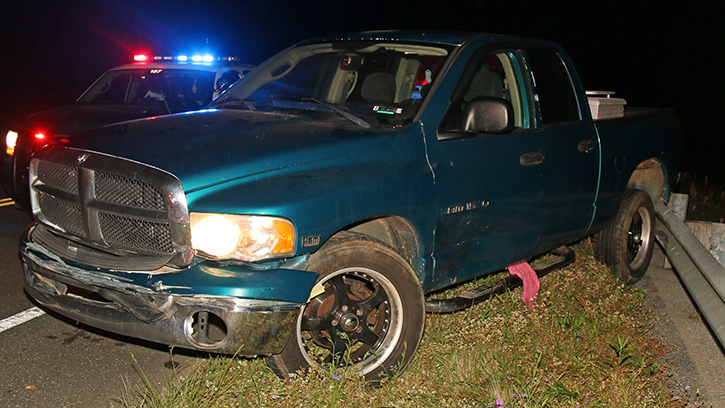
One person was airlifted to a Pensacola hospital following a wreck at the foot of the Escambia River Bridge in Century Saturday night.
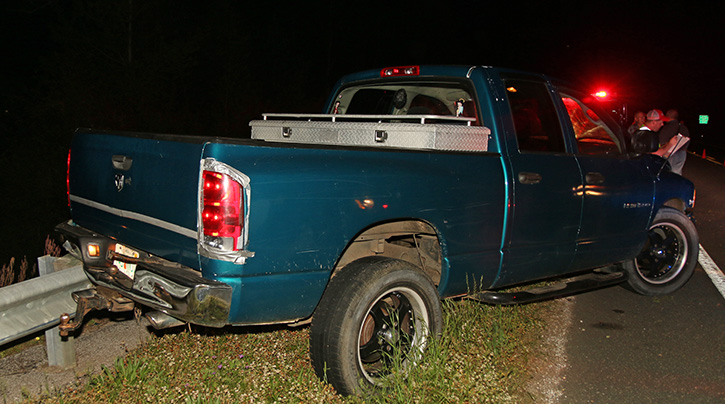
A man in his 50’s lost control of his pickup truck and rotated several times on East Highway 4, striking a guardrail. The man was found on the ground next to the truck, but it was not immediately clear if he was ejected from the vehicle. He was transported by ambulance to the nearby EMS Post in Century and then airlifted by Lifeguard helicopter to Sacred Heart Hospital in Pensacola.
It appeared the the crash may have been related to a medical condition.
Traffic on the Escambia County side of the bridge was reduced to one lane for well over an hour following the 8:25 p.m. accident.
The accident remains under investigation by the Florida Highway Patrol. The Century Station of Escambia Fire Rescue, Escambia County EMS and the Escambia County Sheriff’s Office also responded to the crash.
NorthEscambia.com photos, click to enlarge.
Residents Report Series Of ‘Explosions’
April 10, 2016
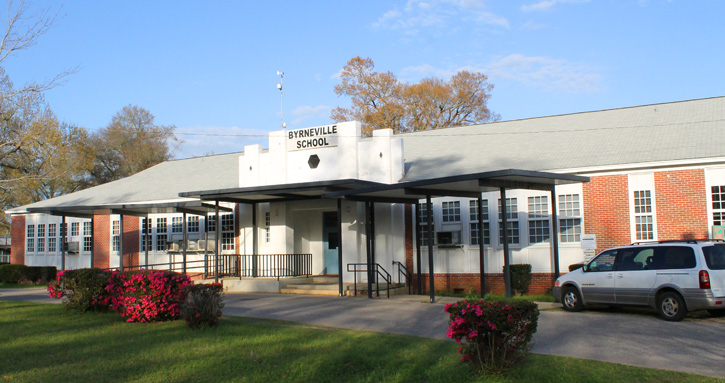
Multiple residents across a portion of the North Escambia area reported hearing and feeling multiple strong “explosions” Saturday night.
The explosions or booms were felt or heard between about 8:30 and 10:40 p.m., with most reporting the largest event at 10:40 p.m. NorthEscambia received the most reports from the Byrneville area, with additional reports from Century (particularly the south side of town and around the prison), the Christian Home community, Gandyville and Bratt. In addition to residents, reports were also received from members of Escambia Fire Rescue.
Residents reported their homes and the ground shaking or rattling, items on walls being moved and even vehicle alarms being activated.
Seismic data did not indicate any earthquake activity in the area.
No explanation for the reports was found Saturday night.
Pictured: Most of the reported “explosion” sounds Saturday night were centered in the area of Byrneville Elementary School. NorthEscambia.com photos, click to enlarge.
Tate Lady Aggies Support The Miracle League
April 10, 2016
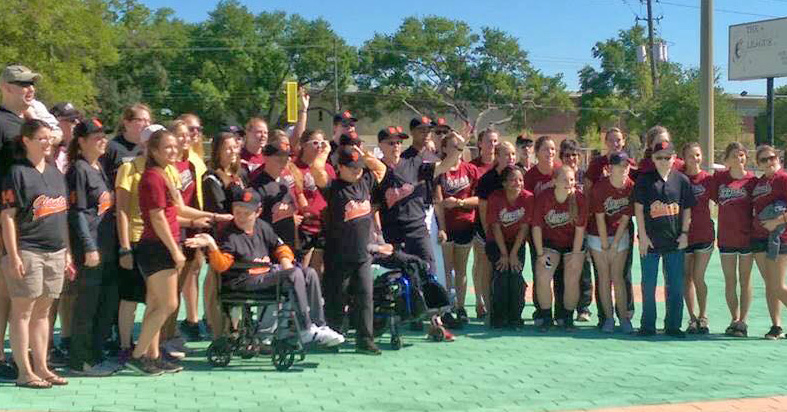
The Tate High School Lady Aggies showed their love and support Saturday morning as they served as “buddies” for the players at the Miracle League of Pensacola. The Miracle League is for disabled and special needs persons of all ages. Some of the players are in wheelchairs and walkers. Courtesy photo for NorthEscambia.com., click to enlarge.
Escambia Fire Rescue Offers Free Smoke Detectors
April 10, 2016
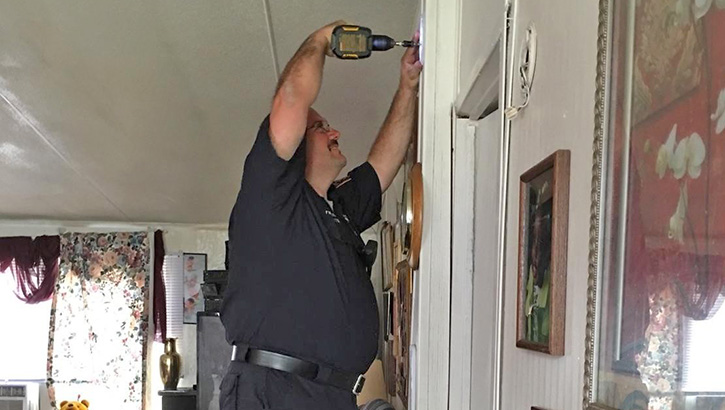
Free smoke alarms are available from Escambia Fire Rescue.
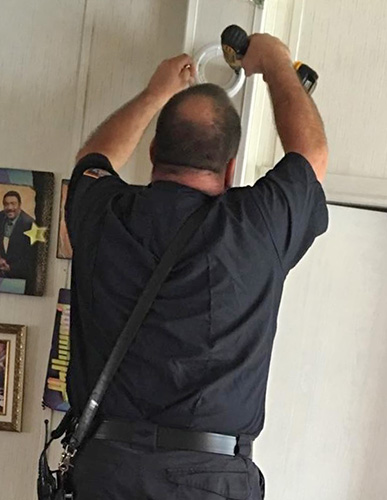 Smoke alarms that are properly installed and maintained play a vital role in reducing fire deaths and injuries. According to the National Fire Protection Association, a working smoke alarm cuts the chances of dying in a reported fire in half. Almost two-thirds of home fire deaths resulted from fires in homes with no smoke alarms or no working smoke alarms. The Escambia County Commission has purchased 800 smoke alarms since January in hopes of helping communities reach the goal of every home in the county having a working smoke alarm.
For information about obtaining a home smoke alarm, call (850) 595-HERO (4376).
No Injuries In Highway 29 Wreck Near Tate School Road
April 10, 2016
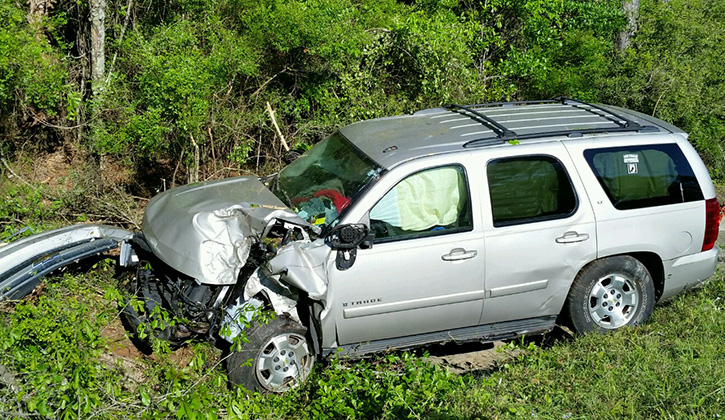
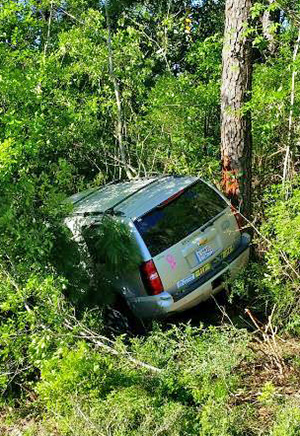
There were no injuries in this single vehicle accident Saturday morning on Highway 29 between Tate School Road and Kingfiled Road. The Florida Highway Patrol has not released details on the crash, NorthEscambia.com photos by Kristi Price, click to enlarge
Wahoos Pull Out 5-4 Win in 13 Innings
April 10, 2016
The Pensacola Blue Wahoos came from two runs down to overcome the Mississippi Braves, 5-4, Saturday in 13 innings at Trustmark Park in Pearl, MS.
Minor league veteran Ray Chang scored the winning run for Pensacola in the top of the 13th inning, showing rare speed for a 32-year-old as he scored from second base. Chang led off the inning with a line-drive single to centerfield and scored when Pin-Chieh Chen smacked a ball to left field that was mishandled by Mississippi’s Dustin Peterson.
 The Blue Wahoos now lead the five-game series, 2-1.
It looked as if Pensacola would win the game in the 12th inning when Tony Renda, Baseball America’s No. 12 prospect in the Washington Nationals’ chain last season, lined a two-out double into right field. He drove in both centerfielder Beau Amaral and shortstop Zach Vincej to give Pensacola a 4-2 lead over the Braves.
But Mississippi came right back with two runs of its own in the bottom of the 12th off of Pensacola reliever Kyle McMyne. Braves center fielder Matt Lipka scored when Renda committed an error on first baseman Levi Hyam’s grounder to second.
Mississippi’s third baseman Emerson Landoni then singled to left field to score Peterson to tie the game again, 4-4.
But with the bases loaded and one out, Blue Wahoos reliever Kyle McMyne got a strike out and ground out to work out of the 12th inning. Mississippi stranded 31 runners on base during the Southern League game.
McMyne ended up getting the win, his first of the season, and Alejandro Chacin was credited with his first save for the Blue Wahoos.
The Blue Wahoos had tied the score, 2-2, in the sixth inning to send the game into extra innings. First baseman Ray Chang smashed a grounder up the middle to center field that scored second baseman Tony Renda, who hit a ground-rule double to left center.
Mississippi got on the scoreboard first in the first inning when right fielder Jody Lara hit a sacrifice fly to right field that scored shortstop Ozzie Albies from third base.
The Braves upped its lead, 2-0, in the third inning when Lipka doubled to center field and then scored on Hyams’ groundball to shortstop.
But the Blue Wahoos fought back to score a run and cut Mississippi’s lead to, 2-1, in the fifth inning when center fielder Beau Amaral singled sharply to right field to score Pin-Chieh Chen, who walked, from second base.
Sal Romano, the Cincinnati Reds No. 9 prospect according to Baseball America, pitched 5.1 inning and allowed two runs on nine hits and two walks. He struck out three batters.
Meanwhile, Mississippi starter Sean Newcomb gave up one run in five innings on four hits and two walks, and he struck out five.
Battle Over Florida Education System Ready For Ruling
April 10, 2016
A Leon County circuit judge heard closing arguments Friday in a potentially far-reaching lawsuit that challenges whether the state has met a constitutional requirement to provide a “high quality” system of public schools.
Judge George Reynolds, who heard four weeks of testimony and arguments, described the case as a “difficult issue.” He did not rule Friday and said lawyers have until April 25 to file written arguments.
 The lawsuit, led by a group called Citizens for Strong Schools, is rooted in a 1998 constitutional amendment that says it is a “paramount duty of the state to make adequate provision for the education of all children residing within its borders.” The amendment fleshed that out, in part, by saying adequate provision will be made for a “uniform, efficient, safe, secure, and high quality system” of public schools.
Citizens for Strong Schools argues that Florida has not complied and that the court should require the state to take steps to carry out the constitutional amendment.
“The state has failed to make adequate provision by not allowing significant numbers of students to obtain a high-quality education,” Jodi Siegel, an attorney for Citizens for Strong Schools, said Friday during her closing argument. “This is not an insignificant matter. There’s over 1 million students that cannot read at grade level. There are half-a-million free-and-reduced lunch students who cannot read at grade level.”
But Rocco Testani, an attorney for the Florida Board of Education, argued that the state’s schools have made a huge amount of improvement and pointed to indicators such as scores on the National Assessment of Educational Progress, a set of tests commonly used to compare students across the country.
“What we know is that Florida has had a remarkable journey from a state that was below average, well below average, 15, 16, 17 years ago, to a state that is now truly a leader, truly a leader, when it comes to national comparisons,” Testani said.
Issues of state education funding, standards and testing have drawn fierce debate during the past two decades, particularly because of changes that former Gov. Jeb Bush spearheaded. Those changes relied heavily on standardized testing, school grades and expanding school choice.
Before the closing arguments Friday, a video deposition of former Lt. Gov. Frank Brogan was presented in court. Brogan served as state education commissioner before becoming Bush’s lieutenant governor and helped usher in the changes.
Brogan, who is now the chancellor of the higher-education system in Pennsylvania, testified in the deposition that he is proud of progress Florida has made. He testified that Bush made education the highest priority of the administration and described Bush as a “wonk.”
“It was difficult to debate education issues with Gov. Bush if you didn’t know what you were talking about,” Brogan said.
Mississippi Tops Pensacola 2-0
April 9, 2016
It was a battle of top pitching prospects and this time Pensacola Blue Wahoos southpaw Amir Garrett lost out to Mississippi Braves right-hander Chris Ellis 2-0 in Pearl, MS.
Ellis, the No. 14 prospect in the Atlanta Braves system, threw six shutout innings, allowed four hits and struck out eight to lead Mississippi to a 2-0 victory over Pensacola at Trustmark Park in Pearl, Miss. The win ties the five-game series at one game apiece.
Ellis joined the Braves in November in a trade with the Los Angeles Angels where he was considered the No. 2 ranked prospect. He cruised in the game, retiring the side three times.
Meanwhile, Amir Garrett, Baseball America’s No. 3 prospect in the Cincinnati Reds organization, pitched six innings, allowing two earned runs on five hits, walking one and striking out four.
Mississippi scored its winning runs when it scored twice in the bottom of the sixth inning off Garrett. The Braves started the sixth with three straight hits with Braves shortstop Ozzie Albies getting things going with his third hit of the game when he singled to center. Then centerfielder Matt Lipka tripled to score him. Left fielder Dustin Peterson then doubled to score Lipka and put Mississippi ahead, 2-0.
It would be all the Braves needed as three relievers came in and continued to shutdown Pensacola’s hitters.
Pensacola did have opportunities to score in the sixth and seventh innings. However, left fielder Phillip Ervin struck out stranding centerfielder Beau Amaral at third base in the sixth. Then in the seventh the Blue Wahoos loaded the bases with two outs but Amaral struck out leaving the bases full.
Tate Hosts District Special Olympics (With Photo Gallery)
April 9, 2016
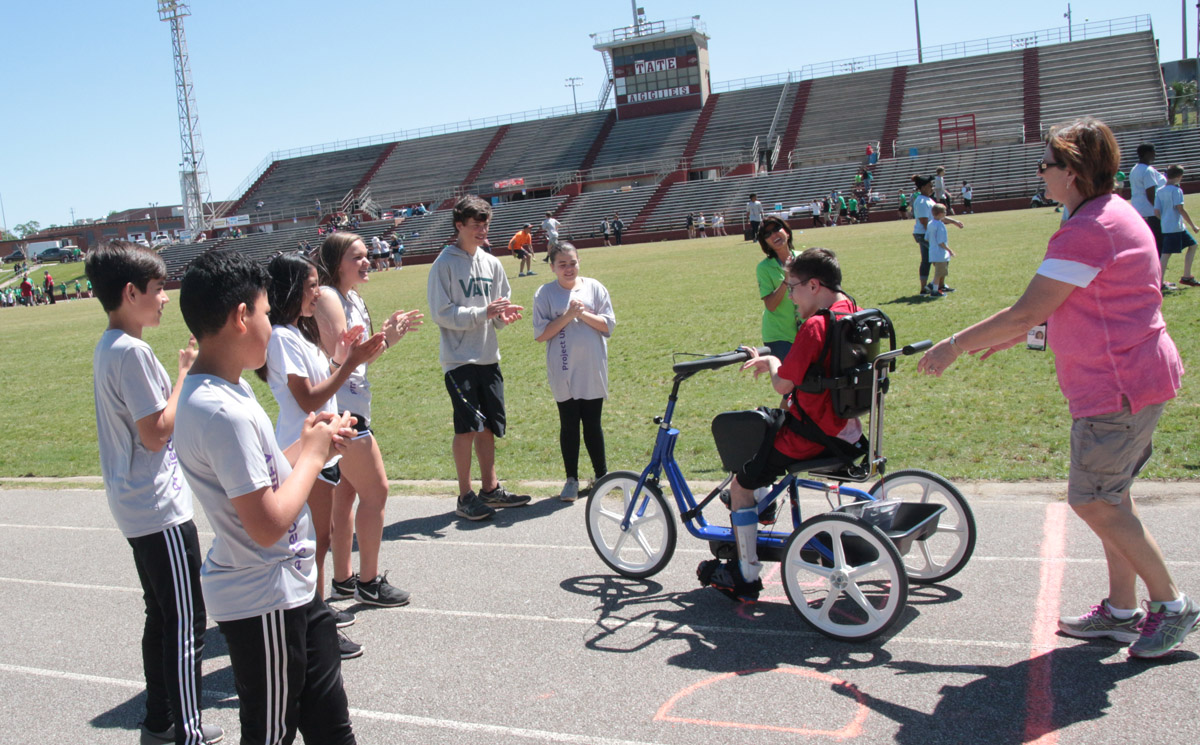
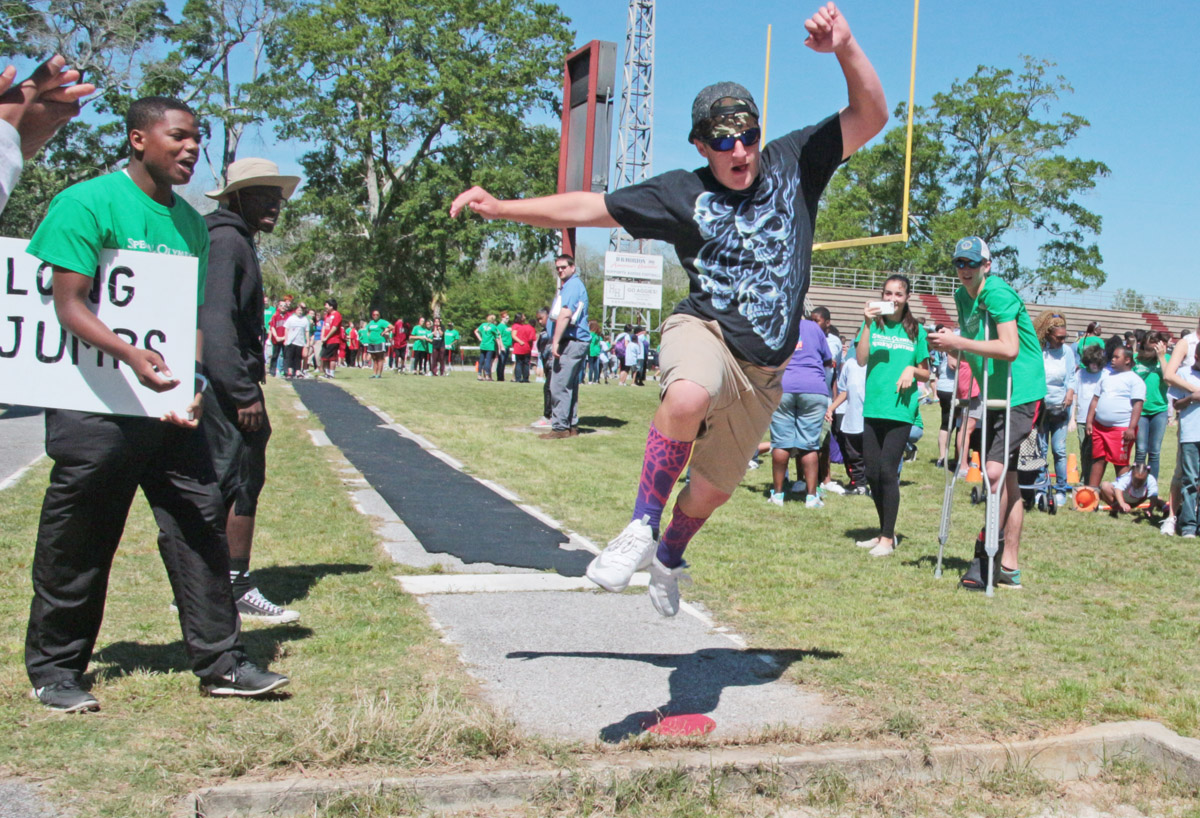
The 20th Annual Escambia County School District’s Special Olympics Spring Games were held Friday at Tate High School with over 500 student athletes. Over 600 Tate student volunteers assisted as “buddies” and event workers.
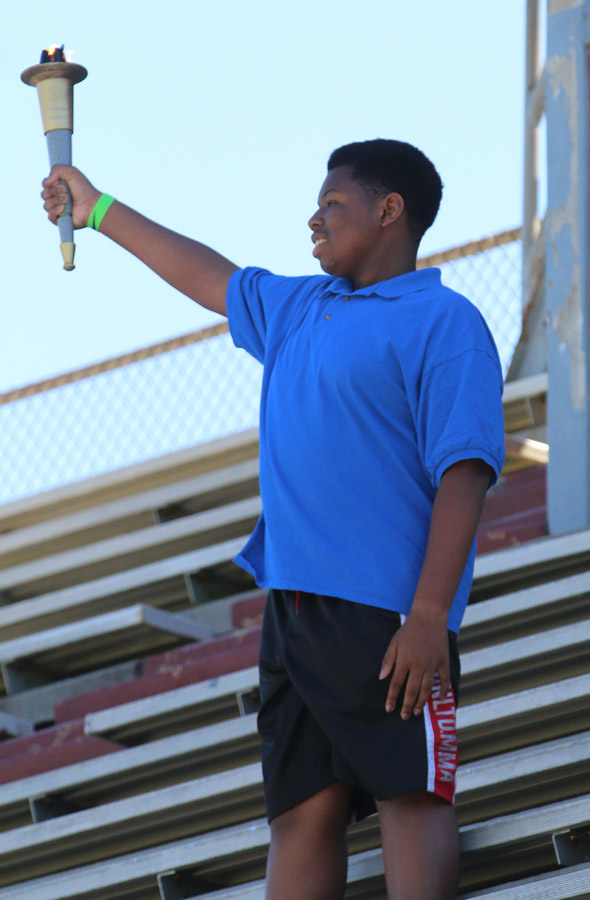
The event began with Special Olympic athletes running with the Special Olympics Torch around the track. There will was also an Olympic Village with plenty of fun and games, and even a petting zoo, for the athletes to enjoy after they completed their track and field events.
Athletes received the traditional gold, silver and bronze medals for top finishes.
NorthEscambia.com photos, click to enlarge.


Forest Service Battles 20 Acre Fire Near Nature Trail Subdivision
April 9, 2016
Florida Forest Service firefighters battled a 20-acre wildfire south of Nine Mile Road near the Nature Trail subdivision late Friday afternoon.
By 6:30 p.m., fighters had used two tractor-plow units to place a line around the majority of the fire’s perimeter while the rest burned into a swamp. Residents southeast of are area can were able to smell smoke and Nature Trail residents could see small flames and smoldering stumps overnight.