

Two Teens Sentenced For Burglaries That Led To Shots Fired, Fiery Molino Wreck
August 25, 2016
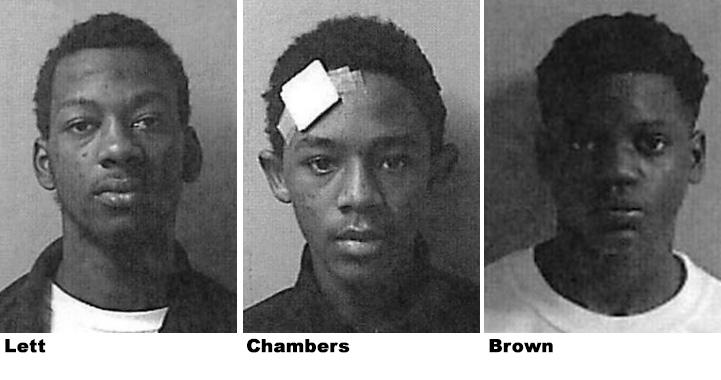
Two of three juveniles have been sentenced on multiple charges for their part in burglaries and a shots fired incident that led to a fiery two vehicle crash in Molino in late 2015.
Tracy Deshawn Lett, Jr. of Pensacola, Mariachi Jerrell Chambers of Cantonment, both age 17, were sentenced as youthful offenders by Circuit Judge Scott Duncan to 42 months in state prison to be followed by 18 months of probation. Lett and Chambers previously entered a plea in July 2016 to three counts of burglary of a conveyance, grand theft, and criminal mischief.
Co-defendant Vashawn Brown of Molino was charged with attempted third degree felony murder, three counts of armed burglary of a conveyance, criminal mischief, grand theft auto and petit theft. He is scheduled for his next court appearance next week.
(Article continues below photo)
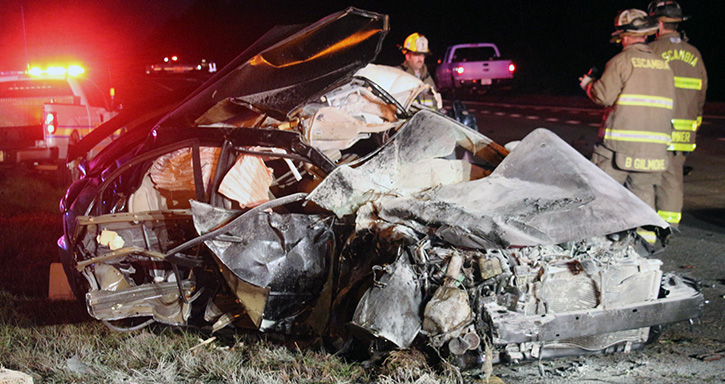
About 4:50 a.m. on November 28, 2015, the Escambia County Sheriff’s Office was dispatched to the area of Highway 29 and Barth Road for a burglary of a vehicle in progress. In the meantime, the burglary victim told dispatchers that he was following the suspects south on Highway 29, and then he advised the suspects were shooting at him and his vehicle.
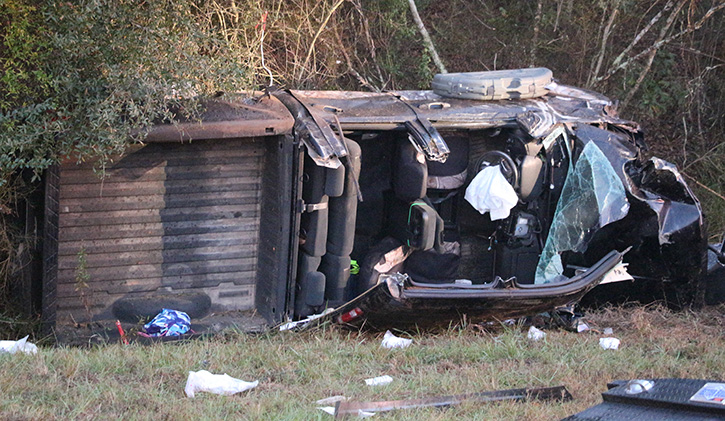
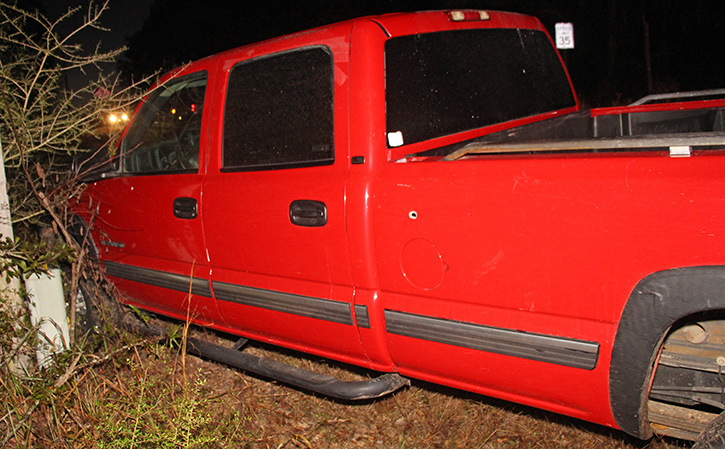
When the suspects reached Barth Road in Molino, they veered into oncoming traffic and struck a pickup truck, according to multiple witnesses. The driver of the pickup, Randall Enfinger, and his 15-year old granddaughter, Abbigail Barninger, were critically injured.
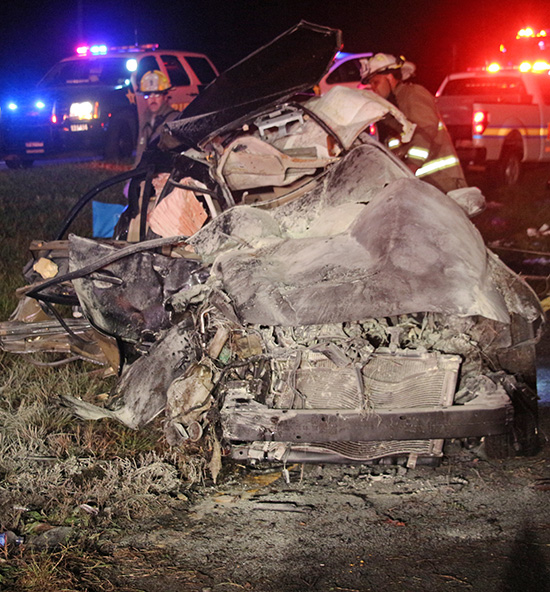
A deputy that arrived on scene a short time later reported finding the suspects’ crumpled vehicle with the engine compartment on fire. He observed the driver, later identified as Chambers, being removed from the driver’s seat by a passerby and Lett trapped with his legs pinned under the dash of the burning vehicle. The deputy and passersby were unable to free him, and the deputy tried unsuccessfully to put out the fire using a fire extinguisher. The deputy and bystanders then used dirt to smother the engine compartment fire and before pulling Lett from the vehicle.
The deputy then reportedly noticed that across the intersection one of the burglary victims was attempting to detain Brown. The deputy handcuffed and detained Brown.
The burglary victim told deputies that he was at his residence in the 500 block of Highway 164 when he heard his dogs barking and walking outside on his porch to see two males breaking into his 2006 Pontiac sedan. He said they ran away after he yelled at them. The burglary victim said his brother heard the suspects get into a vehicle and his brother followed the dark colored vehicle down Highway 29.
 The burglary victim’s brother said he got into his pickup truck and followed the suspects down Highway 29. He said he tried to get around in front of them, according to court documents, but they came around his vehicle and shot at him five or six times. His pickup was hit at least three times. After observing the wreck, the victim’s brother said he chased one of the suspects, later identified as Brown, into the tree line and brought him back to the corner of the intersection.
An Escambia County EMS employee told deputies that Brown said he was walking home when he was chased and hit by a truck, dragged into the woods and hit several times. He told the EMS employee that he had found a gun on the side of the road and kept it for personal protection.
An investigation determined that the wrecked vehicle had been stolen earlier from a residence in the 9000 block of Barth Road where it was unlocked with a spare key in the trunk.
A debit or credit card belonging to the vehicle’s owner was recovered from Brown’s pocket, as was an empty magazine for a semi-automatic handgun that was recovered from the area were Brown was stopped, according to an arrest report.
The entire incident was investigated by the Escambia County Sheriff’s Office. The Florida Highway Patrol responded to the scene but not process the traffic accident or make a report, according to court documents.
Brown and Lett were among five defendants charged in 2014 for their role in an August 2013 burglary at Molino Park Elementary School. Most the stolen items — including computers and iPads– were burned by the suspects. They were placed on juvenile probation under the supervision of the Department of Juvenile Justice through age 19. Each was ordered to undergo counseling, and follow a curfew of 7 p.m. Sunday though Thursday nights and 8 p.m. on Friday and Saturday nights. It was not clear if that probation was still in effect at the time of the November 2015 burglary and traffic crash.
Pictured top and inset: Three people were injured when this vehicle crashed and burst into flames on Highway 29 at Barth Road November 8. Pictured below: The vehicle collided with this pickup, in which two people were trapped. Pictured bottom two photos: Bullet holes in a pickup that was reportedly following the car down Highway 29 after an attempted burglar in McDavid. NorthEscambia.com exclusive photos, click to enlarge.

Man Gets 40 Years For 2014 Beulah Murder
August 25, 2016
An Escambia County man has been sentenced to four decades in prison for a 2014 murder in Beulah.
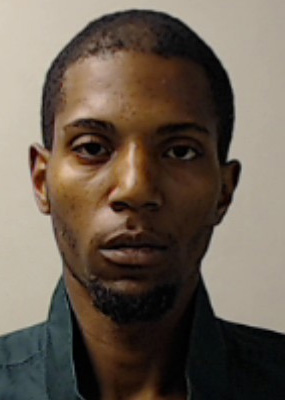 Terrance Soles was by Circuit Judge John Miller to 40 years in state prison with 25 years as a minimum mandatory sentence to be served day for day. On June 3, Soles was convicted by an Escambia County jury of second degree murder for the killing of Skky Shine.
On November 10, 2014, Soles was driving a white Toyota Avalon with the victim Skky Shine in the front passenger seat. Soles made a 911 phone call at approximately 1:30 a.m., and in that phone call Soles can be heard telling the victim, Shine to put his hands on the dash and not to move. Before the call ends, victim Shine can be heard saying “don’t shoot me.” Within minutes, Soles calls 911 back requesting law enforcement to his mother’s home and eventually says on that 911 call “we were going through it here in the car and I shot him.”
Sheriff’s deputies responded to Soles’ mother’s home where Soles drove up flashing his lights and was found to have a 9mm pistol in his lap. The victim, Shine was in the passenger seat with a single gunshot wound to the head.
In the Toyota Avalon, crime scene technicians found one spent 9mm casing and one projectile. FDLE confirmed that the casing was fired from the weapon that the defendant had in his lap. FDLE was also able to identify Shine’se DNA on the 9mm pistol and casing. It was later determined that Soles purchased the 9mm pistol in 2012 from a dealer in Louisiana. During the autopsy, the Medical Examiner determined that the gun was fired from a close range of two inches or less by the presence and location of gunpowder particles on the victim.
Century Applying For $1.3 Million In Grants
August 25, 2016
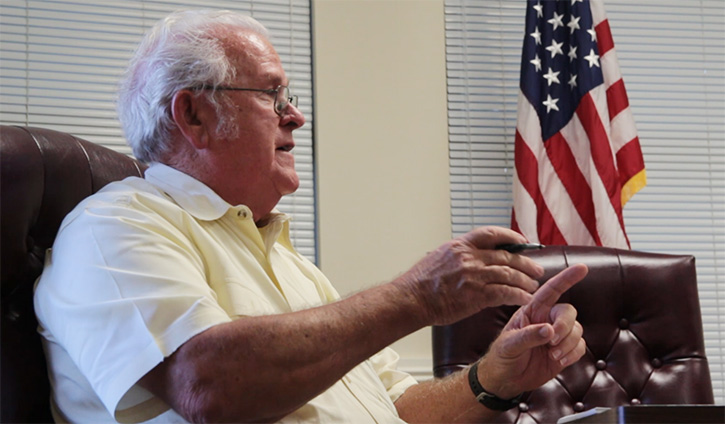
The Town of Century is currently seeking grants totaling just over $1.3 million for tornado recovery.
The Florida Department of Economic Opportunity has made $600,483 in emergency funding available for recovery efforts following the February 15 EF-3 tornado. The application process for Century is basically a formality…the state has announced that Century is the only local government eligible to apply for the funds.
Wednesday afternoon, the town held the first public forum of the application process. No members of the public attended.
The application process is currently also underway on a $700,000 small cities Community Development Block Grant for housing rehabilitation and replacement.
Pictured: Century Mayor Freddie McCall during a grant application meeting Wednesday at the Century Town Hall. NorthEscambia.com photo, click to enlarge.
Wahoos Fall To Mobile
August 25, 2016
After earning two runs in the first inning to go ahead, 2-1, the Pensacola Blue Wahoos lineup simply failed to generate any more scoring opportunities against the Mobile BayBears’ four pitchers Wednesday.
Pensacola got only two more runners on base after the fourth inning.
Mobile, which lost the first two games of the series to Pensacola, pulled out a 3-2 victory in the eighth inning at Blue Wahoos Stadium. The BayBears have not had the best luck in one-run games this season and are now 25-27 in them.
Mobile’s win makes for an exciting three-way race for the second half crown. Mississippi (33-24), which has lost six of its last seven games, is 3.5 games up on Pensacola (30-28) and is four games up on Mobile (29-28).
 Blue Wahoos manager Pat Kelly feels good about his team with 12 games left to play in the Southern League season, despite Wednesday’s loss. Pensacola, which won the first half title with a franchise record 41 wins, are 11-4 in their last 15 games.
“We’re back on track, which is good to see,” Kelly said. “I was a little concerned for a while and wondered if we were getting too complacent. Yeah, they wanted to win but it doesn’t really count. Now, the guys see it does count and they’re doing a great job.”
Mobile’s pitchers, Taylor Clarke, Austin Wright, Miller Diaz and Matt Stites blanked the Blue Wahoos for eight innings. Combined they gave up two runs, one earned on seven hits, walked none and struck out 10. Diaz earned his first win for Mobile and is 1-0, while Stites earned his 14th save on the year.
“They pitched really well,” Kelly said. “They’re a tough, tough club.”
The BayBears’ second baseman Jamie Westbrook scored the winning run in the eighth. Mobile third baseman Dawel Lugo blasted a ground ball down the third base line that Pensacola third baseman Taylor Sparks backhanded and tagged out Mobile first baseman Kevin Cron for the second out of the inning. However, Westbrook scored.
Mobile pinch hitter Gabriel Guerrero tied the game up, 2-2, in the seventh inning when his single to left field scored Lugo.
Pensacola had gone ahead, 2-1, in the first inning when second baseman Brandon Dixon doubled off the base of the left field wall to drive in left fielder Phillip Ervin with the first run. It was Dixon’s seventh RBI in 10 games and he now has 59 RBIs on the year that is first on the team and ninth in the Southern League.
The second Blue Wahoos run scored when right fielder Sebastian Elizalde scored on a wild pitch. Elizalde extended his hitting streak to 10 games Wednesday. His longest streak is 14 games at High-A Daytona Tortugas last season.
Pensacola looked like they could have piled on more runs in the first inning but third baseman Alex Blandino made an ill-advised steal attempt of third base and was thrown out. He had singled to start the game and moved to second on left fielder Phillip Ervin’s single. But with left-handed hitter Elizalde at the plate and no outs, Blandino took off.
“We had errors of aggressiveness,” Kelly said. “You want your guys to be aggressive. But it came back to bite us tonight (Wednesday).”
Barrett Astin showed he can still start when needed. After blanking Mississippi in six innings and striking out a season-high eight five days ago, the 24-year-old righty threw a season-high 6.1 innings, giving up two earned runs on five hits, walking one and striking out five. Astin didn’t get the decision Wednesday but his ERA as a starter is 2.75.
Of his 10 starts this season, he has allowed two runs or less in nine of them, including two throwing two six-inning shutouts in his last four starts.
“Swing guys in the big leagues right now are very important,” Kelly said. “He’s got a lot of value because he can do both.”
Deputies Target Thief Caught On Camera
August 25, 2016
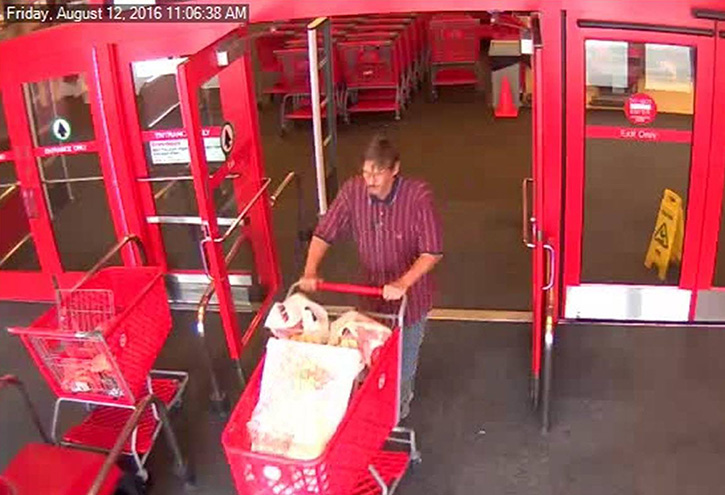
The Escambia County Sheriff’s Office is targeting a thief. They say the suspect in this picture walked into Target on Nine Mile Road and walked out with several hundred dollars worth of stolen merchandise. Anyone with information on this incident is asked to call the ECSO at (850) 436-9620 or Crime Stoppers at (850) 433-STOP. Courtesy photo for NorthEscambia.com, click to enlarge.
Escambia County To Host Job Readiness Workshops
August 25, 2016
Escambia County is sponsoring a series of job readiness workshops, providing job seekers with information and training to enhance their chances of being work-ready when the right job comes along. Workshop dates will be announced on an as-needed basis. The ongoing workshops are free and open to the public, with training session topics including:
- Job search tips and tricks
- Job application and resume development
- Interviewing techniques
- Dress for success
- Time management
- Finding the right job for you
- Customer service skills in the workplace
- Getting along with others in the workplace
- Keeping the job
- Effects of social media and the workplace
- And more…
To register for a workshop or for more information, call (850) 595-3130 or email Carla Jones at csjones@myescambia.com.
FDOT Installs Signs, Lowers Speed Limit To Help Stop Highway 29 Truck Rollovers
August 24, 2016

The Florida Department of Transportation is working on their next step to address a problem with a North Century Boulevard curve that has seen multiple semi-truck rollovers.
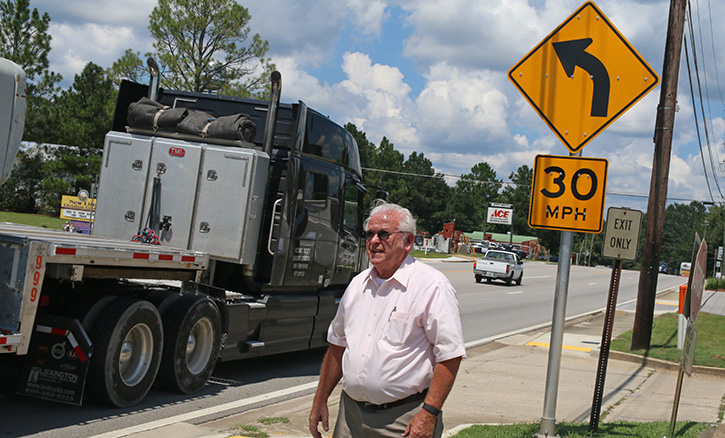
A FDOT contractor has installed “Curve 30 Mph” signs both north and southbound approaching a curve near Jackson Street, and north and southbound near a curve just north of Burger King. The contractor indicated that additional signs will be installed next week instructing truckers to use the left inside lane and warning of the tipping hazard.
The Florida Department of Transportation has acknowledged the the signage is a temporary fix. FDOT is working to identify a design and construction project to correct the slope of the roadway. Century and Escambia County have both pressed FDOT to eventually fix the elevation problem with the roadway.
Twice this year, semi-trucks rolled over in a curve on North Century Boulevard at Jackson Street. City and county officials believe the curve is badly designed with a slope in the outer lane that is difficult for semis to negotiate at the posted 35 mph speed limit. The amount of lean on an 18-wheeler in the outer lane is demonstrated in the photo at page bottom.
Pictured: A newly installed sign near a on North Century Boulevard near Jackson Street warns drivers to slow for the curve. Pictured below: Another warning sign warns of an approaching curve near Burger King. Century Mayor Freddie McCall is seen observing traffic Tuesday shortly after the signs were installed. NorthEscambia.com photos, click to enlarge.

UWF Professor To Attend Makerspace Event At The White House Today
August 24, 2016
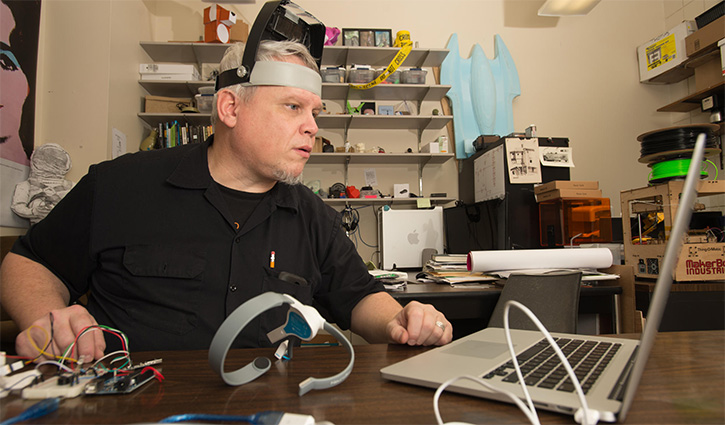
Thomas Asmuth, an assistant professor in the University of West Florida Department of Art, will participate in a roundtable discussion at the White House today during an event called “The Nation of Makers.”
Asmuth teaches new media at the University and works on art projects that meld science and technology.
He is also the founder and president of Emerald Coast Community of Makers, a makerspace shop located on North Guillemard Street in Pensacola. “Makerspace” is defined as a community-operated work space where people with common interests in computers, machines, technology, science and digital art and other areas, meet, socialize and collaborate on projects.
“The Nation of Makers” focuses on people who organize makerspace events.
Asmuth responded to a survey about two weeks ago that the Office of Science and Technology Policy at the White House sent out.
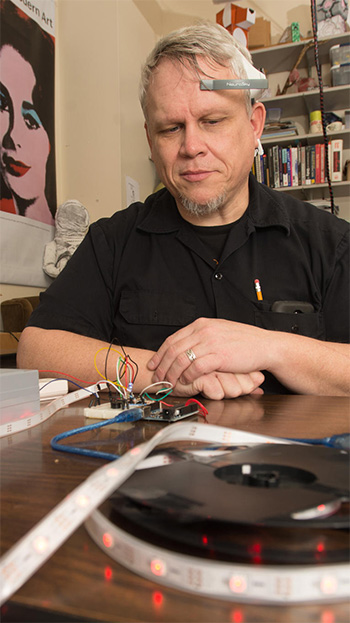 “It was very basic,” Asmuth said. “They were just collecting data about makerspaces in general, and I thought it would be nice to see a pin on the OSTP makerspace map where Pensacola is. I just about fell over when they got back to me and invited me to the White House.”
Roundtable discussions at “The Nation of Makers” are designed to help organizations strategize about growth and sustainability.
Topics to be covered at the White House meeting include legal structures for nonprofit organizations, methods for measuring benefits to the community, ways to cope with burnout, devices for maintaining diversity and inclusion and plans for developing mentorships within organizations and other issues.
“I’m pleased that I’m going to be meeting with people who will be associated with partnerships between makers and spaces, including some universities from around the nation,” Asmuth said. “Hopefully, I will come back with a report that can inform us of how we might have a makerspace at UWF sometime in the future.”
The trip is supported by a grant from the University of West Florida Center for Research and Economic Opportunity.
“Thomas is exactly the right person to be representing UWF at this White House event,” said Dr. Brice Harris, assistant vice president of research and economic opportunity at UWF. “At its core, the maker movement is about empowering individuals to translate their unique thoughts and ideas into creative works and innovative product solutions. The implications for entrepreneurship and advanced manufacturing are tremendous. I believe the contributions Thomas will make to the national discourse while attending the event will be important, and he will return home with new ideas and best practices that will enhance our understanding of the burgeoning role makerspaces are playing in higher education.”
Photos by Michael Spooneybarger/University of West Florida for NorthEscambia.com, click to enlarge.
Water Main Leak Slows Molino Traffic
August 24, 2016
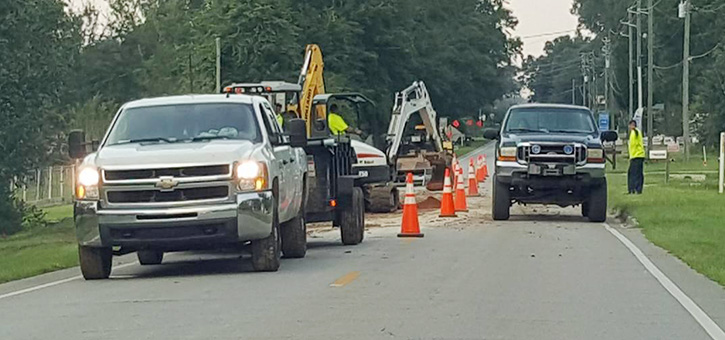
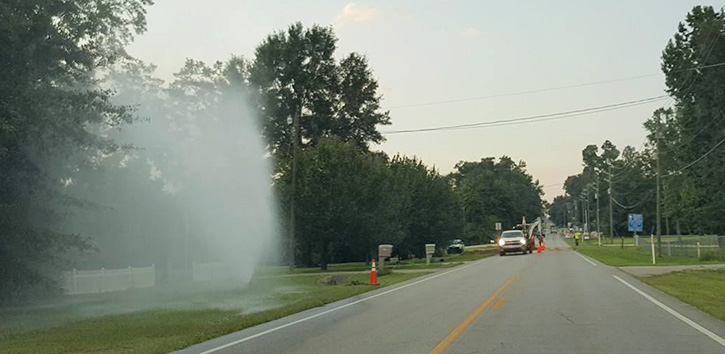
Traffic on Highway 95A near the Molino Community Complex was slowed Tuesday evening as Molino Utilities crews repaired a water main leak. We are told the leak was not significant enough to require a boil water notice. Reader submitted photos for NorthEscambia.com, click to enlarge.
Man Indicted For First Degree Murder Of Two Year Old
August 24, 2016
An Escambia County Grand Jury indicted Alonzo Dewayne Thompkins, Jr. for first degree felony murder in the death of a two-year old child.
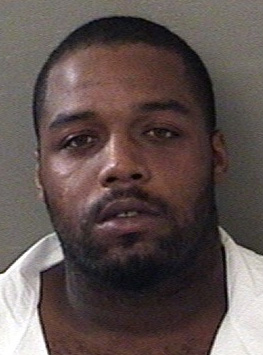 On August 8, child was found unresponsive by his mother after being home alone with the defendant for approximately one hour. The Medical Examiner’s Office determined the death of the child to be caused by blunt force trauma to the child’s torso.
Thompkins is scheduled to be arraigned on September 1 for the murder. He is also charged with aggravated child abuse after a three-year-old child in the residence had multiple bruises on her body and a broken collar bone.