

FDOT: Weekly Traffic Alerts
May 22, 2016

Drivers will encounter traffic disruptions on the following state roads in Escambia and Santa Rosa counties as crews perform construction and maintenance activities.
Escambia County:
- Highway 97- Intermittent daytime lane closures over Little Pine Barron Creek Tuesday, May 24 as crews lay the final layer of asphalt.
- Highway 29 – Intermittent and alternating lane closures within the town of Century and from Champion Drive north continue.
- I-10/U.S. 29 Interchange Improvements – The right lane of I-10 eastbound near U.S. 29 (Exits 10A and 10B) will be closed Sunday, May 22 through Thursday, May 26 from 8 p.m. to 6 a.m. In addition, the U.S. 29 north to I-10 eastbound ramp will be closed during this time as crews perform resurfacing work. Traffic will be detoured north to Broad Street. Drivers will take a U-turn to access I-10 eastbound.
- Nine Mile Road – East and westbound traffic on Nine Mile Road west of Interstate 10 near Heritage Oaks Drive in Escambia County will encounter intermittent lane restrictions from 8 p.m. to 6 a.m. through Monday, May 23 as crews perform construction activities.
- I-10 Widening – Intermittent and alternating lane closures on I-10, near U.S. 90 (Scenic Highway/Exit 17), from 7 p.m. to 6:30 a.m. the week of May 23 as crews perform bridge work.
- Basden Road and Dupont Road- Baisden Road between Bayou Boulevard (State Road 296) and Gonnell Drive will remain closed to traffic through Wednesday, May 25. DuPont Road between Bayou Boulevard and Gonnell Drive will be closed to traffic Wednesday, May 25 through Wednesday, June 1. The temporary road closures will allow crews to make drainage improvements. Detour signs and variable message boards are in place to direct traffic. The drainage work is part of the Bayou Boulevard resurfacing project from Baisden Road to U.S. 90.
Santa Rosa County:
- I-10 Widening – Alternating lane closures on I-10, between the Escambia Bay Bridge and S.R. 281 (Avalon Boulevard/Exit 22), from 8 p.m. to 6 a.m. Sunday, May 22 through Thursday, May 26 as work continues to widen this section of the interstate. In addition, alternating lane closures on Avalon Boulevard near the I-10 interchange as crews perform bridge work.
- I-10 Santa Rosa and Okaloosa Rest Area – Crews will resurface entry/exit ramps of rest areas on Interstate 10 in Santa Rosa and Okaloosa counties beginning Monday, May 23 continuing through Monday, June 6. Lane closures will occur from 6 a.m. to 5 p.m. daily. Only one rest area in each county will be closed during paving operations. Variable message boards and the I-10 Intelligent Transportation System (ITS) will be used to alert drivers of the temporary closure.
- U.S. 90 Milton – Lane restrictions between Kim Drive and Paddlewheel Drive Tuesday, May 24 and Wednesday, May 25. Eastbound lane closure from 9 a.m. to 3 p.m. as crews perform maintenance activities.
- U.S. 98 – Crews will perform striping operations and install raised pavement markers (RPMs) from the Pensacola Bay Bridge to Central Parkway (approximately nine miles) Sunday through Thursday night beginning Wednesday, May 25 and continuing through Thursday, June 30. Motorists may encounter minor traffic delays from 8 p.m. to 5 a.m. No work will take place during the Memorial Day holiday period.
- S.R. 399 over U.S. 98 – Overnight repairs to the S.R. 399 southbound overpass over U.S. 98 will be in place from 8 p.m. to 5:30 a.m. throughout the project. U.S. 98 will be reduced to one lane in each direction from Shoreline Drive to just east of S.R. 399 to allow westbound U.S. 98 traffic to be diverted to eastbound U.S. 98. Westbound U.S. 98 access to S.R. 399 will be closed. An on-site detour will direct traffic to turn left on Daniel Street, left on Shoreline Drive and then right on eastbound U.S. 98 to access S.R. 399 via the at grade on ramp.
All activities are weather dependent and may be delayed or re-scheduled in the event of inclement weather. Drivers are reminded to use caution, especially at night, when traveling in a work zone and to watch for construction workers and equipment entering and exiting the roadway.
Mobile Home Heavily Damaged By Fire
May 22, 2016
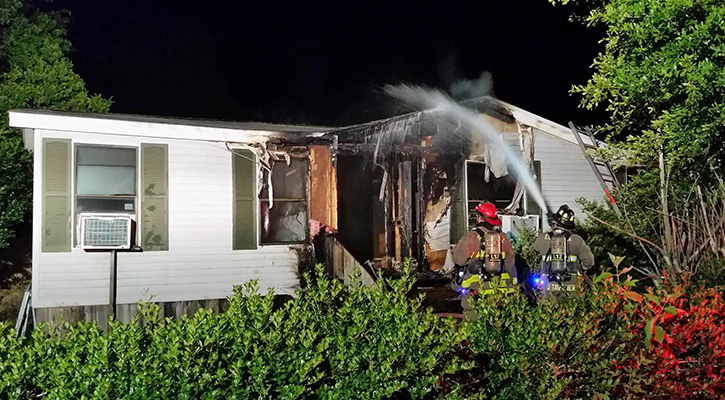
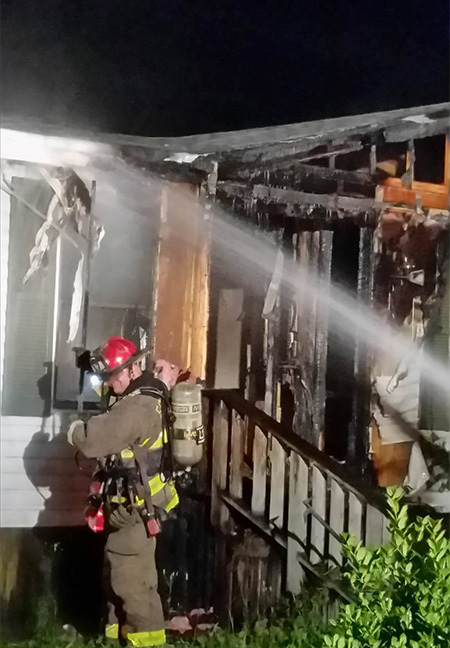 Fire heavily damaged a mobile home early Sunday morning in Ensley. The fire was reported just after 1 a.m. in the Lost Oaks Mobile Home Park in the 8900 block of Chemstrand Road, south of Nine Mile Road. The first 911 callers reported flames coming from the mobile home. Firefighters were able to quickly bring the fire under control. There were no injuries reported. NorthEscambia.com photos by Kristi Barbour, click to enlarge.
Ernest Ward Middle School Names Students Of The Month
May 22, 2016

Ernest Ward Middle School has named Students of the Month. The March Students of the Month, pictured above, are Jaden Lewis, sixth grade; Jayden Jackson, seventh grade; Cloe Smith, eighth grade. The April Students of the Month, pictured below, are Sarius Davis, sixth grade; Andrianna Cooper, seventh grade; Raleigh Woodfin, eighth grade. Submitted photos for NorthEscambia.com click to enlarge.

Top Achievers Honored During Annual Northview FFA Banquet
May 22, 2016

The Northview High School FFA held their annual banquet Friday night.
The event includes a somber retirement ceremony for six of the chapter’s graduating senior officers as they slowly removed their signature FFA blue jackets for the last time.
The night also included many awards for Northview FFA members and supporters. The Northview High School FFA has been continuously honored as a top chapter in Florida and the nation.
Awards and honors presented included:
General Awards
- Extemporaneous Public Speaking Career Development Event – Haylee Weaver
- Prepared Public Speaking Career Development Event – Mitchell Singleton
- Parliamentary Procedure – Courtney Weekley, Haylee Weaver, Bethany Reynolds, Moriah McGahan, Mitchell Singleton, Kaitlyn Kleinatland and Brandon Korinchak.
- Safe Tractor Operations – Cody Kite, Courtney Weekley
- Livestock Evaluation and Selection Career Development Event – Courtney Weekley, Haylee Weaver, Donnie Dixon, Mitchell Singleton, Cole Hassebrock, and Emma Fennell.
- Horse Evaluation – Bethany Reynolds, Tamara Barrows, Kaitlyn Kleinatland, Zack Steele, and Destiny Braddock
- GCA/NRYO Beef production and showmanship – Haylee Weaver
- GCA/NRYO Hog show – Wesley Hardin
- Forestry Team – Kaitlyn Kleinatland, Cole Hassebrock, Tamara Barrows, Grady Rigby, Katie Buford.
- Florida State FFA Convention and Expo attendees – Haylee Weaver, Courtney Weekley, Mitchell Singleton, Bethany Reynolds, Kaitlyn Kleinatland, Brandon Korinchak, Donnie Dixon, Emma Fennell, and Tamara Barrows.
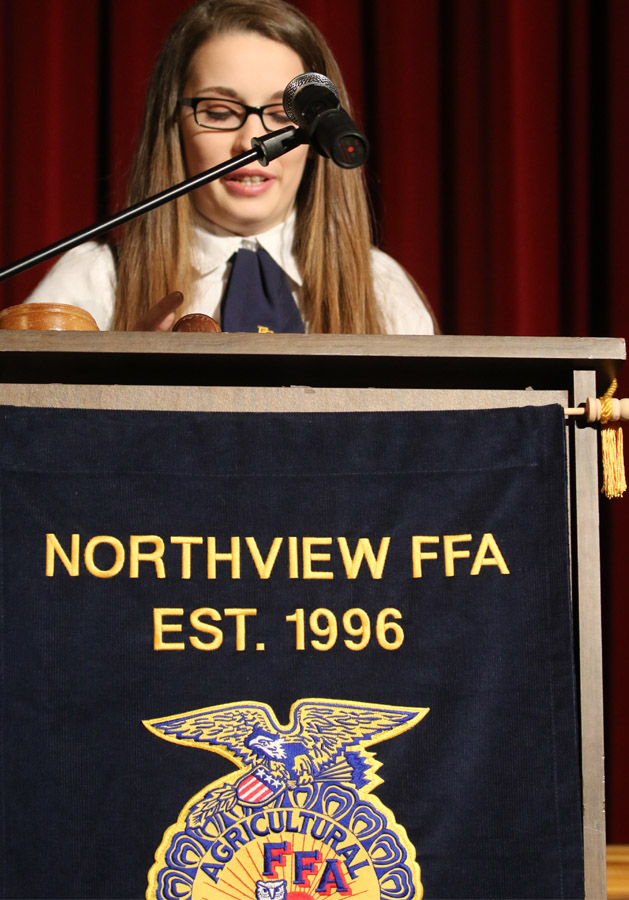 Chapter Leadership Awards – Haylee Weaver, Mitchell Singleton, Bethany Reynolds, Courtney Weekley, Tamara Barrows, Kaitlyn Kleinatland, Tabitha Chavers, Brandon Korinchak, Donnie Dixon, Cody Kite , Breanna Campbell, Emma Fennell.
Blue and Gold Awards – Cole Hassebrock, Troy Stuckey
Outstanding Freshman and Star Greenhand – Density Braddock
Outstanding Sophomore – Donnie Dixon
Outstanding Junior – Mitchell Singleton
Outstanding Senior/Dekalb Agriculture Accomplishment Award – Haylee Weaver
High Point Award- Haylee Weaver- Plaque, Rotating Plaque and $100
Tommy Weaver Memorial Scholarship – Haylee Weaver
Glynn Key Ruritan Scholarship – Haylee Weaver
Jamie Hall Memorial Scholarship – Haylee Weaver
Northview FFA Alumni Scholarship — Kaitlyn Kleinatland, Courtney Weekley, Haylee Weaver
Agriscience FFA Honor Cords – Bethany Reynolds, Courtney Weekley, Haylee Weaver
Agricultural Education Services and Technology (AEST) Certification – Trevor Levins, Hunter Kite, Joel Gunter, Donnie Dixon, Levi Soloman, Julian Satterwhite, Cole Hassebrock.
Retiring Officers
Photographer – Breanna Campbell
Treasurer – Tamara Barrows
Secretary – Courtney Weekley
Reporter – Kaitlyn Kleinatland
2nd Vice President – Bethany Reynolds
President – Haylee Weaver
Honorary Members
Cathy Hardin
Barrineau Park Historical Society
Jacky and Sharon Cunningham
Jimmy Cunningham
Lydia Weaver
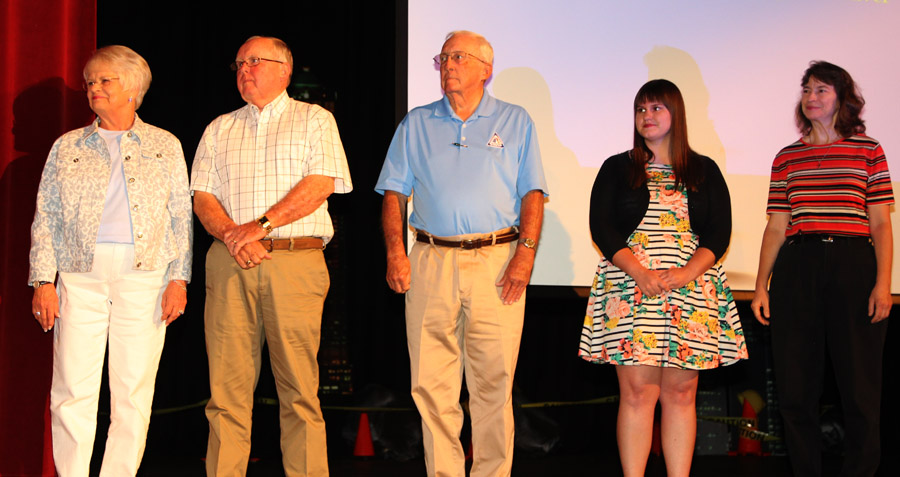
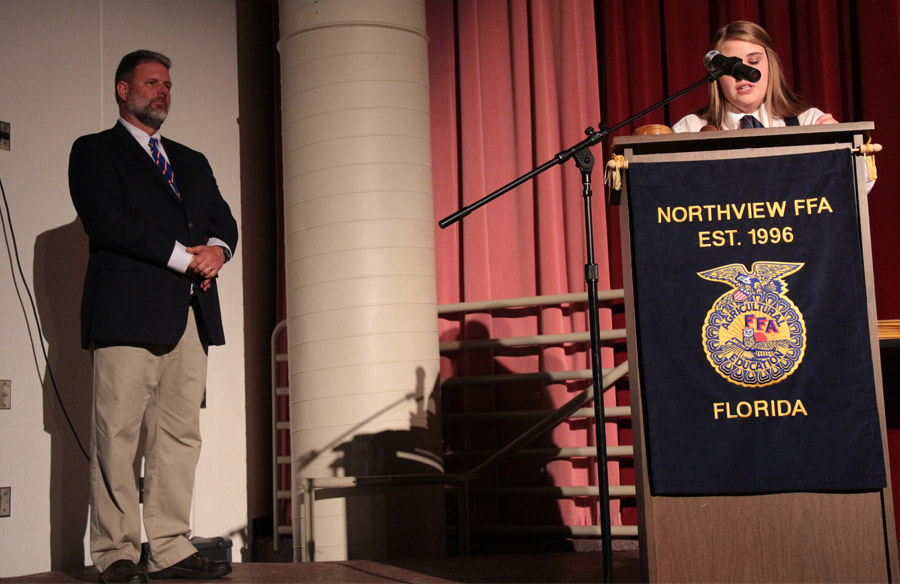
Pictured top: FFA honors graduates Lydia Weaver, Courtney Weekley and Bethany Reynolds. Pictured below: New FFA honorary members Jacky and Sharon Cunningham, Jimmy Cunningham, Lydia Weaver and Cathy Hardin. Pictured bottom: President and senior Haylee Weaver with her retirement address as teacher advisor Perry Byars listens. Pictured inset: Second Vice President and senior Bethany Reynolds. NorthEscambia.com photos, click to enlarge.
ECSO Donates $5,000 To Tate Showband’s Pearl Harbor Trip
May 22, 2016
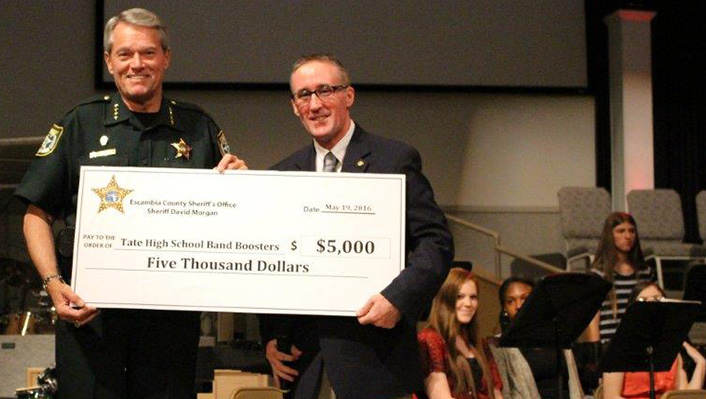
Escambia County Sheriff David Morgan presented a $5,000 donation to the Tate High School Showband of the South at their annual spring concert late last week. The money donated from the Sheriff’s Office comes from State Law Enforcement Trust Fund, which is money seized during drug arrests.The Tate Showband is raising funds to perform in Hawaii in a mass band to commemorate the 75th anniversary of Pearl Harbor on December 7, 2016. Pictured are Showband Director Mike Philley accepting the donation from Sheriff David Morgan. Photo for NorthEscambia.com, click to enlarge.
Blue Wahoos Lose To Jacksonville; Still In First
May 22, 2016

The Pensacola Blue Wahoos were 0-9 with runners in scoring position and fell, 4-0, Saturday to the Jacksonville Suns at The Baseball Grounds of Jacksonville.
Although Pensacola lost Saturday and is 5-5 in its last 10 games, they remain tied for first with Biloxi. The Shuckers took over first after beating the Blue Wahoos April 19. The Blue Wahoos are 25-18 on the season in the Southern League South Division, while the Shuckers are 24-17. Biloxi lost to the Tennessee Smokies, 10-9, Saturday when the Smokies scored nine runs in the seventh and eighth to come from behind to win.
Jacksonville got on the scoreboard first. Suns catcher Francisco Arcia singled to right field to drive in first baseman Brady Shoemaker with one out to go up, 1-0.
Suns third baseman James Roberts drew a bases loaded walk with two out in the sixth inning that scored left fielder Austin Dean, giving Jacksonville a 2-0 lead.
The Suns then put the game away in the eighth inning. Cam Maron pinch hit for Jacksonville and singled in Arcia, 3-0, with one out in eighth inning. Jacksonville center fielder Yefri Perez then hit a deep sacrifice fly to center to score James Roberts from third to give Jacksonville, 4-0, lead in eighth.
Jacksonville pitcher Austin Brice 5.2 scoreless innings, allowing five hits and one walk and struck out six. He improved his record to 3-2 and lowered his ERA to 1.99.
Pensacola pitcher Barrett Astin got the spot start and ended up getting his first loss of the season, falling to 3-1. He pitched three innings gave up one hit, one run, walked four and struck out four.
Blue Wahoos third baseman Eric Jagielo led Pensacola at the plate going 2-4. Pensacola left fielder Tony Renda got a hit in his third straight game against Jacksonville and is now 3-12 in the series.
Florida Gov’t Weekly Roundup: Issues Of Authority
May 22, 2016
The issues in Florida were driven by questions of authority this week.
 Did Florida utility regulators act within their authority by allowing Florida Power & Light to invest ratepayers’ money in a controversial Oklahoma natural-gas project? Did the Obama administration overreach with “guidance” dealing with how public schools should treat transgender students? Can an inmate essentially shut down a Death Row appeal being pursued by his attorney?
Some of the questions were answered — the Supreme Court shot down FPL’s plans — and some were left hanging. When it came to the treatment of transgender students, no one at the highest levels of state government seemed particularly eager to respond at all.
POWER OUTAGE
The decision about the Florida Public Service Commission’s authority to approve the Oklahoma natural-gas project came on a 6-1 ruling by the state Supreme Court, an unusual margin for a court that often decides cases unanimously or on an ideologically divided 5-2 basis.
But Justice Ricky Polston, who generally votes with fellow conservative Justice Charles Canady, wrote the decision saying that the utility-regulatory commission overstepped its bounds by giving FPL the go-ahead to invest in drilling and production of natural gas in what is known as the Woodford Gas Reserves Project.
“This may be a good idea, but whether advance cost recovery of speculative capital investments in gas exploration and production by an electric utility is in the public interest is a policy determination that must be made by the Legislature,” Polston wrote. “For example, in contrast to natural gas exploration and production, the Legislature has authorized the PSC to approve cost recovery for capital investments in nuclear power plants and energy efficient and renewable energy power sources.”
FPL had argued that by passing along the costs for production, the project would help shield the utility’s customers from future price swings for natural gas.
Joining Polston were Chief Justice Jorge Labarga and justices Barbara Pariente, R. Fred Lewis, Peggy Quince and James E.C. Perry. Canady dissented, arguing that the Public Service Commission acted within its legal authority.
“The purpose of the Woodford project is to acquire natural gas, which is used to produce approximately 65 percent of the electricity FPL generates,” Canady wrote. “Acquiring natural gas is therefore necessary for and integrally related to FPL’s primary function of generating electricity.”
FPL was “disappointed” in the decision that could potentially have “long-term negative impact on customers’ bills,” spokeswoman Sarah Gatewood said in an email.
“We continue to believe the Woodford project is a smart long-term investment on behalf of FPL’s customers that will help us provide reliable electricity at low and stable prices by investing directly at the source to provide rate stability and reduce risk for our customers,” Gatewood wrote. “We also believe the PSC was on solid ground in approving a utility’s natural gas investment used in the provision of electric service, and appreciate its careful consideration of this innovative approach.”
FPL has collected about $78.4 million for the Woodford project, which is already providing natural gas for the company. The total comes to less than $1 a month on a typical customer’s bill. It remains unknown if any money will have to be refunded.
BATHROOM BRAWL
With the May 13 release of new guidance by federal officials that school districts should allow transgender students to use restrooms and other facilities of their choice, the fallout in Florida began spreading this week.
The most prominent upshot was social conservatives trying to push Gov. Rick Scott and Attorney General Pam Bondi to defy the administration of Democratic President Barack Obama. But neither Scott nor Bondi seemed eager to wade into the fight.
State Rep. Janet Adkins publicly announced that she had asked Bondi to address whether the Obama administration’s guidance is tantamount to a federal rule, or if it violates the 10th Amendment’s guarantee of state sovereignty for Florida.
“To craft a special class of rights for certain individuals and to allow people to make decisions based on how they identify their gender creates a chaotic environment for the school administrators,” said Adkins, R-Fernandina Beach, in a statement released by her office. “This is illogical and harms the greater need for an orderly learning environment that promotes the safety and well-being of all students.”
Adkins, who chairs the state House K-12 Subcommittee, is running for schools superintendent in Nassau County.
But Bondi’s office demurred. In a letter responding to Adkins, Florida Deputy Attorney General Kent Perez thanked the lawmaker for her curiosity but declined to address the question directly.
“We do not issue legal opinions on federal law,” Perez wrote.
Scott’s office continued to say it was reviewing the issue, even as Republican congressional candidates and one of the state’s highest-profile conservative groups pushed him to get involved.
The Florida Family Policy Council issued a letter by President John Stemberger calling on supporters to sign an online petition asking Scott to defy the Obama administration.
“For starters, the governors in at least six states have told the Obama administration they will NOT comply with his unlawful and dangerous edict,” Stemberger wrote. “But Florida is not yet one of them. We need your help to make that happen. States MUST push back!”
In contrast, the American Civil Liberties Union of Florida issued a letter Thursday calling on Scott and Bondi to stand down.
ACLU of Florida Executive Director Howard Simon said allowing public school students to use facilities corresponding to their stated gender identity — rather than their sex at birth — “is not only required by law, but it is also the right thing to do.”
“When transgender students are required to use separate facilities, it does not go unnoticed by other students,” Simon wrote. “Being separated from other students in this way would be damaging to anyone, but it is especially harmful for transgender children.”
One reason politicians might not be eager to get involved was represented by another development in Florida government. Health officials said they have started listing both spouses on birth certificates of children born into same-sex marriages and hope to have new birth certificates adding the option of “parent” — in addition to “mother” and “father” — by mid-July, according to court documents filed this week.
In a court filing, the state said U.S. District Judge Robert Hinkle’s March 31 final order in a lawsuit that overturned the state’s gay-marriage ban made it possible for the forms to be changed. Hinkle’s order came more than a year after same-sex marriages became legal in Florida and long after the U.S. Supreme Court struck down state bans on gay marriage last June.
Five or 10 years ago, such a ruling would have seemed unlikely. But legal standards and public opinion on LGBT issues have been evolving rapidly, and ambitious politicians might not want to go any further on those debates than they have to.
POWER OF ATTORNEY
Meanwhile, the state’s ongoing battle over the death penalty was roiled again this week, when a Death Row inmate whose execution is on hold asked the Florida Supreme Court to abandon, in his case, consideration of a U.S. Supreme Court decision that struck down the state’s death-penalty sentencing process.
The Florida Supreme Court earlier this year indefinitely postponed the execution of Mark James Asay, a convicted double murderer who was scheduled to be put to death on March 17. The ruling was prompted by a U.S. Supreme Court decision that found Florida’s death penalty sentencing system gave too much power to judges, and not juries.
The state’s high court has focused on the fallout of the decision, which came in a case known as Hurst v. Florida, in more than a dozen Florida death penalty cases since the opinion was issued in January.
During the legislative session that ended in March, Florida lawmakers hurriedly crafted a “fix” to the state law — which defense lawyers contend is flawed — in response to the Jan. 12 ruling,
Under Florida’s new law, juries will have to unanimously determine “the existence of at least one aggravating factor” before defendants can be eligible for death sentences. The law also requires at least 10 jurors to recommend the death penalty in order for the sentence to be imposed, and it did away with a feature of the old law that allowed judges to override juries’ recommendations of life in prison instead of death.
A jury in Asay’s case recommended death on both first-degree murder counts with a vote of 9-3.
Since the Hurst ruling, lawyer Marty McClain — who was appointed after Scott signed a death warrant for Asay — has argued that the new law should apply to Asay and that the prisoner should receive a life sentence, based on a 1972 Florida law that required death sentences to be reduced to life imprisonment without parole if the death penalty is overturned.
“While Mr. McLain (sic) is indeed an honorable and excellent attorney in the rush and exigency of proceeding under a death warrant counsel has moved this court to review and to address claims relating to sentencing issues that petitioner simply is not interested in seeking relief from and now wishes to waive,” Asay wrote in a handwritten, two-page document filed with the Supreme Court.
Documents filed by Asay on Monday and Thursday appear to indicate that he is interested in pursuing appeals based on new or rejected evidence related to his case.
The court could ignore Asay’s request, ask the state to weigh in, ask McClain to respond, or send the case back to the trial court, according to legal experts.
STORY OF THE WEEK: The Florida Supreme Court rejected a decision by utility regulators to allow Florida Power & Light to charge customers for an investment in an Oklahoma natural-gas project.
QUOTE OF THE WEEK: “A right guaranteed by the Florida and United States Constitutions cannot be bargained away by a legislative compromise. To allow a non-unanimous verdict only in cases where the ultimate penalty is to be decided stands the Eighth Amendment ‘death is different’ principle on its head.”—10th Judicial Circuit Public Defender Rex Dimmig, in a friend-of-the-court brief dealing with whether a jury must unanimously agree to impose the death penalty.
by Brandon Larrabee, The News Service of Florida
No Injuries Reported In Cottage Hill Rollover Crash
May 21, 2016

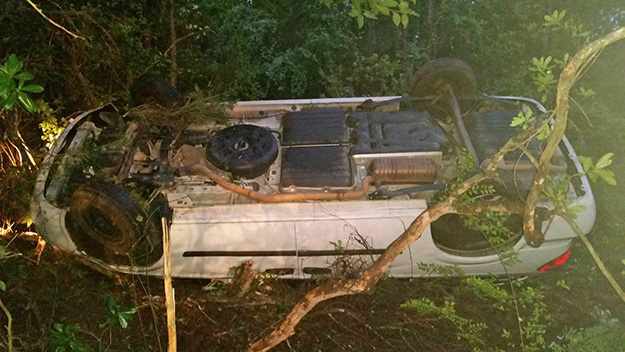
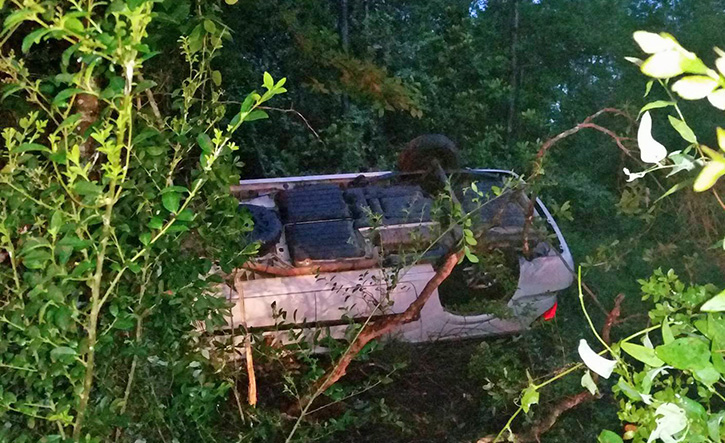
There were no injuries in a single vehicle rollover accident early Saturday morning in Cottage Hill.
The driver of a Dodge Grand Caravan lost control and flipped into a wooded area about 5:15 a.m. on Highway 95A and McKenzie Road. The driver refused medical transport; there were no passengers in the vehicle.
The accident is under investigation by the Florida Highway Patrol. Additional details on the crash have not been released.
NorthEscambia.com photos by Kristi Barbour, click to enlarge.
State Fire Marshal Investigating Suspicious Fire At Abandoned Century Home
May 21, 2016
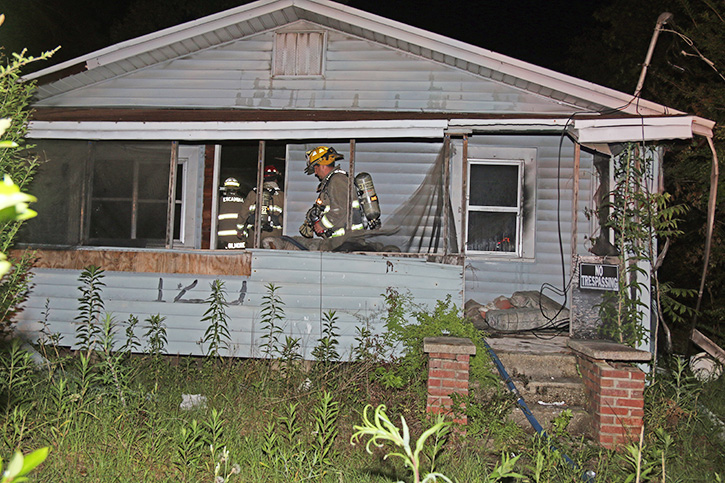
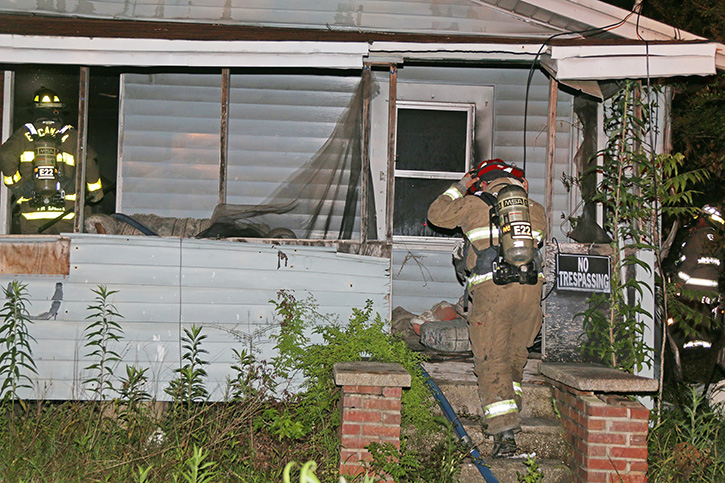
The Florida State Fire Marhal’s Office is investigating the cause of a suspicious fire Friday night that damaged an abandoned home in Century.
The fire was reported by a passerby about 9:40 p.m. at 120 East Pond Street, a wood frame home that neighbors said had been unoccupied for a period of time. The home had no power, no water and no gas connections.
The fire was contained mostly to a couple of rooms inside the home.
There were no injuries reported.
The Century, McDavid, Walnut Hill, Flomaton and Jay fire departments were dispatched to the fire, along with the Escambia County Sheriff’s Office and Escambia County EMS.
NorthEscambia.com photos, click to enlarge.
Scott: Area’s Unemployment Drops, Sees Economic Growth
May 21, 2016
Gov Rick Scott announced Friday that the Pensacola area added 1,300 new private-sector jobs over the year in April. The area’s unemployment rate declined by 0.5 percentage point over the year to 4.5 percent.
 Scott said, “Like the rest of our state, the Pensacola area continues to see economic growth with 1,300 new jobs added over the year. While today’s announcement is great news for Northwest Florida, we will keep working to create more opportunities across Florida so everyone who wants a job can find one.”
The industry with the greatest job growth in the Pensacola area over the year was education and health services with 500 new jobs. The Pensacola area had 5,039 job openings in April, with 1,253 openings for high-wage, high-skill, science, technology, engineering, and math (STEM) occupations.
Florida’s unemployment rate dipped to 4.8 percent in April, down from 4.9 percent in March and the lowest mark for the state in more than eight years. The preliminary April jobless rate represented an estimated 472,000 Floridians being out of work — 6,000 fewer than revised March numbers — from a workforce of 9.8 million, the state Department of Economic Development announced Friday.