

Wahoos Earn 11 Hits In 7-4 Win Over Biloxi
August 10, 2016
This time the Pensacola Blue Wahoos changed up its game script a little bit. Instead of waiting until late in the game to score, the Blue Wahoos jumped out to a 5-0 lead in the second inning.
Behind four players who had multi-hit games and seven of the nine starters getting a hit, Pensacola won the final game of the five-game series over the Biloxi Shuckers, 7-4, Tuesday at MGM Park.
 The Pensacola lineup that scored 11 runs in the first four games and hit .236 broke out in the last game of the series with seven runs on 11-36 hitting for a .305 batting average.
Although Biloxi snapped a six series losing streak, beating Pensacola, 3-2, the Blue Wahoos closed out the season with the Shuckers Tuesday with a 13-12 record.
Pensacola, the first half Southern League South Division champions, is now 21-24 in the second half and 7.5 games behind the South Division leader Mississippi Braves that have a 28-16 record. Biloxi fell to 18-27 and are in last place after being neck-and-neck with the Blue Wahoos in the race for the first half title.
Blue Wahoos shortstop Zach Vincej and right fielder Sebastian Elizalde led the Pensacola offense on Tuesday. Vincej was 2-5 with a run scored and three RBIs. He is hitting .309 in the second half, so far, after hitting .258 in the first half of the season. Vincej leads the Blue Wahoos with 22 multi-hit games.
Elizalde went 2-5 with two runs scored and has 21 multi-hit games this season for Pensacola. He has gotten a hit in his last six games.
Also having a good game at the plate Tuesday was left fielder Phillip Ervin, who went 2-4 with a double, solo home run and scored twice. He leads Pensacola with 51 runs scored this season, plus is second on the team in both homers with 10 and RBIs with 36.
Pensacola scored five runs in the second inning when it sent all nine batters to the plate with four hits, including three doubles by Phillips, Vincej and second baseman Alex Blandino, and two walks.
Blue Wahoos left fielder Ervin started the big inning when he doubled in Elizalde to put the Blue Wahoos ahead, 1-0. Vincej doubled in both catcher Joe Hudson (2-4, one run scored) and Ervin to give Pensacola a 3-0 lead. Vincej then scored when center fielder Brandon Dixon grounded out to second base to make the score, 4-0. The final run of the inning scored when Blandino doubled in first baseman Chad Wallach for a 5-0 lead.
Meanwhile, Pensacola starter Nick Travieso pitched for the first time since July 18 and threw 3.1 scoreless innings with three hits, three walks and two strikeouts. Pensacola reliever Barrett Astin relieved Travieso and got the win (7-3) working 3.2 scoreless innings, allowing two hits, two walks and striking out two. Astin lowered his ERA to 2.37.
Biloxi did earn four in the bottom of the eighth inning when catcher Jacob Nottingham singled back up the middle to knock in both pinch hitter Tom Belza and left fielder Johnny Davis to trail Pensacola, 7-2.
Pensacola sent in its top closer Alejandro Chacin to rescue reliever Carlos Gonzalez, who loaded the bases with one out by walking first baseman Dustin DeMuth and hitting right fielder Clint Coulter.
Chacin then promptly walked Biloxi second baseman Javier Betancourt to score Nottingham making the score, 7-3, Pensacola. Shuckers third baseman Gabriel Noriega than hit a sacrifice fly to right field that scored DeMuth to pull the Shuckers within, 7-4.
Chacin, who has a 1.76 ERA, settled down in the ninth inning setting down the Biloxi side with two strikeouts. He ended up working 1.2 innings with a walk and three strikeouts to earn his Southern League-leading 22nd save of the season.
Cantonment Man Critically Injured After Hitting Pillar At Shopping Center
August 9, 2016
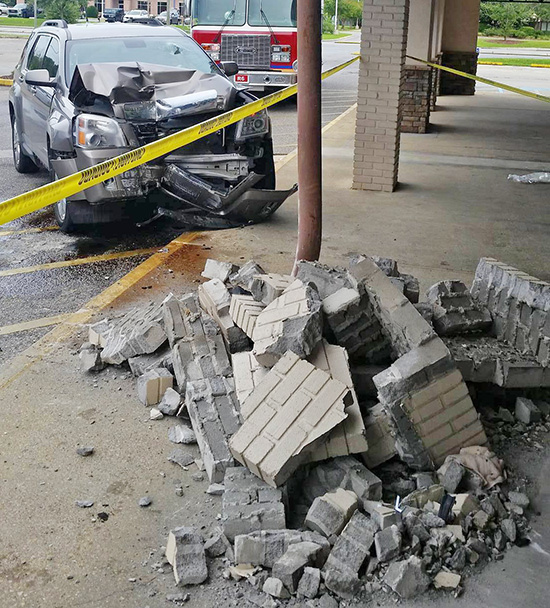
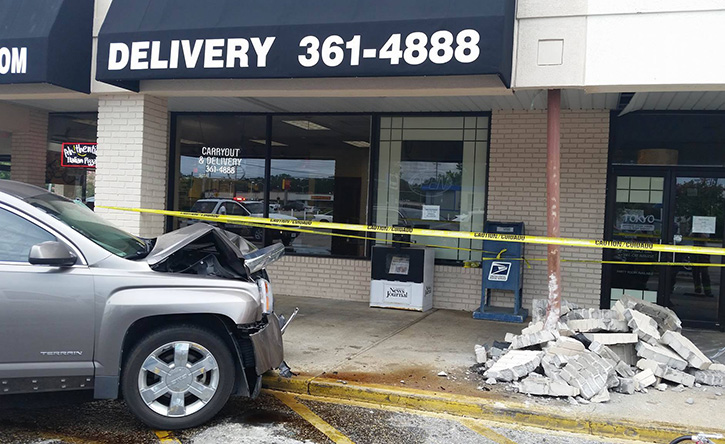
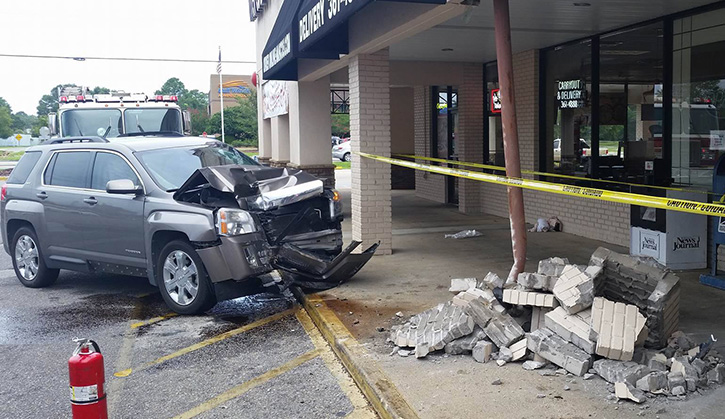
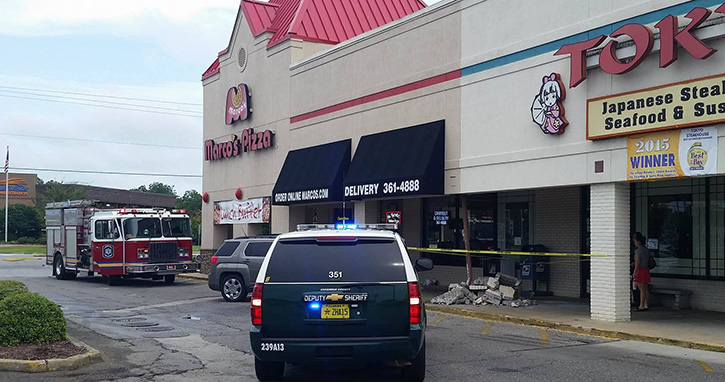
A vehicle driven by a Cantonment man collided with a shopping center building on in the 300 block of East Nine Mile Road Tuesday morning.
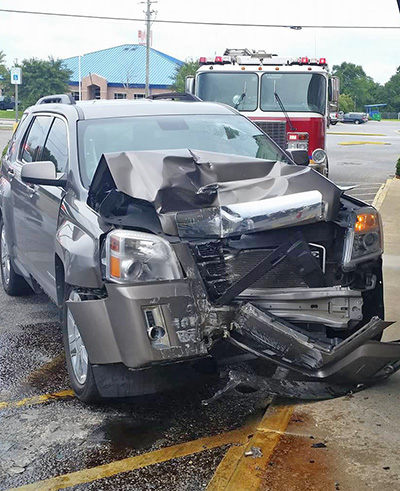 According to the Florida Highway Patrol, 66-year old James Maddox of Cantonment was parked at Nine Mile Plaza at 312 East Nine Mile Road when he began to travel in the parking lot and veered into a brick pillar. He was transported to Sacred Heart Hospital in serious condition. The crash was not alcohol related, per the FHP.
Any charges against Maddox are pending as the FHP continues their investigation. The Ensley Station of Escambia Fire Rescue and the Escambia County Sheriff’s Office also responded to the crash.
Both restaurants near the crash location are expected were open for business as usual.
NorthEscambia.com photos by Kristi Barbour, click to enlarge.
Century Mayoral Candidate Spending Lots Of Own Money; Others Running On Empty
August 9, 2016
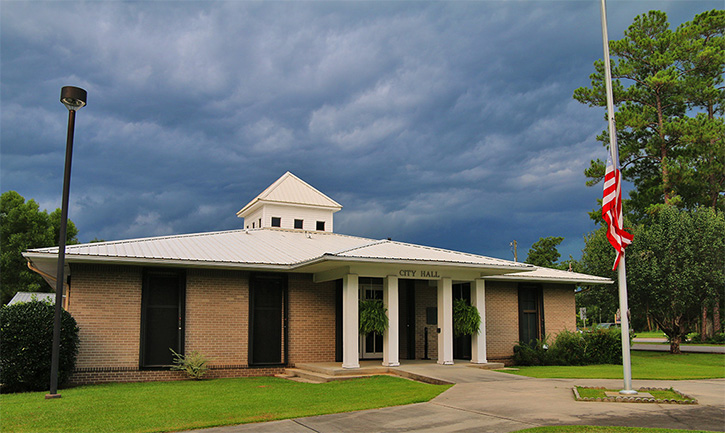
Incumbent Century Mayor Freddie McCall is spending thousands of his own money in an attempt to get re-elected, while his opponents are running with campaign accounts holding balances of less than $75 each.
According to campaign finance reports filed last Friday:
- Incumbent Freddie McCall loaned his campaign $5,000 and received no contributions. He spent $800 to Bill Salter Outdoor Advertising for a “campaign sign”, $825 for yard signs and $121 for the qualifying fee, giving him a cash on hand balance of $3253.11 as of last Friday.
- Ben Boutwell contributed $100 to his campaign and received $450 in additional contributions, including $150 from his wife. he spent $356 on campaign signs and paid his $121 qualifying fee, giving him a balance of $72.32 as of Friday.
- Felic Fussner loaded his campaign $152, had no contributions and paid his qualifying fee of $121 for a balance of $30.56.
- Henry Hawkins contributed $50 to his campaign and received $100 in contributions. He paid his $121 qualifying fee for a cash balance of $28.56. Hawkins also received an in-kind contribution of yard signs worth $200 from Russell Fountain of Century.
Both council candidates are running without opposition:
- Ann Brooks contributed $100 to her campaign, paid her $50.36 registration fee and returned the $49.64 balance to herself.
- Annie Savage contributed $100 to her campaign, paid her $50.36 registration fee and has a balance of $49.64.
The part-time job of Century mayor pays $9,836.88 per year, while a member of the Century town council is paid $3,606.88.
Editor’s note: Some numbers used in this story were averaged to the nearest whole dollar.
Northview, Tate Parents: Complete Chromebook Contract Online
August 9, 2016

High school students in Escambia County, including Tate and Northview, will have access to a Chromebook to use at school and home, allowing students to be connection to available education resources at both locations.
Parents and students are required to view the district Chromebook Contract Video and must review and complete the online Chromebook Contract.
In order for a student to receive the Chromebook as soon as possible, parents and students can:
For more information, refer to information sent home from the school or call your child’s school.
Scott Calls For Zika Protections For Florida Schools
August 9, 2016

As the Zika outbreak expands in Florida, Gov. Rick Scott on Monday directed education officials to protect students heading back to public schools, state colleges and universities, including distributing mosquito repellent to schools in South Florida, where the disease is the most prevalent.
The majority of Florida’s 2.7 million public-school students return to classrooms on Wednesday, followed later in the month by hundreds of thousands of students beginning their fall semesters at state colleges and universities.
The state Department of Health announced on Monday a new non-travel related Zika case in Palm Beach County, bringing to 17 the number of cases linked to infections acquired in Florida. That is on top of 357 travel-related cases and another 55 cases involving pregnant women, for a total of 429.
Leon County also reported its first travel-related case, meaning 30 of Florida’s 67 counties have cases stemming from people traveling outside the continental U.S., with Miami-Dade County claiming 106 of the total. The mosquito-borne virus, which emerged last year in South America, is particularly dangerous to pregnant women and can cause severe birth defects.
“With the announcement of this new (Palm Beach County) case, and the upcoming new school year, I have directed DOH (the Department of Health) and DOE (the Department of Education) to closely work together to ensure students, parents, educators and district leaders have all the resources and guidance they need to combat the Zika virus,” Scott said in a statement.
Scott, who met with St. Johns County officials on Monday to review Zika response plans, said state health officials still believe the 17 Florida cases all originated in the Wynwood neighborhood in Miami-Dade County, with the person involved in the new Palm Beach case having recently traveled to Miami.
But Scott has asked state health and education officials to take a number of steps to protect students across the state. Those steps include:
— Distributing insect repellent to public schools, colleges and universities in Miami-Dade, Broward, Palm Beach, Martin and Monroe counties.
— Requiring schools and universities to have procedures in place to promptly deal with suspected Zika cases.
— Linking schools with local health departments so that clinic nurses and staff can be trained in the prevention and identification of Zika cases.
— Distributing posters, palm cards, door hangers and other Zika-awareness material to be used on campuses and sent home with students.
— Providing a Department of Health “teacher toolkit” that will allow teachers to include Zika messages and activities in lessons.
— Distributing Zika awareness materials to voluntary pre-kindergarten and other school-readiness programs.
“It’s a great opportunity to utilize all the resources that are available and our educators to help our students and our communities understand what to do,” Education Commissioner Pam Stewart said.
Scott said he would meet with education leaders at all levels “to discuss what actions they are taking at their schools and campuses and we will continue to keep an open line of communication with education leaders across the state.”
As the Florida Zika cases increase, a major credit-rating agency has warned the virus could have an impact on the state’s tourism industry and related revenues, including sales taxes, gas taxes and hotel bed taxes.
The Miami-Herald reported that Moody’s has warned Miami and Miami-Dade County about a potential “credit negative” if the Zika outbreak persists into the middle of the winter tourism season in South Florida and affects tourism-related taxes. The rating agency noted that a warning from the federal Centers for Disease Control and Prevention for pregnant women to avoid the Wynwood neighborhood is the first time in the CDC’s 70-year history that it has declared a travel ban on a U.S. location.
Meanwhile, Visit Florida, the state’s main tourism-promotion organization, has created a Zika web page to provide information and “talking points” on the mosquito-borne disease.
Visit Florida said the safety of visitors, who totaled 106 million last year, remained the “highest priority” for the state’s tourism industry.
It also noted the Department of Health’s belief that all the locally transmitted Zika cases “to date” are confined to the Wynwood neighborhood and buffer zone in Miami.
“For perspective, that’s a one-square-mile area in a state that covers more than 65,000 square miles,” Visit Florida said.
by Lloyd Dunkelberger, The News Service of Florida
Deidra’s Gift: Free School Supplies Distributed To Hundreds
August 9, 2016

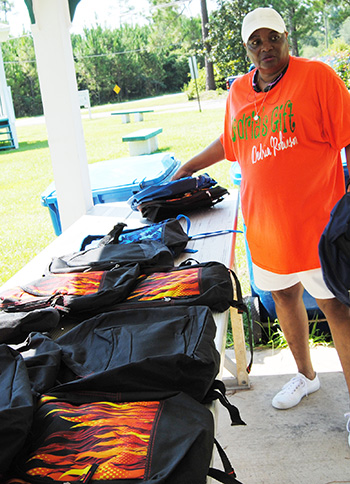
Free backpacks and school supplies were distributed recently in Century to hundreds of children in need, thanks to a family honoring the memory of one of their own, in a program called “Dedria’s Gift”.
The book bags full of supplies were distributed in memory of Dedria Robinson, who was killed in 2005 in an automobile accident at age 11.
Photos for NorthEscambia.com, click to enlarge.


Century Board To Discuss Historic District Homes Damaged By Tornado
August 9, 2016

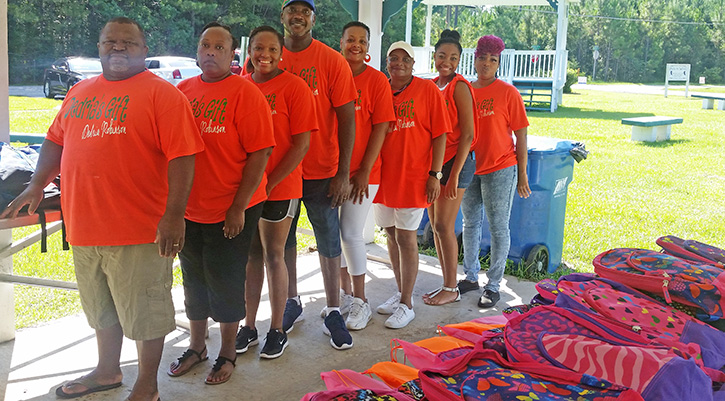
As recovery efforts continue in Century, the Century Architectural Review Board will meet to discuss various housing units within the Alger-Sullivan Lumber Company Residential Historic District, that were damaged as a result of the February 15 tornado.
An overview of the units affected and a recommendation for either rehabilitation or demolition and reconstruction will be provided at the meeting.
The meeting will take place at 10 a.m. Wednesday at the Century Town Hall and is open to the public.
NorthEscambia.com file photo.
No Serious Injuries In Highway 95A Crash
August 9, 2016
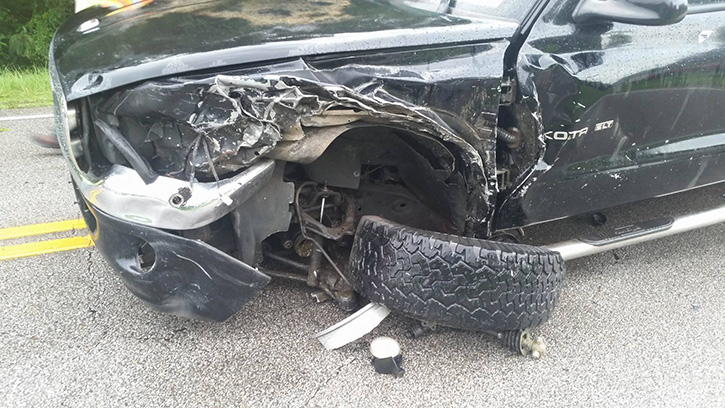
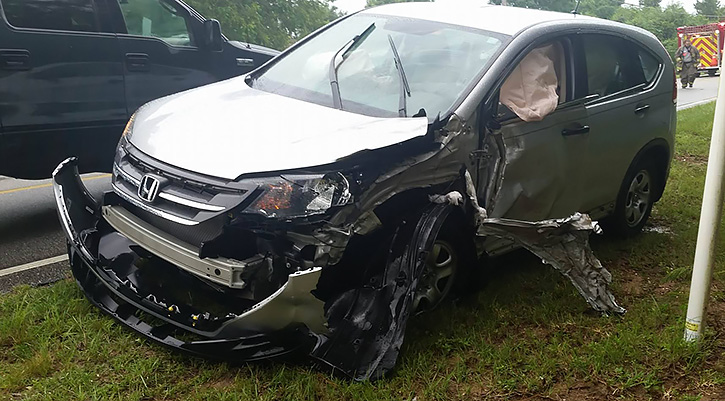
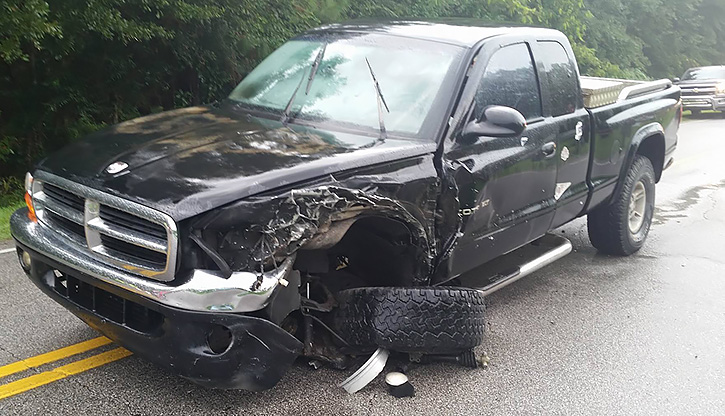
There were no serious injuries reported in a two vehicle crash Monday on Highway 95A south of Molino. The wreck involving a Honda SUV and a Dodge pickup occurred about 3:36 p.m. on Highway 95A south of Cedartown Road. The accident temporarly blocked traffic in both directions on Highway 95A. NorthEscambia.com photos by Kristi Barbour, click to enlarge.

Ernest Ward Middle Cheerleaders Attend Camp; Five Named As All Americans
August 9, 2016


Shuckers Stop Wahoos 3-1
August 9, 2016

The Pensacola Blue Wahoos scored one run in the ninth but the run came too late to make a difference as the Biloxi Shuckers held on for a 3-1 victory Monday to capture the five-game series at MGM Park.
Pensacola just couldn’t score on Biloxi starter Brandon Woodruff who helped the Shuckers take a 3-1 lead in the series.
In fact, Pensacola batters haven’t earned a run off of Woodruff in all three of his starts against the Blue Wahoos. After throwing 20 scoreless innings against Pensacola, Woodruff probably wishes he could throw against them in every game. He has struck out 25 batters and allowed just nine hits. Woodruff improved to 5-4 and his earned-run average dropped to 2.87.
Pensacola, which won the first half title, is now 20-24 in the second half and in fourth place in the Southern League South division. Biloxi is 18-26 and in last place.
In the ninth inning, Blue Wahoos right fielder Sebastian Elizalde lead off with a single to center and reached third on Biloxi center fielder Brett Phillips error. Pensacola shortstop Zach Vincej then hit a sacrifice fly to right field to score Elizalde to pull Pensacola within 3-1.
But Biloxi’s top closer Stephen Kohlscheen then struck out both Pensacola third baseman Taylor Sparks and first baseman Eric Jagielo to end the game and earn his 18th save of the season.
Biloxi scored first in the bottom of the third inning when Shuckers center fielder Brett Phillips homered, his 13th of the season, to lead off the inning and give his team a 1-0 lead. Biloxi tacked on another run in the inning when first baseman Dustin DeMuth singled in left fielder Tyrone Taylor, who had doubled, putting the Shuckers ahead, 2-0.
Biloxi catcher Jacob Nottingham extended the Shuckers lead to 3-0 in the fifth inning with a homer over the center field wall — his eighth home run of the season.
Pensacola starter Sal Romano gave up three runs on two homers in five innings of work. He scattered nine hits, walked none and struck out four. He is 4-11 with a 3.92 ERA and is second in the Southern League with 116 strikeouts.
Leading the way at the plate for Pensacola was second baseman Alex Blandino, who went 3-4. He is now 7-12 in the series against Biloxi in three games with one run, one RBI and one walk.
Pensacola center fielder Jeff Gelalich also got on base twice going 1-3 with a walk.