

FDOT: Weekly Traffic Alerts
September 25, 2016

Drivers will encounter traffic disruptions on the following state roads in Escambia and Santa Rosa counties as crews perform construction and maintenance activities.
Escambia County:
- Interstate 10 (I-10) / U.S. 29 Interchange Improvements Phase 1 – The inside lanes of U.S. 29 north and southbound near the I-10 interchange will be closed from 8 p.m. to 6 a.m. Sunday, Sept. 25 through Thursday, Sept. 29 for drainage improvements.
- 9 Mile Road (from Pine Forest Road to U.S. 29) Widening - Clearing of trees and shrubs on the 2.6 mile segment between State Road (S.R.) 297 (Pine Forest Road) and S.R. 95 (U.S. 29) began Thursday, Sept. 22. Drivers are reminded to watch for workers and equipment entering and exiting the roadway. Lane closures are only permitted between the hours of 8 p.m. and 6 a.m.
- U.S. 29 (from I-10 to 9 Mile Road) Widening – Motorists will encounter lane closures near the U.S. 29/9 Mile Road overpass as workers prepare the area for the bridge replacement. Lane closures will only be permitted between 8 p.m. and 6 a.m.
- I-10 (from Davis Highway to Scenic Highway)Widening – Traffic on Scenic Highway (U.S. 90) northbound will be shifted to the newly constructed northbound travel lanes beginning Wednesday, Sept. 28. The shift will allow crews to install the concrete traffic separator in the median between the north and southbound lanes and open the park and ride facility.
Santa Rosa County:
- I-10 Resurfacing - Intermittent and alternating lane closures east and westbound between the S.R. 87 interchange and the Okaloosa County line from 8 p.m. to 6 a.m. Sunday, Sept. 25 through Friday, Sept. 30 as crews perform construction activities. Motorists are reminded the speed limit is reduced to 60 MPH within the lane closure.
All activities are weather dependent and may be delayed or re-scheduled in the event of inclement weather. Drivers are reminded to use caution, especially at night, when traveling in a work zone and to watch for construction workers and equipment entering and exiting the roadway.
Molino VFD Holds Open House, Live Burn Demonstration
September 25, 2016
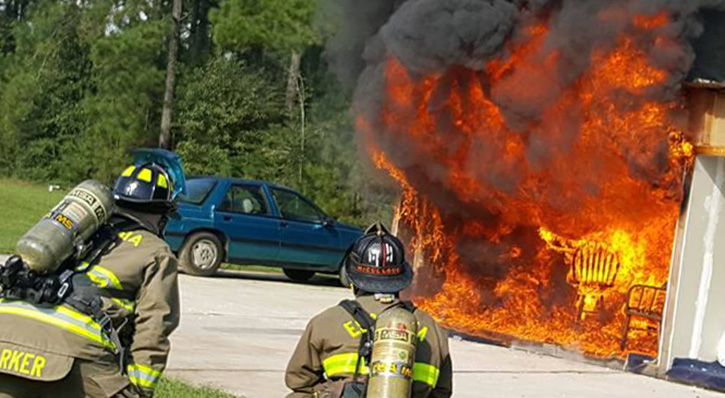
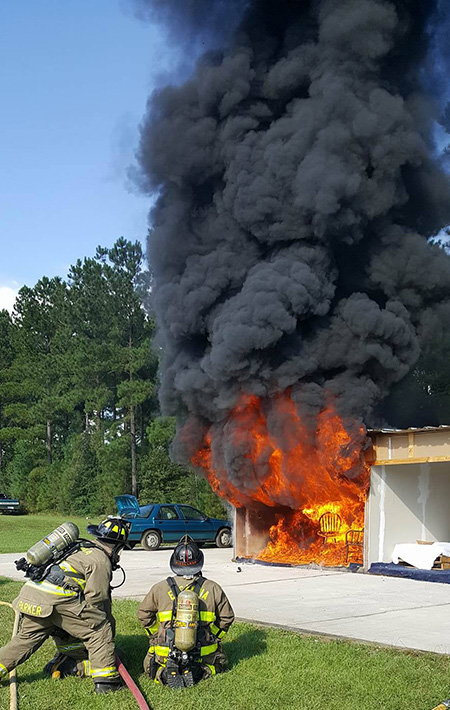
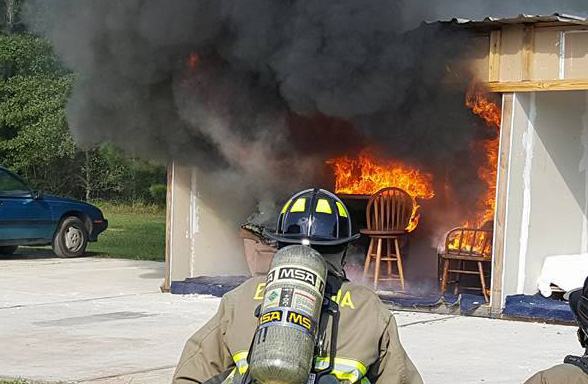
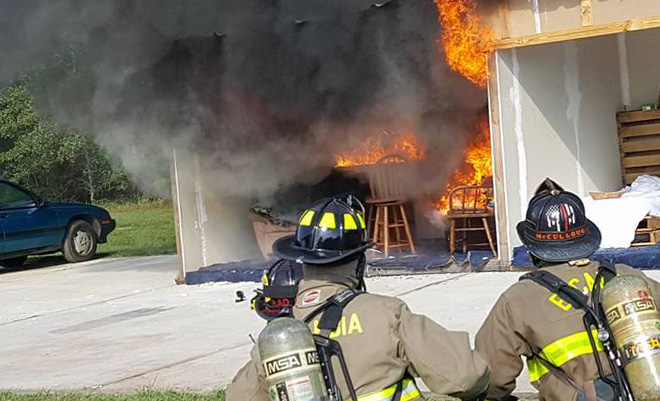
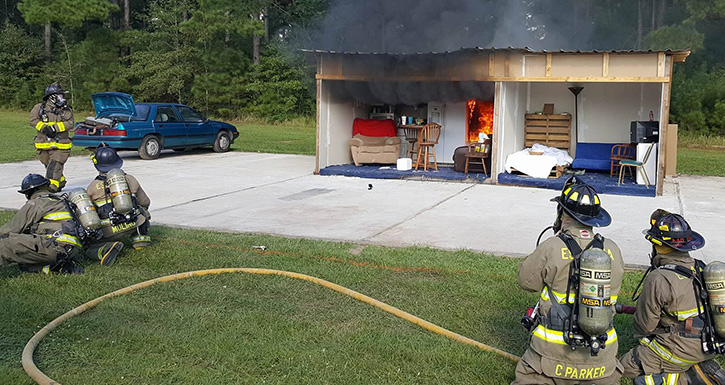
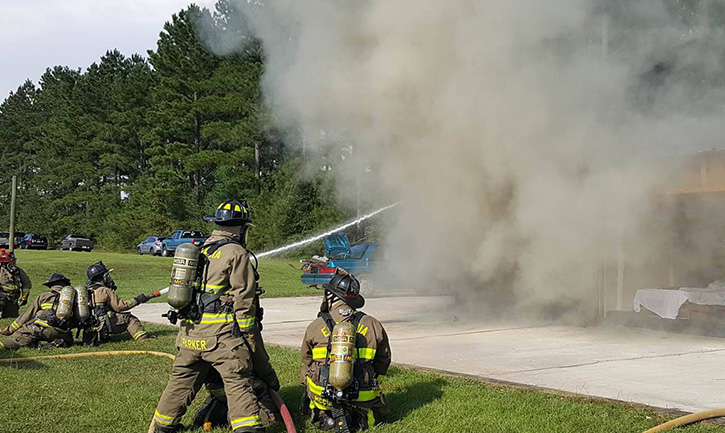
The Molino Station of Escambia Fire Rescue held an open house Saturday afternoon, including a live burn demonstration. The event also included a variety of activities for the entire family, including free food, entertainment and activities for the kids. Photos for NorthEscambia.com, click to enlarge.
Florida Seat Belt Use At All-Time High
September 25, 2016
Seat-belt use is up to nearly 90 percent in Florida, the state Department of Transportation said Thursday. Of 31,055 drivers and 7,426 front-seat passengers observed in June, 89.6 percent were using the safety devices, the agency reported.
The mark is the highest the state has recorded, with slightly lower percentages each year since 2009 when a law went into effect allowing police to pull over and ticket drivers and passengers for not wearing seat belts. When the law took effect, compliance was estimated at 85.2 percent. A year ago, the mark stood at 89.4 percent. In 2000, seat-belt use was estimated at 60.1 percent.
The latest projection is based on observations of motorists taken at 165 sites in 15 counties.
Florida Gov’t Weekly Roundup: The Times, They Are A-Changing
September 25, 2016
As fall settles over Tallahassee — at least in terms of the season, not the weather — state government is also going through some changes.
There’s the actual, physical changes underway at the state Capitol, a construction project meant to repair parking garages and spruce up a main way that people enter the halls of government.
 There are the personnel changes, as a longtime member of Gov. Rick Scott’s administration retires and another agency head gives way to someone Scott has wanted to bring into state government.
And there’s the other seasonal change that takes place every year, as state agencies ready their spending requests for Scott and the Legislature to consider. It marks the unofficial beginning of the process of haggling, bargaining and horse-trading that ends up with lawmakers approving a budget in the 11th hour of the spring legislative session — never before.
But just like the green leaves are still on the trees in Tallahassee, there are a few old storylines to dispose of before moving on. And one of them dealt with Attorney General Pam Bondi.
BONDI TALKS TRUMP
There’s been plenty of speculation in 2016 about whether and how support for presidential nominee Donald Trump might hurt Republicans. But most of that has been speculative. Bondi is one of the few GOP officials to actually see her reputation undermined in real time by her association with Trump.
And on Tuesday, just before the start of a Cabinet meeting, Bondi tried another round of damage control over assertions that a $25,000 political contribution from Trump influenced her office in 2013 to dismiss allegations that Floridians had been bilked by the modestly named Trump University.
In Bondi’s telling, only a single complaint had been filed by a Floridian against the Trump educational company between the time she took office in 2011 and the time of the donation. She also said she had no knowledge of the complaint at the time it was made and that a lower-level staff member found no justification to investigate.
“There was one complaint by one citizen against Donald Trump in 2011,” Bondi said. “I had absolutely no idea, nor would I have had an idea that there was one complaint.”
Bondi said she had no regret about the contribution, which was made from Trump’s charity foundation to a political committee known as “And Justice for All,” which helped in her successful 2014 re-election bid. She said her mistake had been in failing to personally address media questions about the contribution earlier.
“I hate that this is taking away from all the things we can be doing to help people,” Bondi said.
Despite Trump’s statements on the campaign trail that he has given contributions to other politicians to get favors, Bondi said there were no strings attached with the 2013 contribution to her re-election effort.
“I would never, ever trade any campaign donation for some type of favor to anyone,” Bondi said.
PUTNAM AND THE PARKING DECKS
If he still has some spare money lying around, maybe Trump could help the state pay for emergency repairs to two underground parking decks at the Capitol and planned upgrades to a main entry plaza. The potential bill for those changes is a bit more than $25,000 — in fact, it’s 3,000 times as much, or $75 million.
Department of Management Services Secretary Chad Poppell, whose agency oversees the complex, said officials should have a better grasp on some of the costs in about a month when updated figures are available on the already-closed Senate garage.
“These projects are very complex, about half of the cost is just getting the building ready to work on,” Poppell said.
Agriculture Commissioner Adam Putnam had aesthetic and fiscal concerns with the project, describing the minimalistic renderings that Poppell’s office is using to showcase the project as “not particularly attractive” and asking about less-expensive options.
“Seventy-five million (dollars), and to only have to show for it two parking garages that are not collapsing on each other and ADA (Americans with Disabilities Act) accessibility, is extraordinary to me,” Putnam said.
ALL SHOOK UP?
It might be a bit much to say that Scott’s administration underwent a shake-up this week, but there were changes atop two of the agencies that provide services to vulnerable Floridians.
Liz Dudek, a longtime state health official who helped lead an overhaul of the Medicaid program, is retiring as secretary of the Florida Agency for Health Care Administration, Scott announced Wednesday.
Dudek is one of the longest-serving officials remaining under a governor known for agency-head turnover. She has served as secretary since March 2011, shortly after Scott took office.
“Liz Dudek has been a part of my team since my first year in office and has spent over four decades serving Florida families,” Scott said in a prepared statement. “She cares deeply about making our state the best place for families. Under her leadership, we have worked to make hospitals more transparent and accomplished historic Medicaid reform.”
Dudek will be replaced on an interim basis by Deputy Secretary Justin Senior.
The announcement did not explain Dudek’s reasons for leaving the agency, which is primarily responsible for running the Medicaid program but also is involved in regulating hospitals, nursing homes and other health providers.
Meanwhile, after having sent his resume to seemingly every human-resources office in state government, Jeffrey Bragg got a government post: The insurance expert will head up the Department of Elder Affairs, which as the name implies oversees services for older Floridians.
Just hours after Dudek’s retirement was announced, Scott sent out another press release saying Bragg will serve as secretary of the Department of Elder Affairs. Bragg follows Sam Verghese, who began leading the department in December 2014 and will now “pursue opportunities in the private sector,” Scott’s office said.
In a statement announcing the appointment, Scott said Bragg’s experience would prepare him for the job at the department.
“He has over 40 years of experience in the public and private sectors, and is a proven leader who is uniquely qualified for this position,” Scott said. “His experience as well as his management skills will bring new ideas to the department. I am confident he will be a great advocate for the elderly in our state.”
The 67-year-old Palm Harbor resident, a former executive director of the U.S. Department of the Treasury’s Terrorism Risk Insurance Program and senior vice president at Zurich Risk Management in New Jersey, had already tried unsuccessfully for the job of state insurance commissioner and a spot on the Public Service Commission. Chief Financial Officer Jeff Atwater nixed Scott’s push for Bragg to be insurance commissioner, and a PSC nominating council did not forward Bragg’s name to Scott.
SCHOOL ECONOMICS
Even in tight budget years, like the one the state will face come July 1, it’s politically expedient for lawmakers to try to hold public education harmless or even spend a bit more on schools. The debate over what that means for 2017 began in earnest Friday, when the Florida Board of Education approved a request to plow another $721.6 million into the main formula for public education.
Nearly 70 percent of the new funding would come from local property taxpayers, who will see their bills climb along with their property values. But the money would allow the Legislature to spend $7,359.85 a student, an increase of almost 2.5 percent from the current budget year.
The Florida Education Association, the state’s largest teachers union, highlighted a common caveat used whenever a new “record” is set on per-student spending: The previous high-water mark was set in 2007-08.
“Florida’s public schools and their students continue to make gains despite tepid financial support from the state,” said Mark Pudlow, a spokesman for the FEA. “When adjusted for inflation, this proposed budget still doesn’t equal what we were investing on our public schools a decade ago.”
The Department of Education is just one of several state agencies trying to complete legislative budget requests — wish lists that Scott and the Legislature use to construct the budget.
For example, state universities are asking for an additional $14.5 million to hire more mental-health professionals as they deal with a 48 percent increase in the number of students seeking counseling.
At least eight out of the 12 universities don’t meet staffing standards recommended by experts, because they have more than 1,500 students for each mental-health professional on campus. The inadequate staffing has led to waiting lists, fewer counseling sessions and the need to rely on off-campus services, which are not covered by student health fees.
“What we can’t do is see every student who walks in our door for psychotherapy,” said Carlos Gomez, a licensed psychologist and director of Florida State University’s counseling center. “We are referring in record numbers out into the community.”
STORY OF THE WEEK: Gov. Rick Scott’s office announced that Liz Dudek, who led the state’s Agency for Health Care Administration for more than five years, is retiring from her post.
QUOTE OF THE WEEK: “I attended funerals with the governor. I went to the morgue. We can never let that happen again here in Florida.”—Florida Department of Law Enforcement Commissioner Rick Swearingen, remembering the aftermath of the Pulse nightclub shooting and explaining a proposal to set up seven anti-terrorism squads.
by Brandon Larrabee, The News Service of Florida
Ernest Ward’s Deputy Ronnie Gill Receives Sheriff’s Meritorious Service Medal
September 24, 2016
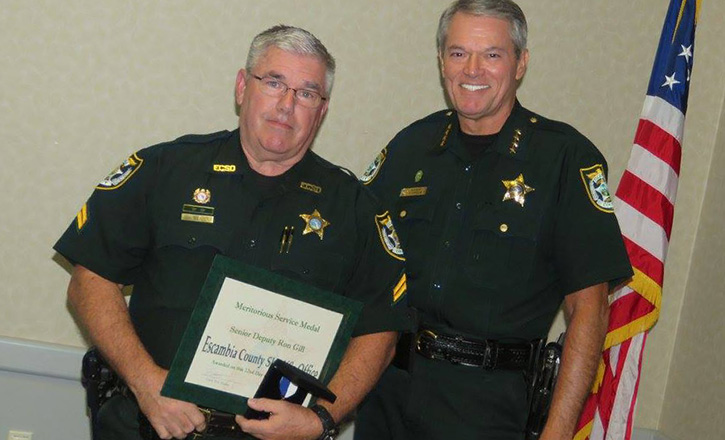
Senior Deputy Ronnie Gill, school resource officer at Ernest Ward Middle School, has been awarded the Escambia County Sheriff’s Office Meritorious Service Medal for the crucial role he plays in breaking down the barriers between law enforcement and youth.
In July, Florida Attorney General Pam Bondi and the Florida Association of School Resource Officers Monday named the Gill the 2016 School Resource Officer of the Year.
His law enforcement career spans nearly 40 years. He joined the Escambia County Sheriff’s Office in 2002 and joined the school resource officer program over 12 years ago.
Senior Deputy Gill not only works hard protecting the students and faculty within Ernest Ward, he also gives selflessly of his time to mentor and help students in need. Whether it is counseling students, leading the Ernest Ward “Teens for Christ” group, or showing up at community sporting events on his own time, Gill has built a reputation within the student population as not just a law enforcement officer, but a person they can look up to and approach.
Gill also gives selflessly of his finances. He has opened his own lunch account with the school and now transfers money into needy student’s accounts on a regular basis. He has been known to provide funds for students that cannot afford trip fees and club dues. He has also taken students shopping for Christmas and has even paid a high school senior’s graduation fees. Whenever there is a need that has been identified, Senior Deputy Gill steps up and fulfills that need.
Pictured: Senior Deputy Ronnie Gill (left) was presented the Escambia County Sheriff’s Office Meritorious Service Medal by Escambia County Sheriff David Morgan. Photo for NorthEscambia.com, click to enlarge.
Taking A Bite Out Of Hunger: Peanut Butter Drive Underway
September 24, 2016
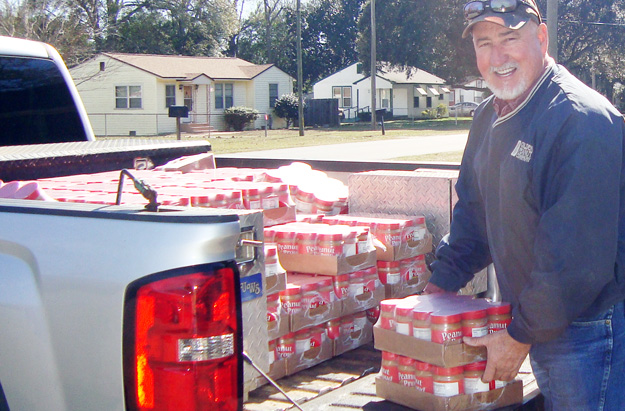
In an effort to boost the supply of the most requested food pantry item, peanut butter, UF IFAS Escambia County Extension is teaming up again with the Florida Peanut Producers Association to help “Take a Bite out of Hunger” by participating in a local peanut butter drive.
Residents are asked to help meet the challenge of collecting 1,000 pounds of the versatile food by donating unopened jars of peanut butter at one of five locations now through Wednesday, November 23. All peanut butter collected will be donated to local food pantries in December.
Drop-off locations:
- Escambia County Administration, 221 Palafox Place, 4th Floor
- Escambia County Extension Office, 3740 Stefani Road
- Escambia County Farm Bureau,153 Highway 97, Molino
- Escambia County Public Safety, 6575 North W Street
- Gilmore Services, 31 East Fairfield Drive
Many families in our community experience food insecurities. They rely upon food pantries to supplement their family’s meals and reduce worries about running out of food. To help meet the need of providing healthy options for our residents in need, this is the fourth year UF IFAS Escambia County Extension has participated in the peanut butter drive.
Last year, more than 2,800 jars of peanut butter were donated to local food pantries.
NorthEscambia.com file photo, click to enlarge.
Escambia Attorney Indicted On Federal Tax Charges
September 24, 2016
An Escambia County attorney has been indicted on federal income tax charges.
James R.J. Scheltema, 56, of Pensacola, made an initial appearance Friday in the U.S. District Court in Pensacola after a federal grand jury returned an indictment charging him with filing false tax returns and tax evasion. The indictment was announced by Christopher P. Canova, United States Attorney for the Northern District of Florida.
The indictment alleges that Scheltema filed false tax returns, claiming a total tax of $18 for 2011 and $1,369 for 2012, when he knew his total tax exceeded that amount. The indictment further alleges that Scheltema attempted to evade paying tax on his taxable income of $598,291 for the calendar year 2013 by failing to file a timely income tax return and later filing a false tax return.
The arraignment is scheduled for September 28. The case resulted from an investigation by the Internal Revenue Service—Criminal Investigation. Assistant United States Attorney David L. Goldberg is prosecuting the case.
Northview Beats Vancleave
September 24, 2016

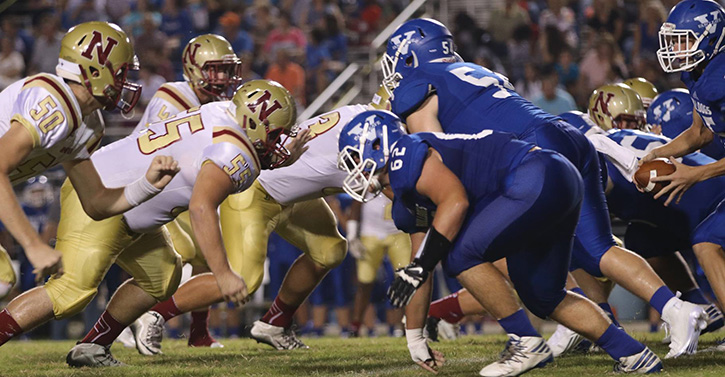
The Northview Chiefs beat the Vancleave (MS) Bulldogs Friday night on the road, 25-3.
“It was a great four quarter game from our guys,” Northview Head Coach Dereck Marshman said. “We preached all week about how physical Vancleave was. Our guys responded and dominated physically for four quarters.”
“I felt it was by far our most complete game. Couldn’t be more proud about how we imposed our will to win tonight,” Marshman added.
The Chiefs were first on the scoreboard of the Mississippi school with a Luke Ward touchdown with 3:30 on the clock in the first. A missed extra point, and Northview was up 6-0. Just seconds before the half, Ward was in for another TD, 13-0.
With 6:41 in the third, the Bulldogs kicked a 39-yard field goal to make the score 13-3. The Chiefs struck again with 1:14 left in the third, Ward scored his third touchdown of the night, 19-3.
Seconds into the fourth quarter, Northview added another touchdown, this time from Hunter Edwards to make it 25-3.
With his three touchdowns, Ward had 18 carries for 125 yards. He also had 58 yards in the air. Edwards had a rushing touchdown, while Jeremiah Woods had 14 carries for 54 yards.
Defensively, Edwards recorded nine tackles, one QB sack and an interception. Jared Aliff had six tackles and two sacks. Neikel Robinson had an interception and two punt returns for 65 yards. Ward also had one punt return for 45 yards.
The Chiefs are on the road again next Friday night, this time to Maplesville, AL, about 30 miles north of Selma.
Look for a photo gallery by Monday on NorthEscambia.com
NorthEscambia.com photos by Gary Amerson, click to enlarge.

Niceville Tops Tate
September 24, 2016

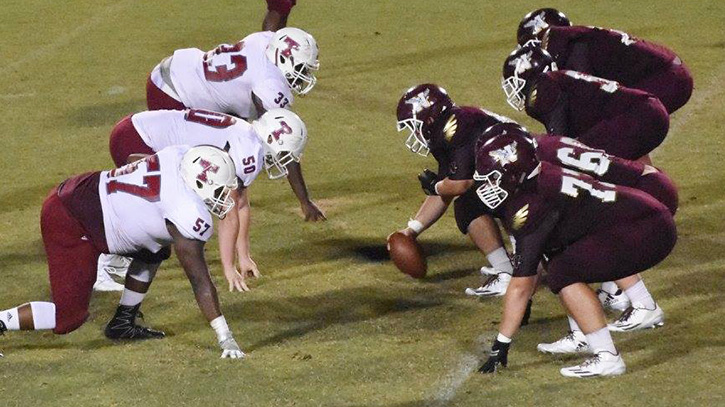
 The last time the Tate Aggies played Niceville, it ended with a 21-20 Aggie win that put Tate in the Final Four. But Friday night was a different story, as Niceville powered to a surprising 39-3 win over Tate.
Tate’s only score of the night came on a 40-yard field goal from with 1:30 to go in the first to make it 14-3.
Next Friday night, the Aggies head to Washington High School at 7:30 p.m.
A photo gallery will be posted by Monday.
NorthEscambia.com photos by Kristi Barbour, click to enlarge.

Escambia Man Pleads Guilty In Federal ISIS Investigation
September 24, 2016
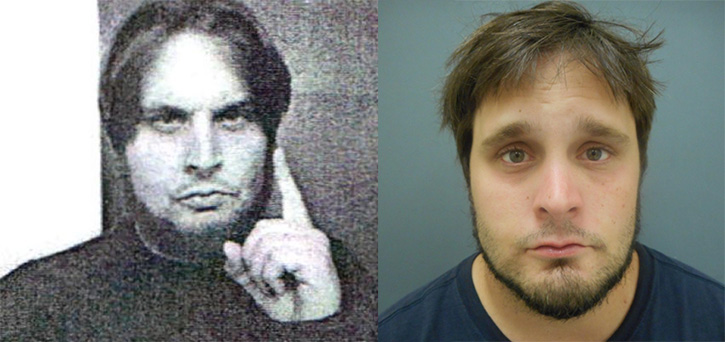
An Escambia County man has pleaded guilty to federal investigators in an ISIS related investigation.
Robert Blake Jackson, 31, of Pensacola, pleaded guilty Friday to making materially false statements in a federal investigation.
In October 2014, Jackson’s Facebook profile contained comments, photos, and videos expressing support for extremist terrorist groups such as the Islamic State of Iraq and the Levant (ISIL, also known as ISIS). In January 2015, a Pensacola telemarketing corporation reported they recently fired Jackson for viewing ISIL-related and other terrorist-related websites and videos on his work computer.
In June 2015, during an interview with the FBI, Jackson stated that he never posted any pro-ISIL or violent content and that he only used the internet at work to search news sites. At his plea hearing, Jackson admitted that these statements were false.
Jackson faces a maximum of five years in prison. Jackson is currently in federal custody at the Santa Rosa County Jail. The sentencing hearing is scheduled for December 12 at the United States Courthouse in Pensacola.
This case resulted from an investigation by the Federal Bureau of Investigation, the Internal Revenue Service – Criminal Investigation, the Florida Department of Law Enforcement, and the other members of the FBI Joint Terrorism Task Force. Assistant United States Attorney David L. Goldberg is prosecuting the case.