

One Injured In Barrineau Park Road Crash
June 12, 2016
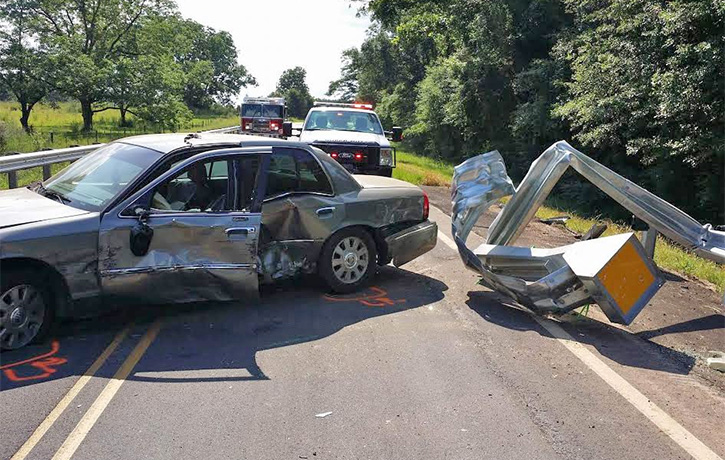
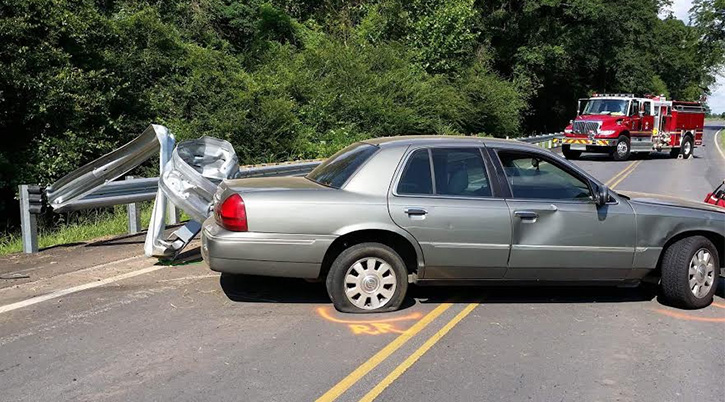
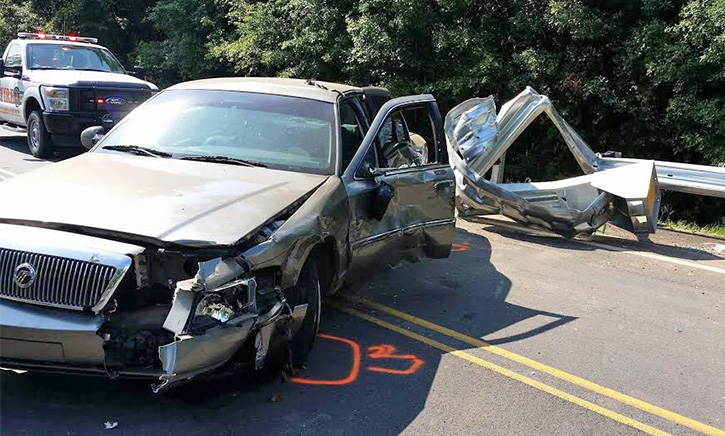
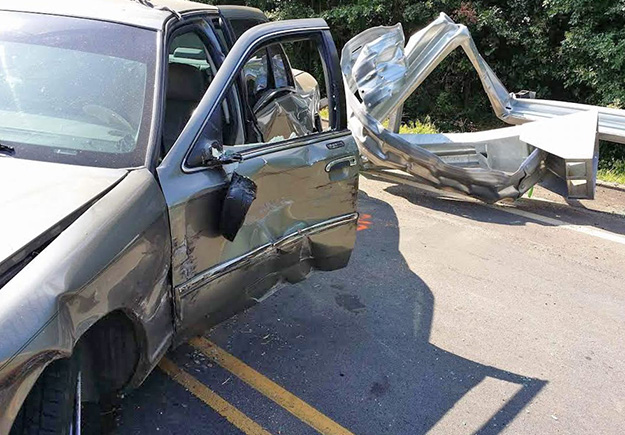
One person was injured in a single vehicle crash Saturday on Barrineau Park Road near Barrineau Lane.
The accident was reported just after 9 a.m. The driver of a passenger car apparently lost control and crashed into a guardrail; the driver was transported by Escambia County EMS to an area hospital with injuries that were not considered critical.
The accident is under investigation by the Florida Highway Patrol. The Molino and Cantonment stations of Escambia Fire Rescue also responded.
Photos for NorthEscambia.com, click to enlarge.
Yard Sale Helps Tate Showband Raise Funds For Hawaii Trip
June 12, 2016

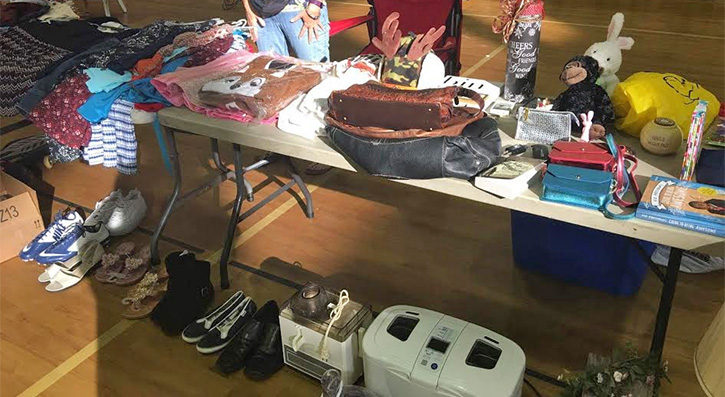
The Tate High School Showband of the South held an indoor multi-family yard sale in the school’s Fryman Gym Saturday. All proceeds will benefit the band’s upcoming trip to Hawaii. The Tate Showband is raising funds to perform in Hawaii in a mass band to commemorate the 75th anniversary of Pearl Harbor on December 7, 2016. Photos for NorthEscambia.com, click to enlarge.

Extension Services To Host Field Corn Day
June 12, 2016

The University of Florida Institute of Food and Agricultural Sciences Escambia County Extension will host its annual Field Corn Day Tuesday, July 19 from 10 a.m. to noon at the UF/IFAS West Florida Research and Education Center, located at 4253 Experiment Road, Highway 182 in Jay.
The event will feature 27 replicated corn varieties and more than 15 corn variety demonstration plots, with varieties from Dyna-Gro, Monsanto-Dekalb, Croplan, Syngenta, Pioneer, Terral and Augusta Seed. Several company representatives will be on hand to provide overviews of their products, and attendees will take a field tour to see how the corn varieties are working at the West Florida Research and Education Center.
Topics for the Field Corn Day include:
- Corn variety trial and demonstration
- Environmentally Smart Nitrogen and urea blends
- Application timing for corn production
Lunch will be provided. For meal planning purposes, call the Jay Extension Office at (850) 675-3107 or the Escambia Extension Office at (850) 475-5230.
File photo.
Wahoos Beat Biscuits
June 12, 2016
For the second night in a row, Pensacola second baseman Alex Blandino played a big role in the Blue Wahoos victory Saturday, earning a two-out bases loaded walk that scored Pensacola first baseman Kyle Parker with the winning run in the 11th inning.
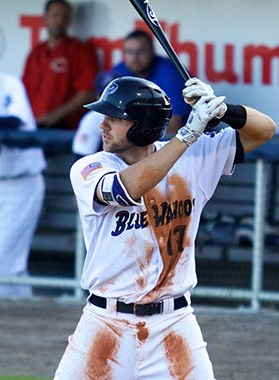 Pensacola won its third straight game in its last at bat beating the Montgomery Biscuits, 3-2, in front of its 14th sellout crowd of 5,038 this season at Blue Wahoos Stadium.
On Friday night, Blandino scored the winning run in a 2-1 game when Pensacola catcher Joe Hudson hit a chopper deep in the hole at shortstop that Montgomery shortstop Willy Adames threw away for an error.
Blandino may be 3-31 in his last 11 games since May 26 but he has walked nine times, including twice Friday as well as getting a single to center field, as his family watched the game from the stands.
Pensacola manager Pat Kelly said Blandino, the Cincinnati Reds No. 8 prospect according to MLB.com, praised Blandino’s patience in the pressure-filled at bat. The Blue Wahoos have played two extra-inning games in its last three victories.
“He went through a little rough spot but he’s a much better player than he has shown the last couple of weeks,” Kelly said. “It was a 3-1 count and most players want to get a base hit but he was very patient. Blandino did a great job.”
Blue Wahoos catcher Kyle Skipworth and third baseman Eric Jagielo both hit solo home runs to left field in the fifth inning to give Pensacola a 2-0 lead, but Montgomery fought back.
For Skipworth, who’s recovering from breaking his left ankle in December, it was his first home run for Pensacola in his sixth game and 20th at bat. One out later, Jagielo jacked his fourth homer of the season.
But Montgomery came back in the sixth to score one, 2-1, when Biscuits third baseman Patrick Leonard hit a sacrifice fly ball to centerfield that scored first baseman Casey Gillaspie. Gillaspie upped his on-base streak to 27 games and has failed to get on base in only three of Montgomery’s 62 games this season.
The Biscuits tied the game, 2-2, in the top of the ninth when second baseman Tommy Coyle singled to right field past Blandino. Coyle then stole second base and Skipworth’s throw to second sailed to centerfield, allowing Coyle to reach third. Montgomery’s No. 9 hitter Pat Blair then doubled to left center to score Coyle.
Raisel Iglesias pitched two scoreless innings, allowing two hits and striking two out in his first rehab start in Pensacola. Iglesias, the Cincinnati Reds opening day starter went on the disabled list with an impingement in his right throwing shoulder earlier this season.
Iglesias was efficient throwing up to 95 mph and fooling two Montgomery Biscuit batters in a row on breaking balls in the low 80s in the second inning. Iglesias even showed his sidearm pitch. He threw 30 pitches, including 22 for strikes.
The first hit by Biscuits leadoff hitter was a check swing single to third base. The other was a rip by right fielder Cade Gotta on a groundball under the glove of a diving Pensacola third baseman Eric Jagielo into left field.
Cincinnati Reds opening day starter had five starts and was 1-1 with a 3.49 ERA with 29 strikeouts in 28.1 innings.
“I thought he was crisp,” Kelly said of Iglesias, who is the third Reds starter to make a rehab appearance this season in Pensacola. Kelly said he joked with Iglesias, “He came into the dugout and I told him this is the Double-A, this isn’t the big leagues, you have to understand these guys can hit. But he was very effective and showed different looks.”
Amir Garrett, the normal starter, then pitched the next five innings, allowing one run on three hits, two walks and struck out three.
Kelly praised Garrett for coming in after Iglesias and pitching well. He did allow three runners to reach third base in his last three innings on the mound.
“Garrett did well but he had three high stress innings in a row and we were concerned about his arm speed,” Kelly said. “I have to credit Garrett. It’s not a situation a starter is used to. He pitched out of some big jams and did a nice job.”
Pensacola remained in sole possession of first place in the Southern League South Division with a record of 36-25. The Biloxi Shuckers also won and improved to 35-26 to remain one game behind the Blue Wahoos.
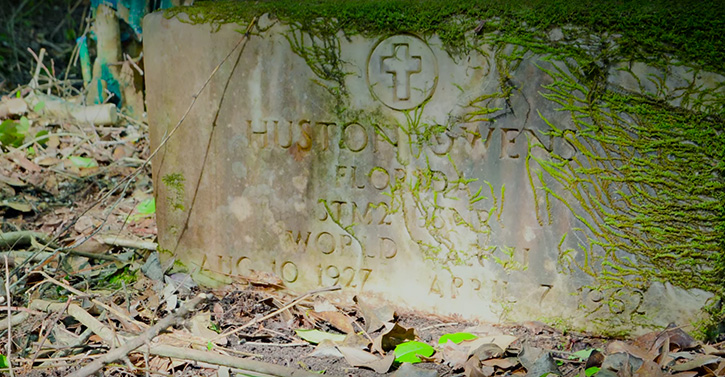
Work Continues To Uncover History Of Old Muscogee Cemetery
June 11, 2016
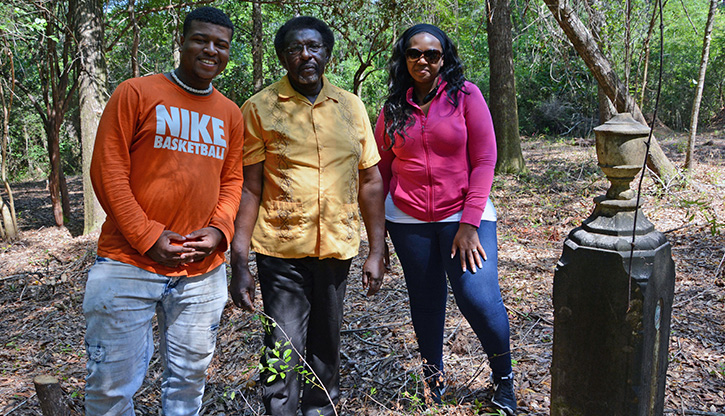
Flanked by his daughter and grandson, Walter McQueen of Cantonment became emotional when they walked down a newly blazed trail leading him to a freshly cleared patch in the woods and saw the headstones of Muscogee residents dating back to the late 1800s.
The 68-year-old had been trying, since he was a teenager, to find the black section of the Old Muscogee cemetery, which had disappeared behind vines, brush and trees and swallowed up by leaf debris decades ago.
In May, Gulf Power Environmental Affairs and Plant Smith employee teamed up with the Northwest Florida Water Management District staff to begin clearing the vegetation to provide families access. (Read previous story, click here.)
“This is amazing to me because I tell you my granddad Elias McQueen is here,” McQueen said. “My grandmother told me he died in 1946, a year before I was born. And I have an uncle, Jim McQueen, here who died of polio at 16 years old. That’s what’s amazing to me about this area.”
McQueen couldn’t find his own family members’ gravesites. He believes the sites are nearer to the River Annex Road under an oak tree, in an area that has yet to be cleared. But he’s nevertheless grateful to be able to stand in a portion of the historic site that was once a part of a thriving timber town that no longer exists. What once was Muscogee is now part of Cantonment.
“Words cannot explain what I feel in my heart,” he said. “I have always thought, ‘When are we going to be able to find these graves?’ This brings back so much of our history. Naturally, families want to know where their family members are buried. This gives us so much closure.”
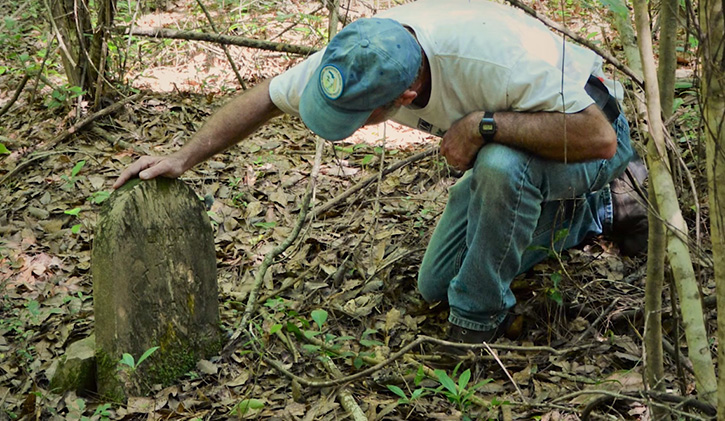 McQueen wants to help with future efforts to restore the cemetery and plans to locate the families of the people in the graves that have been found.
McQueen’s grandson, Kaleb Gulley, 19, who just graduated from high school, has had a fascination about the town his grandfather always told him about and was thrilled when he read a news story about the cleanup effort.
He was also clearly excited to finally be walking through the cemetery as he searched for possible signs of his great-grandfather’s grave.
“When I was riding on the school bus, I’d look directly out here and think, ‘Wow there’s a cemetery there,’” Gulley said. “There is so much history in Muscogee, and I like to hear about the lumber mills and post office and the people who used to live here. I’m enjoying this moment.”
Gulley is also looking forward to passing on to his children, someday, his grandfather’s stories about the ghost town and show them the cemetery.
Rebekah McQueen-Morris, 32, said there used to be an African-American Holiness church across the dirt road from the cemetery. “The members were buried here in the segregated section,” she said.
To be sure, the site is a reminder of the days of segregation. It also provides a snapshot of the people who supported the timber industry, served in the military and, as McQueen-Morris pointed out, had acquired some financial means based on some of the ornate monuments and marble headstones they left behind.
“I grew up in Cantonment, and it’s a blessing that we have another piece of the puzzle to our history,” she said.
“A lot of times we try to research and learn things about our ancestors but we don’t have the resources, or something like this to occur to help us find out about our history,” she said. “Once we find out about our history, where we come from, we find out who we are.”
Broxson Widens Money Lead In Local Senate Race
June 11, 2016
In a primary contest for an open Northwest Florida Senate seat, state Rep. Doug Broxson, R-Gulf Breeze, continued increasing his financial edge in May over Rep. Mike Hill, R-Pensacola Beach.
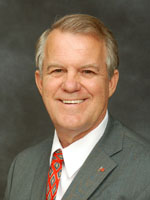 Broxson raised $30,700 in May, bringing his overall contribution total to $218,921, according to a newly filed finance report. Broxson had about $165,000 in cash on hand as of May 31.
Hill, meanwhile, raised $13,335 last month, bringing his overall total to $84,447. He had about $21,000 in available cash as of May 31, the reports show.
Broxson and Hill are running in Senate District 1 to try to succeed Sen. Greg Evers, a Baker Republican now running for Rep. Jeff Miller’s seat in Congress. District 1, which is a Republican stronghold, includes Escambia, Santa Rosa and part of Okaloosa counties.
by The News Service of Florida
Another Judge Rules Florida Death Penalty Unconstitutional
June 11, 2016
For the second time in a month, a circuit judge has ruled that Florida’s new death-penalty sentencing law is “patently unconstitutional” because it does not require unanimous jury decisions for death to be imposed.
Hillsborough County Circuit Judge Samantha Ward on Thursday sided with defendant Michael Keetley, an ice cream truck driver who was charged with murdering two men and injuring four others in 2010.
 Florida lawmakers hurriedly crafted a new death-penalty sentencing process this year, in response to a U.S. Supreme Court decision in January that overturned the old law because it gave too much power to judges, instead of juries.
Under the new law, juries have to unanimously find that at least one aggravating circumstance exists in order for defendants to be eligible for the death penalty. The law also requires juries to weigh whether sufficient mitigating factors exist to outweigh the aggravating circumstances, but the law is silent about whether those decisions must be unanimous. The law also requires at least 10 jurors to recommend the death penalty, a departure from the old law, which required a simple majority of jurors.
But, agreeing with Keetley’s lawyers, Ward ruled that the new law “runs afoul” of the Supreme Court decision, which came in a case known as Hurst v. Florida. Prosecutors argued that the requirement to find at least one aggravator, unanimously and beyond a reasonable doubt, was sufficient to comport with a previous U.S. Supreme Court decision, in a case known as Ring v. Arizona.
“But it defies logic, and the dictates of Ring through Hurst, to have the jury find one of the prerequisites unanimously and beyond a reasonable doubt (that at least one aggravating factor exists), but not the other two prerequisites (that sufficient aggravators exist and that they outweigh the mitigating circumstances),” Ward wrote.
Ward’s decision Thursday was the second time a circuit judge has found that Florida’s new law is unconstitutional. The Florida Supreme Court has also been inundated with arguments about the constitutionality of the law and is poised to decide on the issue.
Miami-Dade County Circuit Judge Milton Hirsch ruled May 9 that unanimous decisions are required in imposing death sentences, rather than recommendations from majorities or super-majorities of juries.
Ward’s ruling dealt with the fact-finding phase of the sentencing process.
The Sixth Amendment guarantee to a trial by jury “unequivocally demands that a jury unanimously find the existence of any fact that subjects a defendant to a sentence in excess of that statutorily authorized by a guilty verdict beyond a reasonable doubt,” Ward wrote Thursday. “Florida’s existing death penalty sentencing scheme is incongruous with this decree.”
by Dara Kam, The News Service of Florida
State Biologists Back A ‘More Conservative’ Bear Hunt
June 11, 2016
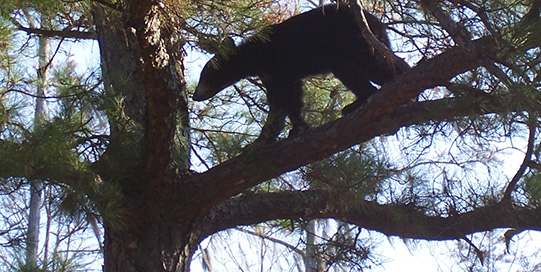 Florida should hold another black-bear hunt but include more restrictions on hunters, Fish and Wildlife Conservation Commission biologists recommended Friday.
However, members of the Fish and Wildlife Conservation Commission will get a menu of four options later this month about the management of Florida black bears, with the choices ranging from a hunt similar to one held last October to delaying another hunt until 2017 or prohibiting a hunt for the next several years.
Commission staff outlined the potential steps Friday.
The staff recommendation for the commission seeks to impose greater restrictions on hunters, from where they can hunt to limiting the number of hunters who could be in the field.
“Our focus will continue to be how to balance what’s best for Florida’s growing bear population with the safety of Florida families and our visitors,” commission Executive Director Nick Wiley said in a release late Friday.
The commission, which voted 4-1 to hold the controversial bear hunt last year, will discuss the options June 22 during a meeting in the Franklin County community of Eastpoint.
In advance of the meeting, the anti-hunt group Stop The Hunt is attempting to set up at least 30 protests in cities across Florida on June 18.
Opponents of the hunt want the state to spend more on non-lethal measures to reduce human-bear conflicts, including expanding the use of bear-proof trash containers.
The staff recommendation, which is described as “more conservative” than the 2015 hunt, would also reduce the hunt to areas where human-bear conflicts are most prevalent; prohibit hunting bears when any other bears, including cubs, are present; set additional restrictions on hunting near game-feeding stations; and require hunters to tag bears immediately.
The release from the commission said the recommendation is based on input received from the public, including during a recent series of online webinars.
Among the other options, one would follow the framework for the 2015 hunt, which was the first in more than two decades. But that could also result in a higher number of bears being targeted as the agency has increased the estimated number of bears in the state.
The 2015 hunt was scheduled for seven days but ended after two days as hunters killed 304 bears. The state agency had put a 320-bear quota on the hunt and later acknowledged it “underestimated the hunter success for the first day.”
The agency estimates there are now 4,220 bears in the state, up from 2,640 in 2002, which was when the previous statewide estimate was made.
The population growth has been called robust as the estimated count was as low as 300 to 500 in the 1970s, when black bears were put on the state’s list of threatened species. Bears were removed from the list in 2012.
A number of local governments, including Seminole, Hillsborough, Miami-Dade and Volusia counties, have voiced opposition to a repeat of the 2015 hunt.
by Jim Turner, The News Service of Florida
License-Free Freshwater Fishing This Weekend In Florida
June 11, 2016
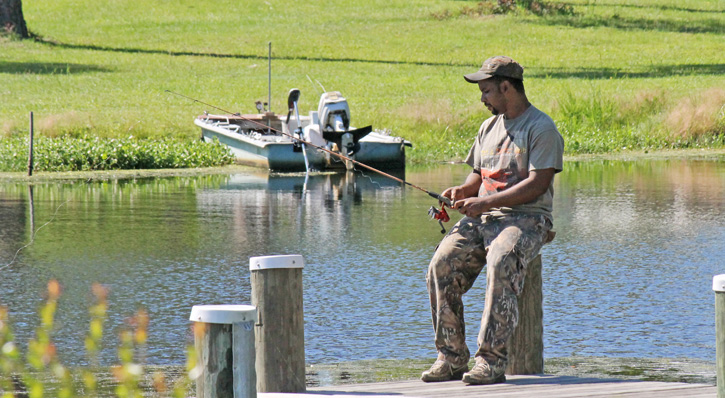
This weekend offers freshwater license-free fishing in Florida for residents and visitors.
On Saturday and Sunday, June 11-12, the freshwater recreational fishing license requirement will be waived.
“Florida is the fishing capital of the world,” Gov. Rick Scott said, “I encourage every family to take advantage of these weekends to enjoy Florida’s great outdoors with their loved ones.”
This free fishing weekend is a part of the eight total license-free fishing days the FWC offers each year. All bag limits, closed areas and size restrictions apply on these dates.
NorthEscambia.com file photo.
Florida Gov’t Weekly Roundup: On A Wild Summer’s Week
June 11, 2016
Florida might not have been on a train bound for nowhere this week, but there were still times when the state’s government and political news felt a lot like “The Gambler.”
“You’ve got to know when to hold ‘em,” Kenny Rogers sings in the country music classic. “Know when to fold ‘em. Know when to walk away. And know when to run.”
 Two South Florida senators decided to fold ‘em by leaving the Legislature — including one whose retirement followed four decades of public service and an inflammatory comment that could have made her re-election bid particularly tough. Two more lawmakers from Palm Beach County decided to run, but for each other’s seats.
Officials at Florida A&M were deciding whether to walk away from Elmira Mangum, the embattled president of the state’s only historically black public university.
Meanwhile, gambling itself was before the Florida Supreme Court, but largely got lost in a deck full of cases and decisions dealing with everything from the death penalty to the state’s workers’ compensation system.
Supporters of the workers’ comp provision struck down by the justices warned that it would harm business — another area where the Gambler had some advice. “You never count your money when you’re sittin’ at the table. There’ll be time enough for countin’ when the dealin’s done.”
SOUTH FLORIDA SHUFFLE
A colleague once compared Sen. Gwen Margolis, D-Miami, to Mount Rushmore for her long record of service and sizable reputation in South Florida. But that reputation took a beating after Margolis sounded dismissive of the heritage of some of her political opponents this week, something that likely led to her decision to end her elected career.
She was elected to the House in 1974, rose to become the first female Senate president in 1990, served on the Dade County Commission and was on her third stint in the Senate when she decided to retire.
“I am guided by the belief that one must leave your community a better place from where you started,” the 81-year-old Margolis said in a statement issued Thursday by her campaign. “Today, I am proud to say that we have done that. The last 40 years have been a blessing because so many milestones and history-making moments were reached on behalf of Miami-Dade and Florida. ”
Margolis didn’t reference the imbroglio over her colorful analysis of the Democratic primary in Senate District 38. The Miami Herald reported that, at a Monday campaign event, Margolis allegedly said it was “reprehensible that three Haitians, some teacher and some lawyer think that they have the right to run against me.”
Three of the remaining five District 38 Democratic primary candidates — accountant Anis Blémur, former state Rep. Phillip Brutus and state Rep. Daphne Campbell — are Haitian-Americans, and some of them started putting pressure on Margolis after the comments became public.
“It is truly sad that Sen. Margolis would stoop that low just because she has competition,” Brutus said. “What is reprehensible is the fact that Gwen Margolis, a public figure, thought it acceptable to attack the Haitian community the way she did.”
The teacher is Don Festge and the lawyer is Jason Pizzo, an attorney from North Miami Beach.
Margolis wasn’t the only female senator from the southern part of the state who decided to leave. Sen. Maria Sachs, D-Delray Beach, told The Palm Beach Post that she was departing the upper chamber two years earlier than expected to focus on running a nonprofit, the Coalition Against Human Trafficking.
Meanwhile, Rep. Kevin Rader and Sen. Joseph Abruzzo said they would swap seats — with Rader, D-Delray Beach, seeking a spot in the Senate while Abruzzo, D-Boynton Beach, returns to the House.
All the moves were driven to some extent by a court-ordered redistricting plan for the state Senate. Margolis was in a redrawn District 38 because of that decision. Sachs, Abruzzo and Sen. Jeff Clemens, D-Lake Worth, were in the middle of trying to figure out how to unscramble a three-incumbent pile-up in the district where they all lived, and part of that involved Abruzzo moving to a district where he didn’t live, but Rader did.
A BUSY COURT
The other branches of government were overwhelmed this week to some extent by the barrage of news coming out of the Florida Supreme Court. Justices dealt with cases on gambling, the death penalty, medical malpractice and the open carrying of firearms.
The gambling case centers on a tiny horse track that is trying to convince the court that it should have slot machines, even without the express approval of the Legislature.
Lawyers for Gretna Racing in Gadsden County and the state traded at-times semantic arguments concerning a 2009 state law that the track said gave it permission to let voters decide whether slots should be allowed at the pari-mutuel.
Some justices seemed frustrated with the close parsing of the state law involved.
“We can get all wrapped up in all the words and phrases and need an English professor to tell us what these things mean,” Justice R. Fred Lewis said.
Almost as complex were the court’s deliberations over whether the state’s new death penalty law is constitutional and, if so, whether it applies to cases that were already in the pipeline when the law passed in March.
But the arguments Tuesday in the case of Larry Darnell Perry, who was convicted of the 2013 murder of his infant son, did little to clear up the murky situation surrounding a January ruling by the U.S. Supreme Court, in a case known as Hurst v. Florida, or a new law approved in response.
“Clearly at this stage in our jurisprudence, we want to make sure that the statute is construed in a constitutional manner so that we don’t have another 15 years of death penalty — if the state wants the death penalty, which apparently it does — in flux,” Justice Barbara Pariente said.
Under Florida’s old law, jurors by a simple majority could recommend the death penalty. Judges would then make findings of fact that “sufficient” aggravating factors, not outweighed by mitigating circumstances, existed for the death sentence to be imposed.
That system was an unconstitutional violation of the Sixth Amendment right to trial by jury, the U.S. Supreme Court decided in an 8-1 ruling.
Florida’s new law requires juries to unanimously determine “the existence of at least one aggravating factor” before defendants can be eligible for death sentences. The law also requires at least 10 jurors to recommend the death penalty in order for the sentence to be imposed.
The gun case dealt with whether Floridians should be allowed to carry firearms openly, instead of being required to follow the state’s concealed-carry law. On medical malpractice, the issue was whether non-economic damages, commonly known as pain and suffering damages, should be capped.
Justices did rule on a case dealing with workers’ compensation insurance, issuing a 5-2 decision in favor of Bradley Westphal, a St. Petersburg firefighter who suffered a severe back injury while on the job in 2009. The case focused on a workers’ compensation law that led to Westphal’s benefits being cut off after two years, creating what the Supreme Court described as a “coverage gap.”
“As applied to Westphal, the current workers’ compensation statutory scheme does not just reduce the amount of benefits he would receive … but in fact completely cuts off his ability to receive any disability benefits at all,” said the majority opinion written by Pariente and joined fully by Chief Justice Jorge Labarga and Justices Peggy Quince and James E.C. Perry. Lewis wrote a separate concurring opinion.
The Florida Chamber of Commerce, the National Federation of Independent Business and the Property Casualty Insurers Association of America quickly issued statements warning that Thursday’s ruling could hurt businesses. Florida Chamber President and CEO Mark Wilson described it as a “further sign that Florida’s workers’ comp system is under attack.”
FAMU: ‘WORKING FOR THE STUDENTS’ OR ‘DYSFUNCTION’?
Also under siege was Mangum, whose week ended with the university president not knowing exactly how much longer she might have at the helm. The Florida A&M University Board of Trustees on Friday delayed a decision about whether to extend Mangum’s contract, now in its third and final year. The deal expires at the end of March.
The 13-member board has eight new members since a failed attempt to fire Mangum last fall. At that time, Kelvin Lawson — who was elected chairman of the board Friday — was the author of a motion to remove Mangum for “incurable cause.”
“I think some of us that have been around longer have a slightly better perspective,” he said Friday. “I think the other board members are going to have to go through that review and then probably get (last year’s evaluation) as a point of comparison to decide if anything at all needs to happen, or if the president’s just allowed to work out the balance of the term of the agreement.”
Mangum said she would not resign.
“The board can do whatever it wants to do,” she said. “I’m here to serve, working for the students, so the board can go line by line, they can extend, they can add, they can change, they can offer options.”
The day before the Friday meeting, a group of former FAMU presidents sent a letter to the board urging trustees not to renew her contract.
“Unfortunately, the disenfranchisement of students, faculty, alumni, staff and community seems to have thrown the university off course,” said the letter, signed by former presidents Frederick Humphries and Fred Gainous and former interim presidents Castell Bryant and Henry Lewis. “We agree that the stalemate that is currently in place creates a culture that will not allow for growth or stability. It is impossible for any university to thrive amid constant dysfunction.”
STORY OF THE WEEK: The South Florida legislative delegation underwent significant changes, with two longtime lawmakers stepping aside and two others deciding to swap their seats.
QUOTE OF THE WEEK: “This isn’t a ban. It’s just a ban on the method of carrying that the Legislature has determined protects public safety more than people walking around like they’re in the wild west.”—Florida Supreme Court Justice Barbara Pariente, questioning how a state law allowing citizens to receive concealed-weapons licenses to carry firearms suppresses gun ownership.
by Brandon Larrabee, The News Service of Florida