

Escambia Neighborhood Renewal Initiative Grant Program Deadline Extended
June 23, 2017
The Escambia County Neighborhood & Human Services Department has extended the spring cycle for its Neighborhood Renewal Initiative Program, funded through the county’s Community Development Block Grant Program. Applications are due Friday, June 30.
Neighborhood organizations located within the boundaries of one of the county’s Community Redevelopment Areas are eligible to apply for up to $500 for projects that promote community and volunteer-based redevelopment efforts in a targeted neighborhood. Past applicants have completed neighborhood beautification projects, neighborhood signs and house numbering projects.
Applications can be submitted to the Neighborhood & Human Services Department at cra@myescambia.com, dropped off or mailed to 221 Palafox Place, Suite 305, Attn: Lily Blackburn. Click here for an application.
To determine if your property is located within a CRA District, click here and search your address from the drop down menu at the top of the screen. For more information, please contact Lily Blackburn with the Community Redevelopment Agency at 850-595-3585 or cra@myescambia.com.
TS Cindy: Blackwater River State Forest Reports Damage And Closures
June 23, 2017
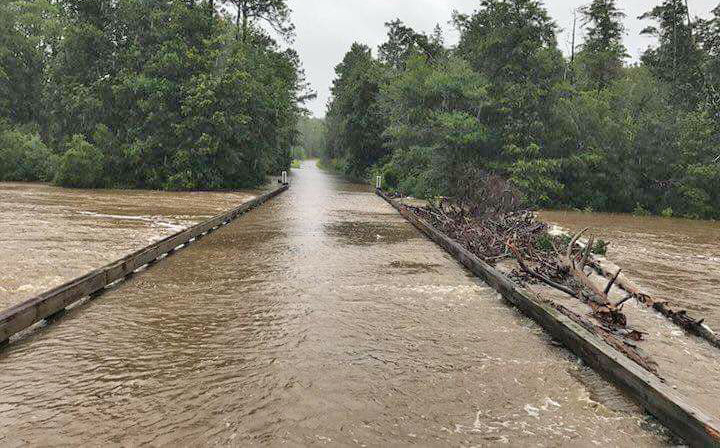
Tropical Storm Cindy caused significant flooding throughout the western portion of Blackwater River State Forest. Numerous major roads remain closed as flood waters continue to rise in area streams and rivers. The campground at the Coldwater Horse Stables will remain closed until Monday, June 26 as flood waters from Coldwater Creek continue to flow into the campground.
“Most of Blackwater River State Forest received substantial rainfall prior to Tropical Storm Cindy. The additional 6 to 12 inches of rain immediately caused streams, rivers and road ditches to overflow. The ground was already saturated, so we experienced significant flooding and road damage throughout the western portion of the state forest” said David Smith, Operations Administrator for Blackwater. “Although floodwaters continue to recede from many of the roads, many of the creeks and rivers rose another 8-12 inches today, preventing reopening of many forest bridges and the closure of the Coldwater campground.”
Currently only the Coldwater campground will be closed due to flooding. All other recreational facilities and campgrounds will remain open through the weekend.
Portions of several major roads in Blackwater River State Forest were closed due to severe flood damage or high water levels on the bridges. The following major roads are partially closed due to flood damage or high water: Bryant Bridge Road, Deaton Bridge Road, Charlie Foster Road, Bud Bass Road, Gordon Land Road, Red Rock Road, Indian Ford Road, Simmons Road, Pleasant Home Road, Melvin Holley Road and Mattie Kennedy Road.
Barricades have been placed on roads too dangerous for vehicular traffic. The public is urged to heed the warnings for these areas. “The Florida Forest Service has only been able to inspect the major forest roads at this time. Barricades were placed on roads and bridges deemed unsafe for public use. These barricades will be removed after the areas are inspected to ensure public safety” added Smith. “Many of the smaller access roads and trails are inaccessible at this time and the public is urged to refrain from using these roads. People visiting Blackwater River State Forest should only drive on the paved roads until conditions improve.”
Florida Forest Service personnel, in cooperation with local county personnel will continue to monitor road conditions within and around Blackwater River State Forest. Roads and bridges will be reopened when conditions improve.
Pictured: Horse Stables Bridge in the Blackwater State Park. Courtesy photo for NorthEscambia.com, click to enlarge.
Inmate Dead After Altercation At Century Correctional Institution
June 22, 2017
The Florida Department of Corrections has released the name of an inmate apparently murdered Monday at the Century Correctional Institution.
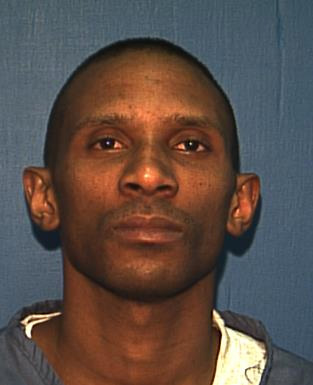 On June 19, inmate Jorge Slaughter was pronounced deceased at Century CI from an apparent inmate on inmate altercation.
“The death is currently under investigation by the Florida Department of Law Enforcement, with assistance from the Department’s Office of the Inspector General.,” Ashley Cook, press secretary for the Florida Department of Corrections, said in an email to NorthEscambia.com.
Slaughter, 30, was serving a 30 year sentence out of Miami-Dade for armed burglary, grand theft and robbery.
Photos Catch Circulation Associated With Tornado Warnings
June 22, 2017
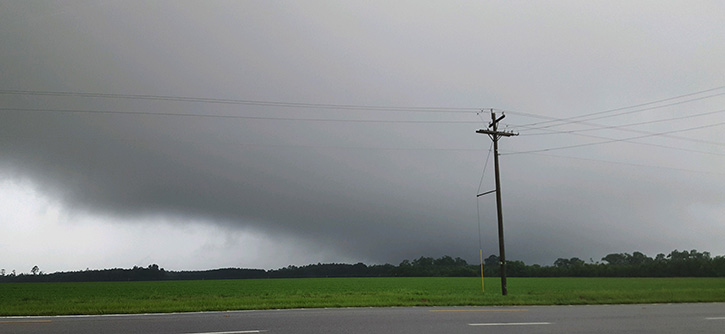
Wednesday afternoon, our NorthEscambia.com cameras caught a broadening area of circulation associated with two tornado warnings.
The tornado warnings were issued during the 4 p.m. hour for the North Escambia area in Florida and for eastern Escambia County in Alabama. According to the National Weather Service, radar indicated a likely tornado moving through Barrineau Park, Walnut Hill and Atmore.
There were unconfirmed reports that the circulation was seen over Walnut Hill. There were no reports of any touchdown or damage as the rotation remained airborne.
The NorthEscambia.com photo above was taken from Highway 97 just south of the Florida/Alabama state line, looking just west of Atmore.
NorthEscambia.com photo, click to enlarge.
Photos: Road Closures, Rising Waters And Washed Out Roads
June 22, 2017
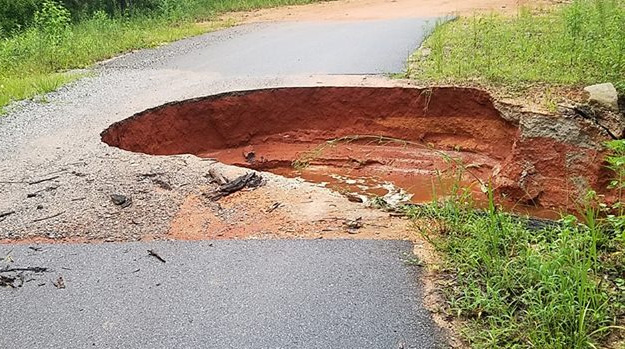
Carnley Road, Occie Phillips Road, Beulah Road and Barrineau Park Road at the state line were the only roads reported closed of I-10 in Escambia County.
Carnley Road (pictured above) just outside Century was closed just south of the state line due to a large washout. Photo by Cody Fowler.
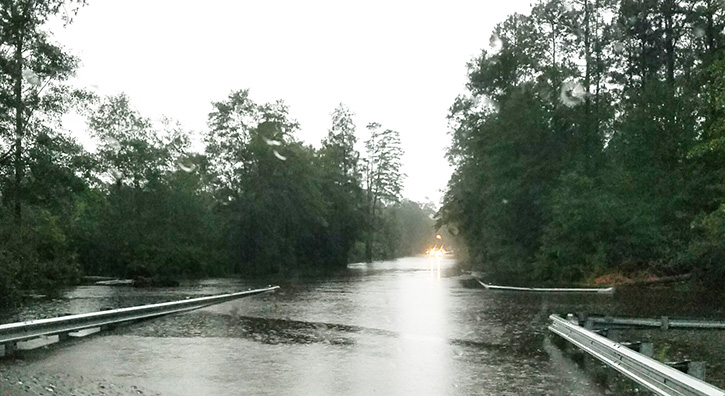
Barrineau Park Road was closed at the state line as the Perdido River continued to climb. This view shows the bridge from the Alabama side, looking back into Florida. Photo by Wesley King.
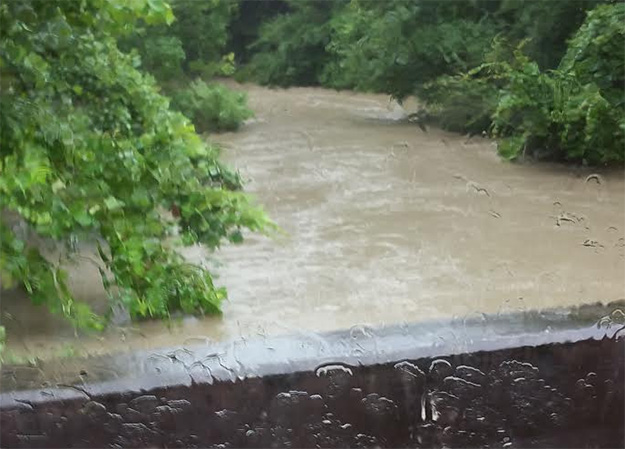
Pictured above: 11 Mile Creek at the Highway 297 bridge. Water was rising, but the bridge remained open to traffic. Photo by John Russo.
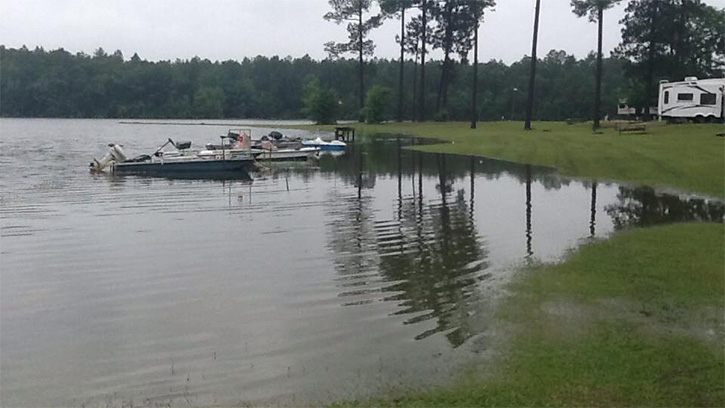
Boats that are tied to the actual bank of Lake Stone in Century look as if they are in the lake due to rising water. Photo by Sheron Autrey.
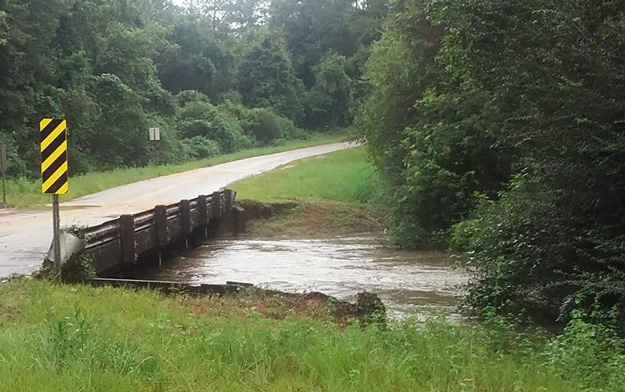
Pictured above: Rushing water approaches the bottom of the bridge on Rigby Road. Photo by Sandy Wiggins.
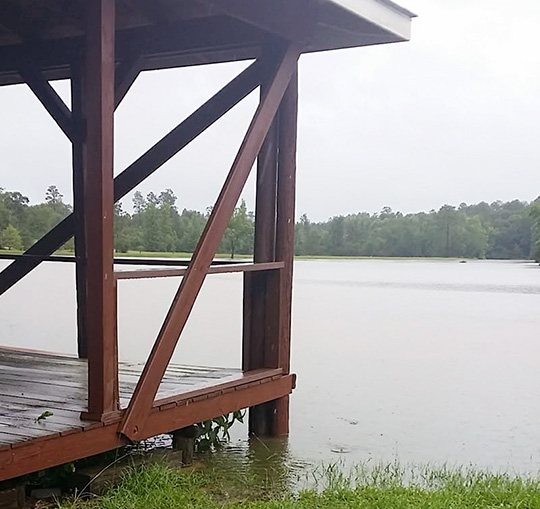
Pictured above: Water rises on Wiggins Lake in Walnut Hill. Photo by Barbara Jett.
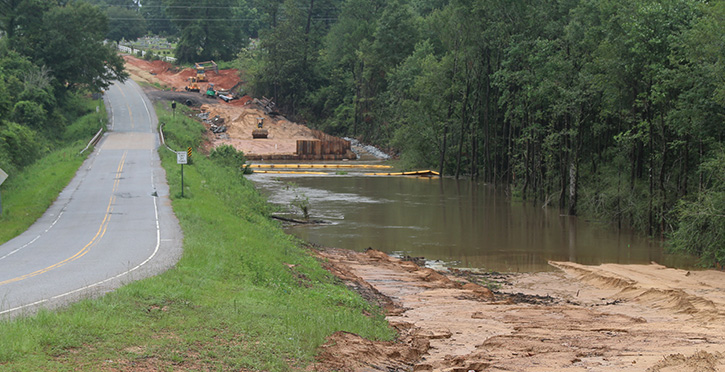
Pictured: The entire construction zone for a new bridge on North Highway 99 in Oak Grove was underwater Tuesday afternoon. NorthEscambia.com photo.
WOW Radio Expands Reach With New Pensacola Station
June 22, 2017

Popular Christian music radio station WOW 90.9 in Pace is now also broadcasting as WOW 101.1 in Pensacola.
“Since our beginning, at different concerts and events, listeners have asked us when we would have a better signal into all of Pensacola” said Dale Riddick, WOW Radio general manager. “We are excited that we can now tell them that the time is now and we look forward to being involved even more in the local communities we serve.”
WOW 90.9 is a non-commercial radio station that has served South Alabama and Northwest Florida since December 2009. WOW Radio plays the best in Adult Christian Hits available today, with a positive, inspirational message. Core artists and groups include: Casting Crowns, TobyMac, Francesca Battistelli, Big Daddy Weave, MercyMe, Natalie Grant, Chris Tomlin, Third Day, Jeremy Camp, Mandisa, and Matthew West, and others.
“For seven and a half years WOW Radio has been serving our audience in South Alabama and Northwest Florida. With this addition, we will be able to reach even more listeners in the Pensacola area,” said Larry Steelman, President of Agape Educational Media. “Thank you to our long time supporters and welcome to our new listeners and partners.”
Agape Educational Media, Inc., a non-profit 501(c)(3) organization and the owner of radio station WOWB 90.9 FM is now simulcasting it’s 100,000 watt signal on WBSR-AM and translator W266AL at 101.1 FM in Pensacola..
The station is also streaming and can be heard at www.wowradio.org and the stations’ Facebook page is www.facebook.com/WOW90.9/.
Escambia Schools Announce New Administrators
June 22, 2017
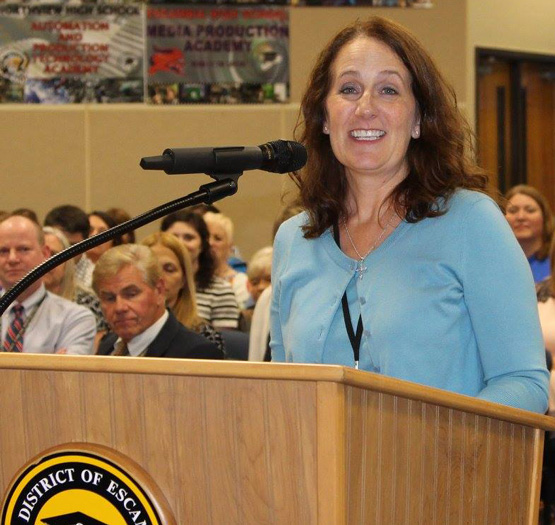
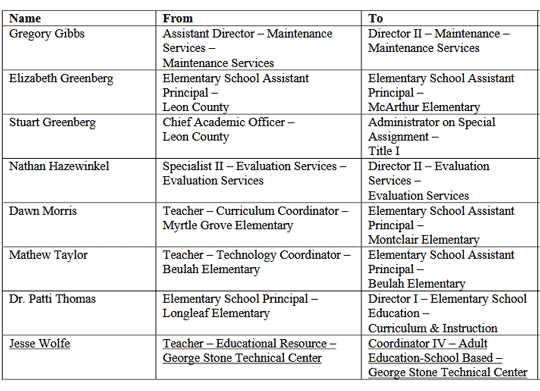
Escambia County School Superintendent Malcolm Thomas has named new administrators at schools and centers throughout the county.
His recommendations, as approved by the school board, were:
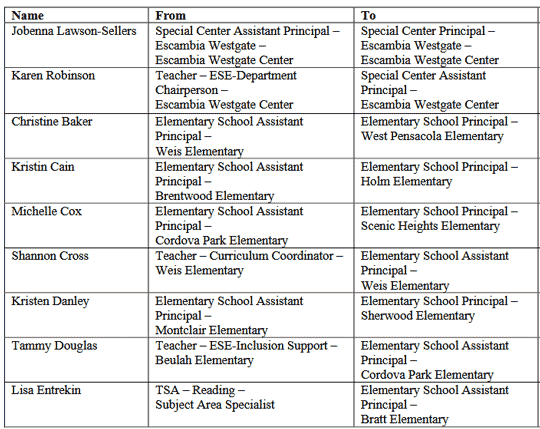
Pictured top: Lisa Entrekin, newly named assistant principal at Bratt Elementary School. Courtesy photo for NorthEscambia.com, click to enlarge.
Alabama Plans To Provide Tablet Computers, Wi-Fi For Prisoners
June 22, 2017
The Alabama Department of Corrections is considering a plan to add tablet computer to existing corrections educational programs offered to inmates at state male correctional facilities to help prepare inmates for reentry back into society and to reduce the state’s inmate recidivism rate.
 The technology would allow inmates to receive educational training by using the tablets in an individual or classroom setting. The technology would give Inmates access to a training curriculum such as adult basic literacy, life skills, GED services, and entry level vocational training.
“The Alabama Department of Corrections is following a nationally recognized evidenced-based approach to securely and cost-effectively provide advanced educational technologies that will help strengthen and expand reentry services leading to lower recidivism rates and contributing to public safety,” said Corrections Commissioner Jeff Dunn.
Dunn added that the ADOC implemented the educational technology at the Julia Tutwiler Prison for Women in 2015 and issued 60 learning tablets to inmates that were donated to the institution by the J.F. Ingram Technical College with much success.
The tablets issued to the male facilities would be managed through a secure wireless network with protocols for denying inmates access to the Internet and outside computer and communication systems. In addition, the technology could provide for secure inmate telephone services which some state department of corrections have already implemented.
The ADOC is in the preliminary stages of the plan and if it moves forward, the tablets would be included in the inmate telephone contract that goes out for an open bid later this year.
Corrections officials said no new funding would be required to purchase the tablets. The ADOC would lower the calling rates for inmates and cover the cost of the tablets by lowering the department’s commission received from the telephone contract.
Good Reviews Will Bring More Money For Universities
June 22, 2017
Like students waiting for their professors to post final course grades, Florida universities will learn this week how well they did on annual performance reviews, entitling them to a share of a record $245 million in state performance funding.
University leaders have pretty much known since the spring how the performance funding list will shake out.
But the university system’s Board of Governors, which is meeting at the University of South Florida, will approve the final list on Thursday, distributing the money to eight of the 11 eligible institutions based on their performances through the 2014-15 academic year. Florida Polytechnic University, the state’s newest school, is not yet part of the program.
Three universities will not qualify for new state performance funding in the budget year that starts July 1: Florida Gulf Coast University, Florida A&M University and the University of North Florida.
UNF did not receive new state performance funding last year, but Florida A&M, which received $11.5 million last year, and Florida Gulf Coast, which received $8 million, will not qualify for shares of the $245 million program in the 2017-18 academic year.
 The University of West Florida, which did not receive state performance funding last year, will qualify for a share, as will New College of Florida, which has never qualified for the money since the current funding model began in 2014-15.
“This is the first time we’re receiving performance funding and it feels great,” Donal O’Shea, president of New College, told the Board of Governors.
The allocation of the state funding, which the Legislature increased by $20 million this year, is based on 10 measurements of performance by each of the 11 institutions, including a six-year graduation rate, salaries of recent graduates, retention of students and student costs.
The funding model has faced some controversy as it represents an attempt to measure annual performance in a system that ranges from major research universities with national aspirations to smaller regional schools with a more Florida-oriented focus. It measures one of the largest public schools in the country, the University of Central Florida, with more than 60,000 students, and New College, which has less than 900 students.
One of its most controversial aspects is that the three lowest-scoring schools do not receive new state performance funding.
But all 11 schools scored enough points to retain their shares of $275 million in institutional performance funding that they contribute, bringing total funding for the program to $520 million in the new budget year.
Two of the schools that will not receive state performance funding are regional universities with similar challenges.
“We are unabashedly a regional university, with a national reputation for serving students in the region,” University of North Florida President John Delaney said.
UNF, like Florida Gulf Coast, scored poorly in its six-year graduation rate, 53 percent, and the measure of new students who return for a second year with at least a 2.0 grade point average, 75 percent.
Delaney said one of the challenges for many UNF students is that they also work, and students working three or more days a week while trying to attend college full-time find it “difficult to get through.”
Delaney and Florida Gulf Coast leaders said many of their students start at the regional universities but later transfer to larger research schools, like the University of Florida, hurting the regional schools’ completion rates.
Florida Gulf Coast was also hurt by a new measure that assesses the net cost for a student to attend a school, offsetting tuition, fees and other costs with scholarships and other financial support. FGCU had the highest cost of $18,790 among the 11 schools.
New College had the lowest cost of attendance, at $5,920, helping it rise out of the bottom three schools in the performance measurement system for the first time.
Florida A&M fell into the bottom three on the performance list by not sustaining significant improvements in its measurements. Last year, FAMU was rewarded with higher points for improvements in areas like the six-year graduation rate and the rise of median salaries for graduates.
H. Wayne Huizenga Jr., a member of the Board of Governors, said although FAMU is a top-rated historically black university, it needs to be doing more to help students, who currently have a 41 percent six-year graduation rate, the lowest in the system.
“You’re the number one HBCU (historically black college or university), but you’re the lowest performing university in the state. Aspire for more, please,” Huizenga said.
Larry Robinson, Florida A&M’s interim president, said the school has embarked on an aggressive campaign to attract higher-performing students and is in the process of hiring a new academic coordinator to focus on increasing graduation and retention rates.
At the other end of the performance funding list, the University of South Florida has joined the University of Florida and Florida State University among the top three, which will get a slightly large share of the $245 million in performance funding.
University of South Florida President Judy Genshaft also announced that her school is expected to join Florida State and UF as state-designated “pre-eminent” institutions in the coming year, qualifying it for additional funding next year.
In the new budget, those three universities and the University of Central Florida will share $52 million in pre-eminent and “emerging” pre-eminent funding as well as their shares of the performance funding pool.
But even for the three schools that will not qualify for state performance funding in the new year, they still will receive additional funding because of a major university budget increase provided by the Legislature, including $121 million to help schools attract top-level faculty and to reward high-performing business, law and medical schools.
by Lloyd Dunkelberger, The News Service of Florida
UPDATE: Missing 4-Year Old Found Safe
June 21, 2017
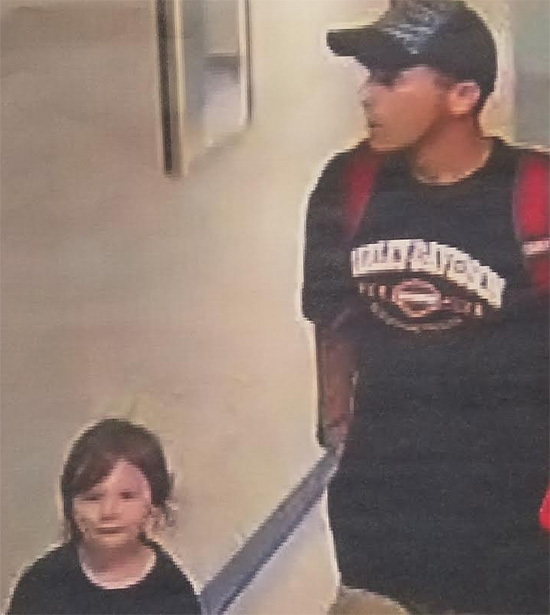
Missing 4-year old found safe and sound. She was found at a home in Santa Rosa County with William Phillip Kavchak thanks to a citizens’ tip. Alonda was a not a patient at the hospital; she was visiting a friend of her mother and Kavchak. She began to act up, and Kavchak offered to take her out for ice cream. They never returned. Further details not yet available.
PREVIOUS STORY
A Florida Amber Alert has been issued for 4-year old Alanda McCoy, who was last seen in the area of the 6000 block of Berry Hill Road in Milton
About 3 a.m., officers were dispatched to the Santa Rosa Medical Center and determined that Alanda McCoy was seen leaving with family acquaintance in the company of William “Bill” Phillip Kavchak, 27.
Kavchak is described as a white male with brown hair, brown eyes, 6’02” and 175 pounds. He was last known to be driving the child’s mother’s vehicle. The vehicle is a green, 2007 Mercury Montego Florida tag Y53UNW. Alanda was last seen wearing a yellow spaghetti strap tank top underneath a black tee shirt, light colored skirt and blue flip flops.
Mr. Kavchak is known to the child’s mother and left Santa Rosa Medical Center at 9:30 p.m. Tuesday to go get ice cream and didn’t return.
The vehicle may look light blue in color. There is a dent in the right front passenger bumper. The tail lights have plastic covers with silver lines in them.
Anyone with information is asked call their local law enforcement agency or 911.