
Impact 100 Awards $108,000 Each To 10 Charities

October 17, 2016

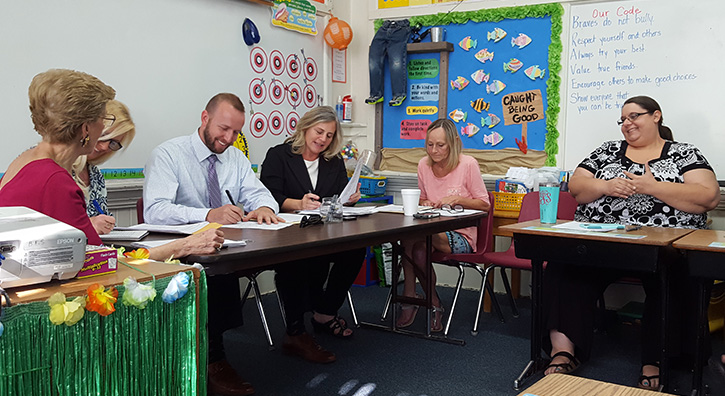
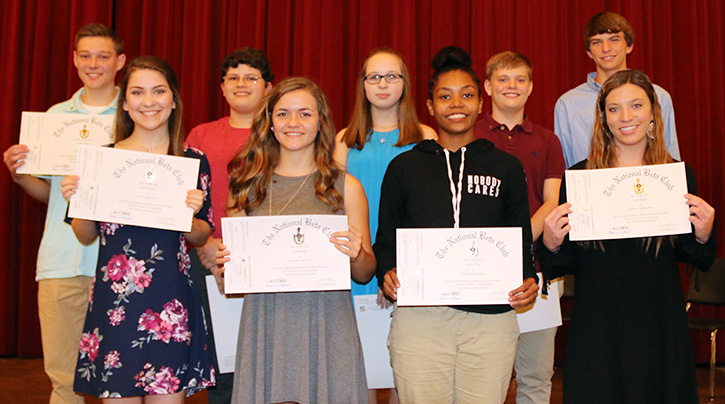
IMPACT 100 Pensacola Bay Area, a local women’s philanthropy group, awarded 10 grants Sunday worth $108,200 each to community groups.

The group has awarded over $8.3 million to nonprofits in Escambia and Santa Rosa counties since 2004.

Each of the following organizations was awarded $108,200 Sunday after a thorough grant review, committee process and membership vote:

ARTS & CULTURE

The Santa Rosa County Creek Indian Tribe, Inc.
Project: Native American Cultural Center

St. John’s Cemetery Historical and Educational Foundation, Inc.
Project: The OUTDOOR MUSEUM at St. John’s Historic Cemetery

EDUCATION

The Arc Gateway, Inc.
Project: Jeff’s Corner Garden at The Arc Gateway

Milk and Honey Outreach Ministries, Inc.
Project: Building Precious GEMS

ENVIRONMENT, RECREATION & PRESERVATION

Greater Pensacola Junior Golf Association, Inc. (The First Tee of Northwest Florida)
Project: Golf and Life Skills Training Facility

Northwest Florida Marine Education and Discovery of Gulf Ecosystems, Inc. (Navarre Beach Marine Science Station)
Project: Coastal Conservation Corp

FAMILY

Manna Food Bank, Inc. (Manna Food Pantries/MANNA)
Project: Fighting Hunger – Better, Faster, Stronger!

Studer Community Institute, Inc.
Project: IMPACT Brain Bags

HEALTH & WELLNESS

Escambia Search and Rescue Dive Team, Inc.
Project: Sea, Air and Land Capabilities Improvement Initiative

PACE Center for Girls (Escambia/Santa Rosa), Inc.
Project: Go Reach

Inmate Re-Entry Facilities Fight Funding Changes

October 17, 2016

Advocates for inmate re-entry facilities said  a Florida Department of Corrections plan to change the way work-release and substance-abuse programs are funded violates state law and may increase rates of recidivism.

Re-entry contractors led by Bridges of America — which provides services in some major cities and has an Orlando contract set to expire Dec. 31 — told reporters the Department of Corrections is running afoul of a requirement that substantial changes in corrections funding are subject to legislative and executive-branch review. The contractors said the changes would reallocate funds from facilities like theirs to programs inside prisons.

Lori Costantino-Brown, president of Bridges of America, said the Department of Corrections notified her organization in July that its state contract would be rebid through a process known as a request for proposals. The department then gave Bridges of America a three-month extension on an existing contract while preparing for the procurement process.

Constantino-Brown said the procurement proposal was “different from anything they had put out in the past,” including geographical caveats and facility requirements she called “suspicious.” Bridges of America has filed a formal protest to the request for proposals.

But Department of Corrections officials, including Secretary Julie Jones, have disputed the allegations.

“They’re welcome to bid on the proposal,” department spokeswoman Michelle Glady said. “If they did, it may change things for them. That would be the decision they have to make. They’re a business. They’re currently protesting it — that has to be resolved before we move forward with this process.”

The department and Bridges of America reached an agreement in May that allowed Bridges to continue operating facilities in Broward and Manatee counties, albeit under altered conditions and subject to termination by the department after two years. Both contracts include three one-year renewal options.

“Today, more than 60 percent of the department’s substance use disorder budget is dedicated to treating only a small number of individuals,” Jones said in a September memo. “We know we can do better. We want to provide more services to treat an even greater number of individuals with the same resources.”

Department officials say their plan would provide services to more prisoners with the same funding levels, while re-entry facility representatives claim the state’s plan focuses simply on “filling prison slots,” increasing the volume of prisoners served but with diminished effectiveness.

Some groups, such as Florida TaxWatch, have backed the re-entry facilities, arguing the department plan would increase inmate recidivism.

by Ryan Ray, The News Service of Florida

Florida Supreme Court Requires Unanimous Juries In Death Sentences

October 17, 2016

The Florida Supreme Court on Friday ruled that jury recommendations must be unanimous for the death penalty to be imposed, delivering a blow to prosecutors and the Legislature by striking down a new law aimed at fixing the state’s death penalty scheme.

Friday’s 5-2 ruling came in the case of Timothy Lee Hurst, whose appeal spawned a U.S. Supreme Court decision in January that found Florida’s death-penalty sentencing process was unconstitutional because it gave too much power to judges, instead of juries.

The Florida court on Friday ordered that Hurst be given a new sentencing hearing and also left the state’s death-penalty sentencing structure in doubt, for the second time in a year.

The immediate impact of Friday’s decision on Florida’s 400 Death Row inmates was unclear, but the 89-page ruling left undisputed that unanimous jury recommendations are required for defendants to be ordered to death, in contrast with a hurriedly crafted law passed in March.

“We are reviewing the Florida Supreme Court ruling, but in the meantime Florida juries must make unanimous decisions in capital cases as to the appropriateness of the death penalty,” Attorney General Pam Bondi’s spokesman, Whitney Ray, said in an email Friday.

Bondi’s office has not ruled out the possibility of seeking a rehearing from the court, something unlikely to be granted, given the 5-2 ruling.

This issues in the Hurst case deal with the sentencing process after juries unanimously find defendants guilty of capital offenses.

Under Florida’s old law, jurors by a simple majority could recommend the death penalty. Judges would then make findings of fact that “sufficient” aggravating factors, not outweighed by mitigating circumstances, existed for the death sentence to be imposed.

That system was an unconstitutional violation of the Sixth Amendment right to trial by jury, the U.S. Supreme Court decided in an 8-1 ruling in January in a case known as Hurst v. Florida.

After the Hurst ruling, the Florida Supreme Court indefinitely halted two scheduled executions, and the Legislature quickly passed a new law to address the U.S. Supreme Court decision.

Under the new law, juries have to unanimously find that at least one aggravating circumstance exists in order for defendants to be eligible for the death penalty. The law also requires juries to weigh whether sufficient mitigating factors exist to outweigh the aggravating circumstances, but the law is silent about whether those decisions must be unanimous. The law also required at least 10 jurors to recommend the death penalty, a departure from the old law, which required a simple majority.

The issue of a unanimous recommendations — not directly addressed in the U.S. Supreme Court decision — was a flashpoint for lawmakers, prosecutors and defense lawyers during legislative debate on the new law. While the state Senate initially wanted to adopt a requirement of unanimous jury recommendations, lawmakers later struck a deal, pushed by state attorneys, to require at least 10 jurors to recommend death.

But in Friday’s highly anticipated decision, the Florida Supreme Court majority found that the state’s attempt to repair the death-penalty sentencing structure remained flawed.

Chief Justice Jorge Labarga and justices Barbara Pariente, R. Fred Lewis and Peggy Quince agreed fully in the majority opinion. Justice James E.C. Perry concurred with the issue of requiring unanimous jury recommendations but dissented on another issue. Justices Charles Canady wrote a dissenting opinion that was joined by Justice Ricky Polston.

The U.S. Supreme Court decision mandated that all findings necessary for imposition of a death sentence are “elements” that must be decided by a jury, and Florida “has a longstanding history of requiring unanimous jury verdicts as the elements of a crime,” the majority wrote.

“… We conclude that under the commandments of Hurst v. Florida, Florida’s constitutional right to trial by jury, and our Florida jurisprudence, the penalty phase jury must be unanimous in making the critical findings and recommendation that are necessary before a sentence of death may be considered by the judge or imposed,” the majority wrote.

Of 31 states that have the death penalty, Florida is one of just three — along with Alabama and Delaware — that have not required unanimous recommendations for sentences of death.

“Simply put, Florida’s extreme outlier status in not requiring unanimity in the jury’s final recommendation renders the current imposition of the death penalty in Florida cruel and unusual under the Eighth Amendment of the United States Constitution,” Justice Barbara Pariente wrote in a concurring opinion.

Resolving the issue “now, as opposed to later, ensures that, for as long as death is a permissible punishment in the United States, Florida’s death penalty will be constitutionally sound,” Pariente wrote.

But in his dissent, Canady objected that the majority’s decision regarding unanimity went far beyond the bounds of the U.S. Supreme Court’s ruling in the Hurst case, saying it “fundamentally misapprehends and misuses” the decision, “unnecessarily disrupting” the administration of the death penalty in Florida.

Hurst was sentenced to death for the 1998 killing of fast-food worker Cynthia Harrison in Pensacola. Harrison, an assistant manager at a Popeye’s Fried Chicken restaurant on Nine Mile Road where Hurst worked, was bound, gagged and stabbed more than 60 times. Her body was found in a freezer.

The jury in the Hurst case recommended a death sentence to the judge, but its vote was split seven to five.

Friday’s decision was a “major shift in Florida jurisprudence,” according to 2nd Judicial Circuit Public Defender Nancy Daniels, whose office represents Hurst.

“The Hurst opinion from today makes it clear that the whole job a jury has to do has to be unanimous,” she said in a telephone interview.

State attorneys will hold a telephone conference on Monday to review the court opinion and assess how to proceed, Florida Prosecuting Attorneys Association lobbyist Buddy Jacobs said Friday.

Friday’s ruling could deepen the rift between the left-leaning court and the Republican-dominated Legislature, which will be forced to address the thorny death-penalty issue again during next year’s session.

Incoming House Speaker Richard Corcoran, who will take over after the November elections, called the state court’s Hurst decision “antithetical to the rule of law” and “dangerous for our state.”

“With no regard to the Legislature’s constitutional duty to establish policy in this state, the Florida Supreme Court expanded the scope of its decision to issues that were not raised by the parties or considered by the U.S. Supreme Court,” Corcoran, a Republican lawyer from Land O’ Lakes, said.

Florida lawmakers will have to address the issue when they reconvene, said Pete Mills, an assistant public defender in the 10th Judicial Circuit who is chairman of the Florida Public Defender Association’s death penalty steering committee.

“We are a nation of laws. We do not make things up as we go along. This was a statute. The statute has been found unconstitutional. To proceed with a statute that is unconstitutional is unwise and will lead to further chaos,” Mills said. “We have been telling the courts and the Legislature that these statutes were unconstitutional for over 15 years. They didn’t listen to us. They should listen to us now. They should have listened to us all along.”

by Dara Kam, The News Service of Florida

Check Out Mo The Lion In Molino And Storytime At A Library Near You

October 17, 2016

The West Florida Public Library now has its very own lion, Mo.

Mo will be joining the Molino Branch Library’s storytime each Wednesday at 10:30 a.m. to help sing songs and read books.

Storytime — with stories, songs and movement activities designed to build future readers — is held at all branch libraries as follows:

Molino Branch
Weekly on Wednesdays at 10:30 a.m.
(No Winter Break)

Century Branch
Weekly on Thursdays at 4 p.m.
(*Winter Break Dec 12 through Jan 17)

Pensacola Library
Weekly on Wednesdays at 10:30 a.m.
(*Winter Break Dec 12 through Jan 17)

Southwest Branch
Weekly on Tuesdays at 10:30 a.m.
(*Winter Break Dec 12 through Jan 17)

Tryon Branch
Mommy & Me: Weekly on Tuesdays at 10:30 a.m.
Mommy & Me is a lapsit program for babies and their special someone.

Preschool Story Time: Weekly on Thursdays at 10:30 a.m.
(*Winter Break Dec 12 through Jan 17)

Westside Branch
Weekly on Thursdays at 11:30 a.m.
(No Winter Break)

Landon’s Big Play: Teams Help Boy With Cerebral Palsy Score Touchdown

October 16, 2016

Landon Hawthorne is like many 10-year old boys — he has love of football and a determination to play.

The Bratt Elementary student was born with ataxic cerebral palsy, but that does not stop his love for the game.  Landon plays for the Flomaton Hurricanes, and he recently ran the ball against Jay and Brewton as they faced off with Flomaton. Saturday, Flomaton visited the Cantonment Cowboys, who allowed Landon his biggest play ever.

After his teammates helped him onto the field, Landon ran the ball down field and across the goal line for a touchdown…both teams cheering as he celebrated in the end zone.

NorthEscambia.com photos by Kristi Barbour, click to enlarge.

FDOT: Weekly Traffic Alerts

October 16, 2016

Drivers will encounter traffic disruptions on the following state roads in Escambia and Santa Rosa counties as crews perform construction and maintenance activities.

Escambia County:

  • 9 Mile Road (S.R. 10/U.S. 90A) from Beulah Road to Pine Forest Road - Clearing of trees and shrubs on the 4.8-mile segment has begun. Lane closures are only permitted between the hours of 8 p.m. and 6 a.m.
  • U.S. 29 (S.R. 95) Widening from I-10 to 9 Mile Road – Crews have begun clearing operations for pond locations.  Motorists will see activity in relation to this near the intersection of Ryan Avenue and Detroit Boulevard. Lane closures will only be permitted between 8 p.m. and 6 a.m.
  • State Road 292 (Perdido Key Drive) Resurfacing (from Alabama State Line to ICWW Bridge) – Intermittent and alternating daytime lane closures will resume Monday,  Oct. 17 as crews mill and place the structural course of asphalt on the main line traffic lanes.  This operation is anticipated to be complete within the next two weeks.

Santa Rosa County:

  • Interstate 10 (I-10) Widening from Escambia Bay Bridge to Avalon Boulevard- Drivers will encounter the following impacts on I-10 from 8 p.m. to 6 a.m. Sunday, Oct. 16 through Thursday, Oct. 20.
    • Traffic will be shifted to the outside on the I-10 on-and-off ramps at Avalon Boulevard/Exit 22 as crews install barrier wall.
    • Alternating lane closures, between the Escambia Bay Bridge and Avalon Boulevard as crews continue widening work.
  • I-10 Resurfacing from east of S.R. 87 to the Okaloosa County Line – Intermittent and alternating lane closures east and westbound between the S.R. 87 interchange and the Okaloosa County line from 8 p.m. to 6 a.m. Sunday, Oct. 16 through Friday, Oct. 21 as crews perform construction activities.  Motorists are reminded the speed limit is reduced to 60 MPH within the lane closure.
  • S.R. 87 Widening from two miles south of the Yellow River to Hickory Hammock Road –The Yellow River beneath the S.R. 87 bridge will be temporarily closed Friday, Oct. 14 from 7 a.m. to 6 p.m. as crews mobilize equipment for construction of the new northbound bridge.  Boaters are advised to avoid this area.

All activities are weather dependent and may be delayed or rescheduled in the event of inclement weather. Drivers are reminded to use caution, especially at night, when traveling in a work zone and to watch for construction workers and equipment entering and exiting the roadway.

Vote By Mail: 310K Ballots Received Statewide, 11K In Escambia County

October 16, 2016

More than 310,000 Floridians have already cast ballots for the November general election, according to the state Division of Elections. Of more than 2.9 million vote-by-mail ballots that have been distributed by county elections supervisors, 310,760 had already been returned as of 10 a.m. Friday, according to numbers posted on the division’s website.

In Escambia County, over vote by mail ballots had been returned, according to the Escambia County Supervisor of Elections website.

Republicans accounted for 130,758 of the returned ballots, while 124,773 were from Democrats. Another 9,091 had been returned by people registered with third parties, and 46,138 were from independent voters.

In the August primary, 1.28 million Floridians voted by mail, with Republicans making up nearly half.

Photos: Century Fall Festival, Car Show

October 16, 2016

The Century Area Chamber of Commerce held a Fall & Craft Festival & Car Show Saturday at Showalter Park.  The event will feature craft booths, family fun, food, a car show and live  entertainment.

For a photo gallery from the Fall Festival, click here.

For a photo gallery from the Car Show, click here.

NorthEscambia.com photos, click to enlarge.


Florida Gov’t Weekly Roundup: As Trump Stumps, Courts Take Care Of Business

October 16, 2016

http://www.northescambia.com/wp-content/uploads/2011/01/floridaweeklly.jpgAs Florida dried out from the second hurricane of the season, it once again found itself this week in the center of the election universe as Republican presidential nominee Donald Trump stumped from Panama City Beach to West Palm Beach in a defiant manner amid scandals engulfing his campaign.

Meanwhile, courts were busy in Tallahassee, extending the voter-registration deadline and finding part of a new death-penalty law unconstitutional.

TRUMPING THE NEWS

As accusations of sexual assault emerged that would typically torpedo the political prospects of lesser candidates, part-time Florida man Trump denounced the charges as “outright lies,” expanded his targets to include establishment Republicans and ratcheted up his attacks on the media and Democratic presidential candidate Hillary Clinton.

And Floridians got a front row seat, with Trump speaking to faithful throngs in Panama City Beach, Ocala, Lakeland and West Palm Beach.

Addressing thousands of cheering supporters at Aaron Bessant Park in Panama City Beach on Tuesday, Trump painted Clinton as a pawn of a global establishment that would usher in the destruction of the nation. He also opined on a variety of issues in Florida, including whether the management of Lake Okeechobee has caused droughts in the state.

Trump’s three-day swing through Florida came as polls show him slipping behind Clinton in the state. It is highly unlikely that Trump can win the White House without Florida’s 29 electoral votes.

The Panama City area is part of a Northwest Florida stronghold for Republicans in statewide races. State Rep. Matt Gaetz, a Fort Walton Beach Republican running for a seat in Congress, referred to the importance of the region while talking to the Trump crowd about former Vice President Al Gore’s visit to South Florida with Clinton earlier Tuesday.

“In 2000, we made sure Al Gore was never going to be the president of the United States,” Gaetz said.

During remarks in Miami Beach, Gore alluded to the state’s 2000 recount, which cleared the way for the presidency of George W. Bush, as he stressed the importance of every vote.

“You can consider me as an Exhibit A of that truth,” Gore said, according to a transcript released by the Clinton campaign.

But it was the release late last week of a video that showed Trump talking about kissing and groping women without consent that put other politicians on the spot this week.

Gov. Rick Scott, who chairs a super PAC backing the Republican nominee, called Trump’s comments “wrong” but stopped short of condemning the Republican presidential hopeful.

On Tuesday, as Democrats tried to use the video as a way to tie GOP candidates to Trump, Republican U.S. Sen. Marco Rubio reaffirmed support for the party’s nominee.

Rubio, who unsuccessfully sought the GOP presidential nomination this year, issued a statement that rejected Trump’s “offensive rhetoric” but expressed a bigger aversion to Clinton becoming president.

“I ran against Donald Trump. And while I respect that voters chose him as the GOP nominee, I have never hesitated to oppose his policies I disagree with,” Rubio said in a statement. “And I have consistently rejected his offensive rhetoric and behavior. I disagree with him on many things, but I disagree with his opponent on virtually everything.

“I wish we had better choices for president. But I do not want Hillary Clinton to be our next president. And therefore my position has not changed.”

COURT REQUIRES UNANIMOUS JURIES IN DEATH CASES

Nine months after the U.S. Supreme Court ruled that Florida’s death-penalty system gave too much power to judges, instead of juries, the state Supreme Court followed up Friday with another major decision that said part of the system is unconstitutional.

The Florida court, in a 5-2 ruling, said juries are required to be unanimous in recommending death sentences. That invalidated part of a law passed early this year that would have allowed 10-2 jury recommendations for defendants to be sent to Death Row.

Friday’s ruling also vacated the death sentence of Timothy Lee Hurst, who was sentenced to death for the 1998 killing of a fast-food worker in Pensacola.

Hurst was the plaintiff in an appeal that resulted in the U.S. Supreme Court ruling in January that Florida’s system of allowing judges — and not juries — to decide whether defendants should face death equates to an unconstitutional violation of the Sixth Amendment right to a trial by jury.

During the spring legislative session, lawmakers and Scott quickly passed a measure to try to address the U.S. Supreme Court ruling. As part of that, the Senate pushed to require unanimous jury recommendations for the death penalty.

But the House balked, and Attorney General Pam Bondi and state prosecutors also opposed the proposal. In a compromise, the two chambers settled on requiring 10 jurors to vote for the death penalty. The Florida Supreme Court on Friday said that part of the new law was unconstitutional.

“The act, however, is unconstitutional because it requires that only 10 jurors recommend death as opposed to the constitutionally required unanimous, 12-member jury,” the court majority ruled.

JUDGE GIVES MORE TIME FOR VOTER REGISTRATION

U.S. District Judge Mark Walker on Wednesday approved a request by the Florida Democratic Party to extend the deadline for voter registration because Hurricane Matthew forced people to flee the East Coast last week. Walker set the new deadline for Tuesday.

“While we wish it had not taken a lawsuit to get the Scott administration to do the right thing, today’s ruling is a major victory for all Floridians and for the democratic process in the Sunshine State,” Florida Democratic Party Chairwoman Allison Tant said in a statement.

Scott initially balked at idea of extending the deadline, saying “(e)verybody has had a lot of time to register.”

But Scott’s office sent out a statement before the Wednesday court hearing suggesting that the Legislature consider changes to the state’s voter registration law during the 2017 session. Florida has one of the earliest registration deadlines in the nation, and the law has no provision for what happens if a disaster strikes near the deadline.

Lawyers for Scott and Secretary of State Ken Detzner voiced no opposition to the extension during the hearing.

STORY OF THE WEEK: Republican presidential nominee Donald Trump tried to rally voters across Florida this week amid a furor about his campaign.

QUOTE OF THE WEEK: — “When you’re taking money out of the masses’ pockets and then giving it literally — to the Democrats’ argument — to the top 1 percent, to the detriment of everybody else, that is de facto socialism.” — Incoming Florida House Speaker Richard Corcoran during a panel discussion on economic business incentives in Texas.

UWF Drops Back And Forth Shootout At Delta State, 55-51

October 16, 2016

The UWF football team compiled a school-record 557 yards of total offense and was in position to ice the game with a 2-point lead, but saw a miscommunication on offense result in a turnover that Delta State turned into the game-winning score and a 55-51 decision at Parker Field-McCool Stadium Saturday evening.

UWF (4-3, 2-2 Gulf South) showed its offensive muscle early and often by scoring a touchdown on each of its first four drives. In just 4:01 of possession, Nobles rattled off four touchdown passes and led the Argonauts to 267 yards of offense.

The Argos started the scoring with an Antoine Griffin 39-yard touchdown catch just over two minutes into the first quarter. DSU (4-3, 2-2) responded with a 13-play, 73-yard drive that ended on a three-yard rush to tie the game at 7-7 early.

West Florida responded with 20 unanswered points, including Ishmel Morrow recording his sixth and seventh touchdowns of the year with 27- and 69-yard scores. UWF would cap first quarter scoring with Anas Hasic’s GSC-leading eighth touchdown of the year coming from 31-yards out.

With the Argos leading 27-14 at the end of the first quarter, Delta State would post three unanswered, second quarter touchdowns to take a 35-27 lead. The Argonauts momentarily halted DSU’s momentum by utilizing a nine-play, 67-yard drive that ended with a 17-yard Nobles-to- Kevin Grant touchdown connection. Nobles concluded the half with a staggering five touchdowns and 355 passing yards.

Delta State held a slim 35-34 advantage heading into the locker room after a first half that featured a combined 753 yards of total offense.

To start the second half, the Statesmen extended their lead with a 12-yard scoring run from Chris Robinson to make the score 42-34 after a quick, five-play, 46-yard drive over the course of 1:42.

The Argonauts ate up 3:22 of clock en route to an eight-play, 72-yard drive that concluded with Jemari Ford’s first rushing score of the year on a 15-yard scamper on second down leaving Delta State with just a one-point lead, at 42-41.

Just 2:02 later with Delta State set to punt, Marcus Clayton blocked, picked up the loose ball and returned it 21 yards to give UWF a 48-42 lead with 7:37 remaining in the third quarter. Clayton’s block is both the first-ever blocked kick and the first special teams touchdown in program history.

After a 45-yard, highlight-reel-worthy catch by Hasic put the Argos in field-goal range at the Delta State 12-yard-line, Andrew Bogaenko converted on a 26-yard attempt to push UWF’s lead to 51-42.

UWF would take that lead into the fourth quarter, but Delta State responded with Robinson’s fifth touchdown of the game to cut UWF’s lead to a slim 51-49 margin.
One of three turnovers, and West Florida’s most costly turnover of the game, came on a Nobles’ fumble with 2:50 remaining allowing DSU to start the eventual game-winning drive at the UWF 17-yard-line.

Robinson continued to give the Argonaut defense headaches late in the contest, as the running back scored his sixth touchdown of the day on a six-yard rush.
The Argonauts had 90 seconds remaining to attempt a comeback, but four incomplete passes secured Delta State’s 55-51 victory.

With Delta State holding the Argonauts scoreless in the fourth quarter, it snaps a streak of 11 consecutive quarters where the Argonauts posted at least one score.
Chris Schwarz led the ground game for UWF, averaging 5.1 yards per carry after a 12-attempt, 61-yard effort. Hasic had a game-high 155 yards receiving on eight catches, while Morrow posted his fifth 100-yard performance in the last six games with 132 yards on five receptions. Nobles totaled 452 yards through the air with five touchdowns after going 24-for-42 passing.

Trent Archie led all players with a UWF single-game record 18 tackles. Marvin Conley contributed with 11 tackles of his own, while Sam Adams was the lone Argonaut to post multiple tackles for loss.

West Florida was hindered by 13 penalties accumulating 119 total yards in addition to Delta State’s 20 points scored off turnovers. Robinson paced the Statesmen offense with six touchdowns and 298 total yards divided between 100 receiving yards and 198 yards on the ground.

« Previous PageNext Page »