

Working Nearly Complete On $1 Million Killam Road Paving Project
August 28, 2017
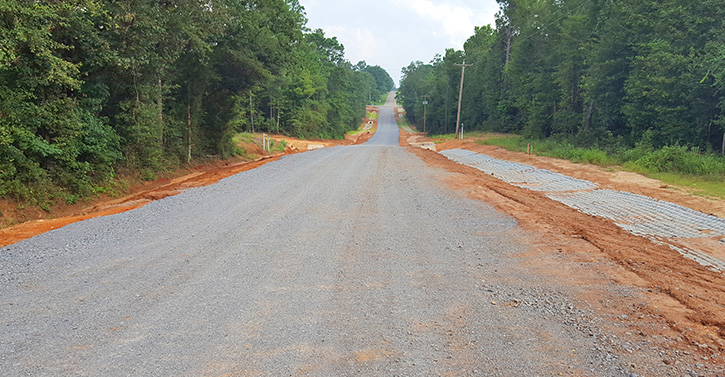
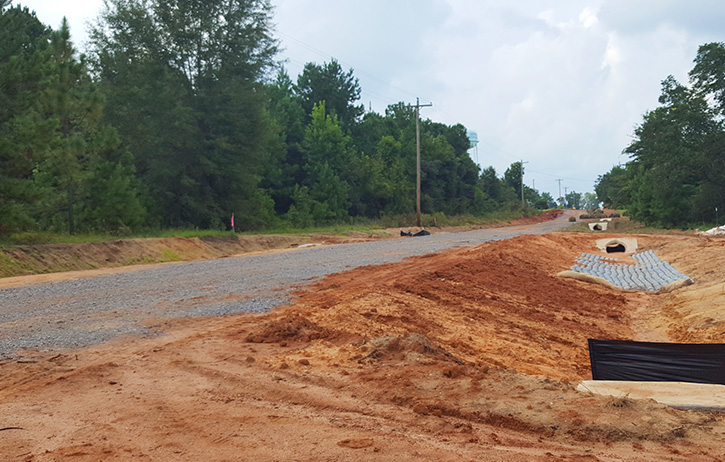
Work is nearing completion on a $1 million project to pave Killam Road near Century.
The project included the design and paving of Killam Road from Highway 4A to State Line Road at the Alabama/Florida state line and drainage upgrades to prevent roadway flooding. According to Escambia County, the project is 80 percent complete with an anticipate completion date of September by contractor Site and Utility.
NorthEscambia.com photos, click to enlarge.
Bonus Gallery: Tribal Beat Band, NHS Cheerleaders
August 28, 2017
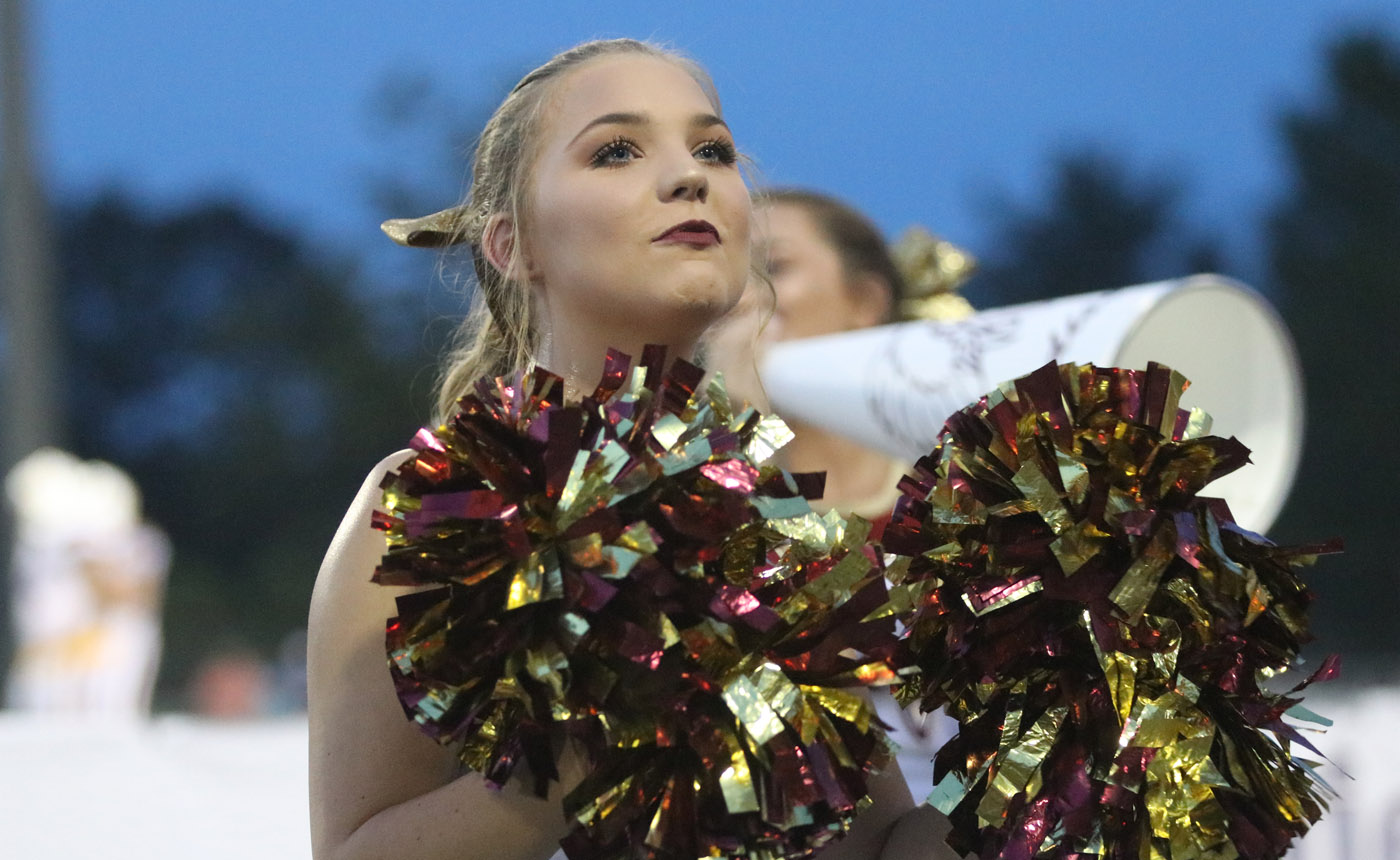
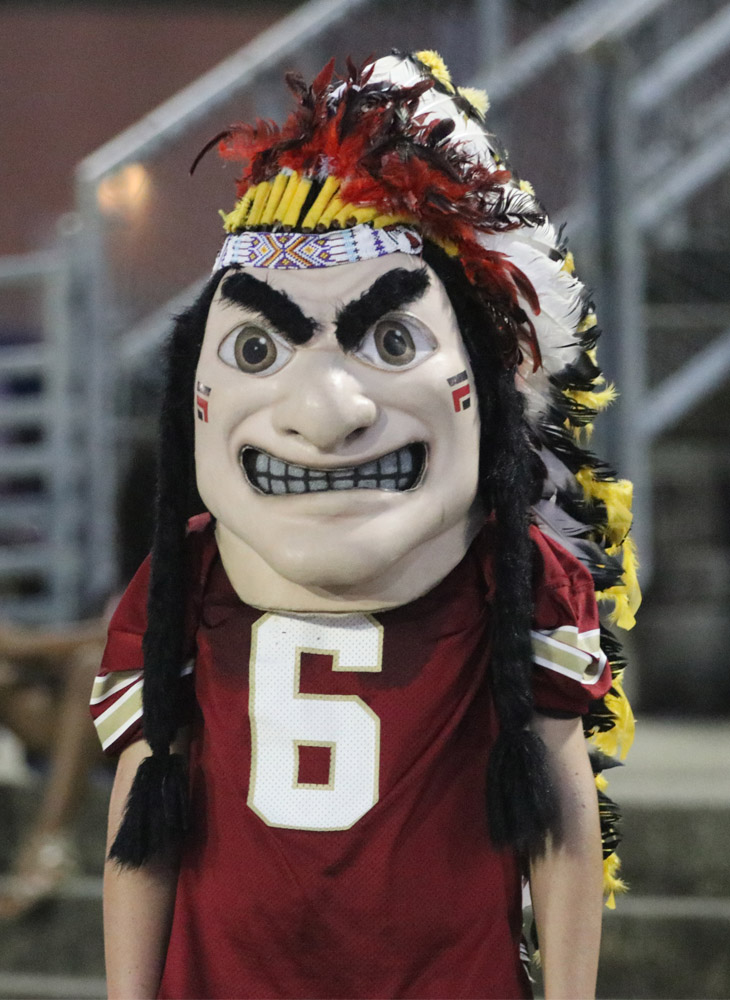 For a bonus photo gallery of the Northview High School cheerleaders and Tribal Beat Band from Friday night, click here.
For a photo gallery of football action as Northview beat Blacksher, click here.
For a game recap story, click here.
NorthEscambia.com photos, click to enlarge.

FDOT: Weekly Traffic Alerts
August 28, 2017

Drivers will encounter traffic variations on the following state roads in Escambia and Santa Rosa counties as crews perform construction and maintenance activities. For the upcoming Labor Day Holiday there will be no lane closures on state roads beginning at 6 a.m. Friday, Sept 1 and ending at 12:01a.m.Tuesday, September 5.
Escambia County
· 9th Avenue Routine Maintenance at Keating Road/Dunmire Street- The northbound outside lane on 9th Avenue at Keating Road/Dunmire Street will be closed from 8 p.m. to midnight Friday, Aug. 25 as crews repair guardrail.
· State Road (S.R.) 10A(U.S. 98/Mobile Highway) Turn Lane Construction at Woodside Road Intersection- Woodside Road will be reduced one lane during daytime hours at the intersection of Mobile Highway Saturday, Aug. 26 and Sunday, Aug. 27 as crews perform utility relocation work in relation to the turn lane project. Traffic flaggers will be on site to direct traffic through the work zone.
· Gregory Street to I-110 northbound on ramp Bridge Painting– The shoulder of the Gregory Street to I-110 northbound on ramp will be restricted from 8 p.m. to 5 a.m. through Friday, Sept. 1 as crews perform painting operations.
· Interstate 10 (I-10)/U.S. 29 Interchange Improvements Phase I- Drivers will encounter the following traffic impacts on I-10 near the U.S. 29 interchange (Exits 10A and 10B) from 8 p.m. to 6 a.m. Sunday, Aug. 27 through Thursday, Aug. 31.
· Alternating east and westbound lane closures on I-10 and north and southbound on U.S. 29.
· Intermittent closure of the U.S. 29 south to I-10 eastbound ramp and the U.S. 29 north to I-10 eastbound ramp. Traffic will be detoured on U.S. 29 to access I-10 eastbound.
· Intermittent closure of the I-10 westbound to U.S. 29 south ramp (Exit 10A). Traffic will be detoured to Exit 10B.
· Alternating lane closures on I-10 westbound to U.S. 29 north ramp (Exit 10B)
· I-10 Widening from Davis Highway to the Escambia Bay Bridge- Alternating lane closures on I-10, between Davis Highway (Exit 13) and Scenic Highway (Exit 17), and on Scenic Highway near the I-10 interchange from 7 p.m. to 6:30 a.m. Sunday, Aug. 27 through Thursday, Aug. 31 as crews perform construction activities.
· U.S. 29 Widening from I-10 to Nine Mile Road- Drivers traveling U.S. 29 and Nine Mile Road will encounter traffic pattern changes from 8 p.m. to 6 a.m. as crews perform drainage and bridge operations as follows:
· Nine Mile Road at the U.S. 29 overpass: Eastbound traffic will be shifted to the westbound, inside travel lane as crews prepare the area for construction of the support column for the new center bridge deck.
· U.S. 29 between I-10 and 9 1/2 Mile Road: Alternating lane closures continue as crews perform drainage operations.
· State Road (S.R.) 30 (U.S. 98) Pensacola Bay Bridge Replacement- Crews will be paving and performing drainage work this week. Drivers can expect alternating east and westbound lane closures on U.S. 98 (Bayfront Parkway) between 14th Avenue and the bridge from 8 p.m. to 5 a.m. Monday, Aug. 28 through Thursday, Aug. 31. On Tuesday, Aug. 29, U.S. 98 westbound lane closures will be in effect 11 p.m. to 5 a.m.
· S.R. 95 (Palafox Street) Underground Utility Work between Yonge Street and Moreno Street- Drivers can expect northbound lane restrictions between Yonge Street and Moreno Street from 8 p.m. to 5 a.m. Monday, Aug. 28 through Friday, Sept 1 as crews clean and video sewer lines.
· S.R. 742 (Creighton Road) Construction Improvement Project from east of Davis Highway to Scenic Highway– Sidewalk construction and Americans with Disabilities Act upgrades are ongoing. There will be intermittent and alternating lane closures from 8:30 p.m. to 5:30 a.m. between Davis Highway and Scenic Highway.
· Nine Mile Road (S.R. 10/U.S. 90A) Widening from Pine Forest Road to U.S. 29- Alternating lane closures continue on Untreiner Avenue as crews perform jack and bore operations.
Santa Rosa County
· U.S. 98 (S.R. 30) Pensacola Bay Bridge Replacement – Crews will be installing barrier wall and performing drainage work this week. Drivers can expect alternating east and westbound lane closures on U.S. 98 near the bridge in Gulf Breeze from 8 p.m. to 5 a.m. Monday, Aug. 28 through Thursday, Aug. 31. On Tuesday, Aug. 29, U.S. 98 westbound lane closures on U.S. 98 westbound will be in effect 11 p.m. to 5 a.m.
· I-10 Widening from Escambia Bay Bridge to Avalon Boulevard (Exit 22) – Widening along Interstate I-10, from the Escambia Bay Bridge to east of S.R. 281 (Avalon Boulevard) continues. Alternating lane closures will be in effect from 8 p.m. to 6 a.m. Sunday, Aug. 27 through Thursday, Aug 31. Reconstruction of the Avalon Boulevard overpass is also ongoing. Drivers expect alternating lane closures on Avalon Boulevard, near the I-10 interchange.
· S.R. 87 Multilane from Eglin AFB Boundary to Hickory Hammock Road –Traffic between County Road 184 (Hickory Hammock Road) and the Eglin AFB boundary is restricted to loads under 11-feet wide. The restriction will be in place through the completion of the project.
Drivers are reminded to use caution, especially at night, when traveling through the construction zone, and to pay attention for workers and equipment entering and exiting the work area. All activities are weather dependent and may be delayed or rescheduled in the event of inclement weather.
Century To Hold Final Budget Workshop Wednesday
August 28, 2017
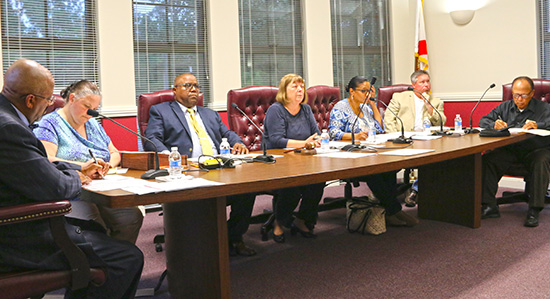
The Century Town Council will hold a final budget workshop Wednesday afternoon to set the town’s budget for the upcoming fiscal year.
It’s the third such meeting held this budget year by the council.
The fiscal year 2016-2017 budget in Century was $4.26 million.
NorthEscambia.com file photo,click to enlarge.
Wahoos Lose Fourth Straight
August 28, 2017

The Pensacola Blue Wahoos lost a 2-1 lead with two outs and a 0-2 count in the ninth inning on Mississippi Braves shortstop Dylan Moore. Moore blasted a two-run double into the gap to right center to put his team on top, 3-2.
Mississippi went on to score four runs in the inning and win, 5-2, Sunday in front of 4,669 at Blue Wahoos Stadium. It was the Blue Wahoos fourth straight loss.
Manager Pat Kelly said the Blue Wahoos would probably have to win their last eight games to have the slightest chance of winning a Southern League record five straight halves.
“We have two outs and two strikes and a chance to win the game and we can’t finish,” Kelly said. “Those are disappointing losses.”
Blue Wahoos starting pitcher Keury Mella looked like he had broken the jinx and finally earned his first win this season at Blue Wahoos Stadium.
Mella looked dominant, tossing six scoreless innings, allowed just two hits, walked two and struck out seven Mississippi hitters.
Mella pitched to the minimum 12 batters through the first four innings, allowing just one hit. He loaded the bases with one out in the fifth inning but got Mississippi catcher Jonathan Morales to ground out into a double play to end the scoring threat. In the sixth, Mississippi again put runners at second and third with one out but Mella got a K and fly out to center field.
 Coming into Sunday’s game, the 24-year-old Mella was 0-6 with a 5.16 ERA at home in 13 appearances. But over his last three starts, Mella has allowed just four earned runs in 18 innings for a 2.00 ERA and struck out 17. For the season, Mella is 3-10 with a 4.46 ERA.
Kelly said Mella has worked with Blue Wahoos pitching coach Danny Darwin on his delivery.
“He’s thrown good the last few games,” Kelly said. “He’s a lot more consistent. His slider is better and he’s throwing more strikes.”
But Mississippi went ahead, 3-2, on Moore’s two-run double off Pensacola closer Carlos Gonzalez. Braves third baseman Austin Riley then singled to right field to score Moore for a 4-2 lead. Riley scored on a Gonzalez wild pitch for the final margin of victory, 5-2.
Pensacola did take a 2-0 lead with both runs coming off Mike Soroka who is 11-8 with a 2.80 ERA for Mississippi.
Pensacola left fielder Gabriel Guerrero scored in the first inning of Sunday’s game on a single to center field by first baseman Gavin LaValley to take a 1-0 lead and to snap its streak of failing to score for 21 innings. The Blue Wahoos last scored against the Jackson Generals in the sixth inning Thursday.
It lost the first two games to the Mississippi Braves, 1-0, and, 5-0. The last time the Blue Wahoos were shutout in back-to-back games was in losses, 1-0, to both the Biloxi Shuckers and the Jackson Generals April 21 and 22 last season.
Pensacola scored its second run of the game in the sixth inning when shortstop Blake Trahan laid down a safety squeeze that scored center fielder Jonathan Reynoso from third to put the Blue Wahoos ahead, 2-0.
Trahan was 3-for-3 with one RBI in Sunday’s game and led off the ninth for the Blue Wahoos with a double into the left field corner. In two games against Mississippi, the shortstop is 5-7.
“To me that was a great accomplishment on the safety squeeze by Trahan,” Kelly said. “He’s swinging the bat good.”
Mississippi finally got on the scoreboard in the eighth inning when second baseman Travis Demeritte singled off Pensacola reliever Robert Stock to drive in Moore to pull the Braves within, 2-1. Moore led the Braves offense going 3-for-5 with two runs scored and two RBIs.
Pensacola won the first half guaranteeing the team a spot in the Southern Division playoffs. It was a Southern League record fourth straight half title, tying them with the Tennessee Smokies, which did it between 2009 and 2011.
In the second half, the Blue Wahoos are sitting in fourth place at 28-34 with eight games left this season. The Jacksonville Jumbo Shrimp lost to Biloxi 10-5 Sunday and are 35-27 in the Southern Division and in first place, seven games ahead of Pensacola.
Photos courtesy Barrett McClean Photography/Blue Wahoos for NorthEscambia.com, click to enlarge.
Attendance Zones Proposed For New Beulah Middle, Kingsfield Elementary (With Maps)
August 27, 2017
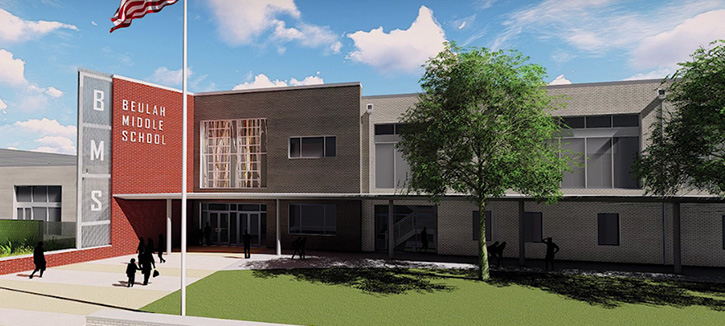
The Escambia County School District has released preliminary school rezoning maps that take effect next year when the new Beulah Middle School and Kingsfield Elementary School open.
The school board is expected to make a final decision on the attendance zones at an October meeting.
Kingsfield Elementary is under construction at 900 West Kingsfield Road next to Ransom Middle School. The 135,000 square foot, $25 million facility will serve 800 students. The school is designed to provide relief to Pine Meadow and Beulah elementary schools and help with the growth coming to mid-Escambia County.
Beulah Middle School is under construction at 6001 West Nine Mile Road on the former Coastal Airport property. The $45 to $48 million dollar school will have a capacity of 1,100 to 1,300 students. Students will be relocated to the new school from Woodham Midde, while hundreds will be rezoned from the overcrowded Ransom Middle.
Both schools are being funded by Local Option Sales Tax dollars and are scheduled to open in the fall of 2018..
Maps are below for the current school year (before the new schools open) and next year (after the schools open). The links are pdf files which can be zoomed for a detailed view.
Elementary School Changes
- Beulah Elementary (Before)
- Beulah Elementary (After)
- Kingsfield Elementary (Before)
- Kingsfield Elementary (After)
- Pine Meadow Elementary (Before)
- Pine Meadow Elementary (After)
Middle School Changes
- Bellview Middle (Before)
- Bellview Middle (After)
- Beulah Middle (Before)
- Beulah Middle (After)
- Ferry Pass Middle (Before)
- Ferry Pass Middle (After)
- Ransom Middle (Before)
- Ransom Middle (After)
- Warrington Middle (Before)
- Warrington Middle (After)
- Woodham Middle (Before)
- Woodham Middle (After)
- Workman Middle (Before)
- Workman Middle (After)
Workers Injured In Construction Zone Structural Collapse At Navy Federal
August 27, 2017
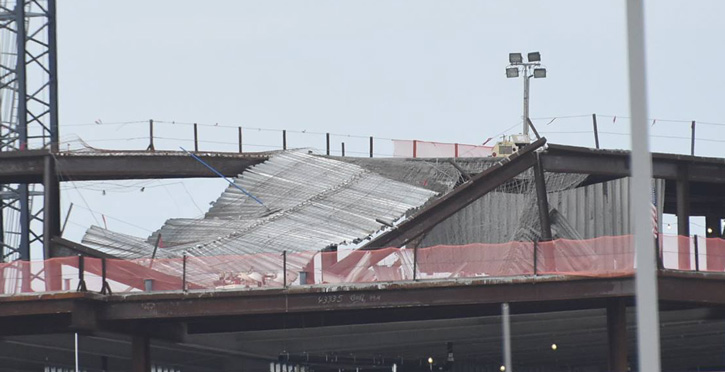
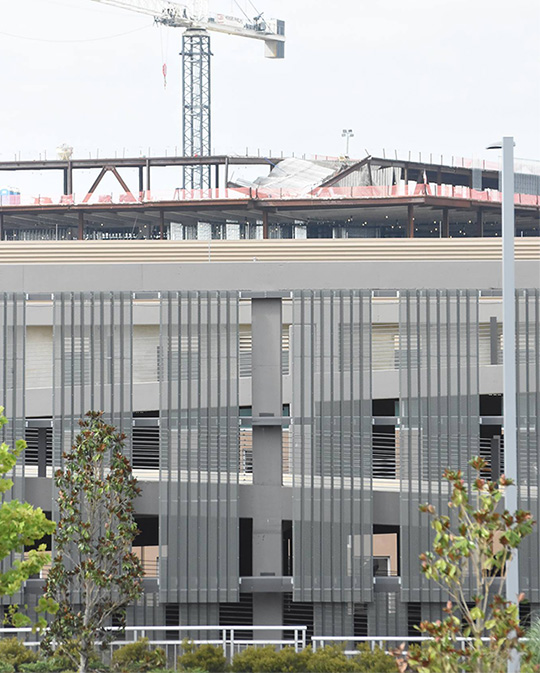
Three construction workers were injured early Saturday morning in a structural collapse in Beulah.
The three fell about 25 feet when the floor they were working on collapsed at Navy Federal on Nine Mile Road. They were transported to Sacred Heart Hospital.
One of the workers sustained serious injuries, and is being treated for spinal trauma, officials said. Ten other construction workers were working in the area during the collapse. They declined medical attention.
Navy Federal released the following statement:
“Just after 5 a.m. an accident occurred in the rooftop structure of Navy Federal Credit Union’s Phase Two expansion project at its Heritage Oaks campus in Pensacola. The accident took place in a construction zone, outside of Navy Federal’s current employee workspace.
“Hensel Phelps Construction employees were working on the project when the accident took place. Three Hensel Phelps employees were taken to a Pensacola hospital. Several others also sought treatment. Construction has been suspended in the immediate area of the accident pending a full comprehensive review of the incident.
“The entire construction team is supporting the well-being of the employees impacted by the accident.”
NorthEscambia.com photos by Kristi Barbour, click to enlarge.
Hurricane Harvey Expected To Raise Florida Gas Prices
August 27, 2017
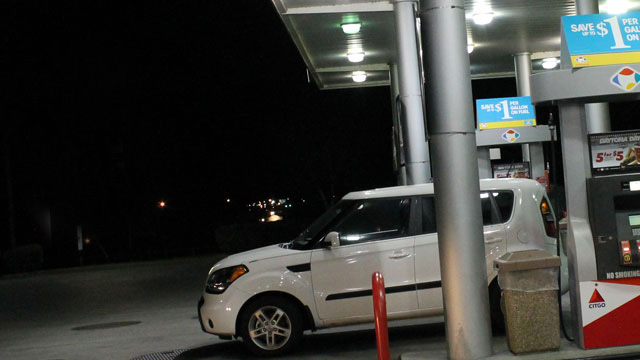
Gasoline prices in Florida are expected to jump in the next week after Hurricane Harvey’s landfall in Texas Friday night.
Oil refineries sit in the path of the storm, and much of the gas that Florida receives is shipped across the Gulf of Mexico from those refineries.
W.D. Williams, a spokesman for AAA Auto Club, said prices could jump between 10 and 30 cents over the next week, depending on how bad the storm is.
“When the refineries are impacted by a storm such as a hurricane, it shuts them down,” Williams said. “The wind interrupts the power supply. You’ll have flooding that interrupts operations. That means there is going to be no gasoline being produced for a bit of time.”
Williams said with Harvey making landfall as a Category 4 storm, some refineries could be offline for up to three weeks.
NorthEscambia.com photo.
Florida Gov’t Weekly Roundup: Wait Is Over For Death Penalty
August 27, 2017
After more than a year-and-a-half hiatus, Florida carried out an execution this week, putting to death a prisoner convicted of murdering two men in Jacksonville 30 years ago.
The delay was caused by a U.S. Supreme Court ruling and subsequent court decisions that forced Florida to overhaul its death-penalty sentencing system. Thursday’s execution also was the first use of a new three-drug lethal injection procedure, which drew a legal challenge.
 The execution of Mark James Asay occurred without incident, raising the possibility that the state could resume a more rapid pace of executions. There are still 360 prisoners on Florida’s Death Row, with Dean Kilgore, a prisoner from Polk County, having been there the longest, at more than 46 years.
Meanwhile this week, the debate over Confederate monuments continued, with Gov. Rick Scott contending it will be up to the Legislature to decide whether to remove a memorial from the Capitol grounds.
Also, the Florida Senate lost one of its former members, when Greg Evers died Monday night in a single-vehicle accident near his home in Okaloosa County.
And three Democratic candidates for governor were united in their pledge to support legislation aimed at prohibiting workplace and housing discrimination based on sexual orientation.
FLORIDA RESUMES EXECUTIONS
Asay was executed Thursday evening after spending nearly three decades on Death Row. He was the state’s first inmate to be put to death in more than 19 months and the first executed under a lethal-injection procedure never used before in Florida or any other state.
Asay’s execution at Florida State Prison was the first since a January 2016 U.S. Supreme Court decision, in a case known as Hurst v. Florida, that effectively put the state’s death penalty in limbo. He also was the first white man executed for killing a black victim in Florida.
The lack of complications with the previously untested lethal-injection procedure may have eased concerns about Florida’s new three-drug protocol.
“The execution took place without incident,” Department of Corrections spokeswoman Michelle Glady told reporters gathered in a staging area beside the prison. “Our objective with this is a humane and dignified process, which was done this evening.”
Asay was convicted in 1988 of the shooting deaths of Robert Booker, who was black, and Robert McDowell.
Asay allegedly shot Booker after calling him a racial epithet. He then killed McDowell, who was dressed as a woman, after agreeing to pay him for oral sex. According to court documents, Asay — who had white supremacist and swastika tattoos — later told a friend that McDowell had previously cheated him out of money in a drug deal.
A MONUMENTAL UPROAR
The debate over Civil War monuments on public property continued, with Scott saying it’s up to the Legislature to decide whether to remove a Confederate soldier memorial from the Capitol grounds.
Democratic gubernatorial candidates and the Florida NAACP are among a chorus of people calling for Scott to relocate the memorial outside the Old Capitol or to hold a special legislative session on the future of Confederate monuments on public property. The demands, at least in part, are a reaction to a white supremacist rally this month in Charlottesville, Va., that turned deadly.
“We’ve got a regular (legislative) session that starts in January, so that’s just a few months away,” Scott told reporters after an Enterprise Florida board meeting in Fort Lauderdale.
The Confederate soldier memorial has stood outside the Old Capitol since 1882.
Meanwhile, U.S. Sen. Bill Nelson, a Democrat expected to face an election challenge from Scott next year, tweeted Tuesday that “Confederate statues belong in a historical museum or cemetery, not in a place of honor.”
The corrective tweet came a day after the Sarasota Herald-Tribune reported that Nelson said, “I think leaving it up to the good sense of the communities involved is the best thing to do.”
And the debate stretched to the U.S. Capitol, with state Sen. Perry Thurston, D-Fort Lauderdale, and state Rep. Patrick Henry, D-Daytona Beach, filing legislation to have the likeness of a civil rights leader and educator replace a Confederate general in the National Statuary Hall in Washington, D.C.
Thurston and Henry want Mary McLeod Bethune, who founded what is now Bethune-Cookman University, to replace Confederate Gen. Edmund Kirby as one of Florida’s two representative statutes in the national Capitol.
The legislation will be considered when lawmakers begin the 2018 session in January.
A PANHANDLE TRAGEDY
Tributes and condolences poured in this week from elected officials and others after reports that Evers had died Monday night.
“Ann and I are heartbroken to learn of the passing of Sen. Greg Evers,” Scott tweeted, referring to his wife, Ann. “Our thoughts and prayers are with his entire family.”
The Florida Highway Patrol said Evers, 62, failed to negotiate a curve on a road near Baker, with his pickup truck ending up submerged in a roadside creek where he was found Tuesday. Evers ran a farm that was well known for its strawberries.
“Greg passionately represented his district for many years in both the House and Senate,” Senate President Joe Negron, R-Stuart, said in a statement. “He was especially dedicated to the men and women of his community who were serving or had served in the military, as well as our fellow Floridians across the state who serve as corrections officers.”
A native of Milton, Evers, a Republican, served nine years in the Florida House before his election to the Senate in 2010. Evers left his Senate seat last year to make a bid for the U.S. House but lost the Republican primary to U.S. Rep. Matt Gaetz.
Evers’ funeral is scheduled for Tuesday in Milton.
IT’S PERSONAL
Three Democratic candidates for governor pledged to support legislation that would prohibit discrimination in jobs and housing based on sexual orientation.
Despite support from the business community, the legislation, known as the “Competitive Workforce Act,” has stalled in the Legislature in recent years. Also, a call for Scott to use his executive power to ban discrimination based on sexual orientation in state agencies has gone unheeded.
“If you elect me governor, you won’t have to wait any longer,” Tallahassee Mayor Andrew Gillum told the LGBTA Democratic Caucus, which represents the lesbian, gay, bisexual and transgender community.
“Florida is too big, too proud, too diverse a state for our politics to reflect an error of yesteryear, yesterdecade, yestercentury,” Gillum said during a caucus conference Saturday in Tallahassee.
Candidate Chris King, a Winter Park businessman, said passing the anti-discrimination law is morally and economically right for the state.
“I want to make sure everyone is comfortable here, everyone is safe here, everyone is protected here,” King said.
Former U.S. Rep. Gwen Graham of Tallahassee said she would work to “stop discrimination in its tracks.”
“We’re going to protect every Floridian, no matter what color their skin is, where they come from, or who they love,” Graham said.
All three candidates said, if elected in November 2018, they would sign an executive order banning discrimination based on sexual orientation or gender identity in state agencies.
Two candidates talked about how ending discrimination was personal for them.
King talked about the discrimination faced by his older brother, David, growing up as a gay man in the South. He said his brother, who moved to California, took his own life at age 30 after battling depression and mental illness.
King said his brother’s experience has compelled him to make anti-discrimination initiatives a centerpiece of his campaign and underscored the importance of speaking “with moral clarity on these issues.”
“I promise you I will,” King told the caucus. “I will give it my best shot.”
Gillum said his older brother, Terrance, faced similar discrimination as a young gay man in Gainesville, moving to California as soon as he could “so that he could live and be himself.”
Gillum said throughout his 15-year public career he has spoken out for LGBT issues.
“Not only because it’s the right thing to do, but it was my little way of showing my big brother that I saw him,” he said.
STORY OF THE WEEK: Florida carried out its first execution since January 2016. Mark James Asay, convicted of killing two Jacksonville men in 1987, died by lethal injection Thursday evening.
QUOTE OF THE WEEK: “Despite the university’s sympathy for plaintiff and all of the students, employees and other members of the FSU community who were exposed to the shooting, it respectfully denies that it is liable in any sum or manner for the action of a madman,” Florida State University said in a court document, asking for the dismissal of a lawsuit filed by a former student who was paralyzed by a 2014 shooting at the university’s Strozier Library.
by Lloyd Dunkelberger, The News Service of Florida
Tate Graduate Morton Graduates From Basic Military Training
August 27, 2017
U.S. Air Force Air National Guard Airman Christopher A. Morton graduated from basic military training at Joint Base San Antonio-Lackland, San Antonio, Texas.
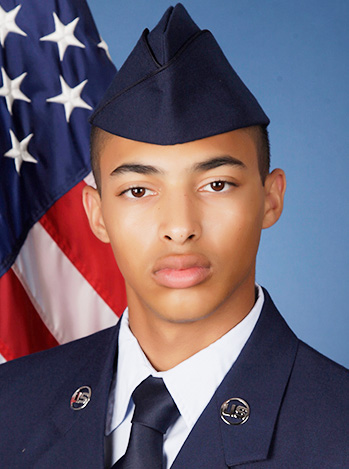 The airman completed an intensive, eight-week program that included training in military discipline and studies, Air Force core values, physical fitness, and basic warfare principles and skills.
Airmen who complete basic training also earn four credits toward an associate in applied science degree through the Community College of the Air Force.
Morton is the son of Stefanie R. and Wade F. Morton II of Pensacola.
He is a 2015 graduate of J.M. Tate High School.