

Friday Night Football Finals
September 9, 2017
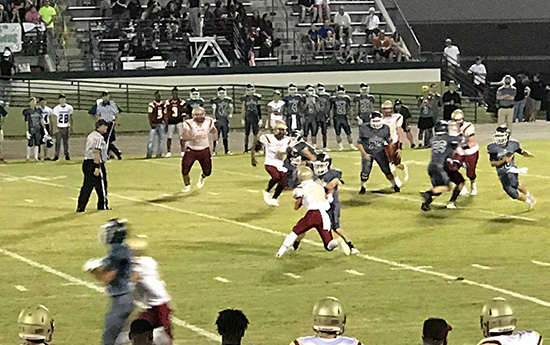
Here are final scores from Friday night football action in the North Escambia area:
South Walton 23, Northview 18 [Read more...]
Washington 21, Pensacola 14
West Florida 34 D’Iberville (MS) 26
FLORIDA CANCELED GAMES
Gulf Breeze at Tate
Rocky Bayou Christian at Jay
Pace at Pine Forest
Milton at Fort Walton Beach
Navarre at Crestview
Catholic at Choctaw
Snook at Baker
Rummel (LA) at Escambia
ALABAMA SCORES
Escambia Academy 49, Pickens Academy 14
Hillcrest Evergreen 29, Flomaton 12
Thomasville 36, WS Neal 19
TR Miller 40, Cottage Hill 34 OT
UMS-Wright 41, Escambia County (Atmore) 8
Pictured: Northview at South Walton. NorthEscambia.com photo by Kimberly Harigel, click to enlarge.
Putnam Says Hurricane Irma Will Hurt Florida’s Ag Industry
September 9, 2017
From landscaping and nursery businesses in Miami-Dade County to citrus growers in Central Florida, the agriculture industry will take a hit from Hurricane Irma, state Agriculture Commissioner Adam Putnam said.
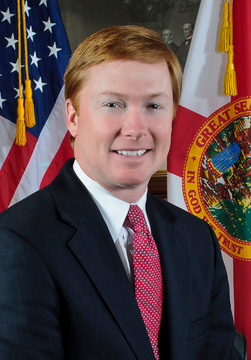 Putnam, who is running for governor next year, said during an interview on Fox 13 in Tampa that protecting people is the priority, but, based on past storms, the powerful hurricane will negatively impact Florida growers.
“The current storm path projections come right up the heart of Florida’s agricultural lands,” Putnam said Friday. “The landscape and nursery businesses in south Dade County, around Homestead. The tropical fruits businesses. Avocados. The citrus and sugarcane industries in South Florida and throughout the interior. Fruit size on grapefruit trees along the Indian River is now of such a size that it is indeed pretty heavy and will undoubtedly be blown off the trees in significant ways.”
Putnam said he will ride out the storm at his home in Bartow.
“I’m hoping we’re not going to notch a fourth hurricane eye over the top of my little town,” Putnam said. “The beautiful trees that were there prior to (Hurricane) Charlie (in 2004), they’re just not the same anymore.”
by The News Service of Florida
Wahoos Win First Championship In Franchise History
September 9, 2017

Pensacola right fielder Aristides Aquino delivered a 400-foot homer and then a single to right field that both put the Blue Wahoos ahead in Friday’s Southern League playoffs.
It was his line drive single in the top of the 12th inning that gave the Pensacola Blue Wahoos its first Southern League championship in its history with a, 5-4, victory over the Jacksonville Jumbo Shrimp in front of 3,689 Friday at Blue Wahoos Stadium.
The players sprinted out to the mound and then all took a knee. After a moment of calm, pandemonium broke out. Pensacola manager Pat Kelly got a bucket of ice cold water dumped over his head. Players rubbed hitting coach Gookie Dawkins bald head with alcohol and poured champagne and beer down pitching coach Danny Darwin’s back. No one escaped without getting drenched with champagne and beer.
Aquino got two chances to win the game and delivered both times. His single drove in left fielder Gabriel Guerrero, his teammate who does a little jig with him after every home run at the top of the dugout steps.
“I don’t have words to explain it,” said a dripping wet Aquino through catcher Chad Tromp who translated for him. “It was an amazing and wonderful year.”
Pensacola first baseman Gavin LaValley and Aquino hit back-to-back home runs to left field in the top of the eighth inning to take the lead for the first time in Friday’s Southern Division playoff game, 4-3.
For LaValley it was his second homer in two games after not hitting one since July 7. The 22-year-old was 4-for-14 in the series with two homers and three RBIs. He finished the season with 20 homers, including his first half with the High-A Daytona Tortugas.
“It feels good to win the playoffs,” LaValley said. “That’s all that matters. It’s the ultimate goal.”
Meanwhile, Aquino set the Pensacola franchise record with 18 homers in a season, surpassing outfielder Juan Duran who blasted 17 in 2014.
Down, 4-3, in the bottom of the ninth inning, Jacksonville rallied when left fielder Austin Dean hit a two out, ground ball single up the middle to drive in catcher Rodrigo Vigil to tie the game, 4-4, and send it into extra innings.
It didn’t seem to matter to Jacksonville that Hurricane Irma was bearing down on Florida’s east coast and requiring the Jumbo Shrimp to play as the home team in Game 3 of the playoffs on Pensacola’s home field. If needed Game 4 and 5 were scheduled to be played in the Biloxi Shuckers’ MGM Park. The Jacksonville team is waiting out the hurricane in Pensacola.
Pensacola won the last three games of the final series with Jacksonville and then swept them in the playoffs, 3-0.
“They had a lot of things they were thinking about,” Kelly said. “But they weren’t about to let us win this game.”
Kelly said he told his team to expect ups and downs in the best-of-five playoff series against Jacksonville.
It was the second championship for Pensacola Blue Wahoos manager Pat Kelly in his 25th season coaching minor league baseball. His other championship came in 1996 with the Washington Nationals Double-A affiliate Harrisburg Senators in the Eastern League. Kelly, who has managed in the Cincinnati Reds organization for 12 years, has taken nine different teams to the playoffs.
The Blue Wahoos, which have played in the Southern League playoffs for three straight years, finally won a Southern League title. It is the first Reds’ Double-A affiliate to win a championship since the Chattanooga Lookouts earned a Southern League championship in 1988.
Besides Aquino another hero of the game was the little used left-handed reliever Andrew McKirahan, who threw two innings for the first time for Pensacola in 10 appearances this season. The 27-year-old missed the 2016 season following his second Tommy John surgery.
The southpaw retired all six Jumbo Shrimp batters he faced, including getting Braxton Lee, who won the Southern League batting crown with a .309 average, to bounce out to second base in the bottom of the 12th inning. McKirahan picked up the win to finish 1-0 with Pensacola.
“That’s the first time I’ve gotten the last out of the season,” said McKirahan, who like many of his teammates experienced his first championship. “I’ve been a reliever all my life and that’s how you dream it up.”
Also instrumental in Pensacola’s first championship was Josh VanMeter, who Kelly played at all four infield positions and left field to keep his clutch hitting in the lineup. VanMeter was 7-11 in the first playoffs of his professional career for a .636 batting average with a homer and four RBIs.
“We had a roller coaster season,” VanMeter said. “It feels great to win it in front of our fans.”
Lee, who was 2-14 in the playoffs, singled to center field to drive in second baseman Alex Yarbrough in the seventh inning to go up, 3-2.
Jacksonville took the lead for the first time in 35 innings against Pensacola when Yarbrough singled in third baseman David Vidal for a 1-0 lead in the second inning. The Jumbo Shrimp tacked on another run to go up, 2-0, when catcher Rodrigo Vigil hit a sacrifice fly to left field to drive in shortstop KC Serna.
Pensacola starting pitcher Austin Ross helped himself out at the plate nailing a line drive to center field with the bases loaded and one out to drive in Aquino to trail Jacksonville, 2-1 in the fourth inning. Pensacola third baseman Arismendy Alcantara then hit a sacrifice fly to short center field that scored shortstop Blake Trahan to tie it, 2-2.
Ross couldn’t stop smiling after the Blue Wahoos won the Southern League championship, which was his first, too. He worked 6.2 innings and gave up three runs on seven hits and three walks. He finished the year 9-0 with a 2.00 ERA, and has now won his last 18 games in a row. The seven-year minor league veteran last loss on July 5, 2016 with the Triple-A Colorado Springs Sky Sox.
“(Manager) PK (Pat Kelly) is awesome,” Ross said. “He’s the best I’ve ever played for. You don’t get to the playoffs very often. It’s tough to win. I’m glad to finish it here.”
Florida Gov’t Weekly Roundup: ‘We Will Get Though This Together’
September 9, 2017
The week started off with the state — and the nation — mesmerized by Hurricane Harvey. But by Friday, Hurricane Irma sent Florida into a frenzy.
As the colossal storm barreled toward the Sunshine State after wreaking havoc in the Caribbean, officials in South Florida ordered massive evacuations.
Gov. Rick Scott shut down schools throughout the state and pleaded for volunteers.
 Panicked evacuees and travelers hogged fuel, water and canned goods, prompting Scott to discourage folks from being greedy gas-wise and leading Agriculture Commissioner Adam Putnam to remind people about old-fashioned tap water and plastic gallon jugs.
The trajectory of a storm packing a wallop bigger than Hurricane Andrew left Floridians glued to the Weather Channel, where meteorologists appeared at times on the brink of panic as Irma churned toward the Florida Keys.
It’s no surprise that Irma and the state’s response overshadowed other news that otherwise might have been the chatter of the capital city.
An appeals court ruled in favor of a tiny North Florida horse track in a case against state regulators, even if the dispute centered on races that involved “tired, reluctant, skittish or disinterested horses moving at a slow pace down the dust-choked path.”
Florida State University decided to review campus statues, markers and names, while the University of Florida relented in its opposition to a speech by white nationalist Richard Spencer.
Controversies in recent weeks about Confederate monuments, racist speeches and the fates of children brought to the country as immigrants have provided evidence of a divided nation.
But the altruism of strangers helping Harvey victims, and the overwhelming numbers of neighbors banding together in advance of Irma, paint a different picture.
The ancient poet Rumi’s advice rings true today, more than ever, especially when hammered by headlines like “Deadly Irma Takes Aim at Florida.”
“Like a sculptor, if necessary, carve a friend out of stone,” he wrote. “Realize that your inner sight is blind, and try to see a treasure in everyone.”
GET OUT NOW
Scott traveled up, down and across Florida, appearing at county emergency operations centers and on national news shows to urge residents and visitors to take Irma seriously.
Public schools, state colleges and universities and state government offices were shut down across Florida on Friday and will remain closed Monday.
Power outages are expected to be widespread from the storm, which is now forecast to run up the state, initially including three of Florida’s most populous counties.
More than 500,000 people have been ordered to evacuate South Florida, and evacuations are being issued for low-lying areas along both coasts.
“This storm is wider than our entire state. It is expected to cause major and life-threatening impacts from coast to coast,” Scott said Friday while at the South Florida Water Management District headquarters in West Palm Beach. “Remember Hurricane Andrew was one of the worst storms in the history of Florida. Irma is more devastating on its current path.”
Scott advised coastal residents to evacuate immediately after being told to do so and to go inland. He also ordered the mandatory evacuation of seven communities — South Bay, Lake Harbor, Pahokee, Moore Haven, Clewiston, Belle Glade and Canal Point — south of Lake Okeechobee.
The U.S. Army Corps of Engineers anticipates excessive winds will push waters from the lake over the Herbert Hoover Dike. The dike itself isn’t expected to be at risk, Scott said in relaying information from the Army Corps.
With fuel at a premium and gridlock on many major highways, hundreds of thousands of people have already left their homes to go to shelters or to travel to northern Florida or to other states.
“I know many of you are stuck in traffic. I’m sure it’s very frustrating, but please be patient,” Scott said. “Evacuations are not convenient, but they are absolutely meant to keep you safe.”
While Scott’s messages to the public were both urgent and stern, he also encouraged Floridians to show compassion to their neighbors.
“We will get through this together,” he said Friday morning.
MONUMENTAL DEBATE
Florida State University President John Thrasher announced Tuesday the creation of a panel of students, faculty, staff and alumni to review campus names, markers, statues and other official recognitions.
The Tallahassee campus is home to a number of statues and memorials, including a three-figure monument commemorating the admission of the first African-American students in the 1960s.
Thrasher, who spoke out strongly after white supremacists led a violent clash over a Confederate statue in Charlottesville, Va., last month, said he is committed to protecting free speech as well as the safety and well-being of FSU’s students and faculty.
“As we seek to become a more inclusive campus for all, it is essential that we continue to engage in dialogue and inquiry with the entire university community,” Thrasher said about the new panel. “We must continue to examine our history in order to collectively build our future.”
The panel will research the statues, names and other recognitions on campus, seeking comments from various constituencies. The group will also determine the “criteria for appropriate naming policies and, if necessary, recommending an appropriate process for renaming campus recognitions,” according to FSU.
Thrasher’s move came days before the University of Florida set a tentative Oct. 19 date for an appearance by Spencer, president of the National Policy Institute, even while decrying the “alt-right” leader’s opinions.
“As a public institution, UF is required by law to make a good faith effort to provide options for a reasonable date, time and campus venue, no matter how much we detest the points of views expressed. As with any event, we also have a responsibility to assess safety and security risks, and will continue to do so until the event,” the university said in a news release Thursday.
Citing security concerns in the aftermath of the deadly Charlottesville event, university President Kent Fuchs last month rejected a request by Spencer to appear Sept. 12 at a campus forum.
But Gary Edinger, a Gainesville First Amendment lawyer, threatened to sue the university on behalf of Spencer, the National Policy Institute, and Cameron Padgett, a Georgia State University student involved in organizing Spencer’s speech.
“This was no doubt a sensitive and difficult issue for the University of Florida, but all citizens should be pleased that the First Amendment was ultimately respected,” Edinger said Thursday.
THE OLD GRAY MARE AIN’T WHAT SHE USED TO BE
Regulators were wrong to try to punish a tiny North Florida pari-mutuel facility that in 2014 turned to slow-motion, two-horse races as it tried to meet the requirements of its state license, a three-judge panel of the 1st District Court of Appeal ruled Tuesday.
The ruling said the state Division of Pari-Mutuel Wagering improperly found Hamilton Downs in violation of its license. The division last year rejected findings of an administrative law judge, who had ruled in favor of the Hamilton County track — but who also described a bizarre scene in which the “races must be seen to be believed.”
“Horses often simply stood at the starting line before slowly plodding down the track,” Administrative Law Judge E. Gary Early wrote last year. “In one instance, a horse actually backed up, until a bystander took it by the lead, thereafter giving the horse a congratulatory slap on the rump when it began to move in a forward direction.”
The legal dispute focused, in part, on the Division of Pari-Mutuel Wagering’s arguments that Hamilton Downs had violated its license because of a race in which betting could not occur. In that race, both of the horses were owned by the same owner — what is known as a “coupled entry.”
Months after the race occurred, regulators filed a complaint alleging that Hamilton Downs had failed to operate all of the scheduled races in its operating license. But the appeals court said regulators failed to prove a violation because Hamilton Downs had run a race — not just a race with betting allowed.
The court also said track owner Glenn Richards had offered to take steps to resolve concerns that racing officials might have had about the “flag drop” race. But it said officials assured him nothing was wrong, and the race was declared official. The Division of Pari-Mutuel Wagering filed the complaint months later.
Hamilton Downs is one of several pari-mutuels across the state that have sought in recent years to add slot machines after voter referendums. Like a track in Gadsden County, it had planned to run controversial barrel races but had to change plans for the 2014 meet after a state rule allowing barrel racing at pari-mutuel facilities was deemed invalid, the appeals court said.
“Resolving that the show must go on, Richards made alternative arrangements,” the ruling said. “He rounded up college students for riders and an elderly herd of untrained horses as their racing steeds. The 2014 meet went off on schedule. Each race consisted of two horses.”
STORY OF THE WEEK: Hurricane Irma took aim at Florida, expecting to make landfall in the southern part of the state on Saturday and move up the peninsula over the weekend.
QUOTE OF THE WEEK: “We cannot save you once the storm hits. … Once there is an evacuation order, get out.” — Gov. Rick Scott, urging residents and visitors to obey evacuation orders.
by The News Service of Florida
FHP: Local Residents Should Use Local Roads, Stay Off I-10
September 8, 2017
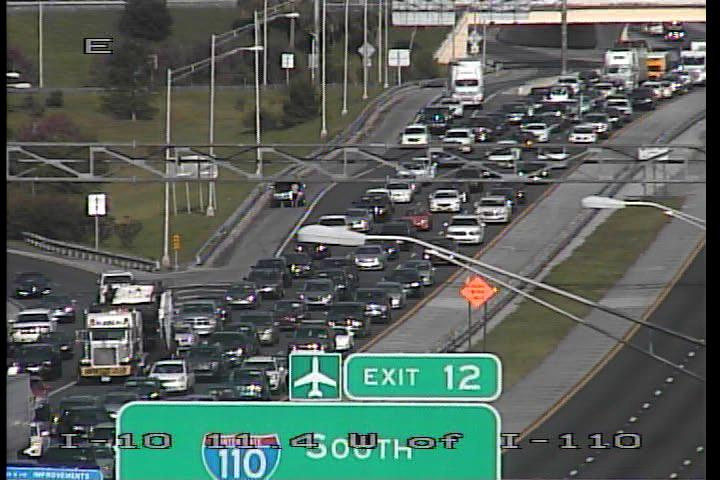
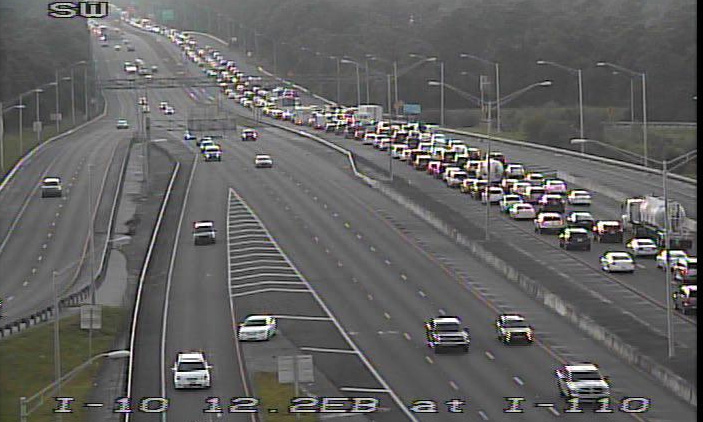
Due to heavy hurricane evacuation traffic, the Florida Highway Patrol is asking that local residents use local roadways for travel when possible. This is in effort to alleviate unnecessary traffic on I-10. Pictured: I-10 westbound just west of I-110 at 5 p.m. Friday. Image for NorthEscambia.com, click to enlarge.
Thomas: Escambia Schools Closed, Many Sporting Events To Continue
September 8, 2017
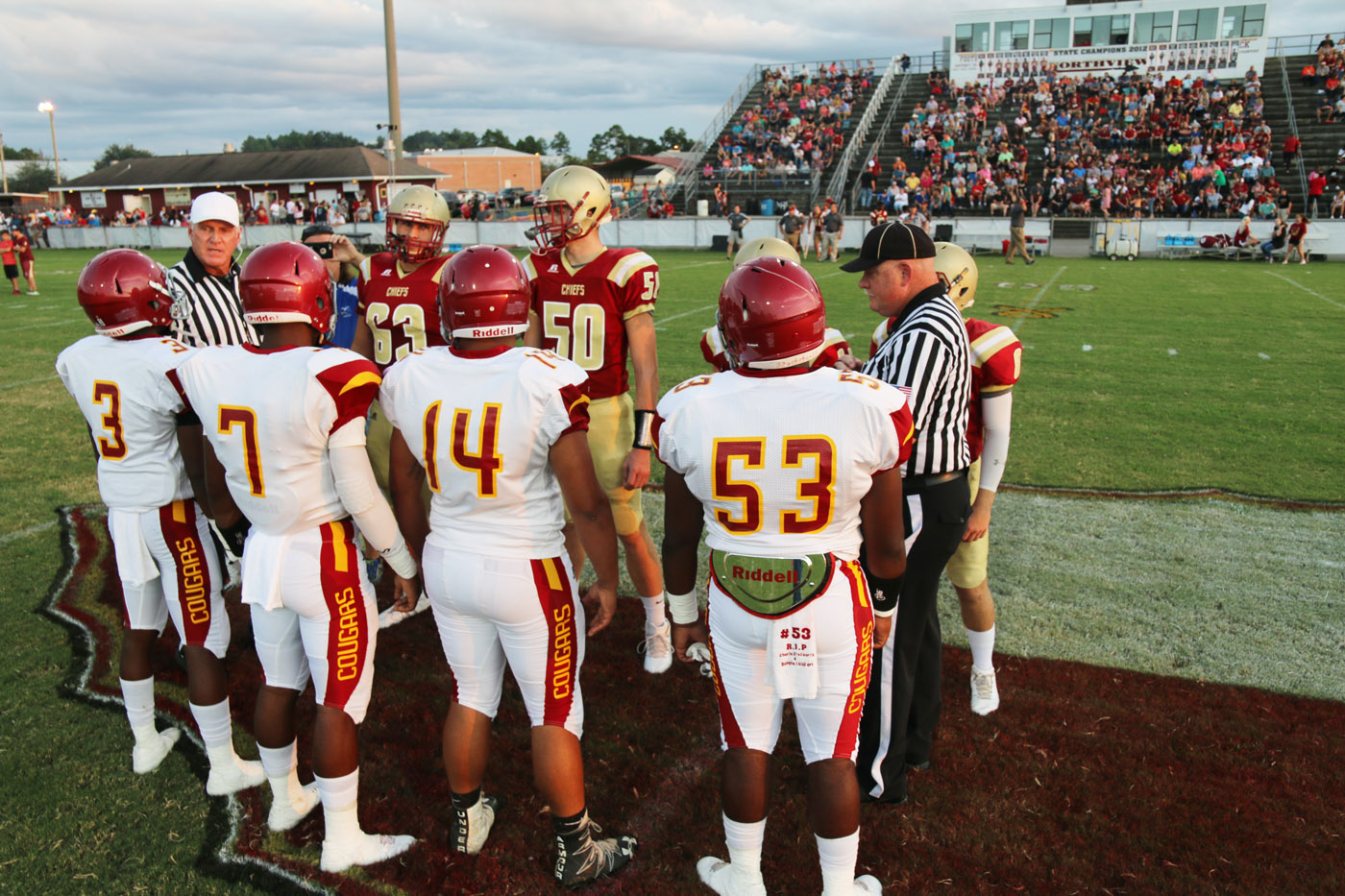
Escambia County School Superintendent Malcolm Thomas has announced that school will be closed on Friday, Sept. 8 and Monday, Sept. 11 to comply with a directive from Governor Rick Scott.
However, all previously scheduled extracurricular activities and sports events will proceed as scheduled this weekend as long as the opposing team’s school district has not cancelled their extracurricular schedule.
“I apologize for the late notice,” said Superintendent Malcolm Thomas. “All Escambia County (FL) public schools and offices will be closed tomorrow, Sept. 8 and Monday, Sept. 11th, per the Governor’s directive. We will continue as many of the scheduled sports and extracurricular activities planned for this weekend as possible. However, we realize some school districts may be canceling weekend events as well as school schedules. ”
The Tate vs Gulf Breeze and the Pine Forest vs Pace football games have been cancelled.
Update: Archbishop Rummel at Escambia was announced cancelled as of Friday morning.
These games will continue Friday night at 7:00 p.m.:
Volleyball: F/JV/V Washington at Escambia
Varsity: West Florida at D’Ibervile
Varsity: Northview at South Walton
Varsity: Pensacola at Booker T. Washington
On Saturday:
Volleyball Varsity Aggie Invitational will be held at Tate
West Florida XC Classic will be held at West Florida High, 7:00 a.m. – 9:00 a.m.
NorthEscambia.com file photo.
Century Correctional Officer Assaulted
September 8, 2017
A correctional officer was recently assaulted at Century Correctional Institution.
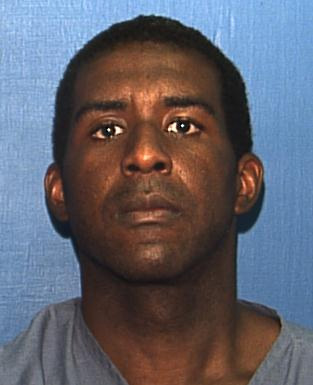 Inmate Andrew Williams assaulted the officer by striking him in the face with a closed fist. Staff responded appropriately, and the inmate was subdued, according to the Florida Department of Corrections.
Medical staff examined the officer and noted injuries. Inmate Williams will receive a disciplinary report for the assault.
Williams was serving a 20 year sentence for first degree murder and shooting or throwing a missile into a building or vehicle.
Escambia County Irma Update — Shelter Opening
September 8, 2017
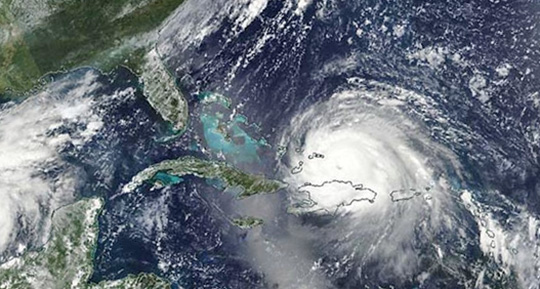
Here is the latest local update from Escambia County on Hurricane Irma:
Escambia County and the American Red Cross are opening a host shelter at the Pensacola Bay Center at 5 p.m. for south Florida evacuees. There are NO evacuations ordered or expected for Escambia County. Further details are below:
Current Situation
- There ARE NO evacuations ordered for Escambia County residents, no matter the location.
- While the storm has tracked more toward the west, our area is still not in the cone of probability. HOWEVER, you do not want you to let your guard down yet. It is vital that our residents take a moment several times a day to monitor the latest information available. IF the storm does track more in our direction, any impacts would most likely be felt sometime the week of Sept. 10.
- Escambia County Emergency Operation Center is at a level 3, or monitoring level. We will continue to closely monitor the situation and through the weekend to provide our residents with the most up-to-date hurricane information.
- The State Emergency Operations Center has been activated to level 1, which is a full-scale, 24-hours-a-day activation.
- The Florida Emergency Information Line has been activated and is available 24/7 for families and visitors at 1-800-342-3557.
- Visit www.floridadisaster.org to find information on shelters, road closures, and evacuation routes.
- Sign up for Escambia County updates at www.MyEscambia.com and clicking the subscribe button.
- Learn what to do before, during and after by downloading our latest disaster guide at myescambia.com.
Weather Update from National Weather Service/National Hurricane Center
- Irma is an extremely dangerous Category 4 hurricane and will likely make landfall in Florida as a major hurricane. It will bring life-threatening wind to much of the state.
- Irma continues to track to the WNW at 16 mph and a turn to the northwest is expected on Saturday afternoon and evening. Based on the latest forecast track, this would take Irma northwest through the Florida peninsula Sunday and Monday.This track will keep the main impacts well east of the area.
- However, breezy to windy conditions can be expected Sunday into Monday and a wind advisory may be required for parts of the area.
- Keep in mind that some fluctuations in track and intensity are still possible.
Host Shelters
- As requested by the state, Escambia County and the American Red Cross are opening a host shelter at the Pensacola Bay Center located at 201 E. Gregory St. starting at 5 p.m.
- The shelter is for south Florida evacuees. There are currently NO EVACUATIONS ordered for Escambia County.
- Evacuees with pets and special needs will be accommodated at the Bay Center.
- Parking is on the Alcaniz Street side.
- Additional shelters will be opened as needed and directed by the state of Florida.
- The Escambia County Equestrian Center is being open as a host shelter for evacuees’ horses. Stalls and RV sites are available at a nominal cost on a first come, first served basis. For more information, visit https://myescambia.com/our-services/parks-and-recreation/equestrian-center/equestrian-center-as-a-storm-shelter.
- Visit www.floridadisaster.org to find information on shelters, road closures and evacuation routes.
Hotels/Lodging
- The Escambia County area hotels are at 92-98 percent capacity through the weekend. Currently, the interstate accommodations are the most occupied, with openings on Pensacola Beach.
- Visit Pensacola has information available at https://www.visitpensacola.com/emergency-updates/
- Through VISIT FLORIDA’s partnership with Expedia, Expedia.com/Florida has been activated to provide accommodations availability information for visitors, residents and first responders.
- VISIT FLORIDA’s Welcome Centers have transitioned to emergency information centers to help direct evacuees with the most up to date information.
Gas/Fuel
- Gov. Scott has taken several actions to help mitigate fuel shortages, read more at http://www.flgov.com/2017/09/07/gov-scott-were-working-aggressively-to-get-more-fuel-to-gas-stations/
- To check fuel availability online, go to https://gasbuddy.com
Pensacola International Airport
- While many southern and eastern Florida airports are closed, Pensacola International Airport is currently open and will remain open as long as Hurricane Irma does not severely impact our area.
- Passengers with scheduled travel to impacted areas are strongly encouraged to monitor the status of their flight by frequently visiting their airline’s website.
Trash Pickup
- There are currently no changes at this time in trash pickup scheduling with ECUA or the city of Pensacola.
County Offices
- Escambia County offices will be open on Friday, Sept. 8. Employees who have childcare issues should contact their supervisors.
Schools
- Gov. Rick Scott is directing all public K-12 schools, state colleges, state universities and state offices to close Friday, Sept. 8 – Monday, Sept. 11.
- ACT tests scheduled to be given in any Escambia County public schools tomorrow, Saturday, Sept. 9th, have been cancelled.
State Offices
- Governor Rick Scott has directed all state offices in all 67 Florida counties to close Friday, September 8 – Monday, September 11
Volunteering & Donations
- Volunteer Florida is coordinating with volunteer organizations across the state and has partnered with the American Red Cross to provide shelter operations training to volunteers and AmeriCorps grantees. Floridians who would like to volunteer can register at http://redcross.org/volunteer
- Gov. Rick Scott activated the Florida Disaster Fund to support individuals who are impacted by Hurricane Irma. The Florida Disaster Fund helps provide financial support to Florida’s communities in times of disaster. To make a contribution, please visit www.FloridaDisasterFund.org or text DISASTER to 20222 to make a one-time donation of $10.
Traffic/Roads
- The Florida Department of Transportation , working with the Florida Highway Patrol, has implemented a limited Emergency Shoulder Use plan for Hurricane Irma evacuations on I-75 at Wildwood to the Georgia state line. Motorists should only use the left shoulder when directed by law enforcement and highway signs.
- The Florida Department of Transportation is suspending construction work and lane closures throughout the state in preparation for evacuation routes.
- The toll at the Bob Sikes Toll Plaza onto Pensacola Beach remains lifted, as do tolls around the state.
Storm Preparation
- Review/make your family plan. Need help? Read more on how to care for your family here.
- Know your zone. Look up your address online at http://bit.ly/2vGzR1R. You can search by address or parcel number and then look for the “Emergency Management Report.” The address function is self-populating, so type slowly and then choose the address from the drop down list.
- Restock your disaster kit supplies/get a kit. if we aren’t impacted by Irma, your preparations won’t be a waste, as we haven’t yet reached the height of hurricane season. You’ll be ready for the next storm. Click here to see our latest disaster guide shopping list.
- Stay Informed – A tropical system can develop very quickly. Be sure you take time every day to monitor the local media. Escambia County also has several tools available for our residents. Learn more here. Monitor local media and legitimate online and social media sources like Escambia County Emergency Management, US National Weather Service Mobile, NOAA NWS National Hurricane Center and Florida SERT.
- Prep your yard - As we are entering the height of hurricane season, it is also recommended that residents take a few minutes to inspect their home and yard. Check for, fix or remove loose items on your home and sheds. Clear loose and clogged rain gutters and down spouts. Trim trees and shrubs around your home.
Other Services/Information
- Veterans from storm-impacted areas who require immediate assistance may contact the VA Health Resource Center Disaster Hotline at 1-800-507-4571
- The Florida Department of Children and Families has released September Supplemental Nutrition Assistance Program benefits to current recipients who have not yet received them to assist with Hurricane Irma preparations.
- Visit http://www.floridadisaster.org to find information on shelters, road closures, and evacuation routes.
- Floridians can text FLPREPARES to 888777 in order to receive text alerts from the Florida Division of Emergency Managment.
Mike Hill Looks To Make House Comeback
September 8, 2017
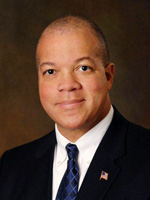 Former state Rep. Mike Hill, R-Pensacola, has opened a campaign account to try to return to the House in 2018, according to information posted Thursday on the Florida Division of Elections website.
Hill, who was first elected to the House in 2013 but ran unsuccessfully for the Senate last year, plans to run in Escambia County’s House District 1. Rep.
Clay Ingram, R-Pensacola, cannot seek re-election next year in the district because of term limits. During his stint in the House, Hill represented nearby District 2.
Cantonment Republican Rebekah Bydlak and Pensacola Democrat Vikki Garrett also have opened accounts to run for the Ingram seat. Bydlak raised $50,027 for the race in August, according to a finance report posted on the state website.
by The News Service of Florida
Price Gouging Hotline Activated as Hurricane Irma Approaches
September 8, 2017
Floridians bracing for the pounding winds and rains of powerful Hurricane Irma are complaining at a historic clip about price gouging and shortages of fuel, Attorney General Pam Bondi said Thursday.
“Our phones are blowing up as they have been all night long and continue to do,” Bondi said. “That’s a good thing, because it’s helping us protect you.”
The state’s price-gouging hotline — 1-866-9-NO-SCAM — had received more than 3,000 calls tied to Irma as of Thursday morning, with some 1,100 coming in Wednesday night.
“We’ve never seen our hotline like this in history,” Bondi said. “However, we’ve never seen a storm this bad. This is bigger than Andrew; people have to understand. To people who survived Andrew and people who lost loved ones during Andrew, this is a much bigger storm.”
The majority of the calls have come from Broward, Miami-Dade and Palm Beach counties. Most are about inflated prices for food, water and ice, but people are also calling to complain about fuel shortages, Bondi said.
“The worst call I got today, and this was the worst of the worst, was a 24 pack of six-ounce bottles of water, for $72 … $72,” said Martin Green, a call center operator. “That was in Jupiter today.”
Mandatory evacuation orders have been issued for barrier islands and low-lying mainland areas of Miami-Dade and Broward counties.
Gov. Rick Scott, who traveled Thursday morning to emergency operations centers in Hialeah and West Palm Beach, activated 3,000 additional members of the Florida National Guard, bringing the number to 4,000. Another 3,000 are to be activated by Friday.
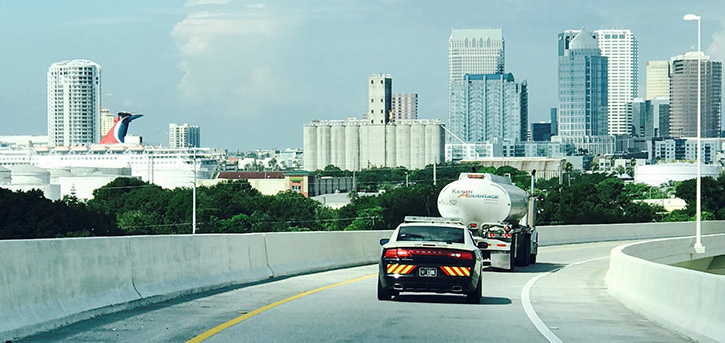
Scott also tweeted a photo of a Florida Highway Patrol car traveling behind a tanker truck on an interstate, noting the FHP is escorting “fuel trucks across FL to ensure supplies are quickly refilled.”
Scott added in a release that he’s been in contact with federal officials, fuel retailers and oil companies to address the demand-created shortages of fuel.
“We have asked fuel companies to identify ships that are in route to our ports so we can arrange military escorts to get them here faster,” Scott said. “To further expedite fuel delivery, I have directed state police to escort fuel trucks to gas stations along evacuation routes.”
Regulations related to truck weights and driver restrictions have been waived for fuel trucks.
To help keep gas stations open longer in evacuation zones, Scott added the state’s offering to arrange police escorts for station employees.