

Florida Gov’t Weekly Roundup: Ready To Settle Down?
January 22, 2017
There was uncertainty in the air this week in Washington, but things were settling down a bit in Florida.
 In Florida, by comparison, some long-term disputes were either being settled or moving in that direction. The Florida Supreme Court rejected a challenge to the state’s de facto school-voucher system, paving the way for the program to continue paying private school tuition for mostly low-income children. The implementation of the state’s new medical marijuana constitutional amendment was being hammered out — though there remains some controversy about how exactly to do that.
At the same time, some new disputes were also beginning. The Senate, for example, took the first steps toward overhauling the state’s college system — something that will provide plenty of work for the $2 million-plus worth of lobbyists that colleges and universities pay for.
The uncertainty in Florida is only likely to grow in the weeks ahead. The March 7 opening day of the Legislature is less than two months away.
SCHOLARSHIPS SAVED
For more than two years, a lawsuit challenging Florida’s Tax Credit Scholarship Program has worked its way through the court, with the state’s largest teachers union pushing for the system to be overturned and parents and students holding demonstrations to “save our scholarships.”
On Wednesday, the Florida Supreme Court sided with those who want to salvage the program, upholding lower court rulings saying the Florida Education Association and its allies didn’t have the required legal standing to challenge the law creating the scholarships.
In a brief order signed by four justices — Charles Canady, Barbara Pariente, Ricky Polston and Peggy Quince — the court said it would decline to hear the case. Justice R. Fred Lewis dissented, as he supported holding oral arguments. Chief Justice Jorge Labarga and Justice Alan Lawson did not take part in the order.
The union and its allies had argued that the program drains money that otherwise would go to public schools and is unconstitutional for the same reasons that the Florida Supreme Court struck down a previous voucher program.
The current system allows corporations to claim tax credits for donations to organizations that then cover private-school tuition for mostly low-income students.
“The Florida Supreme Court’s decision on the case is also a powerful reminder to entrenched special interests that when policymakers work hand-in-hand with Florida’s families, students win,” said former Gov. Jeb Bush, who signed a bill creating the program in 2001. “It is my hope that opponents of Florida’s efforts to help our most vulnerable students will stop impeding successful reforms and join us in ensuring all students have access to excellent educational options.”
But in a statement issued after the ruling, FEA President Joanne McCall said the union hasn’t changed its mind on the underlying question and would look for other ways to take on the program legally.
“Who is allowed to challenge the constitutionality of the tax credit vouchers?” McCall asked. “This ruling, and the decisions by the lower court, don’t answer that question. We still believe that the tax credit vouchers are unconstitutional, but we haven’t had the opportunity to argue our case in court.”
Meanwhile, supporters of the broad-based school choice movement got another legal victory, when an appeals court upheld the constitutionality of a law allowing the State Board of Education to overturn local denials of charter-school applications.
The 5th District Court of Appeal turned down arguments by the Palm Beach County School Board that the law infringes on the power of local school boards to decide on the creation of charter schools, which are public schools typically run by private entities.
“The Florida Constitution … creates a hierarchy under which a school board has local control, but the State Board supervises the system as a whole,” said the eight-page ruling, written by appeals-court Judge Alan Forst and joined by judges Carole Taylor and Mark Klingensmith. “This broader supervisory authority may at times infringe on a school board’s local powers, but such infringement is expressly contemplated — and in fact encouraged by the very nature of supervision — by the Florida Constitution.”
GREEN TAPE
To borrow an old phrase about the weather: If you don’t like the state of Florida’s medical marijuana laws, wait awhile. It’s bound to change.
On Tuesday, the Florida Department of Health released a first whack at the rules for a voter-approved constitutional amendment loosening the state’s laws on medical marijuana. By Thursday, a key state senator had released his own ideas about how the industry should be regulated.
The approach by state health officials would essentially maintain current vendors’ stranglehold on the medical marijuana industry — poised to become one of the nation’s top money-makers — by applying current Florida laws and rules to the constitutional amendment approved in November.
That didn’t set well with those who pushed Amendment 2 in the fall.
“The rule is basically ignoring the text of the constitutional amendment at almost every point of the way,” Ben Pollara, campaign manager of the political committee backing the amendment, said in a telephone interview Tuesday.
While medical marijuana was already a legal treatment for terminally ill patients in Florida, Amendment 2 authorized marijuana for a much broader swath of patients. More than 70 percent of voters supported the amendment, after a similar proposal narrowly failed to capture the requisite 60 percent approval two years earlier.
Sen. Rob Bradley, a Fleming Island Republican who was instrumental in the passage of some of the state’s pre-amendment medical marijuana laws, soon enough filed a proposal calling for a growing number of pot licenses and making it easier for doctors to order the treatment for patients.
Under Bradley’s bill, the state could see another 20 marijuana operators — nearly quadruple the seven current licensed “dispensing organizations” — once the number of patients registered for the treatment reaches 500,000.
It also differs with the health department’s rule on how to define “other debilitating medical conditions” — beyond those specifically listed in the constitutional amendment — eligible for the treatment.
The agency’s draft would leave it up to the state Board of Medicine to decide which patients would qualify for treatment under the unspecified conditions.
Bradley’s proposal does not include any language that would restrict doctors’ ability to decide for themselves if patients qualify for marijuana treatment. But his bill does include a definition of “chronic nonmalignant pain,” something not addressed in the amendment, as “pain that is caused by a debilitating medical condition or that originates from a debilitating medical condition and persists beyond the usual course of that debilitating medical condition.”
“There is a question about how we handle generalized chronic pain. This clarifies that,” Bradley, R-Fleming Island, told The News Service of Florida on Thursday.
2 + 2 MILLION
Senate President Joe Negron, R-Stuart, has long talked about boosting the state’s university system. He’s also mentioned reining in Florida colleges’ abilities to market themselves as a place to get four-year degrees.
The Senate’s plan to help out the universities has already been filed. This week brought the other side of the equation: a bill placing the colleges under a separate 13-member governing board and imposing new restrictions on offering baccalaureate degrees under a Senate bill filed Thursday.
The “College Competitiveness Act of 2017″ (SB 374) — sponsored by Senate Education Chairwoman Dorothy Hukill, R-Port Orange — would place Florida’s 28 state colleges, which are now under the Florida Board of Education, under a newly created State Board of Community Colleges.
The board would operate similarly to the Board of Governors that oversees Florida’s 12 state universities. It would also appoint a chancellor to oversee the newly renamed Florida Community College System, which is now known as the Florida College System.
“Community colleges are vital to Florida’s K-20 public education system,” Negron said. “With a distinct mission, separate from the role of our K-12 and state university systems, our nationally recognized community colleges deserve their own coordinating board to advocate for the success of the system.”
The bill would limit the growth of baccalaureate degrees at the colleges by imposing a cap, between 2 percent and 4 percent, based on the number of students enrolled in upper-level classes at each school.
The colleges and universities involved in the discussion of the Senate’s several proposals will apparently not suffer from a lack of representation. The schools and related organizations are spending at least $2 million a year on lobbyists, according to a review of new disclosure records required by the House.
The lobbying-fee totals will rise as firms continue to file copies of their contracts with public agencies, including colleges, cities, counties, school boards, hospitals and special districts, under a new rule initiated by House Speaker Richard Corcoran, R-Land O’ Lakes.
A not-all-inclusive roundup of some of the details: $775,000 in annual contracts with nine state universities; another $627,000 from seven of the 28 state colleges, with disclosures pending for at least six other colleges; and contracts with student associations and the Association of Florida Colleges, which represents all 28 of the lower-level schools.
STORY OF THE WEEK: The Florida Supreme Court turned down an appeal in a challenge to the state’s Tax Credit Scholarship Program, allowing the voucher-like system to continue.
QUOTE OF THE WEEK: “Early on the big difference is how much media attention you have for everything you do.”—Gov. Rick Scott, on what differences fellow businessman-turned-politician Trump might encounter as he enters the White House. Scott clashed frequently with the media over access in the first few months of his term.
by Brandon Larrabee, The News Service of Florida
Postal Service Raises Stamp Prices
January 22, 2017

The Postal Service has raised the price of its first-class “forever” postage stamps by 2 cents as of Sunday.
The price of a stamp to mail a one-ounce letter has now increased from 47 cents to 49 cents. Postcards, letters being mailed to international destinations, and heavier letters won’t be affected by the price change.
The new price reverses a 2-cent cut in April 2016.
Photo for NorthEscambia.com, click to enlarge.
Bondi Goes To Court For Tobacco Payments
January 22, 2017
Attorney General Pam Bondi has asked a Palm Beach County circuit court to resolve a dispute about whether two tobacco companies have improperly avoided paying tens of millions of dollars to the state under a landmark 1997 settlement with the tobacco industry.
Bondi’s office filed a motion to enforce the settlement in a dispute that stems from R.J. Reynolds Tobacco Co. selling the Winston, Kool and Salem cigarette brands to the tobacco company ITG Brands. The dispute also includes Maverick cigarettes, which were transferred to ITG amid a merger between R.J. Reynolds and Lorillard Tobacco Co.
The 1997 settlement required certain major tobacco companies, including R.J. Reynolds, to make annual payments to the state in exchange for legal protections.
In the motion, Bondi’s office contends that payments based on Winston, Salem, Kool and Maverick cigarettes improperly stopped after the brands became part of ITG. The motion said the state is owed more than $45 million.
“The sale of major, pre-existing tobacco brands to another company for billions of dollars does not cause the payment obligations to vanish like a puff of smoke,” Bondi said in a prepared statement.
A spokesman for Reynolds American, the parent company of R.J. Reynolds, said the company will fight the state’s claims, but he couldn’t comment directly on the active litigation.
“We believe we have strong legal and factual defenses to the motions filed today in this case and will vigorously defend against them,” Reynolds spokesman Bryan D. Hatchell said in an email.
A representative for ITG didn’t immediately respond to a request for comment.
The settlement resolved Florida’s 1995 lawsuit over the unlawful marketing and sales of cigarettes by R.J. Reynolds and other major tobacco companies.
The settlement required the tobacco companies to annually pay several hundred million dollars to Florida — the state received $378 million in 2014 — in exchange for a release from liability for past and future damages tied to the sale and marketing of cigarettes.
After the transfers of the four cigarette brands, Bondi’s office contends Reynolds has refused to include money from sales of the four brands in its annual payment to Florida, while ITG has similarly refused despite having agreed to assume obligations regarding the cigarettes.
“While the settling parties provided a mechanism for annual payment amounts to be decreased if the aggregate shipments fell, they necessarily intended that any such decrease would reflect lower consumer demand for these cigarettes — and thus lower public health care costs for the state,” the court document said. “The settling parties could not have intended and did not intend that the amounts paid to the state to cover the public health care costs from consumption of these cigarettes could be eliminated, wholly or partially, by a settling defendant’s transfer of iconic cigarette brands to another entity, a conveyance for which it received several billion dollars.”
Without any enforcement of the settlement, the motion argues, the state could be out $30 million a year in future payments. Money from the settlement is supposed to cover health care expenses tied to cigarettes.
Groundbreaking Held For New Kingsfield Elementary School
January 21, 2017
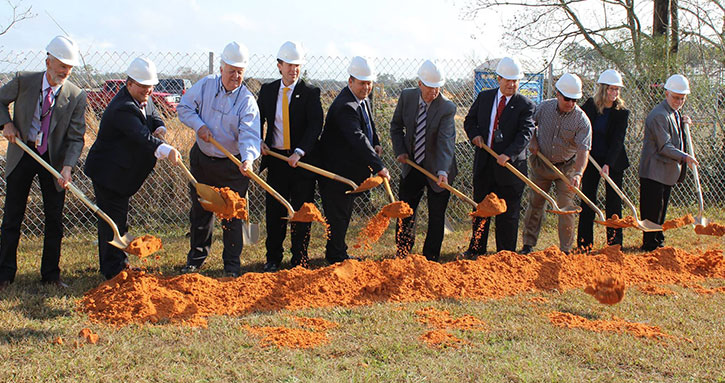
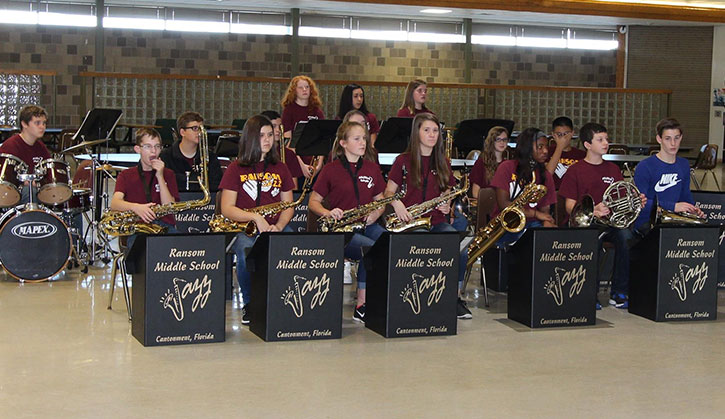
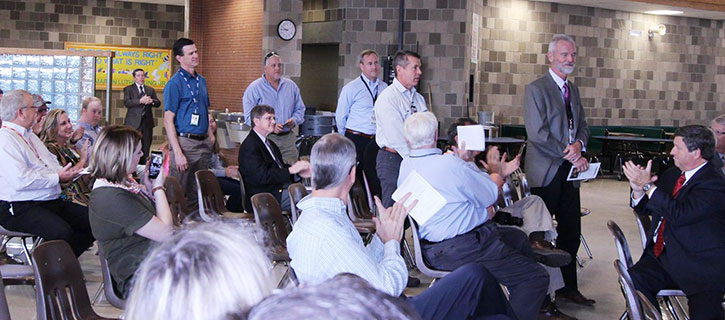
A groundbreaking ceremony was held Friday morning for the new Kingsfield Elementary School.
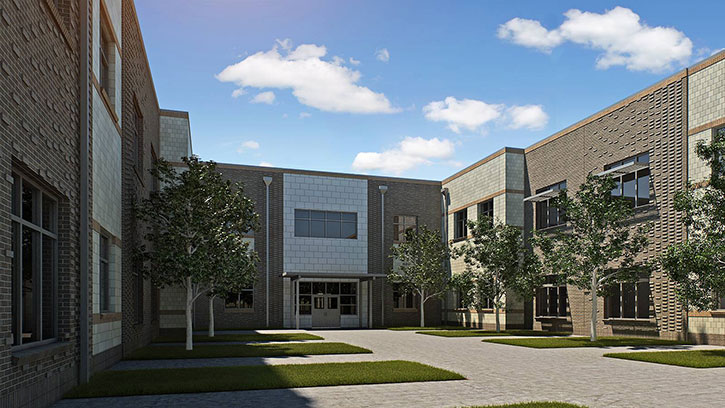
Lord & Son will build the new $25 million Kingsfield Elementary at 900 West Kingsfield Road next to Ransom Middle School. The 135,000 square foot school will serve 800 students.
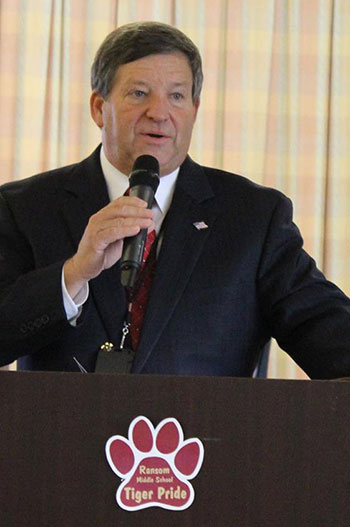 “Our objective is to give relief to Pine Meadows and Beulah and help the growth that is coming to the mid-Escambia County area,” said Escambia County Superintendent of Schools Malcom Thomas. “Most of that growth is being spurred by Navy Federal. There are housing developments going up in the area and more planned developments in next three to five years. We know some of those homes will be families with children.”
The school is being funded by Local Option Sales Tax dollars and is scheduled to open in the fall of 2018.
Photos by Kim Stefansson for NorthEscambia.com, click to enlarge.


Telemarketer Gets 90 Months Federal Prison For Fraud
January 21, 2017
Gary R. Tomey II, 47, of Pace, was sentenced Friday to 90 months in prison after he was found guilty of conspiracy and mail fraud during a two-week jury trial. He was also ordered to pay a $1,219,129.46 forfeiture money judgment and $6,677 in restitution.
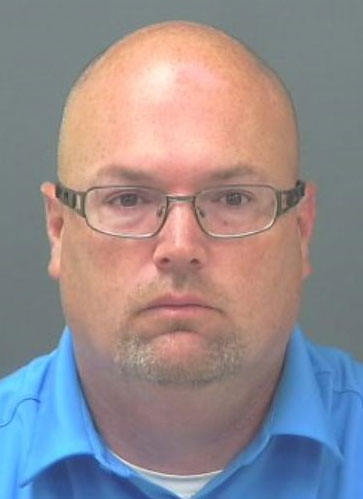 Tomey owned and operated Children and Family Services Inc. (later called Children’s Charitable Services Inc.), which fraudulently solicited charitable donations by calling donors in Alabama, Arkansas, Florida, Indiana, Mississippi, Ohio, and Tennessee. Tomey instructed his employees to falsely tell donors that 100% of their donation went to the charity and that they were volunteers. They were also told to say the charity was located in and only helped the donor’s home state. However, the employees were paid a commission-based hourly wage and worked from a call center in Milton, Florida. Of the more than $1.2 million raised in donations, only 1.5% actually went to a charitable cause. The rest paid wages, business expenses, and Tomey’s own personal expenses.
Tomey’s sentence was enhanced because he committed his fraud through telemarketing and because he victimized more than 10 people over the age of 55.
This case resulted from an investigation by the Federal Bureau of Investigation. Assistant United States Attorney Alicia H. Kim prosecuted the case.
“Fraudsters who exploit the charitable spirit of the American people, and especially those who prey upon the generosity of our seniors, can count on a thorough scrutiny and aggressive prosecution by this office,” said United States Attorney Canova.
“When individuals misuse funds intended for a charitable purpose, it harms all donors and honest non-profit organizations,” said Charles P. Spencer, Special Agent in Charge of the FBI Jacksonville Division. “The FBI is committed to investigating and rooting out this type of corruption, whether it happens in a public office or a non-profit organization.”
Escambia 4-H Members Attend Presidential Inauguration
January 21, 2017
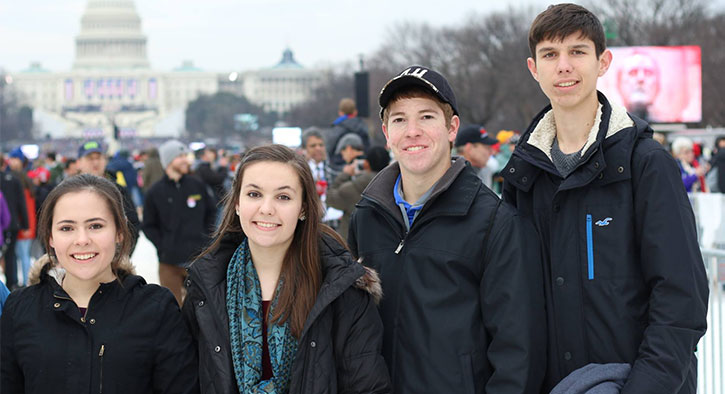
Fifty youth — including three from Escambia County — rom the Florida 4-H youth development program attended the presidential inauguration in Washington, D.C., to learn more about U.S. democracy and civic engagement.
“4-H believes in learning by doing, and this is an opportunity for our young people to be really engaged in our political process at the highest level,” said Chris Decubellis, associate state program leader for Florida 4-H youth development.
Representing Escambia County 4-H were Michelle Tinker, Danielle Tinker and Dillon Conti from Barrineau Park 4-H.
Pictured above (L-R) Michelle Tinker and Danielle Tinker from Escambia County 4-H, Steven Lommers flrom Florida 4-H, and Dillon Conti from Barrineau Park 4-H at the presidential inauguration in Washington on Friday. Photo for NorthEscambia.com, click to enlarge.
Escambia Attorney And Accountant Face Prison For Federal Tax Crimes
January 21, 2017
An Escambia County accountant and attorney is facing up to five year in prison for federal tax crimes.
 James R.J. Scheltema, 56, of Pensacola, has pled guilty to filing false tax returns and tax evasion.
Between 2010 and 2013, Scheltema, a certified public accountant and attorney, received restricted stock as compensation for his legal and accounting services. He initially reported no compensation on his 2011 and 2012 individual income tax returns, despite receiving substantial compensation from stock issuance and the sale of stock. Scheltema also failed to file timely 2013 individual and corporate income tax returns for two companies he owned and operated.
Scheltema tried to evade notice of stock sales by instructing checks be made payable to his wife and to one of the companies he owned, rather than to himself. After being notified of the IRS investigation, Scheltema filed amended 2011 and 2012 returns and a delinquent 2013 return, which were still false.
The sentencing hearing is scheduled for April 10 at 3 p.m. For each charge of filing false tax returns, Scheltema faces a maximum of three years in prison. For the tax evasion charge, he faces a maximum of five years in prison.
This case resulted from an investigation by the Internal Revenue Service—Criminal Investigation.
Weekend Gardening: Tips for January
January 21, 2017

Here are gardening tips for the month of January from the IFAS Extension Service:
Flowers
- Refrigerated bulbs such as tulip, daffodil and hyacinth should be planted in prepared beds.
- Start seeds of warm season flowers late this month in order to have transplants in March.
- There’s still time to transplant some cool season annuals such as carnations, foxglove, pansies, petunias and snapdragons.
- Re-fertilize cool season flowerbeds, using a liquid or dry form of fertilizer. Be careful not to apply excessive amounts and keep granules away from the base of stems.
- Finish dividing crowded perennials. Don’t wait until spring for this job.
- Plant bare root roses immediately after they are purchased.
Trees and Shrubs
- Plant trees and shrubs. This is an ideal time of year for transplanting larger specimens.
- Plant bare root plants such as deciduous ornamental shrubs and trees.
- Prune dormant shade trees, if needed.
- Stick hardwood cuttings of fig, grape, honeysuckle, Althea, Catalpa, Forsythia and Wisteria.
Fruits and Nuts
- Apply dormant oil spray to peach, plum, nectarine and other deciduous fruit trees. This practice is necessary when growing the stone fruits in locations along the Gulf Coast. Note: This applies to the flowering peaches and cherries since they are susceptible to the same pests as their fruiting cousins.
- Plant bare root deciduous fruit trees
- Prune dormant fruit trees if needed
Vegetable Garden
- Start seeds of warm season vegetables late this month in order to have transplants in March.
- Lime (if needed), and begin preparing vegetable gardens for the spring planting.
- Cool season vegetables that can still be planted in the garden are: beets, broccoli, cabbage, carrots, cauliflower, celery, Chinese cabbage, kale, kohlrabi, leek, mustard, bunching onions, parsley, English peas, Irish potatoes, radishes and turnips.
- Irish potatoes can be started from January through March by planting seed pieces 3 to 4 inches deep in rows. Always purchase certified seed potatoes.
Lawns
- Check soil moisture during winter and water as needed.
Three Tate Aggies Named To Florida All-State Class 6A Football Team
January 21, 2017
 Three Tate High School Aggies made the Florida All-State Class 6A football team.
First Team Offense - P – Evan Legassey 6-3 190 Sr.
Second Team Offense – UT – Jake Henry 5-11 180 Sr.
Honorable Mention - DB – Patrick Palmer 5-11 175 So.
Molino Toddler Airlifted After Attack By Two Dogs
January 20, 2017

A Molino toddler was injured when attacked by two dogs Thursday.
The child reportedly entered an open gate into a neighbor’s property on Rumford Road and was attacked by two English bulldogs, according to Joy Tsubooka, Escambia County spokesperson. It was not immediately clear, she said, if the child opened the gate or it had been left open by someone else.
The toddler was airlifted to a Pensacola hospital as a trauma alert.
The two dogs were surrendered by the owner and are now in the custody of Escambia County Animal Control. An investigation into the incident is ongoing. Further details haven’t been released.
NorthEscambia.com file photo.