

Bratt Elementary Names Students Of The Month
November 2, 2017
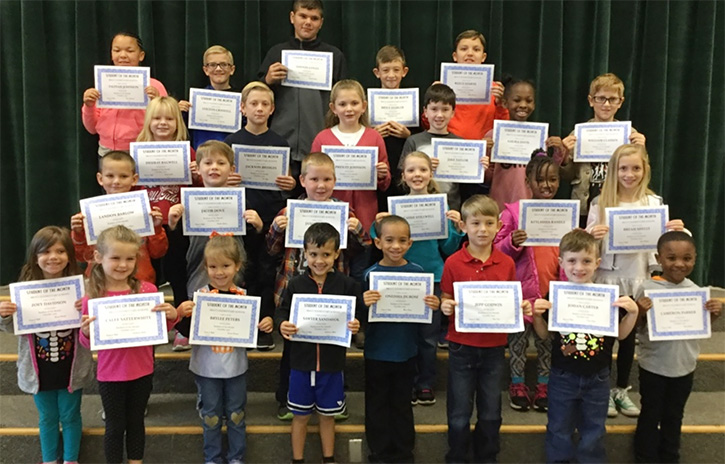
The following students were named Students of the Month for October at Bratt Elementary School.
Pre-K
- Caleb Madison
- Cameron Parmer
Kindergarten
- Sawyer Sandavol
- Brylee Peters
- Zoey Davidson
- Jonah Carter
- Calee Satterwhite
First Grade
- Keylashia Randle
- Landon Barlow
- Jaxon Byrd
- Jepp Godwin
Second Grade
- Breah Shelly
- Jacob Dove
- Oneisha Dubose
- Cassie Stillwell
- Camden Jacobson
Third Grade
- Jake Taylor
- Presley Johnson
- William Classen
Fourth Grade
- Aakira Davis
- Reece Starns
- Jackson Bridges
- Desiray Bagwell
Fifth Grade
- Taliyan Johnson
- Colton Criswell
- Bryce Stabler
- Ashton Covan
In addition, Oneisha Dubose and Desiray Bagwell were selected to represent Bratt Elementary as Escambia County Students of the Month for October.
Photo for NorthEscambia.com, click to enlarge.
Brewton Teen Sentenced For Deadly Hit And Run
November 2, 2017

An Alabama teen that struck a middle school student with her vehicle in 2016 before leaving the scene was sentenced to prison Wednesday.
Donnavia Zandra Williams pleaded guilty to manslaughter for hitting and killing 12-year-old Devon Spencer.
 Williams was sentenced to 20 years in state prison by Judge Bert Rice. Under the sentencing, the first five years are mandatory to be followed by five years probation. If Williams completes both the prison sentence and probation without any disciplinary action or reincarceration, the remaing 10 years of her sentence will be waived.
Williams was 17 in February of 2016, when the deadly crash occurred. She told police her windshield was icy, and she’d thought she hit a mailbox.
Devon Spencer, 12, and a friend were walking on Williamson Street, traveling from an apartment complex to W.S. Neal Middle School. The friend was not seriously injured, but Devon died a few days later at Sacred Heart Hospital.
Williams was 17 in February of 2016, when the deadly crash occurred. She told police her windshield was icy, and she’d thought she hit a mailbox.
Devon Spencer, 12, and a friend were walking on Williamson Street, traveling from an apartment complex to W.S. Neal Middle School. The friend was not seriously injured, but Devon died a few days later at Sacred Heart Hospital.
Pictured top: Devon Spencer.
Escambia Seeks Volunteer To Serve On Disability Awareness Committee
November 2, 2017
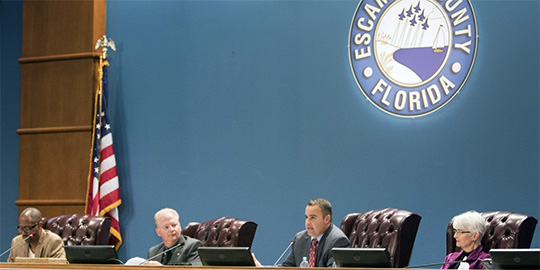
The Escambia County Board of County Commissioners is seeking county residents interested in volunteering for an “at-large” appointment to the Escambia County Disability Awareness Committee, which was established by the board in 2013.
Escambia County Residents interested in serving on the committee are asked to submit a resume and letter indicating their desire to serve by the close of business Wednesday, November 8. Letters and resumes should be submitted to Judy Witterstaeter, Program Coordinator, Board of County Commissioners, P.O. Box 1591, Pensacola, Florida 32502, or emailed to jhwitter@myescambia.com.
Resumes submitted for consideration are subject to public records requests and are included in Escambia County Commission meeting information, including the agenda and official meeting minutes.
The purpose of the committee is to make recommendations to the board of county commissioners regarding issues relating to the disabled community and any other issues requested by the board. The committee is composed of seven voting members, and all members of the committee must be electors of Escambia County. Each commissioner on the board of county commissioners appoints one member to the committee, and each member serves concurrently with his or her appointing commissioner’s term. The board collectively appoints two at-large members, who each serve a four-year term.
There are four meetings scheduled each year on the third Wednesday of the month. Meetings begin at 3 p.m. and typically last until 5 p.m. Special meetings may be scheduled if needed. There is no travel required.
FHP Identifies Man Killed In Fiery Santa Rosa Crash
November 2, 2017
The Florida Highway Patrol has identified a man killed in a fiery high-speed crash Wednesday night in Santa Rosa County.
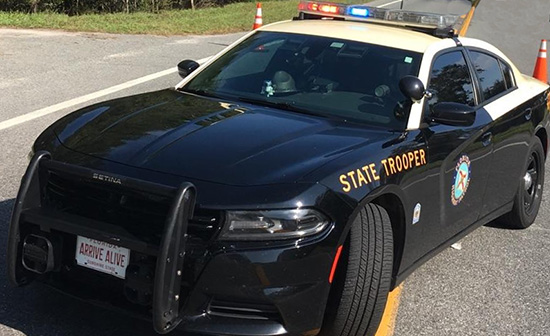 The FHP said 30-old Darius Hunter of Pensacola was driving a two-door Nissan east on Highway 90 near Woodbine Road about 10:40 p.m. He was traveling at a high rate of speed when he passed a slower vehicle, left the roadway and traveled down the shoulder of the road. After striking several trees, the vehicle caught fire.
Hunter was pronounced deceased on scene. This investigation is ongoing.
The FHP is currently seeking a dark colored sedan that may have been racing Hunter when the crash occurred. Anyone with information about this incident is asked to contact CPL L. Slick of the Florida Highway Patrol at (850) 471-6927.
Florida Businesses To Get Worker’s Comp Rate Cut
November 2, 2017

State Insurance Commissioner David Altmaier has ordered a 9.8 percent decrease in the premiums businesses pay for workers’ compensation insurance beginning next year.
He also ordered the National Council on Compensation Insurance to include in all future recommended rate filings a “quantitative analysis” of the impact that eliminating attorney-fee caps have had on the workers’ compensation system. NCCI is an organization that files recommended rates on behalf of insurance companies.
In a final order Tuesday, Altmaier rejected a recommended 9.6 percent rate reduction filed by NCCI and ordered it to file by Nov. 7 a slightly larger 9.8 percent reduction.
The Office of Insurance Regulation said a 2 percent profit and contingencies provision in the NCCI filing was “excessive” and ordered it lowered to 1.85 percent.
In a statement, NCCI said it’s in the process of reviewing its filing to comply with the order by Nov. 7.
Workers’ compensation is a no-fault system meant to protect workers and employers. It is supposed to provide workers who are injured on the job access to medical benefits they need to be made whole. Those who are injured for at least eight days also are entitled to indemnity benefits, or lost wages. In exchange for providing those benefits, employers generally cannot be sued in court for causing injuries.
Florida businesses paid nearly $3.8 billion in workers’ compensation premiums in 2016, up from about $2.8 billion in 2012. The costs for the mandatory coverage are the 33rd highest in the nation, according to NCCI.
Bill Herrle, executive director of the National Federation of Independent Business-Florida, said small-business owners will benefit under Altmaier’s order.
“Any rate reduction is welcomed news,” Herrle said. “We have the confidence in the insurance commissioner that the rate reduction is merited.”
Altmaier’s near 10-percent reduction is more conservative than what the group Florida Workers’ Advocates proposed at a public hearing last month. Stephen Alexander, an actuary for the association, testified that rates should be reduced by an average 15.4 percent.
Nevertheless, the reduction in 2018 rates is in stark contrast to a 14.5 percent increase that was approved last year. That hike went into effect in December 2016 and was filed to reflect two Florida Supreme Court rulings as well as increases in the rates paid to health providers who treat injured workers.
The 2016 filing, NCCI said, was a “law only” filing, reflecting changes to the system. The 2017 filing was based on experiences for policy years 2014 and 2015 as they were valued at year-end 2016.
In Tuesday’s order, the Office of Insurance Regulation directed NCCI to include in its future recommended rate filings a detailed analysis of the impact of Castellanos v. Next Door Company, a 2016 Florida Supreme Court ruling that struck down caps on fees for attorneys who represent injured workers.
“The analysis may include alternative data sources and should examine changes to the Florida workers’ compensation market that are attributed to or observed as a result of the recent court decision,” the order said. “These changes include, but are not limited to, reopening of claims from older years, changes in reserves or payment patterns, changes to claim closures or settlement rates, changes to claim frequency and severities, increasing attorney involvement and fees paid to attorneys.”
Florida Workers’ Advocates President Mark Touby in a statement said he was pleased that Altmaier recognized deficiencies in the existing rate process.
“It is tremendously troubling that NCCI has admitted that last year’s 14.5 percent rate increase was not based on any relevant data, but was instead based on market projections. The fact that we are now facing a significant rate reduction raises the question of whether last year’s hasty rate increase was justified — or alternatively, whether it was an avenue to over-collect premiums from Florida businesses based upon NCCI’s myth that there was an unfunded liability. Either way, this process is in serious need of reform, and we are pleased that Commissioner Altmaier has recognized the deficiencies in the existing NCCI process,” the statement said.
NFIB’s Herrle is confident that NCCI”s analysis will show the elimination of the fee caps will increase attorney involvement in the system and, therefore, drive up rates.
“We’re OK waiting to get our I-told-you-so’s on that one,” he said. “We believe that unrestricted attorneys’ fees will eventually catch up with us.”
by Christine Sexton, The News Service of Florida
Autopsy: Evers Died From Drowning, Heart Disease Contributed
November 1, 2017
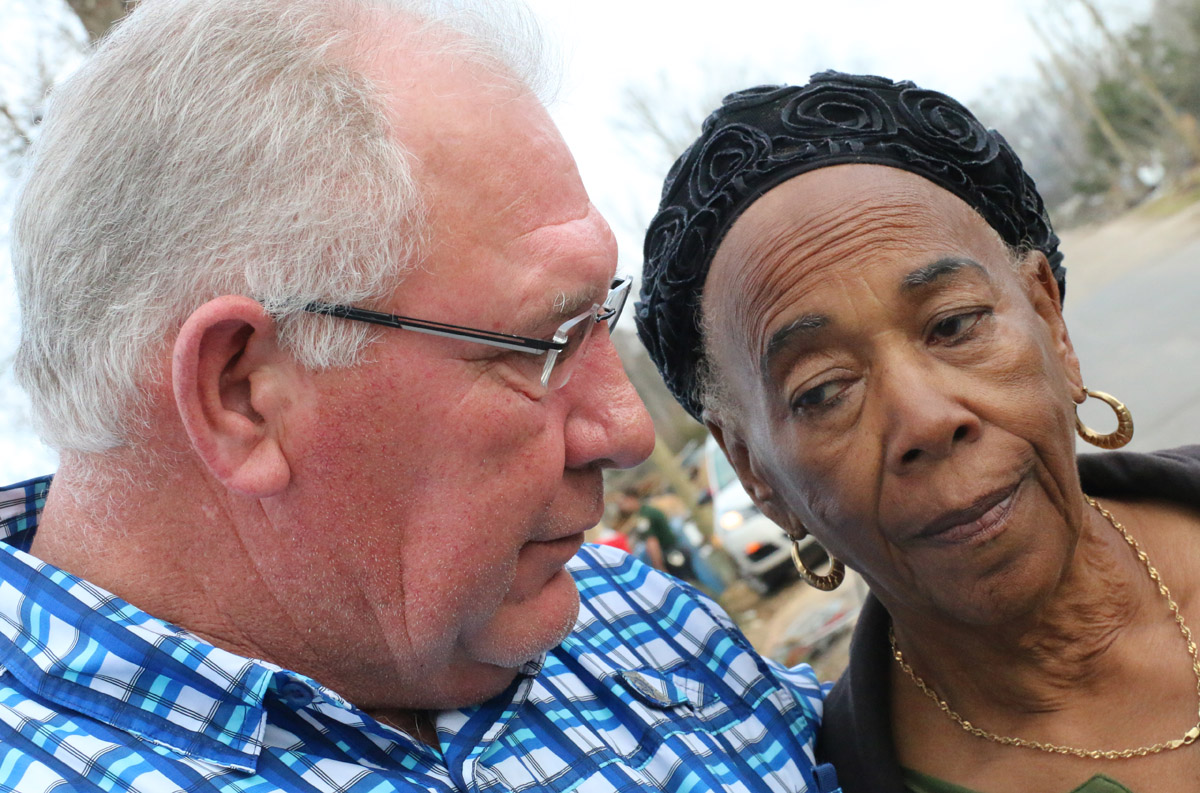
An autopsy report has been released showing that former state Sen. Greg Evers drowned after crashing his pickup truck off a bridge and into a creek not far from his home on August 21, possibly as the result of a heart problem.
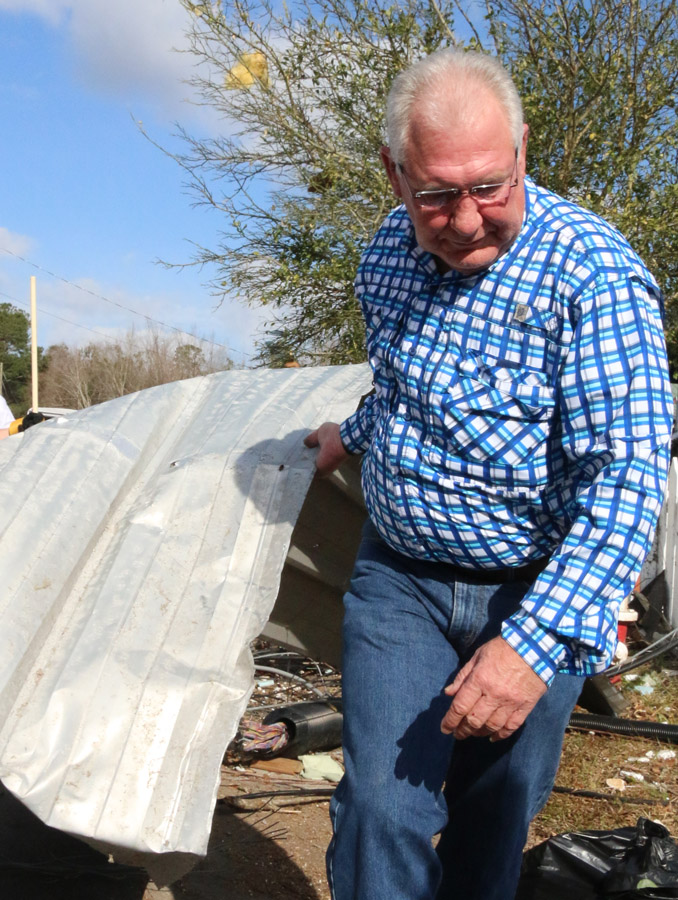 The autopsy, conducted by Dr. Cameron Snider of the First Judicial Circuit Medical Examiner’s Office, lists the official cause of death as drowning, The autopsy report states that arteriosclerotic cardiovascular disease contributed to Evers’ death.
According to the National Heart, Lung and Blood Institute, atherosclerosis is a disease in which plaque builds up inside arteries and can lead to narrowing of the arteries over time, leading to a heart attack, stroke or death.
The Florida Highway Patrol said Evers ran off Griffith Mill Road near Baker sometime late in the day August 21. He apparently missed a curve and his vehicle was found submerged in Penny Creek after going through a guardrail.
Evers was partially ejected though a broken windshield when the truck landed in the creek. Evers and the vehicle were found the following day.
A native of Milton, Evers, a Republican, served nine years in the Florida House before his election to the Senate in 2010. Evers left his Senate seat last year to make a bid for the U.S. House but lost the Republican primary to U.S. Rep. Matt Gaetz.
Related: Greg Evers Remembered As Champion For Florida, North Escambia
Pictured top. Sen. Greg Evers consoles a victim in the days following an EF-3 tornado in Century. Pictured inset: Evers removes debris out of the roadway on Front Street in Century. Pictured below: Evers signs a letter from the Northwest Florida Legislative Delegation encouraging Gov. Rick Scott to release funding for Century tornado victims. NorthEscambia.com photos, click to enlarge.

Century Kitchen Fire Causes Minor Damage
November 1, 2017
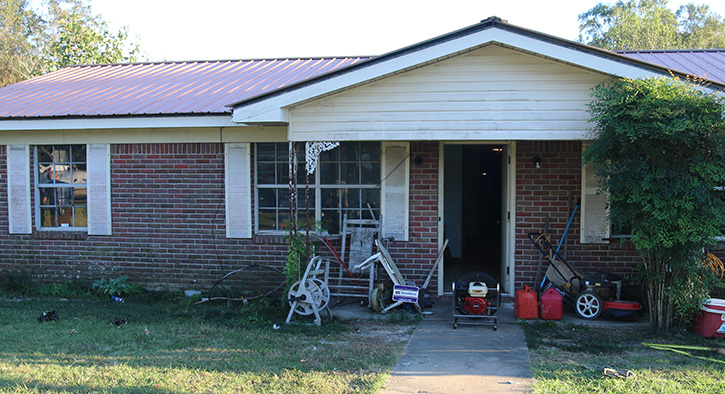
Fire caused minor damage in a Century home Tuesday afternoon.
Firefighters responded to a smoke alarm at a home on Hilltop Road and found smoke coming from the brick house. The fire was contained to the kitchen area and quickly extinguished.
The fire reportedly began when an unattended pot on the stove boiled dry and melted a plastic item of some sort that was being heated in the pot. There were no injuries reported.
NorthEscambia.com photos, click to enlarge.
FDOT: Weekly Traffic Alerts
November 1, 2017

Drivers will encounter traffic variations on the following state roads in Escambia and Santa Rosa counties as crews perform construction and maintenance activities.
Escambia County
· Nine Mile Road (State Road (S.R.)10/U.S. 90A) Widening from Beulah Road to Pine Forest Road- Eight Mile Creek Road, south of Nine Mile Road, will be reduced to one lane from 6 a.m. to 8 p.m. Tuesday, Oct. 31 as crews install drainage pipe. Traffic flaggers will be on site to safely direct drivers through the work zone.
· Interstate 10 (I-10)/U.S. 29 Interchange Improvements Phase I- Drivers will encounter the following traffic impacts on I-10 and U.S. 29 near the interchange (Exits 10A and 10B) from 8 p.m. to 6 a.m. Tuesday, Oct.31 through Thursday, Nov. 2 as crews perform construction activities:
· Alternating lane closures east and westbound I-10 and north and southbound U.S. 29.
· Intermittent closure of the U.S. 29 south to I-10 eastbound ramp and the U.S. 29 north to I-10 eastbound ramp. Traffic will be detoured on U.S. 29 to access I-10 eastbound.
· Intermittent closure of the I-10 westbound to U.S. 29 south ramp (Exit 10A). Traffic will be detoured to Exit 10B.
· Alternating lane closures on the I-10 westbound to U.S. 29 north ramp (Exit 10B).
· I-10 Widening from Davis Highway to the Escambia Bay Bridge-This week drivers will continue to encounter alternating east and westbound lane closures between Davis Highway (Exit 13) and Scenic Highway (Exit 17) and on Scenic Highway near the I-10 interchange from 7 p.m. to 6:30 a.m. as crews perform construction activities. In addition, I-10 eastbound will be intermittently reduced to two lanes during the day as crews perform paving work.
· U.S. 29 Widening from I-10 to Nine Mile Road- Drivers traveling U.S. 29 and Nine Mile Road will encounter traffic pattern changes from 8 p.m. to 6 a.m. as follows:
· Nine Mile Road at the U.S. 29 overpass: The nightly eastbound traffic shift onto the westbound inside travel lane continue as crews prepare the area for construction of the support column for the new center bridge deck.
· U.S. 29 between I-10 and 9 1/2 Mile Road: Drivers may experience alternating lane closures as crews perform drainage operations.
· S.R. 742 (Creighton Road) Construction Improvement Project from east of Davis Highway to Scenic Highway– Intermittent and alternating lane closures between Davis Highway and Scenic Highway from 8:30 p.m. to 5:30 a.m. continue as crews perform milling and paving operations, curb replacement, sidewalk repairs, and Americans with Disabilities Act upgrades.
· Nine Mile Road (S.R. 10/U.S. 90A) Widening from Pine Forest Road to U.S. 29- Alternating lane closures continue Untreiner Avenue as crews perform jack and bore operations.
· U.S. 98 (S.R. 30) Pensacola Bay Bridge Replacement – Alternating east and westbound lane closures on Bayfront Parkway between 14th Avenue and the bridge from 8 p.m. to 5 a.m. this week through Saturday, Nov. 4 as crews work on drainage improvements. On Tuesday, Oct. 31, westbound lane restrictions will be in effect from 11 p.m. to 5 a.m.
· S.R. 292 (Pace Boulevard) Driveway Construction- Northbound traffic on Pace Boulevard can expect lane closures at Jordan Street from 8 p.m. Thursday, Nov. 2 to 5 a.m. Friday, Nov. 3 as crews perform activities associated with driveway construction.
· I-10 at W Nine Mile Road Utility Work Pacing Operations- Utility crews will perform work on the Navy Federal Reconductor project over I-10 at Nine Mile Road Thursday, Nov 2. Motorists may encounter minor delays from 8 p.m. Thursday, Nov. 2 to 1 a.m. Friday, Nov. 3 as law enforcement assist with two 15-minute traffic pacing operations.
Santa Rosa County
· I-10 Widening from Escambia Bay Bridge to Avalon Boulevard (Exit 22) – Widening efforts on I-10 and reconstruction of the Avalon Boulevard overpass continues. Alternating I-10 lane closures will be in effect from 8 p.m. to 6 a.m. through Friday, Nov. 3. Drivers can also expect lane restrictions on Avalon Boulevard, near the I-10 interchange.
· S.R. 87 Multilane from Eglin AFB Boundary to Hickory Hammock Road – Traffic between County Road 184 (Hickory Hammock Road) and the Eglin AFB boundary will remain restricted to loads less than 11-feet wide through completion of the project in late 2018.
Drivers are reminded to use caution, especially at night, when traveling through the construction zone, and to pay attention for workers and equipment entering and exiting the work area. All activities are weather dependent and may be delayed or rescheduled in the event of inclement weather.
Thousands Attend Fall Festivals, Halloween Events (With Gallery)
November 1, 2017

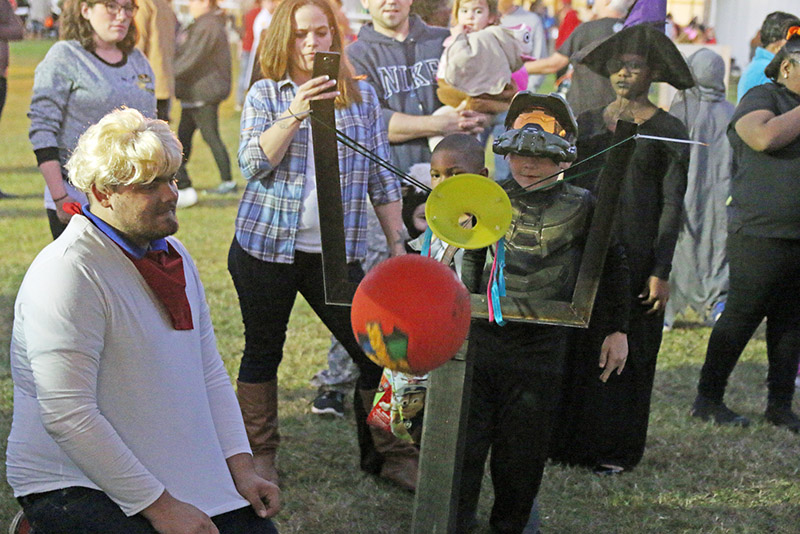
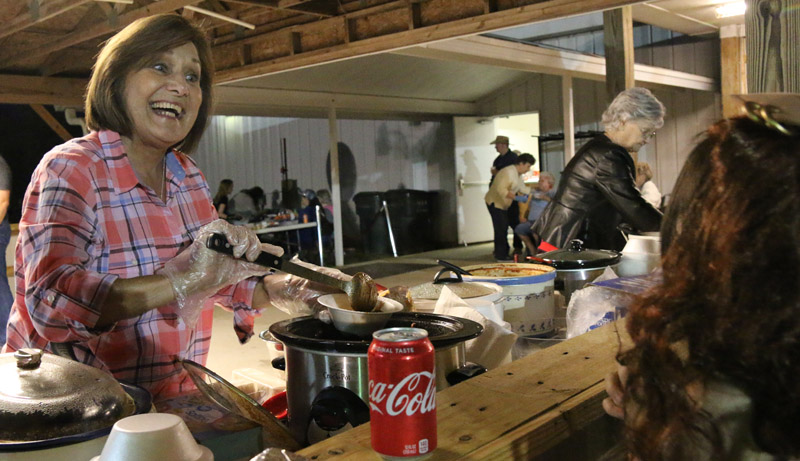
Thousands of people attended fall festivals and Halloween events across the North Escambia area Tuesday night.

One of the largest was the annual community-wide fall festival at Victory Assembly of God on Highway 29 near Molino. The event was designed to provide a safe activity for attendees from across the community. The festival featured a variety of games, a bounce house, a hayride and lots of free food and candy.
For a photo gallery, click here.
Pictured: Scenes from the annual community-wide fall festival at Victory Assembly of God in Molino. NorthEscambia.com photos, click to enlarge.

Jennifer Luker Named Ernest Ward Middle Teacher Of The Year
November 1, 2017

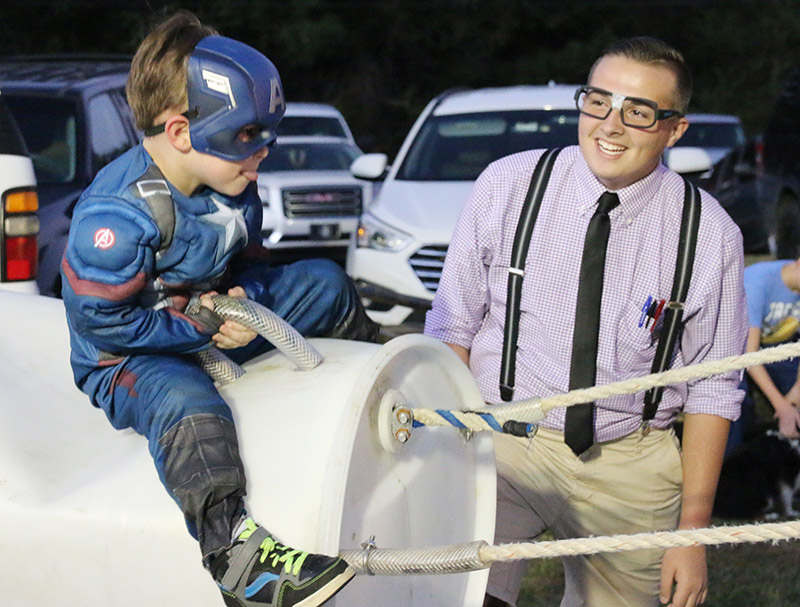
Jennifer Luker has been named Teacher of the Year at Ernest Ward Middle School.
Luker is a 2001 graduate of Northview High School. She holds a bachelor’s degree in elementary education from the University of West Florida in 2006 and started the first of her 12 years teaching. She taught at the elementary level for four years, obtaining her master’s degree in educational library media. She started teaching at Ernest Ward in 2010, where she has taught math, science, language arts and history.
Luker and her husband Jonathan have one son, Noah.
Photos for NorthEscambia.com, click to enlarge.