

International Paper In Cantonment Names New Mill Manager
October 20, 2017
International Paper announced Scott Taylor has been named mill manager of International Paper’s Pensacola Containerboard and Pulp Mill in Cantonment.
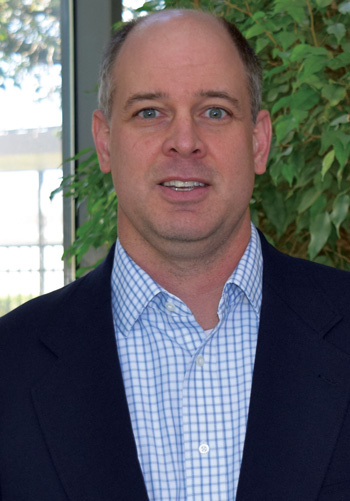 In his new position, Taylor will have overall leadership responsibility for the mill’s safety and environmental performance, people engagement, sustainable operations and community stewardship.
Most recently, Taylor was International Paper’s manager of Technical Services for its Containerboard business located at the company’s global headquarters in Memphis. Taylor joined IP in 2002 at the company’s Franklin, VA, Mill. He has worked in several manufacturing and technical leadership roles of increasing in responsibility throughout his career with the company.
“My family and I are looking forward to relocating to Northwest Florida,” said Taylor. “I’m excited to join such an outstanding Pensacola team and become part of a great community.”
In a related move, former Pensacola Mill Manager Brett De Jong has been promoted to International Paper’s manager of Investments for its Containerboard business. In his new position, De Jong will be responsible for leading the implementation of the strategic capital investments for IP’s Riverdale Mill Containerboard Machine conversion in Selma, AL. He and his family will continue to reside in the Pensacola area.
De Jong joined International Paper in 1997 with International Paper’s Global Technology group in Cincinnati, Ohio. In his years with IP, he has held various roles with increasing leadership responsibility in technology and at IP Mills in the U.S. Since 2012, De Jong had been the mill manager in Cantonment.
“I have thoroughly enjoyed my time with the Pensacola team, as well as being part of an exceptional community,” said De Jong. “I am leaving a talented team in great hands with Scott. I look forward to hearing about the mill’s many accomplishments in the future.”
“Brett has done excellent work leading the Pensacola team and positioning the mill for ongoing success,” said Roman Gallo, IP’s vice president, Manufacturing, Containerboard. “Scott’s manufacturing and technical experience will be an asset to the mill. I am confident he will provide the leadership needed to help the Pensacola team to remain a safe operation and reach another level of sustainable performance.”
Photos: A Beautiful Early Morning At Lake Stone
October 20, 2017

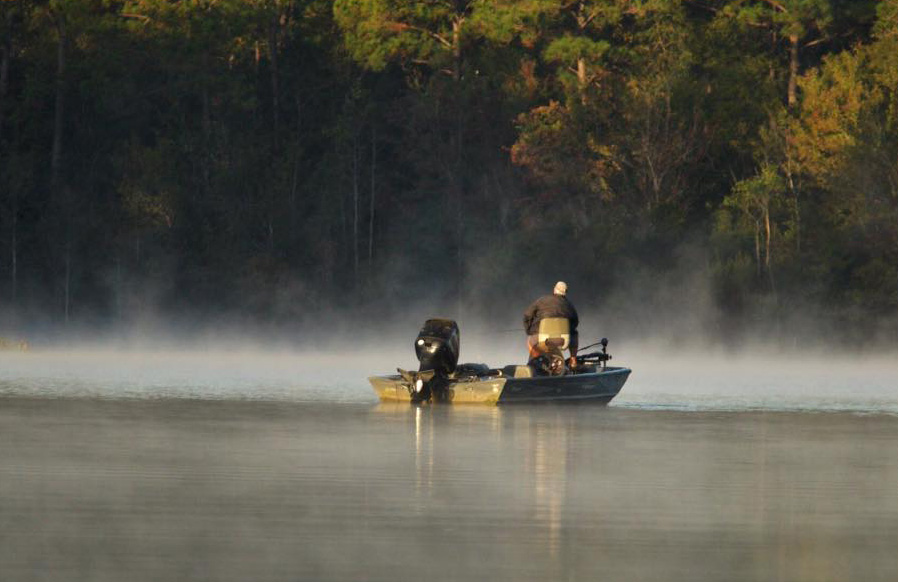
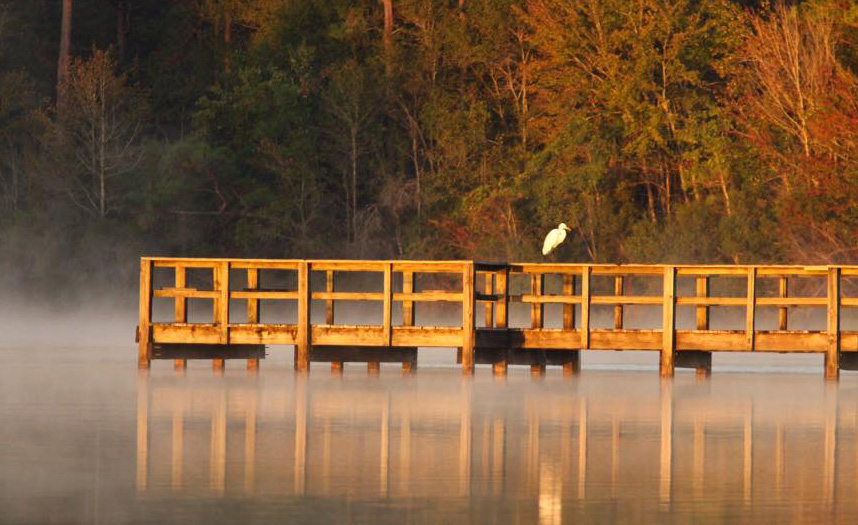
Pictured is early Thursday morning at Lake Stone on West Highway 4, just outside Century.
Lake Stone Campground is a 100-acre campground and boat ramp facility . The campground has 77 campsites for everything from big RV rigs to tents. Recently updated to accommodate the more modern and much larger RV’s, Lake Stone is the county’s only facility located on a fresh water lake.
Lake Stone facilities include a boat ramp (gasoline engines are not allowedon Lake Stone), indoor public use building, a playground, showers, restrooms, fishing pier, security lights, electrical and water hookups, a sewage dump station, picnic areas and the beautiful lake.
Photos by Ditto Gorme for NorthEscambia.com, click to enlarge.

NWS: Expect Warmer, Drier Winter Months
October 20, 2017
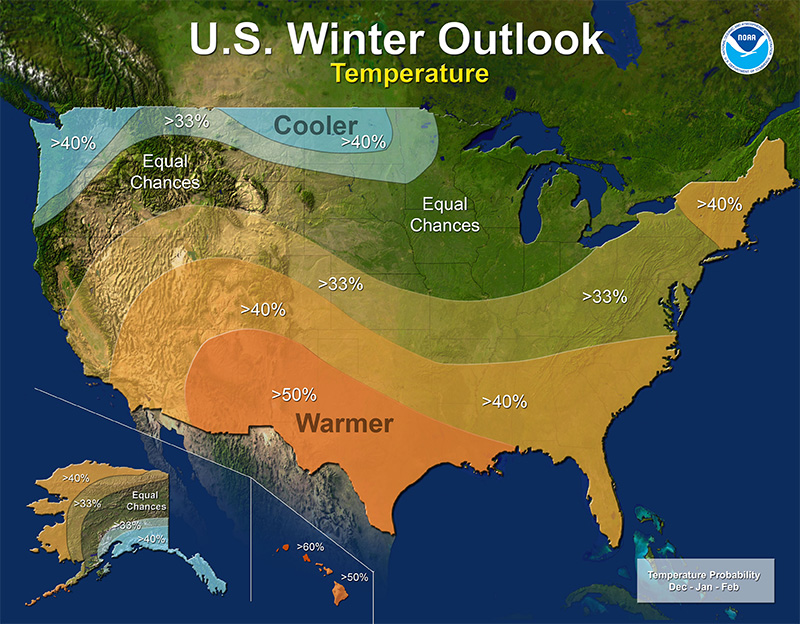
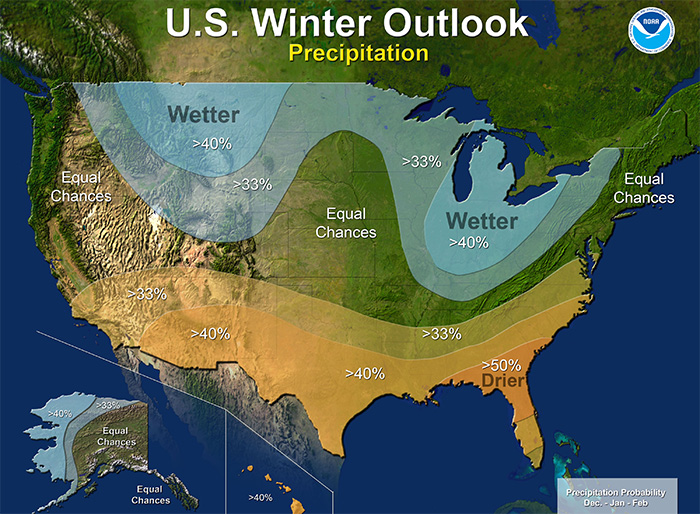
North Escambia residents can expect a warmer, drier than normal winter, according to forecasters.
The National Weather Service has issued their Winter Weather Outlook for December, January and February. It indicates a 55 to 65 percebt probability of La Niña conditions over the continental United States. That normally includes a more northward aligned polar jet over the central United States and a warmer and drier winter over the southerns states, according to the National Weather Service in Mobile.
Here are the normal average monthly highs, lows and precipitation at Pensacola for the winter months:
Pensacola -
Dec: 62.6/44.4 and 4.55″
Jan: 60.5/42.2 and 4.63″
Feb: 63.8/45.5 and 5.06″
Warrant Signed In Atmore Against Steve Nodine, Former Mobile Commissioner
October 20, 2017
An arrest warrant has been issued in Atmore for former Mobile County Commissioner Stephen Nodine after he allegedly contacted a woman there in a harassing manner.
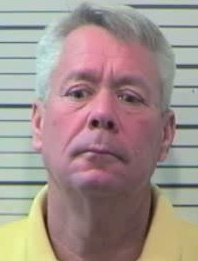 Atmore Police Chief Chuck Brooks said Nodine allegedly sent several text messages on Wednesday to an Atmore woman and she filed a criminal complaint against him Thursday morning. Brooks said the third degree domestic harassment warrant is a misdemeanor charge that would be heard in Atmore Municipal Court, if Nodine is arrested.
“We will try to get him to come in,” Brooks said, adding that police believe he is currently in Florida or Louisiana.
A “petition for protection from abuse”, was filed in Escambia County (AL) Circuit Court on Thursday by a woman who claimed she had been in a date relationship with Nodine and she was now fearful that she would become the victim of abuse.
“Defendant texted me on several different occasions to let me know ‘I’m in Atmore’ after contacting several of my friends disparaging me. He has in the past been accused of murder of his ex-girlfriend Angel Downs. I am fearful of what he can do,” she wrote on the petition. She listed Nodine’s address as being in Jupiter, FL, on the paperwork.
In May 2010, Nodine resigned his post as a Mobile county commissioner after the shooting death of his girlfriend, Angel Downs. He was arrested for her murder, but his trial ended with hung jury. Nodine did serve about three years total in prison after pleading no contact to perjury and gun charges.
Florida Workers’ Compensation Rate Cut Eyed
October 20, 2017
Fewer workers are filing workers’ compensation claims, helping lower the costs Florida employers will pay for insurance next year.
How big of a reduction in rates will be decided by Florida Insurance Commissioner David Altmaier, who held a rate hearing Wednesday in Tallahassee.
 The National Council on Compensation Insurance, which proposes rates on behalf of all workers’ compensation carriers, has proposed an overall average 9.6 percent reduction in premiums for 2018.
“It’s one of the largest decreases in the last 10 years,” Jeff Eddinger, a senior division executive for NCCI, told Altmaier and five high-ranking staff members from the Office of Insurance Regulation. State Insurance Consumer Advocate Sha’Ron James also attended the meeting.
He said if the proposed filing is approved, workers’ compensation rates will have decreased by 60 percent in Florida since 2003, when the state passed a sweeping workers’ compensation law.
But Stephen Alexander, an actuary with the advocacy group Florida Workers’ Advocates, testified that the rates should be reduced by 15.4 percent instead.
Altmaier is charged with reviewing the filing to ensure the proposed changes are not excessive, inadequate or unfairly discriminatory.
Altmaier will make the final decision but told reporters after the hearing he did not know when he would act on the rate filing.
“I want to make sure we are deliberate in our process,” Altmaier said. “I don’t want to put a timeframe on it. I just want to make sure we do a diligent job and come to the right decision.”
Alexander, formerly an actuary with the state’s insurance consumer advocate, focused, in part, on underwriting in his proposal calling for deeper cuts.
NCCI has proposed a 2 percent underwriting profit in its rates for 2018, while Alexander is proposing a 4 percent underwriting loss. He said the 4 percent figure is consistent with carriers’ experiences in other states where NCCI recommends workers’ comp rates.
Alexander also told Altmaier, for example, the state should scrap a rule that discourages rate deviation in the workers’ compensation market. Just three out of 242 carriers deviate from NCCI rates today, he said.
Altmaier said after the meeting he would review the recommendations.
Workers’ compensation is a no-fault system meant to protect workers and employers. It is supposed to provide workers who are injured on the job access to medical benefits they need to be made whole. Those who are injured for at least eight days also are entitled to indemnity benefits, or lost wages. In exchange for providing those benefits, employers generally cannot be sued in court for causing injuries.
Florida businesses paid nearly $3.8 billion in workers’ compensation premiums in 2016, up from about $2.8 billion in 2012. The costs for the mandatory coverage are the 33rd highest in the nation, according to NCCI.
While the system is supposed to be self-executing, injured workers hire attorneys when there are disputes over the amounts of benefits they should receive.
The proposed reduction in rates is in stark contrast to last year when NCCI requested a 19.6 percent increase in rates, the majority of which was attributable to a Florida Supreme Court ruling in a case where justices ruled that caps on attorneys’ fees were unconstitutional. The Supreme Court, in a separate decision, also tossed out a restriction on benefits in the case of a St. Petersburg firefighter injured on the job.
Ultimately, the state approved a 14.5 percent increase last year.
NCCI’s Eddinger said the 2018 rate filing was based on the two most recent years of data, 2014 and 2015, and, therefore doesn’t contain much data from after the 2016 Supreme Court decisions.
“We won’t really see post-data come in until next year or the year after that,” he said adding that about 5 percent of the claims data in the rate is impacted by the court decisions.
NCCI actuary Jay Rosen concurred.
Rosen told the panel that not much of the “data that has been impacted by these court decisions has been reported to NCCI, and therefore it is not reflected in this particular rate filing.”
Florida Workers’ Advocates has pushed for changes to how workers’ compensation rates are set and said Wednesday’s testimony underscores why it’s necessary.
While the majority of the hearing focused on the workers’ compensation rates, Pensacola roofer Adam Purdy asked that Altmaier crack down on professional employer organizations, or PEOs, that deny workers’ compensation coverage to undocumented workers.
It’s a crime in Florida to file workers’ comp claims using false identification. ProPublica/NPR reported this summer about Florida PEOS who report employees who file workers’ compensation claims to the state and don’t pay the benefits.
Altmaier said he would consider the PEO testimony.
“All the comments that were made today, we’ll take under consideration including that one,” he said.
by The News Service of Florida
Alabama Volunteer Firefighter Arrested On Child Pornography Charges
October 19, 2017
An Alabama volunteer firefighter has been arrested on a child pornography charges involving a local victim.
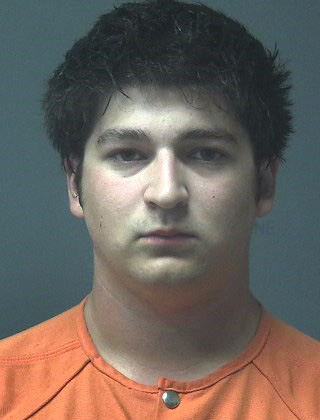 David “Noah” Perdue, age 19 of Brewton was charged with five counts of possession of child pornography and attempt to possession obscene material. He surrendered himself to the Escambia County (AL) Sheriff’s Office on Wednesday and was booked into the Escambia County (AL) Detention Center in Brewton.
The victim was under age 18, according to investigators.
The investigation into Perdue began in August when the Escambia County (AL) Sheriff’s Offcie received a complaint from parents that believed there had been inappropriate contact of a sexual nature with their minor child. An investigation by followed by the Sheriff’s Office, Alabama Department of Human Resources and the Child Advocacy Center.
Officials said Perdue was a volunteer firefighter with the Barnett Crossroads Volunteer Fire Department. Information on his current status with the department was not available.
Century Affirms Support For Home Rule
October 19, 2017
The Town of Century has approved a resolution in support of protecting and strengthening “home rule” in Florida.
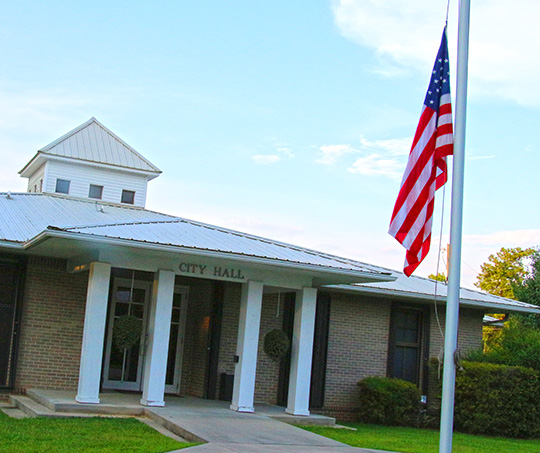 Under the concept of “home rule”, each of Florida’s 412 cities has the flexibility to craft its laws specifically to its own unique needs. Any city can adopt its laws so long as the law doesn’t conflict with state or federal law. Florida voters amended the state constitution to confer home rule powers to municipal governments.
“The Town Council believes protecting and strengthening “Home Rule” authority would be in the best interests of the residents and businesses of the Town of Century and State of Florida,” the resolution passed unanimously by the Century Town Council states.
The resolution supports the Florida League of Cities’ legislative efforts to protect home rule. The League has opposed any legislative effort that impedes home rule. The League will oppose any effort that interferes with a city’s ability to provide the financial stability and essential services required by its residents and local businesses.
Fields Of Faith: Community Worship Service Held (With Gallery)
October 19, 2017

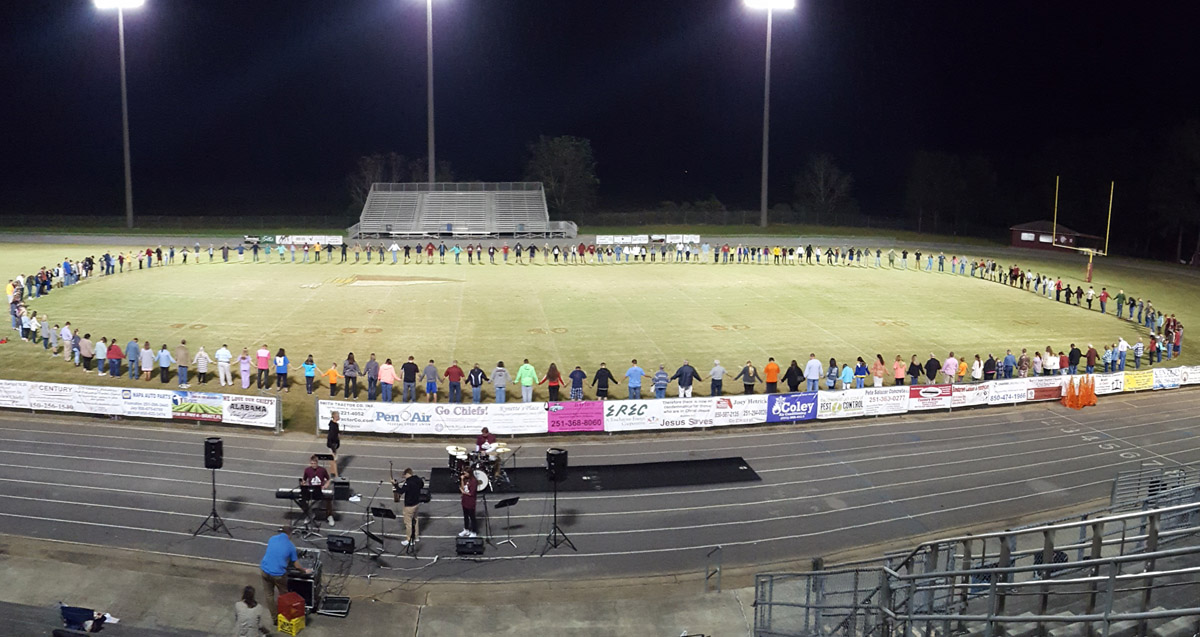
The Northview High School Fellowship of Christian Athletes (FCA) sponsored a student-led worship event “Fields of Faith” Wednesday night in the Tommy Weaver Memorial Stadium.
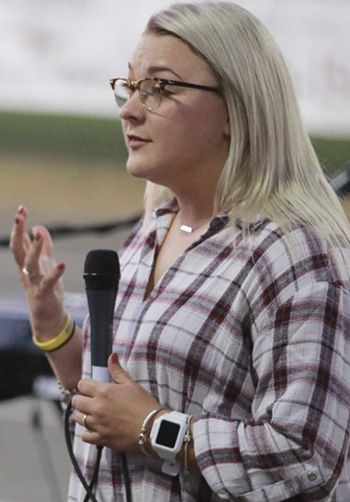 The service included music, a guest speaker and prayer.
“The Lord is in full control. He can help you in any battle, in any trial, in any situation that comes your way,” said speaker Lauren McCall, coach of the Northview High School varsity cheerleaders. She encouraged those in attendance to be saved and dedicate their lives to Christ.
Over 200 faithful joined hands in prayer on the football field to end the annual service.
For a photo gallery, click here.
NorthEscambia.com photos, click to enlarge.

Broxson Files Resolution Supporting Gulf Drilling Moratorium
October 19, 2017
A decades-long moratorium against oil drilling in an area of the eastern Gulf of Mexico used by the military for air and sea training should remain in place, according to resolution filed Wednesday by state Sen. Doug Broxson, R-Gulf Breeze.
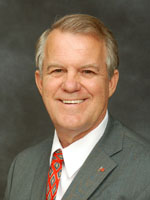 The resolution (SR 550), introduced amid debates in Washington about expanding offshore drilling, asks Congress to maintain the moratorium, which is in place from east of the Military Mission Line, which runs south of Hurlburt Field in Okaloosa County to Key West. The moratorium is set to expire in 2022.
The north-south military mission line off the Florida Panhandle was established in 1983, but Broxson’s resolution said the Gulf of Mexico Range Complex, or “GOMEX,” has been used since the end of World War II to test surface-to-air rockets and future weapons systems.
“The military missions require day and night access to the airspace, from the surface up to 60,000 feet, for high-speed flying and maneuvering, as well as day and night access to the seaspace, from the sea surface to the subsurface areas, for use by ships and submarines,” said Broxson’s resolution, filed for the 2018 legislative session.
Rep. Mel Ponder, R-Destin, filed an identical House version (HR 319) last week.
Escambia County Corrections Recognizes GED Graduates
October 19, 2017
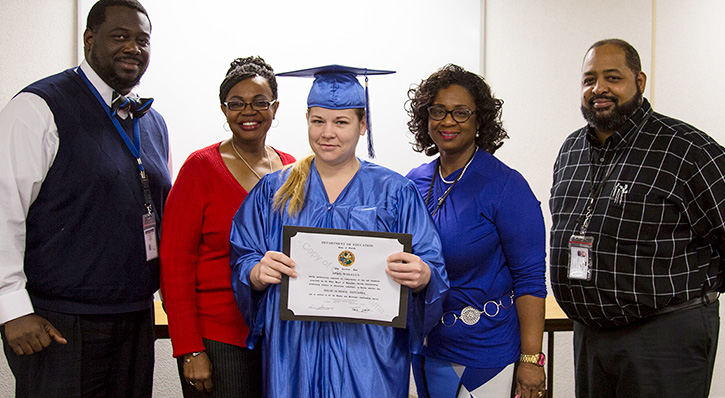
The Escambia County Corrections Department and Jail Division proudly recognized two Jail GED Program graduates with a ceremony Wednesday, Oct. 18 at the Escambia County Jail, celebrating their dedication to achieving educational goals. This marked the first formal graduation ceremony hosted by Escambia County to recognize individuals housed at the jail who receive their GED diplomas.
Laxavier Lowery, 18, and April Wheelus, 30, earned their GED diplomas through the program while incarcerated, and both said they plan to continue on to higher education when they are released later this year.
At the ceremony, Escambia County Corrections Director Tammy Jarvis commended the graduates for their accomplishment and encouraged them to continue to work toward their goals.
“Use this opportunity as a launching pad,” Jarvis said. “Getting your GED – I don’t know that you know how many doors this has opened for you…this has opened so many more opportunities for you than what you had before you achieved this. Just the fact that you were willing to step out tells me that you’re looking for some sort of change. You’re looking to better yourself. You know that there are other things out there.”
Other ceremony attendees included Jail Commander Selina Barnes, Jail Maj. Greg Nash, Officer in Charge of Security Lt. Jason Walker, Program Coordinators Sean Parker and Donna Wilson, Instructors Rayshell Fairley and Charles Hall, along with graduates’ family members.
The Escambia County Corrections Department has offered a GED program for many years, becoming a certified testing center through the Florida Department of Education in 2014. In the 2016-17 fiscal year, two juveniles received high school diplomas and eight adults earned GED diplomas, with 324 students enrolled in the GED program and 179 tests administered.
After receiving his diploma Wednesday, Lowery expressed his plans to go to Pensacola State College for an associate degree before moving on to Florida Agricultural and Mechanical University to study communications. Lowery completed the GED program for his grandma, who he said was “rejoicing” when she heard the news.
“I never want to fail, so I continue to strive to do better,” Lowery said.
Lt. Jason Walker, who supervises the jail’s programs division including the GED program, said one of the objectives of the Escambia County Corrections Jail Division is to provide programs to incarcerated individuals to teach life skills in an effort to reduce recidivism.
“We want them to succeed so that society as a whole succeeds, and then hopefully next time we see them is in a better light,” Walker said. ”It’s a wonderful thing if we can help someone reach their goals.”
Wheelus said graduating from the GED program was especially significant for her since her mother encouraged her to complete it. Wheelus’ mother passed away Saturday, but learned of her daughter’s accomplishment before she died. Wheelus said she plans to attend Pensacola State College to study business and continue to better herself for her 9-year-old and 2-year-old sons.
“It means a lot,” Wheelus said of earning her diploma. “This is the best possible thing that could happen. It means a lot for me, my children, my family.”
Photos for NorthEscambia.com, click to enlarge.