
Florida Rolls Out Redesigned, More Secure Driver’s Licenses

December 31, 2017

Colorful high-tech driver’s licenses and state identification cards, designed for added security and to cut down on fake IDs, are rolling out across Florida in 2018

But unless it’s time to update a card because of an expiration date or a name or address change, there’s no need to rush out for a new ID.

“We are in the middle of reaching out to all of our stakeholders, and letting them know how to identify the new card, this is what it looks like, these are some of the security features you can look for,” said Alexis Bakofsky, a spokeswoman for the Florida Department of Highway Safety and Motor Vehicles. “Starting January 1, 2018, it will be the only credential that is issued in Florida.”

Intended in part to crack down on fake licenses, the state agency expects to spend $460,000 to complete the statewide rollout. The money comes from the state’s Highway Safety Operating Trust Fund.

The agency did not provide information on how much it has spent on the redesign.

The card features nearly double the number of security features as the current card, Bakofsky said.

“Some you’ll see. Some you will not see,” Bakofsky said. “That is to maintain security so that a law enforcement officer, or anyone who needs to authenticate that credential, can safely do so.”

Each card will have better safeguards, from features that appear only when viewed under ultraviolet light to a pastel-colored linear rendering of the Florida state seal and a large orange “FL.”

A head shot of the person who has been issued the card will appear in four locations, including one that is a part of a transparent background.

A red box will be affixed to the front for people under 21, stating when the cardholder will reach that age.

The back features an image of the state of Florida, the year 1845 in reference to the year of Florida’s statehood and the word “Florida” amid blue lines representing ocean waves.

The information on the card will also be linked through two barcodes and a magnetic stripe on the back.

The state is working on a new feature to replace the magnetic stripe in 2019.

by Jim Turner, The News Service of Florida


Old Fashioned Wagon Train Riding Slowly Toward The New Year (Gallery)

December 30, 2017

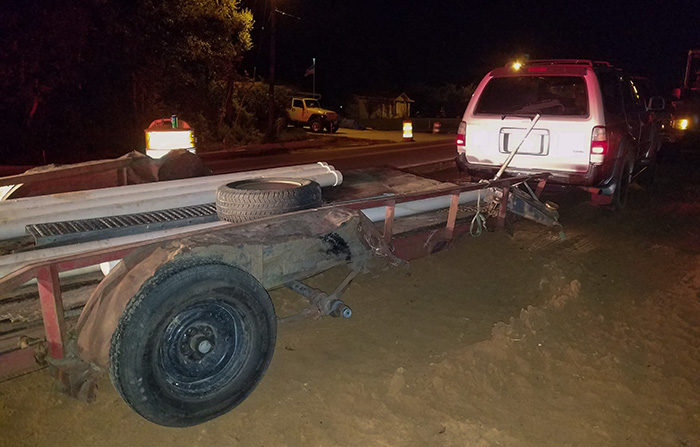
An old-fashioned trail ride set out Friday from Bratt, headed south through North Escambia to greet the new year — and help a friend in need.

The New Years wagon train left a home on Breastworks Road, stopping for lunch at Crossroads Grocery at the Bratt Crossroads. Participants used the stop as a chance to load up last minute supplies and have lunch, the smell of grilled food waffling through the cool midday air as they grilled up some grub.

Riders then headed north on North Highway 99 to take less traveled roads like Oakshade and Pine Barren on their way to Molino and a New Year’s dinner and party at the Barrineau Park Community Center.

They will also hold a baked goods auction to raise money to help friend Doug Poston. He had a stroke a few months back and has been out of work since while he recovers. And that’s just the way it works on the wagon train, where everyone is a friend, a part of the family, as the world passes by at two or three miles per hour.

For more photos, click here.

NorthEscambia.com photos, click to enlarge.


FHP Conducts Roadside Checkpoint On Nine Mile Road

December 30, 2017

The Florida Highway Patrol conducted a roadside checkpoint on Nine Mile Road Friday night from 8:00 until about midnight at Baron Miller Road (between Walmart and Kohls). There were scheduled to be about 30 uniformed officers participating, along with support personnel from the local Mothers Against Drunk Driving chapter.

During the operation, vehicles were stopped to check for driver impairment with roadside sobriety testing performed on site.

Statistics from the checkpoint, including the number of citations and arrests, were not immediately available.

Courtesy photos for NorthEscambia.com, click to enlarge.
Lawmakers Look To Boost Scholarship Programs

December 30, 2017

For Florida residents, attending a state university or college is a bargain.

This academic year, in-state students at Florida’s 12 universities will pay an average of $6,091 in tuition and fees for 30 credit hours, which is nearly 40 percent below the national average of $9,970 for four-year public schools, according to the College Board.

At Florida’s 28 state colleges, full-time students will pay an average of $3,205 in tuition and fees, which is 10 percent below the national average of $3,570, according to the College Board.

And when the Florida Legislature convenes its 2018 session on Jan. 9, lawmakers are expected to further ease the financial burden by expanding merit- and need-based aid.

The scholarship expansions are part of Senate President Joe Negron’s initiative to improve the quality and accessibility of Florida’s higher-education system.

Lawmakers backed most of the higher-education package in the 2017 session, although some of the changes were lost when Gov. Rick Scott vetoed a bill after raising concerns about its impact on the state college system.

Legislation (SB 4) that will be on the Senate floor early in the 2018 session would make permanent an expansion in Bright Futures scholarships and would authorize programs that recognize high-performing graduate schools and efforts to hire top-level faculty and researchers at state universities. The bill would also hold universities to a four-year graduation standard in performance funding.

“I’m very encouraged and very optimistic we will get that done,” Negron, R-Stuart, said in an interview with The News Service of Florida.

Sen. Bill Galvano, a Bradenton Republican who oversees higher-education spending in the Senate, said the initiative reflects “a real desire to make sure no one has an obstacle to obtaining a higher education.”

“We’re going to do two things at once,” said Galvano, who is sponsoring the main Senate bill. “We’re going to create much greater access, which in the end results in a more qualified workforce and more innovation in the economy. And the other thing is we are going to heighten the (quality) level of the institutions that we have in the state of Florida.”

Several provisions in the bill affect the 94,000 students who have merit-based Bright Futures scholarships.

One measure would make permanent a decision to cover 100 percent of tuition and fees for the top-performing Bright Futures students, who are known as “academic scholars.” The bill also includes $300 for books for both the fall and spring semesters and would allow academic scholars to use the scholarships during the summer.

A new provision, which was not included in the 2017 legislation, would also boost Bright Futures scholarships for “medallion” scholars, who currently receive $77 for each credit hour. Credit hours average more than $200 across the system.

The bill would expand the scholarships to 75 percent of the tuition and fees, or $159 for each credit hour.

The legislation, with the support of Senate Appropriations Chairman Rob Bradley, R-Fleming Island, would also allow medallion scholars to use their scholarships during the summer.

The medallion scholarship expansion would cost some $77 million, with an additional $27.6 million for the summer semesters beginning in 2019, according to Senate analysts.

Lawmakers are also expected to build on a need-based aid expansion, which boosted the Florida Student Assistance Grant program by $121 million and expanded coverage to some 234,824 students this year, an increase of more than 122,000 students receiving the aid.

The grants, which average $1,147 per student this year, are used on top of federally funded Pell grants, which are awarded based on family income levels.

The new legislation also would double the state’s match for students in the “First Generation” grant program, which helps students with financial need who come from families where parents have not earned college degrees.

In the 2016-17 academic year, 8,361 university and state college students received the awards, which averaged $1,270, although another 15,442 students were eligible but did not receive funding.

The program is particularly important to state colleges, which have the majority of students who qualify for the program.

Another provision in the bill, which was advanced by Sen. Anitere Flores, R-Miami, would create a scholarship program to cover full tuition and fees for students from farmworker families.

The program, which would cost some $500,000, would award up to 50 scholarships per year.

At the university level, another measure in the bill could impact student finances.

The legislation would require state universities to develop a “block tuition” program by the fall of 2018. In such a program, students would pay a flat rate each semester rather than paying for classes on a credit-hour basis.

For instance, a student could pay a fee representing 15 credit hours but take classes totaling 18 or more credit hours, which would represent a savings.

However, if a student paid a fee representing 15 credit hours but took only 12 hours of classes, it would represent a financial penalty.

by The News Service of Florida

Escambia BOCC Weekly Meeting Schedule

December 30, 2017

Here is a schedule of Escambia County public meetings for the week of January 1-5:

Monday, Jan. 1

County offices closed – New Year’s Day

Wednesday, Jan. 3

Board of County Commissioners and International Association of EMTs and Paramedics Bargaining Meeting – 10:30 a.m., Escambia County Public Safety Building, 6575 N. “W” St., Meeting Room 222

Development Review Committee - 1 p.m., Escambia County Central Office Complex, 3363 West Park Place

Board of County Commissioners and International Association of Firefighters Bargaining Meeting – 2:30 p.m., Escambia County Public Safety Building, 6575 N. “W” St., Meeting Room 222

Thursday, Jan. 4

Board of County Commissioners Executive Session (Amalgamated Transit Union) – 8 a.m., Ernie Lee Magaha Government Building, 221 Palafox Place, BCC Conference Room

BCC Agenda Review, Public Forum and Regular Meeting – 9 a.m., 4:30 p.m. & 5:30 p.m., Ernie Lee Magaha Government Building, 221 Palafox Place (Agenda)

Youth Sports Thriving at Escambia County Parks

December 30, 2017

More than 1,000 local youth participated in football and cheerleading this season at Escambia County athletic parks, offering children and teens opportunities to develop athletic skills and make friends in a fun, structured environment.

Through partnerships between the Escambia County Parks and Recreation Department and local youth sports associations, youth participate each fall in football, cheerleading and flag football at several county-owned parks.

Escambia County Parks and Recreation Director Michael Rhodes said the department is proud to partner with local athletic associations to offer sports to local youth, and it wouldn’t be possible without the many volunteers who dedicate their time to the programs.

“The parks and recreation department knows the importance of youth involvement in athletics and other recreation programs and knows the benefits that can be reaped throughout childhood and teenage years when involved in athletics at a young age,” Rhodes said. “Without the volunteer support and long hours put in by these parents, relatives and friends, youth sports in Escambia County would not thrive as it does today.”

And for the kids and teenagers who participate, youth sports represent so much more than just a game, said League Commissioner Brian Reed with the North West Florida Youth Sports Alliance. Just wrapping up its fourth season, the league has about 125 teams in Escambia and Santa Rosa counties with more than 4,000 youth ages 5-14 participating, Reed said.

“I don’t think anybody puts enough emphasis on what youth sports does,” Reed said. “It goes beyond just the game…It provides them an activity to do, but I think more than that it’s providing them positive role models, and they’re learning the sport the correct way. I think the guys who are out here involved, they’re out here trying to make a positive influence on the youth.”

Reed said the partnership between the league and the county is essential to keeping football and cheerleading programs running, especially when it comes to maintaining fields so the athletes have a safe place to play. The Escambia County Parks and Recreation Department always works hard to keep up the fields and quickly address any issues as they arise, Reed said.

“They take so much weight off of my guys, the guys that are running these parks,” Reed said. “I don’t know what we would do without the parks and recreation department. Anytime I have an issue or one of my parks has an issue, I just pick up the phone and it’s handled. It’s a priceless, symbiotic relationship.”

Youth football and cheerleading finished their approximately four-month season in November, and the youth flag football league kicked off shortly after at Escambia County’s Ashton Brosnaham Athletic Park.

Along with football teams, each ballpark also has cheerleaders who participate through the Emerald Coast Cheer Association, cheering at each game and taking part in an annual cheer competition. The cheer association has athletes in Escambia and Santa Rosa counties, with participants ranging from ages 4-14.

Emerald Coast Cheer Association President Andi DeVito said the program focuses on skill progression, with the rules established to prepare young athletes to enter high school cheer programs.

DeVito said the importance of youth cheerleading and other sports is huge, and she hopes to continue to grow the cheer program in both Escambia and Santa Rosa counties.

“Kids need to have some kind of organized social interaction, whether it’s a sport or some kind of program to be involved in,” DeVito said. “And being involved in community recreational programs makes those kids a part of our community – they’re our future leaders.”

Escambia County provides its facilities to youth sports organizations, and Rhodes said the county is happy to support them in their continuous efforts in the community.

“Ultimately, the parks and recreation department is pleased that we can have parks under our purview that offer several options to parents, whether it be tackle football, flag football, cheerleading, lacrosse or other sports,” Rhodes said. “This supports our goal of being involved in youth sports and its tremendous benefits to young people in our community.”

Funeral Services Set For Century Accident Victim Daizee Angus

December 29, 2017

Funeral services have been set for Daizee Brooke Angus, the young Flomaton woman that passed away in a vehicle accident last week near Century.

Funeral services will be held at 2:30 p.m. Sunday at the West Milton Church of Christ, with Pastor Al Bethea officiating.

The family will receive friends from 1:30 p.m. Sunday until the time of service at the church. Burial will follow in the Serenity Gardens Cemetery.

Daizee was 19-years old. She was a senior at Flomaton High School and was employed at McDonald’s in Flomaton.

For the complete obituary, click here.

Cantonment Woman Charged With Shooting, Killing Puppy

December 29, 2017

A Cantonment woman  has been charged with shooting and killing a misbehaving puppy.

Amanda Cay Carpenter, 27, was charged with animal cruelty and firing a weapon in public in connection after the incident at a mobile home park on Ryale Road.

Carpenter’s next door neighbor called the Escambia County Sheriff’s Office and reported that she was inside her residence when she heard two gunshots, a slight pause and one more gunshot. The witness told deputies that she heard the dog whimpering and crying after the first two shots. Then after the last shot, she did not hear the animal anymore. She said she walked outside to see what was going on and observed Carpenter going back inside her residence with what was later found to be a .22 caliber rifle, an arrest report states.

Carpenter told deputies that her nine-month old pit bull chewed up and damaged several items in her room. She said she tried to put it in a kennel but it would not go. According to an arrest report, she said the  puppy also attempted to bite her in the face before she put it outside.

When asked by deputies why she did not just leave the dog outside, locked in the yard and call animal control, Carpenter could not answer, the report states.

When Carpenter shot at the dog, she was firing in the direction of another trailer only about 40 feet away, according to the Escambia County Sheriff’s Office.

FHP Seeks Driver In North Davis Hwy Pedestrian Hit And Run

December 29, 2017

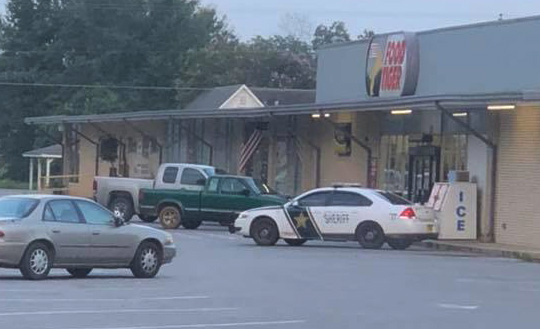
The Florida Highway Patrol is searching for the driver of a Chevrolet Trailblazer that struck a pedestrian Thursday afternoon on North Davis Highway.

About 3:16 p.m. the vehicle was traveling southbound on North Davis Highway as 52-year old Paula Clark was crossing the roadway in a marked crosswalk with a walking signal. The FHP said the suspect failed to yield to Ckark, hitting her  in the side. Clark walked to the nearby West Florida Hospital emergency room for treatment of minor injuries.

The suspect vehicle is a mid 2000’s dark blue Chevrolet Trailbalzer with damage to the right side of the vehicle. Anyone with information on the suspect vehicle, driver or crash is asked to call Trooper Timothy Brown in the Florida Highway Patrol Pensacola District at (850) 484-5000.

2018 Session: Lawmakers Weigh Spending On Conservation Projects

December 29, 2017

When state lawmakers met during the 2017 legislative session, one of the biggest issues was a bill backed by Senate President Joe Negron to revamp how water flows in parts of South Florida.

Lawmakers aren’t considering such a major piece of environmental legislation as they prepare for the 2018 session.

But they have started moving forward with several high-priced bills that would further divvy up money that voters approved in 2014 for water and land conservation. Those proposals, if approved, could help address issues such as restoring natural springs and improving the St. Johns River.

Lawmakers during the upcoming session also could become embroiled in other environment-related debates. For example, bills (SB 462 and HB 237) have been filed to try to prohibit the oil-drilling process known as fracking, although the outlook remains murky as in past sessions.

And a brawl is brewing over a proposal (SB 574 and HB 521) that would further limit local government authority to set rules, this time seeking to block municipal and county rules for tree planting and trimming.

Aliki Moncrief, of the Florida Conservation Voters, called local pre-emption measures involving environmental protection the “most dangerous.”

“Pre-emption of local government has been a running theme of the Legislature in recent years; this tree bill is just another example,” Moncrief said.

Lawmakers will start the 2018 legislative session on Jan. 9, after Negron made the South Florida water bill a key issue of the 2017 session.

The bill allows the state to bond up to $800 million for a reservoir south of Lake Okeechobee. The project seeks to help move water south and reduce polluted discharges from the lake into the St. Lucie and Caloosahatchee estuaries in Southeast and Southwest Florida.

Money for the project comes through a 2014 constitutional amendment, which voters approved to set aside a portion of “documentary stamp” real-estate taxes for land and water conservation.

State economists have estimated that the “doc stamp” taxes will generate $862.2 million for the Land Acquisition Trust Fund next fiscal year.

In past years, lawmakers started to carve up the fund for targeted projects, while also using a portion of the money to cover state agency expenses said to be tied to conservation.

The use of the money for agency overhead spurred an ongoing lawsuit from backers of the 2014 constitutional amendment. Meanwhile, some influential legislators also have questioned such uses of the money.

Senate Appropriations Chairman Rob Bradley, R-Fleming Island, has repeatedly said the money should not go toward agency expenses.

“I think we don’t spend enough of the Land Acquisition Trust Fund dollars on land acquisition,” Bradley told reporters in November. “The voters sent a clear message in 2014 … and we need to do better.”

As the 2018 session approaches, Bradley is backing measures that would lead to other targeted uses of the voter-approved money.

Bradley wants to spend $100 million on the once-iconic Florida Forever program (SB 370), doubling a proposal by Gov. Rick Scott. The appropriations chairman also wants to increase annual funding (SB 204) for the state’s natural springs from $50 million to $75 million and set aside $50 million a year for the restoration of the St. Johns River, its tributaries and the Keystone Heights lake region in North Florida.

Meanwhile, Sen. Debbie Mayfield, R-Rockledge, Rep. Gayle Harrell, R-Stuart, and Rep. Rene Plasencia, R-Orlando, are seeking another $50 million from the fund (SB 786 and HB 339) to help restore the condition of the Indian River Lagoon. That would include providing matching money to local governments to help move away from septic tanks and hook up residents to central sewer systems.

Another measure (SB 174) calls for setting aside $50 million annually for beach-nourishment and inlet-management projects, but the future of the proposal is unknown because its Senate sponsor, Clearwater Republican Jack Latvala, has announced his resignation after an investigation into allegations of sexual harassment.

The proposals by Bradley and Latvala, have reached the Senate Appropriations Committee, while the Indian River Lagoon proposal has not appeared before committees.

Lawmakers in the past have earmarked parts of the voter-directed money so that at least $200 million a year goes for Everglades projects, another $64 million goes for the Negron-backed reservoir in the Everglades Agricultural Area south of Lake Okeechobee and $5 million goes to the St. Johns River Water Management District for projects dedicated to the restoration of Lake Apopka.

Julie Wraithmell, of Audubon Florida, said bracing the state for future storms, as well as covering damages from Hurricane Irma, most likely will be a dominant theme for the 2018 session, including environmentally.

“We need to look at how do we recover from the biggest storm season in recent memory and how do we make ourselves more resilient in the face of future storms as well,” Wraithmell said. “So, I think you’re going to see a lot of discussion around the Florida Forever program and some of the other environmental spending bills out there, about how can we use these to best protect Florida and our way of life. We saw remarkable amounts of flooding, particularly in Southwest Florida. We know that conservation lands both help us to hold water and they’re also the source of our water recharge.”

While environmental groups focus heavily each year on funding issues, they also are watching other potentially contentious issues for the 2018 session.

As an example, Sen. Greg Steube, R-Sarasota, is sponsoring the proposal that would limit the authority of local governments to make decisions about tree trimming and planting.

Steube has called requirements to trim trees and replant removed trees an infringement on property rights by local governments that go “way above and beyond what they should be doing.”

But the proposal has drawn opposition from environmental groups, along with the Florida Association of Counties and the Florida League of Cities, which say trees improve property values, reduce flood risk and provide a cooling effect.

“Whether and how communities regulate tree removal should be a local question. Some communities may choose not to regulate trees because they do not face development pressure or are sparsely developed,” 1000 Friends of Florida said in a release. “Other communities may choose to strictly regulate tree removal because they highly value their tree canopy and would risk losing it without rules to protect it.”

by Jim Turner, The News Service of Florida

« Previous PageNext Page »